Category: Environment

Deepwater Horizon

Transocean Deepwater Horizon Explosion-A Discussion of What Actually Happened?

The trouble with the way that the news is presented and consumed is that major events are delivered in ‘headline’ style and even something as terrible as the oil spill in the Gulf of Mexico is starting to compete with other, more current, news stories.

The other issue with news channels is that it is uncommon to be presented with a real insight into the human scale of massive catastrophes.  Thank goodness for the web!

Drilling Ahead is a website that describes itself as A Social Network of Oil & Gas Professionals. Another website find courtesy of Naked Capitalism.

On Drilling Ahead is a report about the loss of the Deepwater Horizon.  It makes both gripping and chilling reading.  Here’s an extract but it’s much better to read it directly from here:

An Ill-fated Discovery
According to news accounts, at about 10 p.m. CDT last Tuesday, Deepwater Horizon was stable, holding an exact position in calm, dark seas about 45 miles south of the Louisiana coastline. Water depth in the area is 5,000 feet. The vessel manifest listed 126 souls on board.

Deepwater Horizon was finishing work on an exploration well named Macondo, in an area called Mississippi Canyon Block 252. After weeks of drilling, the rig had pushed a bit down over 18,000 feet, into an oil-bearing zone. The Transocean and BP personnel were installing casing in the well. BP was going to seal things up, and then go off and figure out how to produce the oil — another step entirely in the oil biz.

The Macondo Block 252 reservoir may hold as much as 100 million barrels. That’s not as large as other recent oil strikes in the Gulf, but BP management was still pleased. Success is success —
certainly in the risky, deep-water oil environment. The front office of BP Exploration was preparing a press release to announce a “commercial” oil discovery.

This kind of exploration success was par for the course for Deepwater Horizon. A year ago, the vessel set a record at another site in the Gulf, drilling a well just over 35,000 feet and discovering the 3 billion barrel Tiber deposit for BP. SoDeepwater Horizon was a great rig, with a great crew and a superb record. You might even say that is was lucky.

But perhaps some things tempt the Gods. Some actions may invite ill fate. Because suddenly, the wild and wasteful ocean struck with a bolt from the deep.

The Lights Went out;
and Then.
..

Witnesses state that the lights flickered on the Deepwater Horizon. Then a massive thud shook the vessel, followed by another strong vibration. Transocean employee Jim Ingram, a seasoned
offshore worker, told the U.K. Times that he was preparing for bed after working a 12-hour shift. “On the second [thud],” said Mr. Ingram, “we knew something was wrong.” Indeed, something was very wrong.

Within a moment, a gigantic blast of gas, oil and drilling mud roared up through three miles of down-hole pipe and subsea risers. The fluids burst through the rig floor and ripped up into the gigantic draw-works. Something sparked. The hydrocarbons ignited. In a fraction of a second, the drilling deck of the Deepwater Horizon exploded into a fireball. The scene was an utter conflagration.

Unimaginable hell!

And here’s another extract:

Read the rest of this Post

Is there a positive side to communitarianism?

Rethinking the State

I have a new article up at Rethinking the State — which now has several new authors including Nathan Fox-Helser,

Prison - Norway style

Andrew Butler, and Paul Monroe — about the positive aspects of communitarian systems.

I’m not sure exactly what the political leanings are of the Learning From Dogs readership — I would hope that a variety of viewpoints are represented — but I know that often communitarian philosophies are held in contempt in libertarian or free market circles because of their association with historical attempts at socialism and communism.

Regardless, I’d love to hear your thoughts, as it’s a philosophy I’ve been thinking about a lot recently.  I write:

…I have to admit that one of the key flaws I see in communitarian political philosophies is not so much the non-cohesive nature of the doctrines themselves, but rather the level at which they are prescribed.  If communitarianism was only applied at the local level, could it really survive without an element of voluntarism?  I feel that capitalist leaning nation-states are begging the question in saying that ideologies like socialism don’t work, because they are assuming that they must be applied at the nation-state level.

This involves the idea that the strictness of economic laws tends to lessen as they move further away from large-scale application, so anti-communitarian claims like the lack of an adequate price mechanism and lack of adequate information tends to become less of a problem for local communities because the nature of economic communication changes as the distance between actors closes.  It also involves the idea put forth by such philosophers as David Hume that human beings are naturally sociable creatures, and a communitarian system at the local level would be able to use this sociability to its advantage.

The full article is reproduced below:

Continue reading “Is there a positive side to communitarianism?”

Arizona Immigration Law

Introduction

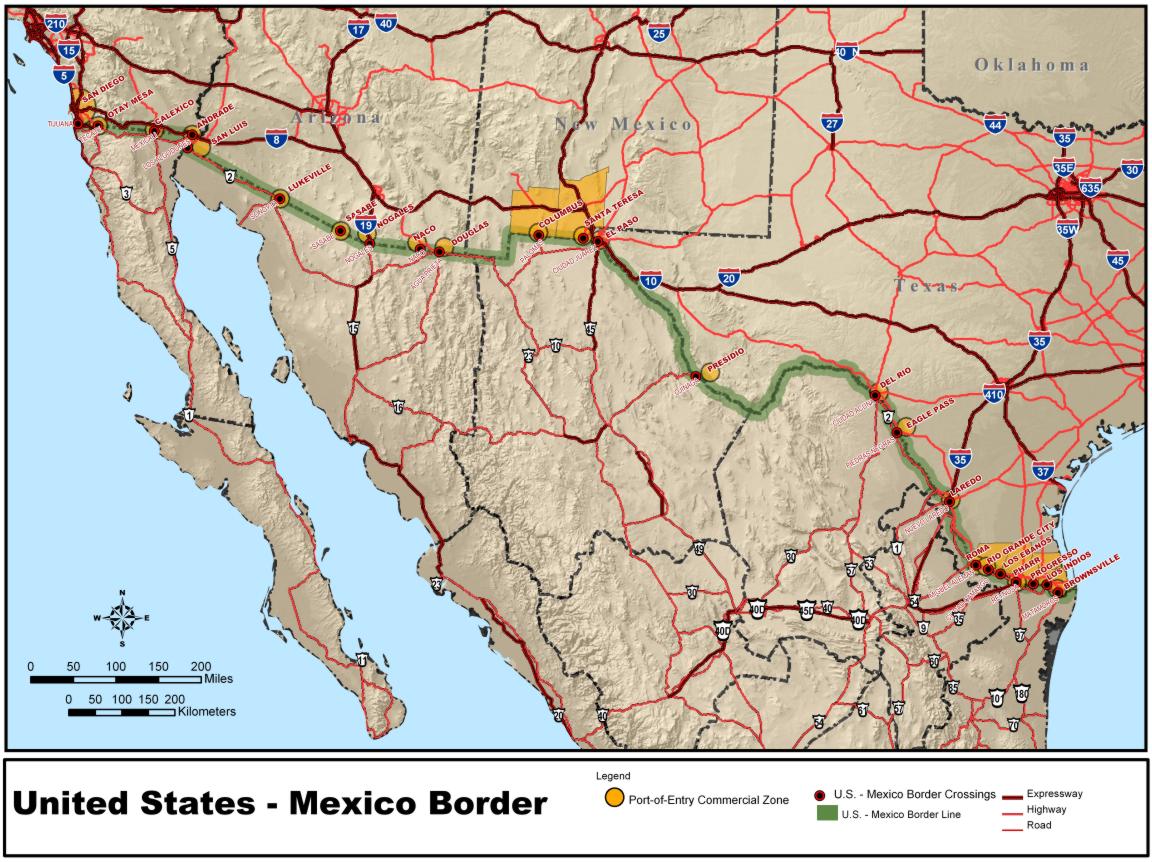
[As a newcomer to Arizona with only a couple of months experience of living in Payson, North-East of Phoenix, I have no right to pass comment on what has been big news both inside and outside the State.  I have observed that feelings run strong about illegal immigrants, with many reacting to the complicated process that I am going through applying for US residency by saying “It’s not fair”.  Not fair in the sense that they see so many Mexicans just walking over the long border that Arizona has with it’s neighbour to the south.

Thus this thoughtful Post from Gordon Coons is a chance for Learning from Dogs to air a point of view from someone who does have a right to an opinion. Ed.]

My fellow Americans, friends and relatives:

I am writing you to express my concerns over the recently passed law regarding immigration in my former state of Arizona.

As most (if not all) of you know, I lived in Arizona for 10 years, my children still live there and Linda and I have been living in Mexico. I mention this only in that it gives me a certain perspective on the events that have transpired recently.

The Border

The spate of marches and protests around the country would lead us to believe that the state of Arizona has completely lost its collective and legislative mind. The feeling is that enforcing such a law would lead to rampant profiling of Mexicans (and other Chicanos) who DO live in this country legally.

First of all, let’s examine WHY all of those Latinos want to come here. There are 2 basic, and yet profound, reasons:

  1. they want jobs and
  2. they want their children to be born here so that they become naturalized citizens and are the beneficiaries of all of our rights.

Do I blame them? Of course not….if I were in their shoes, I would want to come here as well.

I do take exception to the growing group of “banditos Mexicano” who are bent on illegal activities on both sides of the border.

Read the rest of this Post

Remarkable people: Prof James Lovelock

The father of Gaia

A week or so ago, the BBC under their Beautiful Minds series, screened a programme about James Ephraim Lovelock, more popularly known as Professor Jim Lovelock.

Prof. James Lovelock

(Picture taken from this article – in itself well worth reading.)

The programme demonstrated that Lovelock’s mind is more than beautiful, it is still capable, at 90 years of age, of thinking in ways that are very rare in today’s societies where conformity is such a powerful force.

As always, WikiPedia has an excellent reference on Prof. Lovelock and I encourage you to read it plus Lovelock’s own website which makes up in content what it may lack for presentation!

Luckily there is an extract from the BBC programme on YouTube – please watch this and reflect on exactly what Lovelock is saying.

And if you are up for more, then settle down for thirteen minutes and watch this next video.

James Lovelock is the Darwin of our times.

Now to put this into some context (this is me speaking as a layman!).

Please read the rest of this post

It’s an ill wind that blows nobody any good!

Iceland’s ash casts an enigmatic spell over Japan

It seems that there has been nothing else on the news following the eruption of Mount Eyjafjallajokull
in Iceland, which was of particular interest to me  because on the 10th April I was flying from New York across the southern area of Iceland on my way to Rome, since which time I have passed through the UAE and Singapore on my way to Japan.

My work replacement was due to arrive on the 18th April after a holiday in the Mediterranean, but the flight which he was on was diverted into Paris because UK airspace was suddenly closed. He managed to continue his journey by train, ferry, car, taxi and bus but was then stuck in England. My duty had to continue but there seemed little point in propping up a hotel bar with other crews, so I decided to turn the situation into something positive.

After an exploratory trip into Tokyo, it was Paul, our Editor in Chief who put me in contact with his sister and her husband in the city, and another friend who suggested I should jump on a train and go to Hiroshima to see his son, who I know, so my travels started.

The transport system in Japan is extremely well organised with instructions and information well displayed in English along side Japanese. Everything is clean and modern, and runs to the second! At short notice I decided to make the journey to Hiroshima in this once in a life time opportunity, and there was the famous bullet train a monster of modern technology, which runs on banked rails at steady speeds of 400 kph.

Mount Fuji - Japan

We sped along through ever changing countryside. Initially the skyline was of mainly high rise buildings which changed to two story properties once we were out of town. The new leaves of spring and the famous blossom of the plum and cherry trees, and the quick glimpse of a Japanese water garden. Industry is mixed with small allotments, and tiny houses, roads and rail lines raised from ground level to make everything fit, and above that cables and wires, because of the threat of earthquakes, and past the stunning Mount Fuji, white with snow against a blue sky.

I never met such polite people, and on the train the guards and girls who pass through the carriage with drinks and food bow when they enter and leave. They are so well dressed and smart. No graffiti here!

Familiar Japanese trading names on local buildings, and strangely a huge Union Jack flag. I wonder how there can be so many buildings and parking areas full of cars ,but seemingly no people in view, but many large span bridges arching across hill sides to join places together.

Through Kyoto where there seemed to be a lot of energy being used, for purposes that were not immediately clear. College students in smart suits with white shirts and blue ties, passed quietly through the train. I noticed each time they had left the train at a station they took their rubbish with them, and put the seat back in the upright position!

The A-Bomb Dome

At last after four hours we arrived at Hiroshima, which today it is a lovely modern city of which to be proud. There is just one damaged building standing in a stark fashion at the waters edge which is all that it takes to remind us of such devastation and the Garden of Peace, there to allow some quiet reflection.

I took a 45 minute boat ride to Mijajima, now a World Heritage site. This beautiful island is probably 15 miles from Hiroshima, and there amongst the beauty of the trees and a 500 year old shrine wander the deer, quite happy to sit as people pass by.

My thought as I came away from Hiroshima was that all leaders of any country with any connection to Nuclear weapons or power should be made to attend the A-Bomb Dome and reflect. As all the plaques say this must never be allowed to happen again.

By Bob Derham

Man proposes, nature disposes.

A salutary reminder of the power of nature

This is being written at 15:00 UTC on Tuesday, 20th April.  It’s still anyone’s guess as to when the airspace that commercial aircraft fly in will be free from volcanic fallout.

Nature disposing

Based in Arizona but planning to fly to the UK in about three weeks, it’s also very frustrating finding really good, accurate information to help one think through plans and back-up plans.

But here’s a web site for UK glider (sailplane) pilots that goes a very long way to providing really solid information.  Check it out. (And, once again, thanks to Yves Smith of Naked Capitalism for finding the site.)

Well done GlideMet.

By Paul Handover (ex British Gliding Association pilot/instructor.)

Today’s No-Brainer

Bottled water …..

… in developed countries is not only an insanity but also an obscenity.

  • It is no healthier than tapwater. If it were essential to health then how come we oldies survived before? Logically, the Human Race should have died out.
  • It tastes no different, unless you buy it fizzy – but you could add your own fizz at home.
  • It costs VASTLY more than tapwater.
  • It is VASTLY more profitable to producers than gasoline for oil companies.
  • It is VASTLY more expensive to produce – around 1500 times more than an equivalent quantity of tap water.
  • Its transportation produces significant amounts of harmful emissions.
  • It is VASTLY wasteful; water is scarce, yet it takes 7 litres of water to make a 1 litre bottle plus the contents.
  • It leads to VASTLY-INCREASED pollution. ‘see “Giant Rubbish Dump Accumulating in the Pacific
  • It soaks up resources that could be better used, including to save lives of people dying from lack of or dirty water.

In short, it is absolute folly. What on earth is there going for it? At the same time, it is big business and very popular? Why?

  • Are people ignorant about all the above? That’s quite worrying …. not much future with so much ignorance about.
  • Are people paranoid about what comes out of their taps? Oh dear –  paranoia is not good for us.
  • Do people place their vanity and status-image before the above-mentioned points? Hmmmm …..
  • Are many people just suckers for slick advertising? I guess the answer to that one is a straight “Yes”.
  • Have millions of people no common-sense and/or social conscience? Oh dear, this time it’s a clear “No”.
This is pretty!

Bottled water is nonsense, except of course where there is no alternative.

If rich, fat Westerners really like bottled water they could export it to developing countries where millions die through lack of or poisoned/polluted water every year while at the same time pouring funds into building water infrastructure for these very same people.

Yes, I know the industry provides jobs, but so did making nerve-gas for the Nazis.

The point is, we should direct our energy and money into things which are not totally unnecessary and destructive. I’m not a great fan of the “nanny-state”, but in some areas – and this is one – the government should be taking a more forceful lead. Help us kick our silly, selfish, faddish and destructive addiction to bottled water.

Some excellent links on this topic:

By Chris Snuggs

Alistair Cooke

A tribute to Alistair Cooke of Letter from America

Many, many people of a certain age will remember with very fond affection the weekly BBC Radio broadcasts of Alistair Cooke under the title of Letter from America.

Alistair’s broadcast title, Letter from America, came to mind because I have been thinking for a couple of weeks about what to call my impressions about moving to Payson in Arizona.

Payson Perceptions? Pictures of Payson? Payson Profile?  No!  They all seemed naff!

But would it be too presumptuous to echo Cooke’s hugely famous programme title?  Hopefully not.

(And regular readers will know that yesterday, the first Letter from Payson was published.)

I did a Google search on Alistair Cooke and immediately found the BBC web page devoted to him.  For those that don’t know Cooke here are a few details from WikiPedia.

Born in 1908 in Salford, Lancashire, England, Cooke first started broadcasting for the BBC in 1946 and continued until the 20th February, 2004, a total of 58 years and making Letter from America the longest-running speech radio show in the world.

I hope the BBC will forgive me in reproducing here on Learning from Dogs the obituary that is on the Alistair Cooke website.  He was a wonderfully interesting man and his weekly Letter from America seems to have been part of my complete life (in a sense it was).

——————-

Reading Letter from America in the 1950s

He read his Letter from America for 58 years

Esteemed writer and BBC broadcaster Alistair Cooke, famed for his programme Letter From America, has died aged 95. BBC News Online looks back at his long and respected career.

For more than half a century, Alistair Cooke’s weekly broadcasts of Letter from America for BBC radio monitored the pulse of life in the United States and relayed its strengths and weaknesses to 50 countries.

His retirement from the show earlier this month after 58 years, due to ill health, brought a flood of tributes for his huge contributing to broadcasting.

Born in Salford, near Manchester, northern England, Alistair Cooke’s father was an iron-fitter and Methodist lay-preacher.

Alistair Cooke

Alistair Cooke: Consummate broadcaster

Winning a scholarship to Jesus College, Cambridge he read English, edited the undergraduate magazine, Granta, and founded the Cambridge University Mummers.

Alistair Cooke made his first visit to the United States in 1932, on a Commonwealth Fund Fellowship which took him to both Yale and Harvard universities.

Following his return to Britain, he became the BBC’s film critic and, in 1935, London correspondent for America’s National Broadcasting Corporation.

He returned to the United States in 1937 to work as a commentator on American affairs for the BBC. He made his home there and, in 1941, became an American citizen.

Alistair Cooke

A passion for jazz

March 1946 saw the first edition of American Letter, which became Letter from America in 1949.

The series was the longest-running series in history to be presented by a single person.

Alistair Cooke never decided what he was going to talk about until he wrote the script, made no notes during the preceding week and preferred to rely on his memory.

In an interview given at the time of the 3,000th edition of Letter from America, he appeared to have mixed feelings about the future of the United States.

“In America,” he said, “the race is on between its decadence and its vitality, and it has lots of both.”

Addressing Congress in 1973

He addressed Congress in 1973

Cooke led his listeners through the American vicissitudes of Korea, Kennedy, Vietnam, Watergate, Nixon’s resignation and Clinton’s scandals.

In all of this, Cooke pulled no punches. The lyricism of his broadcasting and the urbanity of his voice did not disguise his fears for America which he saw becoming a more violent society.

A liberal by nature, he reserved particular dislike for what he saw as the shallow flag-waving of the Reagan presidency.

Alongside working for the BBC and The Guardian, for which he wrote from 1945 to 1972, he developed a passion for jazz and golf and, as a film critic, he mixed with Hollywood stars.

As a commentator on history, Cooke was sometimes an eyewitness too. He was just yards away from Senator Bobby Kennedy when the latter was assassinated in 1968.

He was never as comfortable on television as radio but, by the 1970s, his hugely successful television series America recounted his personal history of his adopted homeland and won international acclaim, two Emmy Awards and spawned a million-selling book.

British or American?

The Queen awarded him an honorary knighthood in 1973 and the following year, for a journalist, he received the ultimate recognition – he was asked to address the United States Congress on its 200th anniversary.

He told his audience he felt as if he was in a dream, standing naked before them and there was only one thing he could find to say.

Teasing, he exclaimed to the assembled legislators, “I gratefully accept your nomination for President of the United States!”

Naturally, he brought the house down.

Many Britons thought he was American, but to the Americans he was the quintessential Brit, the man who brought them the best of British television as presenter of Masterpiece Theatre. For his part, he explained, “I feel totally at home in both countries.”

He impressed both audiences with his high quality work. With his unquenchable curiosity, Alistair Cooke remained for decades the consummate broadcaster, an elegant writer and a man of enormous wit and charm who made sense of the American Century.

By Paul Handover (still missing Letter from America on the radio.)

Letter from Payson – first impressions

Ma’am, it’s only a small cow town!

On February 26th Jean and I, and a caravan of dogs and cats, arrived at our new home in Payson, Arizona.

We chose Payson simply because we wanted seasons.  Payson is about an hour NE of Phoenix up at 5,000 feet and has very distinct seasons!

Snow in the garden - late March!

Both of us for different reasons thought we knew America pretty well.  Jean was married to an American for nearly 30 years and I had been doing business in the US for a long time, even having my own (small) US company based in New Jersey.

But what neither of us anticipated was the wonderful warmth and friendliness of the Payson inhabitants.  Despite the fact that Payson is hurting big time as a result of the economic situation, the majority of people that we met were happy, smiling and wonderfully accepting of a couple of Brits turning up in their town.

Indeed, Jean spoke to this stranger in the local supermarket, a tall guy complete with the boots and Stetson hat, and asked simply, “Why are so many people in Payson smiling?

His reply was simply, “Ma’am, it’s only a small cow town!

Well here’s a couple of newcomers to this small cow town who like it!

Payson and the Mogollon Rim in the background.

By Paul Handover

Let’s stop messing with the clocks!

Crazy, outdated concept – adjusting clocks twice a year!

The whole concept of adjusting the clocks with the seasons, “Daylight Saving” as the Americans call it, seems increasingly ludicrous the more that one thinks about it. In the UK, it is called British Summer Time and is abbreviated to BST; I call it British Silly Time.

The expensive consequences for computer systems, airlines, railways and many other systems and organisations having to mess about with times and schedules are completely unnecessary. And I have lost count of the number of times I have heard of people missing calls or online meetings due to misinterpretations of time zones and distortions in the name of “daylight saving”.

One would have thought that people who spend the most time involved with nature would find it the most ludicrous and that among those would be farmers. However, it seems that this is not the case as there is a discussion about introducing permanent BST or even “double BST” on the UK National Farmers Union (NFU) website.

The news article is titled “Should we change the clocks?”. My answer is a simple “no”. In case the answer is unclear, I mean “no”! That is “do not change the clocks”! That is “leave the clocks alone”! That is “stop messing with the clocks”! In the UK that means “leave the clocks on GMT, the correct time”!

Does no one else understand this? Well, thankfully, many people do. For example, the whole of the aviation industry uses Zulu time (UTC) worldwide. Let’s be clear what that means. When pilots get a weather reports from any airport in the world (whether it is Heathrow or Los Angeles airport), the times are in Zulu time which is UTC/GMT. Yes everyone uses UTC.

The really funny part is that the NFU news article even states “analysts have claimed an extra hour’s daylight could be worth £3.5 billion a year to the economy”. This is the ultimate fallacy.

Let us be clear about something, in case you had not noticed: THERE IS NO EXTRA DAYLIGHT!! Where, on earth, did farmers get the idea that there is?!

Chris Madden cartoon

By John Lewis