Think you have had a bad day/week/month/year/life? Want to see your life in perspective? Go here and reflect. This is one very brave and incredibly inspiring young woman.
Those of you who see this and are in the UK, do read Alice’s Bucket List and help if you are at all able. If not, just hold Alice and all her family, and Mabel, in your prayers.
No, not the one between the USA and the UK but between dogs and man.
Great thanks to Peter N. a loyal Learning from Dogs reader, who passed this item to me just a few days before I left for England, where I am until the 16th. The story comes from the website Life With Dogs, not a website that I had previously come across, where it appeared on June 2nd. It is reproduced in full below.
'Puppy' Bear
A Piedmont, OK man says his devoted dog tried to save his wife’s life during last week’s tornado.
Leanne Sneed was at home when the deadly tornado struck. Her husband Gary said she took cover as the twister began to rip the house apart around her, laying down and covering her head as debris fell.
What happened next can only be explained as an act of love. Bear used his considerable frame to protect Leanne. He laid down on top of her, completely covering her body with his. He did not move, keeping her pinned under him until the storm had passed. Miraculously, despite the complete destruction that surrounded them, neither Bear nor Leanne suffered any injuries.
Gary Sneed said that Bear’s bravery is even more impressive when you consider that he’s still just a puppy. He said the 160-pound dog is incredibly loving, and he fully believes Bear was willing to sacrifice his life for Leanne’s.
I don’t recall who it was who passed this poem to me so apologies for that.
Also a trawl around the Internet can’t find the name of the poem although it is referred to several times as a quote from the late George Crabbe.
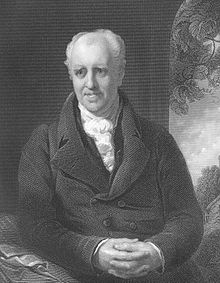
George Crabbe
Anyway, quote or poem, here it is:
With eye upraised his master’s look to scan,
The joy, the solace, and the aid of man:
The rich man’s guardian and the poor man’s friend,
The only creature faithful to the end.
George Crabbe
However my trawl for more details about the poem did lead to some interesting background information about this writer.
George Crabbe combined three careers: doctor, minister, and writer. Born in Aldeburgh, a fishing village in Suffolk, he served his apprenticeship to an apothecary, and then set up as a surgeon-apothecary in 1775. He abandoned this career four years later and went to London to earn his living as a writer. In 1782 he was ordained priest and became chaplain to the Duke of Rutland. He held several livings thereafter, and finally in 1814 became rector of Trowbridge, Wiltshire, where he spent the rest of his life.
Crabbe’s long literary career divides into two parts: the poems, — notably ‘The Village‘ (1783), published during or shortly after his early stay in London; and the long series of works beginning with ‘Poems‘ (1807), which includes ‘The Parish Register‘ and ‘Sir Eustace Grey‘;’The Borough‘ (1810), ‘Tales in Verse‘ (1812), ‘Tales of the Hall‘ (1819), and the inferior ‘Posthumous Tales‘ (1834). This series shows Crabbe moving from static description and portrait toward narrative, until he achieves something which approaches a group of linked short stories in verse. His work, in its low-keyed, realistic, unsentimental picture of rural life, represents less the last gasp of eighteenth-century poetry than a reaction to it different in direction from Wordsworth’s. It is indicative of the kind of work Crabbe produced that Thomas Hardy admired and was influenced by him.
Also Wikipedia has an extensive entry for Crabbe that starts,
George Crabbe (24 December 1754 – 3 February 1832) was an Englishpoet and naturalist.
He was born in Aldeburgh, Suffolk, the son of a tax collector, and developed his love of poetry as a child. In 1768, he was apprenticed to a local doctor, who taught him little, and in 1771 he changed masters and moved to Woodbridge. There he met his future wife, Sarah Elmy, who accepted his proposal and had the faith and patience not only to wait for Crabbe but to encourage his verse writing. His first major work, a poem entitled “Inebriety”, was self-published in 1775. By this time he had completed his medical training, and had decided to take up writing seriously. In 1780, he went to London, where he had little success, but eventually made an impression on Edmund Burke, who helped him have his poem, The Library, published in 1781. In the meantime, Crabbe’s religious nature had made itself felt, and he was ordained a clergyman and became chaplain to the Duke of Rutland at Belvoir Castle in Leicestershire.
The two works for which Crabbe became best known were The Village (1783) and The Borough (1810), both lengthy poems dealing with the way of life he had experienced. In 1783, he also married Sarah. In 1814, he became Rector of Trowbridge in Wiltshire, where he remained. By the time of his death, he was well regarded and a friend of William Wordsworth, Sir Walter Scott and other major literary figures of the time.
Linking yesterday’s amazing story with Dr. Sheldrake’s work.
Many of you will have read the account published yesterday about little Mason, the pet dog that was picked up by the recent tornado in North Smithfield, Alabama. Here’s a recap of what happened.
Mason, a terrier mix, now rests inside the Vulcan Park Animal Care Clinic where he’s waiting to find out what kind of surgery he will need to repair 2 badly broken legs. This is only the 2nd night he’s spent under any kind of roof in the last 2 weeks and the story of how he got there is almost too amazing to believe.
On April 27th, Mason was hiding in his garage in North Smithfield when the storm picked him up and blew him away. His owners couldn’t find him and had about given up when they came back Monday to sift through the debris, and found Mason waiting for them on the porch.
In that book, there are several references to both incredible journeys undertaken by pet dogs and the science believed to be involved. The book is much recommended.
Chapter 13 of Sheldrake’s book is called Pets Finding Their People Far Away. Here’s how it starts,
In 1582, Leonhard Zollikofer left his native St. Gall, Switzerland, to go to Paris as ambassador to the court of the French King Henri III. He left behind his faithful dog, aptly named Fidelis. Two weeks later the dog disappeared from St. Gall. Three weeks after that he rejoined his master at the court in Paris, exactly at the time when the Swiss ambassadors were being led in to an audience with the king. The dog had never been to Paris before. How did he find his master so far away from home?
There are other ‘mind-blowing’ examples in the book. In Chapter 10, Incredible Journeys, Dr. Sheldrake explores many aspects of this wondrous ability of many animals.
Animals bond not only to members of their social group but also to particular places. Many kinds of animals, both wild and domesticated, can find their way home from unfamiliar locations. This attachment to places depends on morphic fields, which underlie the sense of direction that enables animals to find their way home over unfamiliar terrain.
The sense of direction also plays a vital role in migration. Some species, like swallows, salmon, and sea turtles, migrate from breeding grounds to feeding grounds and back again over thousands of miles. Their ability to navigate is one of the great unsolved mysteries of biology, as I discuss in the next chapter. Here too I think that morphic fields, and the ancestral memory inherent in them, could provide an explanation.
If you have read this and are curious, then these videos will give you a little more to mull over. The first is a little ‘alternate’.
Watch this video – any chit-chat from me is superfluous.
Smithfield, Alabama
If a tornado picked you up, threw you across the sky, and set you down in an unfamiliar place far away from home, and you broke two legs in the process, could you find your way back? That’s exactly the incredible story of Mason, a terrier mix in Alabama.
Credits.
I first saw the item as a link in the daily digest from Naked Capitalism. As ever, I am indebted to the fantastic work that Yves and her team does in scouring the world for interesting news items.
The link went to a website that was just loaded with ads but in the article was another link to Fox 6. There was the story as well, as this extract explains,
BIRMINGHAM, AL (WBRC) –
Update**:As of Wednesday night, Mason has been x-rayed and put on an IV. His vets at the Vulcan Park Animal Clinic plan to operate on his two broken legs Friday. They will use plates and maybe pins to help realign his bones. Doctors think it will be a long, but ultimately successful recovery.
Amazing stories of survival from the April 27th tornadoes don’t just include people. There are some amazing 4-legged tales of endurance being told including the story of one dog who just returned home yesterday. He is clearly battered, but alive.
Mason, a terrier mix, now rests inside the Vulcan Park Animal Care Clinic where he’s waiting to find out what kind of surgery he will need to repair 2 badly broken legs. This is only the 2nd night he’s spent under any kind of roof in the last 2 weeks and the story of how he got there is almost too amazing to believe.
On April 27th, Mason was hiding in his garage in North Smithfield when the storm picked him up and blew him away. His owners couldn’t find him and had about given up when they came back Monday to sift through the debris, and found Mason waiting for them on the porch.
Do support the Fox 6 website by reading the story in full.
Finally, the original link, as mentioned above, did contain this great news update,
Because of the generosity of Vulcan Park Animal Care in Birmingham, a center that volunteered their services to help the ailing pup, Mason is now on the mend — and needless to say, being showered with affection. Last Friday, Mason underwent surgery to fix metal plates to both his broken limbs, which will keep them stabilized as they heal. Mason will remain at Vulcan Park for about six more weeks, as his family works to restore some sense of order to their shattered home.
Just another account of how remarkable man’s best friend truly is.
The background. My fellow author, Jon Lavin, received an email on the 6th May, as follows,
Dear Jon,
Hello, I am writing from Headline publishers to ask whether you might like to review the book Until Tuesday by Luis Carlos Montalvan on your blog Learning From Dogs. I understand that the title of your blog is a metaphor, but in this case it is particularly apt, as the book details a very special relationship between a man and his dog. The book is written by a retired U.S. Army captain, Captain Luis Carlos Montalvan, and it describes the way in which the Captain’s participation in the army and in Iraq in particular, left him suffering from an extreme case of Post Traumatic Stress Disorder, so much so that even performing small daily tasks were almost impossible for him. That is, until service dog Tuesday was brought into his life. Tuesday truly taught the Captain how to function again, and furthermore, how to enjoy life again. I believe that the blog’s posts such as ‘Dogs and integrity’ and, indeed, the blog’s opening statement, indicate that this book might be of interest to you.
Well Jon, at that time, still wasn’t clear of the last hurdles of his MA, so I offered to do the review and contacted Headline and, as a consequence, Montalvan’s book arrived here in Payson yesterday. Frankly, although flattered by the nice words written about Learning from Dogs and the invite to review the book, I didn’t have a clue as how to approach the job in hand. To be honest, I still don’t!
So I am not going to study how other book reviews are put together, I’m just going to give you my feelings and reactions as they happen.
It was a busy day so I did no more than open the envelope, read the front and back covers of the book, plus the single page ‘flyer’ from Headline Publishing included in the envelope.
This is the front cover of the book (slightly different layout to the American version, by the way) which for any dog lover (we have 12 dogs here in Payson) is obviously eye-catching.
Then idly, I opened the book completely at random, it was page 243, and read from the start of the first paragraph on that page. Here’s what I read,
A few days later, Tuesday quietly crossed our apartment as I read a book and, after a nudge against my arm, put his head on my lap. As always, I immediately checked my mental state, trying to assess what was wrong. I knew a change in my biorhythms had brought Tuesday over, because he was always monitoring me, but I couldn’t figure out what it was. Breathing? Okay. Pulse? Normal. Was I glazed or distracted? Was I lost in Iraq? Was a dark period descending? I didn’t think so, but I knew something must be wrong, and I was starting to worry … until I looked into Tuesday’s eyes. They were staring at me softly from under those big eyebrows, and there was nothing in them but love.
When I put my hand on his head, he stepped on to the couch and raised his face to my own. We stared at each other for a few seconds and then, slowly, Tuesday licked me. Yes, on the lips … and the chin … and the nose … slobbering all over my face with that big slow-moving tongue. That’s the moment when Tuesday, after all his caution, stopped being just my service dog, and my emotional support, and my conversation piece. That’s when he became my friend.
I closed the book. There were wet corners to my eyes, my voice was unsteady as I said to Jeannie, “Well I better get on with some stuff.” and left the room.
I was transported back to the start of 2007 when I had my own share of crap to deal with and having my friend Pharaoh, my German Shepherd (that’s him on the home page of Learning from Dogs) with me was my salvation, and the key to him and me finding this beautiful woman, my wife Jean, a dog lover extraordinaire, and a life that I couldn’t even have dreamt about. Funny old world!
So, yes, I will enjoy reading Until Tuesday over the coming days and, dear reader, will report back from time to time. The British publishers, Headline, have a synopsis on their website. It reads thus,
UNTIL TUESDAY is the story of how Tuesday, a service dog, helps to heal a shattered soldier.
Luis Carlos Montalván is a 17-year veteran and retired captain of the US Army. Even after suffering stab wounds, a traumatic brain injury and three broken vertebrae, Captain Luis chose to remain at his post on the Iraq-Syria border. In his mind, he had come this far, now wasn’t the time to abandon his comrades.
However, when Luis returned home, the pressures and injuries proved too much to bear. Physical disabilities,agoraphobia and crippling PTSD drove him to the brink of suicide. And that’s when he met Tuesday.
UNTIL TUESDAY entwines Luis’ story of courage and bravery with that of his trusted dog, Tuesday, and shows how a brave soldier who fought tirelessly for his country, found a way back from the devastation of being injured in action, with the help of his canine friend.
Thanks to Steve D. from the congregation here in Payson for mentioning this book. Certainly one for my next Amazon order.
There’s a trailer on YouTube concerning the book, which is summarised as follows,
A heart-wrenching but deeply funny and ultimately uplifting story of family, love, loyalty, and hope, The Art of Racing in the Rain is a beautifully crafted and captivating look at the wonders and absurdities of human life . . . as only a dog could tell it.
So who is Garth Stein? Well, of course, he has his own website, from which may be read,
Garth Stein is the author of the New York Times best selling literary novel, The Art of Racing in the Rain (Harper, 2008). Now published in 23 languages, The Art of Racing in the Rainwas the #1 BookSense selection for June, 2008, the Starbucks spring/summer 2008 book selection, and has been on the IndieBound™ bestseller list since its publication. Stein’s previous novel, How Evan Broke His Head and Other Secrets (Soho Press, 2005) won a Pacific Northwest Booksellers Association Award, and was a BookSense Pick in both hardcover and paperback. Raven Stole the Moon (Harper, 2010) was Stein’s first novel. He has also written a full-length play, Brother Jones, and produced a number of award-winning documentaries.
With an M.F.A. in film from Columbia University (1990), Garth worked as a documentary film maker for several years, and directed, produced, or co-produced several award winning films.
Born in Los Angeles and raised in Seattle, Garth’s ancestry is diverse: his mother, a native of Alaska, is of Tlingit Indian and Irish descent; his father, a Brooklyn native, is the child of Jewish emigrants from Austria. After spending his childhood in Seattle and then living in New York City for 18 years, Garth returned to Seattle, where he currently lives with his wife, three sons, and their dog, Comet.
Meet one funny dog—-Enzo, the lovable mutt who tells this story. Enzo knows he is different from other dogs. Every dog loves to chase cars, but Enzo longs to race them. He learns by watching TV and by listening to his best friend, Denny, an up-and-coming race-car driver, and his daughter, Zoe, his constant companion. Enzo finds that life just like being on the racetrack. For he sees that life, like racing, isn’t simply about going fast. And, by learning the tricks of racing against all odds, he takes on his family’s challenges and emerges a hero. Enzo holds in his heart the dream that Denny will go on to be a racing champion with his daughter right by his side. For theirs is an extraordinary friendship—one that reminds us all to celebrate the triumph of the human (and canine) spirit.
“The race is long. It is better to drive within oneself and finish the race behind the other than it is to drive too hard and crash.”
That’s the wisdom of Enzo, a dog with a lot to say about cars and life. When THE ART OF RACING IN THE RAIN — Garth Stein’s novel about Enzo and his owners — was published in 2008, readers immediately fell in love with Enzo, and the book has been a New York Times bestseller ever since. That’s because, once people finish reading the novel, they want to tell everybody about it.
Here’s a video of about 3 minutes where Garth Stein explains how he came to write the book.
Plus if you want a longer version, then the following is an interview of Garth with Stacey Cochran on “The Artist’s Craft” on Raleigh Television Network Channel 10.
I have written about Dr Rupert Sheldrake a few times on Learning from Dogs for pretty obvious reasons! You can do a search on the Blog under ‘sheldrake’ but here are a couple of links. Serious Learning from Dogs on January 10th, 2011 and Time for a rethink on the 14th April, 2011.
Anyway, I am now well towards the end of Sheldrake’s revised book, Dogs That Know When Their Owners Are Coming Home and it is more than fascinating. Bit short of time just now so please forgive me if I do no more than show this video which sets out some of the background to the book. Sheldrake’s website is here, by the way.
Last Wednesday, I set out to explain why the blog is called Learning from Dogs. If you missed that then it is here. The focus was on the very special relationship between man and dog that goes back thousands of years. It has been a critically important relationship for both species.
But there is another aspect to this Blog, as follows: The relationship between dogs and man goes back thousands of years. The theory is that dogs were domesticated between 15,000 and 40,000 years ago although DNA evidence suggests dogs split away from the grey wolf around 100,000 years ago. Certainly, the dog was the first animal to be domesticated by man. In fact, some archaeologists speculate that man could not have been a successful ‘hunter-gatherer’ without his relationship with the dog and thus been able to progress to farming the earth for food.
The relationship between Planet Earth and man, as in H. sapiens, goes back around 200,000 years. There is little doubt that most people, even with a minimum of awareness about the world that we live in, are deeply worried. On so many fronts there are forbidding and scary views. It feels as though all the certainty of past times has gone; as if all the trusted models of society are now broken. Whether we are talking politics, economics, employment or the environment, nothing seems to be working.
Why is this? What’s the cause?
It would be easy to condemn man’s drive for progress and an insatiable self-centredness as root causes. But it’s not the case.
The root cause is clear. It is this. How mankind has developed is the result of mankind’s behaviours. All of us behave in many ways that are hugely damaging to the survival of our species. It is likely that these behaviours are little unchanged over thousands of years.
But 2000 years ago, the global population of man was just 300 million.
Twelve-hundred years later, in 1800, it was 1 billion. In 1927, just 127 years later, the two-billionth baby was born. In 1960, only 33 years on, the three-billionth baby. (Remember the moon landing in 1969? Well, of course you do! There were about three and a half billion people on the planet!)
Just 16 years on, in 1974, the four-billionth baby was born. In 1987, 13 years later, five billion. Around October 1999, the sixth-billionth baby was born!
It’s trending to a billion every decade. 100 million population growth every year, or about 270,000 every single day!
Combine man’s behaviours with this growth of population and we have the present situation. A totally unsustainable situation disconnected from the planet that supports us.
The only viable solution is to amend our behaviours. To tap into the powers of integrity, self-awareness and mindfulness and change our game.
We all have to work with the fundamental, primary relationships we have with each other and with the planet upon which we all depend. We need a level of consciousness with each other and with the living, breathing planet that will empower change. We need spiritual enlightenment on a grand scale.
That’s why we have so much to learn from dogs. They are man’s best friend. They are man’s oldest friend. They have a relationship with us that is very special; almost certainly telepathic. They can show us how we need to live our lives.
Man's oldest, and wisest, friend.
That’s the real reason why this Blog gets written. Phew! Glad that’s off my chest!




 Learning from Dogs