Category: Dogs

If there’s any doubt ….

…. there’s no doubt!

My title and sub-title comes from commercial aviation. It’s one aspect of the safety culture that safely the millions of passengers who embark on a commercial flight each year. (IATA estimate that it will be 3.6 billion in 2016.) In other words, if the flight crew have even an inkling of an issue with the aircraft while in flight they will make an immediate decision to land.

Why I chose this title will become clearer as you read on.

The end of the Second World War so far as Europe was concerned came on May 8th, 1945. In other words: VE Day. London was not a pretty sight in 1945.
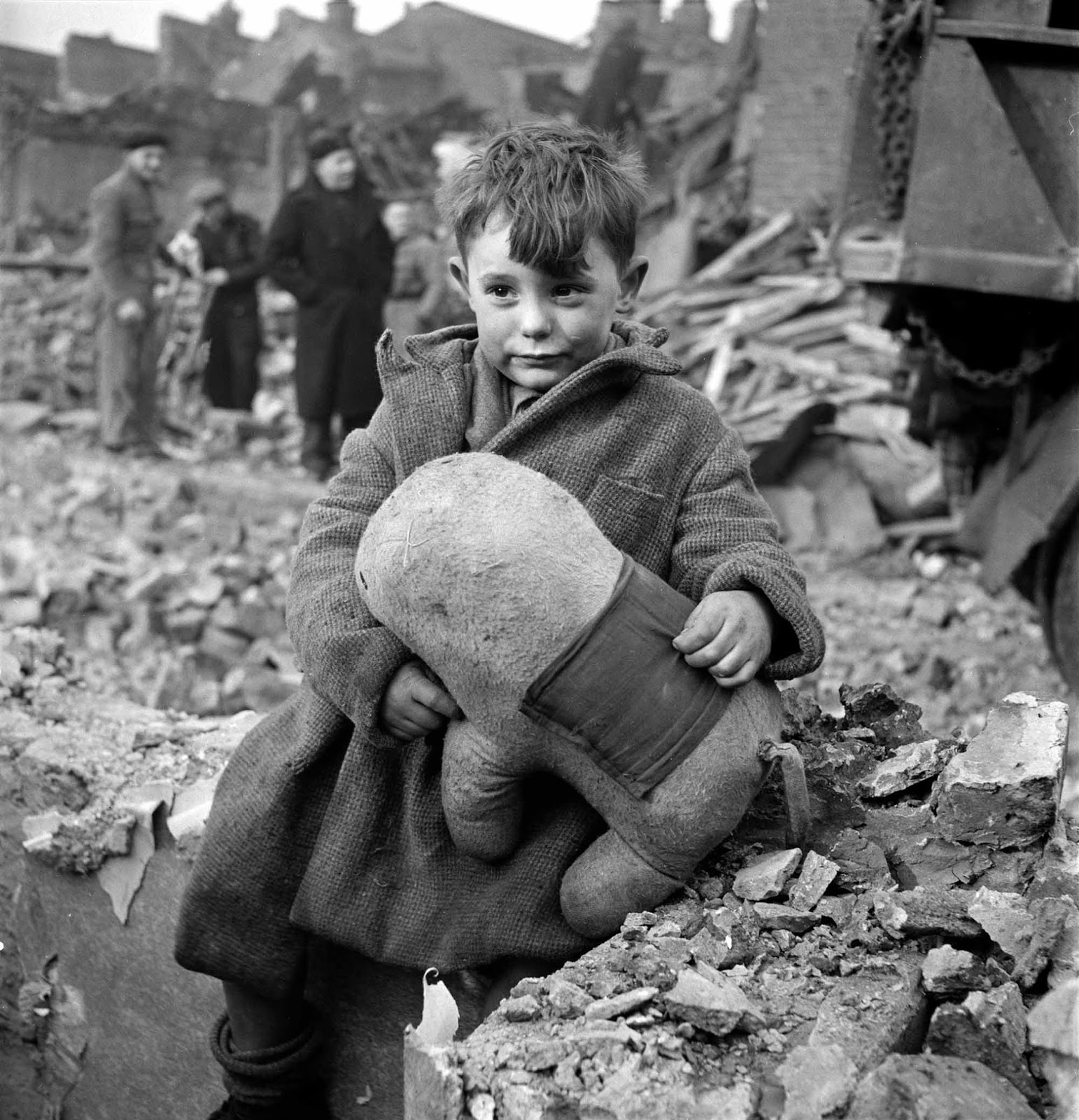
Toni Frissell’s famous image of an abandoned boy clutching a stuffed animal in the rubble of 1945 London.
Toni Frissell’s famous image of an abandoned boy clutching a stuffed animal in the rubble of 1945 London. (Image taken from this website page.)

What’s the relevance of May 8th, 1945 to me? Well exactly six months, to the day, before VE Day yours truly was born in Acton which was just six miles West of Marble Arch in the centre of London.

It has been a family legend that when VE Day was announced my mother looked at her six-month-old baby son and announced that he was going to live! For those first six months of my life in London were very dangerous. From that same website page where that photograph above came from one can read (my emphasis):

Nazi Germany continued to bomb London up until 1945 using a variety of delivery methods including V-1 and V-2 rockets. In total 1,115 V-2s were fired at the United Kingdom. The vast majority of them were aimed at London, though about 40 targeted (and missed) Norwich. They killed an estimated 2,754 people in London with another 6,523 injured.

I have very clear mental images of playing in and around bomb sites near our home right up to 1953 when there was a real push to clear the sites away ahead of the Queen’s Coronation on June 2nd, 1953.
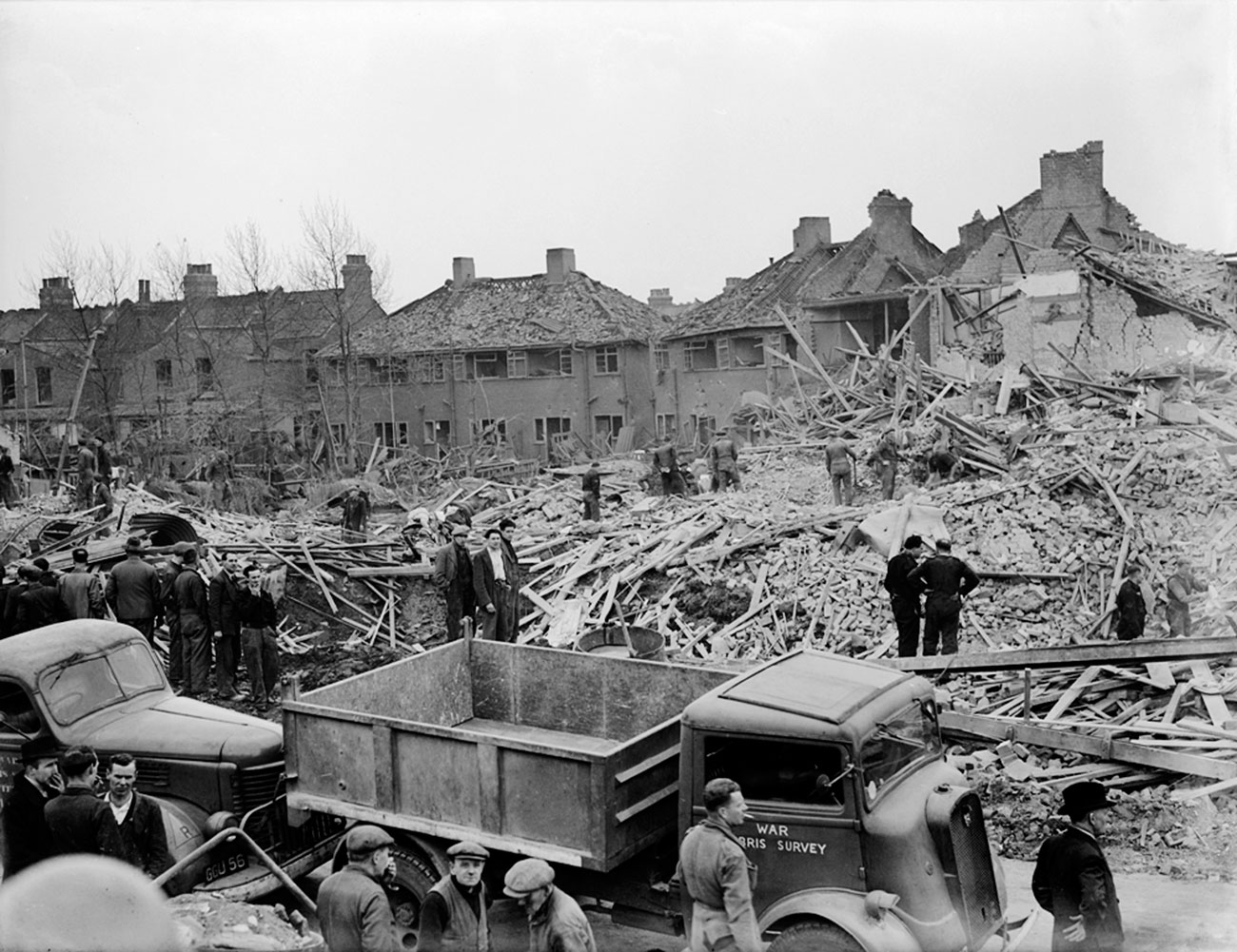
German V-2 bomb damage on Uppingham Avenue, Stanmore, just a few miles from home
German V-2 bomb damage on houses in Uppingham Avenue, Stanmore, just a few miles from home. The bomb exploded on March 16th, 1945.

So what’s this all about and why do I see it as relevant to today’s world? Stay with me for a little longer.

Yesterday, Patrice Ayme left a comment to my Private Power post. He opened that comment by saying:

With all due respect, and abundant apologies for the daring image, we can’t write exclusively about dogs, lest we want to finish as dog food. As Paul is suggesting. Indeed I view seriousness in global inquiry as a basic moral duty.

Imagine Jews worrying just about dogs, while Auschwitz was being built; it’s arguably what happened, said Hannah Arendt (I’m paraphrasing; she was hated for it, though…) Some will scoff, but Kim in Korea is building one new H bomb every 5 weeks… One single H bomb, in the ‘right’ place, can kill more than Auschwitz.

On December 27th, Patrice published a post under the title of Isaac Asimov’s Foundation Trilogy. It started:

In the Real World, Foundations Saved Civilization Before:

The combination of imperial collapse followed by re-birth from Foundations within happened several times already, for real.

Civilizations collapsing into Dark Ages from the actions of dozens of millions of people occurred more than once. And then very small groups arose, often within the collapsing empire, and imposed new ways of thinking which enabled civilization to restart.

After I read his post I left a question as a comment: “Are you saying that our present civilization is on the point of collapse?”

Patrice replied:

Well, we are certainly tottering at the edge:
http://www.newyorker.com/news/news-desk/world-war-three-by-mistake
Playing Russian roulette works only that long. Unfortunately demoncrats did not care.

I then went across to that article carried by The New Yorker. It was an article written by Eric Schlosser, author of the book Command and Control: Nuclear Weapons, the Damascus Accident, and the Illusion of Safety and a producer of the documentary Command and Control from 2016.

It’s a long article but an extremely important read. Here are some of the key extracts:

ooOOoo

World War Three, by Mistake

Harsh political rhetoric, combined with the vulnerability of the nuclear command-and-control system, has made the risk of global catastrophe greater than ever.
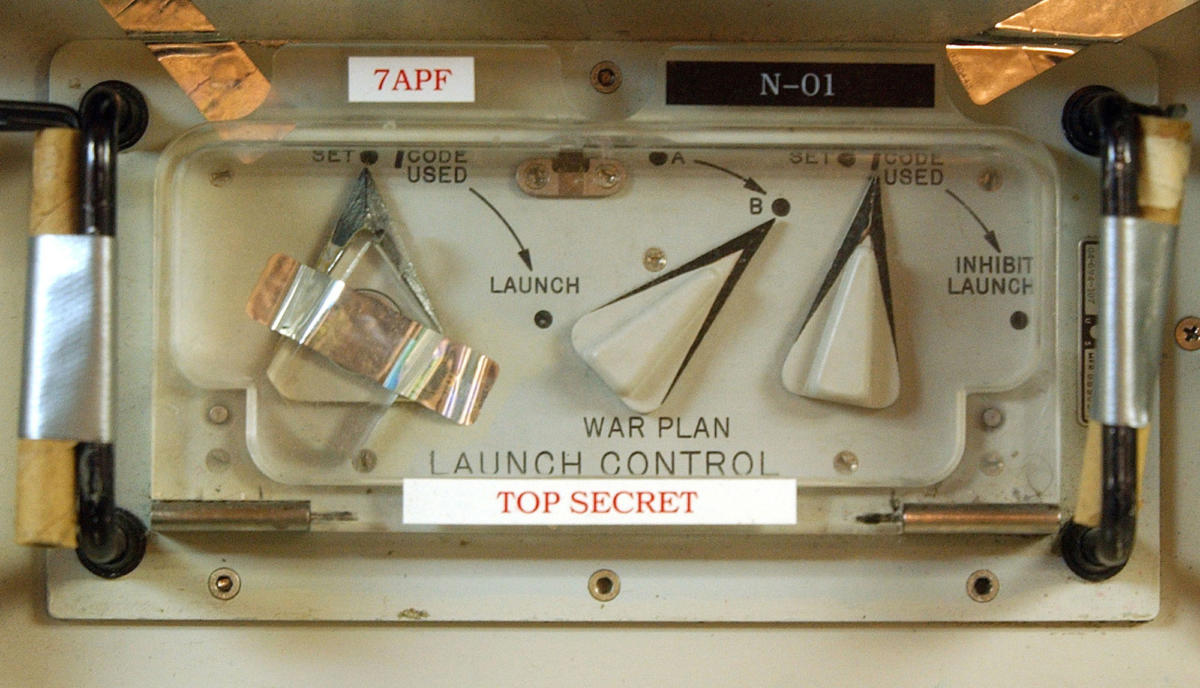
 A dilemma has haunted nuclear strategy since the first detonation of an atomic bomb: How do you prevent a nuclear attack while preserving the ability to launch one?PHOTOGRAPH BY ANDY CROSS / THE DENVER POST VIA GETTY
A dilemma has haunted nuclear strategy since the first detonation of an atomic bomb: How do you prevent a nuclear attack while preserving the ability to launch one? PHOTOGRAPH BY ANDY CROSS / THE DENVER POST VIA GETTY

On June 3, 1980, at about two-thirty in the morning, computers at the National Military Command Center, beneath the Pentagon, at the headquarters of the North American Air Defense Command (NORAD), deep within Cheyenne Mountain, Colorado, and at Site R, the Pentagon’s alternate command post center hidden inside Raven Rock Mountain, Pennsylvania, issued an urgent warning: the Soviet Union had just launched a nuclear attack on the United States. The Soviets had recently invaded Afghanistan, and the animosity between the two superpowers was greater than at any other time since the Cuban Missile Crisis.

U.S. Air Force ballistic-missile crews removed their launch keys from the safes, bomber crews ran to their planes, fighter planes took off to search the skies, and the Federal Aviation Administration prepared to order every airborne commercial airliner to land.

President Jimmy Carter’s national-security adviser, Zbigniew Brzezinski, was asleep in Washington, D.C., when the phone rang. His military aide, General William Odom, was calling to inform him that two hundred and twenty missiles launched from Soviet submarines were heading toward the United States. Brzezinski told Odom to get confirmation of the attack. A retaliatory strike would have to be ordered quickly; Washington might be destroyed within minutes. Odom called back and offered a correction: twenty-two hundred Soviet missiles had been launched.

Brzezinski decided not to wake up his wife, preferring that she die in her sleep. As he prepared to call Carter and recommend an American counterattack, the phone rang for a third time. Odom apologized—it was a false alarm. An investigation later found that a defective computer chip in a communications device at NORAD headquarters had generated the erroneous warning. The chip cost forty-six cents.

[Two paragraphs later]

My book “Command and Control” explores how the systems devised to govern the use of nuclear weapons, like all complex technological systems, are inherently flawed. They are designed, built, installed, maintained, and operated by human beings. But the failure of a nuclear command-and-control system can have consequences far more serious than the crash of an online dating site from too much traffic or flight delays caused by a software glitch. Millions of people, perhaps hundreds of millions, could be annihilated inadvertently. “Command and Control” focusses on near-catastrophic errors and accidents in the arms race between the United States and the Soviet Union that ended in 1991. The danger never went away. Today, the odds of a nuclear war being started by mistake are low—and yet the risk is growing, as the United States and Russia drift toward a new cold war. The other day, Senator John McCain called Vladimir Putin, the President of the Russian Federation, “a thug, a bully, and a murderer,” adding that anyone who “describes him as anything else is lying.” Other members of Congress have attacked Putin for trying to influence the Presidential election.  On Thursday, Putin warned that Russia would “strengthen the military potential of strategic nuclear forces,” and President-elect Donald Trump has responded with a vow to expand America’s nuclear arsenal.  “Let it be an arms race,” Trump told one of the co-hosts of MSNBC’s “Morning Joe.” “We will outmatch them at every pass and outlast them all.”

The harsh rhetoric on both sides increases the danger of miscalculations and mistakes, as do other factors. Close encounters between the military aircraft of the United States and Russia have become routine, creating the potential for an unintended conflict. Many of the nuclear-weapon systems on both sides are aging and obsolete. The personnel who operate those systems often suffer from poor morale and poor training. None of their senior officers has firsthand experience making decisions during an actual nuclear crisis. And today’s command-and-control systems must contend with threats that barely existed during the Cold War: malware, spyware, worms, bugs, viruses, corrupted firmware, logic bombs, Trojan horses, and all the other modern tools of cyber warfare. The greatest danger is posed not by any technological innovation but by a dilemma that has haunted nuclear strategy since the first detonation of an atomic bomb: How do you prevent a nuclear attack while preserving the ability to launch one?

[Going to the closing paragraph]

Every technology embodies the values of the age in which it was created. When the atomic bomb was being developed in the mid-nineteen-forties, the destruction of cities and the deliberate targeting of civilians was just another military tactic. It was championed as a means to victory. The Geneva Conventions later classified those practices as war crimes—and yet nuclear weapons have no other real use. They threaten and endanger noncombatants for the sake of deterrence. Conventional weapons can now be employed to destroy every kind of military target, and twenty-first-century warfare puts an emphasis on precision strikes, cyberweapons, and minimizing civilian casualties. As a technology, nuclear weapons have become obsolete. What worries me most isn’t the possibility of a cyberattack, a technical glitch, or a misunderstanding starting a nuclear war sometime next week. My greatest concern is the lack of public awareness about this existential threat, the absence of a vigorous public debate about the nuclear-war plans of Russia and the United States, the silent consent to the roughly fifteen thousand nuclear weapons in the world. These machines have been carefully and ingeniously designed to kill us. Complacency increases the odds that, some day, they will. The “Titanic Effect” is a term used by software designers to explain how things can quietly go wrong in a complex technological system: the safer you assume the system to be, the more dangerous it is becoming.

ooOOoo

My greatest concern is the lack of public awareness about this existential threat, the absence of a vigorous public debate about the nuclear-war plans of Russia and the United States, the silent consent to the roughly fifteen thousand nuclear weapons in the world.

Is there a dog angle to all of this? You bet! For dogs as well as people are all innocents caught up in the madness of war.
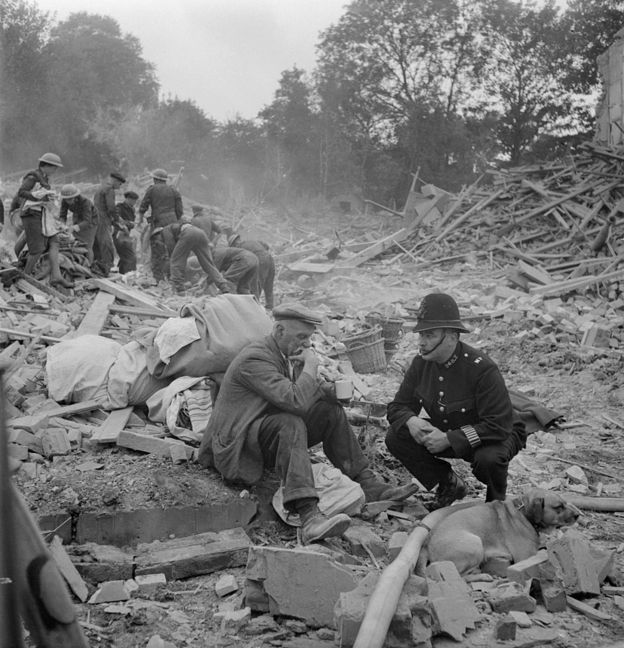
nd sympathy to a now homeless man, who returned home from walking his dog to find his house destroyed and wife killed by a V1 flying bomb. London 1944
A policeman offering sympathy to a now homeless man, who returned home from walking his dog to find his house destroyed and wife killed by a V1 flying bomb. London 1944. (The dog is just below the Policeman’s left shin.)

Now do you see why I entitled today’s post If there’s any doubt. there’s no doubt.

For if we were the flightcrew of the good ship Earth we would be urgently looking for a diversion airfield upon which to land; and land now!

Wherever you are in the world, whatever you are doing, if you share the concern expressed so clearly by Patrice don’t do nothing. Even if all you do is to send a message on one of the social media apps that’s far better than doing nothing. All that evil requires to succeed is for good people to do nothing!

For I haven’t a clue as to when and how my life will come to an end but, as sure as hell, I would prefer that it isn’t six months to the day after the start of World War III.

Especially if that war came about as a mistake!

Dreams of hope

My wish for 2017, and for evermore.

One of the many things that we adore about living here in Merlin, Southern Oregon is the closeness of nature. Not just the nature of the slopes and mountains but the nature of the trees, creeks, grasses and wild plants.

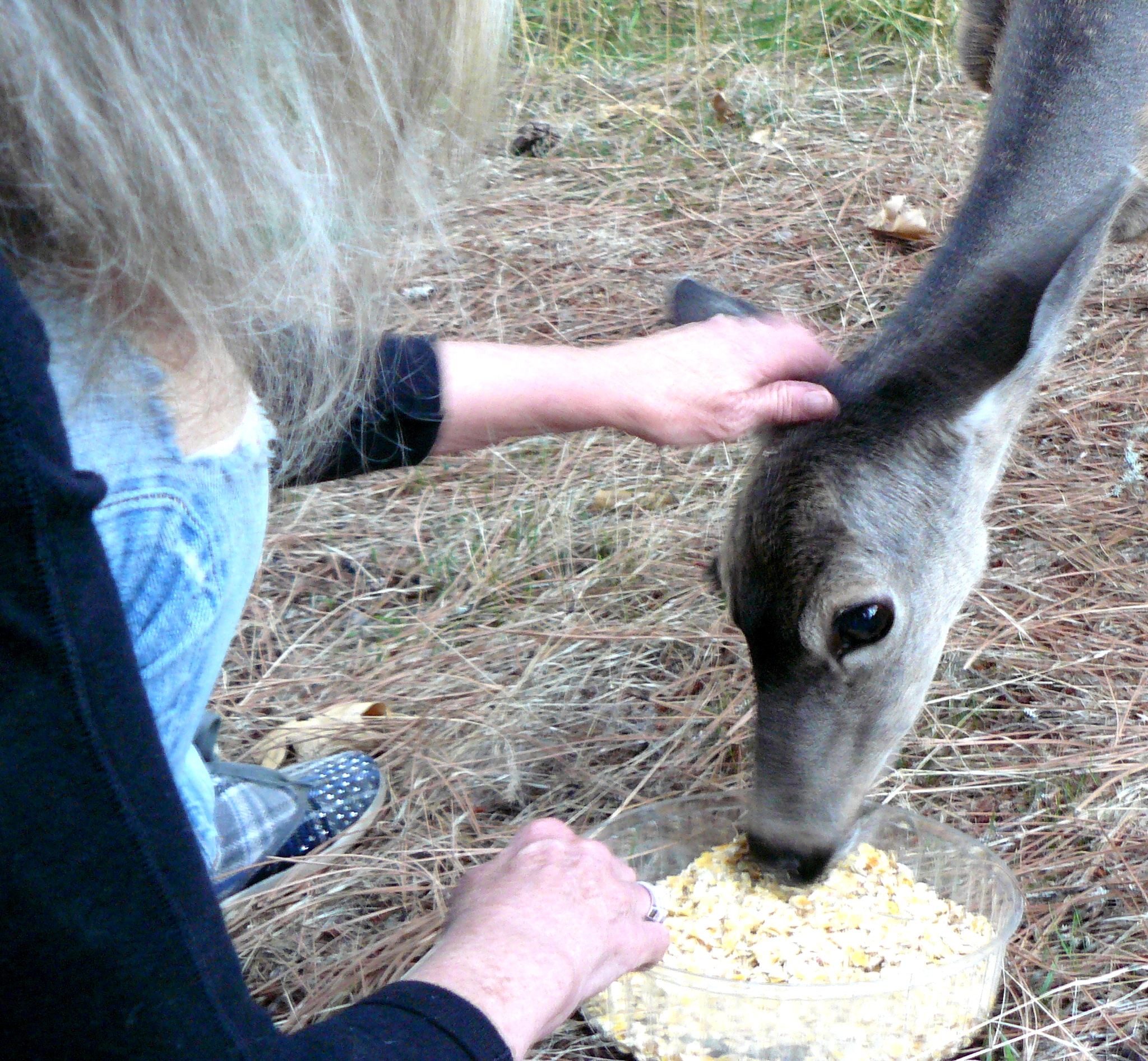
Plus the awareness over the 4+ years that we have been here of how easy it is to gain the trust of wild animals. I will go to my grave holding on to the sweet sensation of a wild deer trusting me and Jean to the point where we could stroke the deer’s neck when we were feeding her.

The trust between the deer and Jean then enabled the deer to feed from Jean's hand.
The trust between the deer and Jean then enabled the deer to feed from Jean’s hand.
Then, unbelievably, the wild deer continues feeding as Jean fondles the deer's ear.
Then, unbelievably, the wild deer continues feeding as Jean fondles the deer’s ear.

(Both photographs taken in October, 2014 in the area of grassland near to our stables.)

The measure of how we, as in humanity, really feel about the only home we have, as in Planet Earth, is how we regard our planet.

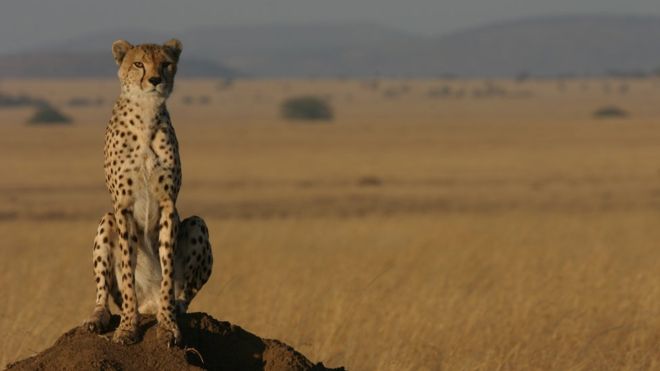
The pain that we feel when we read, as I did yesterday, about another animal species possibly heading towards extinction. In this case, an item on the BBC News website about Cheetahs.

Cheetahs heading towards extinction as population crashes

By Matt McGrath Environment correspondent

Protected parks and reserves for cheetahs are not sufficient as the animal ranges far beyond these areas.

 The sleek, speedy cheetah is rapidly heading towards extinction according to a new study into declining numbers.

The report estimates that there are just 7,100 of the world’s fastest mammals now left in the wild.

Cheetahs are in trouble because they range far beyond protected areas and are coming increasingly into conflict with humans.

The authors are calling for an urgent re-categorisation of the species from vulnerable to endangered.

(Read the full article here.)

It’s no good tut-tutting; something different has to be done. For otherwise nature will have the last word to say about the future of vast numbers of species especially homo sapiens!

All of which leads me to the main theme of today’s post: holding nature in higher esteem as in higher legal esteem.

Read the following that was published on The Conversation blogsite on October 10th, 2016 and is republished here within their terms. The author is , Lecturer on Anthropology, University of Colorado, Denver.

ooOOoo

What if nature, like corporations, had the rights and protections of a person?

October 10, 2016 8.16am EDT

image-20161005-20110-9ipkfz
The forest around Lake Waikaremoana in New Zealand has been given legal status of a person because of its cultural significance. Paul Nelhams/flickr, CC BY-SA

In recent years, the U.S. Supreme Court has solidified the concept of corporate personhood. Following rulings in such cases as Hobby Lobby and Citizens United, U.S. law has established that companies are, like people, entitled to certain rights and protections.

But that’s not the only instance of extending legal rights to nonhuman entities. New Zealand took a radically different approach in 2014 with the Te Urewera Act which granted an 821-square-mile forest the legal status of a person. The forest is sacred to the Tūhoe people, an indigenous group of the Maori. For them Te Urewera is an ancient and ancestral homeland that breathes life into their culture. The forest is also a living ancestor. The Te Urewera Act concludes that “Te Urewera has an identity in and of itself,” and thus must be its own entity with “all the rights, powers, duties, and liabilities of a legal person.” Te Urewera holds title to itself.

Although this legal approach is unique to New Zealand, the underlying reason for it is not. Over the last 15 years I have documented similar cultural expressions by Native Americans about their traditional, sacred places. As an anthropologist, this research has often pushed me to search for an answer to the profound question: What does it mean for nature to be a person?

The snow-capped mountain

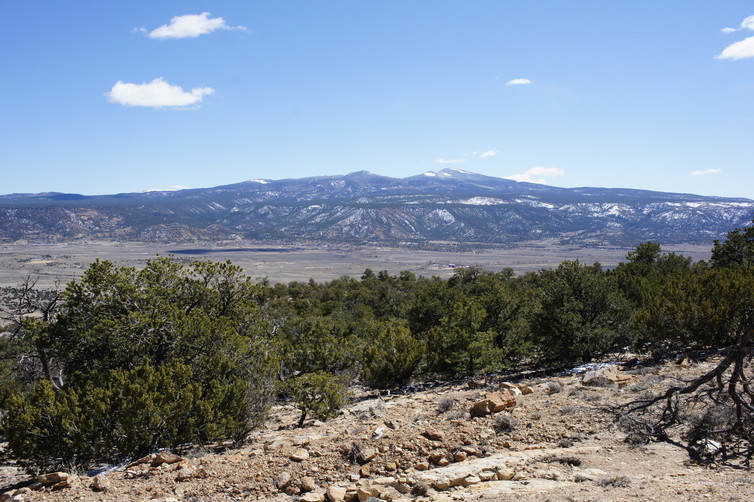
A majestic mountain sits not far northwest of Albuquerque, New Mexico. Like a low triangle, with long gentle slopes, Mount Taylor is clothed in rich forests that appear a velvety charcoal-blue from the distance. Its bald summit, more than 11,000 feet high, is often blanketed in snow – a reminder of the blessing of water, when seen from the blazing desert below.

The Zuni tribe lives about 40 miles west of Mount Taylor. In 2012, I worked with a team to interview 24 tribal members about the values they hold for Dewankwin K’yaba:chu Yalanne (“In the East Snow-capped Mountain”), as Mount Taylor is called in the Zuni language. We were told that their most ancient ancestors began an epic migration in the Grand Canyon.

 Mount Taylor in New Mexico, a sacred site to the Zuni who believe it is a living being. Chip Colwell, Author provided.
Mount Taylor in New Mexico, a sacred site to the Zuni who believe it is a living being. Chip Colwell, Author provided.

Over millennia they migrated across the Southwest, with important medicine societies and clans living around Mount Taylor. After settling in their current pueblo homes, Zunis returned to this sacred mountain to hunt animals like deer and bear, harvest wild plants like acorns and cattails, and gather minerals used in sacrosanct rituals that keep the universe in order. Across the generations Dewankwin Kyaba:chu Yalanne has come to shape Zuni history, life, and identity no less than the Vatican has for Catholics.

But unlike holy places in the Western world, Zunis believe Mount Taylor is a living being. Zuni elders told me that the mountain was created within the Earth’s womb. As a mountain formed by volcanic activity, it has always grown and aged. The mountain can give life as people do. The mountain’s snow melts in spring and nourishes plants and wildlife for miles. Water is the mountain’s blood; buried minerals are the mountain’s meat. Because it lives, deep below is its beating heart. Zunis consider Mount Taylor to be their kin.

There is a stereotype that Native American peoples have a singular connection to nature. And yet in my experience, they do see the world in a fundamentally different way from most people I know. Whether it is mountains, rivers, rocks, animals, plants, stars or weather, they see the natural world as living and breathing, deeply relational, even at times all-knowing and transcendent.

In my work with Arizona’s Hopi tribe, I have traveled with cultural leaders to study sacred places. They often stop to listen to the wind, or search the sky for an eagle, or smile when it begins to rain, which they believe is a blessing the ancestors bestow upon them.

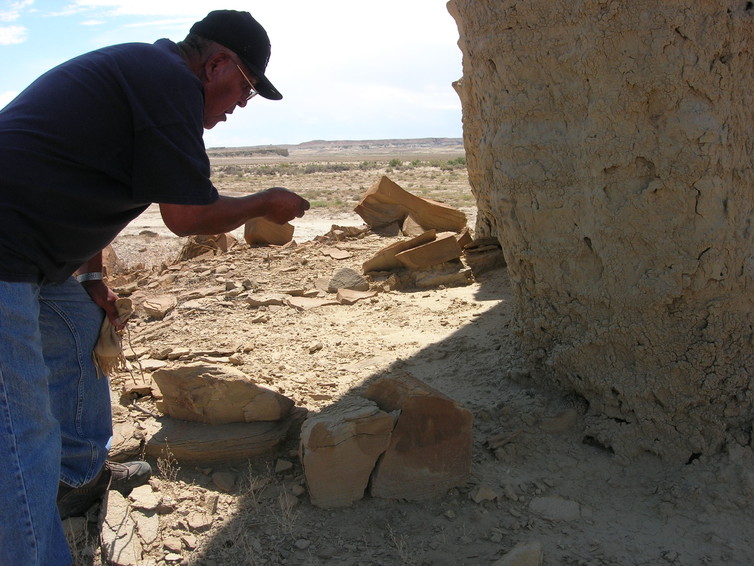
During one project with the Hopi tribe, we came across a rattlesnake coiled near an ancient fallen pueblo. “Long ago, one of them ancestors lived here and turned into a rattlesnake,” the elder Raleigh H. Puhuyaoma Sr. shared with me, pointing to the nearby archaeological site. “It’s now protecting the place.” The elders left an offering of corn meal to the snake. An elder later told me that it soon rained on his cornfield, a result from this spiritual exchange.

Violent disputes

Understanding these cultural worldviews matters greatly in discussions over protecting places in nature. The American West has a long history of battles over the control of land. We’ve seen this recently from the Bundy family’s takeover of the federal wildlife refuge in Oregon to the current fight over turning Bears Ears – 1.9 million acres of wilderness – into a national monument in Utah.

Yet often these battles are less about the struggle between private and public interests, and more about basic questions of nature’s purpose. Do wild places have intrinsic worth? Or is the land a mere tool for human uses?

 A Hopi elder making an offering to a snake to protect a sacred space. Chip Colwell, Author provided.
A Hopi elder making an offering to a snake to protect a sacred space. Chip Colwell, Author provided.

Much of my research has involved documenting sacred places because they are being threatened by development projects on public land. The Zuni’s sacred Mount Taylor, much of it managed by the U.S. National Forest Service, has been extensively mined for uranium, and is the cause of violent disputes over whether it should be developed or protected.

Even though the U.S. does not legally recognize natural places as people, some legal protections exist for sacred places. Under the National Historic Preservation Act, for example, the U.S. government must take into consideration the potential impacts of certain development projects on “traditional cultural properties.”

This and other federal heritage laws, however, provide tribes a small voice in the process, little power, and rarely lead to preservation. More to the point, these laws reduce what tribes see as living places to “properties,” obscuring their inherent spiritual value.

In New Zealand, the Te Urewera Act offers a higher level of protection, empowering a board to be the land’s guardian. The Te Urewera Act, though, does not remove its connection to humans. With a permit, people can hunt, fish, farm and more. The public still has access to the forest. One section of the law even allows Te Urewera to be mined.

Te Urewera teaches us that acknowledging cultural views of places as living does not mean ending the relationship between humans and nature, but reordering it – recognizing nature’s intrinsic worth and respecting indigenous philosophies.

In the U.S. and elsewhere, I believe we can do better to align our legal system with the cultural expressions of the people it serves. For instance, the U.S. Congress could amend the NHPA or the American Indian Religious Freedom Act to acknowledge the deep cultural connection between tribes and natural places, and afford better protections for sacred landscapes like New Mexico’s Mount Taylor.

Until then, it says much about us when companies are considered people before nature is.

ooOOoo

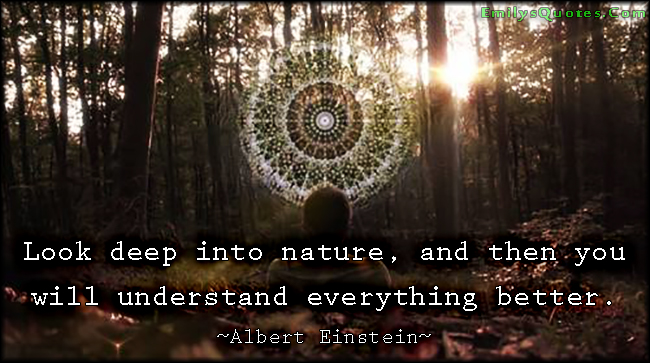
 emilysquotes-com-look-deep-nature-understand-wisdom-inspirational-life-albert-einsteinMy dreams of hope!

So many good people.

Demonstrating the power of goodwill.

It is a function of the news media to highlight alarming events; many of them with some justification.

But it’s all too easy to be drawn into a world that seems almost to be uniformly dark and foreboding.

Thus the following item seen over on the Care2 site really does deserve the widest sharing because it reminds us that there are countless good people who work so hard for our wonderful animals.

ooOOoo

Christmas Rescuers Save 1,300 Dogs and Cats From Winter Without Electricity

3196714-largeBy: Laura S.  December 24, 2016

About Laura

DONETSK — In the days before Christmas, a Ukrainian animal shelter drifting toward a winter of complete darkness has experienced an unexpected tidal wave of support from international animal lovers determined to keep the power on.

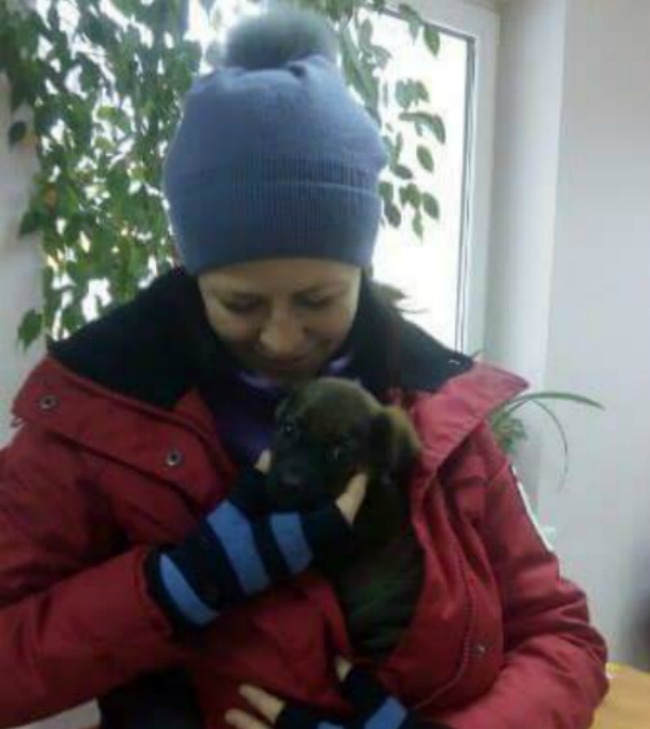
15622021_1036490849792714_720628534510030461_nLast week, the shelter – located on the Russian border- sent out a distress call about the imminent threat of blackout for their 1,300 dogs and cats, many of whom were left behind by refugees during violent attacks over the last two years. After losing their local business sponsor during the military conflict, the shelter team have been enduring an intense struggle to feed the animals and to simply stay afloat.

15356522_1022758584499274_2915401203100161546_n11“I can’t even remember the last time something good happened to us,” shelter manager Vita Bryzgalova explained in an email to the Harmony Fund international rescue charity. “We are now facing a power shut-down since the debt for electricity accumulated over the past year. It is almost $7,000 since the beginning of 2016.”

“If the electricity in the shelter would be cut, the veterinary appliances will not work and the shelter will be under sub-zero temperatures with no way to provide treatment or carry out operations,” Vita continued. “There will be no place to keep medications and vaccines and food for all animals living in the shelter as everything will freeze. The building is heated by a boiler but it doesn’t not work without the electric pump. There are three hospital wards with animals here and there are about 80 animals that are being treated and they especially need warmth and care. Also we have 35 employees who give daily care of the animals and they will be sick more often without heat in the rooms. Without electricity, we will also have no external communications by telephone or internet.”

Having provided donations of food and staff wages during this difficult time, the Harmony Fund turned to Facebook to see if people might be willing to help keep the electricity on. Within 48 hours, half the funds were raised ($3,500) and this sum was enough to keep the power on for the next few months while the charity attempts to raise funds for the rest of the debt to the electricity supplier.

ooOOoo

Now quickly drop over to the Harmony Fund’s website where you will read:

About Us – Overview

The Great Animal Rescue Chase

The Great Animal Rescue Chase celebrates the art of animal rescue with a worldwide race to rescue one million. It’s a free event, open to all, and is perhaps the only global animal rescue event aimed at helping any animal in distress, anywhere in the world. Our ambition is to create a culture of enthusiasm and pride in animal activism. We believe in teaching, by example, that there is a hero in each of us just waiting to be unleashed. Empowered animal lovers can not only save lives, but build the momentum for powerful animal welfare reform.

The Harmony Fund

The Harmony Fund offers a lifeline to so called “underdog” animal rescue squads across the planet. Our partners are the small but incredibly courageous and effective animal rescue teams who operate in parts of the world where funding is very hard to come by. Our supporters are helping us to dramatically impact the capacity of these rescue teams to touch thousands upon thousands of animals who might otherwise be unreachable.

Gratitude and respect are at the cornerstone of our relationship with our supporters. We do not expose our supporters to graphic photos of animal suffering or distribute dire forecasts about animal suffering. Instead we focus on a spirit of joy and determination as we pursue essential operations to provide food, veterinary medicine, shelter and protection from cruelty for animals worldwide.

Contact Us

To contact The Great Animal Rescue Chase or the Harmony Fund, view our Contact Us page.

Now go and read some of the awe-inspiring stories of rescues: The Great Animal Rescue.

Welcome Heroes

garc-intro-left-rescue-pitIn the space of time it takes a raindrop to roll down your cheek, a life changing decision is made. You either turn sorrowfully away from an animal in distress or summon the courage to run forward and help. For all you runners out there, welcome home.

Come on in and rest your feet a while. Then join us in a planet-wide race to save 1 million suffering animals who are about to learn the spectacular meaning of second chances.


I know that all of you dear readers of this place will, without hesitation, summon the courage to run forward and help.

So many good, loving people.

A Very Happy Christmas

To all of you and your families and loved ones.

I saw this post below on a blog site that was new to me. It was just called Lady Fi. It simply reached out to me in the most beautiful and peaceful manner and seemed like the perfect re-posting (with LadyFi’s permission) for today: December 25th.

Can’t add anything more to who LadyFi is other than what she writes on her About page.

So, you want to know who I am? Well, you’ll get a pretty good idea from reading my blog. But, in brief:

A Brit living in Sweden since 1996. Came here as a so-called love immigrant.

Have got two small kids and good supply of ear plugs.

Husband is like a third child and the dog is like the fourth.

Blessed with an ironic sense of humour.

Scriptwriter, textbook writer and translator (Swedish into English).

Here’s that post.

ooOOoo

Paws for thought

13 December is Lucia – one of my favourite times of year.

Lucia is all about children dressed in white and carrying candles

To symbolize hope and light in the darkness.

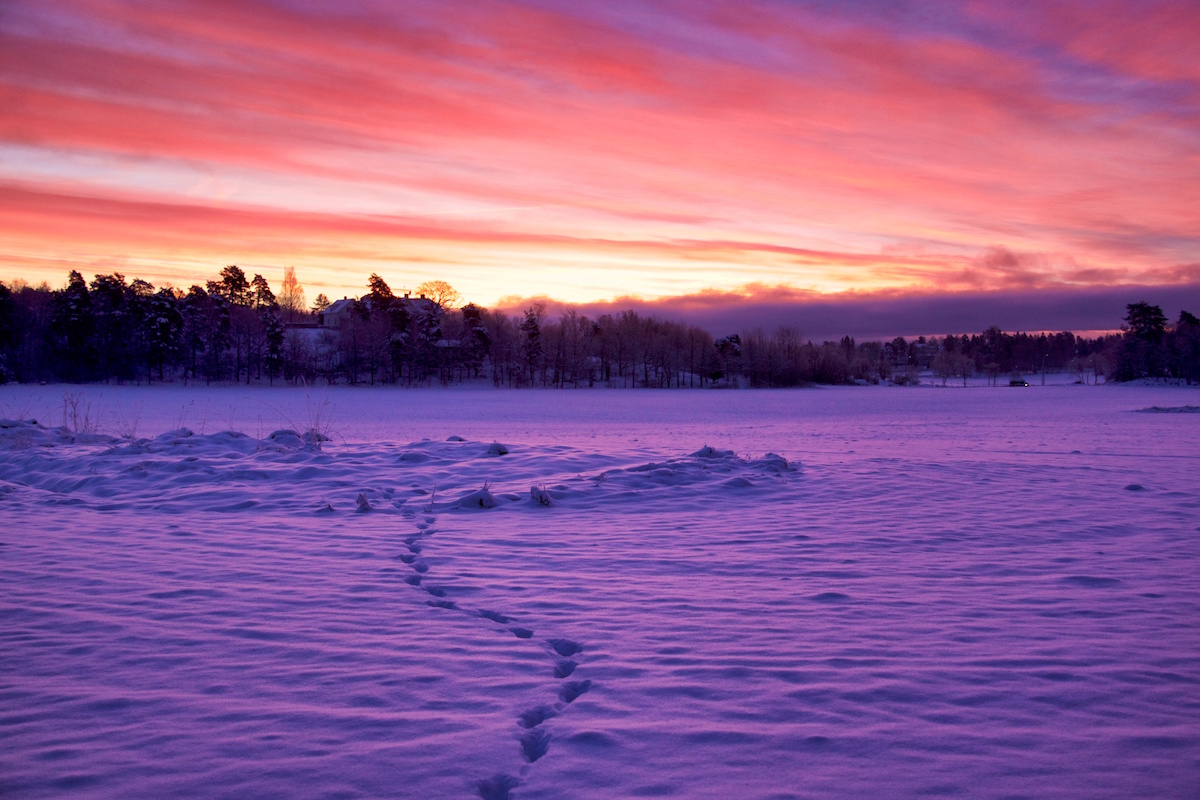
ablazeThe dawn that day didn’t disappoint either.

It blazed with light and colour,

So that dogs (and people) seemed small and humble

Under the huge lilac sky;

dogsinpurpleAnd paw prints were etched across a purple

Canopy of snow – leading the eye

To that glorious sky of hope.

pawprintsooOOoo

(I believe these pictures came from the Skywatch site.)

Trusting that for all of us your Christmas period and the whole year to follow offer endless visions of such stillness, peace and beauty.

A wonderful Saturday Smile

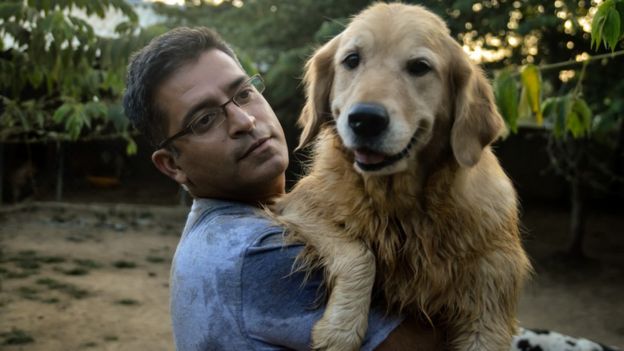
Rakesh Shukla gives lost dogs a wonderful voice.

Last Monday, the BBC News website featured an item about Rakesh Shukla.

Rakesh runs a charity called The Voice of Stray Dogs (VoSD).The WikiPedia entry is a bit light on details but the UK arm of The Huffington Post makes up for that. Here’s an extract from the news item:

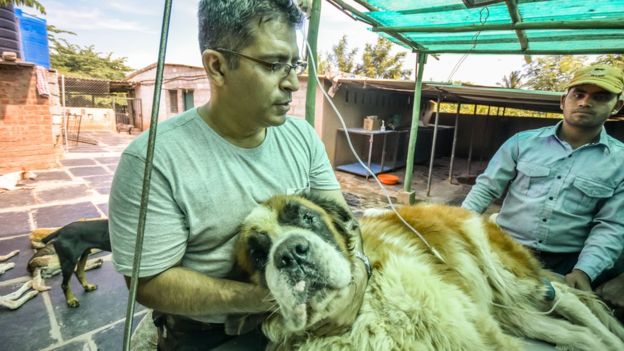
VoSD was founded by Mr Rakesh Shukla, affectionately known as the “Dog Father”. It was set up single-handedly after he felt obliged to do something about the plight of stray dogs in India. Well known for keeping dogs in his home [ the VoSD Sanctuary] and in his office, Rakesh has worked tirelessly to raise funds for the care of stray dogs [ with greater than 90% contributed by himself]. One visitor said ““Rakesh’s growing family of rescued dogs is a sight to behold. It is amazing how so many dogs together get on so well“.

He operates a system that has rescued more than 3000 dogs in 2 years with 400+ permanent dogs under his care. VoSD offers the highest standard of service and is equipped with the latest technology so that stray dogs get the best possible care.

Back to the BBC item that I am taking the liberty of republishing in full.

ooOOoo

The man who looks after 735 dogs

19 December 2016, India

_92945569_bbc-vsd-59Rakesh Shukla is a software engineer who’s found his life’s calling in looking after dogs that no-one wants, writes the BBC’s Geeta Pandey in Bangalore.

The car pulled up outside a dusty farmhouse near the capital of the southern Indian state of Karnataka and suddenly dogs were everywhere, yelping and barking, jumping with joy.

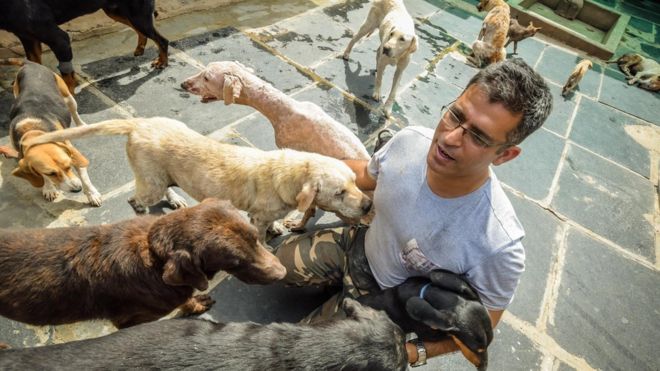
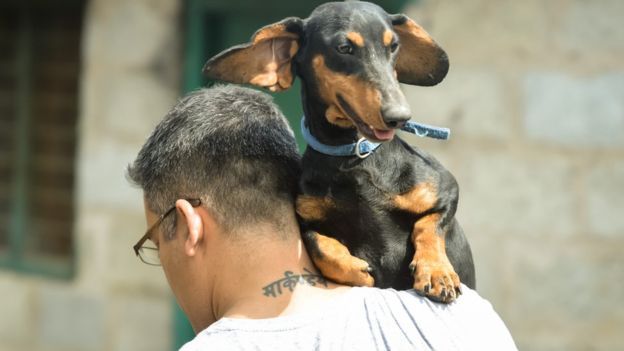
Within seconds, they were all over Rakesh Shukla, nuzzling him and licking him, and Mr Shukla was as delighted to see them. He spoke to them, patted some, scratched one behind the ears, and lofted another onto his shoulder.

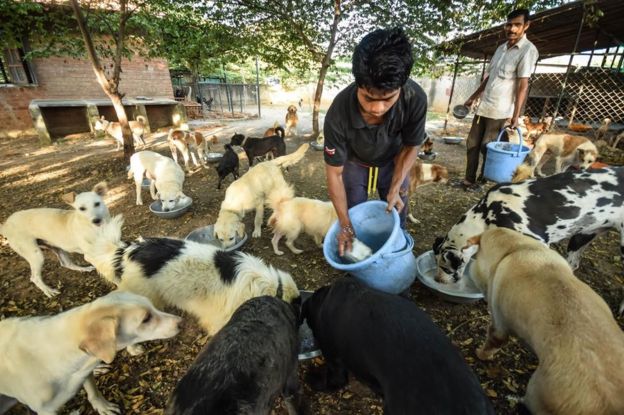
Then he gave me a tour of his three and a half acre farm. At last count, Mr Shukla had 735 dogs.

_92950543_bbc-vsd-114_92945567_bbc-vsd-41There are Labradors on the farm, there are Golden Retrievers, Great Danes, Beagles, Dachshunds, Rottweilers, Saint Bernards and even a pug. There are hundreds of mongrels too.

Most of the dogs are strays, the others have been abandoned by their owners. The latest arrivals was a group of 22 pedigreed dogs whose owner, a city businessman, was shot dead recently by criminals.

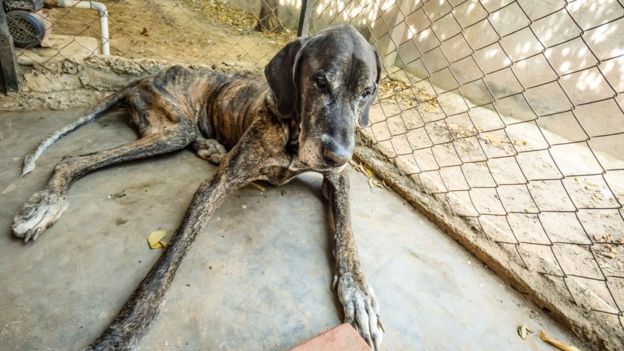
“I’m the last stop for these dogs. They are no longer cute and cuddly. Many are sick and no longer wanted,” said Mr Shukla, 45.

Affectionately known as the “Dog Father”, he calls the dogs his babies and him their “papa”.

_92945571_bbc-vsd-123_92950776_bbc-vsd-85Mr Shukla, who founded a software company along with his wife 10 years ago, spends three to four days every week on the farm, taking care of his canines.

“I had worked in Delhi, in the United States and then set up my own company in Bangalore,” he said. “Life was all about buying big cars and expensive watches and living a fancy life. I had travelled and seen the world many times over, but then I was not happy.”

Then Kavya came into his life: a beautiful 45-day-old Golden Retriever that he fell hopelessly in love with. It was in June 2009, and Mr Shukla remembers clearly the day he brought her home.

“When we got home, she went and hid in a corner. I got down to her level on the floor and I was calling out to her. She was looking at me, she was scared, but I could see she wanted to trust me,” he said.

“And that’s when the moment happened – it was a physical feeling, my hair was tingling, I could feel a warm glow. And I’ve never needed to ask myself that question – ‘why am I here?’ – again after that.”

_92950549_bbc-vsd-96_92961801_mediaitem92961800Mr Shukla’s second dog, Lucky, came to him three months later when he rescued her from the streets. “It had been raining for 12-13 days, she was wet and miserable, so I brought her home too,” he said.

Over the coming days and weeks, whenever he met a stray or abandoned dog, he brought it home. Initially he kept them there but when his wife protested, he moved some of them to the office, where the top floor was turned into a home for dogs.

In 2012, as the pack grew, Mr Shukla bought land in Doddballapur town and set up the farm – a haven for dogs that are old, ailing or simply unwanted.

_92950774_bbc-vsd-76_92950551_bbc-vsd-79The farm is designed for its canine residents, with lots of open spaces for them to run around and ponds to swim in, and there’s double fencing to keep them safe.

Every time we entered an enclosure, a cacophony of barks greeted us.

The farm employs about 10 people, including trained veterinary assistants, to look after the dogs, cook for them and feed them. The dogs are fed 200kg of chicken and another 200kg of rice daily and many of the sick ones need regular medicines and attention.

_92950778_bbc-vsd-49_92951835_bbc-vsd-20The daily cost of running the centre is 45,000 to 50,000 rupees ($663; £532 to $737; £592), according to Mr Shukla, who said he provided 93% of the funds.

In the past year though, he has run into problems with some animal activists, who have demanded that they be allowed onto the farm. He has also faced complaints that he is creating public unrest by keeping so many dogs. There have also been demands that he shut down the farm.

He has refused to concede.

“I’ve made a pact with my dogs,” he said. “We will part only when one of us kicks the bucket.”

ooOOoo

You know that there are many who are desperately worried about 2017 and beyond. The next few years, ten at most, will see the results of this great experiment that humanity is conducting.

Now, I’m happy to put my hand up as someone who does worry at what my generation is leaving for our grandchildren.

Then one comes across people like Rakesh and, somehow, the future doesn’t seem quite so grim.

What a wonderful man.

Published on Oct 8, 2014

Rakesh Shukla is the go-to guy for dog rescue in Bangalore. His privately-funded venture, ‘The Voice of Stray Dogs’ champions the cause of India’s stray/ street dogs with research, publication, litigation, veterinary and healthcare services for stray dogs.

 See you all on the other side of Christmas!
But promise me one thing: Never turn your back on a dog in need.

Pure, unconditional love.

Giving from the heart; in this case a dog’s heart.

As many readers know we have nine dogs here at home, divided into the ‘kitchen’ group (Paloma, Casey and Ruby) and the ‘bedroom’ group (Pharaoh, Brandy, Cleo, Sweeny, Pedy and Oliver). Inevitably the latter group are closer to us because they share the bulk of the home with Jeannie and me, and sleep in our bedroom. Don’t get me wrong, I am not saying that the kitchen group are any less affectionate than the bedroom group it’s just that, for me especially, I am able to be emotionally and physically closer to our bedroom group because for most of the hours of each day they are close to me.

Brandy, Cleo and Oliver seem to be incredibly sensitive to Jeannie’s and my feelings. If something makes me cry then one of them will be next to me in seconds. When Jeannie and I hug, Oliver will stand on his rear legs, place his front legs on our bodies above our waists and act as if he is hugging us. Even the mention of the word “out” has Cleo running to the front door.

So many more examples but you get the drift!

Last Friday The Washington Post published a heart-breaking story. It concerned a young man, just 33-years-old, who was dying from a brain hemorrhage. Here’s an extract from that story:

Ryan Thomas Jessen had gone to the hospital for what he thought was a migraine, but it turned out to be a brain hemorrhage, his sister, Michelle Jessen, wrote on Facebook earlier this month.

The hemorrhage, which doctors believe may have been brought on by high blood pressure, would prove fatal.

But before Jessen died, the 33-year-old Californian’s family wanted to let his dog, Mollie, see him one last time.

Michelle Jessen filmed that last visit by Mollie and, as one might expect, the video has been shared right across the world.

So very often words come so difficult when one wants to reflect on what we have just watched.

Which is why I’m allowing Jimmy Stewart to make it easier.

He never came to me when I would call

Unless I had a tennis ball,

Or he felt like it,

But mostly he didn’t come at all.

When he was young

He never learned to heel

Or sit or stay,

He did things his way.

Discipline was not his bag

But when you were with him things sure didn’t drag.

He’d dig up a rosebush just to spite me,

And when I’d grab him, he’d turn and bite me.

He bit lots of folks from day to day,

The delivery boy was his favorite prey.

The gas man wouldn’t read our meter,

He said we owned a real man-eater.

He set the house on fire

But the story’s long to tell.

Suffice it to say that he survived

And the house survived as well.

On the evening walks, and Gloria took him,

He was always first out the door.

The Old One and I brought up the rear

Because our bones were sore.

He would charge up the street with Mom hanging on,

What a beautiful pair they were!

And if it was still light and the tourists were out,

They created a bit of a stir.

But every once in a while, he would stop in his tracks

And with a frown on his face look around.

It was just to make sure that the Old One was there

And would follow him where he was bound.

We are early-to-bedders at our house — I guess I’m the first to retire.

And as I’d leave the room he’d look at me

And get up from his place by the fire.

He knew where the tennis balls were upstairs,

And I’d give him one for a while.

He would push it under the bed with his nose

And I’d fish it out with a smile.

And before very long He’d tire of the ball

And be asleep in his corner In no time at all.

And there were nights when I’d feel him Climb upon our bed

And lie between us,

And I’d pat his head.

And there were nights when I’d feel this stare

And I’d wake up and he’d be sitting there

And I reach out my hand and stroke his hair.

And sometimes I’d feel him sigh and I think I know the reason why.

He would wake up at night

And he would have this fear

Of the dark, of life, of lots of things,

And he’d be glad to have me near.

And now he’s dead.

And there are nights when I think I feel him

Climb upon our bed and lie between us,

And I pat his head.

And there are nights when I think I feel that stare

And I reach out my hand to stroke his hair,

But he’s not there.

Oh, how I wish that wasn’t so,

I’ll always love a dog named Beau.

There is no love without pain,

But to have lived without the love of a dog in one’s life would be not to have lived at all.

Our dear, dear dogs!

It seems like the blink of an eye.

How the years speed past us!

I have lost count of the times in the last year that I have said the following:

Thank goodness that when we were younger we really didn’t understand what it was to be old!

Now being old is to a great extent as much as a thing of the mind as it is of the body. As the saying goes: “One is only as old as you feel!” (Or as many men know it: One is only as old as the woman you feel.)

Moving swiftly on!

Dogs offer us many lessons including what it is to become old, then old and infirm, and then pass away. Which is why so many owners of their beloved dogs spend as much time and care on keeping their elderly dogs as fit as possible as they do on themselves; probably in many cases spending more care and attention on their dogs than on themselves.

ooOOoo

 10 Simple Tips for Keeping Your Old Dog Young

1396029-largeBy: Lisa Spector December 10, 2016

About Lisa

Those of us who love and have dogs know that senior years always approach too fast. Sanchez, my 13 1/2 year old yellow Lab, has had his health challenges this year, but now that he’s gained back his strength and has recovered from E. coli, he’s acting younger than he has in years. I’ve noticed this not only in his energy level, but also in his cognitive abilities and in his engagement with dogs and people around him. I cherish his golden years and am always looking for ways to keep his mind active and alert, and keep him connected with life.

sanchezginainbed-443x3311. Adopt a second, younger dog.

Admittedly, I’ve been a single dog person my entire life… up until five years ago. When it felt like I was agonizing on the decision to expand my canine household, my vet said to me, “Bringing a younger dog into your household will help keep Sanchez younger as he ages.” Sanchez was only seven at the time, and that perspective had never occurred to me. It’s shown itself to be true.

2. Give daily spoonfuls of coconut oil.

I’ve written about the benefits of coconut oil for pets, everything from fur conditioner to paw protection. But, I hadn’t realized that coconut oil helps with canine cognition until I read this Cambridge study. I’ve been giving both Sanchez and Gina a tablespoon of coconut oil nightly for a couple of months. Not only do they love the taste, but I have definitely noticed an improvement in Sanchez’s cognitive abilities.

3. Train him often. 

An old dog not only can learn new tricks, but also loves the attention and benefits from the mental stimulation as much as any age dog. Dogs love to learn, no matter their age. I still spend time training every night with Sanchez. As you can see in the video above, I’ve come up with ways to make his training less physical. But, he still gets rewarded for being involved and staying still. If it gets late, he starts whining and begging for his training time with me. The bonding time is precious and it stimulates him to keep learning and being challenged. He has no complaints about his yummy rewards either.

goldens-cat-sanchez-gina-443x3344. Mix it up.

Although dogs love consistency and build confidence through their routines, it’s sometimes good to mix up that routine as well. I recently was staying with friends and their three Golden Retrievers. While there, Sanchez loved the new smells in their backyard, neglected all of his daily naps and really enjoyed their multi-pet household, including the cats.  Our routine completely changed as my friends generally rise much earlier than me and their dogs are fed right away. I decided to allow my dogs the same privilege while we were there. Of course, Sanchez just loved it. I was surprised how quickly he reverted back to our normal routine when we got home. While he’s making up for his missed naps now, he really enjoyed the change of scenery, people, pets, and general surroundings.

5. Add variety to diet, and consider nutritional needs.

I also add variety to Sanchez’s dog food. While the base is the same (organic meat), the variety comes in the extras. Sometimes I add in canned sardines, other times it’s salmon oil. I alter between any of the following additions: sweet potatoes, carrots, pumpkin, green beans, spinach, kale, apples, and bananas. He’s a Lab and LOVES his food. Surprising him adds to his olfactory delight as well.

6. Add environmental enrichment.

Ohio State University College of Veterinary Medicine defines environmental or behavior enrichment as “the process of manipulating an animal’s environment to increase physical activity & normal species typical behavior that satisfies the animal’s physical and psychological needs.” Music created for senior dogs, with their hearing sensitivities in mind, is a great way to provide auditory stimulation that engages their senses.

7. Incorporate nose work.

Dogs often lose hearing and sight in their senior years. But, as long as they can still smell, they can still find their way around. I’ve honestly met blind and deaf dogs that were still retrieving balls, and I barely noticed any impairment to their sight or hearing. Engage a dog’s nose, and you’ll keep him stimulated.

K9 Nose Work defines this sport as “the fun search and scenting activity for virtually all dogs and people. This easy to learn activity and sport builds confidence and focus in many dogs, and provides a safe way to keep dogs fit and healthy through mental and physical exercise.” I enrolled Sanchez in classes a couple of years ago, and now we play “find” games at home. I hide pieces of liver in boxes spread throughout the living room. He searches for the piece of liver and is rewarded with more liver in the box when he finds it. He LOVES this search game.

8. Play often.

No matter the age, dogs enjoy and benefit from playtime. Even if they don’t have the same physical abilities as their younger canine friends, they can still engage in play. Try a game of hide and seek. Actually, all training and nose-work games should also feel like play to them. Pretend you’re a kid again, and they’ll pick up on your energy and thank you for it.

9. Walk them in new areas.

Again, engaging their nose helps keep them stimulated and interested in their surroundings. Bringing them to a new area for a walk is another way to do that. Sanchez is still often with me in the car. So, once a week, I try and stop in a new area for him to explore.

10. Take time to smell the roses.

Walks may no longer be about physical activity. Move at his pace. Allow him to use his nose as much as he chooses. I’ve learned that it’s not only good for Sanchez, but it’s good for me. He’s teaching me the importance of taking time to slow down and enjoy nature. Honestly, does it ever get any better?

ooOOoo

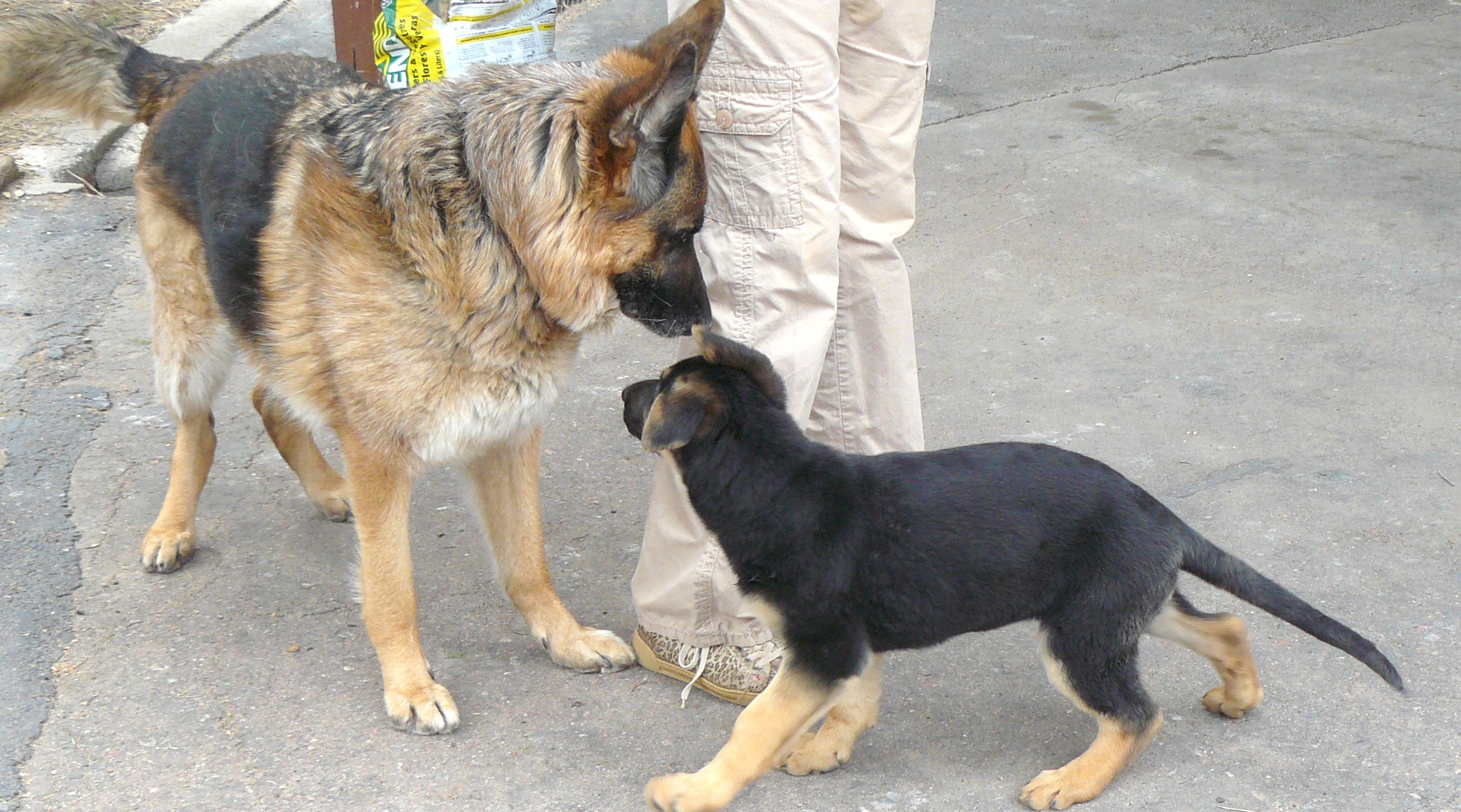
Our wonderful Pharaoh is getting pretty old now; he was 13 1/2 years-old on December 3rd which is a grand age for a German Shepherd. When he was a young puppy I was advised to get a younger playmate for him when his years were building up. For two reasons. The first being that the younger dog keeps the elderly dog playing and interested in the world. The second reason being that the elder dog will teach the younger dog all the owner’s commands.

Pharaoh demonstrating his benevolent status with puppy Cleo. April 2012.

Cleo has proved both points. Pharaoh in living with so many dogs around him is most definitely kept engaged and despite his rear hips being so very fragile and weak he still doesn’t miss a turn in going out with the other dogs.

Just to underline how fantastic Pharaoh is doing, his age at the conversion ratio of 1 dog year to 8 human years makes him 108! Or 36 years my senior!

Dog food recall alert

Concerning Blue Ridge Beef

Repeat of what came in yesterday:

Dear Fellow Dog Lover,
Because you signed up on our website and asked to be notified, I’m sending you this special recall alert. If you no longer wish to receive these emails, please click to unsubscribe.

Blue Ridge Beef of Eatonton, Georgia, has announced it is voluntarily recalling 2 of its raw frozen products due to their potential to be contaminated with Salmonella and Listeria bacteria.

To learn which products are affected, please visit the following link:

Blue Ridge Beef Pet Food Recall of December 2016

Please be sure to share the news of this alert with other pet owners.

Mike Sagman, Editor
The Dog Food Advisor

P.S. Not already on our dog food recall notification list yet? Sign up to get critical dog food recall alerts sent to you by email. There’s no cost for this service.

If you visit that Blue Ridge link you will read the following:

ooOOoo

December 8, 2016 — Blue Ridge Beef of Eatonton, Georgia has announced it is voluntarily recalling two of its frozen products due to their potential to be contaminated with Salmonella and/or Listeria monocytogenes.

What’s Being Recalled?

blue-ridge-beef-dog-food-recallblue-ridge-beef-cat-food-recallThe affected products are sold in 2 pound chubs and can be identified with the following manufacturing codes:

  • Lot #mfd ga8516
    Beef for dogs
    UPC code 8542980011009
  • Lot #mfd ga81216
    Kitten grind
    UPC code 854298001016

Where Was It Sold?

The affected products were distributed to retail stores in the following states:

  • Arizona
  • Florida
  • Georgia
  • North Carolina
  • South Carolina
  • Texas

About Salmonella and Listeria

Salmonella and Listeria can affect animals eating the product.

There is a risk to humans from handling contaminated pet products, especially if they have not thoroughly washed their hands after having contact with the products or any surface exposed to these products.

Healthy people infected with Salmonella and/or Listeria should monitor themselves for some or all of the following symptoms:

  • Nausea
  • Vomiting
  • Diarrhea
  • Bloody disarrhea
  • Abdominal cramping
  • Fever

Consumers exhibiting these signs after having contact with this product should contact their healthcare provider. Consumers should also follow the simple handling tips on the package.

What Caused the Recall?

This recall was initiated after the FDA received two complaints associated with these products, including one complaint of two kitten illnesses and one complaint of a puppy death.

Subsequent testing by the FDA of a 2 pound chub of beef for dogs and kitten grind collected at a veterinary office revealed the presence of Salmonella and Listeria monocytogenes.

There is no direct evidence linking these unfortunate instances to contaminated product.

This recall is being made with the knowledge of the U.S. Food and Drug Administration.

What to Do?

Consumers who have purchased the above lots of beef for dogs or kitten grind are urged to stop feeding them and return products to the place of purchase for a full refund.

Or dispose of them immediately. Those with questions can email the company at blueridgebeefga@yahoo.com

U.S. citizens can report complaints about FDA-regulated pet food products by calling the consumer complaint coordinator in your area.

Or go to http://www.fda.gov/petfoodcomplaints.

Canadians can report any health or safety incidents related to the use of this product by filling out the Consumer Product Incident Report Form.

ooOOoo

We must keep our dogs and cats as healthy and safe as possible.

Feel free to share this howsoever you wish.