Category: Dog lessons

Loyalty with a capital “D”!

As in Dog!

Towards the end of September in came an email addressed to learningfromdogs.

Hi Paul,

Pete here from The Goody Pet.

Firstly – A big thank you for writing all those amazing articles on dogs. Been sharing these articles with my friends and they really enjoyed reading them. Was wondering if I could contribute a guest post for your website? I have been a dog owner for the past 15 years and would love to share some of my tips to your readers.
If you are interested, please let me know? I will be more than happy to prepare a few topics to send across to you.
Kind Regards,
Pete

Goes without saying that I was delighted to receive Pete’s email and his offer of an article. Here it is!

ooOOoo

DOGS: A LESSON IN LOYALTY

by Pete Decker, October 8th, 2017

Dog is a man’s best friend, this is something we have said and heard enough number of times. They can be better friends that any human can ever be, this is a fact that almost all dog owners can surely vouch for.

A dog’s loyalty has been seen and heard of in many famous incidents as well as stories like Hawkeye, the dog who grieved the death of his Navy SEAL owner by lying down near his casket day in and out. Or the story of Hachiko, the dog who greeted his owner at the train station every day and continued to look for his owner at the same place daily even after the sudden death of the owner.

What makes dogs so loyal?

There have been some people who say that they depend on humans for food and shelter and so have to be loyal without a choice. But when you see the dog of a street dweller loving him unconditionally or when you see the reaction of a dog after meeting his master who has been away for a long time, you know it’s not just about food and shelter.

They are colonial creatures who like to live together, whether it is a colony of humans, dogs or even other animals. They just want to love and be loved back.

Dogs are not like human beings, they are much better. They do not cheat or betray. They only need one master and that is enough for them to live happily. Unknowingly, dogs teach us many important lessons that help us be better and more loyal people. Let us consider some of them:

They teach you never to betray

Your closest human friend or companion may betray you when the time comes, but a dog never ever will. If needed he will lay his life for you, but betraying is out of question. A human being is capable of telling lies, manipulating, or twisting facts, a dog is not capable of any of that.

A dog can never lie

No matter how close you are to a person, they still may not tell you everything or all the truth. As humans, we think withholding information is not considered lying and do that all the time. But a dog can never lie, he doesn’t even know how to. There is no pretense or withholding information with a dog. For a dog the world is only about you. And it only has ways to show you how much it loves you, nothing more.

They teach you never to judge

Your dog does not care whether you are rich or poor, whether you are ugly or beautiful. It does not even care if you are thin, fat, or what nationality you belong to. A dog will not judge if you have failed at anything, or hold prejudices against you. With a dog you can never be scared of being ridiculed or humiliated. As long you it is with you, you mean the world to him, and he will never leave you no matter what.

Forgiving is another lesson they teach us

A dog is not capable of holding grudges, or being revengeful. These qualities are for us humans. Even if you hurt your dog knowing or unknowingly they will still forgive you at all times. They will not hold your mistakes against you. They will forget your flaws and love you as it always did.

Love is beyond everything

This is one thing that differentiates a human from a dog. Your best friend of one time may not be the same anymore, but a dog will be your best friend as long as you live. They will be by your side at all times, through thick or thin.

You can always repay the favor by ensuring that your dog is responsibly cared for, well fed with regular grooming.

These are some important lessons of loyalty that a dog teaches us. If only we humans imbibe even a part of their qualities, the world will be a much happier place to live in.

ooOOoo

That closing photograph, that was also supplied by Pete, says it all.

Naturally, I asked Pete to offer a little background information on his goodself and this is what he wrote me:

The author of this post is Pete Decker, the Lead Editor at The Goody Pet. Pete loves to share his passion for pets through snippets of interesting and helpful information. You can find more of Pete at his website, Twitter or Facebook.

The loyalty of dogs continues tomorrow!
Letting go of the glass.

Another vital lesson from our dogs.

I saw the following video on Facebook from a dear friend back in my days of living and working in Colchester, Essex, England.

There’s nothing mind-blowing about the message but nevertheless it’s a good reminder to learn to chill out as our dogs do.

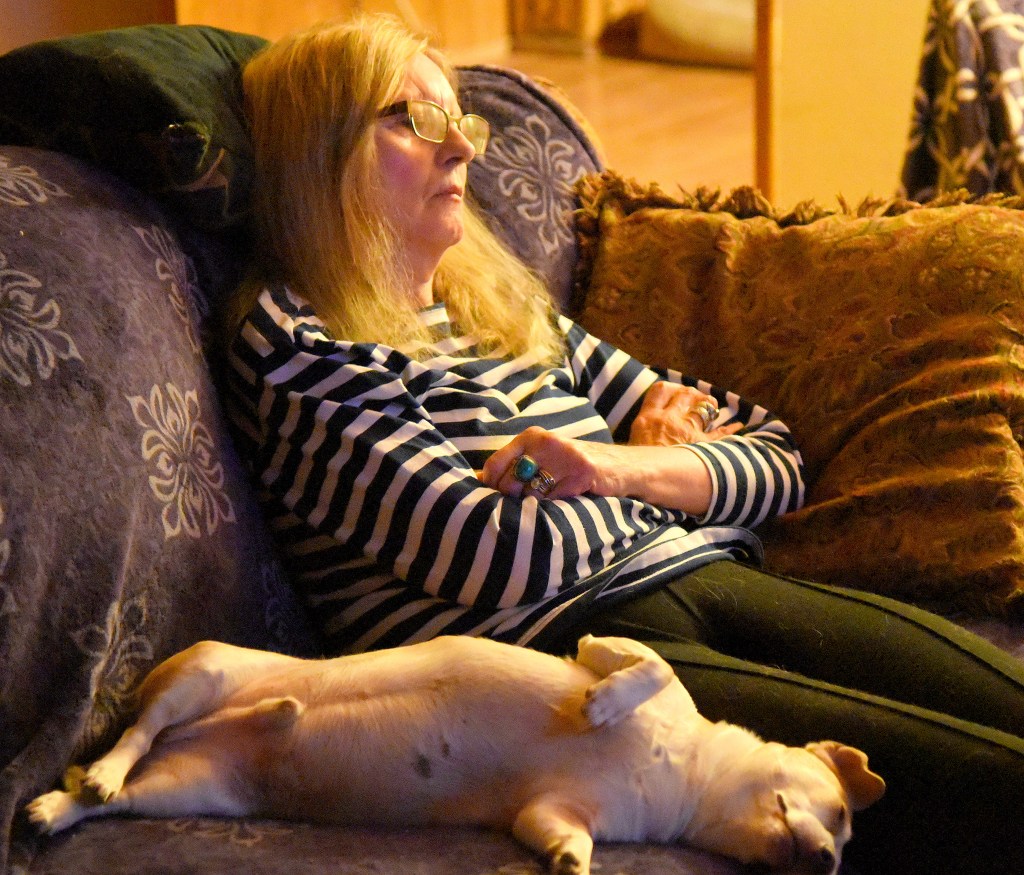
Or as Jeannie and Pedy were doing last Thursday evening!

(Oh, and this will be the first time that Jeannie knew of me taking this picture!)

Thanks Roger.

The implications of inequality

What on earth has inequality to do with dogs!

A fair question one might think. Because this blog is primarily about what we humans should be learning from our dogs. Well, I do see a connection, a message of learning for us. Stay with me for a while.

But first, here’s how I open up Chapter 18 Sharing in my book – Learning from Dogs.

Here’s a silly story that made me laugh when I first came across it.

A man in a casino walks past three men and a dog playing poker.
“Wow!” he says, “That’s a very clever dog.“
“He’s not that clever,” replies one of the other players.
“Every time he gets a good hand he wags his tail.“

This clever dog couldn’t hide his happiness and had to share it by wagging his tail. OK, it was a little bit of fictional fun but we all recognise that inherent quality in our dogs, how they share so much of themselves in such an easy and natural fashion.

Now if one was being pedantic one would say that sharing is not the same as equality. Yet I see them as two separate seats in life’s common carriage.

Many lovers of dogs know that when they lived a life in the wild, slowly evolving from the grey wolf, they replicated, naturally, the pack characteristics of wolves. As in the pack size was around 25 to 30 animals. Yes, there was a hierarchy in the pack but that really only presented itself in the status of three animals: the female ‘alpha’ dog; the male ‘beta’ dog; the ‘omega’ dog that could be of either gender. Ninety percent of the pack were animals on equal standing. If only that was how we humans lived.

A few days ago there was an essay published on The Conversation blogsite under the title of Why poverty is not a personal choice, but a reflection of society.

It opened with this photograph.

A homeless camp in Los Angeles, where homelessness has risen 23 percent in the past year, in May 2017. AP Photo/Richard Vogel

Let me emphasize this: “A homeless camp in Los Angeles, where homelessness has risen 23 percent in the past year, in May 2017.”

Here are two small extracts from that article:

Research Investigator of Psychiatry, Public Health, and Poverty Solutions, University of Michigan


As someone who studies poverty solutions and social and health inequalities, I am convinced by the academic literature that the biggest reason for poverty is how a society is structured. Without structural changes, it may be very difficult if not impossible to eliminate disparities and poverty.


About 13.5 percent of Americans are living in poverty. Many of these people do not have insurance, and efforts to help them gain insurance, be it through Medicaid or private insurance, have been stymied. Medicaid provides insurance for the disabled, people in nursing homes and the poor.

Four states recently asked the Centers for Medicare and Medicaid Services for permission to require Medicaid recipients in their states who are not disabled or elderly to work.

This request is reflective of the fact that many Americans believe that poverty is, by and large, the result of laziness, immorality and irresponsibility.

In yesterday’s post celebrating July 4th, where I shared that lovely picture sent to me by Neil Kelly from my Devon days, there was an exchange of comments between me and author Colin Chappell. Colin is the author of the book Who Said I Was Up For Adoption.

First, in response to Colin saying “That pic really says it all doesn’t it!”, I replied:

No question. Indeed, one might ‘read’ that picture at many levels. From the level of providing a smile for the day all the way through to a very profound observation on life itself.

Colin then replied to me:

I ‘ll go straight for the profound perspective! As I recently noted on another blog, I cannot recall anybody from history who became famous for their material possessions. In fact, I recently read an article written after an individual had surveyed a few thousand gravestones… and they drew the same conclusion. There was not a single epitaph which alluded to a material possession. Dogs know all that intuitively, so why does our superior (?) mind have trouble grasping such a simple perspective?

I then responded by saying that I thought it would make a fabulous introduction to today’s post. The heart of which I am now coming to.

Here in our local city, Grants Pass, there is a Freethinkers and Humanists group. They meet once a month. Jerry Reed from that group some time ago recommended to me reading the book The Spirit Level authored by Richard Wilkinson and Kate Pickett.
Jerry and I were exchanging emails in the last couple of days and he reminded me of that book.

There it was sitting on my bookshelf with a bookmark in at page 62. For reasons that escape me, I had become distracted and forgotten to stay with the book. Despite me being very interested in the proposition.

I said as much in an email reply to Jerry. He then replied to my email with this:

Hey, that happens to me a lot too, very frequently. So, I frequently settle for a video that might capture the essence of the book in considerably less time, while also maintaining my attention much better.

So, if you want a video about what Wilkinson has to say, here’s the one I recommend:

Here is that video. It is a little under 17 minutes long. Please watch it.

Published on Oct 24, 2011

http://www.ted.com We feel instinctively that societies with huge income gaps are somehow going wrong. Richard Wilkinson charts the hard data on economic inequality, and shows what gets worse when rich and poor are too far apart: real effects on health, lifespan, even such basic values as trust.

I haven’t got anything profound to say by way of closing today’s post.

But what I will say is that if our societies, especially in certain countries not a million miles from home, more closely emulated the sharing and caring that we see in our dogs then that really would be wonderful.

Image seen on this website: http://enlightendogs.com/about/testimonials-2/

Happy July 4th!

If you will allow this old Brit to recognise the 4th July!

Speaking of Brits, the following was sent to me by Neil, a close friend from my previous days living in South Devon, England.

Perfect!

Thanks Neil!

Calming for dogs.

Slowly we are all moving on.

You will all recall the shock of me seeing Pharaoh’s empty bed that first morning after he had died. This picture:

Not only was it difficult to look at but not one of our other dogs went near it. This was despite the fact that Jean had washed and cleaned the whole bed.

One could almost imagine the dogs understanding that it would not have respected their memory of Pharaoh to immediately takeover his rather nice bed.

But life has to move on!

Yesterday evening, just as Jean and I were getting everyone ready for bedtime, Cleo signaled that she was moving on.

She had settled herself down on the bed.

That was so good to see and was another step in the right direction in settling me down as well!

So on the theme of being calm, especially in these hot summer months, do read this recent article that was published on the Care2 site.

ooOOoo

7 Ways to Calm a Dog During Thunderstorms

By: Becky Striepe June 21, 2017

About Becky Follow Becky at @glueandglitter

My dogs are both terrified of thunderstorms. These are some of the tricks that vets and trainers have recommended to help our poor babes when stormy weather rolls in.

Our lab mix, Jenna, trembles in the corner when it thunders, while our 60-pound dog, Bandit, tries to leap into my lap. These are some of the ways to calm a dog during thunderstorms that we’ve tried.

Every dog is different, so what works for one may not work for another. Jenna is terrified of the Thundershirt, for example, but many people I know swear by it. Chances are, not all of these calming techniques will help your dog during a thunderstorm. You’re basically throwing spaghetti at the wall to see what sticks.

Ways to Calm a Dog During Thunderstorms

Lavender and massage oil on a old wooden background

1. Lavender Oil

You don’t want your dog to ingest lavender oil, so put a few drops on her collar when a storm is freaking her out. The soothing scent can help calm some dogs’ nerves, and the smell is a distraction from what’s going on in the sky.

2. Massage

Just like humans, dogs find massage soothing. The video above shows a calming massage that you can use on your dog during a thunderstorm. You can also try an ear massage, which Jenna responds to really well. Basically, you gently run your hand up the dog’s ear, from where the ear meets the head to the tip of the ear. When you reach the tip, gently massage for a second, then repeat. Like in the video, it seems to work best if I also talk to her in a soothing voice while massaging.

3. A Hand on the Back

Sometimes, your dog just needs to know that you are there and in control of the situation. This trick works well on our dog, Bandit, who is definitely boss dog in our house. During a storm, a hand on his back helps him feel like he can step back from being the pack leader, which helps him feel secure and safe. Talking in a soothing voice helps here, too.

4. Training Exercises

You may feel like it’s mean to start bossing your scared dog around, but practicing her sit/stay/shake is a great way to distract your dog from the storm and remind her that you’ve got this under control. This one works well on both of my dogs.

5. Thundershirt

These wrap shirts help soothe a lot of dogs during thunderstorms, and they’re available at any pet store. Many friends with dogs have recommended the Thundershirt to me. It made Jenna more anxious, but she is clearly in the minority in this situation.

6. White Noise

If your dog can’t hear the storm, your dog won’t be so scared. Dogs can feel the shift in pressure from a storm, even when they can’t hear it, so this technique seems to work best in conjunction with other calming techniques, like massage or lavender oil. Bring your dog to her favorite room, turn down the lights, and turn up the white noise. If you don’t have a white noise machine, you can find free white noise tracks on YouTube, like the one above.

7. Rescue Remedy for Pets

Rescue Remedy is a blend of plant extracts. They make homeopathic drops and gummies for humans, and they have drops for pets, as well. The site recommends putting the drops into water, but I’ve also had good luck putting them onto a treat or into a glob of peanut butter, if my dogs aren’t too scared from the storm to take a treat.

As I mentioned above, different natural remedies will work for different dogs, so don’t be discouraged if the first thing you try doesn’t work out. Sometimes, especially for high anxiety dogs, you’ll have the best results combining a few of these ways to calm a dog during a thunderstorm.

ooOOoo

I don’t know about tips for calming dogs, some of these sound great for yours truly!

Pharaoh, my teacher.

Another tribute to dear Pharaoh.

The most profound thing that I learned from Pharaoh is that dogs are creatures of integrity. That goes back to a day in June, 2007. Some six months before I met Jeannie in Mexico in December, 2007. I was sitting in Jon’s home office just a few miles from where Pharaoh and I were then living in South Devon.

It was a key chapter in Part Four of my book where I examine all the qualities that we humans need to learn from our dogs.

So here is Chapter 13 from my book Learning from Dogs. (Written in ‘English’ English!)

ooOOoo

Chapter 13
Integrity

In the Introduction to this book I mentioned how the notion of “learning from dogs” went back to 2007 and me learning that dogs were creatures of integrity. Let me now elaborate on that.
It is a Friday morning in June in the year 2007. I am sitting with Jon at his place with Pharaoh sleeping soundly on the beige carpet behind my chair. I didn’t know it at the time but it was to become one of those rare moments when we gain an awareness of life that forever changes how we view the world, both the world within and the world without.

“Paul, I know there’s more for me to listen to and I sense that we have established a relationship in which you feel safe to reveal your feelings. However, today I want to talk about consciousness. Because I would like to give you an awareness of this aspect of what we might describe under the overall heading of mindfulness.”
I sat quietly fascinated by what was a new area for me.

“During the years that I have been a psychotherapist, I’ve seen an amazing range of personalities, probably explored every human emotion known. In a sense, explored the consciousness of a person. But what is clear to me now is that one can distil those different personalities and emotions into two broad camps: those who embrace truth and those who do not.”

Jon paused, sensing correctly that I was uncertain as to what to make of this. I made it clear that I wanted him to continue.

“Yes, fundamentally, there are people who deny the truth about themselves, who actively resist that pathway of better self-awareness, and then there are those people who want to know the truth of whom they are and seek it out when the opportunity arises. The former group could be described as false, lacking in integrity and unsupportive of life, while the latter group are diametrically opposite: truthful, behaving with integrity and supportive of life.”
It was then that Jon lit a fire inside me that is still burning bright to this day. For he paused, quietly looking at Pharaoh sleeping so soundly on the carpet, and went on to add, “And when I look at dogs, I have no question that they have a consciousness that is predominantly truthful: that they are creatures of integrity and supportive of life.”
That brought me immediately to the edge of my seat, literally, with the suddenness of my reaction causing Pharaoh to open his eyes and lift up his head. I knew in that instant that something very profound had just occurred. I slipped out of my chair, got down on my hands and knees and gave Pharaoh the most loving hug of his life. Dogs are creatures of integrity. Wow!

****

Later, when driving home, I couldn’t take my mind off the idea that dogs were creatures of integrity. What were those other values that Jon had mentioned? It came to me in a moment: truthful and supportive of life. Dogs have a consciousness that is truthful, that they are creatures of integrity and supportive of life: what a remarkable perception of our long-time companions.
I had no doubt that all nature’s animals could be judged in the same manner but what made it such an incredibly powerful concept, in terms of dogs, was the unique relationship between dogs and humans, a relationship that went back for thousands upon thousands of years. I realised that despite me knowing I would never have worked it out on my own, Jon’s revelation about dogs being creatures of integrity was so utterly and profoundly obvious.

As I made myself my usual light lunch of a couple of peanut butter sandwiches and some fruit and then sat enjoying a mug of hot tea, I still couldn’t take my mind off what Jon had revealed: dogs are examples of integrity and truth. I then thought that the word “examples” was not the right word and just let my mind play with alternatives. Then up popped: Dogs are beacons of integrity and truth. Yes, that’s it! Soon after, I recognised that what had just taken place was an incredible opening of my mind, an opening of my mind that didn’t just embrace this aspect of dogs but extended to me thinking deeply about integrity for the first time in my life.

Considering that this chapter is titled “Integrity”, so far all you have been presented with is a somewhat parochial account of how for the first time in my life the word “integrity” took on real meaning. That until that moment in 2007 the word had not had any extra significance for me over the thousands of other words in the English language. Time, therefore, to focus directly on integrity.

If goodness is to win, it has to be smarter than the enemy.

That was a comment written on my blog some years ago, left by someone who writes their own blog under the nom-de-plume of Patrice Ayme. It strikes me as beautifully relevant to these times, times where huge numbers of decent, law-abiding folk are concerned about the future. Simply because those sectors of society that have much control over all our lives do not subscribe to integrity, let alone giving it the highest political and commercial focus that would flow from seeing integrity as an “adherence to moral and ethical principles; soundness of moral character; honesty.” To quote my American edition of Roget’s Thesaurus.

Let me borrow an old pilot’s saying from the world of aviation: “If there’s any doubt, there’s no doubt!”

That embracing, cautious attitude is part of the reason why commercial air transport is one of the safest forms of transport in the world today. If you had the slightest doubt about the safety of a flight, you wouldn’t board the aircraft. If you had the slightest doubt about the future for civilisation on this planet, likewise you would do something! Remember, that dry word civilisation means family, children, grandchildren, friends, and loved ones. The last thing you would do is to carry on as before!

The great challenge for this civilisation, for each and every one of us, is translating that sense of wanting to change into practical, effective behaviours. I sense, however, that this might be looking down the wrong end of the telescope. That it is not a case of learning to behave in myriad different ways but looking at one’s life from a deeper, more fundamental perspective: living as a person of integrity. So perfectly expressed in the Zen Buddhist quote: “Be master of mind rather than mastered by mind.” Seeing integrity as the key foundation of everything we do. Even more fundamental than that. Seeing integrity as everything you and I are.

It makes no difference that society in general doesn’t seem to value integrity in such a core manner. For what is society other than the aggregate of each and every one of us? If we all embrace living a life of integrity then society will reflect that.

Integrity equates to being truthful, to being honest. It doesn’t mean being right all the time, of course not, but integrity does mean accepting responsibility for all our actions, for feeling remorse and apologising when we make mistakes. Integrity means learning, being reliable, and being a builder rather than a destroyer. It means being authentic. That authenticity is precisely and exactly what we see in our dogs

The starting point for what we must learn from our dogs is integrity.

ooOOoo

The face of integrity!

Unconditional dog love

Couldn’t have a better story to follow yesterday’s news about Socks finding a new home.

I have lost count of the times that over the years I have featured on this blog the bond between a person and a dog. Yet that hasn’t blunted my mind or dulled my heart to hearing of new stories of this wonderful bond arriving over the ‘air waves’.

Such is the case of Ben and his dog that was featured on the Shareably site last July.

My pleasure to share this story with you.

ooOOoo

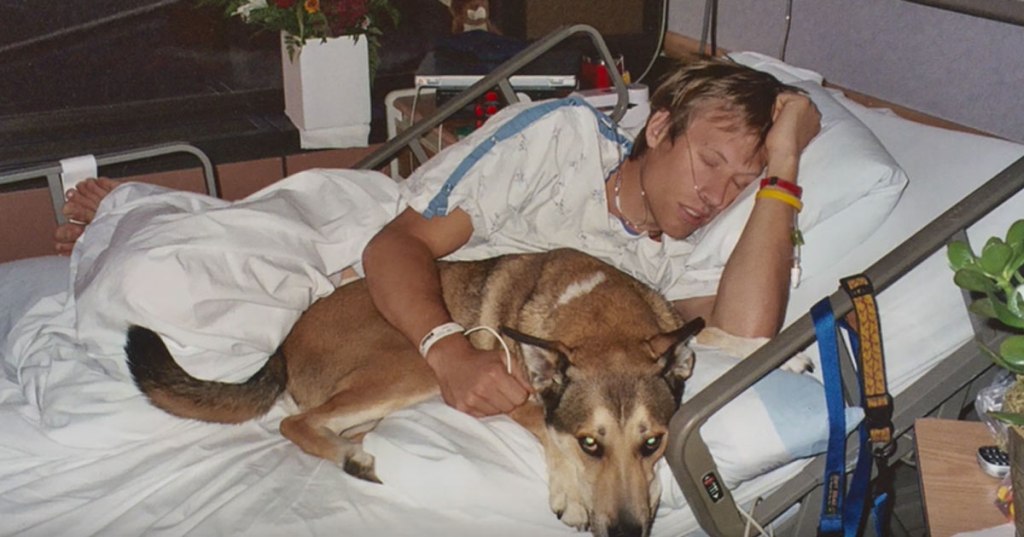
Doctor’s tell dog to leave owner’s hospital bed, but dog refuses and lays by his owner’s side

written by Jenny Brown on July 11th, 2016
There is the saying that a dog is a man’s best friend. It might be because a dog is by your side when you’re feeling down, is there to play catch when you feel like throwing around the frisbee, or simply there when you want some company.
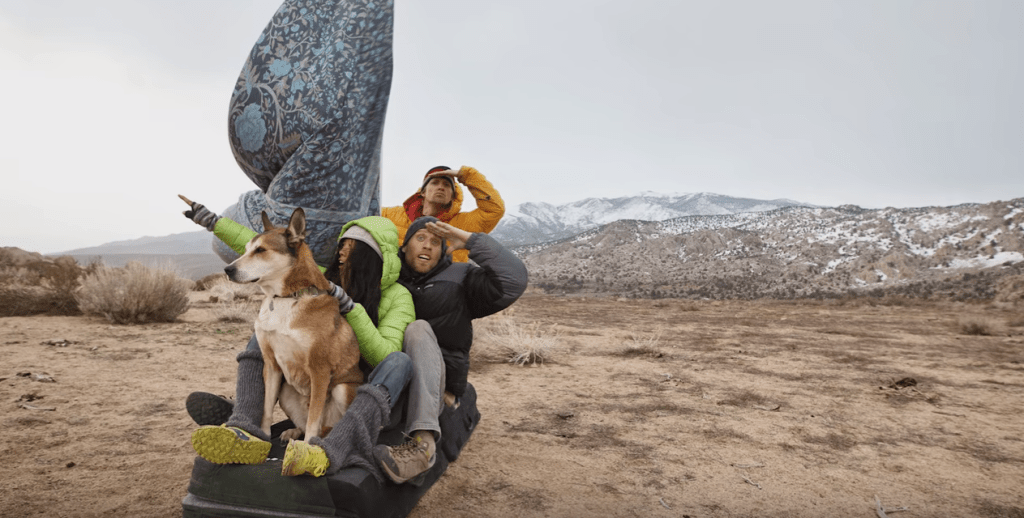
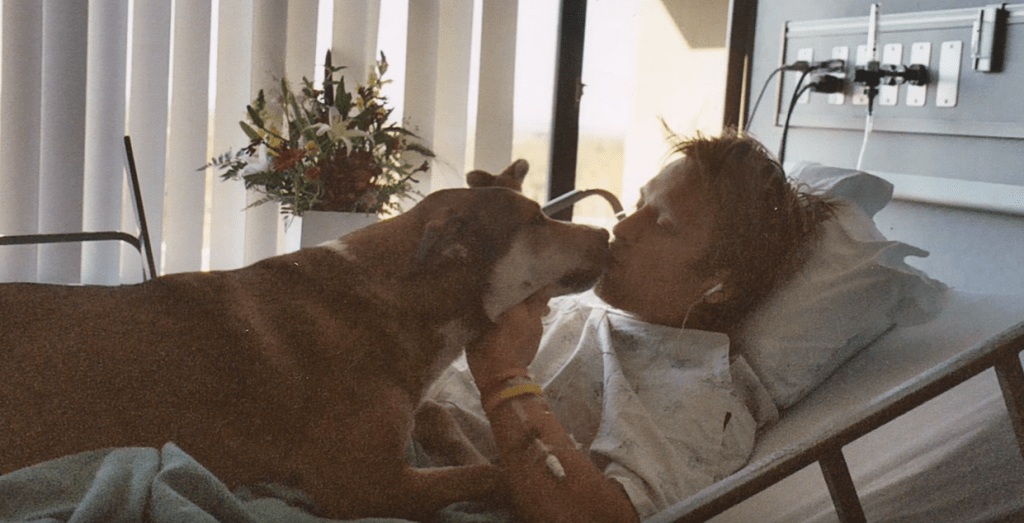
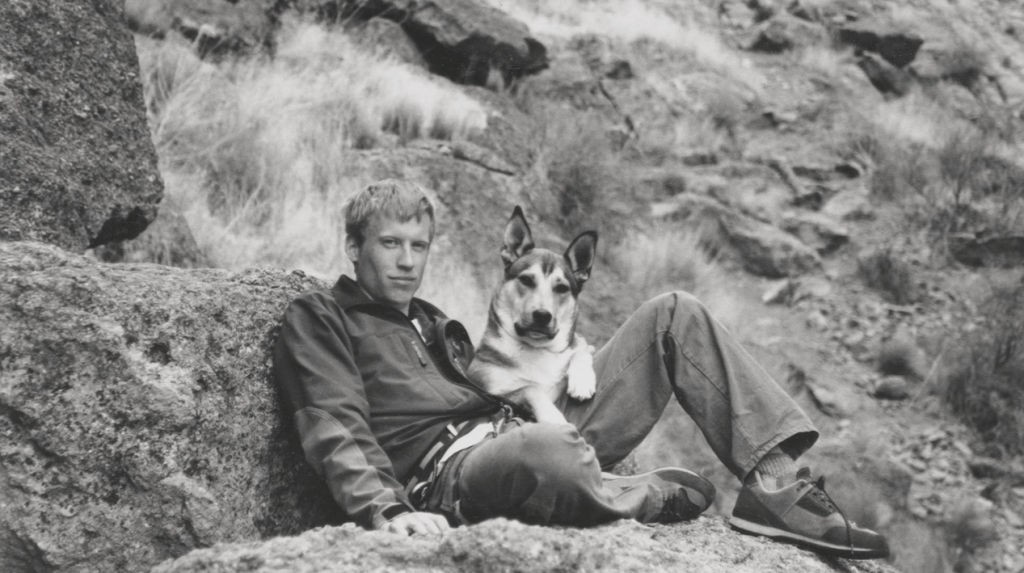
As dog-lovers we are grateful for the things dogs do for us, but do we consider how dogs might be as grateful for the things we do for them? In this video, the beautiful relationship between one man, Ben, and his dog is shown from the perspective of not the man, but his dog.

The relationship between Ben and his dog begins in their earlier years. The two of them travel around the world. From camping in the deserts to hiking in the mountains, they discover their favorite places to visit and make new friends along the way.

Source YouTube/Ben Moon

As the story continues, however, Ben develops cancer. While Ben must spend his time in a hospital and away from traveling, his dog continues to stay by his side, night and day. The relationship between Ben and his dog seems that it may worsen due to Ben’s obstacle, but instead, their relationship only strengthens.

Source YouTube/Ben Moon

The story progresses years later, as Ben overcomes his battle and the bond between him and his dog continues to grow. Through the highs and lows of their relationship, Ben and his dog remain the best of friends until the very end.
This touching video is a dedication made by Ben to his dog, for all the best moments they spent together. This video also shows what is truly the essence of friendship, between a man and his best friend, his dog.

Source YouTube/Ben Moon

Please SHARE this with your friends and family.

(Ed: Note that the dialogue in the following professionally shot film is the voice of the dog.)

ooOOoo

Friendship, as in true friendship, is very precious. That true friendship is rarely unconditional between humans. Not impossible, just rare.

For common examples of unconditional friendship, as in the unconditional love bond, we have to turn to our dogs.

What beautiful teachers they are!

Training a dog correctly

A guest post from Robert Michael.

Jean and I went to a conference down in Medford last Saturday. It was a conference to do with Parkinson’s Disease and was arranged by the group Parkinson’s Resources of Oregon (PRO).

Almost immediately upon our arrival at 1pm we saw a gentleman in his wheel chair accompanied by his service dog. That gentleman soon identified himself as Ken Schiff and his wonderful service dog was named Lacey. It was clear within moments how beautifully behaved was Lacey and, by implication, how well trained he had been to perform his role as a service dog to Ken.

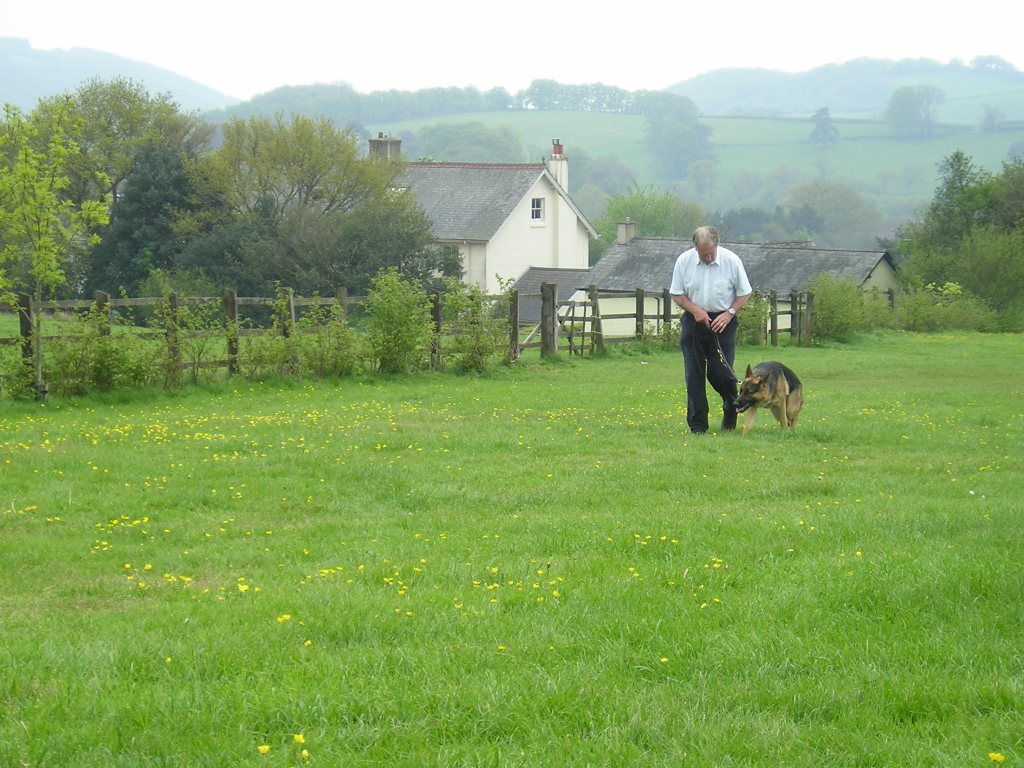
That took me way back to my days of working with Pharaoh back in Devon; before Jean and I met. Living in a very rural part of England with, reputedly, there being more sheep than people, one of the early requirements was to train Pharaoh to behave properly in the vicinity of sheep. Here are a couple of pictures from that training day in Devon.

Pharaoh’s training the afternoon of the 11th May, 2004.

oooo

Luckily the training paid off! Pharaoh was fabulous in and around sheep!

Needless to say, Pharaoh also received professional training for his general behaviours.

So treat all of the above as my introduction to a guest post by Robert Michael. On dog training. So who is Robert Michael?

Robert Michael

Robert is professional dog trainer having an experience of almost 8 years now. And he loves to contribute to the pets blogs to enjoy his passion. Plus, I write free of cost for those pets blogs: do you have one? Contact me rob.michael47@gmail.com

ooOOoo

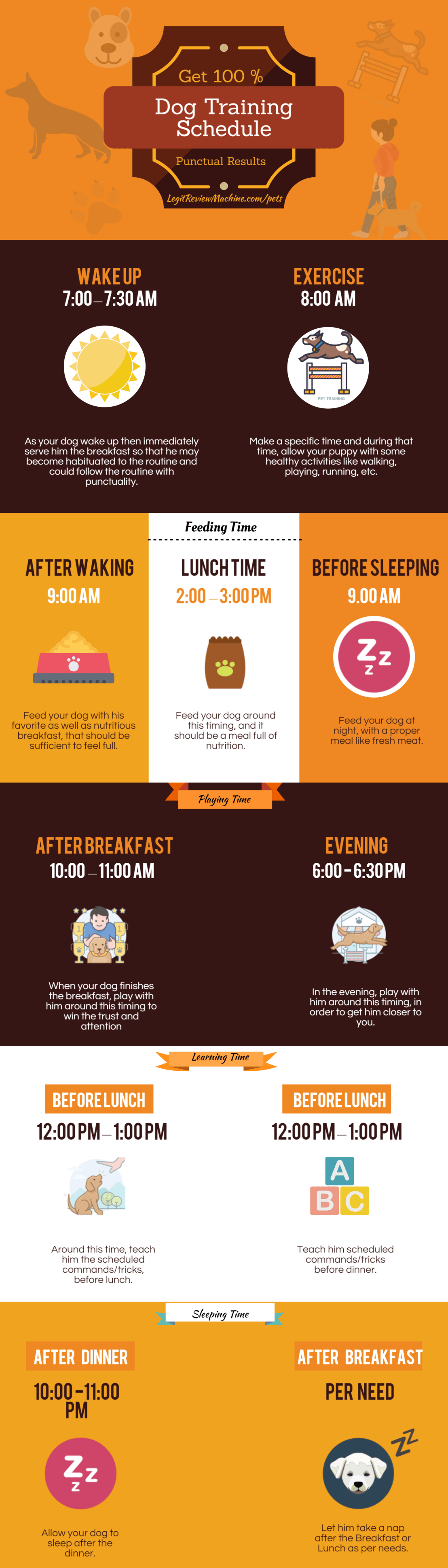
A Comprehensive Visual Guide on Dog Training Schedule to Get 100% Outcomes

by Robert Michael. April 26th. 2017

There are a number of acts to follow on time, when your dog is on a training with you! So, if it is said that, you can get no any effective outcomes of the dog training, without making a proper schedule; it would not be wrong at all.

So, you must be aware of the fact that:

Making an appropriate dog training schedule is necessary for a super effective output. Now you might be thinking that:

How to make a dog training schedule?

So, it is not a tough task to do so! You just can make a schedule by following the tips given below:

  • Take a pen and diary specified in writing and following the schedule.
  • Save notes in your mobile phone, and set the reminders.
  • Make an Excel sheet containing the schedule.
  • Make an MS Word document to file the training schedule.
  • Make a training schedule chart and attach to one of the walls of your home.

So, these are the super easy ways, you can make and follow the training schedule of your dogs.

  • You will be habituated by the training schedule.
  • Your dog will get habituated by the schedule timings.
  • You will get a punctual routine.
  • Your training sessions will prove to be more effective.
  • You will be able to train your dog by an organized manner.

What can you include in the schedule?

  • The feeding timings.
  • The playing timings.
  • The walk timings.
  • The toilet timings.
  • The training sessions’ timings.
  • The exercise timings.
  • The sleeping and waking up timings.

You can see the Legit Review Machine infographic to better understand the dog training schedule ways and steps.

ooOOoo

And here is that infographic that Robert included as a separate image in his email to me.

Puppy Training Schedule

I’m sure many of you will have found this very useful and I do hope there will be more guest posts from Robert.

Tensions abound in many societies.

Reader alert: This has nothing to do with dogs!

Then as soon as I started to write today’s post (as of yesterday afternoon) I realised the error in my sub-title. For one might argue that this does have a connection with how our dogs behave as a cohesive group. But I’m going to be ‘an arse’ (‘ass’ in American speak) and ask you to hold out until the end of today’s post to read the ‘doggie’ connection. (Note that today’s post is Part One. Part Two continues tomorrow.)

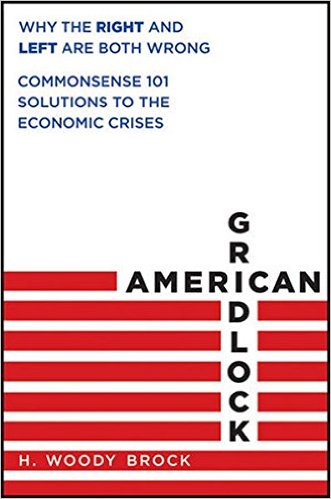
american-gridlock_0I am in the middle of reading American Gridlock written by H. Woody Brock and published in 2012. Here’s an extract of what the book is about, courtesy of Amazon:

A sensible solution to getting our economy back on track

Pessimism is ubiquitous throughout the Western World as the pressing issues of massive debt, high unemployment, and anemic economic growth divide the populace into warring political camps. Right-and Left-wing ideologues talk past each other, with neither side admitting the other has any good ideas. In American Gridlock, leading economist and political theorist H. Woody Brock bridges the Left/Right divide, illuminating a clear path out of our economic quagmire.

Arguing from first principles and with rigorous logic, Brock demonstrates that the choice before us is not between free market capitalism and a government-driven economy. Rather, the solution to our problems will require enactment of constructive policies that allow “true” capitalism to flourish even as they incorporate social policies that help those who truly need it.

Brock demonstrates how deductive logic (as opposed to ideologically driven data analysis) can transform the way we think about these problems and lead us to new and different solutions that cross the ideological divide. Drawing on new theories such as game theory and the economics of uncertainty that are based upon deductive logic, Brock reveals fresh ideas for tackling issues central to the 2012 U.S, Presidential election and to the nation’s long-run future:

It greatly influenced me and I sat down and wrote an essay. Mainly to clarify my own thinking ahead of a meeting last Saturday of our local Freethinkers Group where the topic was “Ideas for Improving our Democratic Processes”. The “our” being the US democratic process but just as valid for many other countries.

I first set out to see if there was a clear, unambiguous definition of what a democratic society is. Surprise, surprise there isn’t one. Very quickly I came up with three:

The first:

A democracy by definition is government through elected representatives. It is a form of society which favours equal rights, freedom of speech and a fair trial and tolerates the views of minorities. Civics and Citizenship website

The second:

A DEMOCRACY IS a society in which all adults have easily accessible, meaningful, and effective ways:

(a) to participate in the decision-making processes of every organization that makes decisions or takes actions that affect them, and;

(b) to hold other individuals, and those in these organizations who are responsible for making decisions and taking actions, fully accountable if their decisions or actions violate fundamental human rights, or are dishonest, unethical, unfair, secretive, inefficient, unrepresentative, unresponsive or irresponsible;

(c) so that all organizations in the society are citizen-owned, citizen-controlled, and citizen-driven, and all individuals and organizations are held accountable for wrongdoing. Democracy Watch website

And the third:

Better democracy, everywhere.

The Democratic Society (Demsoc) works for more and better democracy, where people and institutions have the desire, opportunity and confidence to participate together.

We work to create opportunities for people to become involved in the decisions that affect their lives and for them to have the skills to do this effectively. We support governments, parliaments and any organisation that wants to involve citizens in decision making to be transparent, open and welcoming of participation. We actively support spaces, places and processes to make this happen. Democratic Society website.

I went on to say in my essay:

Yes, there is some harmony between all three definitions but there are also significant differences in tone and language.

I am sure many of you are familiar with the book by H. Woody Brock American Gridlock. I started reading it a few days ago and cannot now put it down.

For the core message of the book is that we, as in society, must distinguish between inductive and deductive reasoning. Let me use the definitions as found on the Live Science website.

Deductive reasoning

Deductive reasoning is a basic form of valid reasoning. Deductive reasoning, or deduction, starts out with a general statement, or hypothesis, and examines the possibilities to reach a specific, logical conclusion, according to the University of California. The scientific method uses deduction to test hypotheses and theories. “In deductive inference, we hold a theory and based on it we make a prediction of its consequences. That is, we predict what the observations should be if the theory were correct. We go from the general — the theory — to the specific — the observations,” said Dr. Sylvia Wassertheil-Smoller, a researcher and professor emerita at Albert Einstein College of Medicine.

In deductive reasoning, if something is true of a class of things in general, it is also true for all members of that class. For example, “All men are mortal. Harold is a man. Therefore, Harold is mortal.” For deductive reasoning to be sound, the hypothesis must be correct. It is assumed that the premises, “All men are mortal” and “Harold is a man” are true. Therefore, the conclusion is logical and true.

That is, we predict what the observations should be if the theory were correct.

Let that really work it’s way through your consciousness. It’s an idea that is rooted in the great scientists and philosophers of many thousands of years ago. Think of Euclid, the Greek Socratic philosopher who founded the Megarian school of philosophy. He was a pupil of Socrates in the late 5th century BCE, and was present at his death. (I cheated and looked it up.)

It was Euclid who through Euclidian geometry came to understand the principles of angles and straight lines; as in the shortest distance between two points.

Moving on:

Inductive reasoning

Inductive reasoning is the opposite of deductive reasoning. Inductive reasoning makes broad generalizations from specific observations. “In inductive inference, we go from the specific to the general. We make many observations, discern a pattern, make a generalization, and infer an explanation or a theory,” Wassertheil-Smoller told Live Science. “In science there is a constant interplay between inductive inference (based on observations) and deductive inference (based on theory), until we get closer and closer to the ‘truth,’ which we can only approach but not ascertain with complete certainty.”

Even if all of the premises are true in a statement, inductive reasoning allows for the conclusion to be false. Here’s an example: “Harold is a grandfather. Harold is bald. Therefore, all grandfathers are bald.” The conclusion does not follow logically from the statements.

Inductive reasoning has its place in the scientific method. Scientists use it to form hypotheses and theories. Deductive reasoning allows them to apply the theories to specific situations.

Now for some of you this side trip into reasoning may have seen more like a complete departure. But the point is that, as American Gridlock makes so powerfully: There are two main problems to be solved if this nation is to get back on track. First, win-win policy solutions must be identified for the five real-world problems addressed in Chapters 2 through 6. Second, the Dialogue of the Deaf must come to an end, policy gridlock with it, and these solutions must be implemented. (Pages 7-8)

I closed my essay by setting out the following proposition:

Until we have a clear, universally acknowledged definition of what a democratic society is then it is impossible and utterly futile to debate the various processes including what is the best process for American society.

Is this relevant to the world outside the USA? You bet it is. For better or for worse, what the USA does today the rest of the world does soon thereafter.

And as you will see in Part Two that comes tomorrow democratising the economy is key.

For when we look at the way that dogs, and wolves, operate as a pack in the wild there are only three animals with status:

  • The alpha female who has first choice of the male dogs for mating purposes and makes the decision, as and when necessary, to move her pack to a new territory,
  • The beta dog, always a male, whose role is to keep the pack running smoothly as a cohesive group and not letting squabbles get out of hand, and,
  • The omega dog, that can be of either gender, whose role is to keep the pack happy.

All the other animals in the pack of around fifty are of equal status and work for the benefit of the pack. Now that is something we should learn from dogs!

Staying in balance.

We, as in humanity, could be very close to the end!

Now my sub-title could be argued as being a tad provocative and, perhaps, it is. But I wanted to catch your attention and then hope that you stay with me for today’s post.

Jean and I belong to the Humanists & Freethinkers Group of Grants Pass. At last Saturday’s meeting the main item was a talk given by William Kötke: His website is here. Bill, as he was happy to be called, is the author of the books The Final Empire and Garden Planet (the links take you to the respective Amazon pages). Bill also has more details of his first book here.

The essence of Bill’s talk was that when we ‘evolved’ from a life of hunting and gathering to developing the land for agricultural purposes we lost our connection to the planet. For the simple reason that as foragers we depended on always being able to find edible wild plants and fruit, and therefore lived in balance with the land, but when we started to farm we became protective, materialistic and greedy. For having more land, even if one took it by force from another, equated to making more; making more food, using the surplus to buy favours, sell, etc.

Some of the facts that Bill presented in his talk were truly frightening such as soil loss; a topic I highlight in tomorrow’s post.

But for now just settle down and watch this interview of Bill filmed by Woodburn Community Access Television.

Published on Jan 10, 2016

Author and Futurist William H. Kotke shares with Woodburn his years of knowledge and understandings of the Human History and The Current Dilemma all of us face as a species.

Is there a way forward?

Yes, I think so and it’s all to do with communities; more on that in a later post.

Is this anything to do with dogs?

Here’s what the Welcome page of this blog says (in part):

As man’s companion, protector and helper, history suggests that dogs were critically important in man achieving success as a hunter-gatherer.  Dogs ‘teaching’ man to be so successful a hunter enabled evolution, some 20,000 years later, to farming,  thence the long journey to modern man.  But in the last, say 100 years, that farming spirit has become corrupted to the point where we see the planet’s plant and mineral resources as infinite.  Mankind is close to the edge of extinction, literally and spiritually.

Dogs know better, much better!  Time again for man to learn from dogs!

I rest my case.