Category: Dog lessons

Let’s do …. nothing!

The restorative effect of doing …. nothing.

A week ago I published a post called On quietness.  It was predominantly comprised of a republication of a much earlier item written by Jon Lavin.

However, in the way that things happen, shortly after that post (last Friday’s one) was published I came across this TED video of Andy Puddicome.

I’ll say no more – enjoy the video.  (Beautifully delivered in ten minutes, by the way!)

When is the last time you did absolutely nothing for 10 whole minutes? Not texting, talking or even thinking? Mindfulness expert Andy Puddicombe describes the transformative power of doing just that: Refreshing your mind for 10 minutes a day, simply by being mindful and experiencing the present moment. (No need for incense or sitting in strange positions.)

oooOOOooo

 “Most people assume that meditation is all about stopping thoughts, getting rid of emotions, somehow controlling the mind. But actually it’s … about stepping back, seeing the thought clearly, witnessing it coming and going.” (Andy Puddicombe)

The TED profile of Andy P. offers this:

Andy Puddicombe
Andy Puddicombe

Why you should listen to him:

Andy Puddicombe wants you to take a break — not just from work, but from your own mind, which is so full of anxieties about the world and anxieties about its own anxieties. To help you do that, Puddicombe, a former Buddhist monk, co-founded Headspace, a project to make meditation more accessible to more people in their everyday lives. Puddicombe also writes prolifically for the Huffington Post and the Guardian, on the benefits of mindful thinking for healthy living.

oooOOOooo

So as someone who seems to have real trouble relaxing, I mean real relaxation in the letting go sense, I’m flirting with the idea of committing 10 minutes of meditation each day.  Andy offers a charmingly easy way of doing this, as you will discover if you go to his website Headspace.  Here’s a quote from the ‘What is Headspace‘ page.

Here at Headspace we’re on a mission to get as many people in the world as possible to take 10 minutes out of their day, to practice a simple and easy-to-learn meditation technique.  And if you like the way it makes you feel, then we’d love to show you how to make that a life-long skill.

This is meditation for modern life – simple, scientifically-proven techniques, that you can use every day to experience a healthier and happier mind.

Those articles published by the Guardian as referred to above may be found here: The Guardian, if you want to browse around some more.

Stay tuned as to the outcome of me and meditation; I’ll share with it you via Learning from Dogs.  Let’s face it, dogs are very good at chilling out for ten minutes!  Oh dear, something else to learn from our doggies!
P1120193

New Year, Old Message

The deep values associated with having faith.

This was sent to me by Dan Gomez.  I take great pleasure in offering it to you, dear reader.

oooOOOooo

A dog named Faith.

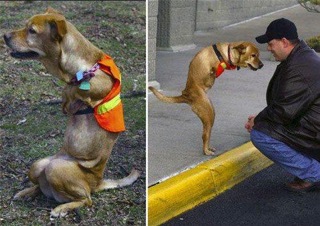
This dog was born in 2002. He was born with 2 legs. He of course could not walk when he was born. Even his mother did not want him.

faith1

His first owner also did not think that he could survive and he was thinking of putting him to sleep. But then, his present owner, Jude Stringfellow, met him and wanted to take care of him.

She became determined to teach and train this little dog to walk by himself.

She named him ‘Faith’.

faith2

In the beginning, she put Faith on a surfboard to let him feel the movement.  Later she used peanut butter on a spoon as a lure and reward for him for standing up and jumping around.  Even the other dog at home encouraged him to walk.

Amazingly, only after 6 months, like a miracle, Faith learned to balance on his hind legs and to jump to move forward.  After further training in the snow, he could now walk like a human being.

faith3

Faith loves to walk around now. No matter where he goes, he attracts people to him.

He is fast becoming famous on the international scene and has appeared on various newspapers and TV shows.  There is now a book entitled ‘With a Little Faith‘ being published about him.  He was even considered to appear in one of the Harry Potter movies.

faith4

His present owner Jude Stringfellew has given up her teaching post and plans to take him around the world to preach that even without a perfect body, one can have a perfect soul.

faith5

oooo

faith6

oooo

faith7

oooo

faith8

oooo

faith9

oooo

faith10

oooo

faith11

In life there are always undesirable things, so in order to feel better you just need to look at life from another direction.  I hope this message will bring fresh new ways of thinking to everyone and that everyone will appreciate and be thankful for each beautiful day.

Faith is the continual demonstration of the strength and wonder of life.

A small request: All you are asked to do is keep this story circulating.

oooOOOooo

We can never stop learning from dogs.

Thanks Dan!

Sanity anchors.

The importance of staying grounded in the face of the oncoming storm.

A few days ago, I exchanged emails with Jon Lavin.  In the early days of Learning from Dogs, Jon used to write the occasional post, one of which seems highly relevant some three years later.  I will republish it tomorrow.

jon-lavin

Jon and I go back a few years and most who know me know that it was Jon’s counselling back in 2007 that opened my eyes to something that, literally, changed my life.  For the better, I hasten to add!

In our recent email exchange, Jon wrote this:

Just started back at work today. A bit of a shock to the old system! Am wondering what to set my sanity sights on for this coming year in the middle of almost total uncertainty.

Of course!  How obvious! The need to ensure that our lives contain anchors of stability, safe places to curl up in, metaphorically speaking, where we can seek refuge from the winds of change.  Otherwise, we run the very real risk of being overcome by the uncertainty of the future.

The resonance with small boats and the sea is obvious, and unavoidable in the case of yours truly.

songbird-of-kent1
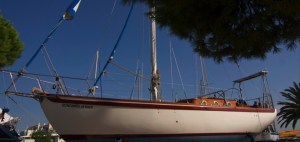
Tradewind 33, Songbird of Kent

For five years I lived on and sailed a Tradewind 33, Songbird of Kent; my base being Larnaca on the island of Cyprus at the Eastern end of the Mediterranean Sea.  Contrary to the image of the Mediterranean, it wasn’t uncommon to experience some ‘interesting’ weather; there were times when it could turn very nasty!

The comfort, physical and mental, offered by being tucked up in a small bay, listening to the storm about one, while riding securely to your anchor was beyond imagination.

Jon’s comment underscores the incredible importance of each of us knowing what anchors us to a secure place.  So, like any sailor, always keep a weather eye open for those early signs of a storm, and cast your anchor in good time.

Needless to say, having a loving dog or two in one’s life provides a wonderful storm-proof anchor.

P1120182

An awakened soul

Keeping it nice and gentle for today. 

We had neighbours come and have a meal with us a few days ago and in their thank-you email, the following was included.

Until one has loved an animal, a part of one’s soul remains un-awakened.
~ Anatole France

DL1

dl2

dl3

dl5

dl4

dl6

Thanks Dordie and Bill.

Hachikō, a lesson in faithfulness.

Note:  This post was first published in August, 2010 and has remained a very popular read on Learning from Dogs since then.

So here is that post once again, albeit with a few minor changes.

oooOOOooo

More than a film, a message from dogs to mankind.

Richard Gere and Hachi

We recently watched a film about an Akita dog called Hachi, Hachikō in Japanese, that demonstrates the loyalty that dogs can offer their human companions.

It’s a very moving film. Expect to shed many tears.  Even more so when one reflects that the Hollywood film is based, reasonably accurately, on a true story.  The details of this story are in Wikipedia from which is quoted:

In 1924, Hidesaburō Ueno, a professor in the agriculture department at the University of Tokyo took in Hachikō as a pet. During his owner’s life Hachikō saw him out from the front door and greeted him at the end of the day at the nearby Shibuya Station. The pair continued their daily routine until May 1925, when Professor Ueno did not return on the usual train one evening. The professor had suffered from a cerebral hemorrhage at the university that day. He died and never returned to the train station where his friend was waiting. Hachikō was loyal and every day for the next nine years he waited sitting there amongst the town’s folk.

Hachikō was given away after his master’s death, but he routinely escaped, showing up again and again at his old home. Eventually, Hachikō apparently realized that Professor Ueno no longer lived at the house. So he went to look for his master at the train station where he had accompanied him so many times before. Each day, Hachikō waited for Professor Ueno to return. And each day he did not see his friend among the commuters at the station.

The permanent fixture at the train station that was Hachikō attracted the attention of other commuters. Many of the people who frequented the Shibuya train station had seen Hachikō and Professor Ueno together each day. They brought Hachikō treats and food to nourish him during his wait.

This continued for nine years with Hachikō appearing precisely when the train was due at the station

Now watch and weep.

Back to the Wikipedia entry:

That same year, another of Ueno’s faithful students (who had become something of an expert on the Akita breed) saw the dog at the station and followed him to the Kobayashi home (the home of the former gardener of Professor Ueno — Kikuzaboro Kobayashi) where he learned the history of Hachikō’s life. Shortly after this meeting, the former student published a documented census of Akitas in Japan. His research found only 30 purebred Akitas remaining, including Hachikō from Shibuya Station.

Professor Ueno’s former student returned frequently to visit the dog and over the years published several articles about Hachikō’s remarkable loyalty. In 1932 one of these articles, published in Tokyo’s largest newspaper, threw the dog into the national spotlight. Hachikō became a national sensation. His faithfulness to his master’s memory impressed the people of Japan as a spirit of family loyalty all should strive to achieve. Teachers and parents used Hachikō’s vigil as an example for children to follow. A well-known Japanese artist rendered a sculpture of the dog, and throughout the country a new awareness of the Akita breed grew.

Eventually, Hachiko’s legendary faithfulness became a national symbol of loyalty.

Hachikō died on March 8, 1935. He was found on a street in Shibuya. His heart was infected with filarial worms and 3-4 yakitori sticks were found in his stomach. His stuffed and mounted remains are kept at the National Science Museum of Japan in Ueno, Tokyo.

Hachiko

A dog offers loyalty, trust and love in exchange for being treated with integrity and compassion.

That’s why we have so much to learn from dogs.

Smarter than we realise!

Mirror on my behaviours.

Another fascinating aspect of how we learn from our dogs.

The last week has been challenging, to say the least.

P1120158

The biggest winter storm in ages hit this part of Southern Oregon last Thursday, the 20th.  That day we lost our power to the home around 6.30 pm.  We only had it restored around 4pm last Sunday, the 23rd.  That meant no access to our well, no cooker, no heating in the house and … well you get the picture.

P1120160

The wet snow, some 9 inches or so, brought down trees across the property including one that blocked our driveway.

So where’s this leading?

Just that there have been times when I have been irritable to the extreme.  My normal patience with the dogs has been lacking from time to time.  Moments when I have pushed a dog away from me, or shouted at another when the barking was getting to me.

The dogs have been so forgiving, so tolerant of my irritability.  I was able to reflect in my quieter moments about my behaviours.  Able to see how well or otherwise I coped.  The dogs offered a mirror to me.  Allowing me a gently chastisement that getting angry with the world around me was my problem.  It was me that was ‘choosing’ my actions and behaviours.

The dogs also chose to respond to me.  Here’s how Hazel responded.

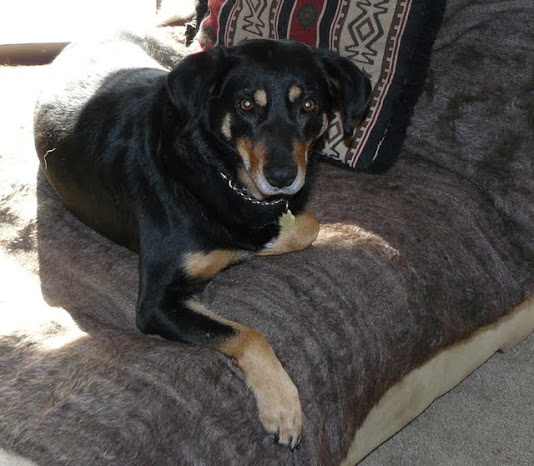
P1120183

Here’s how Dhalia responded.

P1120189

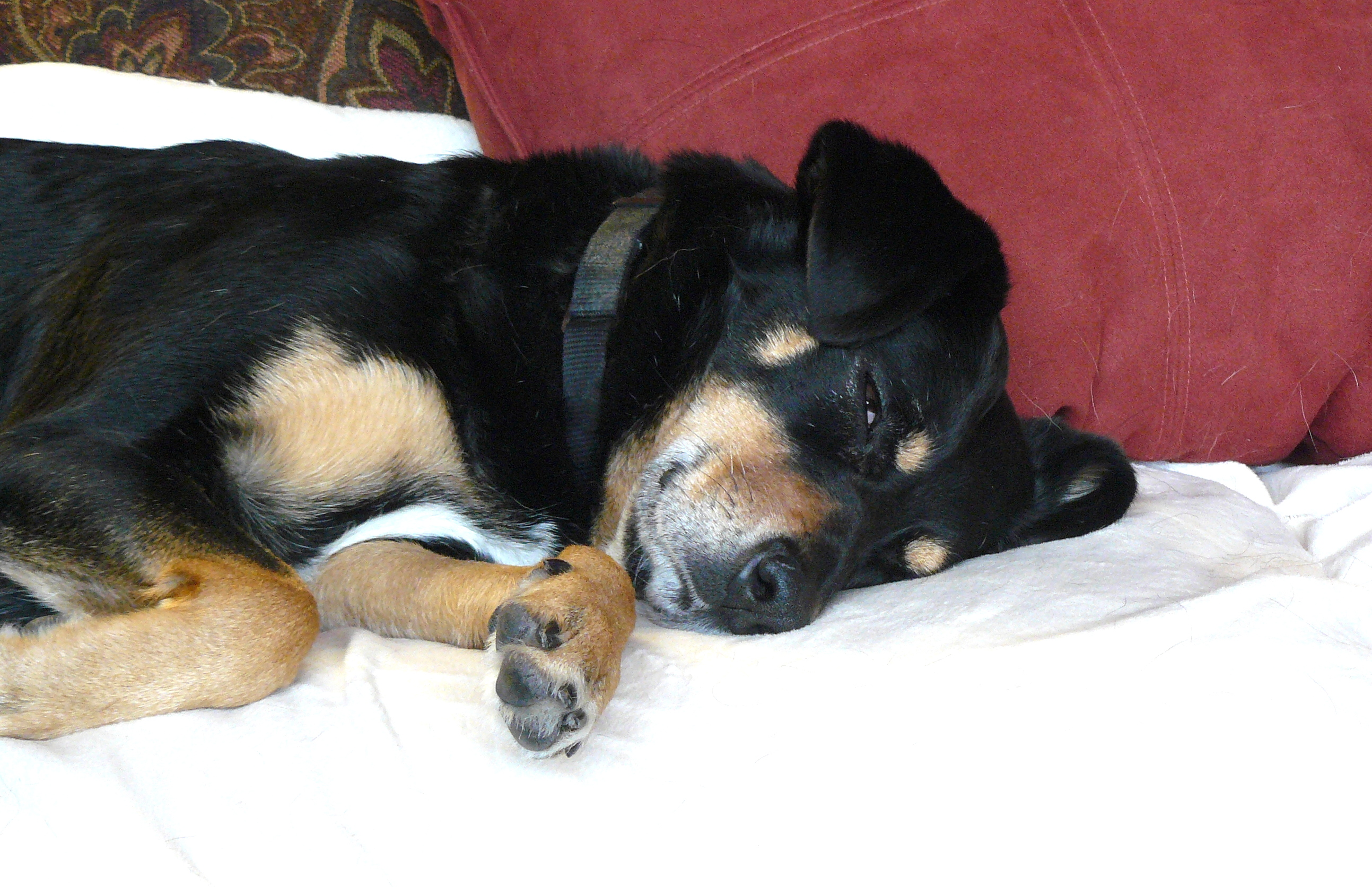
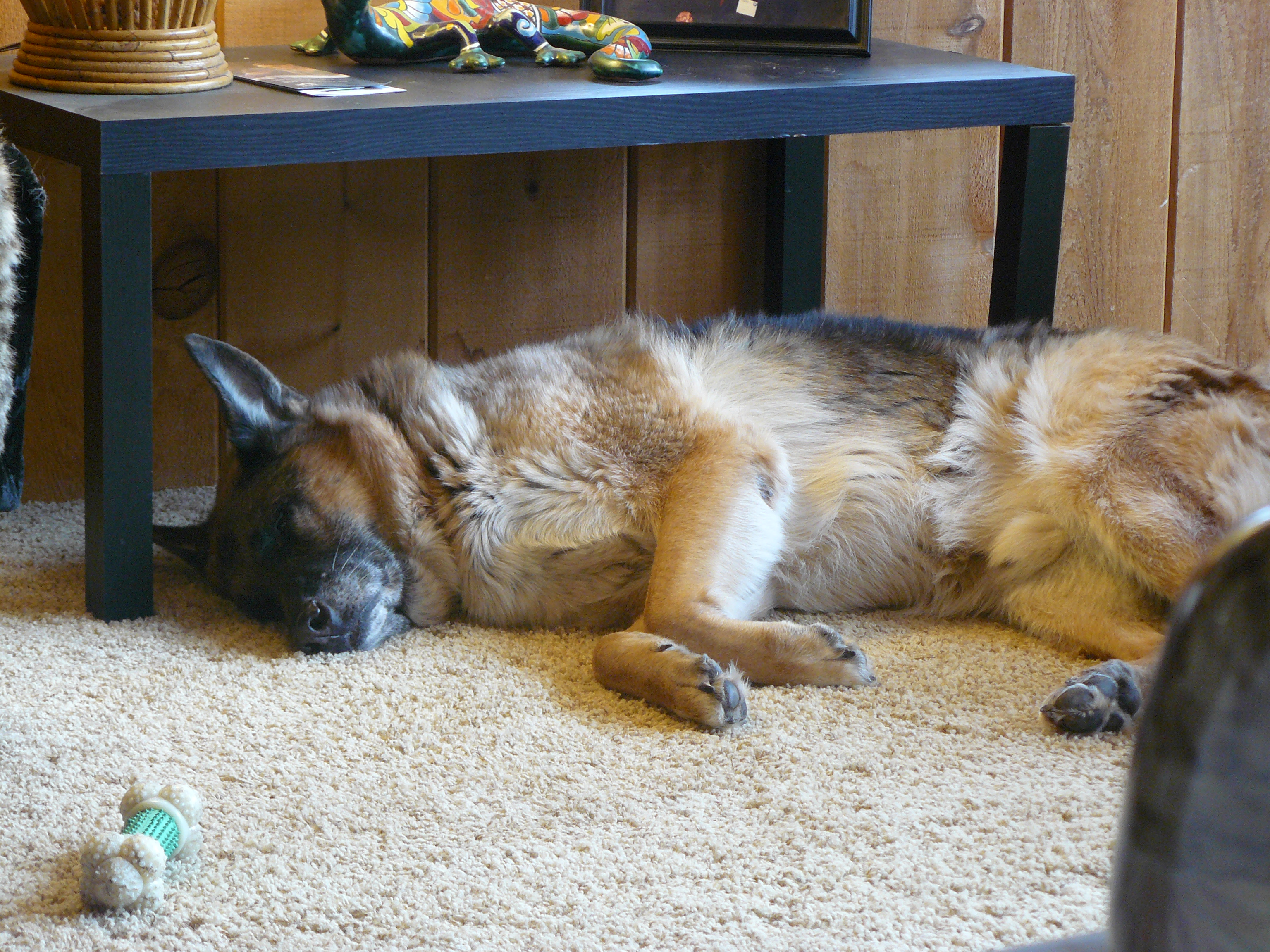
Finally, here’s how that grand old man Pharaoh responded.

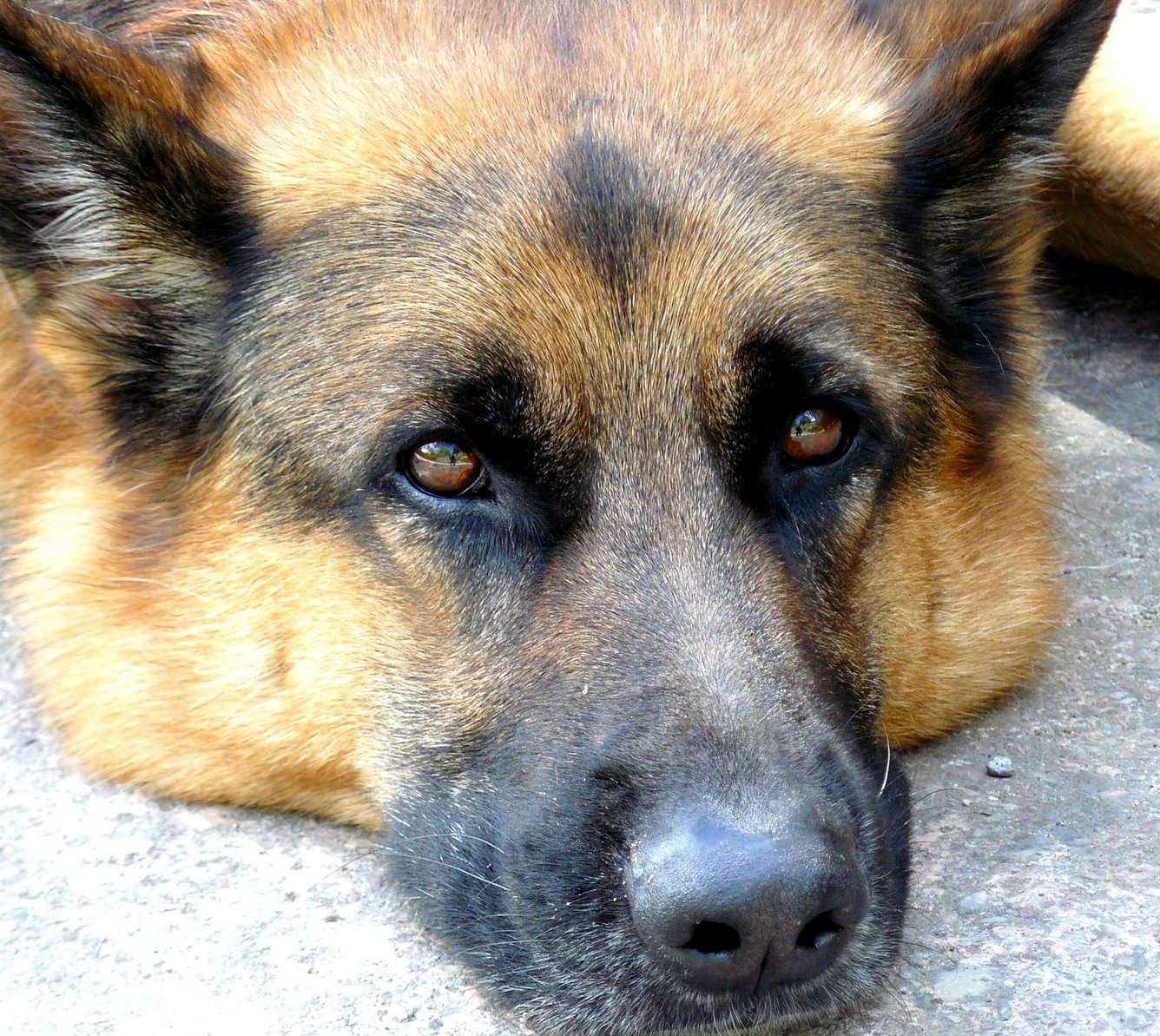
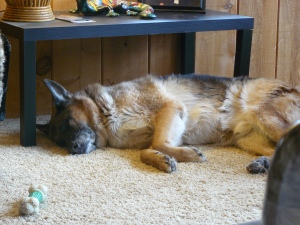
P1120193

All of them offering me the message: chill out, Paul!

Just very grateful.

Yet another aspect of what we learn from dogs.

This is Hazel.

Hazel

As I write these words, Hazel is laying down on the carpet just next to me.  She was dumped on the street outside Jean’s Mexican house back in early 2010.  Hazel was still in milk and probably had had her puppies taken from her and sold for a few pesos.  Who knows!

But her gratitude for being rescued by Jean is boundless.  Most nights she sleeps on our bed, curled up tightly behind my back.  Her love for her world here in Oregon is beautiful and pure.  As they say, dogs do not lie about love.

So what’s this leading up to?

Simply setting the scene for a wonderful TED video by Louie Schwartzberg, first seen by me on Christine’s blog 350 or bust.

Watch and be grateful for all the beautiful things in the world.

louieschwartzberg

Louie Schwartzberg is an award-winning cinematographer, director, and producer whose notable career spans more than three decades providing breathtaking imagery for feature films, television shows, documentaries and commercials.

This piece includes his short film on Gratitude and Happiness. Brother David Steindl-Rast’s spoken words, Gary Malkin’s musical compositions and Louie’s cinematography make this a stunningly beautiful piece, reminding us of the precious gift of life, and the beauty all around us.

As a visual artist, Louie has created some of the most iconic and memorable film moments of our time. He is an innovator in the world of time-lapse, nature, aerial and “slice-of-life” photography – the only cinematographer in the world who has literally been shooting 24 hours a day, 7 days a week continuously for more than 30 years.

Louie was recognized as one of the top 70 Cinematographers for the On Film Kodak Salute Series. He is a member of the Directors Guild of America and the Academy of Motion Pictures Arts and Sciences.

Louie is credited by many with pioneering the contemporary stock footage industry by founding Energy Film Library, a global company with a network of 12 foreign offices, which was acquired by Getty Images in 1997. Motion picture clients of his cinematic artistry include Sex in the City, The Bourne Ultimatum, Die Hard 4, Syriana, Crash, Men in Black and classics such as American Beauty, Koyaanisqatsi and E.T. among others.

Louie went on to found BlackLight Films, a creative production company specializing in producing original theatrical feature, large format films, HD and TV programming.

In 2004, BlackLight Films completed production of the theatrical feature film, America’s Heart &Soul, distributed theatrically by Walt Disney Pictures. In 2006, BlackLight Films completed a series of HD shorts, Louie Films, for the launch of Buena Vista Home Entertainment’s Blu-Ray DVD releases. In 2007, the company produced a 1-hour special, Chasing the Light, which aired nationally on PBS.

Past projects include the 35mm film Seasons of the Vine for Disney’s California Adventure Theme Park and a 26-half hour series, America!, for The Hallmark Channel.

Louie has won two Clio Awards for Best Environmental Broadcast Spot, an Emmy nomination for Best Cinematography for the Discovery Channel Special, Oceans of Air, and the Heartland Film Festival’s Truly Moving Picture Award for Walt Disney Pictures’ feature film release America’s Heart & Soul.

Louie completed production on a feature length nature documentary, Wings of Life, to be theatrically released worldwide, under Walt Disney Pictures’ new production banner, Disneynature. The film was released in France (March 2011) under the title Pollen and won the Roscar Award for Best Cinematography at the 2011 Wild Talk Africa Film Festival.

Louie spoke at the TED 2011 conference in Long Beach, CA and has been a regular presenter at the annual Bioneers Conference in San Francisco. Currently, Louie is in production with National Geographic to produce Hidden Worlds, a 3D Imax film.

To underline the gratitude that I have to be here surrounded by such beautiful countryside, let me close with this picture recently taken from our bedroom window.

Deer

Woof, woof, let me drive, Daddy!

With thanks to Martin Lack for forwarding this item.

As reported on the BBC,

5 December 2012

A charity in New Zealand is teaching rescued dogs how to drive a car.

The canine driving school is aimed at proving how intelligent the animals can be.

Monty the giant schnauzer is among the novice drivers who have learned to control the brakes, gears and steering wheel.

Bill Hayton reports.

Prepare to be amazed!

The love of a dog.

More on the beautiful and inspiring ways of the dog.

Back at the beginning of July, I wrote a post about Jasmine.  Jasmine was a rescue dog that turned out to be a natural ‘Mother hen’.  That post was called Letting go; a dog lesson and, as the post explains, “Jasmine was truly one of a kind. She mothered many of the sanctuary’s residents back to health including Bramble the roe deer, Humbug the badger and two of the other sanctuary dogs, just to mention a few.

But, guess what?  More evidence of the benefits of having a dog in your life (or in our case make that 10 dogs!).

From the blogsite The Raw Story comes this:

Babies who spend time around pet dogs have fewer ear infections and respiratory ailments than those whose homes are animal-free, reported a study.

The study, published in the US journal Pediatrics, did not say why but suggested that being around a dog that spends at least part of its day outdoors may boost a child’s immune system in the first year of life.

Cats, too, seemed to convey some protection to babies, though the effect observed was weaker than with dogs.

The article goes on to say,

The research was based on 397 children in Finland whose parents made diary entries each week recording the state of their child’s health during the infant’s first year, from nine weeks to 52 weeks of age.

Overall, babies in homes with cats or dogs were about 30 percent less likely to have respiratory infectious symptoms — which included cough, wheezing, rhinitis (stuffy or runny nose) and fever — and about half as likely to get ear infections.

And concludes,

The most protective association was seen in children who had a dog inside at home for up to six hours a day, compared to children who did not have any dogs or who had dogs that were always outside.

“We offer preliminary evidence that dog ownership may be protective against respiratory tract infections during the first year of life,” said the study.

“We speculate that animal contacts could help to mature the immunologic system, leading to more composed immunologic response and shorter duration of infections.”

The improvement was significant, even after researchers ruled out other factors that could boost infection risk, such as not having been breastfed, attending daycare, being raised by smokers or parents with asthma, or having older siblings in the household.

In addition to having less frequent ear infections and respiratory infections, babies near dogs tended to need fewer courses of antibiotics compared to those who were reared in pet-free households, it said.

Previous research has shown conflicting results, with some studies finding no benefit for young children being around furry pets and others finding that animal contact appears to offer some protection against colds and stomach ailments.

The study authors said their research differs from previous analyses because it focuses solely on the first postnatal year and does not include older children.

Pharaoh approves!

Clever old dogs

This was first published on the 31st October, 2009.

Dogs? Yes, we can certainly learn a lot from them.

We could start by learning to clean up our own mess better …..

obedience-dog
Setting an example ….