Category: Core thought

Please Help a George

A canine charitable opportunity that deserves wide support.

The details that follow strike a chord with me, strike a chord in a big way.  When I first came to live with Jean back in 2008 it was clear that this wasn’t going to be a normal relationship.  Why?  Because, at that time Jean had 12 dogs living with her in San Carlos, Mexico and my arrival, together with my Shepherd dog, Pharaoh (see home page for a picture of him), took that number to 13.  Jean’s dogs were all Mexican rescues; she also ran her own local humane society in San Carlos and over the years had found homes for literally dozens of dogs.

One of those Mexican rescues was a dog called Loopy, who had been terribly treated by local Mexicans.  The consequence when I arrived, a stranger in the middle of Loopy’s life with Jean, was that Loopy was very aggressive towards me; my hands have small scars to bear witness to the number of nips Loopy launched in my direction.

It took over a year before I was able to just let my hand ‘accidentally’ brush her side.  Slowly Loopy’s trust in me built up until now I can press my face to her face and cuddle her for ages.  (To underline the love that Loopy bestows on me, I will get Jean to take a picture and publish that before the end of the week.)  So with that in mind, let me turn to the details recently sent to me by friend and colleague, Dapinder Singh, from England.

———————

George and loving owner, Ian.

This is George. He was in an English dog pound and condemned to death.

He had been very badly abused, one eye blinded by what was thought to be a kick, he trusted no-one and had rejected all human contact.  He was desperate and in despair.

After an exhaustive search for anyone who take on the rescue of George, we (as in Doris Banham) took him into our care just a day before he was due to be euthanased.  His veterinary problems were easier to deal with than the mental ones.  His eye was damaged beyond repair causing him constant pain so it had to be removed, teaching George to trust again was much harder.

That journey back to trusting humans was long, George had suffered severe and terrible abuse,  but there was no question of giving up on him and slowly but surely he began to live again as we fought to undo the wrongs that had been done to him. After some months with us, a wonderful family came to the rescue and offered George his ‘forever’ home where he found the love that he so deserved. His family are completely devoted to him.

His story, however, could have been a very different one were it not for the work of the team at Doris Banham’s. Below is an extract written by the lovely family who adopted him and from our fantastic volunteer, Sheila, who helped bring George back to life again.

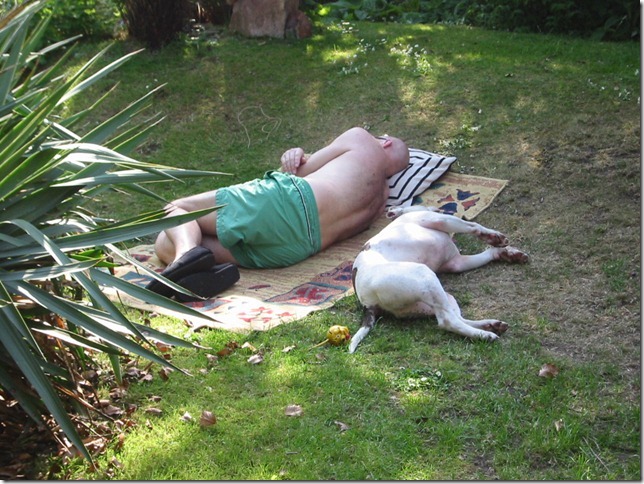
“Hi, Sheila. Here is a shot of George in his new garden. He is settling down very well and seems to be very happy. I will keep you posted as to his progress. All the best Liz and Ian.”

There were a number of photographs sent to Sheila, however I have taken editor’s liberty and moved them to the foot of the article – I want you to stay with this to the point where you can see how to help.  Here’s Sheila’s reply,

“WELL THESE BOUGHT ME TO TEARS , OUR GEORGE , THIS IS TRUE RESCUE , THIS IS ALL DOWN TO YOU DORIS BANHAM NOTHING ELSE TO SAY …” SHEILA X.

Are there other Georges out there?  You bet! Far too many of them, right across the world.  So let’s all do something to help these special creatures, who show us humans just what unconditionally love feels like.

Friday 4th November, 7.30pm – Come to the Hellaby Hall Hotel, Old Hellaby, Maltby, Yorkshire, S66 8SN

Call for tickets now to the Pound Dog Ball telephone number (UK) 07772 538513 or email pogpublications@yahoo.com  Full details here.

Please help all the Georges out there by supporting this Charity Fundraising Event: Black Tie, Dinner/Dance at Hellaby Hall, Rotherham, 7.30pm, on Friday 4th November. It’s a don’t miss night…..3 course meal, live entertainment all night and dancing ’til late!!!! It’s going to be a great night.

If you can’t make the Ball but would like to send in a donation then please post a cheque, made out to Pound Dog Ball, to the following address:

c/o Jennifer Smith

Clumber Lodge,

50 Hemingfield Road

Wombwell, S73 0LY.

Or if you prefer an electronic donation, further details are:

Pound Dog Ball
A/C 31542265
Sort 40-45-29 (HSBC)

The account is a charity account, set up only for this event.  Once the money has been paid to the charities the account will be closed.

All monies raised will be shared between http://www.dogsos.co.uk/ (Doris Banham) and http://www.barnsleyanimalrescue.org.uk/  (Barnsley Animal Rescue Charity)

I know that Dapinder, and everyone else involved in helping these precious animals, sends you their heartfelt thanks.

Finally, more photos of George enjoying life as all dogs should. What a wonderful story, an honour to be able to publish it, and promote the Ball, on Learning from Dogs.  Please help.

Can modernisation be “ecological”?

Three guest posts from Martin Lack of Lack of Environment, today the concluding Part Three

Hope you have been following the previous two parts of this essay from Martin.  Part One can be read here; Part Two here.

————————-

Can modernisation be “ecological”? – Part 3

This is the third and final part of my mini-critique of the school of environmental thought known as Ecological Modernisation.
——————-
Newsflash: Today [Sept. 27th.] is Earth Overshoot Day for 2011. This was a genuine coincidence (i.e. I did not know this when I decided to do this 3-part story). See paragraph 2 below…
——————-

Where are we now?
In his seminal 1968 article on ‘The Tragedy of the Commons’, Garrett Hardin had observed that it was not possible to achieve Jeremy Bentham’s hedonistic goal of “the greatest good for the greatest number” because, at the level of the individual, to do so would require food and/or energy to be used for subsistence purposes only (Hardin 1968: 1243). In 1977, William Ophuls agreed that the optimum population is not the maximum possible, which appears to imply that, if necessary, artificial limits to growth should be imposed. Furthermore, he explicitly stated that, “…this optimum level… may be as little as fifty percent of the theoretical maximum…” (Ophuls 1977: 28).

Mathis Wackernagel et al have recently provided “…evidence that human activities have exceeded the biosphere’s capacity since the 1980s. This overshoot can be expressed as the extent to which human area demand exceeds nature’s supply. Whereas humanity’s load corresponded to 70% of the biosphere’s capacity in 1961; this percentage grew to 120% by 1999.” However, the authors also pointed out that, if… “12% of the bioproductive area was set aside to protect other species; the demand line crosses the supply line in the early 1970s rather than the 1980s” (Wackernagel et al 2002: 9268-9)(emphasis mine).

In laboratory-controlled studies, the size of a population of, say, fruit flies can be shown to depend on the scarcity or abundance of food; and the presence or absence of predators. However, in 2005, Meadows et al pointed out that a growing population “…will slow and stop in a smooth accommodation with its limits… only if it receives accurate, prompt signals telling it where it is with respect to its limits, and only if it responds to those signals quickly and accurately” (Meadows et al 2005: 157).

This pursuit of the resulting “S-curve” is sometimes referred to as the demographic transition of an increasingly affluent society through three stages: (1) high birth and death rates; (2) high birth rate but low death rate; and (3) low birth and death rates. However, in a section entitled ‘Why Technology and Markets Alone Can’t Avoid Overshoot’, Meadowset al also pointed out that if we put off dealing with limits to growth we are more likely to come up against several of them simultaneously (ibid: 223).

Even though no-one seems to want to talk about population control today, neither Hardin nor Malthus was the first to raise this contentious subject because, as Philip Kreager has pointed out, this dubious honour goes to Aristotle’s treatise on Politics within which, “…population is a recurring topic, extensively discussed and integral to the overall argument…” (Kreager 2008: 599). Furthermore, according to Theodore Lianos, although Aristotle was thinking at the scale of a city rather than a country, the great philosopher recognised that there was an optimum population size, which depended on the land area controlled by the city (for food production purposes), which could be determined by, “the land-population ratio that produces enough material goods so that the citizens can live a wise and generous life, comfortable but not wasteful nor luxurious” (Lianos 2010: 3).

Conclusions
It has been demonstrated that dematerialisation alone cannot deal with the problem of resource depletion unless the increase in unit efficiency is greater than the increase in scale of production (i.e. something that cannot be sustainable indefinitely).

Furthermore, whereas it may be possible to partially decouple environmental degradation from economic growth, pursuit of this as a sole objective is a dangerous strategy. This is because to do so is to remain ambivalent about the existence and significance of limits to growth; indeed it is to deny that growth itself may be the problem.

In the final analysis, the only thing that will be sustainable is progression towards the steady-state economy proposed by Daly and others; combined with qualitative development instead of quantitative growth. Therefore, the only form of modernisation that could be ecological is one that places the intrinsic value of vital resources such as clean air and clean water – and the inherent value of a beautiful landscape – well above the instrumental value of money or precious metals.
——————-
References:
Hardin, G. (1968), ‘The Tragedy of the Commons’, Science, 168, pp.1243-8.
Kreager, P. (2008), ‘Aristotle and open population thinking’, Population and Development Review 14(34), pp.599-629.
Lianos, T. (2010), ‘Aristotle’s Macroeconomic Model of the City-State’.
Meadows D, et al (2005), Limits to Growth: the 30-Year Update, London: Earthscan.
Ophuls, W. (1977), Ecology and the Politics of Scarcity, San Francisco: Freeman and Co..
Wackernagel, M. et al (2002), ‘Tracking the ecological overshoot of the human economy’,Proc. of the National Academy of Sciences [USA], 99(14), pp.9266-9271.

The German Shepherd dog

Republished, with permission, from the Blog Dreamwalker’s Sanctuary – thank’s Sue.

Sometimes when I want to clear a space in my head I like to either listen to music or Draw… This week I had some spare time on my hands and so the Sketch pad and Pastels came out once again..

And here is the result.

I hope you enjoy the result of this German Shepherd Dog I drew in Pastels..

I wasn’t brought up with Dogs my family always had cats, But I just love German Shepherds, well all four legged Dogs and Cats and animals .. But I remember one German Shepherd which was rather special… her name was Xena  who belonged to a dear friend..


Xena

She sent me this picture of her some years ago now.. Sadly  Xena she is no longer with us…My earliest memory of a German Shepherd was when I was 6 or 7 years of age. I remember I had to walk past the Vicarage gates to the infant school in our village where this huge GS was usually safe behind… His bark I think was worse than his bite.. But to a young girl I was scared of him.. One day the gate was open and he bounded out as I went past, and he barked loudly at me..

My heart raced and I think I started to cry.. as I was on my own.. I remember a woman coming to my aid and saying he wouldn’t hurt me.. as she calmed me down..

The German Shepherd was ushered back behind the gate, But not before someone had let me stroke him and take away my fear.. Or I may have been afraid of dogs in the future..


Funny how when one’s mind is trying to empty itself.. It then becomes full of past memories.. That are triggered by something else..


Have a Great weekend all of you, and Sorry if I didn’t get around to visit all of you but your on my to do list.. Next week as I’m working this weekend..


Take care and be good to each other.


Can modernisation be “ecological”?

Three guest posts from Martin Lack of Lack of Environment, today Part Two

As previously mentioned, Martin came to the attention of Learning from Dogs when making a comment to the second part of my Sceptical Voices essay.   This is the second part of an essay that Martin wrote that is worthy of deep consideration.  Part One can be read here; the concluding Part Three next Monday, the 10th.

————————-

Can modernisation be “ecological”? – Part 2

What is the problem with Modernity?
The problem is that the accumulation of personal wealth has become the sole objective of many people in modern society; and perpetual growth is posited as a means whereby even the poorest might achieve it. However, the New International Version of the Bible records the Apostle Paul as having written, “For the love of money is a root of all kinds of evil…” (1 Timothy 6:10); and economists and politicians have argued about this for centuries…

According to Jon Elster, it was Karl Marx that coined the term ‘money fetishism’ to describe the belief that money (and/or precious metals) have intrinsic (use) value rather than just instrumental (exchange) value, which Marx felt was as misguided as the religious practice of endowing inanimate objects with supernatural powers (Elster 1986: 56-7). However, the terms use value and exchange value were first put forward by Aristotle (384-322 BC) who, according to Daly, also recognised the danger of focusing on the latter (i.e. whereby the accumulation of wealth becomes an end in itself). Therefore, Daly suggests that the paperless economy (where no useable commodities actually change hands) is the ultimate destiny for money fetishism (Daly 1992: 186).

In 1987, the World Commission on the Environment and Development (WCED) was clearly keen to try and settle an argument and, therefore, made the following quite astonishing assertion: “Growth has no set limits in terms of population or resource use beyond which lies ecological disaster” (Brundtland et al 1987: 45). Instead, WCED gave us the much-touted – but ill-defined – concept of sustainable development (SD). However, in stark contrast to the WCED report, Carter much more recently observed that SD “…will require a fundamental transformation in attitudes to economic growth, consumption, production and work” (Carter 2007: 48). This appears to be a subtle acknowledgement of the legitimacy of Herman Daly’s insistence of the need for a move to a steady-state economy; precisely because infinite growth is impossible in a closed system.

A basic tenet of Daly’s thesis is that economic activity does not take place in a vacuum and that economic – not just ecological – collapse awaits us unless we recognise the limited capacity of the ecosystem within which we operate: “Of all the fields of study, economics is the last one that should seek to be ‘value-free’, lest it deserve Oscar Wilde’s remark that an economist ‘is a man that knows the price of everything and the value of nothing.’” (Daly 1992: 4).

On 22 December 2010, the BBC broadcast a Panorama programme entitled “What Price Cheap Food” containing the startling revelation that, in the two years between 1 November 2008 and 1 November 2010, town planners approved applications for at least 577 new supermarkets across the UK. The programme also revealed that so-called “mega farms” (i.e. factory farming of cows and pigs – “dairy-go-rounds” and “sty scrappers” respectively) will be the next ‘big idea’ imported from the USA. The potential mega farm operators argue that there is significant scope for recycling and energy from waste schemes to be incorporated, although environmentalists would question (1) the wisdom of concentrating potentially polluting activities; and (2) the ethics of factory farming (which undoubtedly goes against the grain of green consumerism). However, although the potential for economies of scale cannot be denied, this could all be seen as symptomatic of what Daly called “growthmania“.

Growthmania versus Limits to Growth
One of the world’s most famous deniers of Limits to Growth arguments is Julian Simon, who once famously won a bet with Paul Ehrlich that the price of any commodity would reduce with the passage of time. Nevertheless, how can anyone deny that the Earth’s resource base or its capacity to accommodate human beings is anything other than limited? Quite easily, apparently: In 1994, Simon claimed that “humanity now has the ability (or knowledge) to make it possible to feed, clothe, and supply energy to an ever-growing population for the next 7 billion years.”

However, the stupidity of such a dangerously fallacious argument was exposed 2 years later by Paul and Anna Ehrlich, who pointed out that at 1994 growth rates, “it would take only 774 years for the 1994 population of 5.6 billion to increase to the point where there were 10 human beings for each square meter of ice-free land on the planet!” Furthermore, they pointed out that if growth did not decline from 1994 levels, it would take only 1900 years for the mass of the human population to equal the mass of the Earth! (Ehrlich and Ehrlich 1996: 66).

Fortunately, the UN now believes (May 2011) that the human population on this planet will probably stabilise by the end of the current Century at somewhere between 10 and 15 billion. The only trouble with that is that, we may well have already exceeded the ecological carrying capacity of the planet, and are therefore causing extreme stress to the global ecosystem; of which the most obvious symptom is AGW.
—————-
References:
Daly, H. (1992), Steady State Economics (2nd ed), London: Earthscan.
Elster, J. (1986), An Introduction to Karl Marx, Cambridge: Cambridge University Press.
Ehrlich, P. and Ehrlich, A. (1996), Betrayal of Science and Reason, New York: Island Press.

Can modernisation be “ecological”?

Three guest posts from Martin Lack of Lack of Environment, today Part One

Martin came to the attention of Learning from Dogs when making a comment to the second part of my Sceptical Voices essay.  Since then, he and I have exchanged a number of emails.  Over the next few days, I would like to re-publish an essay that Martin wrote that is worthy of deep consideration.  Here is Part One.  Part Two will be on Friday and Part Three next Monday, the 10th.

————————-

Can modernisation be “ecological”? – Part 1

This is the first of a series of posts based on an essay with this title that I wrote earlier this year as part of the requirements for my MA in Environmental Politics.

Introduction
There are two possible ways of understanding the question; as to require a critique ofEcological Modernisation (EM) as a school of environmental thought or perhaps, far more demandingly, a critique of modernity itself. Although the main intention of this essay is to do the latter; it will inevitably do the former as well.

Definitions
In order to answer this question, it is essential to define what is meant by ‘ecological’; ‘modernisation’; and the theory of EM to which it has given rise:
– In the context of the question, ‘ecological’ is taken to mean thinking, behaviour, and policy that are ‘environmentally-friendly’; rather than merely or predominantly anthropocentric (i.e. concerned with human needs and interests).
– To understand what is implied by the term ‘modernisation’, it is necessary to define what is meant by the word ‘modernity’ because people often conflate the term with industrialisation or even capitalism. However, whereas both of the latter were forged in the industrial revolution of the late eighteenth and early nineteenth century, modernity has its roots in the scientific revolution of “the Enlightenment” in the eighteenth century.
– The theory – if not the practice – of EM emerged from Germany in the early 1980s. Whereas the social scientists Joseph Huber and Martin Jänicke are most-commonly credited with having originated the term, it is probably Arthur Mol that brought it to the attention of the English-speaking world in 1996, when he quoted Huber as having (somewhat enigmatically) said, ‘…all ways out of the environmental crisis lead us further into modernity.’ Thankfully, Mol then went on to explain that EM theory therefore seeks to repair “…a structural design fault of modernity: the institutionalised destruction of nature.” (Mol 1996: 305).

In addition to the above, it is important to differentiate the terms ‘modernity’ and ‘civilisation’: Civilisation pre-dates the Enlightenment by several millennia; and is often equated with the development of agriculture, settled communities, and cities. However, since past civilisations have come and gone, is there any reason to think that our modern civilisation will be any different? This should not be seen as the question of a wannabe anarchist; as it is merely an acknowledgement of human history.

According to John Dryzek, the rhetoric of the EM discourse is reassuringly optimistic; and would have us believe that we can retain a healthy environment without having to sacrifice the benefits of progress (Dryzek 2005: 171). More recently, echoing both Mol and Dryzek, Neil Carter has defined EM as a “…policy strategy that aims to restructure capitalist political economy along more environmentally benign lines based on the assumption that economic growth and environmental protection can be reconciled.” (Carter 2007: 7).

It is in this context that Carter used the term “decoupling” to refer the idea of breaking any direct causal link between economic growth and environmental degradation; but also suggested that “dematerialisation” of manufacturing processes (i.e. the reduction of environmental resources consumed per unit of production) would be essential (2007: 227). However, if we take the manufacturing of motor cars as an example, the rate of fossil fuel consumption will always accelerate unless the percentage increases engine fuel efficiency is greater than the percentage increases in the number of cars. Therefore, since the former must exponentially decline towards zero, the logical conclusion is that we must control the demand for the latter.
—————
References:
Carter, N. (2007), The Politics of the Environment (2nd ed), Cambridge: Cambridge University Press.
Dryzek, J. (2005), The Politics of the Earth (2nd ed), Oxford: Oxford University Press.
Mol, A. (1996), ‘Ecological Modernisation and Institutional Reflexivity: Environmental Reform in the Late Modern Age’, Environmental Politics, 5(2), pp.302-23.

The Power of Joy

Yet another fabulous example from dogs.

This is a guest post from Joelle Jordan.  Let me broadcast my gratitude for this lovely story. For two reasons.  The first is that Joelle is very generous in sharing her fine work and the second is that at the time of me putting this Blog post together, 4pm yesterday, I really needed a helping hand – have been short of time all week-end.  So thank-you Joelle.  Here’s her story.

————————-

Joy is a difficult commodity to come by these days. I don’t mean entertainment, I don’t mean a good laugh, I mean pure joy, where, even just for a single moment, all worries and doubts, frustration and anger are lifted as though by Atlas.

Like so many other humans in our world, I often find myself in a constant state of stress. There always seems to be something to worry about, whether it’s money, job fulfilment, the state of my relationships, getting the house cleaned, finding time to get to the market, and more. If given the chance, I know we all could spend nearly all of our waking hours (and some of our sleeping hours, too) worrying about something. We spend so much time on the many things that inevitably work themselves out, and so little time on things that will create a memory and a crystal moment of joy.

Jordan and Charlie

My little dog Charlie spends his time in the completely opposite fashion; spending his waking hours seeking joy, and committing less time to things that worry him.

Charlie seems to exist normally in three states of being; content, happy and utterly joyful. When I see him in an emotional state other than these, it nearly breaks my heart. I wonder why this little carefree being who brings such happiness to my life should be anything less than blissful at all times.

I notice something about how Charlie handles his stressful moments, however few and far between they may be. A recent example just occurred. My partner and I are teaching him how to behave on a leash. He has generally not given us any problems on a leash and took to the activity rather quickly. My partner can easily walk him to the corner and back, and he happily accompanies her, listening to her commands and responding, exploring his world in the safe company of his mama, creating a nice outing for them both.

However, his behavior closer to the house is less than stellar, barking at people (especially children who are frenetic and loud) and other dogs, generally forgetting that he is neither a big dog nor in charge of everyone, and just acting rather rude. A change in behavior from his human friend and he learned quickly that running after something and barking while on the leash earns him a very sudden and not so gentle stop, all powered by his own momentum, his harness jerking him off his paws and backwards. After the first incident or two, he ran back to me, the little boy that he is, placing his paws on my leg as I squatted down to him, burying his head in my chest. I assured him that he was fine and stroked him, and told him, “You can’t do that, buddy, see what happens?”

Here is where the story could turn into his utter contempt of the harness and leash. Rather, though, after a little stroking and encouragement, he became ready to try again. This time, instead of running and barking after the children at play in the neighbor’s yard, he calmly walked with me to the end of our driveway and then sat quietly and watched them shoot hoops. When it was time to go in, we walked back to the front door, accompanied by the cheering compliments of “Good job!” and pats from my partner. I saw him begin to walk a little taller and prouder, somehow understanding about a job well done and lesson learned. He trotted through the front door in search of his brother, our Chihuahua Jordan. His happy tongue dangled in wait for the promised treat. The stress he’d been seemingly engulfed in was simply released, gone. It was experienced and then just let go.

Perhaps I’m slightly jaded; after all, it was just a simple leash lesson. In truth, this little animal has no responsibilities except to be cute, not to pee in the dining room and not to chew on things. He has no bills to pay; his only worry is probably something vague about his supper. Sometimes, when letting them out of their crates, Charlie is less happy to see me (master, mama, food giver, spoiler) but is nearly bursting to get at and play with his big brother Jordan. Personal feelings (hurt and otherwise) aside, isn’t there a lesson to be learned here? He continues to teach me.

I watch his eyes. I have since I’ve known my little guy; I find them to be fascinating. In Merle’s Door, Ted Kerasote describes Merle as a “four eyed” dog; a dog that seems to have eyebrows (darker fur over his eyes ) that help express his feelings. Charlie is also a four-eyed dog.

Stanley Coren, the astute canine psychologist from the University of British Columbia, has also noted that these “four-eyed” dogs obtained their reputation for psychic powers “because their expressions were easier to read than those of other dogs. The contrasting-colored spots make the movement of the muscles over the eye much more visible.”

Case in point: the other morning Jordan had burrowed under an Indian blanket for it was a little chilly. Charlie, on the other hand, was in simple need of something: play. Jordan, however, was warming and had no interest. Charlie looked up at me, and held a conversation with me with only his eyes: Mom, make him play!

“He doesn’t want to play, bud, I’m sorry.”

He’s under the blanket! That’s the best time to play!

“But he doesn’t want to play right now, Charlie.”

Distraught. His eyebrows were high but off to the side, the classic cartoon expression of distress. If his lip could’ve quivered from holding back tears, it would have. A soft whimper.

How can that be?

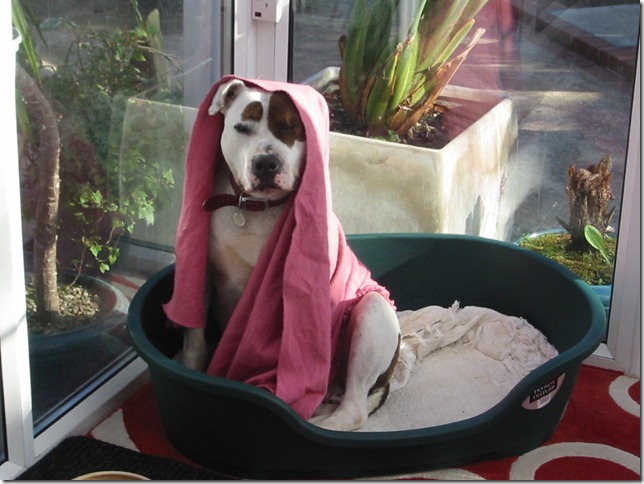
It was a less than joyful moment for Charlie, but it was something out of my power to control. All I could do was redirect him. I enlisted him to come help me with the laundry. This is a favorite past-time of his because there are dryer sheets to be rooted out and torn to shreds. As I moved the clothes from the washer to the dryer, I saw that my boy had found his joy again but not in search of dryer sheets: he had jumped into the basket of dirty laundry and discovered a plethora of good and interesting smells, one of my t-shirts now covering his head like a scarf.

He was in heaven for probably the fourth or fifth time that morning.

————————-

Joelle in speaking about joy echoes a part of yesterday’s sermon that I hope to write a little about before the end of the week.

Consequences

Acceptance of what has happened is the first step to overcoming the consequences of any misfortune. 

William James, January 11th, 1842 - August 26th, 1910

The above is a quotation attributed to the late American philosopher, William James, comprehensively written about on the Stanford Encyclopaedia of Philosophy.

When drafting this post last Wednesday, I used the quotation and reference to William James to soften, as it were, me reproducing an item on Yves Smith’s fabulous blog, Naked Capitalism.

I did have second thoughts about including the video below and the summary of what was written by Yves.  The second thoughts were around me not wanting Learning from Dogs to stray into sensationalism or hot pop topics.

The reason I did publish this post was that maybe, just maybe, young Mr. Alessio Rastani is saying it how it really is.  How we all have been lulled over the years into believing so much rubbish from so many movers and shakers in the world of power and politics.  Whereas, in truth, most people who stop and reflect on the world we are presently living in, intuitively sense, that something has broken.

The good news that may be interpreted from Mr. Rastani’s predictions is that we are now living through a period of change, the end of an era, and that the opportunity for a better, more caring world is wide open.

Introduced on the Naked Capitalism site, as follows,

This segment on BBC may not go viral, but it seems to be getting traction, based on the e-mails (hat tip readers Paul S and Marcus) and alerts in the comments section.

This is not an entertaining Rick Santelli-style rant, it’s a cool assessment of how the Euromarket crisis is likely to end, which he thinks is very badly. The flummoxed reaction of the BBC host suggests that the trader, Alessio Rastani, was a booking mistake.

But consider his second message: that Goldman and people rule the world and like him don’t care about what happens to the real economy. A depression is just a great investment opportunity if you see it coming and position yourself accordingly. Rastani is the bland, reasonable face of predatory capitalism.

But in the best interests of scepticism and balance, I also reproduce what was published in the UK’s Telegraph newspaper on the 27th September,

11:50PM BST 27 Sep 2011

The soundbites won Mr Rastani instant fame. He became a viral hit and was trending on Twitter. BBC business editor Robert Peston was among the fans. “A must watch if you want to understand the euro crisis and how markets work,” he told his army of 82,000 followers on Twitter on Tuesday.

The interview contained such gems as “Governments don’t rule the world, Goldman Sachs rules the world [and] Goldman Sachs does not care about the rescue package.”

But on Tuesday night the BBC was left facing questions about just how qualified Mr Rastani is to speak about the markets.

In the interview Mr Rastani described himself as an independent trader. Elsewhere he claims he’s an “investment speaker”. Instead of operating from a plush office in Canary Wharf Mr Rastani works and lives with his partner Anita Eader in a £200,000 semi in Bexleyheath, south London. The house, complete with a mortgage from Royal Bank of Scotland, belongs to her not him.

He is a business owner, a 99pc shareholder in public speaking venture Santoro Projects. Its most recent accounts show cash in the bank of £985. After four years trading net assets are £10,048 – in the red.

How a man who has never been authorised by the Financial Services Authority and has no discernible history working for a City institution ended up being interviewed by the BBC remains a mystery.

The incongruity led to some commentators speculating Mr Rastani was a professional hoaxer. The BBC denied the allegation: “We’ve carried out detailed investigations and can’t find any evidence to suggest that the interview with Alessio Rastani was a hoax.”

However, the BBC declined to comment on what checks, if any, it had done prior to the interview.

Mr Rastani was a little more forthcoming.

“They approached me,” he told The Telegraph. “I’m an attention seeker. That is the main reason I speak. That is the reason I agreed to go on the BBC. Trading is a like a hobby. It is not a business. I am a talker. I talk a lot. I love the whole idea of public speaking.”

So he’s more of a talker than a trader. A man who doesn’t own the house he lives in, but can sum up the financial crisis in just three minutes – a knack that escapes many financial commentators.

“I agreed to go on because I’m attention seeker,” he said on Tuesday. “But I meant every word I said.”

We shall see.


Sceptical voices, reflections

If there’s any doubt, there’s no doubt!

I know that expression from my days as a private pilot.  It makes such obvious sense, especially in a single-engined light aircraft with one pilot on board.  It’s all about risk.

Frederick Herzberg, the famous American psychologist, coined the term ‘hygiene factor’.  It was the second part of a two-factor approach to the management of people.  According to Herzberg’s theory, people are influenced by two sets of factors, motivation factors and hygiene factors.  More background on this aspect here.

To me, as I reflect on the messages offered in the Sceptical Voices article, Part One and Part Two, the concepts of risk and hygiene seem totally appropriate to the topic of AGW, Anthropogenic Global Warming.

Whether or not AGW is a valid theory behind the rapid change in global warming is utterly irrelevant.  It is the risk to humanity that matters.  There is absolutely no harm done from assuming that AGW is happening and that feedback processes run a grave risk of tipping planetary conditions out of control, and getting that wrong.

On the other hand, assume that AGW is such an uncertain concept that it really isn’t wise to adjust our life styles, and getting that wrong would endanger the human species.

Think of being on a commercial airline flight and you become aware that one of the two pilots in the cockpit is incapacitated through food poisoning.  No doubt that you, with all your fellow passengers, would vote for an immediate diversionary landing.  It’s to do with risk.

From the perspective of Herzberg, a co-ordinated program by the world’s leading governments to tackle AGW might also improve the overall motivation of their peoples in a whole manner of ways.

Merci voiced this perfectly in her comment to Sceptical Voices, Part One, thus,

Yes, question all we want, yes, there are other important issues to resolve in the world, but WHAT IF “Climate Change/Global Warming“ is for real, what then?

Dan wrote also in that Part One piece,

And by “peel-back-the-onion”, I mean that any ardent, independent researcher should publish both sides of the story as a matter of course.  Especially in regards to global warming.

But publishing both sides of the story is not the argument.  The argument is the risk to humanity of doing nothing, and getting it wrong.

That well-respected weekly newspaper The Economist had a recent article about the melting of Arctic ice, from which is quoted,

Arctic sea ice is melting far faster than climate models predict. Why?

Sep 24th 2011 - from the print edition

ON SEPTEMBER 9th, at the height of its summertime shrinkage, ice covered 4.33m square km, or 1.67m square miles, of the Arctic Ocean, according to America’s National Snow and Ice Data Centre (NSIDC). That is not a record low—not quite. But the actual record, 4.17m square km in 2007, was the product of an unusual combination of sunny days, cloudless skies and warm currents flowing up from mid-latitudes. This year has seen no such opposite of a perfect storm, yet the summer sea-ice minimum is a mere 4% bigger than that record. Add in the fact that the thickness of the ice, which is much harder to measure, is estimated to have fallen by half since 1979, when satellite records began, and there is probably less ice floating on the Arctic Ocean now than at any time since a particularly warm period 8,000 years ago, soon after the last ice age.

That Arctic sea ice is disappearing has been known for decades. The underlying cause is believed by all but a handful of climatologists to be global warming brought about by greenhouse-gas emissions. Yet the rate the ice is vanishing confounds these climatologists’ models. These predict that if the level of carbon dioxide, methane and so on in the atmosphere continues to rise, then the Arctic Ocean will be free of floating summer ice by the end of the century. At current rates of shrinkage, by contrast, this looks likely to happen some time between 2020 and 2050.

Re-read the sentence, “The underlying cause is believed by all but a handful of climatologists to be global warming brought about by greenhouse-gas emissions.”  In particular, “by all but a handful of climatologists”  Think of risk.

That article, which should be read in full, concludes thus,

A warming Arctic will bring local benefits to some. The rest of the world may pay the cost.

Indeed, the rest of the world may pay the cost!  As I wrote, it’s all about risk.

So whether or not one wants to believe every word of that Economist article is irrelevant.  Or whether one should have believed, or not, the article in New York’s The Sun newspaper back in 2007,

By SETH BORENSTEIN, Associated Press | December 12, 2007

WASHINGTON — An already relentless melting of the Arctic greatly accelerated this summer, a warning sign that some scientists worry could mean global warming has passed an ominous tipping point. One even speculated that summer sea ice would be gone in five years.

Greenland’s ice sheet melted nearly 19 billion tons more than the previous high mark, and the volume of Arctic sea ice at summer’s end was half what it was just four years earlier, according to new NASA satellite data obtained by the Associated Press.

“The Arctic is screaming,” a senior scientist at the government’s snow and ice data center in Boulder, Colo., Mark Serreze, said.

Last year, two scientists surprised their colleagues by projecting that the Arctic sea ice was melting so fast that it could disappear entirely by the summer of 2040. This week, after reviewing his own new data, a NASA climate scientist, Jay Zwally, said: “At this rate, the Arctic Ocean could be nearly ice-free at the end of summer by 2012, much faster than previous predictions.”

So scientists in recent days have been asking themselves these questions: Was the record melt seen all over the Arctic in 2007 a blip amid relentless and steady warming? Or has everything sped up to a new climate cycle that goes beyond the worst case scenarios presented by computer models? “The Arctic is often cited as the canary in the coal mine for climate warming,” Mr. Zwally, who as a teenager hauled coal, said. “Now as a sign of climate warming, the canary has died. It is time to start getting out of the coal mines.” [My emphasis, PH]

So, in conclusion, scepticism is healthy and is an important aspect of open debate within an open society, part of determining truth, however challenging that simple concept might be.

But eventually one needs to take a position, to take a stand on the really important issues in life and in the case of climate change the risk of being too sceptical, too cautious is to put the lives of future generations at stake.  For me, and I guess for tens of thousands of others, that is a risk too far.

Nothing but the truth!

Why should such an obvious concept, that of truth, be so very difficult to define?

Who in the world whose native tongue is English isn’t familiar with the words of the oath, “I swear to tell the truth, the whole truth and nothing but the truth,” often with the phrase, “so help me God.”  It is the fundamental foundation of a working justice system.  Probably the most famous of oaths is the American Presidential oath upon taking up office, “I do solemnly swear (or affirm) that I will faithfully execute the Office of President of the United States, and will to the best of my Ability, preserve, protect and defend the Constitution of the United States.”

Then just the other day I was exploring the blog Lack of Environment written by Martin Lack who made himself known to Learning from Dogs from a comment to the post Sceptical voices, part two, published on the 23rd.  Martin’s blog carried an article about scientific scepticism (outcome being very little) in global warming being caused by man.  There was reference to the book Climate Cover-Up written by James Hoggan and an extract from that book on the Desmogblog website, as follows,

Democracy is utterly dependent upon an electorate that is accurately informed. In promoting climate change denial (and often denying their responsibility for doing so) industry has done more than endanger the environment. It has undermined democracy. There is a vast difference between putting forth a point of view, honestly held, and intentionally sowing the seeds of confusion. Free speech does not include the right to deceive. Deception is not a point of view. And the right to disagree does not include a right to intentionally subvert the public awareness.

The sentence highlighted by me is fundamental to this essay.  Perhaps the crux of why it feels so difficult to determine the truth is that the vast 24-hour output of news and information, the 24-hour fear machine as John H. calls it, carries no means of distinguishing the reliability of the source, no details of any affiliations that the person offering the information to that particular media outlet may have, and so on and so on.  I wrote a piece on the 12th July called What Exactly is the Truth where I concluded that,

Despite my chest-beating on the subject of politicians and leaders deliberately lying in that recent piece about Juncker, there’s something much more fundamental.  What defines lying is really not that important.  It’s whether or not we trust that our leaders are doing their best for their constituents, to the best of their abilities.

Whether you support left-leaning or right-leaning policies is unimportant; indeed political differences and the ability to vote for one’s beliefs is at the heart of an open democracy.

But if we don’t trust that our leaders are doing their best for our country then that causes the destruction of faith.  If we do not have faith in those that lead us then the breakdown of a civilised social order becomes a very real risk.

So examining the essence of the word ‘truth’ creates a conflict, well it does in my mind.  A conflict between the idea that truth is a very simple concept and that peeling back the meaning of the word truth reveals many, many layers.  Let me quote from the Stanford Encyclopaedia of Philosophy,

Truth is one of the central subjects in philosophy. It is also one of the largest. Truth has been a topic of discussion in its own right for thousands of years. Moreover, a huge variety of issues in philosophy relate to truth, either by relying on theses about truth, or implying theses about truth.

It would be impossible to survey all there is to say about truth in any coherent way. Instead, this essay will concentrate on the main themes in the study of truth in the contemporary philosophical literature. It will attempt to survey the key problems and theories of current interest, and show how they relate to one-another. A number of other entries investigate many of these topics in greater depth. Generally, discussion of the principal arguments is left to them. The goal of this essay is only to provide an overview of the current theories.

The problem of truth is in a way easy to state: what truths are, and what (if anything) makes them true. But this simple statement masks a great deal of controversy. Whether there is a metaphysical problem of truth at all, and if there is, what kind of theory might address it, are all standing issues in the theory of truth. We will see a number of distinct ways of answering these questions.

Truth has been a topic of discussion in its own right for thousands of years.”  So I’m not the first and certainly won’t be the last to ponder on how one gets to know the truth.

Do I have any answers?  None!  Except, perhaps, to muse that if truth can be so difficult to pin down then adopting a rigid stance based on assumptions of truth will carry risk.  And, of course, to reflect that dogs don’t lie.

I’ll close with the quote from Oscar Wilde, “Truth is rarely pure and never simple.”  Quite so.

Moving Planet day

Just a quick item about last Saturday.

My apologies but the demands on my time are a little challenging this week.  All as a result of the creative writing course that is being undertaken at our local Gila Community College, a course that I am loving, by the way!

Last Saturday, John H. and I went down to Tempe, Phoenix to attend the nearest Moving Planet event.  It was well-attended especially by people the right side of 40 years-old!  After all it is the succeeding generation that is going to cope with the consequences of the present abuse of the planet’s resources.

The leader of the event down in Tempe was Doug Bland of Arizona Interfaith Power and Light and it was very encouraging to see such a strong ecumenical involvement.

Later this week, I want to respond to the views that came out in the first part of the Sceptical voices piece last week but for now let me just leave you with a 4-minute video that was shown to the group down in Tempe last Saturday.  It is called Try not to Make Connections.