Learning from Dogs has been publishing on a daily basis since July 15th, 2009. That’s over 460 posts and is a great tribute to the commitment of all the authors of this Blog. We are grateful that our regular readership is also measured in the hundreds and is growing steadily.
Elliot Engstrom
It seemed time to make a small change. We have decided to include articles from Guest Authors on a regular basis. Our first guest is Elliot Engstrom.
Elliot Engstrom is a senior French major at Wake Forest University, and aside from his schoolwork blogs for Young Americans for Liberty and writes at his own Web site, Rethinking the State
Elliot first post for Learning from Dogs is about the US Federal Government and Poverty. This also appeared in The Daily Caller.
————–oooOOOooo—————-
The federal government, which claims to be the greatest supporter of those in need, is anything but a friend of the impoverished.
Often times when conservatives speak of the government treating the rich differently than the poor, the discussion is framed around taxes and welfare, with the argument being made that the government forces the highest earners to pay a massive percentage of all taxes, both punishing success and stifling overall economic productivity and making it all the more difficult for anyone not in the upper echelons to accumulate wealth for themselves. I sincerely hope that I have not constructed a straw man version of this common conservative argument, as I certainly think it has a great deal of credibility. However, I also would like to draw attention to the fact that while government loots the rich through the direct means of taxation, it likewise loots the poor, albeit through a different set of means that is much more difficult to recognize, and thus much more difficult to counteract.
While looting the wealthy can often be construed as some kind of humanitarian effort to aid the poor, looting the impoverished is a much more difficult enterprise to disguise as a moral good. Thus we will find that the government’s means of taking money from the poor are much more difficult to detect, comprehend, and eliminate than the means of direct taxation that is used to extract money from the wealthier members of society.
The dollar in which the majority of Americans receive their wages or salary has no absolute, set value. We see this in the fact that the value of the dollar is constantly fluctuating when compared to gold, silver, or the currencies of other nations (which are all constantly fluctuating in value themselves). “Value” is determined by a wide range of factors, but is based in the fact that human beings are all rational maximizers who are all trying to get what they want while expending the least amount of resources possible to do so. The occurrence of this phenomenon in the mind of every single individual economic actor coordinates the price system in a free market economy.
A given worker making $10.50/hour may see himself as bringing home a constant source of income. However, this is not the case at all due to the constantly shifting value of the dollar. Even in a free and unhindered market, the value of the dollars that this worker takes home each day would fluctuate based on factors like how much liquid currency was actually in existence in the market, how many resources had been invested in banks or stocks, and what amount of resources had been converted into physical capital or products. In the end, the dollar itself has all the value of a flimsy piece of cotton paper – it derives its true value from the productive activities of economic actors who use it as a medium of exchange. In other words, the dollar is a widely accepted “I.O.U.” This would be the case even in the freest of economies. Values of commodities and currencies are always changing based on the effectual demand and effectual supply of the moment.
But, as we all know, we live in anything but a free and unhindered economy. Our supposed “free market” is criss-crossed with a Federal Reserve System that manipulates the value of the dollar at will, a corporate welfare system that socializes the losses of corporations at the expense of the rest of society, and law enforcement policies that weigh the heaviest on those who do not have the time or resources to easily deal with court and lawyer fees, jury duty, and detainments prior to trial, not to mention the fact that the War on Drugs does substantially greater damage to the lower classes of American society than it does good, particularly when speaking of poor African-Americans.
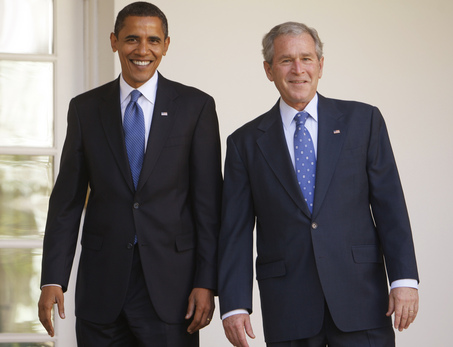
And here’s the scary part – this was all the case before the bailouts and stimulus package that George Bush began and Barack Obama continued and amplified. Not only do these bailouts threaten to massively inflate our currency, spelling disaster for those whose livelihood is based in hourly wages paid in dollars, but it also directly took from all of society, not just the rich or the poor, and gave to a few select corporate entities such as Goldman-Sachs and Wells Fargo. We know this because every new dollar created by the government in the stimulus plan detracted from the value of every dollar already existing in the pre-stimulus economy (or will do so when released into the economy).
Does this sound confusing? It should, because it is, and that’s exactly how the federal government likes it.
While the federal government would tell us that they protect the poor from the exploitation of the rich, economics would tell us that it is in fact the federal government itself that is the greatest exploiter of our nation’s impoverished, and it is this institution that in fact facilitates much of the disparity in wealth between wealthy national corporations and impoverished local communities.
Those of the small government mindset who wish to rally more people to their cause should not go about proclaiming that we should be immediately getting rid of affirmative action and welfare for the poor, but instead should be putting forth a rallying cry against corporate welfare, an inflation-minded Federal Reserve System, and a law enforcement system whose economic penalties weigh heaviest on those with the least money in their savings accounts. It does not have to be out of selfishness that we advocate for a reduction of the federal nanny-state. It can, and should, instead be out of a concern for the poverty and destruction of wealth that is directly generated by this institution’s misguided policies.
Is this a need for change that will become unstoppable for the Catholic Church?
St Peters
I approach this subject with some hesitation. It’s a free world, and how people choose to organise themselves is basically their affair; freedom of association and all that. However, all freedoms are both a personal matter and an absolute right as long as they do not impinge on the rights and freedoms of others. So, in for a penny ……
The Catholic Church’s insistence on celibacy for their priests’ is obviously absurd. It is all very well in theory – “they can then concentrate on serving God” – if you (somewhat bizarrely in my opinion) choose to make that argument. The problem is that Man is NOT a theoretical animal. Sexual abstinence is alien to most models of Homo Sapiens that roll off the production line. It may be the preferred CHOICE that works for some, or even many, but forcing it on priests just DOES NOT WORK.
In recent years, there have been endless scandals in the Catholic Church about the abuse of children by priests, to the point where their policy in fact makes a total mockery of the vast edifice and bureaucracy that their Church is.
There was (or rather is) the dreadful case of the abuse in Ireland going on for decades and involving the most appalling abuse covered up at the highest levels. Now there is an on-going crisis in Germany, with churches and priests all over the country suspected of child-abuse. There are plenty of other examples we know about, and no doubt many we don’t.
And the word “cover-up” is deadly, of course. As soon as an organism evolves – and I find an amoeba, the Church, a company, a political party all alike in this respect – its first instinct is to survive and multiply. And so we have today the grisly spectacle of a Bishop apologising for covering up a priest’s paedophilia. The (usually wrongly) perceived needs of the organism almost ALWAYS take precedence over the law, humanity and decency. Rather than deal effectively and openly (and THAT is what this Blog is all about) with a real problem, the Church very often sweeps the problem under the carpet in the hope that it will go away.
Safe, or in harm's way?
Only of course (like the toxic effects of sub-prime insanity) a serious problem does NOT usually self-heal. Would the Bishop try out this policy with a toothache? I doubt it; he’s know it would only get worse and whack him in the midriff at some stage. So WHY do they do it with abuse cases in their own Church?
No, as long as you have this absurd dogma in the Catholic Church, you will have abuse. And the point is, as soon as you get abuse, it concerns us ALL. We then DO have a right to stick our nose into the Catholic Church’s affairs, or so I maintain. No man is an island ……
Unfortunately, the larger the institution and especially where it concerns beliefs, creeds or whatever (and companies are often similar) the more difficult it is to give up a long-held shibboleth even in the face of the most overwhelming evidence that it is time to “move on”.
If the Pope thinks that all this is helping his particular organism to survive, he is – I believe – sorely mistaken. Celibacy is unnatural – period. Man is HUMAN (sorry to state the obvious). Sex is an integral part of humanity (for the vast majority). But all that is theory and opinion; the point is, the policy JUST DOES NOT WORK, thus leading to multiple and repeated cases of abuse. There may be hand-wrenching, apologies, investigations and promises to put the house in order, but as long as the Pope insists on celibacy, there will be abuse.
And what for? It is all so POINTLESS! Is the Catholic Church maintaining that , for example, the Church of England (CofE) is in some way heretical? If marriage for priests works OK for the CofE, then why not for Catholics? In reality, this dogmatism is only the dead-weight of centuries of tradition, but we should cast off dead weights in the interests of innocent children – and of course (they are human, too) of priests themselves.
Though not a believer, I also sometimes wonder what God would think. In fact, trying to empathize with God is one of my favourite pastimes. Looking down on all this, wouldn’t he be inclined to think the Catholic Church is barmy? How could he POSSIBLY (if he is the God I think he must be) want his humanly-frail priests to be celibate if it means (AS IT DOES) the regular and repeated abuse of children?
Very early on in the life of this Blog, indeed on the second day, I wrote a short article about the NASA mission to the moon, some 40 years after the event. You see, for me that has been the historic event of my lifetime.
I believe that this nation should commit itself to achieving the goal, before this decade is out, of landing a man on the Moon and returning him safely to the Earth. No single space project in this period will be more impressive to mankind, or more important in the long-range exploration of space; and none will be so difficult or expensive to accomplish.
Apollo 11 badge
That speech before Congress by President Kennedy was on the 25th May, 1961. I was 16 and was enthralled by the idea of being alive when man first set foot on another planetary body. That came about on July 20th, 1969 at which time I was living and working in Sydney, Australia. I took three days off work, rented a TV and watched every minute of the event.
Exploration is a core need of man. By pushing out the boundaries of our knowledge we continue to offer hope to mankind.
So it is with great disappointment that it has been announced by President Obama that the manned mission programs to the moon are to be severely curtailed – that sounds terribly like political speak for cancelled!
As Eugene Cernan (last astronaut to set foot on the moon) said:
I’m quite disappointed that I’m still the last man on the Moon. I thought we’d have gone back long before now.
I think America has a responsibility to maintain its leadership in technology and its moral leadership… to seek knowledge. Curiosity’s the essence of human existence.
Curiosity is indeed the essence of human existence.
That curiosity and the investment in space exploration by NASA on behalf of the whole world has shown us some remarkable findings about Saturn and it’s majestic rings. Just watch the video segments in this piece from the BBC.
The one-time cost of Cassini-Huygens mission was $3.26 billion. Just 0.3% of the cost of one year’s expenditure on U.S. defense spending.
Science missions like Cassini enhance cooperation between nations, and greatly contribute to scientific progress which benefits everyone.
Perhaps the big Banks would like to pick up the cost of further manned missions to the Moon?
I apologise for the rather trite sub-heading but it was a bit of attention grabbing to promote the results of a recent conference called Let Markets Be Markets. It was published by the Roosevelt Institute and had one very impressive line of speakers.
One of the speakers was Simon Johnson of Baseline Scenario fame, a Blog that Learning from Dogs has followed since our inception.
Here’s 8 minutes of Simon pulling no punches.
If you want to read and watch other presentations, then Mike Konczal’s Blog Rortybomb is the place to go.
As this Blog has repeated from time to time, this present crisis is a long way from being over.
There seems to be an upsurge of interest in the philosophy of “less is more”. A couple of recent articles about product design, in general and in a specific case, address relevant aspects of this phenomenon.
What do we know?
On one level, we tend to question: how can “less” be “more”? We know it makes no sense! This is true: it really does not make any sense, if all that we focus on is measurable, countable, sequenced information – the kind of information understood by the “left side” of our brains.
On a different level, we know that “less” really is “more”. Less complexity is more simplicity and fun; less distraction is more concentration; and so on. This makes sense when we are thinking about the whole picture – the kind of information which is handled by the “right side” of our brains.
At the moment and on this topic, there is a specific product which is exercising the minds of people who follow these things. Continue reading “Less is more!”→
“Innovation” means different things to different people but, generally, it involves the application of novel ideas, products or processes for some purpose. But even if we can agree on “what” it is, do we understand “how” innovation happens?
Managing 'bright' ideas
There is a significant change taking place in the way that the process of innovation is understood. We can put this in the context of developments in the manageability of other areas of business activity in recent times. Read more of this Post
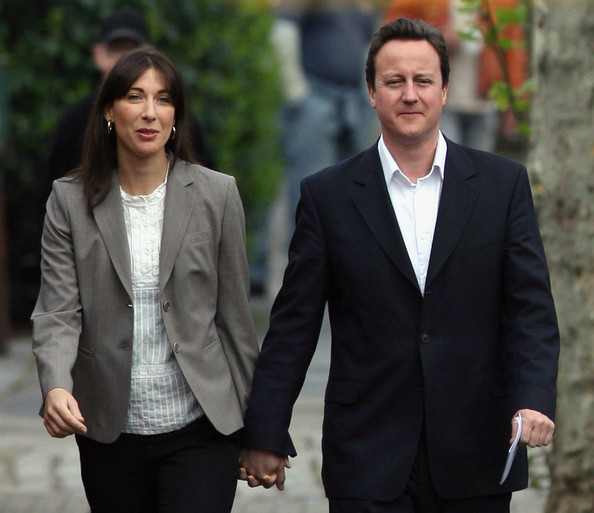
In the latest development in his campaign to show how dramatically the Tories have changed, David Cameron has published the party’s first-ever official list of openly gay MPs.
The Conservatives say they have 20 openly gay candidates standing in the Election. Of those, 11 told party chiefs they were ‘happy’ to be named in the first authorised list of gay Conservative candidates.
David Cameron
Homosexuality is no longer – thankfully – a crime. It has always existed and no doubt always will. It is therefore – logically – a normal feature of human society. Isn’t it time to accept it as such and stop flaunting it constantly in the media? Can we not keep private those parts of our lives which are private? Do heterosexuals go around flaunting their heterosexuality?
Why on earth does a potential government-forming party feel obliged to publish lists of people’s sexuality? Why do I suddenly feel as if I am bizarre in thinking that one’s sexuality should be something private? Personally I haven’t got the faintest interest in other people’s sexual inclinations. Like religion, it should be personal and not eternally flaunted in the media.
And it is all illogical. Either homosexuality is normal or it isn’t. If it is (as it is), then why the constant need to bang on about it, as for example in the Tory party? What on earth has it got to do with running the country? Are the Tories supposed to be better-qualified to run the country the more homosexuals they have? Is there a point at which having TOO MANY becomes a negative point? Would they then start to proclaim how many heterosexuals they had? On a personal level, I keep my sexuality to myself. It is nothing to do with you and certainly not with running the country.
It is analagous to sex in the media. It is overdone. The endless superficial titillation and flaunting of sexuality is demeaning of the Human Spirit. Sex is – or should be – a private matter. It’s better that way. It is more mature that way, but the media – and now the political parties – sink to the lowest denominator instead of focusing on what really matters.
Please, please give us some politicians with common-sense.
Learning from Dogs muses the new book from Yves Smith
ECONned, by Yves Smith
In Econned, Yves Smith, founder of Naked Capitalism, argues that the economy was doing just fine in the regulated environment up to the 1970s. Then began the work of the Chicago economists who challenged Keynesian economics and touted the benefits of deregulation which eventually led to the financial crisis we have today.
Yves argument is internally consistent and well researched, but ignores some factors that I think would change the conclusions drawn from her work.
Yves Smith, author and founder of Naked Capitalism
First, Yves notes that the primary reason that economists are not useful to the real world is that economic research presumes equilibrium. Smith misses the point here, but it is understandable. It took me years of study and contemplation to fully appreciate that an equilibrium simply gives economists a point of reference, a common base, from which to study shocks and movements. In and of itself, equilibrium is not interesting or important. But movements to and from equilibrium are of real interest because they enable us to study and try to predict how individuals will react to incentives and changes in market conditions.
Second, we have to put the contributions of the Chicago economists of the 1970s into context. Up until that time, the only real school of thought in macroeconomics was based on Keynes, who presumed that markets fail and that the government must play an active and large role – primarily through government spending and taxes — for the economy to perform well. Keynes’ work was a reaction to the Great Depression.
Friedman’s monetarism also sought to explain the Great Depression, but focused on the role of monetary policy on the economy. This work showed that the missteps of the Federal Reserve was the primary cause of the depth and length of the Great Depression, and that long-term accommodative monetary policy causes inflation. This body of work did not stress deregulation, although it did lean more heavily on enabling private market solutions than on replacing them with government solutions. Neither theory is complete; Keynes focused on the short run (“In the long run, we are all dead” is a rather famous Keynes quip) and Monetarism focused on the long run.
There was a second large body of work that came out of the University of Chicago during the late 1960s and 1970s. This research documented the tremendous costs of regulation. I know this literature personally and believe that its conclusions are very sound: it shows that any effective regulation limits either the quantity or price of a good or service away from what it would have been without the regulation. In fact, in my view, it was the passage of regulations requiring certain lending behavior that set off the series of events that led to the crisis, which is the exact opposite argument from what Ms. Smith makes.
To publicly comment on the singular importance of the Iraqi elections without crediting President Bush for having the courage and fortitude to free those people from a tyrannical leader who threatened the security of the free world – shameful.
Of course, you also failed to acknowledge President Bush’s role in enabling the historic Afghanistan elections of 2009. I just hoped you would have matured a little since then.
The media is not doing much better on this issue. But then we expect less of our media than our President.




 Learning from Dogs