The BBC reported last Wednesday (1st) the fact that NASA are now advising the Chilean authorities with regard to the trapped miners.
At first, I did a double-take. NASA? Why?
But, of course, it make complete sense. Astronauts clearly have had to face the most extreme form of loneliness – that of being alone in outer space.
Here’s an extract from that BBC piece, which has been widely reported elsewhere:
A team of Nasa experts advised officials to be honest with the miners and not to give them “false hopes”.
The miners, who are 700m (2,300ft) underground, have been told it could take a long time to get them out of the San Jose mine, but have not been given dates.
The Nasa team, which includes a doctor, nutritionist, and engineer and a psychologist, arrived in Santiago after a request by the Chilean authorities. They are due to travel to the mine site on Wednesday.
All we can do is to keep these miners in our minds and hearts.
The lesson from dogs is so obvious but, in a sense, so out of reach to us.
The story published yesterday about the Japanese Akita dog, Hachikō, reverberated around my mind for some days afterwards. (It was written on the 27th.)
It wasn’t only about the incredible loyalty shown by the dog towards its master – refusing to accept that its master was never coming home, year after year. To be honest, humans also show great loyalty to their families and dear friends.
No, there was something else that I couldn’t put my finger on until this morning. It was a dog’s ability to make the best of every moment, to fully experience what is happening now. It’s not the first time I have reflected on this aspect of the dog.
We humans have a similar capability but our intellect, our capacity to reflect on the past and ponder (worry?) about the future frequently means that the value of the moment, the preciousness of now, is lost. I could go on about this – perhaps in another Post.
But I was reminded of when I published a short piece over a year ago, from an unknown author, that was a wonderful attempt to let us humans see into the mind of a dog. Here it is again.
A love song
Pharaoh
I am your dog and have something I would love to whisper in your ear. I know that you humans lead very busy lives. Some have to work, some have children to raise, some have to do this alone. It always seems like you are running here and there, often too fast, never noticing the truly grand things in life.
Look down at me now. While you sit at your computer. See the way my dark, brown eyes look at yours.
You smile at me. I see love in your eyes. What do you see in mine? Do you see a spirit? A soul inside who loves you as no other could in the world? A spirit that would forgive all trespasses of prior wrong doing for just a single moment of your time? That is all I ask. To slow down, if even for a few minutes, to be with me.
So many times you are saddened by others of my kind passing on. Sometimes we die young and oh so quickly, so suddenly that it wrenches your heart out of your throat. Sometimes, we age slowly before your eyes that you may not even seem to know until the very end, when we look at you with grizzled muzzles and cataract-clouded eyes. Still the love is always there even when we must take that last, long sleep dreaming of running free in a distant, open land.
I may not be here tomorrow. I may not be here next week. Someday you will shed the water from your eyes, that humans have when grief fills their souls, and you will mourn the loss of just ‘one more day’ with me. Because I love you so, this future sorrow even now touches my spirit and grieves me. I read you in so many ways that you cannot even start to contemplate.
We have now together. So come and sit next to me here on the floor and look deep into my eyes. What do you see? Do you see how if you look deeply at me we can talk, you and I, heart to heart. Come not to me as my owner but as a living soul. Stroke my fur and let us look deep into the other’s eyes and talk with our hearts.
I may tell you something about the fun of working the scents in the woods where you and I go. Or I may tell you something profound about myself or how we dogs see life in general. I know you decided to have me in your life because you wanted a soul to share things with. I know how much you have cared for me and always stood up for me even when others have been against me. I know how hard you have worked to help me be the teacher dog that I was born to be. That gift from you has been very precious to me. I know too that you have been through troubled times and I have been there to guard you, to protect you and to be there always for you. I am very different to you but here I am. I am a dog but just as alive as you.
I feel emotion. I feel physical senses. I can revel in the differences of our spirits and souls. I do not think of you as a dog on two feet; I know what you are. You are human, in all your quirkiness, and I love you still.
So, come and sit with me. Enter my world and let time slow down if only for a few minutes. Look deep into my eyes and whisper in my ears. Speak with your heart and I will know your true self. We may not have tomorrow but we do have now.
We may not have tomorrow, but we do have now! Cherish the moment.
From the Hubble website. Here’s the description of the image:
“Starry Night”, Vincent van Gogh‘s famous painting, is renowned for its bold whorls of light sweeping across a raging night sky. Although this image of the heavens came only from the artist’s restless imagination, a new picture from the NASA/ESA Hubble Space Telescope bears remarkable similarities to the van Gogh work, complete with never-before-seen spirals of dust swirling across trillions of kilometres of interstellar space.
This image, obtained with the Advanced Camera for Surveys on February 8, 2004, is Hubble’s latest view of an expanding halo of light around a distant star, named V838 Monocerotis (V838 Mon).
The illumination of interstellar dust comes from the red supergiant star at the middle of the image, which gave off a flashbulb-like pulse of light two years ago. V838 Mon is located about 20,000 light-years away from Earth in the direction of the constellation Monoceros, placing the star at the outer edge of our Milky Way galaxy.
A single light-year is approximately 6 trillion miles, or 9,460,730,472,580.8 kms for the metric brigade! Thus 20,000 light-years is 120,000 trillion miles, or 120,000,000,000,000,000 miles.
It is beyond imagination – yet it is real!
It humbles one beyond measure that in this short lifetime on mine, science has reached out so far. And then one looks more closely to home and remains appalled that we have learnt so little about living in peace and with integrity on this funny third rock from the Sun.
Jean and I watched this film the other evening. I have seen it a number of times but Jean just once before when it first was released in 1968! Yes, over 40 years ago!
What struck me watching it today was how beautifully slow the film was. I mean in the sense of camera and scene changes. I had forgotten just how beautiful the film was from a technical perspective. It held the eye and brain in a way that seemed so foreign to the way that films have been made in the last so many years.
And there are more summaries on the INDB website, here’s an example:
“2001” is a story of evolution. Sometime in the distant past, someone or something nudged evolution by placing a monolith on Earth (presumably elsewhere throughout the universe as well). Evolution then enabled humankind to reach the moon’s surface, where yet another monolith is found, one that signals the monolith placers that humankind has evolved that far. Now a race begins between computers (HAL) and human (Bowman) to reach the monolith placers. The winner will achieve the next step in evolution, whatever that may be.
The sign!
What is just as interesting is remembering the feelings that I had when I first saw the film, probably in 1968 or 1969, when I was living out in Australia, aged mid-twenties!
I was incredibly fascinated by the US expeditions out to the moon with the actual landing in July 1969. Indeed, I rented a TV and took a complete week’s holiday from work just to watch every minute of this historical event.
So the film, 2001: A Space Odyssey, seemed to capture, for me anyway, the feelings and mood of a brave new world reaching out beyond Planet Earth. The year 2001 felt like aeons away. It was obvious that when we eventually got to the 21st century, mankind would be unbelievably advanced in many exciting and positive ways.
Ah, the dreams of the naive young!
Now here we are heading towards the year 2011 and the world, I mean mankind, seems to be going where? Here’s Jon Lavin’s rather sombre view:
Have been musing about the part failure of the Russian grain harvest and the resultant speculation, that has forced the grain price up astronomically, the impact on bread/food/beer etc., evidence of the same mentality that kicked the banks/investments recession off.
Also, the fact that Lloyds TSB are 43% owned by the British people and are charging interest on non-approved loans of 165% and have a bonus fund of half billion pounds that certainly they have not asked my permission about.
This continuing lack of integrity, in the face of food shortages, untold hardship for millions of people, just goes to show that until an absolute calamity strikes to stop the whole of mankind in our tracks, it’s business as usual for the financially-led people and get-rich-on-the-back-of-anything-and-anybody crowd.
Are we still at consciousness level 204 or have we crossed back below the threshold, back below integrity 200, where falsehood rules?
The answer is to retain faith in the future, faith in the power of love and compassion, and faith in the fact that being the best that we can be today, now, in the present, just as dogs are so wonderful at doing, will bring us the better tomorrows we all dreamed about in 1968. Here’s a reminder:
By Paul Handover
P.S. Serendipity at work. Saw this from the BBC less than 5 minutes after completing this Post!
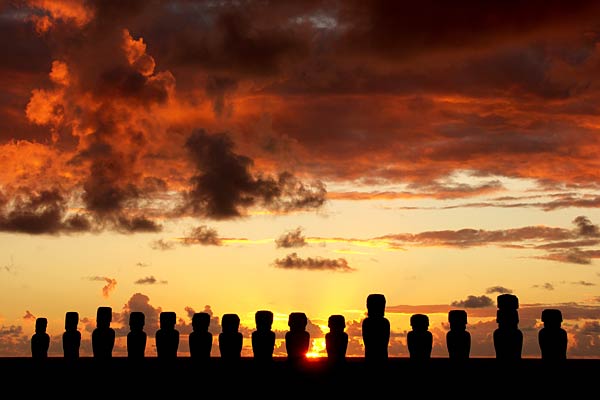
It’s almost unimaginable that Planet Earth could go the same way. Then again, anyone over the age of, say 60, would find where we are today, in terms of mankind’s long-term survival, equally unimaginable from how the world looked 40 years ago.


 Learning from Dogs