As it happens, here in Payson at 01:15 am on the morning of Tuesday, 21st December, low broken cloud was obscuring the moon much of the time. But nonetheless the pale outline of the darkened moon was visible, sitting above the constellation of Orion. Very, very mystical.
Here’s what it looked like without the cloud, thanks to a Google search for images.
Dec 21st 1638; Dec 21st 2010; Dec 21st 2094
And a late update, thanks to Pete N (via Facebook) who spotted this wonderful video recently placed on YouTube.
which then highlighted this video taken by the Kurdistan Planetarium – these are amazing examples of the power of our new virtual world in sharing images across so many peoples.
So here’s a nice distraction- thanks to Sherry Jarrell who sent them to me.
Learning from dogs!
There are about 23 or 24 pictures on the theme of what dogs mean to humans and every odd day or two over the Christmas period, you can enjoy one of them.
On the 2nd November, I wrote an article speaking of the fabulous programme that had been aired on the BBC Two channel of BBC TV. While it was available on the BBC’s iPlayer for viewers in the UK, this is not the perfect vehicle for all those who would have been interested in watching the three episodes.
Thus I am delighted to see that the full set of three programmes has been uploaded to YouTube. They are broken down into twelve parts so to make the watching process more digestible, I propose to create three Posts with four segments in each Post. The first four video segments are below.
But to recap what was written just over a month ago.
Like many others, I saw the first episode of the BBC2 television programme, The Big Silence. It clearly touched many people. (Useful links at the very end of this article.)
I wanted to throw a bit of light on this fascinating subject. As the five people in the TV programme all readily admit, real silence is rather scary to them.
Why would something so wished for by so many – an hour doing absolutely nothing – be sufficiently scary that, in reality, the majority will do everything in their power to avoid silence?
We all have unhappy demons, OK some more than others. We start to hear them when we gift our bodies and minds the grace of real silence. I deliberately included the word ‘bodies’ even though silence is a ‘mind’ thing because resting our bodies with regular silence will also be very therapeutic for us.
What does coming to terms mean? It means giving space to those inner thoughts so that one can clearly hear them. You probably won’t make sense of them, indeed they may have a great unsettling effect, but they won’t hurt you.
Indeed, it’s when we try and stop those inner demons that they manifest themselves in many other ways: fidgeting, funny little unexplained aches, itchy skin, short-tempers, constant feeding of the ego, and on and on and on.
A good indication of what’s going on ‘under the bonnet’, so to speak, is to see if you can sit still in a relaxed manner for just 15 minutes.
Want more from that earlier Post? Here’s the link.
I was much taken by Patrice’s guest post of yesterday and have managed a short break from the travails of my Master’s degree to post an article by David Pratt, that has been part of my research. Jon.
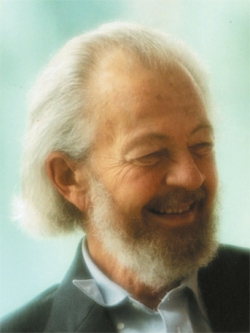
The death of David Bohm on 27 October 1992 is a great loss not only for the physics community but for all those interested in the philosophical implications of modern science. David Bohm was one of the most distinguished theoretical physicists of his generation, and a fearless challenger of scientific orthodoxy. His interests and influence extended far beyond physics and embraced biology, psychology, philosophy, religion, art, and the future of society. Underlying his innovative approach to many different issues was the fundamental idea that beyond the visible, tangible world there lies a deeper, implicate order of undivided wholeness.
David Bohm was born in Wilkes-Barre, Pennsylvania, in 1917. He became interested in science at an early age, and as a young boy invented a dripless teapot, and his father, a successful businessman, urged him to try to make a profit on the idea. But after learning that the first step was to conduct a door-to-door survey to test market demand, his interest in business waned and he decided to become a theoretical physicist instead.
In the 1930s he attended Pennsylvania State College where he became deeply interested in quantum physics, the physics of the subatomic realm. After graduating, he attended the University of California, Berkeley. While there he worked at the Lawrence Radiation Laboratory where, after receiving his doctorate in 1943, he began what was to become his landmark work on plasmas (a plasma is a gas containing a high density of electrons and positive ions). Bohm was surprised to find that once electrons were in a plasma, they stopped behaving like individuals and started behaving as if they were part of a larger and interconnected whole. He later remarked that he frequently had the impression that the sea of electrons was in some sense alive.
In 1947 Bohm took up the post of assistant professor at Princeton University, where he extended his research to the study of electrons in metals. Once again the seemingly haphazard movements of individual electrons managed to produce highly organized overall effects. Bohm’s innovative work in this area established his reputation as a theoretical physicist.
In 1951 Bohm wrote a classic textbook entitled Quantum Theory, in which he presented a clear account of the orthodox, Copenhagen interpretation of quantum physics. The Copenhagen interpretation was formulated mainly by Niels Bohr and Werner Heisenberg in the 1920s and is still highly influential today. But even before the book was published, Bohm began to have doubts about the assumptions underlying the conventional approach. He had difficulty accepting that subatomic particles had no objective existence and took on definite properties only when physicists tried to observe and measure them. He also had difficulty believing that the quantum world was characterized by absolute indeterminism and chance, and that things just happened for no reason whatsoever. He began to suspect that there might be deeper causes behind the apparently random and crazy nature of the subatomic world.
Bohm sent copies of his textbook to Bohr and Einstein. Bohr did not respond, but Einstein phoned him to say that he wanted to discuss it with him. In the first of what was to turn into a six-month series of spirited conversations, Einstein enthusiastically told Bohm that he had never seen quantum theory presented so clearly, and admitted that he was just as dissatisfied with the orthodox approach as Bohm was. They both admired quantum theory’s ability to predict phenomena, but could not accept that it was complete and that it was impossible to arrive at any clearer understanding of what was going on in the quantumrealm.
It was while writing Quantum Theorythat Bohm came into conflict with McCarthyism. He was called upon to appear before the Un-American Activities Committee in order to testify against colleagues and associates. Ever a man of principle, he refused. The result was that when his contract at Princeton expired, he was unable to obtain a job in the USA. He moved first to Brazil, then to Israel, and finally to Britain in 1957, where he worked first at Bristol University and later as Professor of Theoretical Physics at Birkbeck College, University of London, until his retirement in 1987. Bohm will be remembered above all for two radical scientific theories: the causal interpretation of quantum physics, and the theory of the implicate order and undivided wholeness.
In 1952, the year after his discussions with Einstein, Bohm published two papers sketching what later came to be called the causal interpretation of quantum theory which, he said, “opens the door for the creative operation of underlying, and yet subtler, levels of reality.” (David Bohm and F. David Peat, Science, Order & Creativity, Bantam Books, New York, 1987, p. 88.) He continued to elaborate and refine his ideas until the end of his life. In his view, subatomic particles such as electrons are not simple, structureless particles, but highly complex, dynamic entities. He rejects the view that their motion is fundamentally uncertain or ambiguous; they follow a precise path, but one which is determined not only by conventional physical forces but also by a more subtle force which he calls the quantum potential.The quantum potential guides the motion of particles by providing “active information” about the whole environment. Bohm gives the analogy of a ship being guided by radar signals: the radar carries information from all around and guides the ship by giving form to the movement produced by the much greater but unformed power of its engines.
The quantum potential pervades all space and provides direct connections between quantum systems. In 1959 Bohm and a young research student Yakir Aharonov discovered an important example of quantum interconnectedness. They found that in certain circumstances electrons are able to “feel” the presence of a nearby magnetic field even though they are traveling in regions of space where the field strength is zero. This phenomenon is now known as the Aharonov-Bohm (AB) effect, and when the discovery was first announced many physicists reacted with disbelief. Even today, despite confirmation of the effect in numerous experiments, papers still occasionally appear arguing that it does not exist.
In 1982 a remarkable experiment to test quantum interconnectedness was performed by a research team led by physicist Alain Aspect in Paris. The original idea was contained in a thought experiment (also known as the “EPR paradox”) proposed in 1935 by Albert Einstein, Boris Podolsky, and Nathan Rosen, but much of the later theoretical groundwork was laid by David Bohm and one of his enthusiastic supporters, John Bell of CERN, the physics research center near Geneva. The results of the experiment clearly showed that subatomic particles that are far apart are able to communicate in ways that cannot be explained by the transfer of physical signals traveling at or slower than the speed of light. Many physicists, including Bohm, regard these “nonlocal” connections as absolutely instantaneous. An alternative view is that they involve subtler, nonphysical energies traveling faster than light, but this view has few adherents since most physicists still believe that nothing-can exceed the speed of light.
The causal interpretation of quantum theory initially met with indifference or hostility from other physicists, who did not take kindly to Bohm’s powerful challenge to the common consensus. In recent years, however, the theory has been gaining increasing “respectability.” Bohm’s approach is capable of being developed in different directions. For instance, a number of physicists, including Jean-Paul Vigier and several other physicists at the Institut Henri Poincaré in France, explain the quantum potential in terms of fluctuations in an underlying ether.
In the 1960s Bohm began to take a closer look at the notion of order. One day he saw a device on a television program that immediately fired his imagination. It consisted of two concentric glass cylinders, the space between them being filled with glycerin, a highly viscous fluid. If a droplet of ink is placed in the fluid and the outer cylinder is turned, the droplet is drawn out into a thread that eventually becomes so thin that it disappears from view; the ink particles are enfolded into the glycerin. But if the cylinder is then turned in the opposite direction, the thread-form reappears and rebecomes a droplet; the droplet is unfolded again. Bohm realized that when the ink was diffused through the glycerin it was not a state of “disorder” but possessed a hidden, or nonmanifest, order.
In Bohm’s view, all the separate objects, entities, structures, and events in the visible or explicate world around us are relatively autonomous, stable, and temporary “subtotalities” derived from a deeper, implicate order of unbroken wholeness. Bohm gives the analogy of a flowing stream:
On this stream, one may see an ever-changing pattern of vortices, ripples, waves, splashes, etc., which evidently have no independent existence as such. Rather, they are abstracted from the flowing movement, arising and vanishing in the total process of the flow. Such transitory subsistence as may be possessed by these abstracted forms implies only a relative independence or autonomy of behaviour, rather than absolutely independent existence as ultimate substances.
(David Bohm, Wholeness and the Implicate Order, Routledge & Kegan Paul, London, Boston, 1980, p. 48.)
We must learn to view everything as part of “Undivided Wholeness in Flowing Movement.” (Ibid., p. 11.)
Another metaphor Bohm uses to illustrate the implicate order is that of the hologram. To make a hologram a laser light is split into two beams, one of which is reflected off an object onto a photographic plate where it interferes with the second beam. The complex swirls of the interference pattern recorded on the photographic plate appear meaningless and disordered to the naked eye. But like the ink drop dispersed in the glycerin, the pattern possesses a hidden or enfolded order, for when illuminated with laser light it produces a three-dimensional image of the original object, which can be viewed from any angle. A remarkable feature of a hologram is that if a holographic film is cut into pieces, each piece produces an image of the whole object, though the smaller the piece the hazier the image. Clearly the form and structure of the entire object are encoded within each region of the photographic record.
Bohm suggests that the whole universe can be thought of as a kind of giant, flowing hologram, or holomovement, in which a total order is contained, in some implicit sense, in each region of space and time. The explicate order is a projection from higher dimensional levels of reality, and the apparent stability and solidity of the objects and entities composing it are generated and sustained by a ceaseless process of enfoldment and unfoldment, for subatomic particles are constantly dissolving into the implicate order and then recrystallizing.
The quantum potential postulated in the causal interpretation corresponds to the implicate order. But Bohm suggests that the quantum potential is itself organized and guided by a superquantum potential, representing a second implicate order, or superimplicate order. Indeed he proposes that there may be an infinite series, and perhaps hierarchies, of implicate (or “generative”) orders, some of which form relatively closed loops and some of which do not. Higher implicate orders organize the lower ones, which in turn influence the higher.
Bohm believes that life and consciousness are enfolded deep in the generative order and are therefore present in varying degrees of unfoldment in all matter, including supposedly “inanimate” matter such as electrons or plasmas. He suggests that there is a “protointelligence” in matter, so that new evolutionary developments do not emerge in a random fashion but creatively as relatively integrated wholes from implicate levels of reality. The mystical connotations of Bohm’s ideas are underlined by his remark that the implicate domain “could equally well be called Idealism, Spirit, Consciousness. The separation of the two — matter and spirit — is an abstraction. The ground is always one.” (Quoted in Michael Talbot, The Holographic Universe, HarperCollins, New York, 1991, p. 271.)
As with all truly great thinkers, David Bohm’s philosophical ideas found expression in his character and way of life. His students and colleagues describe him as totally unselfish and non-competitive, always ready to share his latest thoughts with others, always open to fresh ideas, and single-mindedly devoted to a calm but passionate search into the nature of reality. In the words of one of his former students, “He can only be characterized as a secular saint.” (B. Hiley & F. David Peat eds., Quantum Implications: Essays in Honour of David Bohm, Routledge & Kegan Paul, London, 1987, p. 48.)
Bohm believed that the general tendency for individuals, nations, races, social groups, etc., to see one another as fundamentally different and separate was a major source of conflict in the world. It was his hope that one day people would come to recognize the essential interrelatedness of all things and would join together to build a more holistic and harmonious world. What better tribute to David Bohm’s life and work than to take this message to heart and make the ideal of universal brotherhood the keynote of our lives.
Today, like every day, is a beautiful day of hope!
At 3.30pm US Mountain Time – 10.30pm UK time – the marriage service between me and Jean Susan will commence at the Episcopal Church in Payson, Arizona. It represents a wonderful day of hope.
But hope is something much bigger than a couple getting married. See it from this perspective. From the eyes of Shimon Schocken.
An inspirational film with an incredibly relevant message to us all.
I’m not going to yield to the temptation to take a personal view, real life is too complicated.
Just, if you can, watch the film.
Here’s the summary from Wikipedia. More background to the film is on the IMDB website including this review:
I saw this movie at Sundance, and it was brilliant. Beautiful shots, wonderful acting and such a moving story! It made me cry, it made me laugh (with Billy Boyd as much of the comic relief!), it made me want to see it again! Gaby Dellal’s direction was spot on, and the emotions from each of the characters was so true, that I wanted to cheer Frank (Peter Mullan)) on while swimming the English Channel and console him when he felt like he couldn’t do anything.
The only thing that I had an “issue” with, was that at a few moments, the Scottish accent was so thick that I missed what was said.
Note: the next 10 days are pretty challenging, in the most positive and beautiful way, as Jean and I are to be married at Payson Episcopal Church on Saturday afternoon and we have guests until the 29th. There will always be a daily post from either me or Jon but do forgive us if they are not of the usual longer reflective style.
Dr. David R. Hawkins, M.D., Ph.D.
Both Jon and I have written about Dr Hawkins many times in Learning from Dogs. But there is also a plethora of valuable material available from the organisation, Veritas Publishing, that is the wrapper, so to speak, around David Hawkins work.
His monthly newsletter is free and often very interesting. For example, in the one that arrived today, there are a couple of extracts from his October lecture that resonate very closely with what Jon published about Eckhart Tolle the previous two days.
“The Self knows. The mind thinks. The thinking is just added as a thrill. Thinking is a thrill and an entertainment. Can you get along without thinking? There is a chair. I don’t think about the chair but I know it’s there. Most of real knowingness goes on without thinking. The animal knows without thinking. It just knows right off the bat who is a friend and who is a burglar.”
“Make choices instead of craving and desire and clutching. Choose to be happy instead of craving what you don’t have. Give up all cravingness. ‘I cannot be happy unless I get to do this or that.’ You are putting happiness as outside of yourself. The source of happiness is within. Winning $1 million does not make a big change in your life. Surrender all cravings to God.”
And do watch this:
Finally, I have repeated a publication today of a post written about Truth published earlier on Learning from Dogs in September. It has come out at the same time as this Post.
(A copy of the original post published earlier in September on this Blog)
Dr David Hawkins writing about truth
One of the many strange consequences of leaving the United Kingdom in 2008 leading, eventually, to settling in Arizona is that we are within a half-day’s car ride of Sedona. Sedona is where Dr. David R Hawkins is based.
Dr. David R Hawkins
Dr. David Hawkins is a life member of the American Psychiatric Association but is best known for his research into “the hidden determinants of human behavior”. That quote is taken from the front cover of Hawkins’ seminal book, Power vs. Force.
Dr. Hawkins was Knighted by the Danish Crown for this work in 1996, a worthy recognition, it seems to me.
I have been reading Power vs. Force for some weeks now. Normally I devour a book, fiction or non-fiction, if it holds my interest. But this book is different! Power vs. Force contains so many profound teachings that frequently there is more than enough to take in from a single page, or even just a couple of paragraphs. To read on before a particular proposition has had time to invade and penetrate one’s deeper senses is almost painful.
The challenge in wanting to share some of these teachings is having the patience to finish the book before putting pen to paper, so to speak. I failed!
In one of the early chapters, Hawkins writes about “the intrinsic source of power and how it operates.” There are a couple of paragraphs that just punched out from the page. Here they are, interwoven with my thoughts:
In looking for the source of power we have noted that it is associated with meaning, and this meaning has to do with the significance of life itself. Force is concrete, literal and arguable. It requires proof and support. The sources of power, however, are inarguable and are not subject to proof. The self-evident is not arguable.
Just at this point, one might have forgiven me for being slightly skeptical. How can the ‘self-evident’ or anything be above argument? Especially if one reflects on the notion that all we perceive with our senses is an illusion, a product of our minds. I clearly recall having this fleeting thought at this point in the paragraph. But the eyes continued to the next sentence and, figuratively, I was gasping for breath. Remember I had just read, “The self-evident is not arguable.” This was what came next:
That health is more important than disease, that life is more important than death, that honor is preferable to dishonor, that faith and trust are preferable to doubt and cynicism, that the constructive is preferable to the destructive – all are self-evident statements not subject to proof. Ultimately, the only thing we can say about a source of power is that it just “is”.
Wow! Those few sentences stopped me in my tracks. Think about what Hawkins is saying. He is saying that we intuitively know, without the need of intellectual argument or ‘proof’, the rightness, the beauty, the perfection of some deeply fundamental concepts.
It’s as if from the earliest moments of human awareness, gravity, sunlight, night and day, for example, were obvious despite eons of time needing to pass before science could ’explain’ these aspects of life.
In other words, there are understandings that are deeply embedded in human consciousness. Hawkins continues:
Every civilization is characterized by native principles. If the principles of a civilization are noble, it succeeds; if they are selfish, it falls. As a term, “principles” may sound abstract, but the consequences of principles are quite concrete. If we examine principles we will see that they reside in an invisible realm within consciousness itself. Although we can point out examples of honesty in the world, honesty itself as an organizing principle central to civilization is nowhere independently existent in the external world. True power, then, emanates from consciousness itself; what we see is a visible manifestation of the invisible.
Phew! True power emanates from consciousness itself!
It’s now 2 days since I read that. It still reverberates within my mind. I was compelled to share it with you. And it reverberates for me in an even clearer form – truth emanates from consciousness itself! Stay with me just a while longer.
A very well-known magical attribute of the human brain is what goes on in the sub-conscious, our ‘back-office’. Give our brain some space to process a dilemma such as deciding what to do for the best and it does come up with what is best for us. Often the best space we can provide for our brain is a good night’s sleep. It’s common folklore to ‘sleep’ on a problem.
My co-founder of Learning from Dogs, Jon Lavin, says that often in sleep we find the truth. I think the same could be said for prayer, as in a spiritual sense more than in a religious sense.
Just reflect again on the power of what comes out from those two paragraphs. Truth is not something external to us; it is within us, all the time. Our level of consciousness is the key to this truth. Our self-awareness is the tool by which we understand our level of consciousness – our mirror to our soul.



 Learning from Dogs