This was seen online in the afternoon of July 4th.
Dogs have appeared at U.K. polling stations wearing bows, rosettes and colourful leads as the public go to vote in the British General Election. The hashtag #dogsatpollingstations has become a highlight of election days for animal lovers on social media as people share photos of themselves exercising their pets and democratic rights at the same time. This year did not disappoint, with dogs on X, formerly known as Twitter, photographed in badges, bows and colourful leashes.
It is an alternative to the normal Picture Parade.
A recent article by George Monbiot gets me thinking.
George Monbiot is 61; his birthday is on January 27th. Thus he is 14 years younger than me. He is an experienced writer for The Guardian newspaper. Plus he has authored quite a few books and founded a charity, and given TED Talks, and I am sure more than this.
I read all of the articles that are published by him. His website is widely read. Please read his biography. Some of his many articles really get me thinking.
Some time ago I asked Mr. Monbiot for permission to republish his articles and that was granted. A small number of them have been republished on Learning from Dogs.
Today I want to republish an article that was presented on July 3rd.
ooOOoo
The Fight Against Oligarchy
Oligarchy is the default state of politics, and it is surging back. How do we stop it?
By George Monbiot, published in the Guardian 27th June 2024
We are about to return to normal politics. After 14 years of Tory corruption and misrule, a Labour government will put this country back on track. Justice and decency will resume, public services will be rebuilt, our global standing will be restored, we will revert to a familiar state. Or so the story goes.
What is the “normal” envisaged by pundits and politicians of the left and centre? It is the most anomalous politics in the history of the world. Consciously or otherwise, they hark back to a remarkable period, roughly 1945 to 1975, in which, in certain rich nations, wealth and power were distributed, almost everyone could aspire to decent housing, wages and conditions, public services were ambitious and well-funded and a robust economic safety net prevented destitution. There had never been a period like it in the prior history of the world, and there has not been one since. Even during that period, general prosperity in the rich nations was supported by extreme exploitation, coups and violence imposed on the poor nations. We lived in a bubble, limited in time and space, in which extraordinary things happened. Yet somehow we think of it as normal.
Those “normal” politics were the result of something known to economic historians as the “great compression”: a drastic reduction in inequality caused by two world wars. In many powerful countries, a combination of the physical destruction of assets, the loss of colonial and overseas possessions, inflation, very high taxes, wage and price controls, requisitioning and nationalisation required by the wartime economy, as well as the effects of rising democracy and labour organisation, greatly reduced the income and assets of the rich. It also greatly improved, once the wars had ended, the position of the poor. For several decades, we benefited from the aftermath of these great shocks. Now the effect has faded. We are returning to true “normality”.
The history of many centuries, including our own, shows that the default state of politics is not redistribution and general welfare, but a spiral of accumulation by the very rich, the extreme exploitation of labour, the seizure of common resources and exaction of rent for their use, extortion, coercion and violence. Normal is a society in which might is right. Normal is oligarchy.
In his magisterial book The Great Leveler, published in 2017, the historian Walter Scheidel explains that only four forces have ever significantly reversed inequality: mass-mobilisation warfare (such as the two world wars), total and violent revolution, state collapse and devastating plagues. Decisions, decisions.
He shows how warfare economies were turned into welfare economies, sometimes by force. For example, following the defeat of Japan, the US occupation government, led by General Douglas MacArthur, sought what it called “the democratization of Japanese economic institutions” to ensure “a wide distribution of income and ownership of the means of production and trade”. To this end, it imposed high property taxes, with a top marginal rate of 90%; broke up business conglomerates; demanded a labour union law enabling the right to organise and strike, and higher wages for workers; organised comprehensive land reform, which dissolved large holdings and distributed them to peasants; and introduced fiscal reform that led eventually to taxes on the highest incomes of 75% and an inheritance tax on the largest estates of 70%. These programmes resulted in the near-total destruction of income from capital and the creation in Japan of a political and economic democracy, almost from scratch.
All the major combatants were similarly transformed. In the US, the top rate of estate (inheritance) tax rose to 71% in 1941, and income tax to 94% in 1944. The National War Labor Board raised workers’ pay while holding down executive pay. Union membership soared. In the UK, the top rate of income tax was held at 98% from 1941 to 1952. It took decades to decline to current levels. A purchase tax on luxury goods was introduced in 1940, with rates that later rose to 100%. The share of incomes captured by the richest 0.1% fell from 7% in 1937 to just over 1% in 1975.
In the absence of one of the four great catastrophes, income and capital inexorably accumulate in the hands of the few, and oligarchy returns. Oligarchs are people who translate their inordinate economic power into inordinate political power. They build a politics that suits them. Scheidel shows that as inequality rises, so does polarisation and political dysfunction, both of which favour the very rich, as a competent, proactive state is a threat to their interests. Dysfunction is what the Tories delivered and Donald Trump promises.
Oligarchs seek the destruction of oversight, which is why UK bodies such as the Environment Agency and the Health and Safety Executive have been comprehensively gutted. The same desire was the driving force behind Brexit. They want the cessation of protest. They want a failing NHS, to justify privatisation. They want malleable politiciansand a tame BBC. They get what they want, distorting every aspect of national life. They pour money into neoliberal and far-right politicalmovements, which help capital to solve its perennial problem: democracy. The arc of history bends towards injustice. But every so often it is broken over the knee of catastrophe.
If you want a return to the rich nations’ “normality” of 1945 to 1975 – in other words, to redistribution, a shared sense of national purpose, robust public services and a strong economic safety net, high employment and good wages – and I think most people would, you need a politics that is not just abnormal, but unprecedented. Snapping the arc of injustice would mean going way beyond Jeremy Corbyn’s 2019 manifesto, let alone Keir Starmer’s limp offering, which treads so carefully around the interests of the rich. We would need to do what the world wars did, without the violence and physical destruction: a peacetime MacArthur programme for overthrowing the oligarchs.
Political parties would need to overcome their fear of economic power: of the newspaper barons, the property developers, the fossil fuel companies, hedge funds, private equity bosses and assorted oligarchs who now fund and influence our politics. The longer we leave this confrontation, the more extreme and entrenched oligarchic power becomes. If we want even a modicum of democracy, equality, fairness and a functioning state, we need not the accommodation with economic power that Starmer seeks, but the mother of all battles with it.
ooOOoo
Let me repeat a sentence from the article: “Oligarchs are people who translate their inordinate economic power into inordinate political power.”
I am towards the end of my life. Whether or not things will change politically, as Monbiot suggests above, I do not know. But if asked to guess I would say probably not.
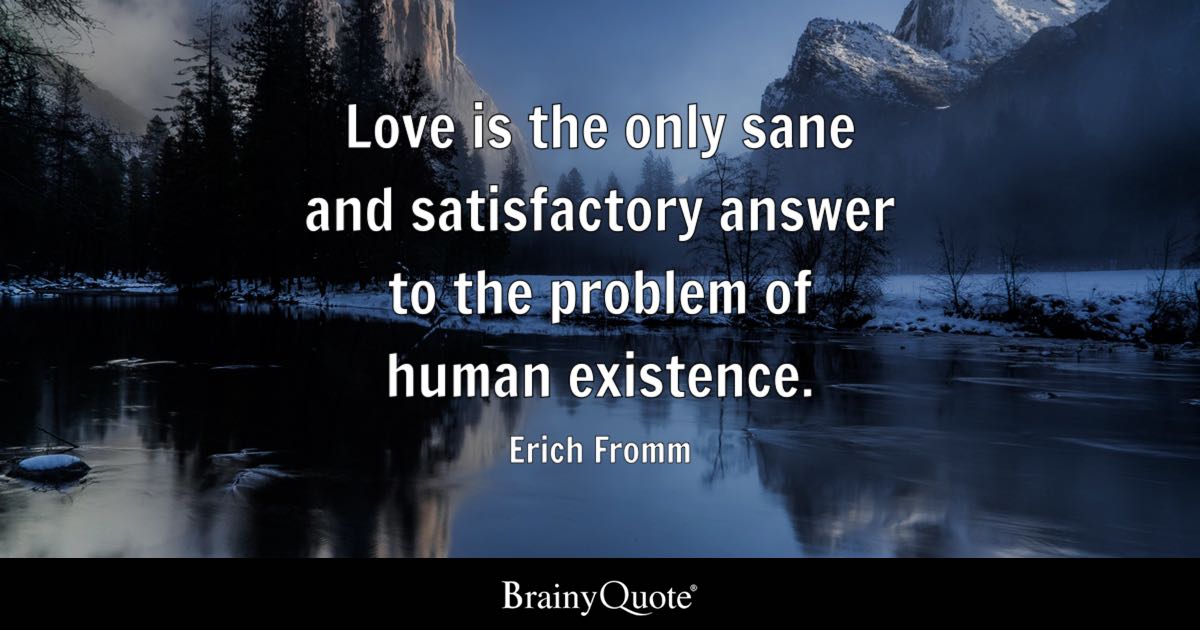
I would love to see a different, as in a better way, of us humans running things. I can’t put it better than how George Monbiot expressed it in that last sentence: “If we want even a modicum of democracy, equality, fairness and a functioning state, we need not the accommodation with economic power that Starmer seeks, but the mother of all battles with it.”
Finally, George Monbiot has a saying on his website: “I love not man the less, but Nature more.” I wish that were not the case, I wish oligarchy was a dead word, but Nature is so beautiful.
The Labour Party, led by Keir Starmer, is heavily favored to return to power for the first time since 2010.
To a U.S. audience, many of the top issues in the election campaign will sound familiar: the economy, immigration, health care, Ukraine and Gaza. The choice of date, too, may ring a bell – and political soothsayers are already trying to read into what it means for the U.K. election to fall on Independence Day.
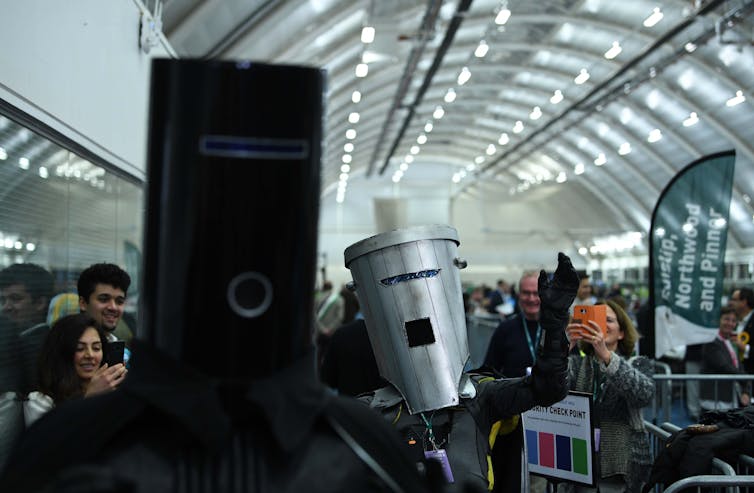
U.K. elections can be an odd affair in which mainstream politicians can rub shoulders with the likes of rival candidates Count Binface and Lord Buckethead. Oli Scarff/AFP via Getty Images
But as to the campaign itself – well, they do things a bit different on the other side of the pond. While Americans may be used to set terms and lengthy campaigns filled with endless advertising, in the U.K. such things are, to use a Britishism, “just not cricket.” Here are three main ways in which the British conduct their elections.
1. Election timeline
U.S. elections follow a predictable schedule. In 1845, Congress passed a law establishing a single day for federal elections to take place on “the Tuesday next after the first Monday in November.” Further, presidents are elected for a fixed four-year term, making the dates for upcoming votes knowable for the foreseeable future.
That isn’t the case in the United Kingdom. By convention, elections have been held on a Thursday since 1935. But the month of the vote has varied considerably. For the most part, they take place in late spring or early summer – but fall and winter elections are not unheard of.
The U.K. Parliament does have a fixed term of five years, with elections automatically scheduled once that time has lapsed. In practice, however, parliaments have rarely gone the full five years.
Indeed, prime ministers in the United Kingdom have the authority to request the dissolution of Parliament at any time. They can do so without the approval of the cabinet, and so prime ministers have taken liberal advantage of their ability to control the timing of the election to try and gain an advantage.
Many thought that Sunak may have been eyeing an election later in the year, but a number of factors, including economic forecasts and not wanting the distraction of a U.S. election, may have factored in to him calling an earlier-than-expected vote.
2. Campaign rules
Besides the shifting timing, the nature and rules of the campaign are also very different in the United Kingdom. This starts with the sheer brevity of the campaign. Once Parliament is dissolved, the election must take place 25 working days later. This means the parties have a mere six weeks to make their case to the public.
And unlike in a presidential system, voters in the United Kingdom do not cast a ballot for the person they want to see lead the country. Instead, the U.K. is divided into 650 distinct constituencies; voters pick their preferred candidate to represent their local constituency in Parliament. The party with the most seats typically wins the election, and the leader of that party has the opportunity to become prime minister and govern as a single-party government or as part of a coalition.
U.K. election campaigns are also subject to strict rules to maintain neutrality. Once the campaign starts, the period of “purdah” kicks in, which imposes certain restrictions on government activities. This involves, for instance, strict prohibitions on government ministers announcing new initiatives to affect the election or using public funds for political purposes.
In the same manner, civil servants – employees of the crown who work for the government but are not political appointees – are required to maintain strict impartiality and not become involved in partisan debates.
Moreover, the Office of Communications, the United Kingdom’s independent media regulatory authority, also enforces strict rules for broadcast media, including television and radio. The 2003 Communications Act requires that all broadcast media must cover the elections in an impartial manner, providing coverage of all parties, even if they do not assign equal time.
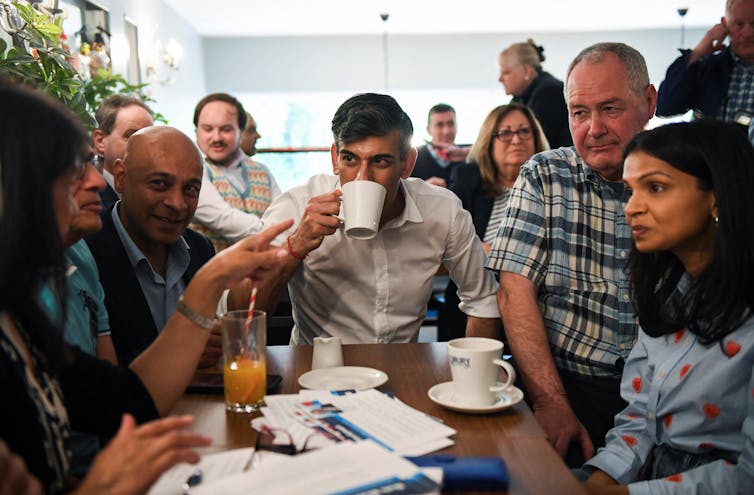
Opposition leader Keir Starmer, left, poses on the campaign trail with what the photographer says is a cup of coffee … but which I strongly suspect is actually tea. Leon Neal/Getty Images
Broadcast media is also not allowed, on polling day, to suggest the outcome of the vote before polls are closed.
In a huge departure from the U.S., U.K. political parties are banned from buying television ads, but this rule does not apply to streaming television.
3. The role of money
The limited role of money is another distinct feature in U.K. elections. Even factoring in the different population sizes, U.K. elections are significantly cheaper than their counterparts in the United States.
Indeed, total campaign spending in the 2020 U.S. elections, covering presidential and congressional races, hit more than US$14 billion. That scale completely dwarfs how much parties and candidates will be able to spend in the 2024 United Kingdom election.
Through regulations established by the Electoral Commission, an independent government agency, a British party that competes in all constituencies in the United Kingdom will be allowed to spend just over £34 million (around $43 million) in total to support all candidates.
That figure in itself marks an 80% increase from the allowance at the last election in 2019, so to factor for inflation since limits were set in 2000.
As a result, both Sunak and Starmer will have only a short time – and limited funds – to make their case to voters. Whoever wins will face a very challenging situation at home and abroad, with little to no respite. According to the think tank Institute for Fiscal Studies, the state of public finances is “a dark cloud that hangs over the election.” And then there is the delicate matter of maintaining a special relationship with the U.S. – a country that may itself have a very different political landscape after it goes to the polls later in the year.
As I have frequently said, I feel English and love the fact that I speak with an English accent. Yet I adore, along with Jean, where we live just outside Merlin in Southern Oregon. I wouldn’t want to live anywhere else in the world.
Politically we are in very strange times, as was said right at the end of this article.
The Westminster Dog Show this year ran from Saturday, 11th May until Tuesday, 14th May.
Christine Longnecker, a horseback riding instructor, rescued Miles from a Pennsylvania shelter. After discovering his love of jumping, she began training Miles for agility competitions.
Many wonderful dogs of all types but this ex-rescue dog, Miles, takes the cake!
But the winner was a miniature poodle called Sage.
I was born in London in November, 1944. Exactly six months before the Second World War ended in April, 1945.
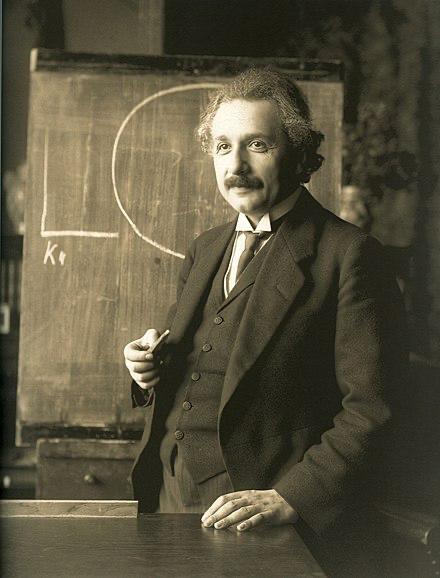
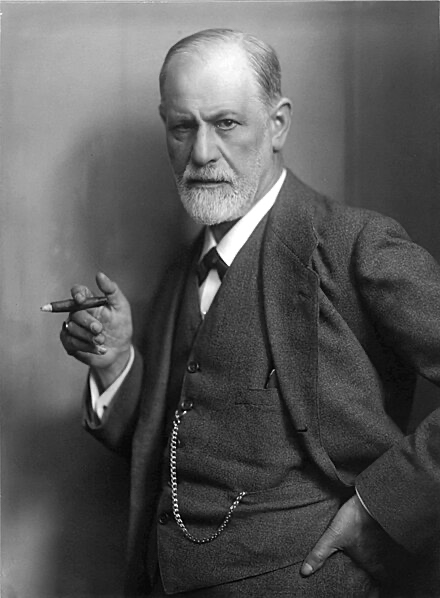
Thus it was of great interest to me that yesterday Jean and I listened to a BBC Radio 4 programme about the letters that were exchanged between two great Jewish men: Einstein and Freud, in 1932. The programme was called Why War? The Einstein-Freud Letters.
The programme ends with offering the listener a fundamental choice, which I won’t spoil for you now. But to me it is an extension of my post (or Patrice’s post) that I published recently on March 19th.
I believe, and hope, you can listen to it by clicking on this link. Here also is the text that is at that link:
In 1932 the world-famous physicist Albert Einstein wrote a public letter to the founder of psychoanalysis, Sigmund Freud. Einstein, a keen advocate of the League of Nations and peace campaigner, asked Freud if he thought war and aggression was forever tied to human psychology and the course of international relations: could we ever secure a lasting world peace?
Einstein’s letter is deeply prescient, as is Freud’s extraordinary response. The exchange was titled ‘Why War?’. The two thinkers explore the nature of war and peace in politics and in all human life; they think about human nature, the history of warfare and human aggression and the hope represented by the foundation of the League of Nations (precursor to the UN) and its promise of global security and a new architecture of international law.
At the time of their exchange, Freud is in the last great phase of his career and has already introduced psychoanalysis into the field of politics and society. Einstein, the younger of the two, is using his huge international profile as a physicist for political and pacifist intervention.
For Einstein, future world security means a shared moral understanding across the global order – that humankind rise above the ‘state of nature’ never to devolve into total war again. He wrote to Freud, as ‘a citizen of the world…immune to nationalist bias…I greatly admire your passion to ascertain the truth. You have shown how the aggressive and destructive instincts are bound up in the human psyche with those of love and the lust for life. At the same time, you make manifest your devotion to the goal of liberation from the evils of war…’ Is it possible, Einstein asks Freud, to make us ‘proof against the psychoses of hate and destructiveness?’. Freud’s answer is fascinating and quite unexpected.
The exchange of letters was sponsored by the International Institute of Intellectual Cooperation, an organisation promoting global security by using prominent thinkers, drawing on multiple fields of knowledge (from science to psychology, politics and law) to achieve a new language for international peace, following the lessons learned from the Great War of 1914-18.
But even as Einstein wrote to Freud in the summer of 1932, the Nazi party became the largest political party in the German Reichstag. Both men felt a sense of apprehension about what was coming; both were pacifist, both Jewish, both would be driven into exile (both Einsteinian physics and Freudian psychoanalysis were denounced by the new regime). The letters were finally published in 1933 when Hitler came to power, suppressed in Germany, and as a result never achieved the circulation intended for them.
Featuring readings from the Einstein–Freud letters and contributions from historians of warfare and psychoanalysis, war journalism and global security, this feature showcases the little-known exchange between two of the 20th century’s greatest thinkers, ‘Why War?’ – a question just as relevant in today’s world.
Contributors include historian of war and peace Margaret MacMillan, BBC chief international correspondent Lyse Doucet, defence and security expert Mark Galeotti, historian of international relations Patrick O Cohrs, author Lisa Appignanesi, who has written on Freud and the history of psychoanalysis, and Faisal Devji, historian of conflict and political violence in India and the Middle East.
Readings are by Elliot Levey (Einstein) and Henry Goodman (Freud)
Jean and I live in an ideal part of America: Merlin in Southern Oregon. We did not plan to come here but in 2012 we wanted to move from Payson, Az. and fortune brought us here. However, I started this blog in 2009 when I had seen the integrity and happiness of dogs and wanted to write about them.
However the wider world is far, far from just the integrity and happiness of dogs.
On March 17th Patrice Ayme posted yet another post on his blog about war and I felt that it was important to be read by as many followers of Learning from Dogs as is possible. (The few small typographical changes are mine.)
ooOOoo
Want No War? A Symptom That Nazism Perdures
Do not whine that war is bad. Ask instead what it is for.
Friend of a friend Manfred Krieger: Will mankind ever learn that wars do no good to anyone?
Patrice Ayme: All over the world, the vermin helping Putin claim that war does not do any good. Similarly the Nazis, after claiming for years that they were the party of peace and minorities, accused big bad France of having launched WW2. France did, indeed, but that was after the Nazis had invaded a few countries, including two democracies, and officially killed a few hundred thousands of alleged mental retards and genetically defective (including a relative of Hitler).
Vermin helping Putin vermin has been crawling around the French and German leadership for a quarter of a century. That Putin was a war criminal was obvious as early as 1999.
The Putinists claim that war never helped anyone. So the war to stop Hitler did not do good to anyone? Only an obdurate Nazi would hold that opinion.
My family was hunted by the Gestapo: I am delighted that more than five million Nazis got exterminated like the vicious vermin they were. It would have been better if the French Republic had declared war on the Nazi gangrene earlier. Destroying the vermin when it was weaker would have saved the lives of in excess of 50 million thoroughly innocent people who got killed as a result of having let the Axis fly from victory to victory, gathering alliances with nearly as equally repulsive tyrannies in the process.
This may well be happening now: the Chinese dictatorship is sitting on a fence, not trying to help the Kremlin tyrant too much. The fascist Iranian theocracy retreated a bit when threatened recently by the West after attacks in the Red Sea, the Gulf of Aden and Syria.
This hesitancy on the part of fascists also happened in World War Two; for a long time Mussolini did not dare to join Hitler, but then they militarily cooperated attacking Spain and three years later, attacking France. But ultimately, except for Franco who looked degenerate, but was smarter, fellow dictators, even Stalin, sided with the Axis.
In final analysis, WW2, and also WW1, happened because, primarily, not enough Germans fought the forces of fascist imperialistic plutocracy inside Germany.
So it is a lack of war, not an excess of it, which brought disaster.
That happened because not enough Morally Correct Germans realized in a timely manner that it would do some good to destroy the fascist imperialistic plutocratic mentality.
None of this deplorable meta-mentality is obsolete; France and Germany encouraged and empowered the Kremlin vermin in the last quarter of a century, by building its economy and financing it with advantageous trade. Now the Kremlin vermin is potentially the greatest threat against humanity and civilization, ever. And what does the German government do? Claim that one should not fight the Kremlin gangrene too much, to not aggravate matters too much.
But that appeasement in face of the unacceptable only encourages the latter. Germans still have to understand the biggest lessons of history.
‘An appeaser is one who feeds the crocodile quality food, hoping
that the ferocious creature will die of indigestion.’
A dramatic article from George Monbiot about water!
I read the latest from George Monbiot yesterday morning and was startled. Startled because I hadn’t thought of it before. Startled because here in Merlin, Southern Oregon we have had so much rain since the beginning of November, 2023 that our acres are swimming in the wet. Startled since that time also our Bummer Creek, which flows across our land, has been at record depths.
But this report is incredibly important and I wanted to share it with you, as I have Geo. Monbiot’s permission for so doing.
ooOOoo
Dry Run
Posted on11th March 2024
The mega-droughts in Spain and the US are a portent of a gathering global water crisis.
By George Monbiot, published in the Guardian 4th March 2024
There’s a flaw in the plan. It’s not a small one: it is an Earth-sized hole in our calculations. To keep pace with the global demand for food, crop production needs to grow by at least 50% by 2050. In principle, if nothing else changes, this is feasible, thanks mostly to improvements in crop breeding and farming techniques. But everything else is going to change.
Even if we set aside all other issues – heat impacts, soil degradation, epidemic plant diseases accelerated by the loss of genetic diversity – there is one which, without help from any other cause, could prevent the world’s people from being fed. Water.
A paper published in 2017 estimated that to match crop production to expected demand, water use for irrigation would have to increase by 146% by the middle of this century. One minor problem. Water is already maxed out.
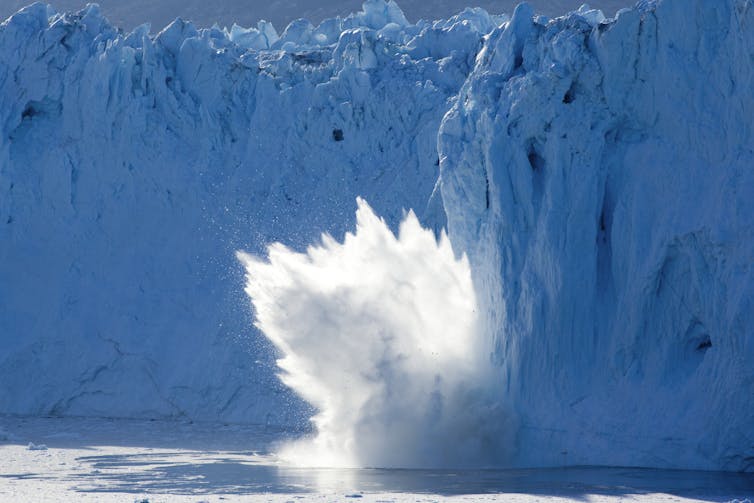
In general, the dry parts of the world are becoming drier, partly through reduced rainfall; partly through declining river flow as mountain ice and snow retreats; and partly through rising temperatures causing increased evaporation and increased transpiration by plants. Many of the world’s major growing regions are now threatened by “flash droughts”, in which hot and dry weather sucks moisture from the soil at frightening speed. Some places, such as the southwest of the US, now in its 24th year of drought, may have switched permanently to a drier state. Rivers fail to reach the sea, lakes and aquifers are shrinking, species living in freshwater are becoming extinct at roughly five times the rate of species that live on land and major cities are threatened by extreme water stress.
Already, agriculture accounts for 90% of the world’s freshwater use. We have pumped so much out of the ground that we’ve changed the Earth’s spin. The water required to meet growing food demand simply does not exist.
That 2017 paper should have sent everyone scrambling. But as usual, it was ignored by policymakers and the media. Only when the problem arrives in Europe do we acknowledge that there’s a crisis. But while there is understandable panic about the drought in Catalonia and Andalusia, there’s an almost total failure among powerful interests to acknowledge that this is just one instance of a global problem, a problem that should feature at the top of the political agenda.
Though drought measures have triggered protests in Spain, this is far from the most dangerous flashpoint. The catchment of the Indus river is shared by three nuclear powers – India, Pakistan and China – and several highly unstable and divided regions already afflicted by hunger and extreme poverty. Today, 95% of the river’s dry season flow is extracted, mostly for irrigation. But water demand in both Pakistan and India is growing rapidly. Supply – temporarily boosted by the melting of glaciers in the Himalayas and the Hindu Kush – will, before long, peak and then go into decline.
Even under the most optimistic climate scenario, runoff from Asian glaciers is expected to peak before mid-century, and glacier mass will shrink by about 46% by 2100. Some analysts see water competition between India and Pakistan as a major cause of the repeated conflicts in Kashmir. But unless a new Indus waters treaty is struck, taking falling supplies into account, this fighting could be a mere prelude for something much worse.
There’s a widespread belief that these problems can be solved simply by enhancing the efficiency of irrigation: huge amounts of water are wasted in agriculture. So let me introduce you to the irrigation efficiency paradox. As better techniques ensure that less water is required to grow a given volume of crops, irrigation becomes cheaper. As a result, it attracts more investment, encourages farmers to grow thirstier, more profitable plants, and expands across a wider area. This is what happened, for instance, in the Guadiana river basin in Spain, where a €600m investment to reduce water use by improving the efficiency of irrigation has instead increased it.
You can overcome the paradox through regulation: laws to limit both total and individual water consumption. But governments prefer to rely on technology alone. Without political and economic measures, it doesn’t work.
Nor are other technofixes likely to solve the problem. Governments are planning massive engineering schemes to pipe water from one place to another. But climate breakdown and rising demand ensure that many of the donor regions are also likely to run dry. Water from desalination plants typically costs five or 10 times as much as water from the ground or the sky, while the process requires masses of energy and generates great volumes of toxic brine.
Above all, we need to change our diets. Those of us with dietary choice (in other words, the richer half of the world’s population) should seek to minimise the water footprint of our food. With apologies for harping on about it, this is yet another reason to switch to an animal-free diet, which reduces both total crop demand and, in most cases, water use. The water demand of certain plant products, especially almonds and pistachios in California, has become a major theme in the culture wars, as rightwing influencers attack plant-based diets. But, excessive as the watering of these crops is, more than twice as much irrigation water is used in California to grow forage plants to feed livestock, especially dairy cows. Dairy milk has much higher water demand even than the worst alternative (almond milk), and is astronomically higher than the best alternatives, such as oat or soya milk.
This is not to give all plant products a free pass: horticulture can make massive demands on water supplies. Even within a plant-based diet, we should be switching from some grains, vegetables and fruit to others. Governments and retailers should help us through a combination of stronger rules and informative labelling.
Instead, they do the opposite. Last month, at the behest of the EU’s agricultural commissioner, Janusz Wojciechowski, the European Commission deleted from its new climate plan the call to incentivise “diversified” (animal-free) protein sources. Regulatory capture is never stronger than in the food and farming sector.
I hate to pile yet more on to you, but some of us have to try to counter the endless bias against relevance in politics and most of the media. This is yet another of those massive neglected issues, any one of which could be fatal to peace and prosperity on a habitable planet. Somehow, we need to recover our focus.
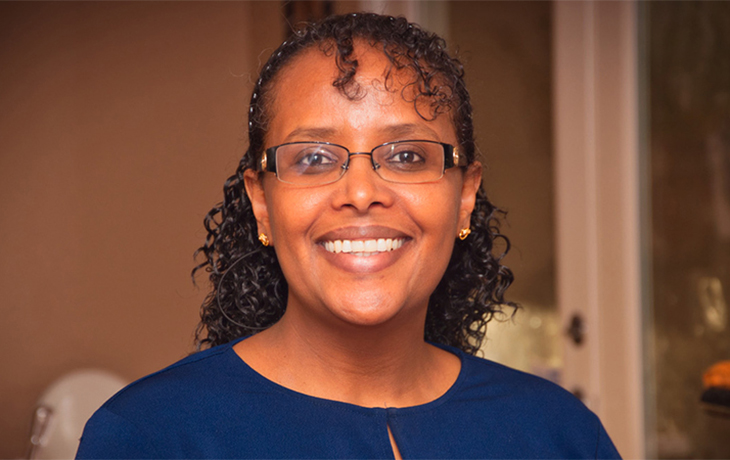
There have been so many disastrous activities on climate change, and I am not belittling them, but it was amazing to come across a TED Talk last Saturday that I watched. But first the speaker, Asmeret Asefaw Berhe, who was born in Asmara, Eritrea. Her bio (in part):
From WikiPedia:
ooOOoo
Asmeret Asefaw Berhe is a soil biogeochemist and political ecologist who is the current Director of the Office of Science at the US Department of Energy. She was previously the Professor of Soil Biogeochemistry and the Ted and Jan Falasco Chair in Earth Sciences and Geology in the Department of Life and Environmental Sciences; University of California, Merced.[1] Her research group worked to understand how soil helps regulate the Earth’s climate.
Advocacy and global impact work
Berhe’s work at the intersection of soil, climate change, and political ecology lends itself well to a number of global issues. During her graduate career, she was a member of the working group that produced the Millennium Ecosystem Assessment, which was called for by the United Nations Secretary Kofi Annan to assess the impact of humans on the environment. She was one of the lead authors on the 2005 report’s chapter on “Drivers of Change in Ecosystem Condition and Services.”[19] The Assessment received the Zayed International Prize for the Environment in 2005.[20]
In 2018, Berhe was selected as part of the inaugural National Academies of Sciences, Engineering, and Medicine New Voices in Sciences, Engineering, and Medicine cohort, as an early career leader working to advance the conversation around key emerging global issues and communicate the evidence base around those challenges.[21]
An advocate for women in science, Berhe is currently a co-Principal Investigator of ADVANCEGeo, which is working to transform the workplace climate of the geosciences to increase retention of women in the field and develop a sustainable model that can be transferred to other scientific domains. Currently, the Earth Science Women’s Network (ESWN), the Association for Women Geoscientists, and the American Geophysical Union (AGU) have partnered to address the issue of sexual harassment in the earth, space and environmental sciences.[22] The program led by Erika Marín-Spiotta and is run with support from a four-year $1.1 million grant from the National Science Foundation.[23]
She currently serves as an advisory board member of 500 Women Scientists, a grassroots organization working to make science open, inclusive, and accessible, and is on the leadership board of the Earth Science Women’s Network.
Earth’s soil can store vast amounts of carbon. Biogeochemist Asmeret Asefaw Berhe says soil could be a powerful tool for fighting climate change – if only we stopped treating it like dirt.
About Asmeret Asefaw Berhe
Asmeret Asefaw Berhe is a soil biogeochemist and President Biden’s nominee to lead the Department of Energy Office of Science. She is a professor of soil biogeochemistry at University of California, Merced. Her research group works to understand how soil helps regulate the earth’s climate.
Berhe’s work exists at the intersection of soil, climate change, and political ecology. During her graduate career, she was a member of the working group that produced the Millennium Ecosystem Assessment, which was called for by the United Nations to assess the impact of humans on the environment.
Berhe received a B.Sc. in Soil and Water Conservation at the University of Asmara in Eritrea. She has an M.Sc. in Political Ecology from Michigan State University and a Ph.D. in Biogeochemistry from University of California, Berkeley.
This segment of the TED Radio Hour was produced by Matthew Cloutier and Sylvie Douglis and edited by Rachel Faulkner and Katie Simon. You can follow us on Facebook @TEDRadioHour and email us at TEDRadioHour@npr.org.
Now that positive TED Talk:
We wish Asmeret the very best of fortune in bringing about these changes.
The challenge with writing posts, albeit not so often, about the global environment, especially when I am a non-scientist, is that one relies entirely on the words of others. In the case of a recent article, published by The Conversation, the authors are claimed to be specialists, and I do not doubt their credentials.
The three authors are René van Westen who is a Postdoctoral Researcher in Climate Physics, at Utrecht University, Henk A. Dijkstra who is a Professor of Physics, also at Utrecht University, and Michael Kliphuis, a Climate Model Specialist, again at Utrecht University.
So, here is their article:
ooOOoo
Atlantic Ocean is headed for a tipping point − once melting glaciers shut down the Gulf Stream, we would see extreme climate change within decades, study shows
Superstorms, abrupt climate shifts and New York City frozen in ice. That’s how the blockbuster Hollywood movie “The Day After Tomorrow” depicted an abrupt shutdown of the Atlantic Ocean’s circulation and the catastrophic consequences.
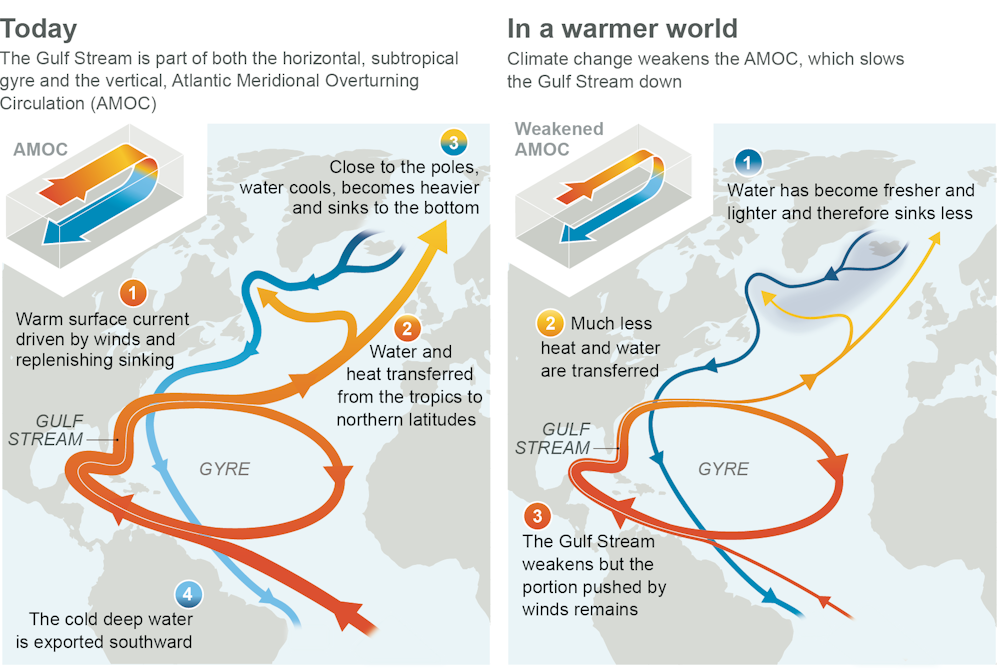
While Hollywood’s vision was over the top, the 2004 movie raised a serious question: If global warming shuts down the Atlantic Meridional Overturning Circulation, which is crucial for carrying heat from the tropics to the northern latitudes, how abrupt and severe would the climate changes be?
In a new study using the latest generation of Earth’s climate models, we simulated the flow of fresh water until the ocean circulation reached that tipping point.
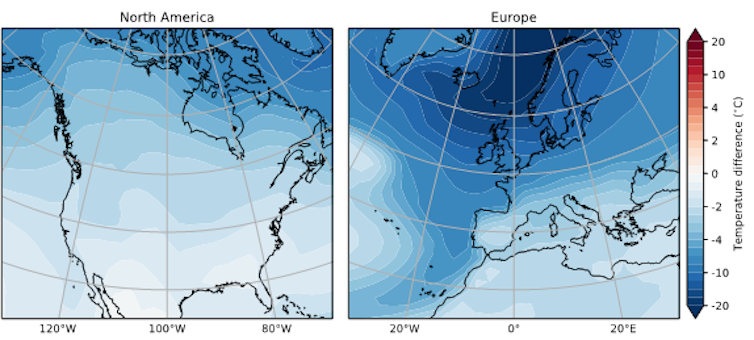
The results showed that the circulation could fully shut down within a century of hitting the tipping point, and that it’s headed in that direction. If that happened, average temperatures would drop by several degrees in North America, parts of Asia and Europe, and people would see severe and cascading consequences around the world.
We also discovered a physics-based early warning signal that can alert the world when the Atlantic Ocean circulation is nearing its tipping point.
In the Atlantic Ocean circulation, the relatively warm and salty surface water near the equator flows toward Greenland. During its journey it crosses the Caribbean Sea, loops up into the Gulf of Mexico, and then flows along the U.S. East Coast before crossing the Atlantic.
This current, also known as the Gulf Stream, brings heat to Europe. As it flows northward and cools, the water mass becomes heavier. By the time it reaches Greenland, it starts to sink and flow southward. The sinking of water near Greenland pulls water from elsewhere in the Atlantic Ocean and the cycle repeats, like a conveyor belt.
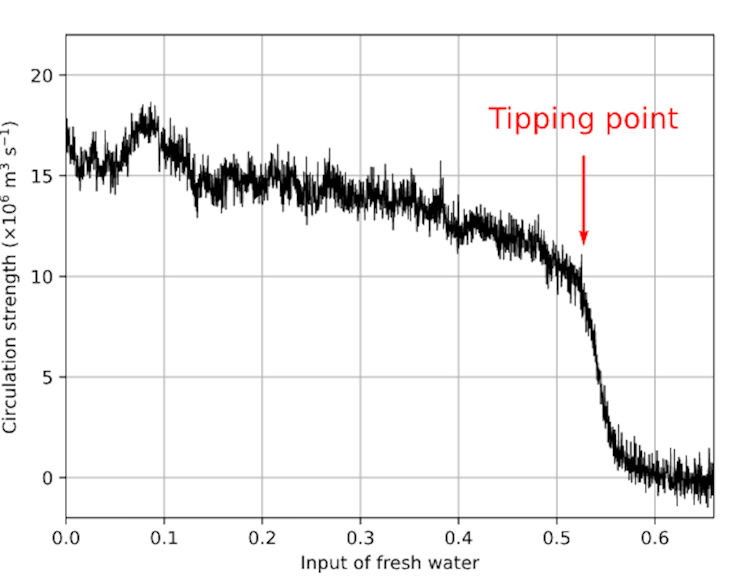
This is where our study comes in. We performed an experiment with a detailed climate model to find the tipping point for an abrupt shutdown by slowly increasing the input of fresh water.
We found that once it reaches the tipping point, the conveyor belt shuts down within 100 years. The heat transport toward the north is strongly reduced, leading to abrupt climate shifts.
The result: Dangerous cold in the North
Regions that are influenced by the Gulf Stream receive substantially less heat when the circulation stops. This cools the North American and European continents by a few degrees.
The European climate is much more influenced by the Gulf Stream than other regions. In our experiment, that meant parts of the continent changed at more than 5 degrees Fahrenheit (3 degrees Celsius) per decade – far faster than today’s global warming of about 0.36 F (0.2 C) per decade. We found that parts of Norway would experience temperature drops of more than 36 F (20 C). On the other hand, regions in the Southern Hemisphere would warm by a few degrees.
The annual mean temperature changes after the conveyor belt stops reflect an extreme temperature drop in northern Europe in particular. René M. van Westen
These temperature changes develop over about 100 years. That might seem like a long time, but on typical climate time scales, it is abrupt.
The conveyor belt shutting down would also affect sea level and precipitation patterns, which can push other ecosystems closer to their tipping points. For example, the Amazon rainforest is vulnerable to declining precipitation. If its forest ecosystem turned to grassland, the transition would release carbon to the atmosphere and result in the loss of a valuable carbon sink, further accelerating climate change.
The Atlantic circulation has slowed significantly in the distant past. During glacial periods when ice sheets that covered large parts of the planet were melting, the influx of fresh water slowed the Atlantic circulation, triggering huge climate fluctuations.
So, when will we see this tipping point?
The big question – when will the Atlantic circulation reach a tipping point – remains unanswered. Observations don’t go back far enough to provide a clear result. While a recent study suggested that the conveyor belt is rapidly approaching its tipping point, possibly within a few years, these statistical analyses made several assumptions that give rise to uncertainty.
Instead, we were able to develop a physics-based and observable early warning signal involving the salinity transport at the southern boundary of the Atlantic Ocean. Once a threshold is reached, the tipping point is likely to follow in one to four decades.
A climate model experiment shows how quickly the AMOC slows once it reaches a tipping point with a threshold of fresh water entering the ocean. How soon that will happen remains an open question. René M. van Westen
The climate impacts from our study underline the severity of such an abrupt conveyor belt collapse. The temperature, sea level and precipitation changes will severely affect society, and the climate shifts are unstoppable on human time scales.
It might seem counterintuitive to worry about extreme cold as the planet warms, but if the main Atlantic Ocean circulation shuts down from too much meltwater pouring in, that’s the risk ahead.
This article was updated to Feb. 11, 2024, to fix a typo: The experiment found temperatures in parts of Europe changed by more than 5 F per decade.
I am 79! I like to think that whatever is coming down the wires, so to speak, will be after my death. But that is a cop out for a) I have a son and a daughter who are in their early fifties, b) I have a grandson, my daughter and son-in-law’s young man, who is a teenager, with his birthday next month, and c) I could possibly live for another twenty years.
The challenge is how to bring this imminent catastrophic global change in temperature to the fore. We need a global solution now enforced by a globally respected group of scientists and leaders, and, frankly, I do not see that happening.
All one can do is to hope. Hope that the global community will eschew the present-day extremes of warring behaviour and see the need for change. That is NOW!
So that the Hollywood movie, The Day After Tomorrow, remains a fictional story. And for those that have forgotten the film or who have never seen it, here is a small slice of a Wikipedia report:
“The Future of Democracy” is, for me, incredibly interesting.
I haven’t a clue as to how long I have been listening to the annual Reith Lecture on BBC Radio 4. It has been many years.
As Wikipedia explains:
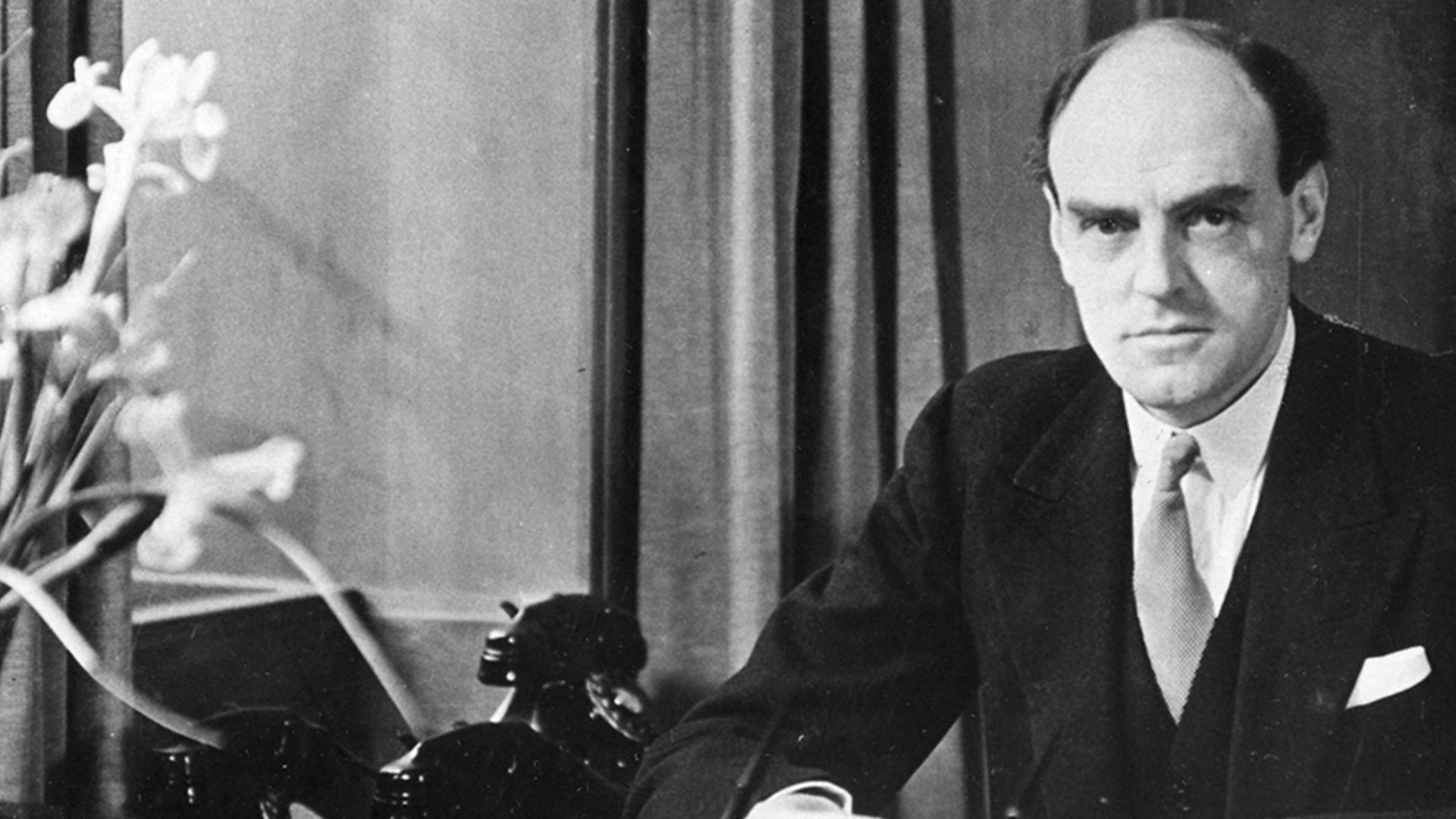
The Reith Lectures is a series of annual BBCradiolectures given by leading figures of the day. They are commissioned by the BBC and broadcast on Radio 4 and the World Service. The lectures were inaugurated in 1948 to mark the historic contribution made to public service broadcasting by Lord Reith, the corporation’s first director-general.
Reith maintained that broadcasting should be a public service that aimed to enrich the intellectual and cultural life of the nation. It is in this spirit that the BBC each year invites a leading figure to deliver the lectures. The aim is to advance public understanding and debate about issues of contemporary interest.
Wikipedia
From the BBC’s History of the BBC.
As the BBC explains on the BBC Sounds website:
Released On: 29 Nov 2023
Available for over a year
This year’s BBC Reith Lecturer is Ben Ansell, Professor of Comparative Democratic Institutions at Nuffield College, Oxford University.
He will deliver four lectures called “Our Democratic Future,” asking how we can build a politics that works for all of us with systems which are robust to the challenges of the twenty first century, from climate change to artificial intelligence. In this first lecture, recorded at New Broadcasting House in London in front of an audience, Professor Ansell asks whether we are in a ‘democratic recession’, where longstanding democracies are at risk of breakdown and authoritarianism is resurgent. And he examines how resilient democracies are to the challenges of artificial intelligence, social media and if they can effectively address core challenges from climate change to inequality.
The Reith Lectures are presented by Anita Anand and produced by Jim Frank. The Editor is China Collins. Reith Co-ordinator is Brenda Brown. The series is mixed by Rod Farquhar and Neil Churchill.
Welcome to my website. I am Professor of Comparative Democratic Institutions at Nuffield College, University of Oxford. My work focuses on a variety of issues in political economy, including both comparative politics and international relations.
I am also co-editor (with David Samuels) of Comparative Political Studies.
My 2010 book, From the Ballot to the Blackboard, published by Cambridge University Press, is available here. My 2014 book (with David Samuels), Inequality and Democratization: An Elite-Competition Approach, published by Cambridge University Press, is available here.
This site contains a variety of working papers, syllabi, my biography, and other information about my academic work. My CV is available here.

 Learning from Dogs