Author: Sherry Jarrell

A “Rogue” Killer Whale?

Animals as Pets?  Do we ever really know what they are thinking?

Do we really ever know what is going on in an animal’s mind?  Some people believe that they do, but when they are wrong, disastrous consequences can result.  Sometimes. Many of these same people would tell you, before the fact, that the risks are worth it.

Unidentified trainer with Killer Whale

This subject has come up a number of times recently, both in my life and in the news from across the world.   Just recently, a seasoned trainer at Florida’s SeaWorld was killed by a killer whale that she had worked with for years.  She was very fond of the whale; there are many photos of her hugging the whale, playing, and working with the whale.  She obviously loved her job, and felt strongly about the whale conservation efforts that Seaworld claims to promote. Witnesses to the mauling have said that the whale seemed angry just before the attack, and concluded that the whale was stressed by being kept in a small tank with little to do.  Essentially, they theorized that the whale “lost it.”  Since then, however, I’ve heard statements made by whale trainers who theorize that the whale was simply playing; that the trainer has been in the water shortly before the incident, playing with the whale.  When she got out of the water, the whale might have wanted to continue to play, and grabbed her pony tail and thrashed her about without any understanding that he was causing her death.  This same whale has been involved in at least two previous deaths.

So can we tell what an animal is thinking?

Continue reading “A “Rogue” Killer Whale?”

Health Care Summit

Political leadership or grandstanding?

What has become very clear to me, after watching the U.S. Health Care Summit between Democrats and Republicans as objectively as possible, is that the President’s goal was not to craft a thoughtful approach to shoring up and improving the U.S. health care system.

Pres. Obama making one of many points at Healthcare Summit

No, the reason for the President and the Democratic leadership to convene the so-called summit was to grandstand; to make a show; to create a photo opportunity; and, most importantly, to try to garner enough support from the Democrats in Congress to ram through the Reconciliation option on the behemoth, disastrous 2000-plus page version of the bill, filled with incomprehensible, internally conflicting doublespeak.

A sad day for American politics.  A very sad day for American citizens.  We deserve better.

Should you invest in U.S. bonds?

Could the U.S. government default on its bonds?

I’ve been asked many times over the years for advice on investing. “What is the market going to do?” “Should I be invested in stocks or bonds?” And, especially in the last few weeks, “Should I hold U.S. or foreign government bonds?”

A U.S. treasury bill

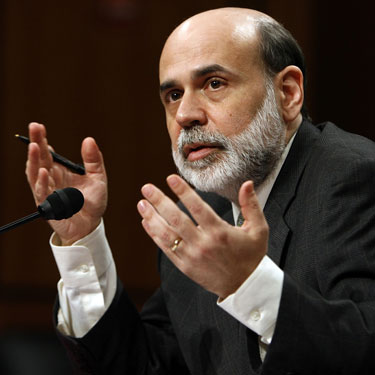
Those are some good questions!  The answers are not as “good.”  The factors that drive the yields on treasury bills and bonds are complex and, despite Ben Bernanke’s pronouncements to the contrary, less well understood than stock returns, and I don’t have a crystal ball, but I can at least begin to frame an answer to these questions here.  I will come back to expand on this topic over time, as markets, economies, and world events evolve.

The return on both bonds and stocks is measured as the percent change between the market price today, and the cash flows received later.  The cash flows of a bond, namely coupon payments and principal, are specified in a contract; if they are not paid, the issuer is in default, and the bondholder has the right to take them to court.  The cash flows on stock, dividends and capital gains, are residual; they are discretionary, and are paid out only after debt payments and other obligations are paid.  For this reason, bonds are considered to be less risky than stocks, and the nominal yields on bonds are generally lower than those of stocks.   The risk-adjusted returns on stocks and bonds may be the same, but the nominal yields on bonds are typically lower.

There is an important distinction between the nature of the returns on bonds and stocks. With bonds, the future cash flows are known.  Movements in the bond’s yield are determined simultaneously with movements in the bond’s price. Once a bond is issued, only changes in interest rates (yield, risk) drive unexpected changes in its price.  Stock prices, on the other hand, fluctuate as either risk or residual cash flows change.  As a result, changes in a bond’s price, hypothetically at least, are a much cleaner indicator of the market’s expectations of future market rates of interest than a stock’s price.

One problem that distorts the information about expected future interest rates that is revealed by changes in the bond’s price is that bonds are less frequently traded than stocks, so the price data on bonds is less comprehensive and complete. In addition, the reported price data that form the basis of bond yield models often diverge from actual market-clearing prices, so that bond pricing models may not describe actual market behavior. Lastly, there is such a tremendous volume of economic and policy information, some of it conflicting, that is crammed into this one variable, the bond price which, given the coupon and principal, summarizes the market’s referendum on future interest rates.

by Sherry Jarrell

Next time: Sources and types of risk in U.S. and other bond prices.

Fed Funds Rate and Consumer/Business Costs

Looking more closely at the implications of changes in the Fed rate

Fed funds rate chart_img
Fed Funds rate influences consumer and business interest costs

Does the Fed Funds Rate, the rate charged by the Federal Reserve to make short-term loans to banks, directly influence the interest rate consumers and businesses pay on credit cards, mortgages, and consumer and business loans?  If you took the word of the average business news commentator, you would think not.  But the answer, of course, is yes.

One way to view the market rate of interest, although certainly not the only correct or useful way, is to think of it as a base rate that represents the risk-free rate, a rate that compensates the population for its impatience to consume the goods it would have consumed had it not lent the funds out in the first place. This risk-free rate is also influenced by the efficiency and functioning of the capital markets that bring borrowers and lenders together.

A risk premium is then added to this base rate of risk-free interest, one that varies depending on the degree of uncertainty of the lender getting repaid.  The risk of default, the risk of prepayment, the risk of political uprising, exchange rate risk, and many other sources of uncertainty — including the risk of inflation — raise the level of the risk premium commanded by lenders in the market.  As an example, over the last 100 years or so, the average annual risk-free rate in the U.S. has been about 4%, and the average annual risk premium for equity securities has been about 8%, bringing the average annual observed interest rate or rate of return to about 12% on these securities.

So what happens to the interest rate charged to consumers and businesses when the Fed raises the fed funds rate?  Basically, the level of the risk-free rate in the economy rises and, as debt contracts expire or new lending takes place, this higher base rate gets factored into the market rate of interest charged.

Overall, the demand for loanable funds falls, the aggregate demand curve for the economy falls, and equilibrium output and employment fall, RELATIVE to where they would have been without the rate increase. The bright side is that a reduction in the money supply that accompanies an increase in the fed funds rate is absolutely essential to curtailing inflation, which drives the risk premium, and represents a much greater cost to the economy.

By Sherry Jarrell

Why the Fed Raised the Interest Rate

Contractionary Fed policy in a recession?

What does it mean when the Fed raises the interest rate? It helps to first understand how the Fed raises the rate, which may surprise some people.  The Fed does not “set” the interest rate as it might, for example, by declaration or edict or by fixing prices.  No, it targets a higher interest rate by contracting the money supply until that money supply intersects the market demand for money at a higher market-clearing rate of interest.

Ben Bernanke, recently reconfirmed Fed Chairman

How does the Fed reduce the money supply? Typically by conducting open market operations, which is the purchase or sale of government securities by the Fed.  To raise the money supply, it purchases new government securities, paying for them by creating — out of thin air — reserves for the commercial banking system. To reduce the money supply, it sells securities which shrinks the amount of deposits in circulation in the economy. In other words, it reduces the liquidity or amount of credit in the system.  This is equivalent to reducing aggregate demand for the goods and services in the economy. (Yes, you heard right — a reduction in the money supply decreases the aggregate demand for goods and services by businesses and consumers.)

Raising interest rates is a contractionary policy decision.  It is designed to “slow down” the economy, reducing output and employment, and raising the equilibrium prices of goods and services in the economy.  Why would the Fed choose to contract an already anemic economy?  To head off inflation, which has it own set of insidious costs and distortions that significantly hurt the economy.

The Fed has always had to tread a very fine line between increasing the money supply enough in the short run to pump up demand and minimize the depth and length of a recession, but not increasing the money supply so much that the increase in demand outstrips the ability of the economy to produce, which creates inflation in the longer run.   Excessive money growth is what causes inflation.  And over the last two years, the U.S. has witnessed a record-shattering increase in the money supply as policymakers struggled to deal with an unprecedented financial crisis.

I have been saying for months that this behemoth money supply would inevitably lead to significant inflation unless steps were taken to shrink it.  I believe the Fed has now begun to take those steps.

By Sherry Jarrell

Michael Jackson

A Michael Jackson fan comes out of the closet

I admit it.  I miss Michael Jackson.  His music defined my youth … my twenties… my middle age.

I forget that’s he gone.  And when I’m reminded, I’m saddened.  I know I didn’t really know him as a person.  I know that all I ever saw was the public persona he put forward.  But he seemed like such a gentle soul to me.  An enormously talented artist who never got the chance to grow up, to have real friends, to escape the expectations of those around him.

Michael Jackson on stage

In the months before his death, I heard the rumors that everyone else did: that he was tired, old, slow, and drugged out.  But I just watched “This Is It,” the documentary made of the rehearsals for his last series of concerts, and Michael Jackson, at 50 years old, was still incredible.  So so talented and so creative.  He directed every note, every dance step, every nuance.  And his singing and dancing — his presence on the stage — is beyond words.  The man may have been eccentric, private, troubled and misunderstood, but the world has never seen a talent like him, and likely never will again.

I really miss Michael Jackson.  Maybe it’s that his music takes me back to a time when I was younger and more free-spirited, but I don’t really care.  I just know that, to me, the world was a better place with him in it.

By Sherry Jarrell

Oh, Irony! The Markets and Obama’s Policies

Where are capital markets heading?

In a recent article, Moody’s announced that it may have to reduce the AAA rating of U.S bonds because of excess spending and historic debt levels of the U.S. government under President Obama.

Moody’s Investors Service Inc. said the U.S. government’s AAA bond rating will come under pressure in the future unless additional measures are taken to reduce budget deficits projected for the next decade.

The U.S. retains its top rating for now because of a “high degree of economic and institutional strength,” the New York- based rating company said in a statement today. The ratios of government debt to the U.S. gross domestic product and revenue have increased “sharply” during the credit crisis and recession. Moody’s expects the ratios to remain higher compared with other AAA-rated countries after the crisis.

What this means in practical terms is that the cost of borrowing by the U.S. government will rise, which will increase spending via more borrowing or higher taxes or more money creation to pay for the higher interest costs.  Sound like a vicious cycle to you?

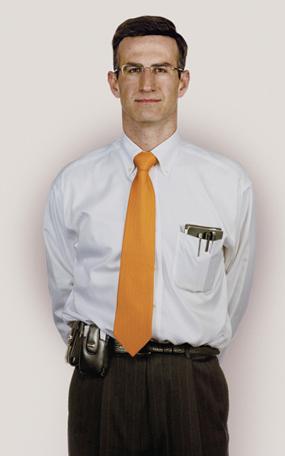
Has anyone noticed the absolute irony of the world capital market having a seat at the table that assesses the viability of Obama’s policies? Obama, who has spent the last year denigrating free markets and capitalism, and has laid the blame for the credit crisis squarely at the feet of those greedy capitalists, now has to deal with a rating agency, which plays a pivotal role in the functioning of those very capital markets, evaluating the creditworthiness of his policies and those of his budget director, Peter Orszag, pictured here.

Peter Orszag, Obama's Budget Director

How wonderfully ironic!

The U.S. would not be the first.   Ireland was recently downgraded, and Japan lost its AAA rating from Moodys in November of 1998; both faced higher borrowing costs as a result.

By Sherry Jarrell

Every Economist, Mr. President? No, Sir!

Here’s one person who doesn’t agree with the President.

The President seems to believe that he can say whatever he wants and no one will hold him accountable. He now claims that “every economist, from both sides of the aisle, believes that the stimulus program created jobs.”

I am an economist, Mr. President, and I know, based either on simple first principles of economics, or on a more rigorous controlled study of labor markets in each major sector of the economy, that the unemployment rate would have been much lower today had the stimulus program never occurred.

You are either woefully unaware of the facts, Mr. President, or are purposefully distorting the facts. Neither is good.  When are you going to realize that just because you say something does not make it so? The world does not contort itself to support your version of the truth.

Do not put words in my mouth, sir.

By Sherry Jarrell

A Guilty Verdict for Bomber is not “Success”!

Wartime issues – assuming we are at war!

The debate about the Christmas Day Bomber continues.   The pundits continue to define “success” in this case as finding him guilty in a court of law.  They go on and on, repeating over and over again, how the evidence is so strong, how the civilian court system is so reliable, how the shoe bomber was tried in civilian court, and how a guilty verdict is virtually certain.  

This is so wrong.  The definition of success is not whether we find the Christmas Day Bomber guilty in a civilian court.  This man intended to blow himself up on Christmas Day, and take hundreds of innocent Americans with him.  The fact that he is alive today, facing a jury or a judge and possible jail time or, at the worst, the death penalty, is a mere footnote to him.

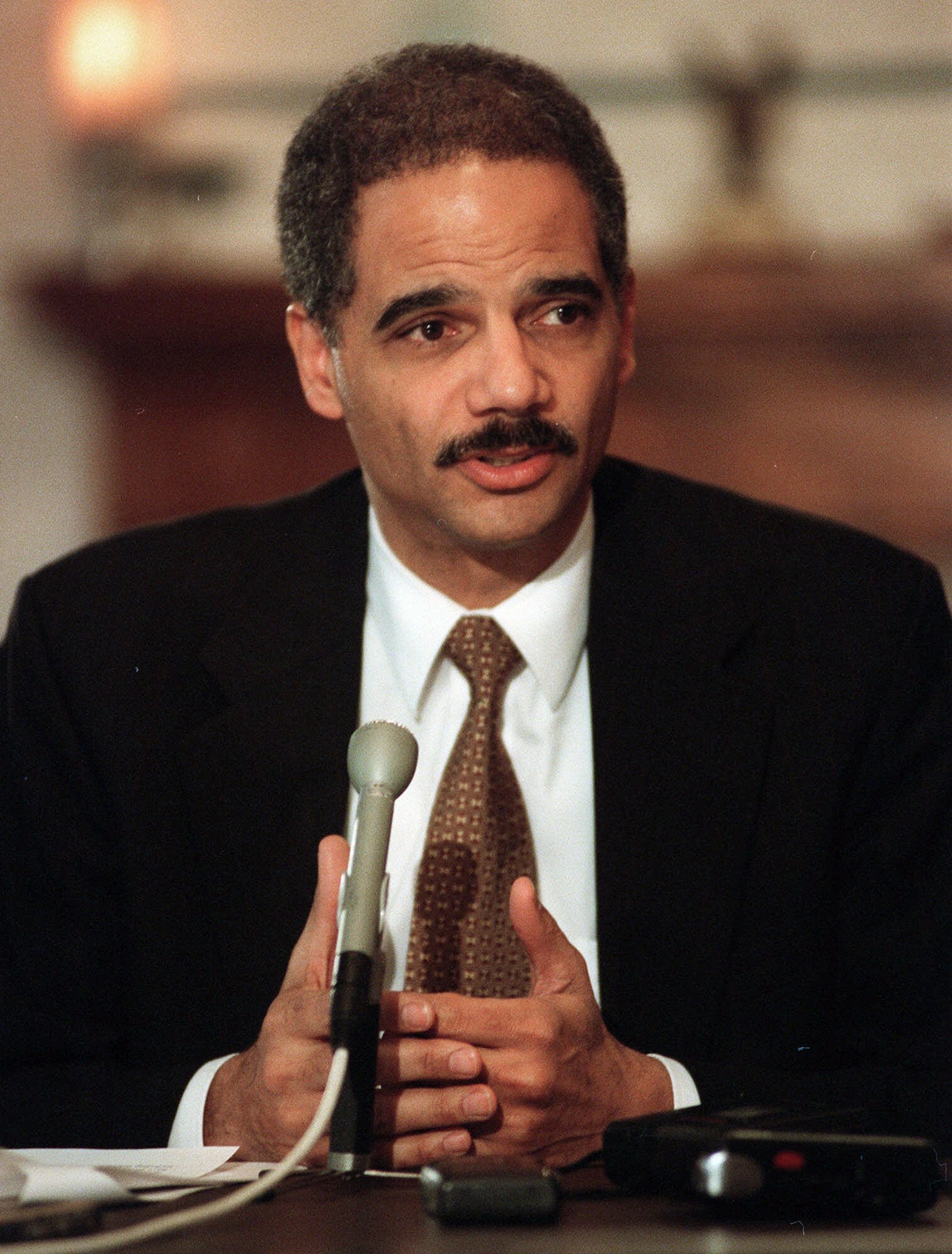
Has it occurred to anyone that if the military had interrogated the shoe bomber as the failed terrorist that he was, that the odds of the Christmas Day Bomber getting on that plane with those explosives would have been diminished?  And interrogating the Christmas Day terrorist instead of shipping him off to the local prosecutor — for reasons Eric Holder, the U.S. Attorney General, has yet to articulate– diminishes the odds of some future terrorist act?

Eric Holder

We are at war!

These people attacked us as part of the ongoing war with terrorists.   No one should “rest easy” because some lawyer is going to sleepwalk through a trial that may or may not successfully reach the painfully obvious conclusion that the Christmas Day Bomber is guilty! On the contrary, it makes me very uneasy that he is in the civilian court system at this point in time at all, because every moment spent reading this man his rights is a moment that could have been spent gathering intelligence from a terrorist.  His punishment will come in due time.  In the meanwhile, we have to extract as much information from his as we can in order to defend ourselves.

We are at war.

By Sherry Jarrell

Obama’s Farcical Freeze

When is a freeze not a freeze?

President Obama’s proposal to freeze parts of federal government spending over the next three years is a lot like a smoker buying a truckload of cigarettes one year before promising to “freeze spending” on cigarettes the next.  He can keep smoking for years to come without spending another dime.

Federal government spending has increased so much over the last year — by some estimates at a rate of 34% — that in December of 2009 the debt limit had to be raised to $12.4 trillion to help absorb a record-shattering $1.4 trillion deficit.

The promise to freeze spending is actually a guarantee that spending will remain at record high levels for the next three years.  It effectively prevents a reduction in federal spending.

How disingenuous of our President.

By Sherry Jarrell