Author: Chris Snuggs

Are we as clever as we think?

This has been circulating on the Internet, but you may not have seen it …..

Indian Chief ‘Two Eagles’ was asked by a white U.S.  government official, ‘You have observed the white man for 90 years.  You’ve seen his wars and his technological advances. You’ve seen his progress, and the damage he’s done.’ The  Chief nodded in agreement.

The official continued, ‘Considering all these events, in your opinion, where did the white man go wrong?’

The Chief stared at the government official for over a minute and then calmly replied, ‘When white man find land, Indians running it, no taxes, no debt, plenty buffalo, plenty beaver, clean water.  Women did all the work, Medicine man free. Indian man spend all day hunting and fishing; all night having sex. Only white man dumb enough to think he could improve system like that.’

(acknowledgements to David Holmes)

Our Christmas Tree is a Fake ….

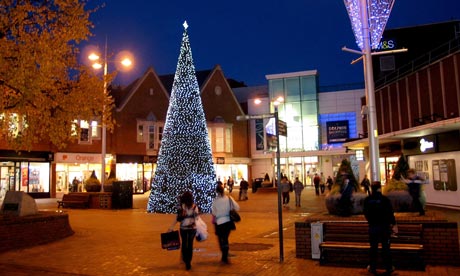
From “The Guardian”, a photo of the the fake Xmas tree in Poole, England that is making people go mild.

Oh Dear! Not even XMAS is safe from the dreaded H&SE, the British Health and Safety Executive and the mentality that we must be protected from every eventuality, but how on earth can you get any Christmas spirit from a giant plastic H&SE tree?

Apparently, the authorities think it is safer than a real tree which “might fall on someone”. But has anyone ever heard of death by XMAS tree? It would make a good title for an Agatha Christie of course ….

But REAL Christmas trees are “good for us”, aren’t they? They grow and are cut down (providing jobs), but then of course new ones are planted, all good for the environment …. But above all, they are REAL. Will everything eventually be replaced by digits and images? How long will it be before we get just a giant wall poster of a Christmas tree? Surely that would be even safer for the plebs?

Save the planet – eat a carrot!

Another political masterpiece!

British Health Minister Andy Burnham is urging us to give up meat; this will apparently help to save the planet.

Andy Burnham! (Seriously)

Now, it is very noble of the Minister to try to help save the planet. However, his efforts do raise some questions.

  • The thing is, if it is essential to stop eating meat then shouldn’t the government put its money where its mouth is and DO something about it? Such as tax it? (usually the first instinct!) Or do they only do things that are electorally favourable? (this is a rhetorical question, by the way – feel free not to answer it …)
  • Or is this perhaps a long process of “educating the electorate”? Well, there are plenty who leave school hardly literate already, so he’s being a bit optimistic, isn’t he? And why start with poor, little Britain? There are tens if not hundreds of millions of our American buddies to convince ….

And at the same time as we are being sermonised about our meat-eating the the USA is edging towards the opening-up to oil-exploration of previously off-limit areas.

In our quaint British lingo this is known as “not singing from the same song-sheet”.  And as for oil, I wish they would make up their minds once and for all; either we have to reduce its use or we don’t.

At the moment, all they seem to be doing is organising conferences (at vast carbon footprint) where they promise to reduce emissions. This is schizophrenia, isn’t it?

Re the British sermon, one wonders whether the noble minister is himself a vegetarian, and of course whether he is among the vast government contingent attending the international climate conference. And does he drive the car 50 metres to the baker’s on Sunday mornings?

Personally, I’d be prepared to give up meat if: A) I were convinced it would do any good and B) I thought that the great and good (and rich) would make a similar sacrifice.

These are two VERY big “ifs” ………

Must go – got some burgers in the pan …..

By Chris Snuggs

Economics and Semantics

Governments borrow – why?

This post is a plea for help from someone clever …. what I would like to understand concerns “the borrowing requirement”. All my adult life I have listened year after year to the British Chancellor’s presentation of his budget and each time there is reference to “the borrowing requirement”.

What I would like to know is WHY there is a borrowing “requirement” in the first place. Exactly WHY do governments spend more than they “earn”? And more to the point, why do – and can – they keep doing this year after year, decade after decade? Layman that I am, it seems to me that continually borrowing, living beyond one’s means, spending more than one receives is BOUND to lead to problems in the long run. Is it simply that in most western democracies the “long run” is not foremost in the minds of our leaders? Or does this continual borrowing not matter?

I was interested in the last French presidential election to see that  centrist candidate François Bayrou proposed making it illegal for the government to spend more than it received. I found this courageous and innovative. Naturally,

Bayrou

he came nowhere in the election! Silly chap! He should have promised to spend, spend, spend like the rest of them! Then he may have had a chance.

No, we are paying vast amounts of interest every year merely to service our debt. The basic questions are: Why can and do states do this? Is it necessary and is it wise? And if the answer to the last two questions is “No”, then why do we let them get away with it?

It seems to me that the “borrowing requirement” is simply a fairly crude means that governments use to bribe us with our own money. Please correct me if I am wrong!

By Chris Snuggs

What makes “a good school”?

A very obvious explanation of good schooling from a British perspective.

There is frequent reference in the media to “good schools”, usually concerning how to create one or get one’s children into one. It is clearly assumed by writers that use this phrase that everyone understands what it means. I am not so sure ….

So what exactly IS “a good school” as far as a parent who wants the best for his children is concerned?

Do the teachers make “a good school”?
Well, teachers are clearly an important contributor to the quality of a school, but are they the critical factor? I think not ….

The premises, facilities, equipment and environment?
The answer is for me the same as for the first question.

The relevance, logic, variety and quality of the curriculum?
Once again, we have the same answer ….. and in truth, it is not too difficult to work out a curriculum that corresponds to these criteria.

So, what IS the critical factor then?

Read more of this Post

Straight Talking and Realpolitik

“To say nothing, especially when speaking, is half the art of diplomacy.” Quote by Will Durant.

During his China visit Obama said that “the US accepted that Tibet was part of China, but went on to push for the early resumption of talks between China and the Dalai Lama.”

This is the usual fatuous “appeal” issued by Western worthies to the Chinese Communist Dictatorship to act honourably towards people it dislikes. As ever, it is a waste of breath, but a diplomatic ritual that has to be endured.

Obama knows it is pointless, the Chinese pretend to listen but also know it is pointless as nothing will change. We all know – or should – that it is pointless. Why then do they do it? You can’t call it self-delusion since nobody is deluded. Frankly, I am not sure what to call it.

Of course, the Chinese claim to Tibet varies from ludicrous through spurious to extremely questionable at best …..

… and Taiwan is a free and independent state, and more to the point democratic. It is a disgrace that free, democratic countries have never recognized it.

The truth (that’s what we want, isn’t it?) is that the CCP is a murderous and illegitimate dictatorship, never having submitted itself to a vote. This may of course be very wise on their part, but it isn’t honest, is it?

In the way of dictatorships, it is quite prepared to massacre its own citizens to protect its power, as happened in the seemingly long-forgotten Tiananmen Square. It is a pity that the free world seems compelled to overlook all this in grovelling to China. We have to deal with them, but issuing fatuous appeals, come on ….

I wonder what the parents of those killed by the CCP thought as doves of freedom were released over Beijing during the last Olympic Games?

By Chris Snuggs

[Footnote from the Editor. This is a hard-hitting Post about the reality of relations between the USA and China. It is a reminder of the truth about such relationships. Readers may want to view this to understand also the reality of trade with China. Some of the images are deeply disturbing.]

Update on the “British Solution”

The Credit Crisis in Britain

Following yesterday’s Post on this Blog about Goldman Sachs, here’s Britain in action.

Ministers yesterday (17th November) launched a £50 billion ($84 billion) bailout of Britain’s crippled banks – and warned there could be worse to come. State-controlled lenders Royal Bank of Scotland and Lloyds Banking Group will receive fresh injections of taxpayers’ money totalling £39 billion ($65.5 billion).

RBS – which has now received the biggest state rescue anywhere in the world – was also handed £11 billion ($18.5 billion) in tax breaks to help keep it afloat.

Source: The Daily Mail

Thanks for the Greed. Are the directors responsible still in place? Are the Great and Good who removed controls and oversaw the decade of binge-spending and easy credit still in place?

Britain's Global Giant!

Oh, I remember now. The very same person in Britain who was Chancellor throughout the 90s and is now Prime Minister is – according to John Prescott (former Labour Deputy-Leader and the person whose office sign was changed at a cost of £700 ($1,200)  when his job name was rebadged weeks before he left it anyway)  – a “Global Giant” who saved the world.

Oh, and let’s not forget, this is the same person who said that: “Britain is better placed than other countries in Europe to weather the crisis …..etc blah, blah, blah …”

The reality (which is in fairly short supply among Global Giants) is different:

Within hours of the Chancellor’s announcement, the European Commission issued a stark warning about the frayed state of Britain’s national finances, warning of an ‘extraordinary deterioration’ because of the cost of City rescues.

It estimates public debt will double as a share of the economy between 2007 and 2011, reaching 88 per cent of gross domestic product – the biggest rise of any leading EU economy.

The latest £50billion bank bailout is roughly equivalent to the annual schools budget and far exceeds the annual defence budget of £35billion. The new moves bring the total of public money lavished on Britain’s financial rescue to £1.2trillion – almost £20,000 for every man, woman and child living in the country.

… and the £ has sunk drastically against the euro ….

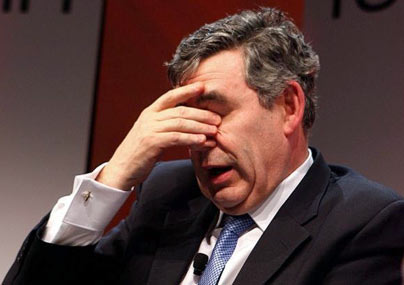
Still, let’s have a bit of positive spin …. the National Debt isn’t quite (yet) what is was just after WWII. A great achievement. Well done  Gordon Brown …. but you can do it …. just one more little push.

We could do with fewer spin-ridden “Global Giants” and more people with vision, courage and competence.

And rather than “saving the world” it might be nicer if Gordon Brown started with saving Britain.

By Chris Snuggs

WOMD

Mass Destruction?

No, it’s not weapons – I just wanted to get your attention; it’s “Words”. Last week two words of enormous significance crept into the news, and the first of them was the word “fair“.

This is a very interesting and potentially devastating word, but I wonder if the Minister was wise in letting it out of the box? Has he read the story of Pandora?

The word was used in connection with a report by British Schools Adjudicator Ian Craig, who had been asked by the British Labour government to look into the procedures and practice of admissions to secondary schools in Britain.

It seems that many parents, desperate to get their child into a good school, are devising ways to get round the strict allocation procedures put in place to ensure “fairness”. As has been brilliantly explained by Judith Woods in “The Telegraph” these desperate tricks include “using grandparents’ addresses on admissions forms for sought-after schools, renting homes in the catchment area, feigning marriage break-up and then reporting that one parent has moved nearer the school, and swapping houses with friends.”

According to Mr Craig – and the government – this is “cheating” and not “fair”, and the former is asking for local authorities to “use all means open to them to deter parents from cheating the admissions system. This includes removing places from the guilty and pursuing them through the courts, possibly using the Perjury Act.”

My interest here is not so much in the minutiae of the details of this current spat but the concept of “fairness” in society, which strikes me as pretty fundamentally complex.

It is of course a fairly modern concept, not one that much preoccupied Genghis Khan or even the Victorians, who were much happier with the principles outlined in this verse of the hymn “All things bright and beautiful”.

The rich man in his castle,
The poor man at his gate,
God made them, high or lowly,
And order’d their estate.

Interestingly, the concept is also one that is not often explicitly discussed by governments. I wonder if this is because the power and moneyed elite know that they might be on a sticky wicket in any discussion of “fairness”?

As ever, one cannot hope to find the answers until one has clearly posed the questions. So here goes:

Minister, as you have introduced into evidence the concept of fairness and labelled those trying to get round the school admission regulations as “cheats”, could you possibly answer these questions?

  • Is it fair that many families – desperate to provide a good education for their children – cannot afford to move to an area where there are good schools but are stuck through their limited means in an educational ghetto?
  • Is it fair that people can play the religion card and send their kids to a high-quality “faith” school outside of their catchment area, Tony Blair, former British PM, being the best recent example.
  • Is it fair that a substantial minority of parents don’t have to bother about finding a good state school at all since they can go private? (And shockingly, according once more to  Judith Woods: “the advantage of being educated at an independent school is greater in Britain than in almost any other country.”)
  • Is it fair that many of the same substantial minority own multiple dwellings while hundreds of thousands of ordinary families do not own their own home and have to pay rent to someone, a system that seems to me to be a direct descendent of the feudal system where you slaved all day in return for the right to live on some Lord’s property? (Speaking of which – much as I love the Queen – is it fair that the small Royal Family owns vast, multiple dwellings that could house thousands of homeless people?)
  • Is it fair that poor person A should die of some horrible disease or disability while person B of limited means can pay for special treatment and survive?

And of course, the ultimate question: Is it fair that I wasn’t born with the voice of Elvis Presley and the brain of Albert Einstein?

Yes indeed; the concept of “fairness” goes far. Once you introduce it as a premise, then where do you stop? And either you base your government on “fairness” or you don’t. You can’t have your cake and eat it, can you?

I look forward in coming days to hearing more from Ministers – and indeed from readers – on the concept of “fairness”. One thing is sure to me, in a world of rapidly-increasing problems and people we risk hearing the word a lot more often as we struggle to find solutions which are “fair”.  Of course, that assumes we think things should be “fair”.

Looking around, my conclusion is that we pretend to think it’s important but only if it doesn’t affect us too much personally.

Oh, the second Word of Mass Destruction? You’ll have to wait till next time …..

By Chris Snuggs

Education, Literacy and Text-Messaging …

English Paper – Question 9, bmbl gr8 cu focl.  Discuss!

Well, every day one learns something new and today I found out that British  GCSEs (the state exams taken by pupils at age 16) will henceforth include a section on “text-messaging”.

Yup, you read it right … at a time when many employers are complaining that even university graduates cannot write and spell correctly we are going to spend time in secondary school practising for exam questions on text-messaging, or “the art of not writing proper English because it is so fiddly”.

text message speak

There are – sadly – so many idiotic things happening in Britain these days that one has sort of got inured, but this takes the biscuit. And the new courses will be not only on the messaging itself but on the “etiquette” of the art …… Am I living in a parallel universe?

What is the “etiquette” of text-messaging? The whole point about this form of communication is its anarchic, personal style. The internet and mobile phoning  are two of the few areas of our life where we can communicate exactly as we like with whom we like. Why this OBSESSION with regulating everything? LEAVE IT ALONE!! And CERTAINLY don’t waste precious school time TEACHING how to text message “PROPERLY”.

And as for “PROPERLY”, WHO exactly is to decide? Ah, we need “norms” … we can’t have anything UNREGULATED after all, especially not in modern Britain. Better set up a commission, preferably at EU level and vast expense, with a President (Oh, they DO so love Presidents) to decide for us HOW to text message with “etiquette”.

When I read this I thought it must be April 1st, but “No”, it is serious …. Pupils “will have to write an essay on the etiquette and grammar of texting, using their own messages as examples – earning up to ten per cent of their overall English GCSE mark.”

But the best is yet to come. It seems that this new departure is “part of the Studying Spoken Language module intended to make GCSEs harder.”

“Harder”? Who wrote this garbage? How can anyone claim that and keep a straight face? And of course, once you have text-messaging on the syllabus and in the exam, then teachers will start to PREPARE for it …. precious time will be devoted to it in class …

“Plonkett – why are you on your mobile phone?”

“I’m just practising for my exam, Sir.”

“Oh, that’s all right then.”

The whole thing makes me despair actually. We are paying civil servants large amounts of money to come out with this nonsense. Many kids can hardly read and write now; apart from anything else it is a clear message that writing in textspeak is OK and that the other stuff is a bore.

“Studying  Spoken Language”? If this is the aim, why not get kids to study speeches of great orators? Gandhi, Luther King, Churchill, Kennedy?  Or even of some of the more eloquent current MPs? William Hague, Vincent Cable and so on? Study what they say? How they get their message across? Discuss and analyse their arguments? That would be fascinating, no? And the kids might at the same time learn something about how their society – and therefore lives – are governed.

Well, No – we have to have “text-messaging” ….

Sorry, our kids deserve better, and so does the British taxpayer.

By Chris Snuggs

Oh, and by the way, the answer to the question at the top of the post is: busting my brains laughing, great, see you, fall of chair laughing. DILLIGAS is all I can ‘say’.

I haven’t got the energy ….

Energy contradictions underline some very strange attitudes.
h-mountainsI went for a bike ride this afternoon ….. there is a super 6km circuit that goes from our village Unterthingau along a country road, up past a farm with magnificent views over the Allgäu countryside then along to Oberthingau and back home …..  On the way there are horses and cows munching happily in fields and of course the snow-capped Alps in the background ….  The exercise and the fresh air were great, but during the ride I was struck by a couple of things. On the skyline in the direction of Kempten was – as usual – a line of a dozen wind turbines. All were – as usual – immobile, save one which was doing its best to turn languidly, and hardly succeeding.
solar2
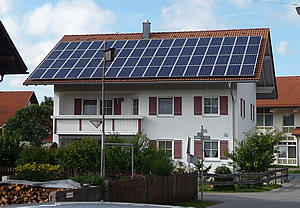
A private house in the village

Now the Germans do things properly, as we know. This area is pristine, hardly a blade of grass or a stone out of place; it is stunning.  So when it comes to energy-saving, they do it seriously (up to a point).

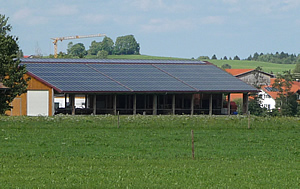
For a start, there are solar panels covering many roofs; the farmers get a subsidy for the installations and sell any surplus to the German National Grid. And then there are those windmills …. but the point is, they are usually motionless. There may be plenty of winter snow in this area, but there isn’t much wind.

solar1
Solar panels on cowshed ...

This confirmed my view that windmills in most places in Europe are never going to solve the energy shortage. They are contributing almost nothing now, and of course only produce anything at all when there’s wind. Full marks to the Germans for trying, but it’ll never be enough.

Leaf-Blower_Vacuum
leaf-blower ....

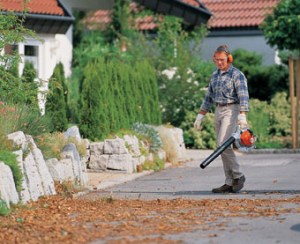
Then as I rode through Oberthingau I saw a local resident blowing leaves off his forecourt with one of those “leaf-blower” machines ….  This struck me as bizarre.

In truth, I’ve NEVER understood those things. What is the point? You blow the leaves from one place to another and later on when there is a little wind it’ll blow them straight back again. If he had been hoovering UP the leaves, fine, but blowing them from one place to another? Why not use a broom? And what have they got against leaves, anyway?

And I thought, on the one hand we are rushing around like headless chickens trying to think of ways of generating energy and on the other we are totally wasting it on ludicrous non-essentials.

As has been claimed and to my mind proven for Africa, what is needed is not giant, national and international projects (though more nuclear power-stations would help) but micro-projects for the masses, and especially a cosmic change in the mindset. You only have to look around to see examples of humungous waste of energy.  Get rid for a start of most traffic lights! Dangerous? Errrmmm, no actually … experiments have shown that when there are no lights people drive more cautiously ….  Get rid of those barriers on motorways that go up and down thousands of times every day. How many people actually drive through a toll barrier without paying? And even if they do, the operator can take their number and report them; why on earth do we need an energy-consuming barrier?

It’s individual mindsets that need to change …  Do people really have to fire up their car to drive 300 metres to the baker’s on Saturday mornings? What happened to walking?  The British “school run” is a classic example; kids are driven to school, don’t get enough exercise and so get fat, the roads are clogged up (and dangerous) and loads of CO2 is produced. Insane …..

One thing is sure, insanity will not save us ….