Author: Paul Handover

Bela’s Bright Ideas

Bela writes her poem on Pulse.

Bela writes frequently and publishes her poetry online.

Recently she published a poem, Do You Need Time?

I am delighted to share the poem with you all. Here is the link to Pulse.

ooOOoo

Do you need time?

I’m not sure I need time —
at least not as it’s commonly considered.
It’s simply what we’re given, like it or not,
for as long as we draw breath:
a new sunrise, a fading sunset,
and the spaces in between,
where we live out an unknown number of days
on this breathing planet.

Time to ponder or to provide,
to nurture, to rest,
depending on the moment
and the hands we’re dealt.

There is time for mountains to rise,
for seas to tumble rhythmically on distant shores.
Time for ground creatures to burrow in before winter,
for hawks to circle rivers and fields, searching —
always searching — for what sustains them.
Time for trees to grow or go dormant,
for planets to whirl their patient orbits —
there is time.

How we humans engage time is another matter.
We guard it, chase it, curse it,
as though it had power over us.
But time simply is.
Rushing or hoarding has never bought us
one more minute in an hour
or one more day in a year.

Perhaps all that’s left
is to flow with it — scheduled or not —
to find our own rhythm
within its turning frame.
We can wrangle with it until the end,
but still, it will roll on.

And maybe that’s mercy:
that time needs nothing from us
but our willingness to live inside it —
fully, gratefully,
while we can.

Pololu sunrise ~ 2016, bj

ooOOoo

May everyone find their own rhythm.

Picture Parade Four Hundred and Ninety-Six

This short video I watched last Friday and wanted to share it with you all.

(As I type this, I’m getting an error (Error 153) on my video player. I hope in reality everything will be fine.)

The writing that accompanied the above video is:

Astounding Comet Lemmon Pics From Our Community

Comet Lemmon has been the best comet of 2025. It passed closest to Earth on October 21 and closest to the sun on November 8. As it brightened in our skies, EarthSky community members from around the globe captured spectacular images of the comet. See a compilation of editor’s picks here. Thanks to all who submitted!

Producer: Kelly Kizer Whitt

EarthSky.org: https://earthsky.org/

Subscribe: https://subscribe.earthsky.org/

Store: https://earthskystore.org/

Team and About: https://earthsky.org/about/

The Science of Sleep.

Exploring the connection between rest and health.

This is a one-hour video (as in a YouTube video) from an accredited US healthcare educator.

That is all for today. Just to add that sleep is so important.

‘When we turn the clocks ahead this spring, we’ll lose an hour of sleep—but for many Americans, poor sleep is a nightly problem. Lack of sleep takes a toll on physical and mental health, increasing risk for chronic conditions like high blood pressure and obesity. Our expert panelists will unpack the latest research on rest, including how social and environmental factors can impact our sleep. They’ll explore the connections between race, sleep, and health disparities. And they’ll share advice on how to improve sleep quality for better overall health.’

The Truth about Gods, part two

The concluding part of this essay by Patrice Ayme.

ooOOoo

Endowing aspects of the universe with spirituality, a mind of their own, is stupid in this day and age, only if one forgets there are natural laws underlying them. But if one wants to feel less alone and more purposeful, it is pretty smart.    

Patrice Ayme

Here is the inventor of monotheism: Nefertiti. Once a fanatic of Aten, the sun god, she turned cautious, once Pharaoh on her own, backpedalled and re-authorized Egyptian polytheism. (The sun-God, Sol Invictis, was revived by Roman emperor Dioclesian 17 centuries later, in his refounding of Romanitas and the empire. His ultra young successor and contemporary, emperor Constantine, used the revived monotheism to impose his invention of Catholicism. Funny how small the conceptual world is.)

***

The preceding part (see Part One yesterday} contains many iconoclastic statements which made the Articial Intelligence (AI) I consulted with try to correct me with what were conventional, but extremely erroneous, ill-informed data points. AI also use the deranged upside down meta-argument that it is well-known that Christianism is not like that, so I have got to be wrong. Well, no, I was raised as a Catholic child in two different Muslim countries, and also in a Pagan one; the Muslim faiths I knew as child were as different from Suny/Shiah faiths as Christianism is, overall, from Islamism. In other words, I know the music of monotheism. So here are:

***

TECHNICAL NOTES: 

[1] To speak in philosophical linguo, we capture two civilizational “ontologies” (logic of existence):

  1. Polytheistic-personal: relational, distributed, ecological.
  2. Monotheistic-fascistic: hierarchical, authoritarian, abstracted.

[2] Paganus, in a religious sense, appears first in the Christian author Tertullian, around 202 CE, to evoke paganus in Roman military jargon for ‘civilian, incompetent soldier‘ by opposition to the competent soldiers (milites) of Christ that Tertullian was calling for.

[3] ‘FAIR OF FACE, Joyous with the Double Plume, Mistress of Happiness, Endowed with Favour, at hearing whose voice one rejoices, Lady of Grace, Great of Love, whose disposition cheers the Lord of the Two Lands.

With these felicitous epithets, inscribed in stone more than 3,300 years ago, on the monumental stelae marking the boundaries of the great new city at Tell el Amarna on the Nile in central Egypt, the Pharaoh Akhenaten extolled his Great Royal Wife, the chief queen, the beautiful Nefertiti.

Nefertiti (‘the beautiful one has come‘) co-ruled Egypt with her older (and apparently famously ugly, deformed by disease) husband. Egypt was at its wealthiest. She was considered to be a DIVINITY. All her life is far from known, and revealed one fragment of DNA or old text at a time. She ruled as sole Pharaoh after her husband’s death, and seems to have offered to marry the Hittite Prince (as revealed by a recently found fragment: ”I do not wish to marry one of my subjects. I am afraid…” she confessed in a letter to the amazed Hittite emperor.). She apparently decided to re-allow the worship of the many Egyptian gods, and her adoptive son and successor Tutankhaten switched his name to Tutankhamen). Both her and Tutankhamen died, and they were replaced by a senior top general of Akhenatten who both relieved the dynasty from too much inbreeding (hence the deformed Akhenaten) and too much centralism focused on the sun-disk (‘Aten’)  

[4] Those who do not know history have a small and ridiculous view of FASCISM. Pathetically they refer to simpletons, such as Hitler and Mussolini, to go philosophical on the subject.. Google’s Gemini tried to pontificate that ‘labeling the structure of monotheism (especially its early forms) as fascistic’ is anachronistic and highly inflammatory. Fascism is a specific 20th-century political ideology. While the author means authoritarian and hierarchical, using ‘fascistic’ distracts from the historical and philosophical points by introducing modern political baggage. It would be clearer and less polemical to stick to Hierarchical’ or ‘Authoritarian-Centralized.

I disagree virulently with this cognitive shortsightedness of poorly programmed AI. The Romans were perfectly aware of the meaning that the faces symbolized (they got them from the Etruscans). So were the founders of the French and American republics aware of the importance of fascism and the crucial capabilities it provided, the powerful republics which, in the end, succeeded the Roman Republic (which died slowly under the emperors until it couldn’t get up); those two republics gave the basic mentality now ruling the planet.

Fascism is actually an instinct. Its malevolent and dumb confiscation by ignorant  morons such as Hitler and Mussolini ended pathetically under the blows of regimes (the democracies on one side, the fascist USSR on the other) which were capable of gathering enough, and much more, and higher quality fascism of their own to smother under a carpet of bombs the cretinism of the genocidal tyrants. It is actually comical, when reading old battles stories, to see the aghast Nazis out-Nazified by their Soviet opponents (discipline on the Soviet side was a lethal affair at all and any moment.) Or then to see SS commanders outraged by the ferocity of their US opponents. At Bir Hakeim, a tiny French army, 3,000 strong, buried in the sands, blocked the entire Afrika Korps and the Italian army, for weeks, under a deluge of bombs and shells, killing the one and only chance the Nazis had to conquer the Middle East. Hitler ordered the survivors executed, Rommel, who knew he was finished, disobeyed him.   

***

Early Christianism was highly genocidal. The Nazi obsession with the Jews was inherited from Nero (who, unsatisfied with just crucifying Christians (64 CE), launched the annihilation wars against Israel) and then the Christians themselves. There were hundreds of thousands of Samaritans, a type of Jew, with their own capital and temple (above Haifa). Warming up, after centuries of rage against civilization, the Christians under emperor Justinian, in the Sixth Century, nearly annihilated the Samaritans; a genocide by any definition.

Later, by their own count, at a time when Europe and the greater Mediterranean counted around 50 million inhabitants, the Christians, over centuries, killed no less than 5 million Cathars from Spain to Anatolia. Cathars, the pure ones in Greek (a name given to them by their genociders), were a type of Christian). In France alone, in a period of twenty years up to a million were killed, (not all Cathars, but that accentuates the homicidal character). As a commander famously said: ”Tuez les tous, Dieu reconnaitra les siens” (Kill them all, God will recognize his own). The anti-Cathars genocide drive in France, an aptly named ‘crusade‘,  something about the cross, lasted more than a century (and boosted the power of the Inquisition and the Dominicans). The extinction of Catharism was so great that we have only a couple of texts left. 

Want to know about Christianism? Just look at the torture and execution device they brandish, the cross. Christianism literally gave torture and execution a bad name, and it’s all the most cynical hypocrisy hard at work. 

And so on. To abstract it in an impactful way, one could say that much of Christianism instigated Nazism. That’s one of the dirty little secrets of history, and rather ironical as the dumb Hitler was anti-Christian, and still acted like one, unbeknownst to himself, his public, and his critiques; those in doubt can consult the descriptions of the Crusades by the Franks themselves, when roasting children was found to relieve hunger.

Chroniclers like Radulph of Caen (a Norman historian writing around 1118) described it vividly: “In Ma’arra our troops boiled pagan adults in cooking-pots; they impaled children on spits and devoured them grilled.” Other sources, such as Joinville, Fulcher of Chartres and Albert of Aachen, corroborate the desperation and brutality, though they express varying degrees of horror or justification.   These acts were not systematic policy but extreme responses to the hunger and chaos of war, and they were preserved in Frankish narratives as part of the Crusade’s grim legacy. (There were also cases of cannibalism in WW2).

Christianism, when not actively genocidal, certainly instigated a mood, a mentality, of genocide; read Roman emperor Theodosius I about heresy. Here is the end of Theodosius’ famous quote: ‘According to the apostolic teaching and the doctrine of the Gospel, let us believe in the one deity of the Father and of the Son and of the Holy Spirit, in equal majesty and in a holy Trinity. We order the followers of this law to embrace the name of Catholic Christians; but as for the others, we judge them to be demented and ever more insane (dementes vesanosque iudicantes), we decree that they shall be branded with the ignominious name of heretics, and shall not presume to give to their conventicles the name of churches. They will suffer in the first place the chastisement of the divine condemnation and in the second the PUNISHMENT OF OUR AUTHORITY which in accordance with the will of Heaven WE SHALL DECIDE TO INFLICT.

The ‘Men In Black‘ of the Fourth Century destroyed books, libraries and intellectuals, ensuring the smothering of civilization, as intended (destruction of the Serapeum in Alexandria, the world’s largest library) around 391 CE. Contemporary writers like Eunapius and Libanius lamented the ‘rage for destruction’ of the Men In Black. Some non-Christian texts were preserved in monasteries, true, but the point is that Christianism made possible the destruction of non-Yahweh knowledge. This is the problem king David himself already had, the fascism, the power obsessed little mind of Yahweh. Monasteries were often built with a covert anti-Christian mentality, things were complicated. When queen Bathilde outlawed slavery (657 CE), her closest allies were bishops, yet she had to execute other, slave-holding bishops. She also founded and funded four monasteries. Soon the Frankish government passed a law enforcing secular teaching by religious establishments.

The uniforms of the Men In Black were copied later by the Dominicans (‘Black Friars’) who led the genocide of the Cathars, in co-operation with the Inquisition, also dressed in black, and then the SS. Luther. Saint Louis expressed explicitly that nothing would bring them more joy than Jews suffering to death. Saint Louis was more descriptive, evoking a knife planted in the belly of the unbeliever and great pleasure. In Joinville’s Life of Saint Louis (c. 1309), Louis recounts a story of a knight who, during a debate with Jews, stabbed one in the belly with a dagger, saying it was better to “kill him like that” than argue theology.  Louis presented this approvingly as zeal for the faith, and wished he could partake. Although he warned, he wouldn’t do it, that would be illegal. With a faith like that Louis IX could only be canonized in 1297 CE. And, following Saint Louis’ hint, the Nazis removed his legal objection by changing the law in 1933, when they got to power.

Luther gave multiple and extensive ‘sincere advices‘ on how to proceed with the genocide of the Jews in his book: ”The Jews and their Lies”. Here is a sample: “If I had to baptize a Jew, I would take him to the bridge of the Elbe, hang a stone around his neck and push him over, with the words, ‘I baptize thee in the name of Abraham.” 

But Musk’s AI, ‘Grok’ informed me that its basic axiom was that Christianism was never genocidal, but instead ‘suppressive‘. Then it thought hard for ‘nine seconds‘ to try to prove to me, with biased context, that I had exaggerated.

I had not.  

***.  

The entire church was into assassination madness, glorifying in its own cruelty; the chief assassin of Hypatia, a sort of Charlie Manson to the power 1000, was made into a saint: Saint Cyril. Cyril’s minions grabbed Hypatia who had just finished giving a lecture, dragged her in the streets, and stripped her clothing, and then stripped her of her own skin, flaying her with oysters shells, causing her demise. She was the top intellectual of the age. Hypatia met her torturous end in 415 CE. Cyril was made into a saint 29 years later, in 444 CE! With saints like that, who needs Hitler?

Not to say Catholicism was useless; the jealous and genocidal, yet loving and all-knowing Yahweh was always a good excuse to massacre savages and extend civilization on the cheap. The Teutonic Knights, finding the Yahweh fanatics known as Muslims too hard a nut to crack, regrouped in Eastern Germany and launched a very hard fought crusade against the Prussian Natives, who were Pagans. After mass atrocities on both sides, the Teutons won.

The Franks embraced the capabilities of the cross, fully. Having converted to Catholicism, they were in a good position to subdue other Germans, who were Arians (and that they did, submitting Goths and Burgonds, Ostrogoths and Lombards). Three centuries later, Charlemagne used Christianism as an instrument to kill Saxons on an industrial scale, in the name of God, to finally subdue them, after Saxons had terminally aggravated Romanitas for 800 years, driving Augustus crazy

Charlemagne, in daily life, showing how relative Christianism was, and its true Jewish origins, used the nickname ‘David’ for king David, the monarch who refused to obey Yahweh, who had ordered David to genocidize a people (petty, jealous God Yahweh then tortured David’s son to death)

Charlemagne lived the life of a hardened Pagan, with a de-facto harem, etc. More viciously, Charlemagne passed laws pushing for secular, and thus anti-Christian education. Following in these respects a well-established Frankish custom. Charlemagne knew Christianism was a weapon, and he was careful to use it only on the Saxons; internally, there was maximum tolerance: Christians could become Jews, if they so wished.

PA

ooOOoo

I found the full essay quite remarkable. Jean has heard me rattle on about it numerous times since I first read the essay on November 2nd. I sincerely hope you will read it soon.

Finally, let me reproduce what I wrote in a response to Patrice’s post:

Patrice, in your long and fascinating article, above, you have educated me in so many ways. My mother was an atheist and I was brought up in likewise fashion. But you have gone so much further in your teachings.

Your article needs a further reading. But I am going to share it with my readers on LfD so many more can appreciate what you have written. Plus, I am going to republish it over two days.

Thank you, thank you, thank you!


The Truth about Gods, part one.

A brilliant essay by Patrice Ayme.

Patrice writes amazing posts, some of which are beyond me. But this one, The Personification Of The World, PAGANISM, Gives Us Friends Everywhere, is incredible.

My own position is that my mother and father were atheists and I was brought up as one. Apart from a slip-up when I was married to my third wife, a Catholic, and she left me and I thought that by joining the Catholic church I might win her back. (My subconcious fear of rejection.)

My subconscious fear of rejection was not revealed to me until the 50th anniversary of my father’s death in 2006 when I saw a local psychotherapist. Then I met Jean in December, 2007 and she was the first woman I truly loved!

Back to the essay; it is a long essay and I am going to publish the first half today and the second half tomorrow. (And I have made some tiny changes.)

ooOOoo

The Personification Of The World, PAGANISM, Gives Us Friends Everywhere

Abstract: Personification of the world (polytheism/paganism) is more pragmatic, psychologically rewarding, and ecologically sound than the hierarchical, abstracted structure of monotheism, which the author labels “fascistic.” [4]

***

Switching to a single fascist God, Ex Pluribus Unum, a single moral order replacing the myriad spirits of the world, was presented as a great progress: now everybody could, should, line up below the emperor, God’s representative on Earth, and obey the monarch and his or her gang. The resulting organization was called civilization. Submitting to God was the only way Rome could survive, because it provided a shrinking army and tax base with more authority than it deserved.

However peasants had to predict the world and it was more judicious to personalize aspects of it. The resulting logico-emotional relationship had another advantage: the supportive presence of a proximal Gods… All over!.[1]

*** 

personification

/pəˌsɒnɪfɪˈkeɪʃn/ noun

1.the attribution of a personal nature or human characteristics to something non-human, or the representation of an abstract quality in human form.

***

Before Christianism, Gods were everywhere. When the Christians took over, they imposed their all powerful, all knowing Jewish God. Some present the Jewish God as a great invention, symbolizing some sort of progress of rationality that nobody had imagined before. 

However, the single God concept was not that new. Even Americans had it in North America, as the chief of God, the Aztecs, had a similar concept, and even Zeus was a kind of chief God. Zoroastrianism had Ahura Mazda, who did not control Angra Manyu, but still was somewhat more powerful. The Hindus had Vishnu and his many avatars.

Eighteen centuries before those great converters to Christianism, Constantine, Constantius II, and Theodosius I, there was an attempt to forcefully convert the Egyptians to a single God. Pharaoh Akhenaten’s monotheistic experiment (worship of Aten) caused turmoil and was erased by his immediate successors.

According to the latest research it seems likely that the famous Nefertiti became a Pharaoh on her own, after the death of her husband, and retreated from monotheism by re-establishing Egyptian polytheism [3]. In the fullness of time, the infernal couple got struck by what the Romans, 15 centuries later, would call damnatio memoriae. Their very names and faith were erased from hundreds of monuments

Shortly after the Aten episode, there was another confrontation between polytheism and monotheism. The colonizers of Gaza were apparently Greek, of Aegean origin, and, as such, over more than a millennium of conflict with the Jewish states in the hills, Greek Gods confronted Yahweh. The Greeks obviously did not see Yahweh as a major conceptual advance, as they did not adopt Him (until Constantine imposed Him, 15 centuries later).

While the area experienced enormous turmoil, including the permanent eclipse of Troy after the war with Greece (see Homer), and later its replacement by Phrygia, then followed by the Bronze Age collapse, then the rise of Tyre, and the Assyrian conquest, the Greeks survived everything, and their civilization kept sprawling (the early Christian writings were in Greek).

Ultimately, the lack of ideological bending, the obsession with pigs and other silliness, helped to bring devastating Judeo-Roman wars. By comparison, the much larger Gaul bent like a reed when confronted with the Greco-Romans, absorbing the good stuff. Mercury, the God of trade, preceded Roman merchants. Gaul didn’t take religion too seriously, and went on with civilizational progress.

The lack of elasticity of the single God religion of the Jews brought their quasi-eradication by Rome; Judaism was tolerated, but Jewish nationalism got outlawed. By comparison, the Greeks played the long game, and within a generation or so of Roman conquest, they had spiritually conquered their conqueror. Christianism was actually an adaptation of Judaism to make Yahweh conquer the heart and soul of fascist Rome.

***

To have Gods everywhere? Why not? Is not the Judeo-Christian God everywhere too? Doesn’t it speak through fountains, and the immensity of the desert, and the moon, and the stars, too?

***

Yahweh, the Jewish God Catholic Romans called “Deus” was deemed to be also the ultimate love object. Yahweh had promised land to the Jews, Deus promised eternal life of the nicest sort – To all those who bought the program. 

Christians were city dwellers and their power over the countryside and barbarians came from those who had imposed Christianism, the imperial powers that be (at the time, more than 90% of the people worked in agriculture). Already as a teenager, Constantine, a sort of superman born from imperial purple, terrified the court which was supposed to hold him hostage. Such a brute and excellent general could only get inspired by Yahweh’s dedication to power.

The country dwellers, the villagers, disagreed that they needed to submit to a God organized, celebrated and imposed by the all-powerful government (god-vernment?). In classical Latin paganus meant ‘villager, rustic; civilian, non-combatant’. In late imperial Latin it came to mean non-Judeo-Christian (and later non-Judeo-Christo-Islamist) [2].

Christianism found it very difficult to penetrate the countryside, where the food was produced. It never quite succeeded (Even in Muslim Albania, Pagan rituals survived until the 20th century; much of the cult of saints is barely disguised Paganism).

Peasants knew that power was distributed throughout nature, and they had to understand those powers, thus love them – That enabled them to predict phenomena.

Peasants could ponder the mood of a river, and even predict it; flooding was more of a possibility in some circumstances, and then it was no time to indulge in activities next to the river. Peasants had to guess the weather, and the earlier, the better. Peasants had to know which part of the astronomical cycle they were in, to be able to plant crops accordingly; that was not always clear just looking outside, but the stars would tell and could be trusted to tell the truth.

We can be friends to human beings, and sometimes it’s great, but sometimes we feel betrayed and abandoned. But a mountain or a sea? They will always be there, they are not running away, they are never deliberately indifferent, and generally exhibit predictable moods. It is more pragmatic and rewarding to love them more rather than an abstract Dog in Heavens. Call them Gods if you want.

ooOOoo

Part two will be published tomorrow.

I am publishing the notes, on both days, so you can look them up now rather than waiting another day.

TECHNICAL NOTES: 

[1] To speak in philosophical linguo, we capture two civilizational ‘ontologies’ (logic of existence):

  1. Polytheistic-personal: relational, distributed, ecological.
  2. Monotheistic-fascistic: hierarchical, authoritarian, abstracted.

[2] Paganus, in a religious sense, appears first in the Christian author Tertullian, around 202 CE, to evoke paganus in Roman military jargon for ‘civilian, incompetent soldier‘ by opposition to the competent soldiers (milites) of Christ that Tertullian was calling for.

[3] ‘FAIR OF FACE, Joyous with the Double Plume, Mistress of Happiness, Endowed with Favour, at hearing whose voice one rejoices, Lady of Grace, Great of Love, whose disposition cheers the Lord of the Two Lands.

With these felicitous epithets, inscribed in stone more than 3,300 years ago on the monumental stelae marking the boundaries of the great new city at Tell el Amarna on the Nile in central Egypt, the Pharaoh Akhenaten extolled his Great Royal Wife, the chief queen, the beautiful Nefertiti.

Nefertiti (‘the beautiful one has come‘) co-ruled with her older (and apparently famously ugly, deformed by disease) husband, Egypt. Egypt was at its wealthiest. She was considered to be a DIVINITY. All her life is far from known, and revealed one fragment of DNA or old text at a time. She ruled as sole Pharaoh after her husband’s death, and seems to have offered to marry the Hittite Prince (as revealed by a recently found fragment: ”I do not wish to marry one of my subjects. I am afraid…” she confessed in a letter to the amazed Hittite emperor). She apparently decided to re-allow the worship of the many Egyptian gods and her adoptive son and successor Tutankhaten switched his name to Tutankhamen. Both her and Tutankhamen died, and they were replaced by a senior top general of Akhenatten who both relieved the dynasty from too much inbreeding (hence the deformed Akhenaten) and too much centralism focused on the sun-disk (‘Aten’).  

[4] Those who do not know history have a small and ridiculous view of FASCISM. Pathetically they refer to simpletons, such as Hitler and Mussolini, to go philosophical on the subject. Google’s Gemini tried to pontificate that ‘labeling the structure of monotheism (especially its early forms) as fascistic’ is anachronistic and highly inflammatory. Fascism is a specific 20th-century political ideology. While the author means authoritarian and hierarchical, using ‘fascistic’ distracts from the historical and philosophical points by introducing modern political baggage. It would be clearer and less polemical to stick to Hierarchical’ or ‘Authoritarian-Centralized’.

I have Ring Worm!

Luckily not badly.

Last week I went to my doctor to find out what was causing my itching, mainly in my groin and the skin of my forearms.

Dr. Mount told me that I had ringworm. I do not remember having had it before.

The Cleveland Clinic have the details online and it struck me that I should share the information with you. The source of this article is here. I hope very much that sharing this article is alright with Cleveland Clinic.

ooOOoo

Ringworm

Ringworm is an itchy, contagious fungal infection that causes a ring-shaped pattern on your skin. Over-the-counter and prescription treatments can stop the fungus from spreading to other parts of your body or to others.

Overview

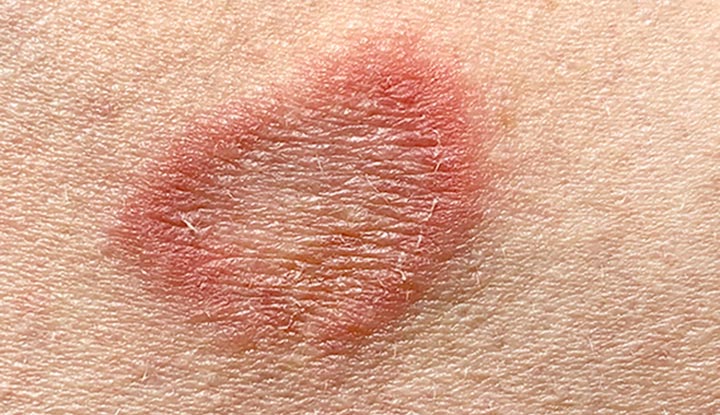
Ringworm (Tinea Corporis) on the skin.
Ringworm is a circular-shaped skin rash caused by a fungal infection.

What is ringworm?

You might be surprised to learn that a fungus — and not a worm — causes ringworm. Fungi thrive in warm and humid areas such as locker rooms and public showers. This common and contagious skin infection gets its name from the red, itchy, ring-shaped skin plaque (a type of scaly rash). It spreads easily and through close contact.

You get ringworm from contact with an infected person, animal or object. Ringworm goes by different names depending on which body part it affects. Ringworm on your body is called tinea corporis. This type of ringworm affects your arms, legs, torso and face. Ringworm is treated with antifungal medication available either over the counter or as a prescription.

Types of ringworm

Ringworm has different names based on where it appears on your body — and it can appear just about anywhere. Ringworm infections include:

  • Athlete’s foot: Also called tinea pedis, this fungal infection causes an itchy, burning skin rash between your toes and on the soles of your feet. Your skin may become scaly and cracked or develop blisters. Sometimes, your feet smell bad.
  • Jock itch: Tinea cruris, or jock itch, causes a red, itchy rash in your groin, upper thighs or rectum. Some people get blisters.
  • Scalp ringworm (tinea capitis): This causes scaly, red, itchy bald spots on your scalp. If left untreated, the bald spots can grow bigger and become permanent.
  • Hands (tinea manuum): Signs of ringworm on your hands include dry, cracked palms and ring-like patches.
  • Beard (tinea barbae): Ringworm appears on your neck, chin and cheeks. The patches might become crusted over or filled with pus.
  • Toenails or fingernails (tinea unguium or onychomycosis): Nails become thick, discolored and deformed.

What does ringworm look like?

Ringworm typically begins as a flat, discolored patch, which may appear red in lighter complexions and brown in darker complexions. The patch has a ring-like or circular shape with a raised, scaly border.

Who gets ringworm?

Ringworm affects people of all ages. You’re more at risk for ringworm if you:

  • Have a weakened immune system or an autoimmune disease like lupus.
  • Participate in high-contact sports, such as wrestling (this ringworm is called tinea gladiatorum).
  • Sweat excessively (hyperhidrosis).
  • Use public locker rooms or public showers.
  • Work closely with animals that might have ringworm.

How common is ringworm?

Ringworm is contagious and extremely common. It can affect 20% to 25% of the world’s population at any given time.

Symptoms and Causes

What are the signs of ringworm?

Signs typically appear between four and 14 days after your skin comes in contact with the fungi that cause ringworm, including:

  • Circular, ring-shaped scales or plaques.
  • Flat patches with a raised, round border.
  • Itchy skin.
  • Hair loss or bald spots in the affected area.

What causes ringworm?

Despite its name, a fungus causes ringworm. This type of fungus naturally lives on your skin, hair and nails. However, when their environment gets hot and damp, the fungi start growing uncontrollably. You can get this infection anytime your skin comes into contact with the ringworm fungus on someone else’s skin.

How contagious is ringworm?

Ringworm is contagious. It can live on your skin, on surfaces and in soil. The main ways ringworm spreads are:

  • Skin-to-skin contact with a person who has ringworm.
  • Contact with an infected dog, cat or animal (livestock or pets).
  • Contact with a contaminated surface, such as a locker room floor or sweaty gym clothes.
  • Sharing objects with an infected person or animal such as a brush, towel or bedding.
  • Contaminated soil.

Diagnosis and Tests

How is ringworm diagnosed?

Your healthcare provider can diagnose ringworm by looking at your skin and assessing your symptoms. They may scrape the area to look at the skin cells under a microscope, too. Examining the scales typically confirms ringworm.

Management and Treatment

How is ringworm treated?

Several nonprescription (over-the-counter) and prescription antifungal medications are available to treat ringworm. Antifungals come in various forms like creams, gels or powders. Your healthcare provider can treat more widespread ringworm with oral antifungal medication.

Antifungal creams and powders

Over-the-counter (OTC) antifungal creams, gels or powders typically work well. OTC products include:

If your symptoms get worse or don’t clear after two weeks, you may need an oral prescription medication from your healthcare provider.

Oral medication

Your healthcare provider may write you a prescription for oral antifungal medication if you have ringworm on your scalp or on many parts of your body. Most medications are prescribed for between one and three months. Oral antifungal medications include:

Antifungal shampoo

Antifungal shampoo, such as ketoconazole shampoo (Nizoral A-D®), may stop scalp ringworm from spreading. It won’t cure it, but it may help contain the infection. You also need to take a prescribed oral antifungal medication. Unaffected family members may benefit from using the shampoo as well.

Home remedies for ringworm

Home remedies like apple cider vinegar or tea tree have little to no benefit. Apple cider vinegar may cause open sores or inflammation. Tea tree oil has antifungal and antimicrobial properties but its effects aren’t well-known.

Your home may require treatment as well. The ringworm fungus can live on surfaces for months. Disinfectant sprays like Lysol® or bleach can remove the fungus. Wash clothes, sheets and towels in hot water and detergent to prevent ringworm from spreading.

Steroid creams

Corticosteroid creams may help reduce inflammation, but they shouldn’t be used to treat ringworm. In fact, they may worsen the infection.

What cures ringworm?

Mild cases of ringworm clear up within a few weeks. More serious infections may require treatment for six to 12 weeks.

Some other things you can do to promote healing:

  • Keep the affected area clean and dry.
  • Apply antifungal lotions, creams or ointments for the entire treatment period.
  • Avoid touching the area and wash your hands before touching other areas of your body.

Does ringworm go away by itself?

Although ringworm can go away by itself, it’s not common. While ringworm is present on your skin, you’re still contagious to others.

Outlook / Prognosis

Can ringworm come back?

Yes, ringworm can come back. Ringworm will go away if you treat it appropriately. Follow your healthcare provider’s treatment plan until the infection clears completely. If you stop treatment or treatment ends too soon, the infection can come back.

What are the complications of ringworm?

If you suspect you or your child has ringworm, don’t use anti-itch creams containing corticosteroids. These creams weaken your skin’s defenses. They can allow the infection to spread and cover larger sections of skin. On rare occasions, the ringworm fungus goes deeper into your skin, making it even harder to treat.

Scalp ringworm can lead to a painful inflammation called kerion. With kerion, you may develop crusty, pus-filled sores, often with hair loss and scarring.

Prevention

How can I prevent ringworm?

Ringworm thrives in damp, warm areas. The fungus can live on towels, clothes, sheets and household surfaces for months. Preventing ringworm involves:

  • Changing your socks and underwear daily or more frequently if they become damp or soiled.
  • Showering immediately after contact sports or exercise.
  • Wearing sandals or shower shoes at the pool and in public locker rooms and showers.
  • Drying your skin thoroughly after showering, especially between your toes.
  • Avoiding sharing towels, washcloths, sheets, clothes, combs or other personal hygiene items.
  • Washing clothes, athletic gear, sheets and towels in hot water and detergent.
  • Disinfecting surfaces with bleach or sprays like Lysol®.
  • Treating pets for ringworm, if they’re infected.
  • Washing hands thoroughly after contact with animals.

A weak immune system or living in a damp, warm climate increases your risk of a fungal infection.

Living With

When should I call the doctor?

Call your healthcare provider if the ringworm infection:

  • Appears on your scalp.
  • Looks infected (redness and swelling).
  • Occurs during pregnancy.
  • Spreads to other areas of your body.
  • Doesn’t improve after using over-the-counter antifungal medication as directed.

What questions should I ask my doctor?

You’re sure to have questions if you or your child develop ringworm. You might ask your healthcare provider:

  • How did I get ringworm?
  • How long is ringworm contagious?
  • Should I (or my child) stay home from work/school until the ringworm infection is gone?
  • What steps can I take to prevent ringworm from spreading to other parts of my body?
  • What steps can I take to prevent ringworm from spreading to other people?
  • What’s the best treatment for ringworm?
  • Should I avoid any medications or treatments?
  • What steps can I take to keep from getting ringworm again?
  • How can I tell if my pet has ringworm?
  • Should I look out for signs of complications?

Additional Common Questions

Is ringworm an actual worm?

No, ringworm isn’t a worm. It’s a fungal infection that gets its name from its ring-like border.

How does ringworm affect pregnancy?

Ringworm fungus won’t affect your pregnancy. Still, you should check with your healthcare provider before using over-the-counter antifungal creams or powders. Oral antifungal medications appear to be safe to take during pregnancy. Your pregnancy care provider can discuss potential risks and benefits with you.

Can you get ringworm from dogs or cats?

Yes, you can get ringworm from dogs, cats and other animals like cows, goats or horses. You can protect yourself by always washing your hands after playing with or petting animals. If your pet has ringworm, disinfect your pet’s bedding and take extra care to clean surfaces your pet has visited in your home.

How is ringworm different from eczema?

Eczema and many other skin conditions can resemble ringworm. Both ringworm and eczema cause itchy, red skin. Unlike ringworm, eczema isn’t contagious and doesn’t spread from one area to another on your body. Ringworm has a unique, ring-like appearance. Contact a healthcare provider for an appropriate diagnosis.

A note from Cleveland Clinic

Ringworm can be unpleasant, but antifungal medications will help you get rid of the fungus that causes ringworm. The treatment may take time, but it’s important to follow your healthcare provider’s treatment plan for as long as recommended. Ending treatment too soon can cause ringworm to return and make the infection harder to treat. Ask your provider about how you can keep ringworm from spreading to other parts of your body and to other people.

ooOOoo

We were having a small and casual party at our house celebrating Halloween. There were thirteen coming some of them in fancy dress. However, a close neighbour, who was coming with her husband, recommended a cancellation just in case I passed the fungal infection on to someone else.

Thus I have to be patient and keep putting on the cream for at least the next couple of weeks, hoping that in time I will notice the fungus going.

Finally, let me just repeat this from the article by Clevedon: ‘Ringworm is contagious and extremely common. It can affect 20% to 25% of the world’s population at any given time.’

Picture Parade Four Hundred and Ninety-Five

Some photos I took on Saturday, 25th October.

They were all taken walking down the driveway to the mailbox.

oooo

oooo

oooo

oooo

oooo

And the last one that is not autumn colours!

I’m not a photographer, unlike my son, Alex, who is (Alex Handover on Instagram) and captures the most wonderful bird photos, but occasionally I grab my camera and take pictures of whatever captures my eye. And before the heavy rains came in that weekend, I saw the beautiful leaves and their colours, and that last photo of the two wild black-tailed deer.

Every morning I feed the deer down by the stables.

Alex’s Photography

My son has beautiful videos of birds on YouTube.

Here is his description from that YouTube website.

I am a wildlife photographer based in the south west of England, spreading the joy of wildlife photography to everyone because the more of us that get interested in wildlife, there is hope for the future. Expect Vlog style and some tips videos. OM systems OM-1 mkII and mkI

Here is the link: https://www.youtube.com/@AlexHandoverPhotography

Enjoy!

The start of it all!

A wonderful documentary of the formation of Planet Earth.

From the website The Earth through time, I quote: The Earth was formed about 4.6 billion years ago. 4.6 billion is 4,600,000.000 years ago. It was formed by collisions of particles in a large cloud of material. Slowly gravity gathered together all these particles of dust and gas and formed larger clumps. These clumps continued to collide and gradually grew bigger and bigger eventually forming the Earth. The earth at this time was very different to how we know it today.

I left a comment on the site: What a wonderful story.. So many comments in support of this fantastic film, and rightly so.

Reply

Me sharing a political interview

It is not something I have done before.

This is a blog about dogs in the main and many different subjects as well. For example, I am very interested in the formation of the planet; see the post coming up soon.

However, my good buddy, Dan Gomez, a Californian, sent me a link to an interview, and I quote “After the Israel-Hamas deal was signed earlier this month, Jared Kushner and Steve Witkoff, President Trump’s envoys and the leading brokers of the agreement, sat down with Lesley Stahl to discuss their unconventional deal-driven approach.”

It is a 60 Minutes interview.

I found it most interesting and completely at odds with the majority of all types of media that think that President Trump is despicable.

My view of politicians of democracies is that 99% of them are talkers. Presumably, Trump is a doer.

I would be interested to hear what others think, especially those who were born in the U.S.A.