Long-term friend, Bob Derham, recently sent me an item that had been forwarded to him.
It’s about the wonders of the technology that attempts to predict what one is writing; in other words predictive text.
Here’s the story (and to maximise the effect, I have turned on just for today the ‘Read more’ link.)
ooOOoo
THE TEXT
Hi Bob, This is Kevin next door. I’m sorry buddy, but I have a confession to make to you. I’ve been riddled with guilt these past few months and have been trying to pluck up the courage to tell you to your face, but I am at least now telling it in text as I can’t live with myself a moment longer without you knowing. The truth is, I have been sharing your wife, day and night when you’re not around. In fact, probably more than you, particularly in the mornings after you’ve left for work. I haven’t been getting it at home recently, but that’s no excuse I know. The temptation was just too much…. I can no longer live with the guilt and I hope you will accept my sincerest apologies and forgive me. I promise that it won’t happen again. Regards, Kevin.
THE ACTIONS
Bob, feeling anguished and betrayed, immediately went into his bedroom grabbed his gun, and, without a word, shot his wife twice, killing her instantly. He returned to the lounge where he poured himself a stiff drink and sat down on the sofa. He took out his phone to respond to the neighbour’s text and saw he had another message:
A lovely way to start a new week. Back on the 7th February, over on the blog Dog Leader Mysteries, Deborah published a post under the title of Returned to Owner: joyful dog + family. It is such a wonderful story that it is republished here, with Deborah’s kind permission.
ooOOoo
Returned to Owner: joyful dog + family
What a story plus a happy ending!
This true story comes from animal lover, dog rescuer and Redwood Writer, Brigid Wasson. I highly recommend you find and friend Brigid on Facebook and visit her Website. I posted Brigid Wasson’s bio sketch and links to her Facebook Pages at the bottom.
Brigid Wasson wrote on Facebook.
Tonight renewed my faith in the “RTO (Return To Owner) Program” that Sue Padgett and I started so long ago. Too little emphasis is placed on owner reclaims of “stray” pets in shelters, something I am working hard to change. A young couple was in a major car accident, leaving the woman disabled and in a wheelchair. Without transportation and unable to work, they fell on hard times after the accident. They had to move in with a relative who later kicked them out, and the person they trusted to care for their dog dropped him off at the County shelter. The dog wasn’t doing well at the shelter, so the director called and asked if I would take him to the humane society. We had no room, so he went to a foster home. A week later, the County shelter director called again and said the real owners had been identified. When they went to get their dog back from the person caring for him, they learned of the deception and felt devastated. Tonight, we delivered the dog to his owner in Ukiah. As soon as I turned into the parking lot of Safeway, he saw him and went crazy, whining and jumping at the window. I opened the door and he leaped into his arms, licking his face and howling “I love you.” The owner burst into tears and hugged him tight, thanking us many times. I had intended to get a photo for Facebook, but in the dark, in the rain, it was a private moment too sacred to capture. Even so, it will be in my mind forever, reaffirming why we do what we do.
I love my mom.
Return to Owner story replies on Facebook
Comments: I am so happy with this outcome and glad that you were able to play such a pivotal part in getting this dog reunited with his family! I have every confidence, that as time goes by, I will be reading more stories like this as more shelters get on board with aggressive RTO efforts! Good job, Brigid! So very touching. It’s not always easy to understand why other have to drop their beloved animals at a shelter. At the time we were so quick to condemn. So glad you were able to help. Animals always remember us. Brigid’s reply
We are so quick to judge when most of us are one injury or illness away from disaster, and life can change in a moment. We gave them our numbers and assured them that they can call us if they run into trouble again.
Awesome story! Never enough happy endings! You are good, good people. This is one thing that pulls at my heart strings. Seeing a grown man cry so hard when we open the truck door and his little dog leaped into his arms and started licking him on his teary eyed face. It was a great reunion for all of us. OH WHAT A STORY! I Love it!!! Thank you for being you Brigid. Great story Brigid. Those are priceless rewards we at shelters need to hear. What a wonderful story, reaffirms my faith in The goodness of people We live for these moments! yes, by all means
I follow the blogsite Exposing the Big Game. The bye-line on the home page explains, “Forget Hunter’s Feeble Rationalizations and Trust Your Gut Feelings: Making Sport of Killing Is Not Healthy Human Behavior“. Some of the posts that are published are incredibly difficult to read.
But this post does at least allow those that hate hunting for sport to register their feelings.
ooOOoo
Who the F**k Hunts Giraffes for Sport and How You Can Stop Them
Have a dog or two in the house? Hide your feelings then!
I have previously remarked on how quickly our dogs pick up on key words and phrases spoken by either Jean or me. In my case, long before I met Jean when I was living in Devon with Pharaoh, I quickly learnt that voicing the word ‘walk’ caused an eruption of interest from his nibs. Then I foiled his intelligence by spelling the word out: w-a-l-k. That lasted all of a fortnight (or two weeks in American speak) before Pharaoh knitted the letters into that walk word.
Here in Oregon our living-room/bedroom group of dogs (Pharaoh, Hazel, Cleo, Sweeney and Oliver) pick up on so many human comments, sayings, and behaviours that at times it feels as though Jean and I need to go somewhere private in order to discuss anything that affects our lovely dogs.
Facial expressions are a key asset in our arsenal of communication methods. Without saying a word, we can alert those around us to our emotional state—ranging from elation to sorrow—simply by flexing a few muscles. Such expressions have evolved to help us connect with one another, avoid danger and work together.
Fellow humans, however, are not the only ones potentially tuning in to the information our expressions convey. According to the results of a study published today in Current Biology, dogs have hacked this silent method of communication, at least enough to distinguish between angry and happy facial expressions.
Dogs and humans share a tight evolutionary bond, which is why veterinarian researchers from the University of Vienna decided to focus on these two species for their study. Dogs are already known to be whizzes at reading us. For instance, they can discriminate between familiar and unfamiliar faces even if just part of the face is shown in a photograph. Whether they actually recognize emotions, however, had not been conclusively investigated before.
It would be wrong to republish the full article without permission but I do want to share another photograph from the article and the closing paragraphs.
A canine research subject differentiates between angry and happy eyes. Photo: Anjuli Barber, Messerli Research Institute
Before the authors delve into the greater animal kingdom, though, they plan to further explore their canine findings. Experiments with puppies could lend insight into whether facial expression recognition is something dogs learn over their lives or if it’s something more innate. And trials with wolves could indicate whether human breeders bestowed emotion recognition in their canine companions via artificial selection, or whether that trait was something dogs’ ancient relatives developed on their own simply by living in the vicinity of humans.
While the initial controlled laboratory findings don’t prove that your dog is watching your every facial move for clues about how you are feeling, they do open up the possibility that dogs are even more empathetic best friends than we thought.
Many of you who have dogs in your lives will intuitively know this to be true. But having the scientific underpinning is wonderful confirmation of that truth.
I’m sure I am not alone in having a dog come up to me and lick the tears off my face.
What incredible loving and trusting relationships we have with our dogs.
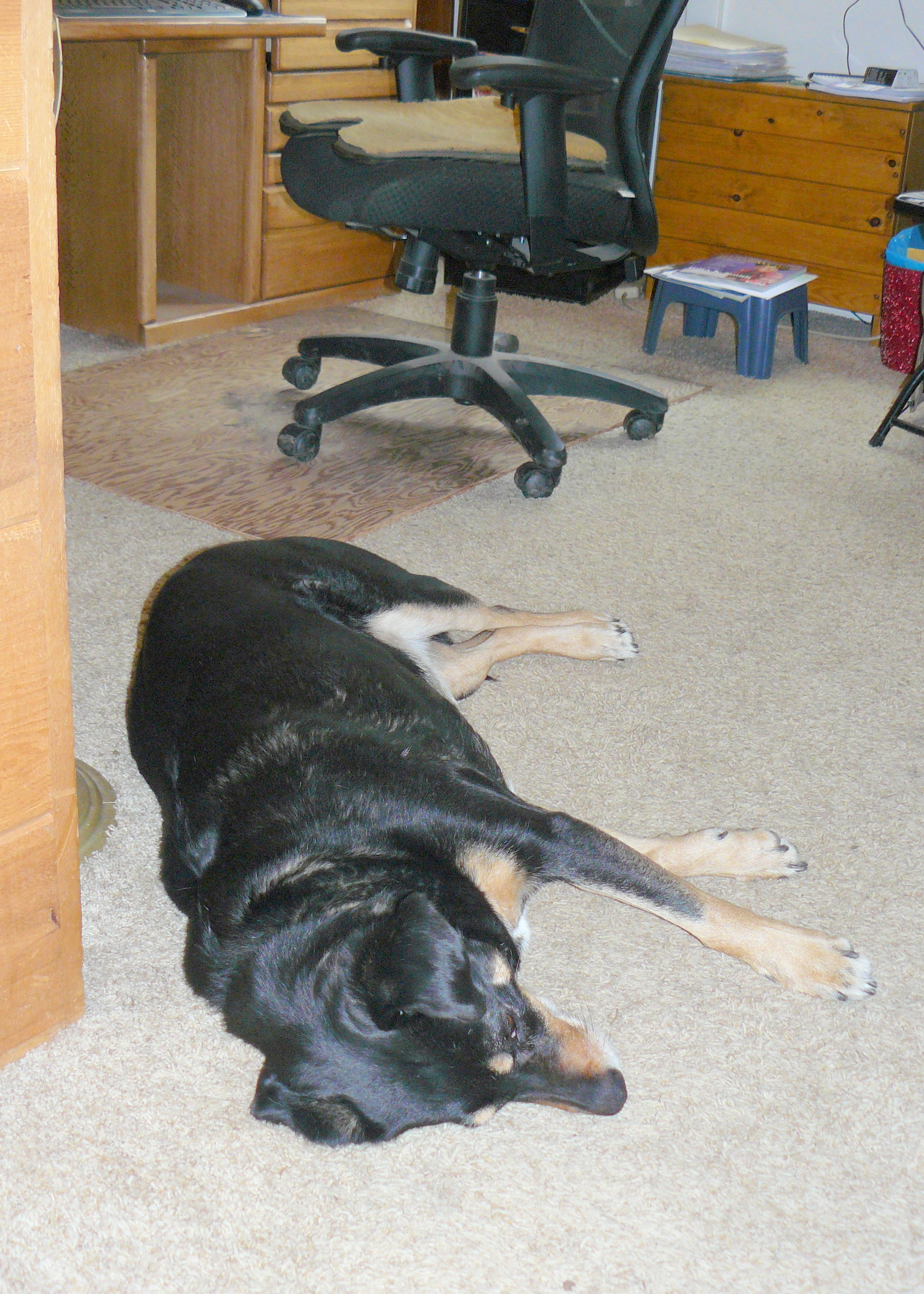
To underline my last sentence, on a whim I just took the following photograph of Hazel who very rarely isn’t by my side.
Picture taken at 10:35 yesterday morning in my ‘home office’ when I had just finished writing today’s post.
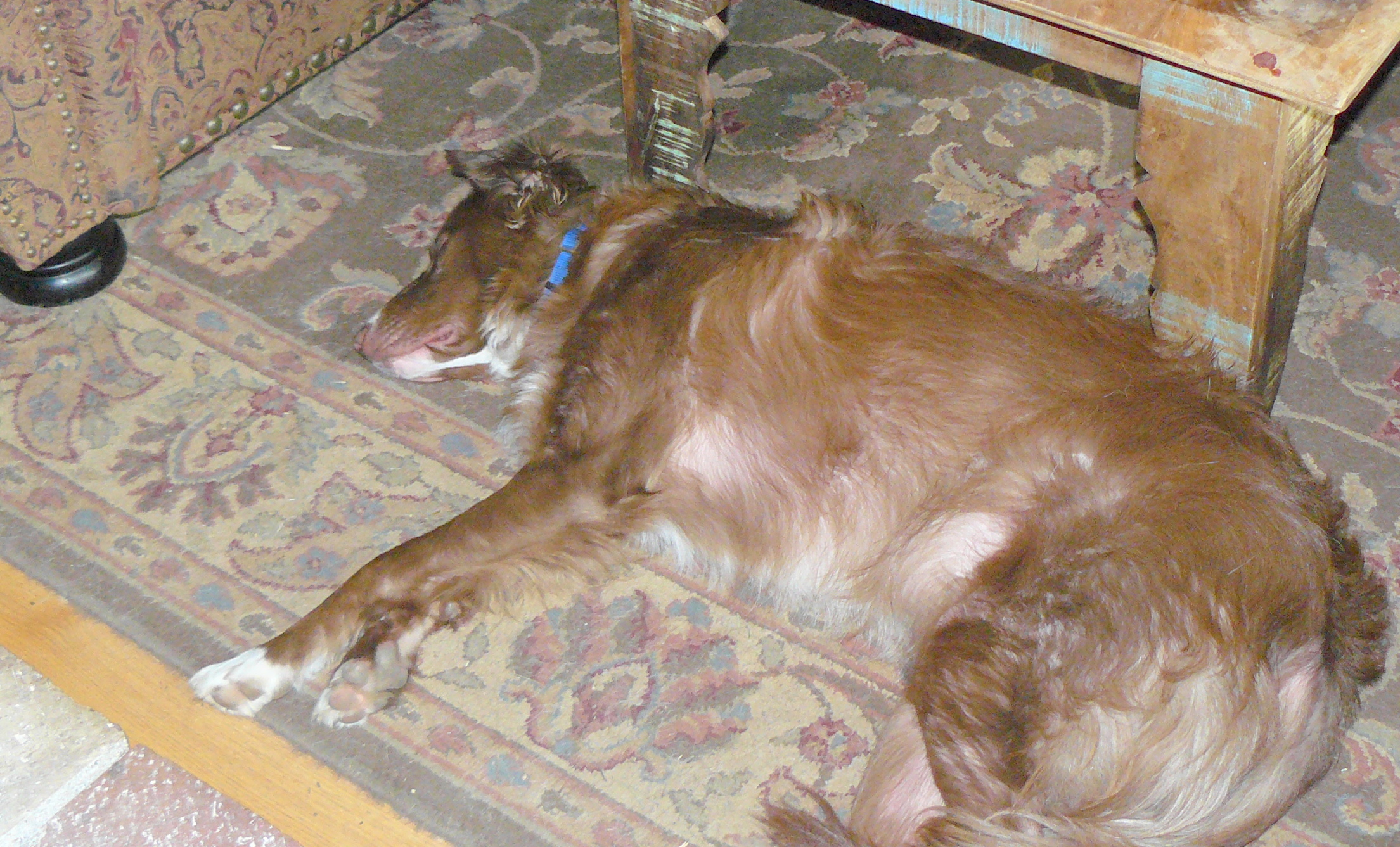
Young Oliver had an upset tummy during the night resulting in the bedroom carpet needing a little ‘sorting out’ after midnight. Thus I was very grateful that a human’s sense of smell is very much inferior to that of the dog!
Oliver sleeping in front of the wood-stove yesterday morning.
I couldn’t escape the irony that today’s post was inspired by an email from friend Dan Gomez. His email included the link to an article on the Brain Links website. It was called How a Dog Actually “Sees” the World Through Smell. Here’s how the article opened:
“The world of scents is at least as rich as the world of sight.”
Even though smell is the most direct of our senses and the 23,040 breaths we take daily drag in a universe of information — from the danger alert of a burning odor to the sweet nostalgia of an emotionally memorable scent — our olfactory powers are not even mediocre compared to a dog’s. The moist, spongy canine nose is merely the gateway into a remarkable master-machine which can detect smells in concentrations one hundred-millionth of what we humans require to smell something, and then transmute them into immensely dimensional and useful information about the world. So magnificent is the dog’s olfactory brawn — including the ability to sniff out skin, breast, bladder, and lung cancers with an astounding degree of accuracy and to literally smell fear — that to our primitive human perception it appears like nothing short of magic.
The article also included this short TED Talk but I have taken the liberty of including the paragraph that preceded the YouTube video.
How that neurobiological magic happens is what cognitive scientist Alexandra Horowitz — who heads the Dog Cognition Lab at Barnard College but has also produced a canon of invaluable insight on how we humans construct our impressions of reality — explains in this short animation from TED-Ed, based on her illuminating book Inside of a Dog: What Dogs See, Smell, and Know (public library):
Mind you, referring back to our overnight doggy incident, I did find one paragraph slightly at odds with my personal views on the subject. It was this one:
We humans tend not to spend a lot of time thinking about smelling. Smells are minor blips in our sensory day compared to the reams of visual information that we take in and obsess over in every moment.
I’m here to tell you that at 1am yesterday morning, my sense of smell was anything other than a minor blip!
OK, before I close, I just want to alert all you dear readers to the fact that from later today until early March my son, Alex, is visiting us. His plans are to find somewhere in Oregon to enjoy some skiing but the very mild Winter so far may put a spanner in those works.
For obvious and natural reasons, writing posts for Learning from Dogs will not be a daily high priority. So if you read a number of posts previously published in earlier times you will understand why. Thank you.
The strong case for maintaining the very best of emotional hygiene.
As is the way of things, last night, after I had read out aloud to Jean yesterday’s conclusion to my personal story entitled The Pen (the first part was on Monday), Jean and I were looking around for something to watch. We dipped into TED Talks and found a recent addition from a Dr. Guy Winch, a licensed psychologist, keynote speaker and author. Here is that talk that so perfectly rounds off the previous two days.
Published on Feb 16, 2015
We’ll go to the doctor when we feel flu-ish or a nagging pain. So why don’t we see a health professional when we feel emotional pain: guilt, loss, loneliness? Too many of us deal with common psychological-health issues on our own, says Guy Winch. But we don’t have to. He makes a compelling case to practice emotional hygiene — taking care of our emotions, our minds, with the same diligence we take care of our bodies.
Dr. Guy Winch
If you want to learn more about Guy Winch then his website is here, and there is an item about Dr. Winch on the Psychology Today website.
(Please note that this is a long post that potentially may be upsetting for some readers. Please trust me when I say there is no intention to upset anyone. I should add that the motivation for writing The Pen is from reading Sue Dreamwalker’s recent post Cracking our Inner Shells.)
Yesterday, I wrote about the circumstances of my father’s death on December, 20th 1956. I wrote:
I became twelve-years-old in November, 1956. Just six weeks after my twelfth birthday, on the evening of December 19th, 1956, my mother, as normal, came into my bedroom to kiss me goodnight. However, what transpired was very far from normal.
For she sat down on the edge of the bed and told me that my father was not well and may not live for much longer. To this day, I can still see her sitting on the edge of the bed, adjacent to my knees covered by the sheet and bedcover, a very drawn look on her face.
I had been aware of my father being at home in bed for a while but had no notion whatsoever, prior to this moment, that he was seriously unwell. In hindsight, it was more than I could emotionally embrace for not only did I not go back into my parent’s bedroom and again say goodnight to my father, I went off to sleep without any problem.
During that night, in the early hours of December 20th, my father died, the family doctor attended and my father’s body was removed; I slept through it all and awoke in the morning to find my father gone.
It’s also relevant to reveal that it was deemed potentially too upsetting for my sister, Elizabeth, my junior by four years, and me to attend my father’s cremation.
Upper Barn, Harberton.
OK! Fast forward to 2006. I was happily married to Julie, my third wife, and had been since the year 2000. Her daughter from a previous marriage, Amy, was also part of the family. We were living in a three-bedroomed converted stone barn known as Upper Barn in the village of Harberton, a few miles west of Totnes, Devon, South-West England. A lovely tranquil home in a very tranquil village; population 300 persons.
I had my two wonderful sisters, Corinne and Rhona, from my father’s first marriage, living within short distances. My work, home-based, involved offering entrepreneurial mentoring to local business owners, and my wife and I had a wonderful local network of good friends. Indeed, in the last months of 2006 I had been working with a professional psychotherapist, Jon, as he was expanding his client base from individuals to working within companies. And Pharaoh had been in the family since 2003! It seemed about as perfect as it could be for me.
December 20th, 2006 was the fiftieth anniversary of my father’s death. I could never settle into the pre-Christmas mood until after the 20th December each year and this anniversary day seemed more poignant than ever. I had missed my father since the day he had died in 1956.
As it happened, that same day Julie seemed off-colour. She was frequently in the bathroom during the day and, naturally, I was concerned. Towards the end of the day I asked what was troubling her. Julie replied that she had had a miscarriage earlier that afternoon. A year after my son and daughter had been born to my first wife in 1972/1973, I had opted to have a vasectomy! Julie’s miscarriage was not of my making.
I won’t go into the details of how my life exploded but will just say that it was traumatic in every way imaginable.
In desperation, a few weeks into the New Year of 2007, I called my psychotherapist business client, Jon, and begged him to take me on as his client. He was initially uncertain, stating that we already had a relationship, but agreed on the understanding that if he thought the counselling relationship wasn’t properly established then he would ask me not to continue working with him. Of course, I agreed.
I want to offer what has been written elsewhere by me, explaining what happened in my fourth counselling session with Jon back in 2007. Clearly my memory of what was said can’t be word perfect but the essence of the dialogue is accurate.
“Paul, when we had our first session and I asked you to relate the key life events that came to you, the first event you spoke of was the death of your father. Tell me more about that time of your life.”
“I don’t have clear memories of my father much before he died that year. He was a lot older than my mother, some eighteen years, and I had been the product of a liaison between them; my father being married at the time. They met when they were both members of an amateur orchestra in London during the height of the Second World War. My father had had two daughters with his wife and longed for a son. I came along just six months before the end of the war.”
I paused for a few moments, sensing how dipping back to that December in 1956 was making me feel uncomfortable.
“I had turned twelve-years-old in early November 1956. Just finished my first term at Grammar School. To be honest, I can’t recall when my father became ill and how long he had been bed-ridden. But on the evening of December 19th, after I had kissed my father goodnight and jumped into my bed next door, my mother came in, closed my bedroom door, sat on the edge of my bed and told me that my father was very ill and that he may not live for much longer.
It clearly didn’t register with me at any significant emotional level because I went off to sleep without any problem. But when I awoke in the morning, Mum told me that my father had died during the night, the family doctor had attended and my father’s body had been removed from the house.”
Jon looked at me and quietly asked, “What feelings do you have about that night and that morning?”
“To be honest, Jon, I have an almost complete absence of feelings. I’ve often tried to discover what I truly felt at the time or, indeed, what I feel all these years later. But the best I have ever been able to come up with is that I was never able to say goodbye. In fact, because it was decided that it would be too upsetting for me, I wasn’t even present at the funeral and cremation, thus reinforcing my sense of not saying goodbye to my father.”
There was a pause before Jon asked his next question. “So, Paul, you have a son and a daughter. What are their ages?”
“My son, Alex, is now thirty-five and my daughter, Maija, thirty-four.”
Jon put his hands together fingers-to-fingers and lent his chin against them. “So your son would have been twelve in 1984. That was when you were very busy running your own business, if I recall.”
I nodded in reply.
“So Paul, let’s say that during that year of 1984 you had been diagnosed with some terminal illness, say cancer, as with your father. That you were given a life expectancy of six months or so. What thoughts come to mind?”
“Jon, you mean in the sense of what it would have meant for Alex and Maija?”
Jon nodded.
“Wow, what a truly terrible thing to reflect upon. But what comes to mind without doubt is that I would have walked away from my business immediately. After all, it very soon wasn’t going to be my business. My kids were still living at home, of course. I would have wanted to share every minute of my life with them. Try to let them understand as much about me, who I was, what I believed in, what made Paul Handover the person he was.”
Jon almost breathed the next question into the air of the room. “Translate the circumstances of the death of your father across to your son. What I mean by that is Alex experiencing the same circumstances from your death. What’s your reaction to that situation, admittedly hypothetical situation, thank goodness?”
I reacted with an immediate passion. “To know that I was terminally ill and to keep that from my son and daughter; that’s terrible, no it’s disgusting. Then to compound it by having everything associated with my death and the disposal of my body denied to Alex and Maija …..,” I left the sentence unfinished before adding, “It’s cruel beyond description. My poor children wouldn’t have a clue as to why they were excluded from what is, whether or not one agrees with it, one of life’s most important moments.”
Jon seemed to hold my anger in the room all about us, as he asked, “How would you reword your last sentences in the manner of a headline; in just a few words?”
I hardly hesitated. “The word that comes to mind is rejection. Alex and Maija, aged twelve and eleven, losing their father in a way that suggested they weren’t important. Yes, that’s it. They would see it as a total rejection of them by their father. Not unreasonably, I might add.”
There was a silence in the room that seemed to go on forever. Then Jon said, “Paul, we are not quite up to the hour but I’m going to suggest you just sit here quietly with Pharaoh and let yourself out when you are confident of being OK to drive home.”
He added, almost as an afterthought, “Just let today settle itself into your consciousness just however it wants to. Don’t force your thoughts either way, neither dwelling on today nor preventing thoughts naturally coming to the surface of your mind. As we have discussed before, pay attention to your dreams. Maybe have a notebook by your bedside so you can jot down what you have been dreaming about. I’ll see you next Friday same time, if that’s alright with you.”
When a crossroads is neither a roadway, nor a choice of pathways, when that crossroads is in our minds, we seldom know it’s there or that we’ve made the choice to take one path and not the other until it’s long past. Sometimes, the best you can do is look for the tiniest clues as to which path one has taken in life and where one is really heading.
I had read that in a book quite recently although, typically, could no longer remember the name of the said book. It had spoken to me in a way that I couldn’t fathom, but of sufficient strength and clarity for me to jot it down on a sheet of paper. I had been sorting papers out on my desk on the Sunday following that last session with Jon when I came across the sheet. The words hammered at me again, but in a way that was now so much more full of meaning than the first time around.
Because, to my very great surprise, my nights’ sleeps on Friday and Saturday had not only been dream free but had taken me to a place of such sweet contentment that it was almost as though I had been reborn. Alright, perhaps reborn was a little over the top, but there was no question that I was in an emotional place quite unlike anything I could ever before recall. Almost as if for the first time in my life I truly liked who I was.
On the Sunday morning, after I had taken Pharaoh over to the woods for our regular walk, I called in on Corinne and shared a cup of tea with her. As I was leaving, Corinne asked me if I was alright. In querying why she had asked, Corinne simply said, “Oh, I don’t know. There’s something different about you today that I can’t put my finger on. A happiness about you that I haven’t seen in ages, possibly never seen in you.”
I gave my sister a long and deep hug and gently said, “I miss our father at times, don’t you?”
She answered, “Oh, I miss him too, miss him so much at times. He was such a wonderful, gentle man who lived for his children. Then to die at such a young age.”
As the week rolled by, I found a truth that had been denied me for the whole of my life. I couldn’t wait to share it with Jon. As I drove across to Torquay, I was full of what I wanted to say.
Jon could tell that I was fit to burst. Indeed, I had hardly sat down on the chair when Jon asked me how my week had gone.
“Jon, It’s been an amazing week. I’ve at last understood some fundamental aspects of my life.”
“That sounds wonderful, Paul, do tell me more.”
“Well, it’s this. I have now realised the emotional consequences of the way my father’s death was handled. In other words, what became hidden deep in my subconscious, far from sight, so to speak, was a belief of having been emotionally rejected. That despite that being so far down in my subconscious world, it clearly explained two conscious ways in which I behave.”
Jon’s demeanour, his wonderful listening demeanour, encouraged me to continue. “The first thing that came to me was the reason why I have been so unfortunate in my relationships with women. Well this is how I figured it out. Whenever a woman took a shine to me, I would do anything and everything to come over as a potentially attractive spouse. In other words, I was being driven by a terrible fear of rejection, rather than rationally wondering if this woman had the potential to be a woman I would love as a wife. Ergo, I oversold myself and, inevitably, made poor long-term relationships; Julie being the classic example.”
I paused and took a sip from the glass of water that was on the small table by my side.
“But the positive aspect of my fear of rejection is that throughout the whole of my business and professional life, I have been successful. Because, I have always put the feelings of the other person above my own as a means of avoiding rejection. Jon, I can’t tell you what a release this has been for me.”
“Paul, that’s a fabulous example of how when we really get to know the person we are, how it then gives us a psychological freedom, a freedom to be the person we truly are, to be happy with ourselves.”
He continued, “One thing I should mention is this. It’s likely that what happened to you back in December 1956 is not necessarily ‘hard-wired’ but certainly is a very deep-rooted emotional aspect of who you are. This new-found awareness will be of huge value to you but that sensitivity to rejection is not going to disappear; probably never will. The difference is that you are now aware of it and quite quickly you will spot the situations, as they are happening, that stir up those ancient feelings. The difference is this new self-awareness will deliver a much deeper emotional understanding of who you are and why you behave in the way you do.”
There was a wonderful sense of peace and calm in the room that ran on for some minutes.
Then Jon just voiced what seemed like the perfect closing thought. “Paul, this mindfulness you have so beautifully revealed is wonderful. You do know you are fine, don’t you!”
I was motivated to reveal these details of my past by what Sue wrote in her recent post Cracking our Inner Shells. She included these words:
Sometimes we have to go within to the silent places we all have in order to find out what is really going on with our emotional bodies. Even knowing all the things I do, we are within our Human form to learn and grow..
I needed to ask myself a few questions as to why I was feeling so lost, depressed and sad… More was going on than just bereavement. Yes the fall I had had,both bruised and shook me, but what else was shaking me to the core?
For those who know a little about my Soul Journey, You will also know that my own Mother and I had not spoken for 10 years prior to her passing some eleven years ago now….Despite many attempts I knew I was only wounding myself more by continually trying to bridge the rift, to be continually rejected.. So this rejection and other issues related to overwork and stress, resulted in a Nervous Breakdown in my mid forties..
So when my Mother died, while I was sad, I guess I never really grieved her loss. Because to me.. I had grieved her long before her death as lost to me.. As I had had to shut down my emotions to cope with her rejection.. I had undergone counselling within my breakdown, and my Mother jumped up at every dark corner of why even in my teens I had suffered from deep depression.
We often go through whole chapters of our lives creating a protective shell around ourselves because we need it in order to heal from some early trauma. I know I had built many such Layers of shell around myself from various experiences over the years..
But more than that, I recommend that if you have any sense of there being hidden parts of your consciousness that would be better brought to the light, then you involve a professional counsellor or psychotherapist. For the reward will be beyond measure.
As mine was.
For on December 14th, 2007 I first met Jean when invited to San Carlos in Mexico for the Christmas period by Suzann and Don Reeves; Suzann being the sister of my very long-term Californian friend Dan Gomez.
Jean and I have now known each other for over seven years and have been married for over four years. I love her beyond imagination. Because I can reveal to Jean the strange, quirky, often fragile person that I am. And I am loved for who I am by Jean.
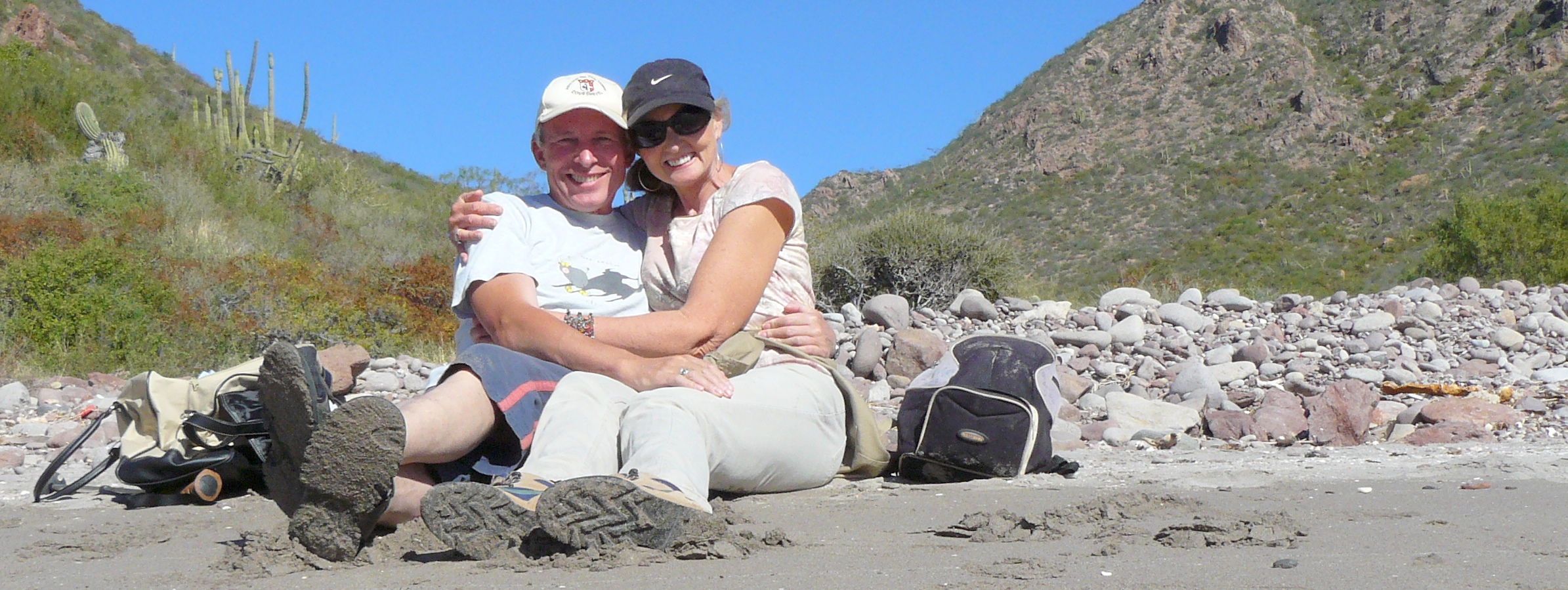
6th January, 2008. Jean and me on a beach in Mexico.
This is the poem I wrote for Jean for this Valentine’s Day just gone.
What’s in a number?
Numbers spell out so much.
From a year of birth,
To a year of death,
From a chance event,
To a predictable breath.
Numbers spell out so much more.
From the day that we met,
To the year we were joined,
From the day we married,
To this day of love today.
So many days of happiness.
Yet numbers that spill beyond the digits.
For they are reflections of times a past,
And they are beacons of our lives,
Numbers that carry so much meaning,
To places so far beyond their count.
Yet today there is a number,
A number that carries all thoughts of love,
Almost endless thoughts of love from me to you,
Two little figures that say seventy-four.
For seventy-four months ago,
This very day,
I met you,
And you met me.
I loved you so soon,
Loved you so well.
And still do.
If you have read this far then well done! 🙂 If only one person has been touched by my experiences then that is wonderful.
I shall close by publishing a paragraph towards the end of Sue’s blog post.
Only you can know the how’s and why’s of your life. The answers that you seek can be found when you start answering your own questions, Sometimes we have to get a little lost in order to find oneself again.. But the journey in finding oneself is all part of our Earth Journey.
(This is a two-part post, with the concluding part tomorrow.)
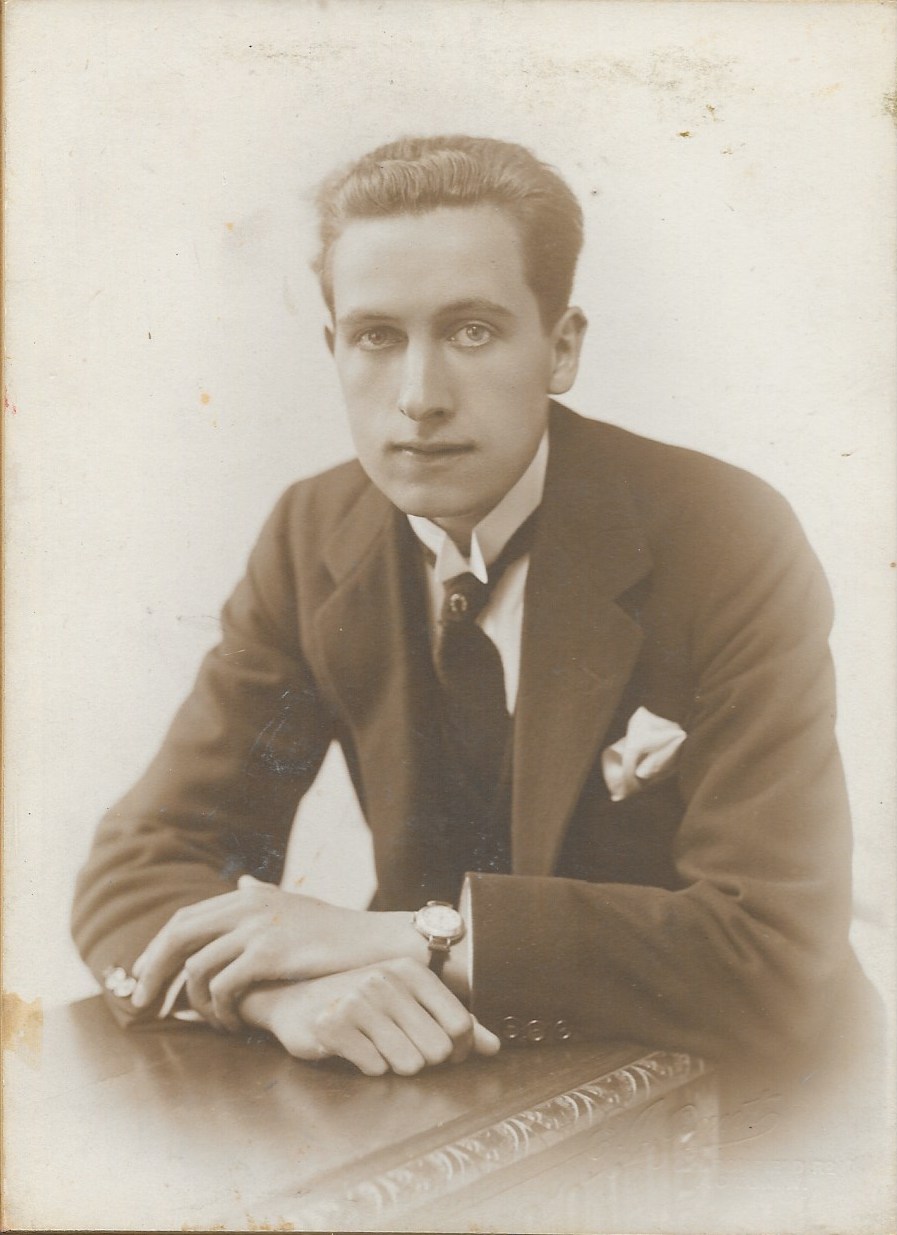
My father was born on June 15th, 1901.
Here is a photograph taken of him on his twenty-first birthday.
Frederick William Handover – June 15th, 1922
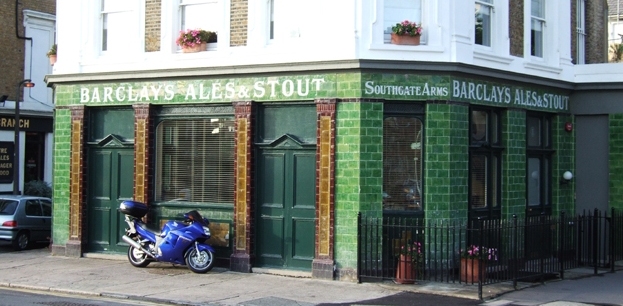
He was an architect for Barclay Perkins & Co., a London firm of brewers. Here are the opening words of the Wikipedia entry.
The Anchor Brewery was an English brewery located in Southwark, London. Established in 1616, by the early nineteenth century it was the largest brewery in the world. From 1781 it was operated by Barclay Perkins & Co, who merged with Courage in 1955. The brewery was demolished in 1981.
A Barclays Public House in Southgate, London N1. Picture from The Brewery History Society.
I was born in November, 1944 and at the start of the school year in September 1956, me aged eleven, I started in the first term of Preston Manor County Grammar School near Preston Road, Wembley, just a few miles from where we all lived. (Mother, father, me and Elizabeth, my younger sister by four years.) Frankly, I had been regarded as a bit of a dreamer at my primary school and more than a few were surprised that I passed the ’11+’ exams, a prerequisite for attending a grammar school in those days.
I became twelve-years-old in November, 1956. Just six weeks after my twelfth birthday, on the evening of December 19th, 1956, my mother, as normal, came into my bedroom to kiss me goodnight. However, what transpired was very far from normal.
For she sat down on the edge of the bed and told me that my father was not well and may not live for much longer. To this day, I can still see her sitting on the edge of the bed, adjacent to my knees covered by the sheet and bedcover, a very drawn look on her face.
I had been aware of my father being at home in bed for a while but had no notion whatsoever, prior to this moment, that he was seriously unwell. In hindsight, it was more than I could emotionally embrace for not only did I not go back into my parent’s bedroom and again say goodnight to my father, I went off to sleep without any problem.
During that night, in the early hours of December 20th, my father died, the family doctor attended and my father’s body was removed; I slept through it all and awoke in the morning to find my father gone.
Now fast forward just a few years.
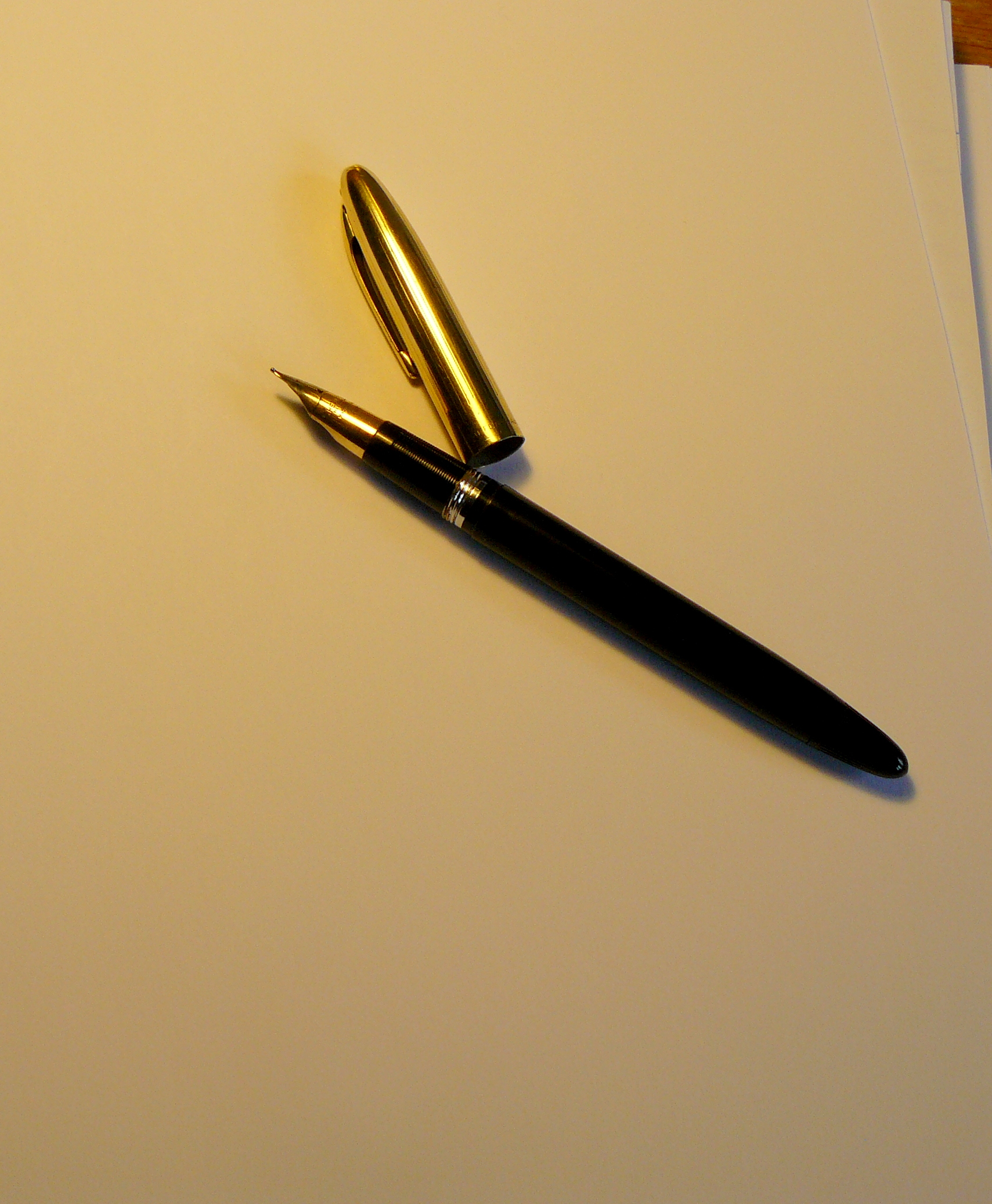
It’s too long ago now for me to recall who it was who gave me my father’s fountain pen that he used on a daily basis when he was alive. It is a Sheaffer Crest Snorkel with a 14K gold Triumph nib with a platinum plated tip.
I have had the pen for nearly sixty years and treasure it, as you can imagine. But in recent times it was not functioning properly and I put it down to old age, and transferred to a modern pen.
By a wonderful stroke of luck I recently came across an American company, Pendemonium, who restore and service a wide range of pens, including Sheaffer pens of the age of my father’s pen; that particular model first was produced in 1952.
On Saturday, the restored Sheaffer pen was sent back to me. It is a real joy to find that it writes so well and remains a living memory of my father from so long ago.
My father’s Sheaffer fountain pen.
Now all you dear readers must be wondering just what on earth I’m rambling on about!
My answer will be offered in Part Two that will be posted tomorrow.
Yet another wonderful item sent across to me by neighbours Dordie and Bill.
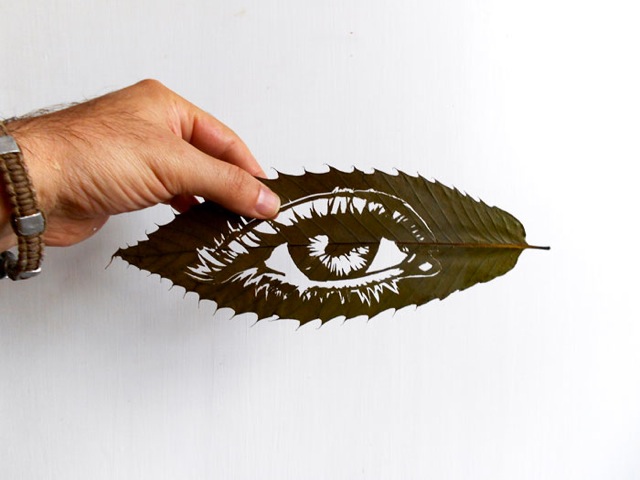
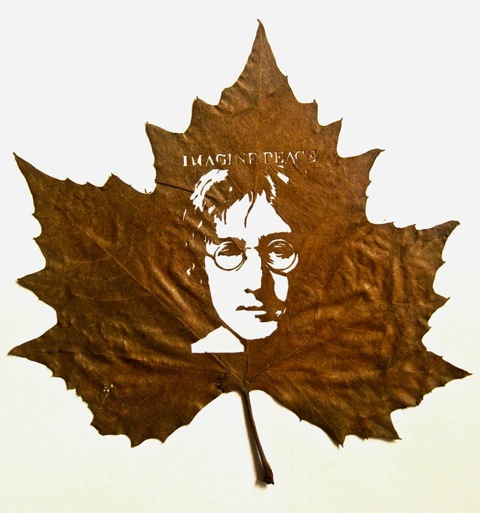
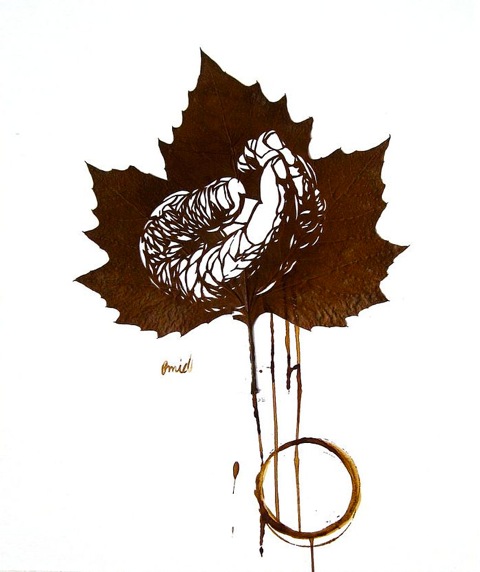
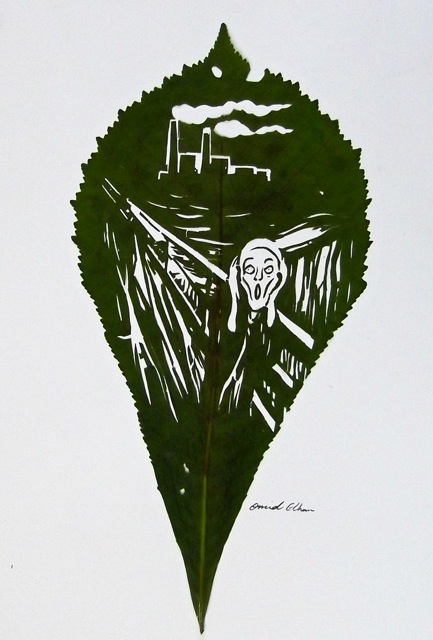
Delicate Leaf Cuttings By Omid Asadi
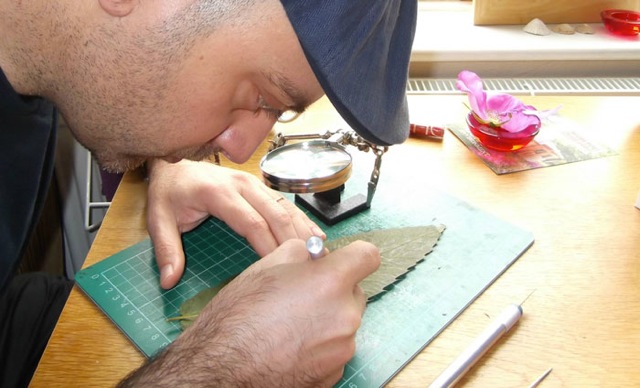
My name is Omid Asadi and I currently live in Manchester, United Kingdom. I created this work with carving and cutting techniques on actual fallen leaves using a craft knife and a needle. I always try to create pieces with a message, not just beautiful art. Some of these messages or ideas come from my world view, poems, stories, global problems and philosophy. I’m also inspired by other artists’ and designers’ works.
Here’s the man in action.
I use a craft knife or scalpel and needle. It is not like a paper cutting because each part needs a certain pressure to cut. If I make a mistake, I destroy maybe hundreds of hours of work.
oooo
Leaf’s Mind. I’m very attentive to beautiful fallen leaves. Suddenly, I started SEEING them, not simply looking at them.
oooo
Carriage. I believe that we look at many things everyday, but don’t SEE them. For example, apples had been falling from trees for thousands of years, but only Isaac Newton truly saw that and, thanks to him, our lives have changed forever.
oooo
Dandelion
oooo
Che Guevara
oooo
Love
oooo
Eagle
Another set of these remarkable cuttings in a week’s time.










 Learning from Dogs