Author: Paul Handover

Why do we love dogs?

A fifteen-minute programme from the BBC.

I recently listened to this episode. It is part of a series on the BBC (Radio 4) that is entitled Why Do We Do That?

Hopefully you can also listen to the programme by using this link: https://www.bbc.co.uk/sounds/play/m0027v43

The information about this episode is published below.

Ella Al-Shamahi asks why do we love dogs? Dogs evolved from wolves but why did they choose us humans to be their best friends? They say dogs are a man’s best friend but all dogs, even chihuahuas are descended from wolves, the grey wolf, a majestic, fierce and incredibly dangerous species. How did this happen but more importantly, why did we start trusting wolves? And when did wolves turn into dogs? Dogs have been a part of our story for a long time. They are depicted in cave and rock art and dogs are a part of our story because of how useful they are. From the mundane everyday hunting and guarding to the epic stories of life saving dogs . But how did we get here? Oxford Professor Greger Lawson studies ancient dog DNA and thinks the evolution from wolves into dogs began when we both realised we could help each other.

Enjoy!

Scamming

It is becoming very large!

Early on last Wednesday, February 26th, the BBC Radio 4 programme World at One, had a major item on scamming. Here are the details of that programme:

Released On: 26 Feb 2025

Back in September we revealed the knitted cardigan scam. Millions have been taken in by social media ads of expensive looking knitwear for a reasonable price. Victims hear nothing until something cheap and nasty arrives in the post months later. But it’s more than a simple con. Shari Vahl reveals what its really about. Sales of stout show no sign of stopping as more young women are turning to it. Guinness blames increased demand with supply chain issues for a recent shortage. Its rivals in the dark beer world are jumping on the opportunity with some success. Will it work? Finally, a listener tells us how his energy company gave his mobile number to a criminal who went on to steal £40,000. We find out how you can prevent this happening to you. Presenter: Shari Vahl Producer: Kevin Mousle.

Then later on that morning, I watched the video below, produced by the American Social Administration

Then there was this list of scams and frauds produced by the USA Government

Read it – that link is here: https://www.usa.gov/scams-and-fraud

Be carefully everybody!

An article on decluttering

And it isn’t all that one might expect!

Jeannie and I are at opposite ends of the scale, so to speak. The older I get the more I want everything in the same place, primarily because I cannot remember where I previously put something.

Jeannie loves putting stuff anywhere because she can recall where it is!

So an article in The Conversation was fascinating.

ooOOoo

Decluttering can be stressful − a clinical psychologist explains how personal values can make it easier

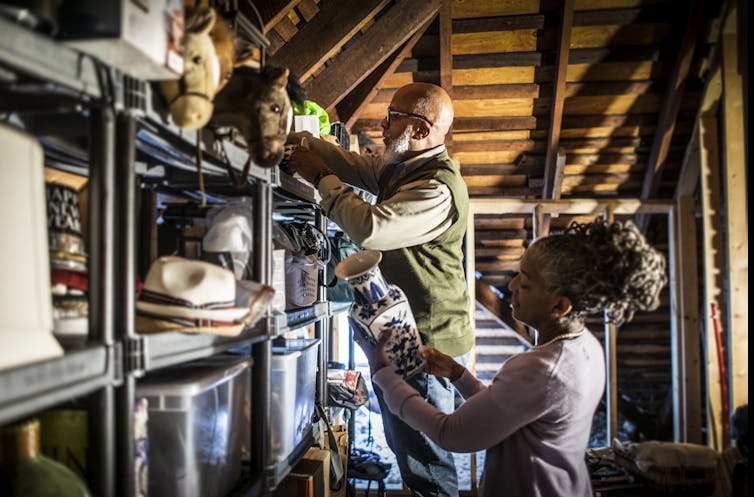
Asking how discarding an item fits with a person’s goals can help them decide whether to keep it. MoMo Productions via Getty Images

Mary E. Dozier, Mississippi State University

I recently helped my mom sort through boxes she inherited when my grandparents passed away. One box was labeled – either ironically or genuinely – “toothpick holders and other treasures.” Inside were many keepsakes from moments now lost to history – although we found no toothpick holders.

My favorite of the items we sorted through was a solitary puzzle piece, an artifact reflecting my late grandmother’s penchant for hiding the final piece to a jigsaw puzzle just to swoop in at the last moment and finish it.

After several hours of reminiscing, my mom and I threw away 90% of what we had sorted.

“Why did I keep this?” is a question I hear frequently, both from my family and friends and from patients. I am a licensed clinical psychologist whose research focuses on the characterization, assessment and treatment of hoarding disorder, particularly for adults 60 years of age or older. As such, I spend a great deal of my time thinking about this question.

What drives the need to keep stuff?

Hoarding disorder is a psychiatric condition defined by urges to save items and difficulty discarding current possessions. For adults with “clinically severe” hoarding disorder, this leads to a level of household clutter that impairs daily functioning and can even create a fire hazard. In my professional experience, however, many adults struggle with clutter even if they do not meet the clinical criteria for hoarding disorder.

Holding on to things that have sentimental value or could be useful in the future is a natural part of growing older. For some people, though, this tendency to hold on to objects grows over time, to the point that they eventually do meet criteria for hoarding disorder. Age-related changes in executive function may help explain the increase in prevalence of hoarding disorder as we get older; increasing difficulty with decision-making in general also affects decisions around household clutter.

The traditional model behind hoarding disorder suggests that difficulty with discarding comes from distress during decision-making. However, my research shows that this may be less true of older adults.

When I was a graduate student, I conducted a study in which we asked adults with hoarding disorder to spend 15 minutes making decisions about whether to keep or discard various items brought from their home. Participants could sort whatever items they wanted. Most chose to sort paper items such as old mail, cards or notes.

We found that age was associated with lower levels of distress during the task, such that participants who were older tended to feel less stressed when making the decision about what to keep and what to discard. We also found that many participants, particularly those who were older, actually reported positive emotions while sorting their items.

In new research publishing soon, my current team replicated this finding using a home-based version of the task. This suggests that fear of making the wrong decision isn’t a universal driver of our urge to save items.

In fact, a study my team published in August 2024 with adults over 50 with hoarding disorder suggests that altruism, a personality trait of wanting to help others, may explain why some people keep items that others might discard. My colleagues and I compared our participants’ personality profiles with that of adults in the general population of the same gender and age group. Compared with the general population, participants with hoarding disorder scored almost universally high on altruism.

Altruism also comes up frequently in my clinical work with older adults who struggle with clutter. People in our studies often tell me that they have held onto something out of a sense of responsibility, either for the item itself or to the environment.

“I need it to go to a good home” and “my grandmother gave this to me” are sentiments we commonly hear. Thus, people may keep things not out of fear of losing them but because saving them is consistent with their values. https://www.youtube.com/embed/JNVjPM1cIbg?wmode=transparent&start=0 Your values can help guide which possessions should stay in your life and which ones should go.

Leaning into values

In a 2024 study, my team demonstrated that taking a values-based approach to decluttering helps older adults to decrease household clutter and increases their positive affect, a state of mind characterized by feelings such as joy and contentment. Clinicians visited the homes of older adults with hoarding disorder for one hour per week for six weeks. At each visit, the clinicians used a technique called motivational interviewing to help participants talk through their decisions while they sorted household clutter.

We found that having participants start with identifying their values allowed them to maintain focus on their long-term goals. Too often, people focus on the immediate ability of an object to “spark joy” and forget to consider whether an object has greater meaning and purpose. Values are the abstract beliefs that we humans use to create our goals. Values are whatever drives us and can include family, faith or frivolity.

Because values are subjective, what people identify as important to keep is also subjective. For example, the dress I wore to my sister’s wedding reminded me of a wonderful day. However, when it no longer fit I gave it away because doing so was more consistent with my values of utility and helpfulness: I wanted the dress to go to someone who needed it and would use it. Someone who more strongly valued family and beauty might have prioritized keeping the dress because of the aesthetics and its link to a family event.

Additionally, we found that instead of challenging the reasons a person might have for keeping an item, it is helpful to instead focus on eliciting their reasons for discarding it and the goals they have for their home and their life.

Tips for sweeping away the old

My research on using motivational interviewing for decluttering and my observations from a current clinical trial on the approach point to some practical steps people can take to declutter their home. Although my work has been primarily with older adults, these tips should be helpful for people of all ages.

Start with writing out your values. Every object in your home should feel value-consistent for you. For example, if tradition and faith are important values for you, you might be more inclined to hold onto a cookbook that was made by the elders at your church and more able to let go of a cookbook you picked up on a whim at a bookstore.

If, instead, health and creativity are your core values, it might be more important to hold onto a cookbook of novel ways to sneak more vegetables into your diet.

Defining value-consistent goals for using your space can help to maintain motivation as you declutter. Are you clearing off your desk so you can work more efficiently? Making space on kitchen counters to bake cookies with your grandchildren?

Remember that sometimes your values will conflict. At those moments, it may help to reflect on whether keeping or discarding an object will bring you closer to your goals for the space.

Similarly, remember that values are subjective. If you are helping a loved one declutter, maintain a curious, nonjudgmental attitude. Where you might see a box filled with junk, your grandmother might see something filled with “toothpick holders and other treasures.”

For additional resources and information on hoarding disorder, visit the International OCD Foundation website.

Mary E. Dozier, Assistant Professor of Psychology, Mississippi State University

This article is republished from The Conversation under a Creative Commons license. Read the original article.

ooOOoo

Prof. Mary Dozier makes some powerful, and cogent, statements in this article. Especially that one’s values are subjective. Nevertheless, I think I should write out my values and see what they tell me.
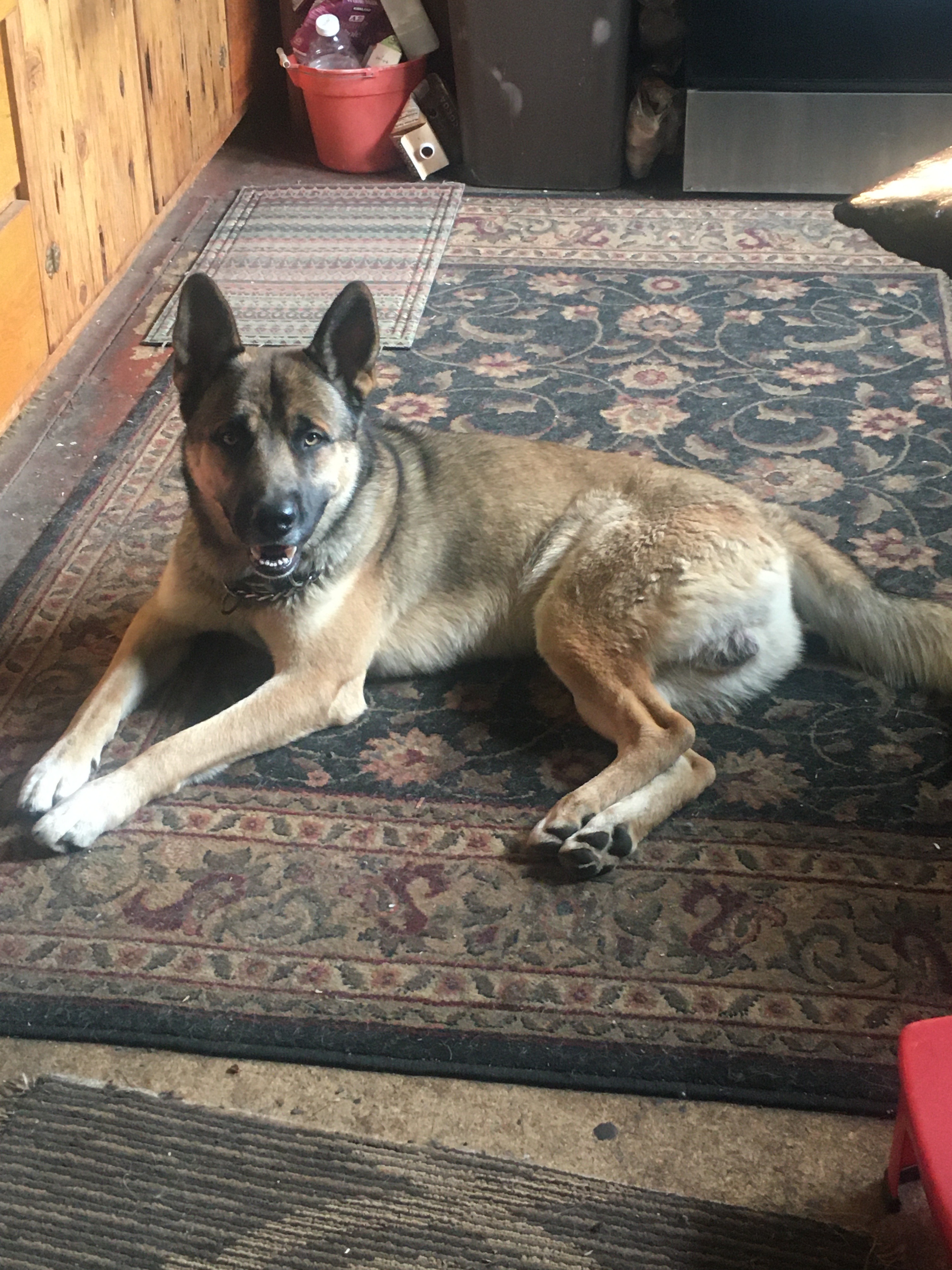
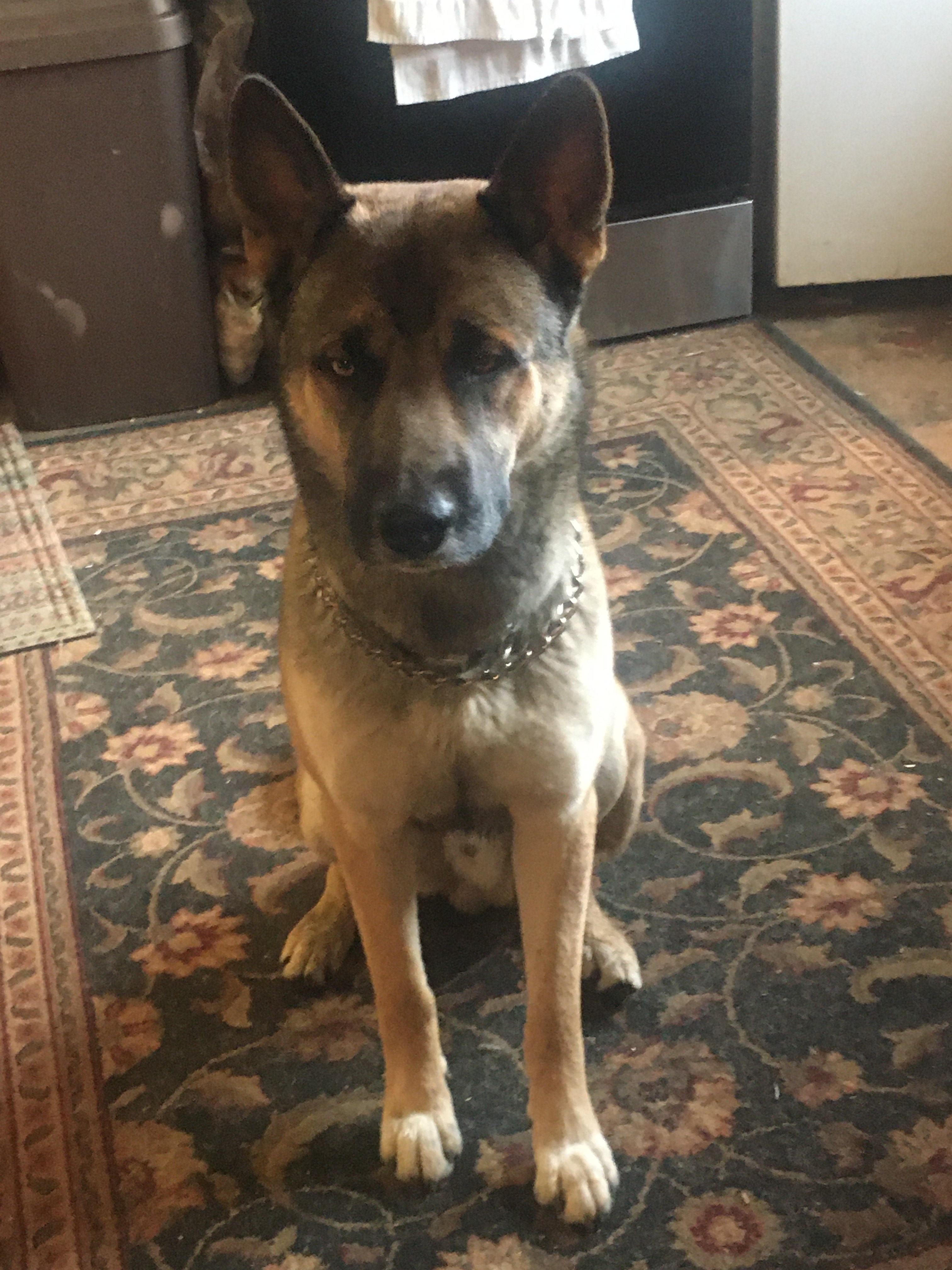
A Pair of German Shepherds

It came as a guest post, and just fabulous!

And I wish I had taken note of who sent it in.

I suspect they are a pair from the same parents!

My stray into British politics

A riveting talk by Sir John Major.

(Images may be subject to copyright. If I am emailed that I am infringing the copyright of the New Statesman this photograph will be removed.)

Wikipedia speak of Sir John as follows:

Sir John Major (born 29 March 1943) is a British retired politician who served as Prime Minister of the United Kingdom and Leader of the Conservative Party from 1990 to 1997. He previously held Cabinet positions under Prime Minister Margaret Thatcher, his last as Chancellor of the Exchequer from 1989 to 1990. Major was Member of Parliament (MP) for Huntingdon, formerly Huntingdonshire, from 1979 to 2001. Since stepping down as an MP in 2001, Major has focused on writing and his business, sporting, and charity work, and has occasionally commented on political developments in the role of an elder statesman.

(More of the Wikipedia article is here.)

On yesterday’s World This Weekend the programme was entirely devoted to a speech that John Major gave on February 16th. His theme was: “We are moving into a more dangerous world

BBC Sounds have a recording of that speech that will stay available for 29 days. That link is here: https://www.bbc.co.uk/sounds/play/m00282l8

I sincerely hope you can listen to it, for I found the talk riveting!

Picture Parade Four Hundred and Sixty-Two

This gorgeous dog is up for adoption.

oooo

He is about 20 months old, a Husky and Shepard mix. Well mannered and sweet.

Please, if someone is keen to know more then please contact Carl at +1 (541) 415 0409.

Venus and Valentine’s Day

The role of the planet today!

From that post: Venus, named for the Roman goddess of love, reaches its greatest brilliancy on Valentine’s Day, February 14. Venus is currently blazing, low in the west after sunset, with Saturn below.

Wherever you are, try spotting Venus.

Our human language!

Namely a universal law.

I was attracted to an article that I read in The Conversation last a week ago.

It also taught me that we humans speak according to Zipf’s Law. I had not previously heard of this law.

So let me republish the article with the full permission of The Conversation.

ooOOoo

Whalesong patterns follow a universal law of human language, new research finds

A humpback whale mother and calf on the New Caledonian breeding grounds. Mark Quintin

Jenny Allen, Griffith University; Ellen Garland, University of St Andrews; Inbal Arnon, Hebrew University of Jerusalem, and Simon Kirby, University of Edinburgh

All known human languages display a surprising pattern: the most frequent word in a language is twice as frequent as the second most frequent, three times as frequent as the third, and so on. This is known as Zipf’s law.

Researchers have hunted for evidence of this pattern in communication among other species, but until now no other examples have been found.

In new research published today in Science, our team of experts in whale song, linguistics and developmental psychology analysed eight years’ of song recordings from humpback whales in New Caledonia. Led by Inbal Arnon from the Hebrew University, Ellen Garland from the University of St Andrews, and Simon Kirby from the University of Edinburgh, We used techniques inspired by the way human infants learn language to analyse humpback whale song.

We discovered that the same Zipfian pattern universally found across human languages also occurs in whale song. This complex signalling system, like human language, is culturally learned by each individual from others.

Learning like an infant

When infant humans are learning, they have to somehow discover where words start and end. Speech is continuous and does not come with gaps between words that they can use. So how do they break into language?

Thirty years of research has revealed that they do this by listening for sounds that are surprising in context: sounds within words are relatively predictable, but between words are relatively unpredictable. We analysed the whale song data using the same procedure.

Photo of a humpback whale breaching from the water.
A breaching humpback whale in New Caledonia. Operation Cetaces

Unexpectedly, using this technique revealed in whale song the same statistical properties that are found in all languages. It turns out both human language and whale song have statistically coherent parts.

In other words, they both contain recurring parts where the transitions between elements are more predictable within the part. Moreover, these recurring sub-sequences we detected follow the Zipfian frequency distribution found across all human languages, and not found before in other species.

Whale song recording (2017) Operation Cetaces 916 KB (download)

A chart showing the different frequencies of sound in whale song.
Close analysis of whale song revealed statistical structures similar to those found in human language. Operation Cetaces

How do the same statistical properties arise in two evolutionarily distant species that differ from one another in so many ways? We suggest we found these similarities because humans and whales share a learning mechanism: culture.

A cultural origin

Our findings raise an exciting question: why would such different systems in such incredibly distant species have common structures? We suggest the reason behind this is that both are culturally learned.

Cultural evolution inevitably leads to the emergence of properties that make learning easier. If a system is hard to learn, it will not survive to the next generation of learners.

There is growing evidence from experiments with humans that having statistically coherent parts, and having them follow a Zipfian distribution, makes learning easier. This suggests that learning and transmission play an important role in how these properties emerged in both human language and whale song.

So can we talk to whales now?

Finding parallel structures between whale song and human language may also lead to another question: can we talk to whales now? The short answer is no, not at all.

Our study does not examine the meaning behind whale song sequences. We have no idea what these segments might mean to the whales, if they mean anything at all.

Photo of whale backs and tails visible above the surface of the sea.
A competitive pod of humpback whales on the New Caledonian breeding grounds. Operation Cetaces

It might help to think about it like instrumental music, as music also contains similar structures. A melody can be learned, repeated, and spread – but that doesn’t give meaning to the musical notes in the same way that individual words have meaning.

Next up: birdsong

Our work also makes a bold prediction: we should find this Zipfian distribution wherever complex communication is transmitted culturally. Humans and whales are not the only species that do this.

We find what is known as “vocal production learning” in an unusual range of species across the animal kingdom. Song birds in particular may provide the best place to look as many bird species culturally learn their songs, and unlike in whales, we know a lot about precisely how birds learn song.

Equally, we expect not to find these statistical properties in the communication of species that don’t transmit complex communication by learning. This will help to reveal whether cultural evolution is the common driver of these properties between humans and whales.

Jenny Allen, Postdoctoral research associate, Griffith University; Ellen Garland, Royal Society University Research Fellow, School of Biology, University of St Andrews; Inbal Arnon, Professor of Psychology, Hebrew University of Jerusalem, and Simon Kirby, Professor of Language Evolution, University of Edinburgh

This article is republished from The Conversation under a Creative Commons license. Read the original article.

ooOOoo

The research scientists have led to a prediction: … we should find this Zipfian distribution wherever complex communication is transmitted culturally. Humans and whales are not the only species that do this.

Fascinating!

Dear Richard

A few last words from Paul!

I first met Richard Maugham when we were being treated to a private jet flight to the Hannover International Fair in 1982, some 43 years ago. We were both English and I was living in Tollesbury, Essex, near Colchester and Richard living near Ealing, West London.

The common thread was that all the passengers were major sellers of the Commodore ‘PET’.

Richard and I hit it off straight away. Richard was a fellow salesman. I was ex-IBM Office Products Division and Richard was ex-Olivetti.

Both of us also volunteered for the Prince’s Youth Business Trust, a charity headed by Prince of Wales, as he was then, helping young people start their own business.

The Prince of Wales, me, and Richard Maugham

Gillie and Colin, a couple who know Richard, recently sent me the following email:

Dear Paul,

I write to inform you that Richard passed away today at 2.50 GMT.

Both Colin and I were at his hospital bedside.

Our thoughts and condolences are with you.

Gillie and Colin.

The ‘today’ in the above email was Sunday, 9th February, 2025.

Richard will never be forgotten.

Richard will be sorely missed.

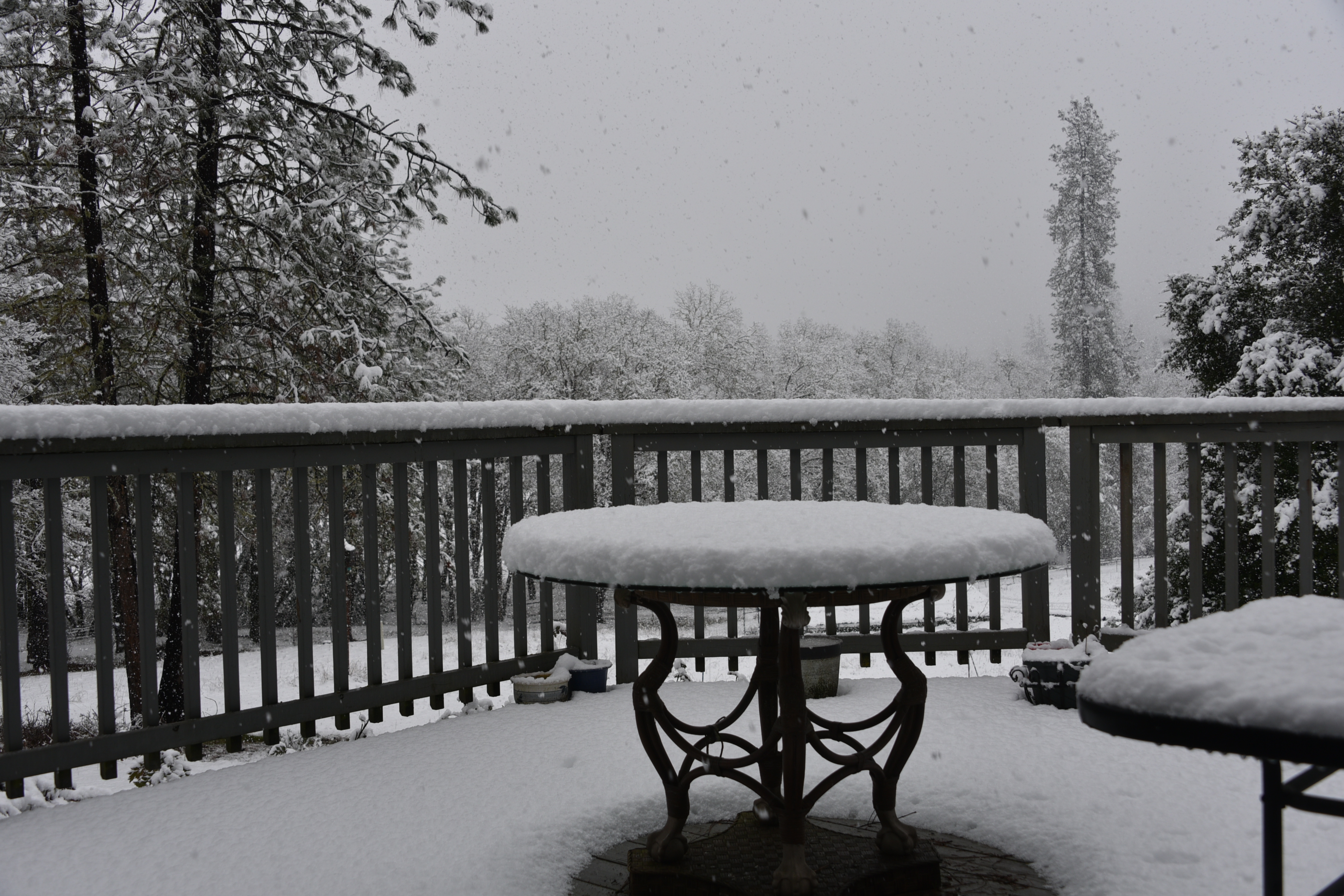
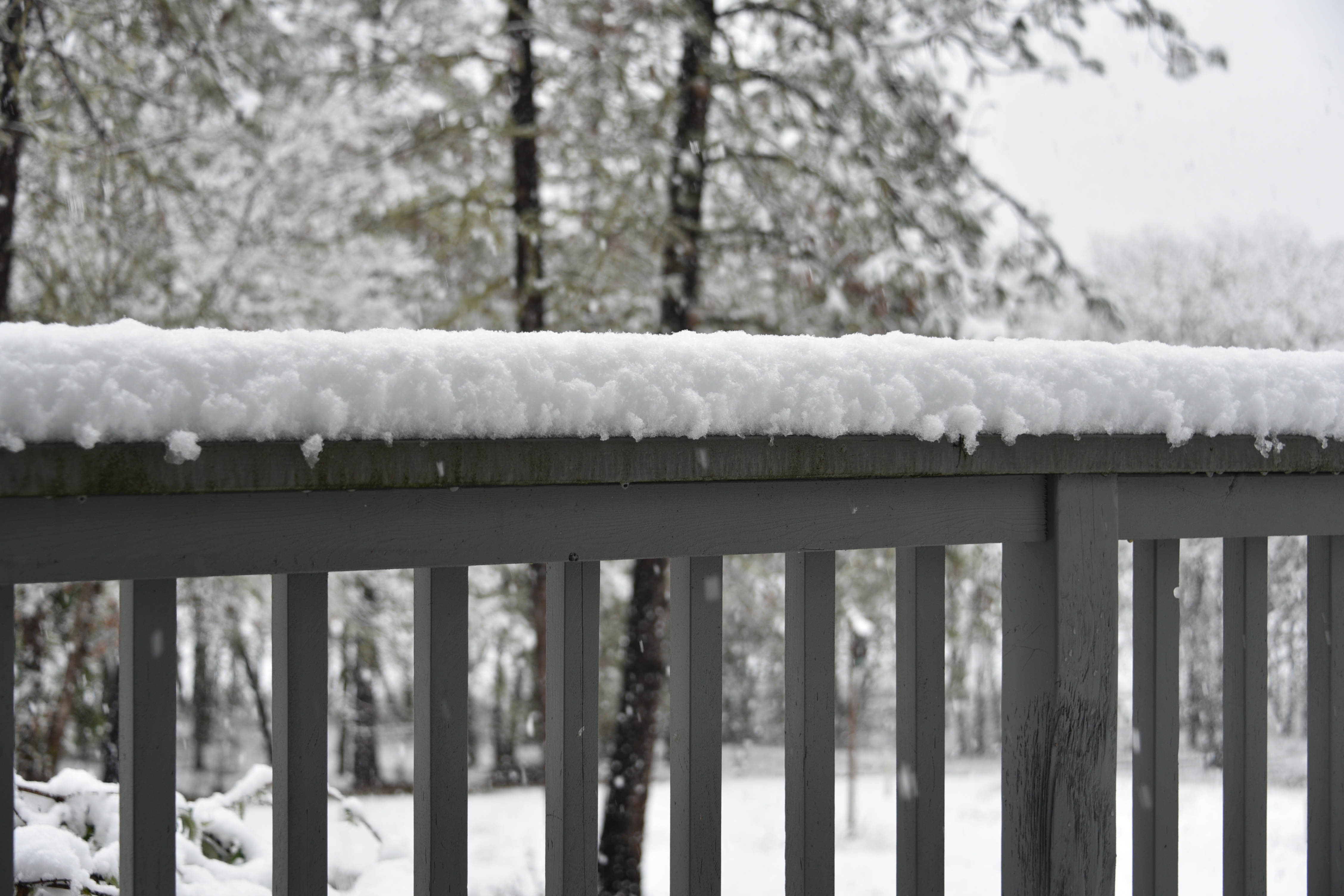
Picture Parade Four Hundred and Sixty-One

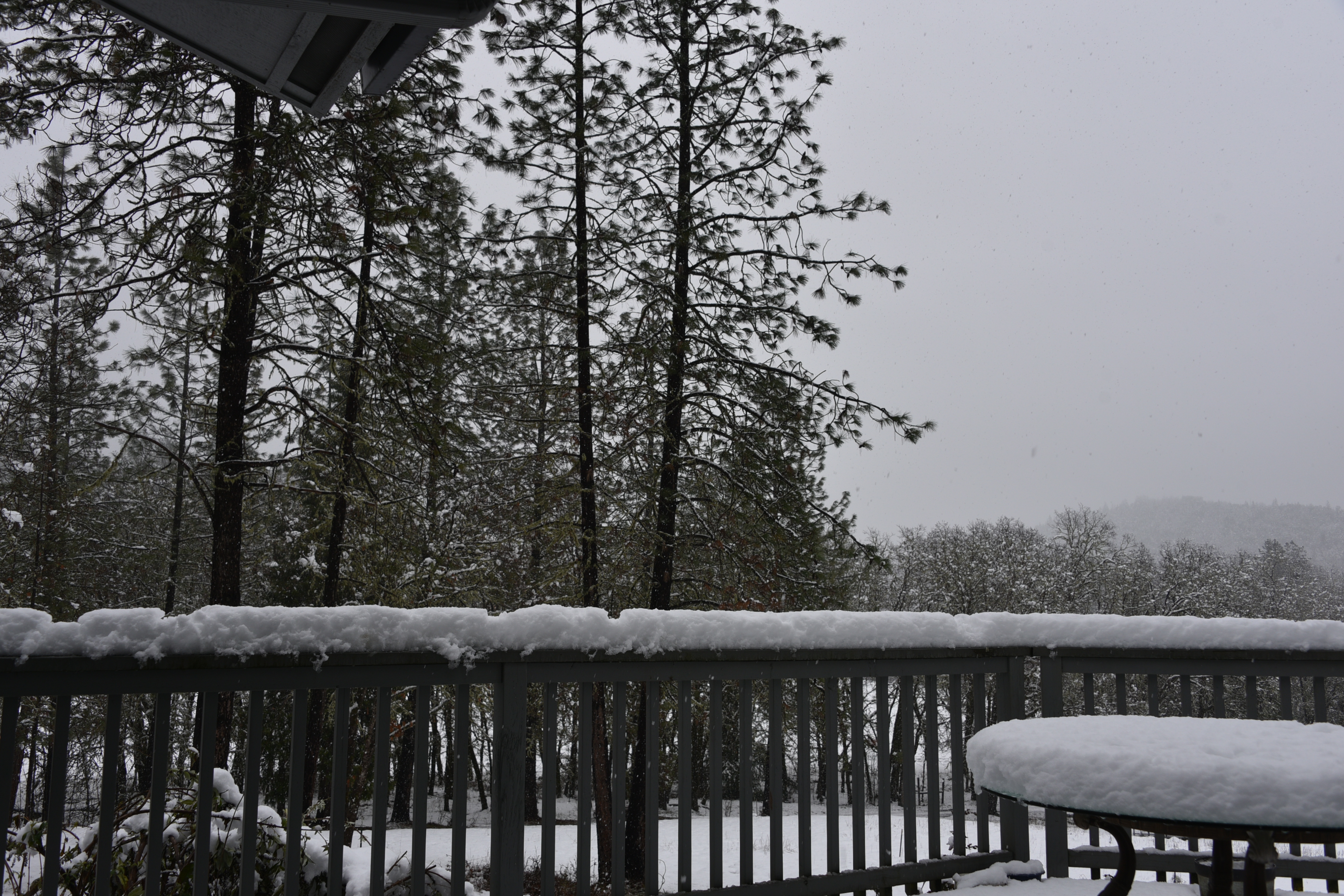
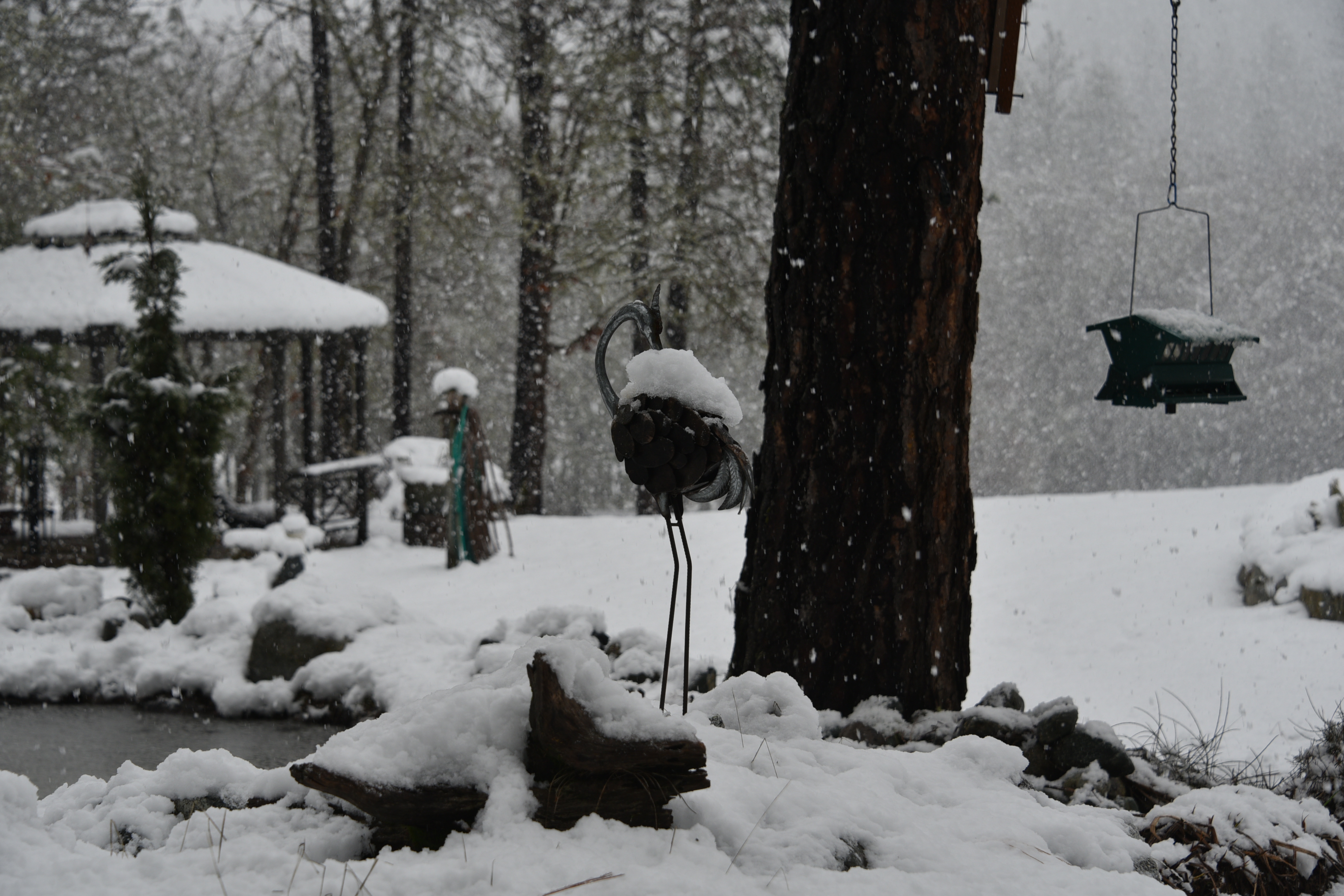
Last Monday’s snow, as in the 3rd February, 2025.

oooo

oooo

The first two were taken on our deck, looking East, and the third was taken from my office window looking to the South.

Update as of Wednesday last!

oooo

oooo

oooo

My guess is that we are now experiencing some 8 inches of snow!

Then an update from last Friday afternoon.

Mount Sexton, above and below.

oooo