Smaller than usual but still charming!
oooo
oooo

oooo
oooo

oooo
oooo

Gorgeous!
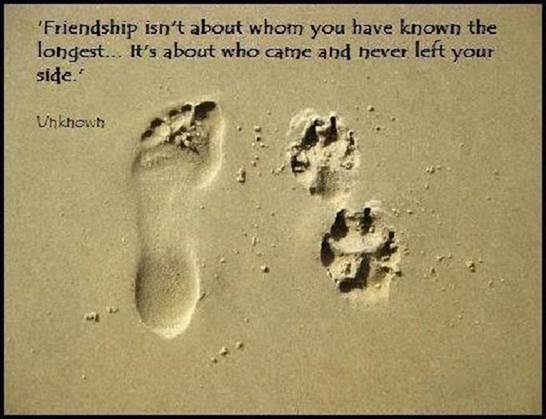
Dogs are animals of integrity. We have much to learn from them.
Year: 2020
Smaller than usual but still charming!
oooo
oooo
oooo
oooo
oooo
oooo
Gorgeous!
How hard could it be, really? Just a few snips here and there should do it.
I hadn’t intended to publish a post for today. But then I saw Stephen Messenger’s post over at The Dodo and I thought that it was far too good not to share with you.
ooOOoo
“I fell on the floor laughing.”
By Stephen Messenger
Published on 8/15/2020
How hard could it be, really? Just a few snips here and there should do it.
That, apparently, was what one well-meaning dog mom thought when she decided to cut her dog’s overgrown hair herself at home.
And, well, you’ll see how that turned out.

The other week, Susana Soares was hanging out with her dog, Mano, when she realized his hair had gotten rather overgrown. It’d been a while since Mano had been to the groomers, and his shag was becoming a bit of an issue.
“Hair was getting in his eyes,” Soares told The Dodo.
Mano wasn’t loving it.

Soares, who’s actually worked as a hair stylist for humans, figured that taming Mano’s unruly mane would be no sweat.
“I decided to cut his hair at home,” she said.
So, Soares grabbed some scissors and got down to business — and this is what resulted:
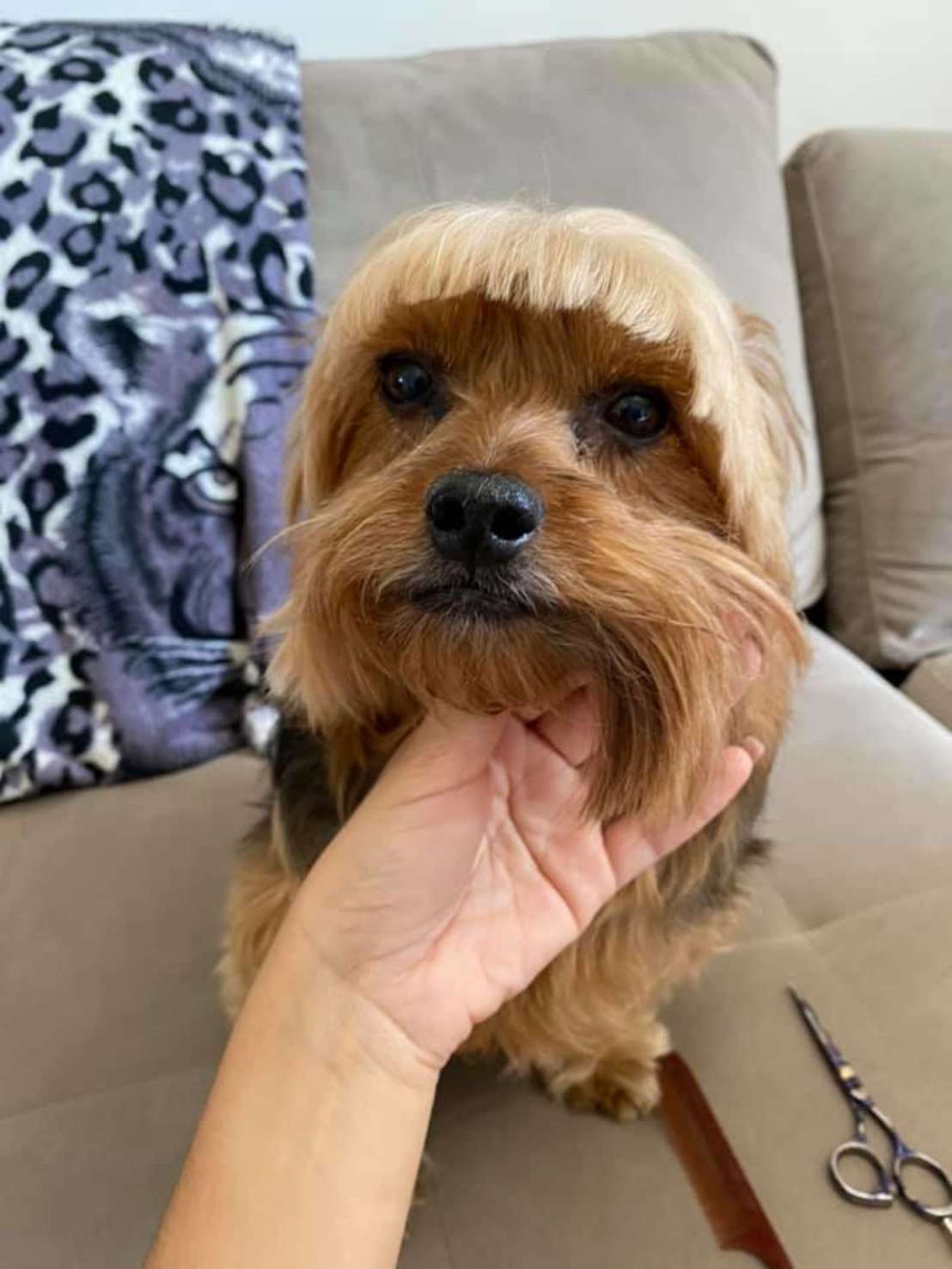
Soares had solved Mano’s hair-in-the-eyes issues sure enough.
She gave him bangs — bangs that inadvertently gave Mano a questionable new look.
It was almost as if the little dog had cut his bangs himself. Without a mirror.

Mano didn’t have to ask Soares how she thought his new ‘do’ turned out.
“I fell on the floor laughing,” she said.

Did the cut look ridiculous? Yes, of course it did. But Mano’s not vain. He could see clearly again, after all.
“He likes it,” Soares said.
Fortunately, when tussled, Mano’s haircut looks less silly. If only slightly so.
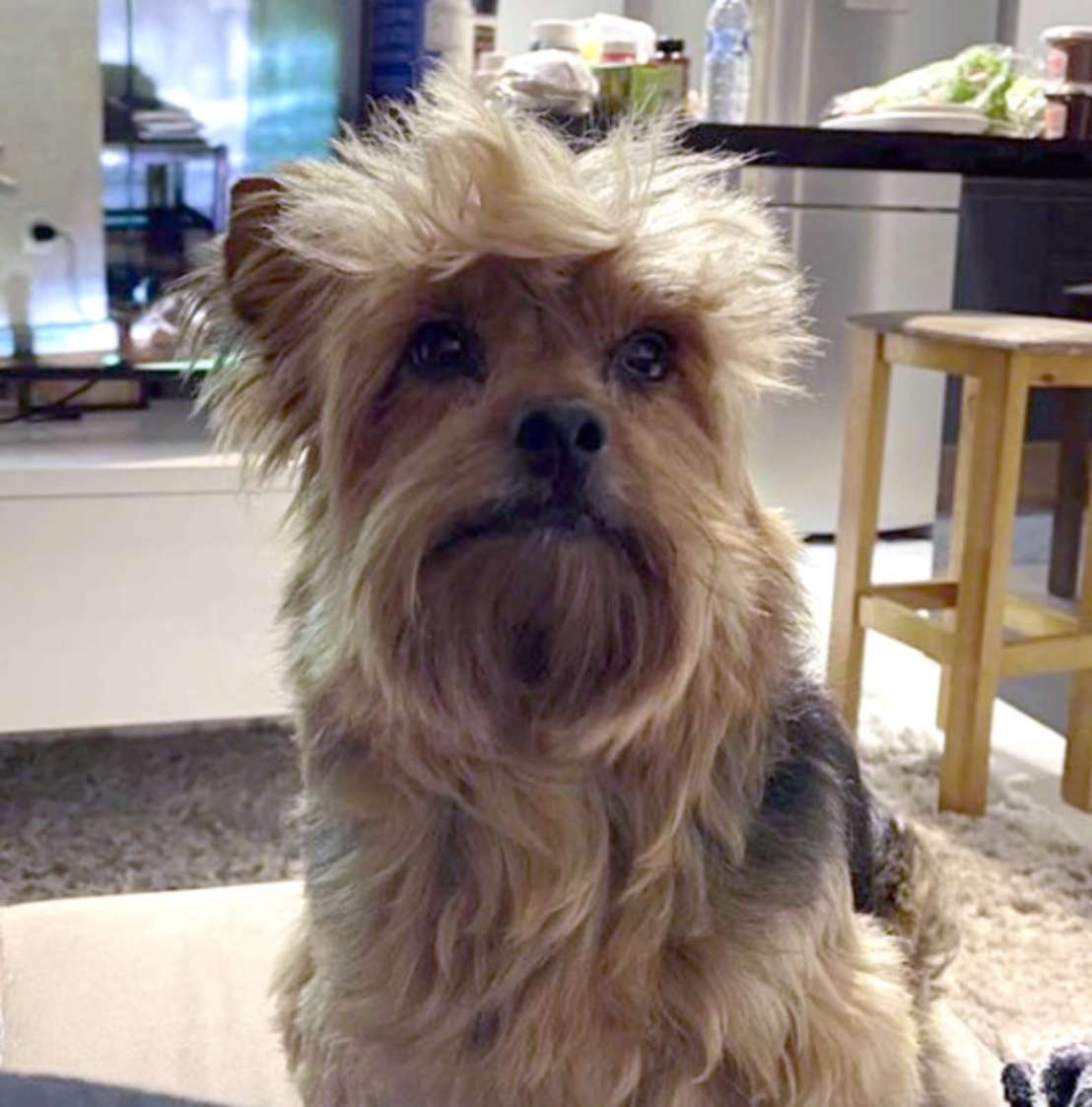
Despite how things turned out, Soares did have the best intentions — and that’s what matters most.

Bad haircuts come and go. And thankfully, in time, Mano’s bangs will grow back into a more natural look.
When it comes time to trim them again, Soares plans to keep her scissors in the drawer and leave it to the pros.
“I will not be repeating that!” she said.
ooOOoo
See what I mean. This was a delightful story and I really have nothing to add other than joining in with the laughter!
This is just a beautiful story!
Dog lovers have two fears in their hearts: their dog dying and their dog going missing.
I think in many ways a dog going missing is the more difficult of the two to handle. There are so many questions unanswered!
So when The Dodo published this story earlier this Summer I immediately put it in my ‘blog’ folder. Somehow I overlooked the story but that is remedied today!
ooOOoo
“[He] looked me straight in the eyes as if he was saying, ‘I gotta see that this is really you.’”
By Lily Feinn
Published on 7/1/2020.
Two years ago, Linda Harmon’s beloved dog Twixx went missing from her yard.
Twixx had been a bit of an escape artist, known for digging tunnels under the fence. That’s how he ended up with a little scar on the top of his head.
Harmon’s husband had recently installed metal posts around the fence making it impossible for Twixx to get out. After checking the gate and the fence, they couldn’t find any signs of tampering — it was as if Twixx had just disappeared.
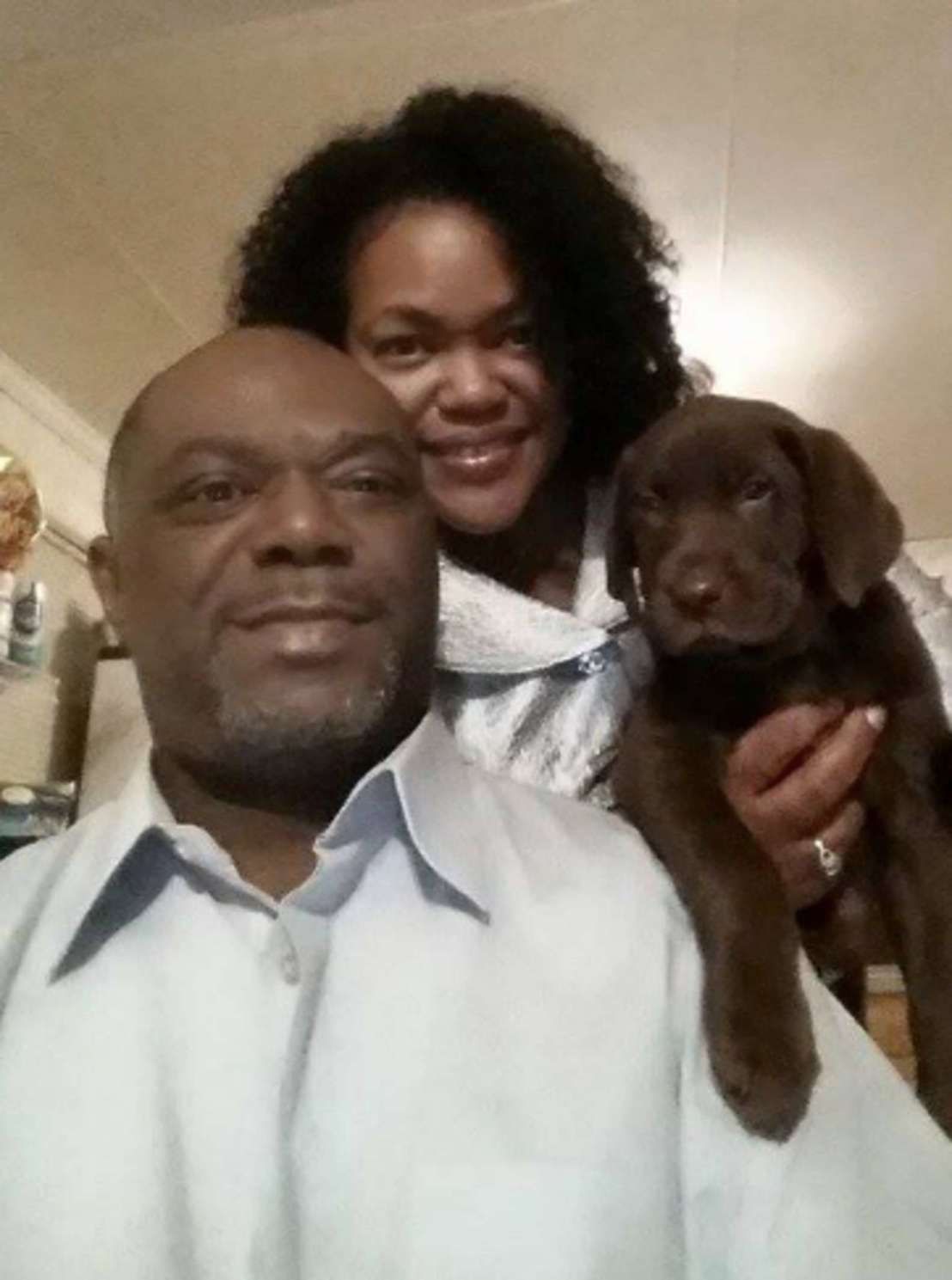
Harmon began searching the neighborhood, making posters, posting on Facebook and checking with the local animal control. Then a woman who had been following Twixx’s story on Facebook reached out to Harmon via text.
“She said, ‘I’m so sorry to send you this, but I found your Twixx. He’s been hit on the side of the road and here’s his picture,’” Harmon told The Dodo. The woman sent Harmon a photo of the top of the dog’s head, and there was Twixx’s little scar.
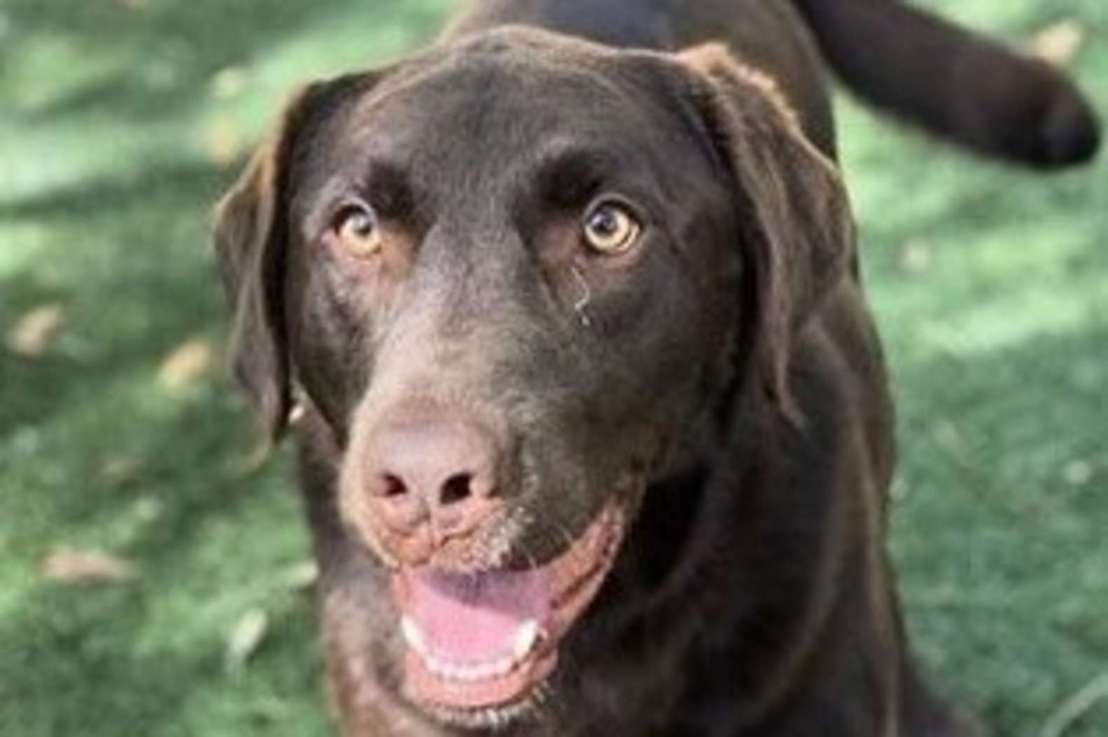
Harmon reported Twixx as deceased to the microchip company, but still had difficulty accepting that he was really gone. “I never truly believed it in my heart,” Harmon said. “My husband said, ‘You’ve got to let this go. You’re grieving over him.’ But I said I would never get another dog and I didn’t for two years.”
Then, earlier this month, Harmon was sitting with her church group when a miracle happened — she received a call from the local animal shelter asking if she had ever owned a chipped pet.
“I just started bawling. I was crying endlessly, and I was around quite a few church members and they rushed to me, thinking I had bad news,” Harmon said. “But when they looked at me I was smiling.”
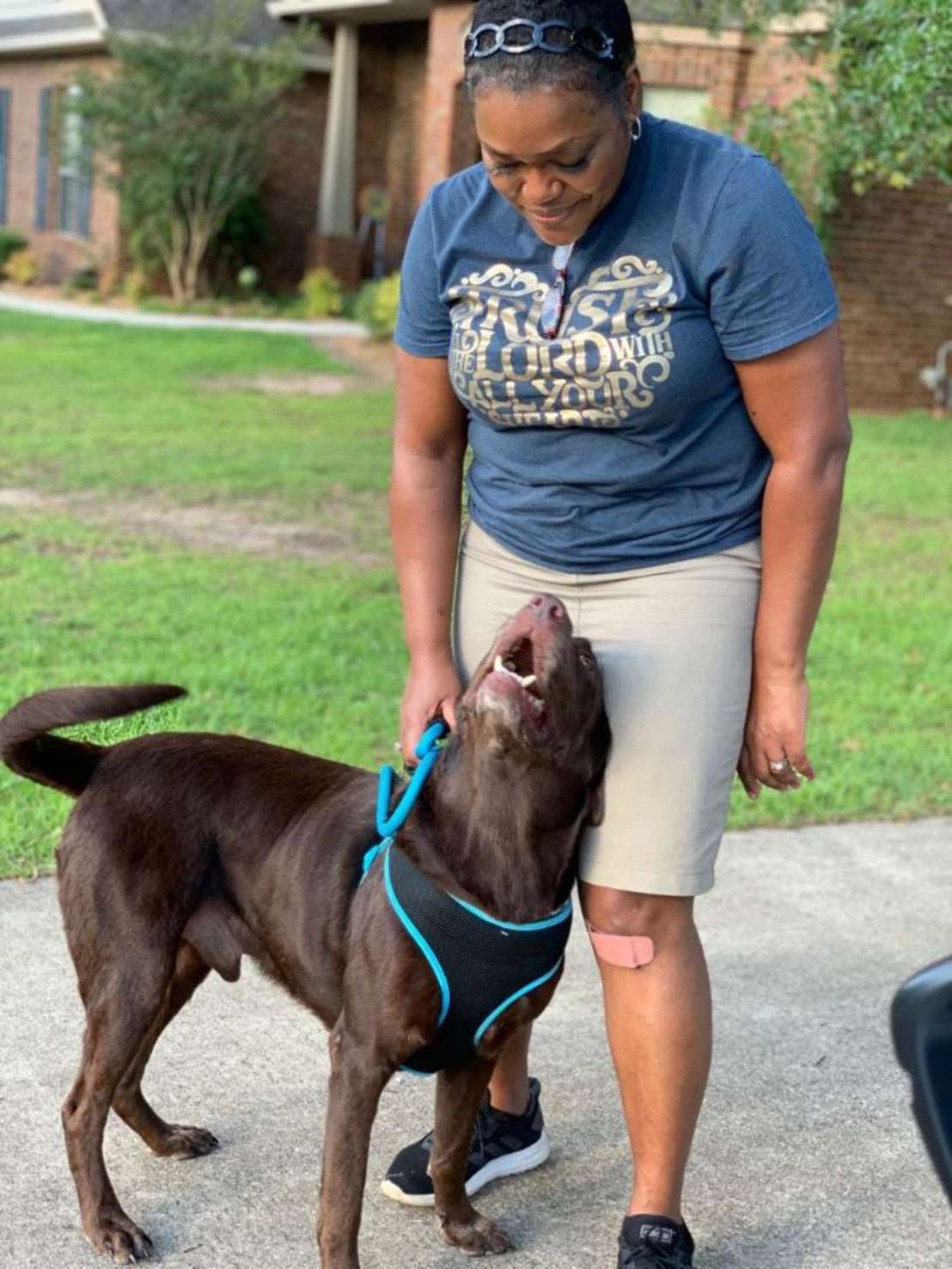
After so long apart, Harmon worried that Twixx wouldn’t remember her. And the last thing she wanted was to make her dog feel scared or uncomfortable.
So the shelter came up with a plan: When Harmon came to pick up Twixx, they would hold him behind the gate while she called his name, and shelter staffers would watch the dog’s reaction.
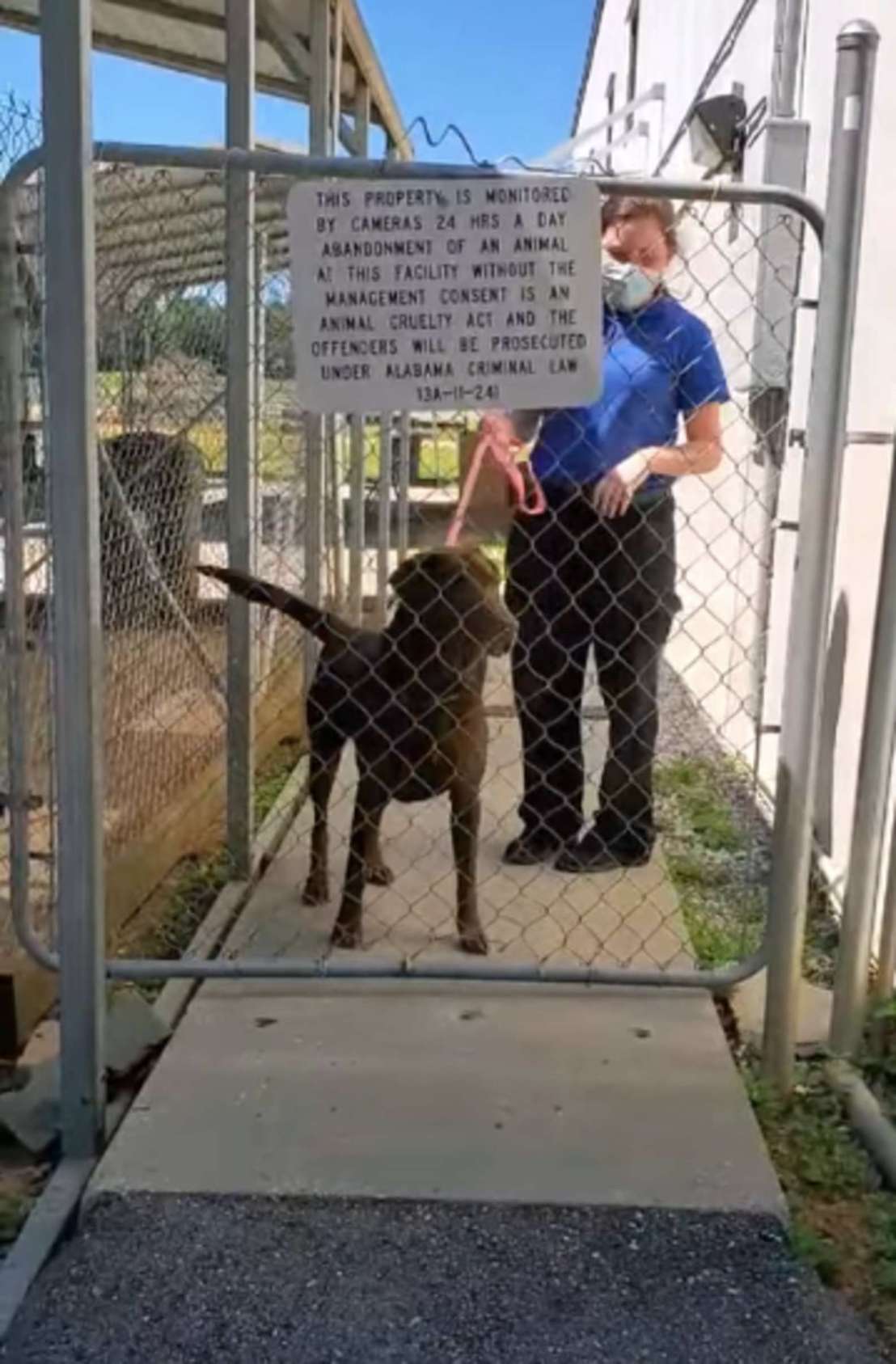
When Twixx arrived at the shelter gate, Harmon began to gently say his nickname — Tootaroota — and as soon as the dog heard her, he put his snout on the ground as if sniffing for his mom.
“Finally, when I bellowed out ‘Twixx’ he ran to the gate and stood at attention,” Harmon said. “And I heard the lady say, ‘Let him out because he’s trying to find her.’”
As soon as they opened the gate, Twixx turned the corner and ran straight to his mom. It was as if he remembered every minute they had spent together, and the two years apart faded away.
“He couldn’t stop wiggling — oh my goodness — and he just jumped on me,” Harmon said. “Then he laid his head in my arms and looked me straight in the eyes as if he was saying, ‘I gotta see that this is really you.’”

Soon everyone watching the reunion had tears in their eyes — including Harmon.
Now, Twixx is home safe and sound with the family that loves him. And he hasn’t dug another hole since.
ooOOoo
Dogs store the scents of humans that have loved them forever. In a very real sense it is part of their memory system albeit it is very different to the memories that you and I have. For dogs have a scenting ability, call in a nose, that is 100 million times better than ours. It is impossible for us humans to truly comprehend what that means to a dog.
But Twixx demonstrated this superbly because the first thing he did was to “put his snout on the ground as if sniffing for his mom.”
So many stories about our wonderful dogs!
A very interesting article in The Smithsonian Magazine.
There are countless breeds of dogs and they represent thousands of years of breeding.
But recent work in determining the genetic background behind the many different features of dogs has revealed so much.
The Smithsonian Magazine published an article nearly a month ago and hopefully it is alright to share it with you.
ooOOoo
A new study looks at the genes that underlie traits from self control to communication

By Viviane Callier, July 31, 2020
Thousands of years of selective dog breeding has created a fantastic diversity of domestic canine companions, from the workaholic border collie to the perky Pomeranian. In cultures around the world, humans bred different dogs to be good at tasks including guarding, hunting and herding. Later, in Victorian England, kennel clubs established breed standards related not only to their behavior, but also their appearance.
As genomic sequencing has become more affordable, scientists have begun to understand the genes behind physical features such as body shape and size. But understanding the genes behind dog cognition—the mental processes that underlie dogs’ ability to learn, reason, communicate, remember, and solve problems—is a much trickier and thornier task. Now, in a pair of new studies published in Animal Cognition and in Integrative and Comparative Biology, a team of researchers has begun to quantify just how much variation in dog cognition exists, and to show how much of it has a genetic basis.
To study canine cognition, the studies’ authors turned to publicly available genetic information from a 2017 study, and a large community science project, Dognition.com, in which dog owners tested their own pets. “These papers offer an exciting integration of two forms of big data,” says Jeff Stevens, a psychologist at the University of Nebraska-Lincoln who was not involved in the study.
Previous studies often compared cognition in one breed against another using small sample sizes of dogs from each. This study, by contrast, is the first to examine the variation in cognition across three dozen breeds, and the genetic basis of that variation, explains Evan MacLean, a comparative psychologist at the University of Arizona who oversaw the pair of new studies. MacLean says dog breeds may be an ideal way to study the heritability of cognitive traits because breeds—all part of the same species—represent close genetic relatives with an incredibly diverse range of appearances and behaviors.
To gather a sufficient amount of data on how dogs reason and solve problems, the researchers looked to the Dognition.com portal. The initiative, created by Duke University dog researcher Brian Hare, started with tests in the lab. Researchers developed methods to understand how dogs think. They then stripped those methods down, and simplified them for dog owners to do themselves. In an earlier project, the researchers tested dogs in the lab and compared their results to those from owners testing the same dog at home. The results were the same, giving them confidence that the results from the citizen science project were reliable.
To participate in this project, dog owners tested their pups on 11 standardized tasks used by animal behaviorists on a variety of species that reflect four aspects of cognition: inhibitory control, communication, memory and physical reasoning. One task that measured inhibitory control, for example, involved having an owner put a treat on the floor in front of the dog and then verbally forbidding the dog from taking it. The owner then measured how long the dog would wait before eating the treat. In a task to assess communication skills, the dog owner placed two treats on the ground and gestured towards one of them. The owner then determined if the dog approached the indicated treat. To assess memory, the owner visibly placed food under one of two cups, waited for a few minutes, and then determined if the dog remembered which cup the food was placed under. To test physical reasoning, the owner hid food under one of two cups, out of view of the dog. The owner lifted the empty cup to show the dog that there was no food and then assessed whether the dog approached the cup with the food underneath.
The participating dog owners reported their dog’s scores and breed, producing a dataset with 1,508 dogs across 36 breeds. The researchers analyzed the scores and found that about 70 percent of the variance in inhibitory control was heritable, or attributable to genes. Communication was about 50 percent heritable, while memory and physical reasoning were about 20 percent heritable.
“What’s so cool about that is these two traits that are highly heritable [control and communication] are those that are thought to be linked to dogs’ domestication process,” says Zachary Silver, a graduate student in the Canine Cognition Center at Yale who was not involved in the study.
Dogs are better at following humans’ communicative cues than wolves, and this is something that seems to be highly heritable, explains Silver. In contrast, there’s some evidence that wolves are better than dogs at physical reasoning.
Some of these traits are also influenced by environment and how the dog was handled as a puppy, so there are both genetic and environmental components. In fact, there is so much environmental and experiential influence on these traits that Gitanjali Gnanadesikan, a graduate student in MacLean’s lab and lead author of the new studies, cautions against the idea that these findings support certain breed restrictions or stereotypes. “Even the highly heritable traits have a lot of room for environmental influence,” she says. “This shouldn’t be interpreted as, ‘each of these breeds is just the way they are, and there’s nothing that can be done about it.’”
In the same way that women are on average shorter than men, but there’s quite a lot of overlapping variation within each sex, dog breeds also show a lot of variation within each breed that overlaps with variation among breeds.
Previous work has linked differences in inhibitory control to the estimated size of dogs’ brains. Comparative studies across many different species, ranging from tiny rodents to elephants and chimpanzees, also show that some aspects of self-control are strongly related to brain size. The bigger the brain size, the more self-control the animals seem to have, MacLean says.
Stevens notes that a lot of things—not just inhibitory control—correlate with brain size across species. And brain size, metabolic rate, lifespan, home range size are all correlated with body size. When many traits are correlated with each other, it is not clear which of these factors may underlie the cognitive differences. So there are a number of questions remaining to be explored.
After showing the degree to which different aspects of dog cognition are heritable, Gnanadesikan and MacLean used publicly available information on the genomes of dog breeds to search for genetic variation that was associated with the cognitive traits of interest. The researchers found that, like many other complex traits, there were many genes, each with small effect, that contribute to dogs’ cognitive traits. That is in contrast to morphological features in dogs; about 50 percent of variation in dog body size can be accounted for by variation in a single gene.
One of the limitations of the study is that the researchers did not have cognitive and genetic information from the same dogs; the genomes were breed averages. In the future, the researchers are planning to collect genetic data from the very same dogs that are completing the cognitive tests, to get measures of cognitive and genetic variation at the level of individual dogs. “This gives us a roadmap for places that we might want to look at more carefully in the future,” MacLean explains.
ooOOoo
Now this is an article that deserves to be read carefully so if you are in a hurry bookmark this and wait until you can sit and absorb the messages the article contains.
I was minded to look up Gitanjali’s details and I am glad I did. These are the details:
Gitanjali Gnanadesikan
I am an evolutionary biologist and comparative psychologist who is interested in social behavior and cognition. I work with Evan MacLean in the Arizona Canine Cognition Center studying the development and evolution of behavior and cognition in dogs and wolves.
I think I will reach out to her and see if she has more information she would like to share with us all.
Yes, you heard that correctly.
There was an article on the website EarthSky News yesterday that, literally, took me out of this world. It described the role of magnetic rivers in newly forming star clusters.
There’s not a dog in sight but nevertheless I wanted to share this article with you.
ooOOoo
Astronomers have learned that the pull of gravity can sometimes overcome the strong magnetic fields found in great star-forming clouds in space. The resulting weakly magnetized gas flow can feed the growth of new stars.

Astronomers have known for decades that stars like our sun form when giant clouds of gas and dust in space – sometimes called molecular clouds – collapse under their own gravity. But how does the material from interstellar space flow into these clouds, and what controls the collapse? The image above helps illustrate an answer to these questions. It’s a composite, made with data from SOFIA – an airborne telescope designed for infrared astronomy – overlaid on an image from the now-retired Spitzer Space Telescope. This composite shows that the pull of gravity can sometimes overcome the strong magnetic fields found in great star-forming clouds in space. And it shows that, when that happens, weakly magnetized gas can flow – as on a conveyor belt – to feed the growth of newly forming star clusters.
A statement from the Max Planck Institute in Bonn, Germany, explained:
A major finding in the last decade has been that extensive networks of filaments permeate every molecular cloud. A picture has emerged that stars like our own sun form preferentially in dense clusters at the intersection of filaments.
Now look back at the image above, which shows the Serpens South star cluster, a star-forming region located some 1,400 light-years from Earth. In that image, you see a dark filament in the lower left. Now notice the “stripes” on the image, which astronomers call streamlines. They represent magnetic structures, discovered by SOFIA. The astronomers said these magnetic structures act like rivers, channeling material into the great star-forming cloud.
As you can see in the image, these magnetic streamlines have been dragged by gravity to align with the narrow, dark filament on the lower left. Astronomers say this configuration helps material from interstellar space flow into the cloud.
This is different from the upper parts of the image, where the magnetic fields are perpendicular to the filaments; in those regions, the magnetic fields in the cloud are opposing gravity.

The scientists said in a statement from Universities Space Research Association (USRA) that they are:
… studying the dense cloud to learn how magnetic fields, gravity and turbulent gas motions contribute to the creation of stars. Once thought to slow star birth by counteracting gravity, SOFIA’s data reveals magnetic fields may actually be working together with gravity as it pulls the fields into alignment with the filaments, nourishing the birth of stars.
The results were published in the peer-reviewed journal Nature Astronomy on August 17. The lead author of the new study is Thushara Pillai of Boston University and the Max Planck Institute for Radio Astronomy in Bonn, Germany.
In 1835, the French philosopher Auguste Comte wrote of the unknowable nature of stars:
On the subject of stars, all investigations which are not ultimately reducible to simple visual observations are … necessarily denied to us. While we can conceive of the possibility of determining their shapes, their sizes, and their motions, we shall never be able by any means to study their chemical composition or their mineralogical structure … Our knowledge concerning their gaseous envelopes is necessarily limited to their existence, size … and refractive power, we shall not at all be able to determine their chemical composition or even their density…
He was, famously, wrong.
He couldn’t have envisioned the range of tools available to modern astronomers. It’s a beautiful thing that, nowadays, astronomers can not only learn about the compositions of stars via their studies of their spectra, but also probe the deeper mysteries, going all the way to the births of these colossal, self-luminous balls in space.

Bottom line: Astronomers have learned that the pull of gravity can sometimes overcome the strong magnetic fields found in great star-forming clouds in space. The resulting weakly magnetized gas flow can feed the growth of new stars.
Source: Magnetized filamentary gas flows feeding the young embedded cluster in Serpens South
ooOOoo
Just read that paragraph just before the end of the article: “He couldn’t have envisioned the range of tools available to modern astronomers. It’s a beautiful thing that, nowadays, astronomers can not only learn about the compositions of stars via their studies of their spectra, but also probe the deeper mysteries, going all the way to the births of these colossal, self-luminous balls in space.”
What a long way we have come from just, say, 50 years ago.
It would be easy to get lost in the article in a scientific manner, and that would be entirely appropriate.
But there’s another beautiful way to get lost in the article; by dreaming of outer space and forgetting just for a moment or two this Earthly planet we all live on!
 Learning from Dogs