… not to be in such a hurry to shut the garage door!
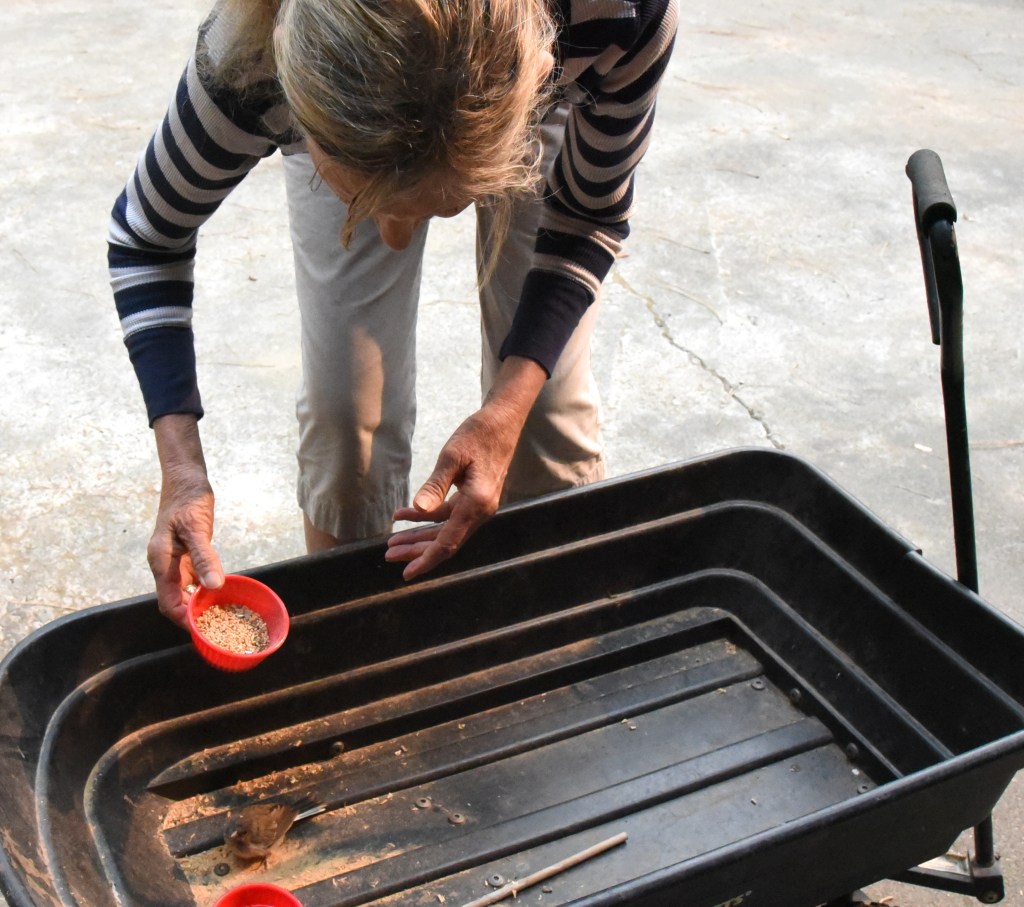
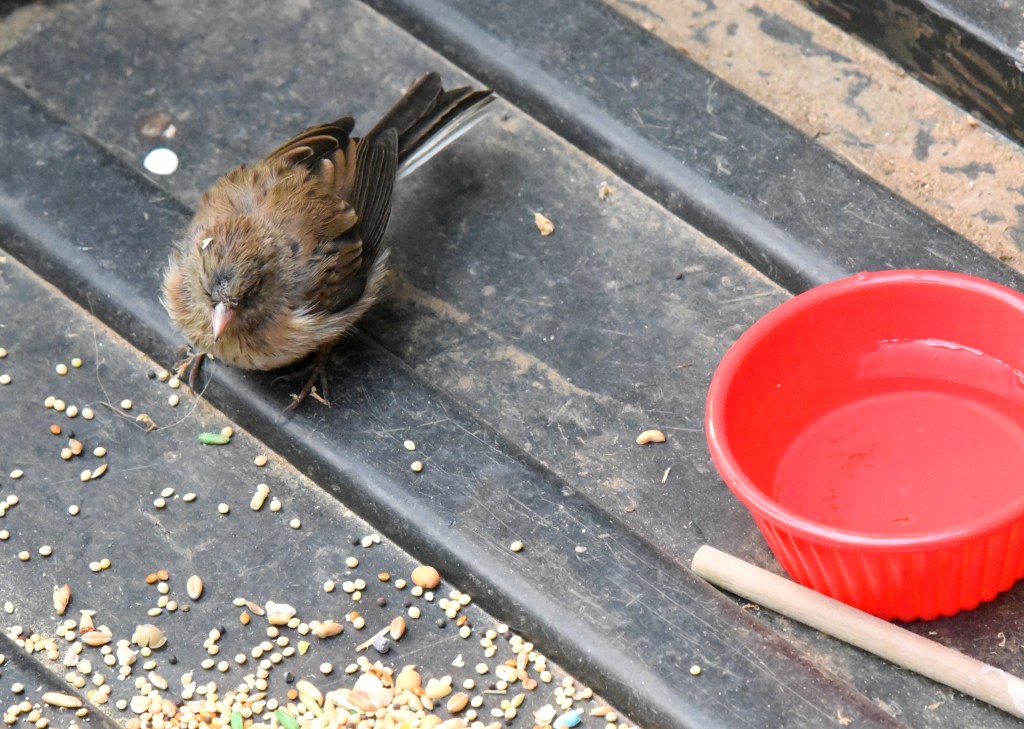
I went out to the garage yesterday morning to sort out a few things and found a small bird almost fast asleep in a trolley cart I use about the place.
It clearly had got caught inside the garage when I closed the electric door the previous evening. (Some of the local birds do come in to the garage to feast on insects and spiders that they come across.)
(That’s sawdust in the bottom of the cart.)
I called Jeannie to come out and look at the little chap and she had the brilliant idea of feeding the bird some of the bird food we give our two parakeets. Plus, she brought out a bowl of water.
It worked!
In next to no time the aforesaid bird had had sufficient to eat and it was time to relax in the warm air.
Twenty minutes later he had flown away!
OK!!
The real point of today’s post is to advise you that my son, Alex, and his longterm partner, Lisa, are staying with us for a few days and quite naturally blogging is going to be on the back-burner.
Rather than go ‘silent’ I am going to share with you over the next six days a beautiful series of posts on the clouds.
As frequently happens, recently I was sent an email from someone I hadn’t previously been in contact with. It was Sienna Penfold and this is what she wrote:
Hello Paul,
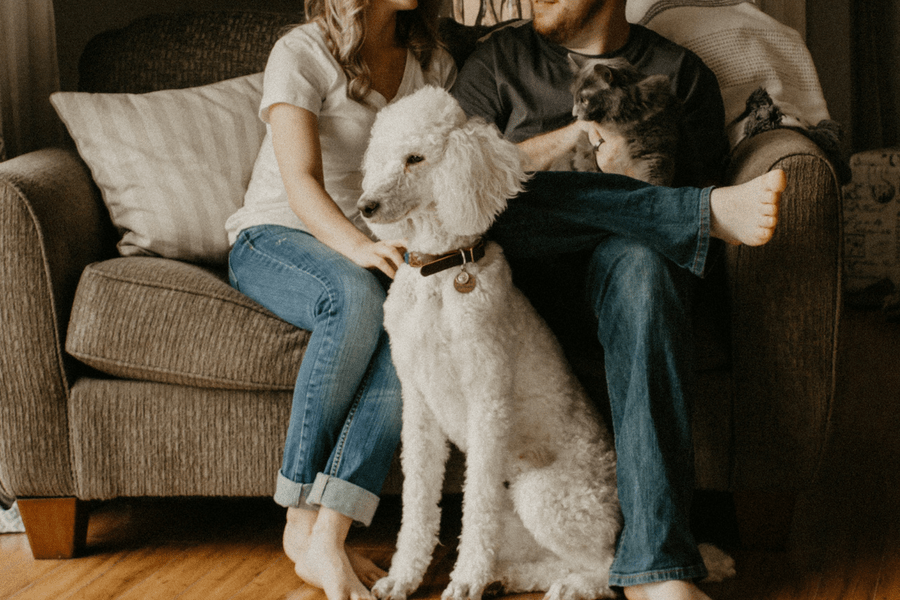
My name is Sienna, and I’m a full-time mom and a regular contributor to highstylife.com. Proud owner of two beautiful dogs (Coco & Hulk) and beautiful cat adopted from a shelter.
Since I’m equally passionate about my pets and my job I’ve decided to share my knowledge and experiences. I love the combination of sharing information and learning from others. Stories I like to write are mostly connected to pets and lifestyle.
You all know me well enough to know what my response was!!
So here is Sienna’s guest post.
ooOOoo
Be Prepared! Tips to Protect Your Dog and Your Family from Dangerous Parasites
by Sienna Penfold, August 21st., 2018
Every year during spring, summer, and most of fall, every pet parent becomes painfully aware of all the crawlies that enjoy the nice weather as much as our furry buddies do. From annoying fleas, which can also carry various diseases, all the way to worms, and ticks, the sunny days of the warm season come with a slew of responsibilities for every family – because, unfortunately, all these insects also pose a risk for us and our kids as well, not just for our pets.
Even if you do your best to prevent any type of an infection, you should also stay alert for any early signs of a flea infestation, and any presence of ticks and other parasites that can wreak havoc on your pooch’s as well as your own health. Let’s go through some of the key symptoms, preventative measures, and possible treatments to make your summers all the more comfortable and worry-free! Keep an eye on your furball
Fleas and ticks are the most common external parasites that your pooch may have, and while it’s always best to focus on prevention, some dogs are more prone to having these pests and thus need more attention from you. Keep in mind that there are almost 2,000 species of fleas out there, and you may find some to be more resilient than others. The following are some of the simplest symptoms your dog will exhibit in case they have fleas:
Frequent scratching and skin irritations such as psoriasis, redness, and hair loss
Flea droppings in your dog’s coat (which you can check when grooming them and examining their hair against a contrasting surface such as a white piece of paper)
Excessive licking and biting
Pale gums
On the other hand, ticks are the next most common parasite found in nature, and its many species carry a wide range of diseases that can endanger your dog’s health or even life. These are the symptoms to keep an eye on:
Skin irritation and itchiness
Loss of appetite
Vomiting
Diarrhea
Lack of energy
A potential internal parasite infection, coming from a wide range of worms, heartworm included, may cause all of the above symptoms as well as the following issues:
Scooting, or dragging their rears against the floor
Coughing
A rounded belly
Visible parasites in fecal matter
The most effective preventative measures
Depending on your furry friend’s health and specific conditions (if any are present), you can mix and match several useful solutions to prevent any parasite issues. For example, regular grooming, including twice-a-day combing, regular baths with suitable shampoos, and even natural remedies as a part of their diet, such as a smidgen of garlic, and spraying apple cider vinegar mixed with water, can help.
Topical solutions come in various forms, from repellant collars to topicals, and are applied once a month, mostly on a dog’s back. However, you should keep in mind that not every form of protection is all-encompassing, meaning that they sometimes don’t include heartworm protection, which are transferred through mosquito bites.
A great option is a monthly spot-on topical such as Advocate dog flea treatment which also keeps your pooch safe against heartworms, and worms. Remember to weigh your pooch beforehand, because all of these treatments are used in different doses depending on how heavy your dog is.
Protecting your environment
Even though you cannot possibly keep your dog away from all risky spots, especially if you take them to natural spots such as rivers, mountains, and meadows, you can still decrease their risk with the right hygiene rules.
If your pooch lives indoors, make sure you vacuum and clean your home every day, or at least every other day, to remove any potential flea eggs. Removing carpets is one of the best ways to prevent an infestation, although your furniture still leaves plenty of room for them to bask in.
Using flea and tick-repellent substances such as apple cider vinegar in your homemade cleaning supplies, can also help you protect your rooms. Make sure to wash your own linens as well as your dog’s bedding on a regular basis, with items such as the Seventh Generation detergent with predominantly plant ingredients, which are perfectly pet and kids-safe. If you dress your dog, you can use the same detergent to wash their sweaters, and make sure they don’t harbor any unwanted pests!
Since all of these parasites transmit many diseases that can also come with all of the listed as well as with more severe symptoms, it’s best to check your dogs from head to toe, especially in those hidden nooks such as between their toes, behind and inside their ears and around their tails. However, it’s always a good idea to have your vet check with you on a regular basis, and make sure that whatever may be causing those symptoms is not a parasite, but a harmless issue, such as an upset stomach.
ooOOoo
Don’t know about you but we found that a very informative guest post!
Want some more?? Please let me know!
As always, I have no commercial interest in or knowledge of any the products and companies mentioned by Sienna.
Simply because yesterday Anita from Anitashope blog left the following comment:
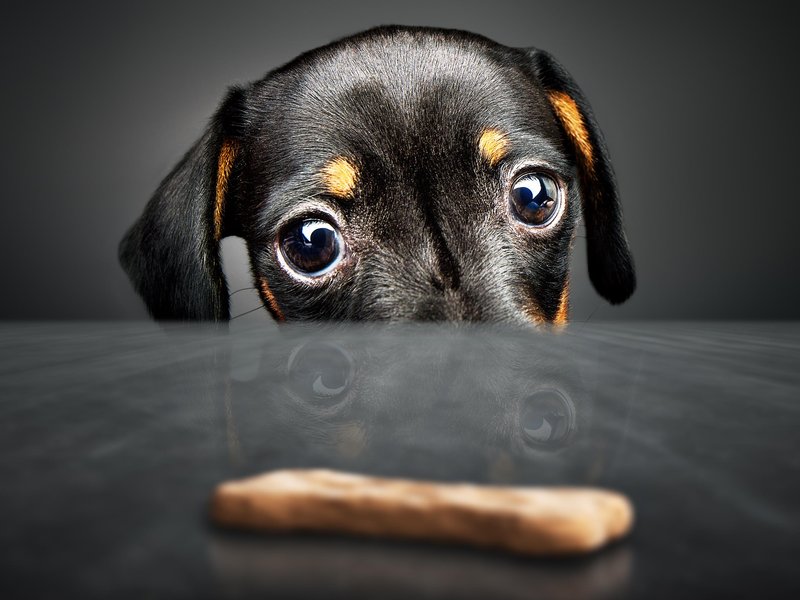
This article popped up after I responded to todays post but I also have to respond to this one as I need to tell you about Mimi. Mimi is my coon hound black lab mix and she will NOT make eye contact with you when a treat is involved. She will come sit by you and look off in the distance like “I am not looking at you”, then she will cut her eyes sideways just to make sure the treat is still there. Its hilarious.
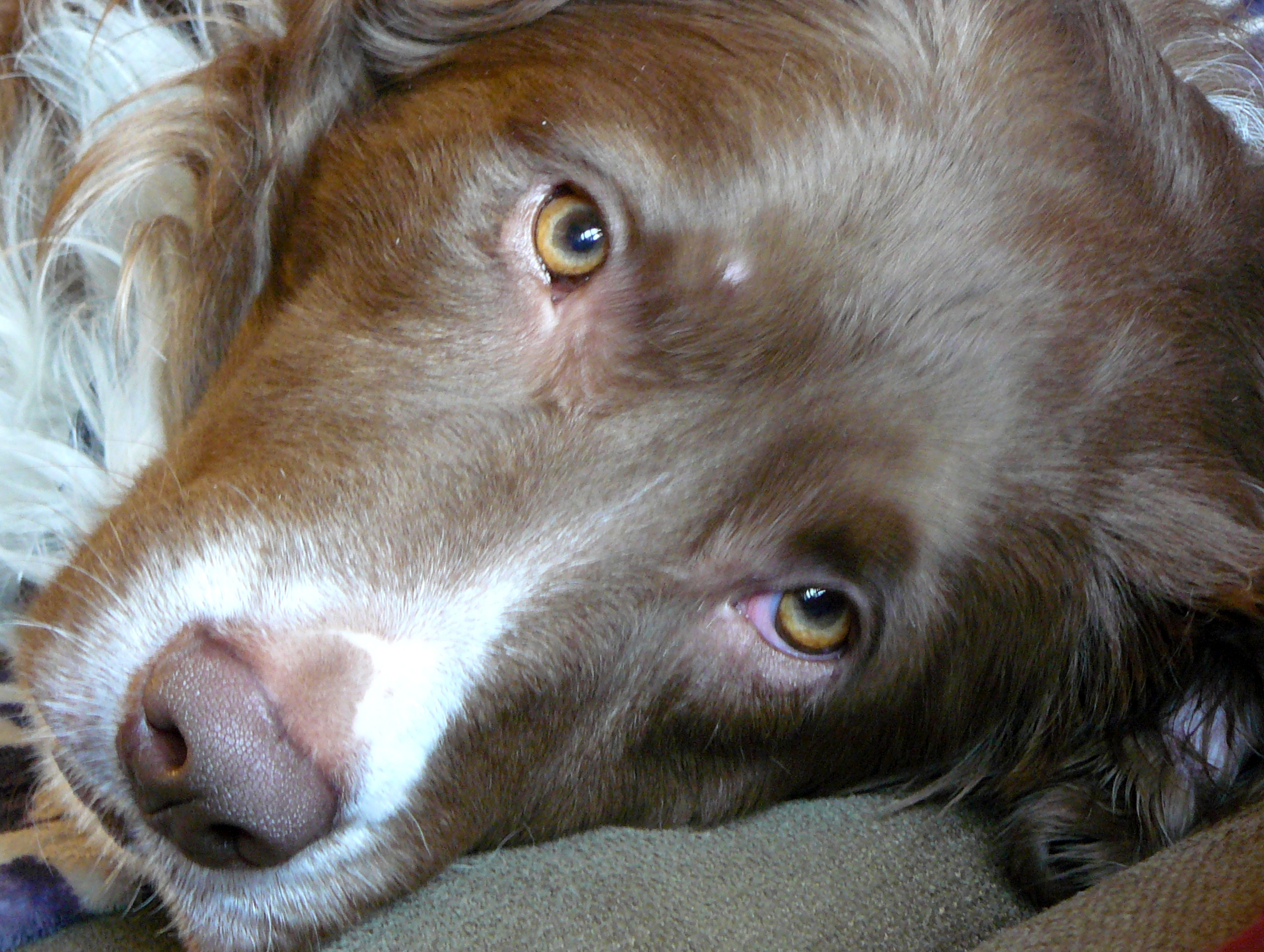
The post where her comment was left was one that I published back on March 13th, 2017. It included the most beautiful photograph of Oliver’s eyes. I had forgotten that picture.
So for that reason alone, it is being republished today.
ooOOoo
The love and admiration for this beautiful animal goes on and on!
It seems as though it is almost on a weekly basis that new and incredible facts about our dear, dear dogs come to the surface.
So what prompted this from me today!
Only a wonderful article that was originally published in New Scientist but then was carried by The Smithsonian. I am hoping that by fully linking this post to both the New Scientist article and the essay in The Smithsonian I am at liberty to republish it for all you good people.
ooOOoo
Dogs Use Deception to Get Treats, Study Shows
When a human partner withheld tasty snacks, the dogs got sneaky
Would these eyes deceive you? New study says yes. (johan63/iStock)
By Brigit Katz smithsonian.com March 10, 2017
There is plenty of evidence to suggest that dogs, in addition to looking adorable in sweaters, possess fairly sophisticated cognitive abilities. They recognize emotion, for example, and respond negatively to antisocial behavior between humans. Man’s best friend can also get pretty tricksy when it comes to scoring snacks. As Brian Owens reports for New Scientist, a recent study found that dogs are capable of using deceptive tactics to get their favorite treats.
The study, published in the journal Animal Cognition, was led by Marianne Heberlein of the Department of Evolutionary Biology and Experimental Studies at the University of Zürich. Heberlein told Owens that the idea for the study was born when she observed her pet pooches engaging in deceptive behavior; one sometimes pretends to see something interesting outside, prompting the other to give up his sleeping spot.
To find out if dogs engage in similar shenanigans with humans, Heberlein and a team of researchers paired 27 dogs with two different partners, Stanley Coren explains in Psychology Today. One of these partners would repeatedly go to the bowl of a given dog, fish out a treat, and give it to the pup. The other would show the treat to the dog, and then put it in her pocket. Perhaps unsurprisingly, the dogs began to show a preference for the more generous partners, and would approach them spontaneously.
Once one partner had been established as co-operative, the other as competitive, the dogs were taught to lead their partners to one of two boxes, both containing food, with the command “Show me the food.” And the same pattern was repeated: when the dogs led the co-operative partner to a treat, they got to eat it. The competitive partner withheld the treat.
Researchers then showed the dogs three covered boxes. One contained a sausage, the second contained a less-yummy dry biscuit, and the third was empty. Once again, the process of treat giving and withholding was repeated, but this time with a twist: when the dog was reunited with its owner, the owner asked it to choose one of the boxes. If there was a treat inside the box, the dog was allowed to eat it. But “if the dog chose the box which had been opened before,” Coren explains, “the owner just showed the empty box to the dog.”
Over the course of a two-day testing period, the dogs were repeatedly presented with this conundrum. They had been trained to lead both partners to boxes containing food, but they knew that the competitive partner would not let them eat the snacks. They also knew that if any snacks remained inside the boxes once they were reunited with their owners, they would get a chance to eat them. So the dogs got a little devious.
Researchers observed the pooches leading the co-operative partner to the box containing the sausage more often than expected by chance. They led the competitive partner to the sausage less often than expected by chance. And here’s where things get really interesting: the dogs took the competitive partner to the empty box more frequently than the co-operative partner, suggesting that they were working through their options and engaging in deliberate deception to maximize their chances of getting both treats.
“It is as though the dog is thinking, ‘Why should I tell that selfish person where the best treat [is] if it means that I will never get it?’,” writes Coren.
“These results show that dogs distinguished between the co-operative and the competitive partner,” the authors of the study write, “and indicate the flexibility of dogs to adjust their behaviour and that they are able to use tactical deception.”
Rest assured, dog lovers: your pooches may be sneaky, but they still love you more than cats.
Science confirms what we instinctively understand!
That the way a dog looks deep into our eyes is more than emotional froth!
Follower of this blog, Anita, left a comment to yesterday’s post. This is what she wrote (my emphasis):
This has been a wonderful compilation of awesome photos. You must do it again sometime. Dogs are so wonderful and such great companions. They do have eyes that see straight through our very souls and ready to love us at the drop of a hat.
One of our dogs here at home, Oliver, has those eyes. When he stares into my own eyes it feels as though at some mystical level Oliver and I are connected.
Young Oliver and those eyes! (Taken 1st March, 2018.)
So imagine my surprise when reading yesterday the lead essay in The Smithsonian about the evolution of the domesticated dog and me coming across this:
The relationship has become so close that even our brains are in sync. Witness a study showing that dogs hijack the human brain’s maternal bonding system. When humans and dogs gaze lovingly into one another’s eyes, each of their brains secretes oxytocin, a hormone linked to maternal bonding and trust.
In other words, science confirms what I experience as being real!! (Undoubtedly shared by many of you!)
Long ago, before your four-legged best friend learned to fetch tennis balls or watch football from the couch, his ancestors were purely wild animals in competition—sometimes violent—with our own. So how did this relationship change? How did dogs go from being our bitter rivals to our snuggly, fluffy pooch pals?
The new drama Alpha answers that question with a Hollywood “tail” of the very first human/dog partnership.
Europe is a cold and dangerous place 20,000 years ago when the film’s hero, a young hunter named Keda, is injured and left for dead. Fighting to survive, he forgoes killing an injured wolf and instead befriends the animal, forging an unlikely partnership that—according to the film—launches our long and intimate bond with dogs.
Just how many nuggets of fact might be sprinkled throughout this prehistoric fiction?
We’ll never know the gritty details of how humans and dogs first began to come together. But beyond the theater the true story is slowly taking shape, as scientists explore the real origins of our oldest domestic relationship and learn how both species have changed along canines’ evolutionary journey from wolves to dogs.
When and where were dogs domesticated?
Pugs and poodles may not look the part, but if you trace their lineages far enough back in time all dogs are descended from wolves. Gray wolves and dogs diverged from an extinct wolf species some 15,000 to 40,000 years ago. There’s general scientific agreement on that point, and also with evolutionary anthropologist Brian Hare’s characterization of what happened next. ’The domestication of dogs was one of the most extraordinary events in human history,” Hare says.
But controversies abound concerning where a long-feared animal first became our closest domestic partner. Genetic studies have pinpointed everywhere from southern China to Mongolia to Europe.
Scientists cannot agree on the timing, either. Last summer, research reported in Nature Communications pushed likely dates for domestication further back into the past, suggesting that dogs were domesticated just once at least 20,000 but likely closer to 40,000 years ago. Evolutionary ecologist Krishna R. Veeramah, of Stony Brook University, and colleagues sampled DNA from two Neolithic German dog fossils, 7,000 and 4,700 years old respectively. Tracing genetic mutation rates in these genomes yielded the new date estimates.
“We found that our ancient dogs from the same time period were very similar to modern European dogs, including the majority of breed dogs people keep as pets,” explained Dr. Veeramah in a release accompanying the study. This suggests, he adds, “that there was likely only a single domestication event for the dogs observed in the fossil record from the Stone Age and that we also see and live with today.”
End of story? Not even close.
In fact, at least one study has suggested that dogs could have been domesticated more than once. Researchers analyzed mitochondrial DNA sequences from remains of 59 European dogs (aged 3,000 to 14,000 years), and the full genome of a 4,800-year-old dog that was buried beneath the prehistoric mound monument at Newgrange, Ireland.
Comparing these genomes with many wolves and modern dog breeds suggested that dogs were domesticated in Asia, at least 14,000 years ago, and their lineages split some 14,000 to 6,400 years ago into East Asian and Western Eurasian dogs .
But because dog fossils apparently older than these dates have been found in Europe, the authors theorize that wolves may have been domesticated twice, though the European branch didn’t survive to contribute much to today’s dogs. Greger Larson, director of the Wellcome Trust Palaeogenomics & Bio-Archaeology Research Network at Oxford University, suggests that the presence of older fossils in both Europe and Asia, and the lack of dogs older than 8,000 years in between those regions, supports such a scenario.
“Our ancient DNA evidence, combined with the archaeological record of early dogs, suggests that we need to reconsider the number of times dogs were domesticated independently. Maybe the reason there hasn’t yet been a consensus about where dogs were domesticated is because everyone has been a little bit right,′ Larson said in a statement accompanying the study.
Perhaps more intriguing than exactly when or where dogs became domesticated is the question of how. Was it really the result of a solitary hunter befriending an injured wolf? That theory hasn’t enjoyed much scientific support.
One similar theory argues that early humans somehow captured wolf pups, kept them as pets, and gradually domesticated them. This could have happened around the same time as the rise of agriculture, about 10,000 years ago. The oldest fossils generally agreed to be domestic dogs date to about 14,000 years, but several disputed fossils more than twice that age may also be dogs or at least their no longer entirely wolf ancestors.
Since more recent genetic studies suggest that the date of domestication occurred far earlier, a different theory has gained the support of many scientists. “Survival of the friendliest” suggests that wolves largely domesticated themselves among hunter-gatherer people.
“That the first domesticated animal was a large carnivore, who would have been a competitor for food—anyone who has spent time with wild wolves would see how unlikely it was that we somehow tamed them in a way that led to domestication,” says Brian Hare, director of the Duke University Canine Cognition Center.
But, Hare notes, the physical changes that appeared in dogs over time, including splotchy coats, curly tails, and floppy ears, follow a pattern of a process known as self-domestication. It’s what happens when the friendliest animals of a species somehow gain an advantage. Friendliness somehow drives these physical changes, which can begin to appear as visible byproducts of this selection in only a few generations.
“Evidence for this comes from another process of domestication, one involving the famous case of domesticated foxes in Russia. This experiment bred foxes who were comfortable getting close to humans, but researchers learned that these comfortable foxes were also good at picking up on human social cues,” explains Laurie Santos, director of the Canine Cognition Center at Yale University. The selection of social foxes also had the unintended consequence of making them look increasingly adorable—like dogs.
Hare adds that most wolves would have been fearful and aggressive towards humans—because that’s the way most wolves behave. But some would have been friendlier, which may have given them access to human hunter-gatherer foodstuffs..
“These wolves would have had an advantage over other wolves, and the strong selection pressure on friendliness had a whole lot of byproducts, like the physical differences we see in dogs,” he says. “This is self-domestication. We did not domesticate dogs. Dogs domesticated themselves.”
A study last year provided some possible genetic support for this theory. Evolutionary biologist Bridgette von Holdt, of Princeton University, and colleagues suggest that hypersocial behavior may have linked our two species and zero in on a few genes that may drive that behavior.
“Generally speaking, dogs display a higher level of motivation than wolves to seek out prolonged interactions with humans. This is the behavior I’m interested in,” she says.
Von Holdt’s research shows that the social dogs she tested have disruption to a genomic region that remains intact in more aloof wolves. Interestingly, in humans genetic variation in the same stretch of DNA causes Williams-Beuren syndrome, a condition characterized by exceptionally trusting and friendly behaviors. Mice also become more social if changes occur to these genes, previous studies have discovered.
The results suggest that random variations to these genes, with others yet unknown, may have played a role in causing some dogs to first cozy up with humans.
“We were able to identify one of the many molecular features that likely shape behavior,” she adds.
How have dogs changed since becoming our best friends?
Though the origins of the dog/human partnership remain unknown, it’s becoming increasingly clear that each species has changed during our long years together. The physical differences between a basset hound and wolf are obvious, but dogs have also changed in ways that are more than skin (or fur) deep.
One recent study shows how by bonding with us and learning to work together with humans, dogs may have actually become worse at working together as a species. Their pack lifestyle and mentality appear to be reduced and is far less prevalent even in wild dogs than it is in wolves.
But, Yale’s Laurie Santos says, dogs may have compensated in other interesting ways. They’ve learned to use humans to solve problems.
“Several researchers have presented dogs and wolves with an impossible problem (e.g., a puzzle box that can’t be opened or a pulling tool that stops working) and have asked how these different species react,” Santos explains. “Researchers have found that wolves try lots of different trial and error tactics to solve the problem— they get at it physically. But at the first sign of trouble, dogs do something different. They look back to their human companion for help. This work hints that dogs may have lost some of their physical problem-solving abilities in favor of more social strategies, ones that rely on the unique sort of cooperation domesticated dogs have with humans. This also matches the work showing that dogs are especially good at using human social cues.”
The relationship has become so close that even our brains are in sync. Witness a study showing that dogs hijack the human brain’s maternal bonding system. When humans and dogs gaze lovingly into one another’s eyes, each of their brains secretes oxytocin, a hormone linked to maternal bonding and trust. Other mammal relationships, including those between mom and child, or between mates, feature oxytocin bonding, but the human/dog example is the only case in which it has been observed at work between two different species.
The intimacy of this relationship means that, by studying dogs, we may also learn much about human cognition.
“Overall, the story of dog cognitive evolution seems to be one about cognitive capacities shaped for a close cooperative relationship with humans,” Santos says. “Because dogs were shaped to pick up on human cues, our lab uses dogs as a comparison group to test what’s unique about human social learning.” For example, a recent Yale study found that while dogs and children react to the same social cues, dogs were actually better at determining which actions were strictly necessary to solve a problem, like retrieving food from a container, and ignoring extraneous “bad advice.” Human kids tended to mimic all of their elders’ actions, suggesting that their learning had a different goal than their canine companions’.
We may never know the exact story of how the first dogs and humans joined forces, but dogs have undoubtedly helped us in countless ways over the years. Still, only now may we be realizing that by studying them, they can help us to better understand ourselves.
I can do no better than to repeat those last two sentences of the essay by Brian Handwerk:
We may never know the exact story of how the first dogs and humans joined forces, but dogs have undoubtedly helped us in countless ways over the years. Still, only now may we be realizing that by studying them, they can help us to better understand ourselves.
For, boy of boy, do we humans need help when it comes to better understanding ourselves!






 Learning from Dogs