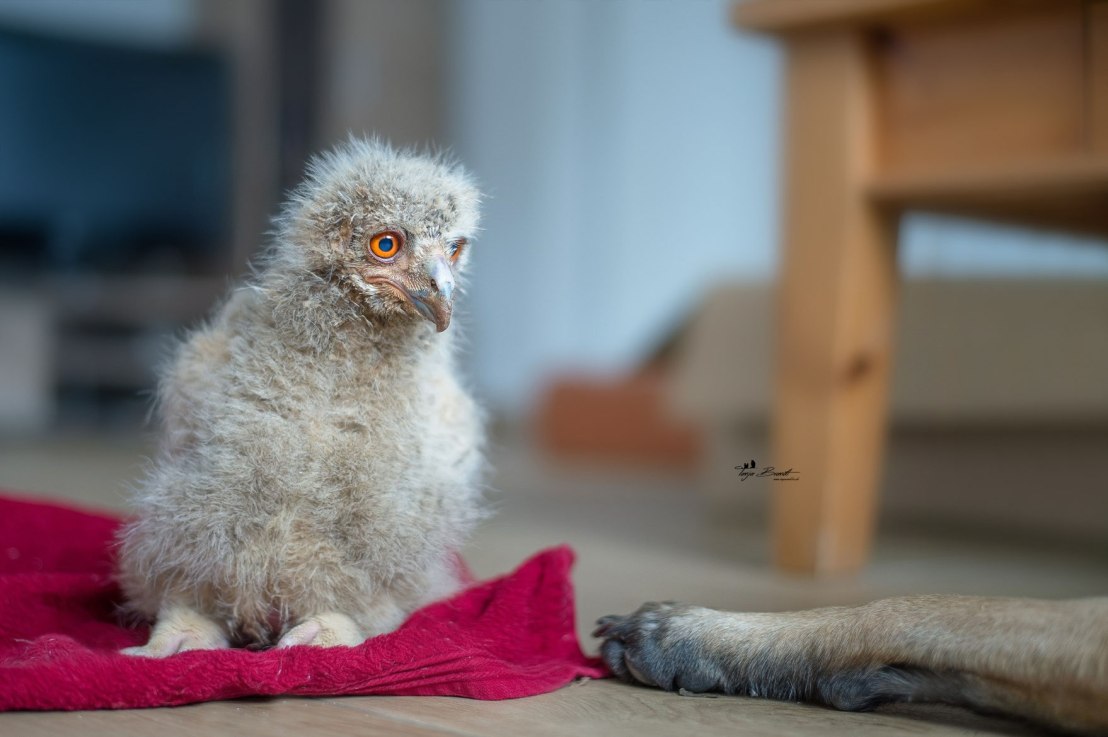
Yet more of the wonderful Tanja Brandt.
Again, taken from here.

oooo

oooo
oooo

oooo

oooo

oooo

Beyond beautiful!
Dogs are animals of integrity. We have much to learn from them.
Year: 2017
Yet more of the wonderful Tanja Brandt.
Again, taken from here.
oooo
oooo
oooo
oooo
oooo
oooo
Beyond beautiful!
The eating habits of us humans have to change!
Funny how things go!
For just two days ago I published a post under the heading of Meat is Heat. It featured an essay by Michael Greger. He of the website NutritionFacts.org. That essay promoted the message:
What we eat may have more of an impact on global warming than what we drive.
Just cutting out animal protein intake one day of the week could have a powerful effect. Meatless Mondays alone could beat out a whole week of working from home and not commuting.
Many of you read that post.
On the same day that I published that post, George Monbiot published an article in The Guardian newspaper that offered the same message, albeit coming at it from a different place but nonetheless just as critically important.
Here it is republished with Mr. Monbiot’s very kind permission.
ooOOoo
This is the question everyone should be attending to – where is the food going to come from?
By George Monbiot, published in the Guardian 11th December 2017
Brexit; the crushing of democracy by billionaires; the next financial crash; a rogue US president: none of them keeps me awake at night. This is not because I don’t care – I care very much. It’s only because I have a bigger question on my mind. Where is the food going to come from?
By mid-century there will be two or three billion more people on Earth. Any one of the issues I am about to list could help precipitate mass starvation. And this is before you consider how they might interact.
The trouble begins where everything begins: with soil. The UN’s famous projection that, at current rates of soil loss, the world has 60 years of harvests left, appears to be supported by a new set of figures. Partly as a result of soil degradation, yields are already declining on 20% of the world’s croplands.
Now consider water loss. In places such as the North China Plain, the central United States, California and north-western India – among the world’s critical growing regions – levels of the groundwater used to irrigate crops are already reaching crisis point. Water in the Upper Ganges aquifer, for example, is being withdrawn at 50 times its recharge rate. But, to keep pace with food demand, farmers in South Asia expect to use between 80 and 200% more water by 2050. Where will it come from?
The next constraint is temperature. One study suggests that, all else being equal, with each degree Celsius of warming the global yield of rice drops by 3%, wheat by 6% and maize by 7%. This could be optimistic. Research published in the journal Agricultural & Environmental Letters finds that 4°C of warming in the US Corn Belt could reduce maize yields by between 84 and 100%.
The reason is that high temperatures at night disrupt the pollination process. But this describes just one component of the likely pollination crisis. Insectageddon, caused by the global deployment of scarcely-tested pesticides, will account for the rest. Already, in some parts of the world, workers are now pollinating plants by hand. But that’s viable only for the most expensive crops.
Then there are the structural factors. Because they tend to use more labour, grow a wider range of crops and work the land more carefully, small farmers, as a rule, grow more food per hectare than large ones. In the poorer regions of the world, people with less than 5 hectares own 30% of the farmland but produce 70% of the food. Since 2000, an area of fertile ground roughly twice the size of the United Kingdom has been seized by land grabbers and consolidated into large farms, generally growing crops for export rather than the food needed by the poor.
While these multiple disasters unfold on land, the seas are being sieved of everything but plastic. Despite a massive increase in effort (bigger boats, bigger engines, more gear), the worldwide fish catch is declining by roughly 1% a year, as populations collapse. The global land grab is mirrored by a global seagrab: small fishers are displaced by big corporations, exporting fish to those who need it less but pay more. Around 3 billion people depend to a large extent on fish and shellfish protein. Where will it come from?
All this would be hard enough. But as people’s incomes increase, their diet tends to shift from plant protein to animal protein. World meat production has quadrupled in 50 years, but global average consumption is still only half that of the UK – where we eat roughly our bodyweight in meat every year – and just over a third of the US level. Because of the way we eat, the UK’s farmland footprint (the land required to meet our demand) is 2.4 times the size of its agricultural area. If everyone aspires to this diet, how do we accommodate it?
The profligacy of livestock farming is astonishing. Already, 36% of the calories grown in the form of grain and pulses – and 53% of the protein – are used to feed farm animals. Two-thirds of this food is lost in conversion from plant to animal. A graph produced last week by Our World in Data suggests that, on average, you need 0.01m2 of land to produce a gram of protein from beans or peas, but 1m2 to produce it from beef cattle or sheep: a difference of 100-fold.
It’s true that much of the grazing land occupied by cattle and sheep cannot be used to grow crops. But it would otherwise have sustained wildlife and ecosystems. Instead, marshes are drained, trees are felled and their seedlings grazed out, predators are exterminated, wild herbivores fenced out and other lifeforms gradually erased as grazing systems intensify. Astonishing places – such as the rainforests of Madagascar and Brazil – are laid waste to make room for yet more cattle.
Because there is not enough land to meet both need and greed, a global transition to eating animals means snatching food from the mouths of the poor. It also means the ecological cleansing of almost every corner of the planet.
The shift in diets would be impossible to sustain even if there were no growth in the human population. But the greater the number of people, the greater the hunger meat eating will cause. From a baseline of 2010, the UN expects meat consumption to rise by 70% by 2030 (this is three times the rate of human population growth). Partly as a result, the global demand for crops could double (from the 2005 baseline) by 2050. The land required to grow them does not exist.
When I say this keeps me up at night, I mean it. I am plagued by visions of starving people seeking to escape from grey wastes, being beaten back by armed police. I see the last rich ecosystems snuffed out, the last of the global megafauna – lions, elephants, whales and tuna – vanishing. And when I wake, I cannot assure myself that it was just a nightmare.
Other people have different dreams: the fantasy of a feeding frenzy that need never end, the fairytale of reconciling continued economic growth with a living world. If humankind spirals into societal collapse, these dreams will be the cause.
There are no easy answers, but the crucial change is a shift from an animal to a plant-based diet. All else being equal, stopping both meat production and the use of farmland to grow biofuels could provide enough calories for another 4 billion people and double the protein available for human consumption. Artificial meat will help: one paper suggests it reduces water use by at least 82% and land use by 99%.
The next Green Revolution will not be like the last one. It will rely not on flogging the land to death, but on reconsidering how we use it and why. Can we do this, or do we – the richer people now consuming the living planet – find mass death easier to contemplate than changing our diet?
ooOOoo
As many of you know Jeannie and I changed our diet to a vegan diet some four weeks ago. It was done more for personal health reasons than from an awareness of the difference that it made to the future of the planet. But over the last few weeks we have had our eyes opened to the broader benefits of not eating meat. George Monbiot spells out the urgency of change for all of us, especially the richer people in the richer countries.
Am I hopeful that there will be a mass awareness of the need to change? I truly just don’t know. I will close be repeating Mr. Monbiot’s closing sentence.
Can we do this, or do we – the richer people now consuming the living planet – find mass death easier to contemplate than changing our diet?
Interesting times!
A very beautiful photograph.
I’m sure I have mentioned previously the fun, education and sheer enjoyment that I, and many, many others, get from the photography forum Ugly Hedgehog. I drop into the forum several times a day.
Thus it was that yesterday morning I went to an item posted by Kalina. It was called Moonset in Greenland.
This is the photograph that Kalina had shared on the forum:

And how that photograph was described by Kalina.
This is a moon, not a supermoon, not a fancy moon, not even a full moon, just a moon rising outside of Scoresby Sound, Greenland. What a magical place..
Later on, as I was seeking, and being given, permission to share the image with all you good people, Kalina answered my question as to what had brought her to Greenland. Her answer:
I love the absolute raw beauty in Greenland. I was on a schooner built in 1909 sailing through the largest fjord system in the world, words cannot describe the beauty. We never encountered another soul the entire time, there is no evidence of humans..polar bears and musk ox but no people. I will add that this image is not photoshopped..
Just go back to that image and get lost in it.
Get lost in one’s dreams!
Then when you return to your real world, go across to WikiPedia and read more about this magical place. Here’s an extract from that WikiPedia entry.
ooOOoo
Scoresby Sund (Danish: Scoresby Sund, Greenlandic: Kangertittivaq) is a large fjord system of the Greenland Sea on the eastern coast of Greenland. It has a tree-like structure, with a main body approximately 110 km (68 mi)[2] long that branches into a system of fjords covering an area of about 38,000 km2 (14,700 sq mi). The longest of the fjords extends 340–350 km (210-216 mi) inland from the coastline.[1] The depth is 400–600 m (1,310-1,970 ft) in the main basin, but depths increase to up to 1,450 m (4,760 ft) in some fjords.[1] It is one of the largest and longest fjord systems in the world.[3][4][5]
On the northern side of the mouth of the Scoresby Sund stands Ittoqqortoormiit, the only permanent settlement in the region, with a population of 469 (in 2010). The name of the sound honours English explorer William Scoresby, who in 1822 mapped the fjord area in detail.
ooOOoo
Plus wanted to share another photograph of Scoresby Sund taken by Hannes Grobe, seen on that WikiPedia page.

More details of Dr. Hannes Grobe may be read here.
A counter-intuitive approach to stopping global warning.
About three weeks ago, the 22nd November to be precise, I published a post under the title of Our Beautiful Planet. It included the reply to an email that I had sent to Prof. Bill Ripple or, to give him his full nomenclature, William J. Ripple, Distinguished Professor of Ecology, Department of Forest Ecosystems and Society, Oregon State University, Corvallis, Oregon.
I reached out to the good Professor because I wanted to share with you what he thought were the top priorities in terms of how each and every one of us should change our lifestyle. You may well recall his reply (my emphasis):
Paul, Consider suggesting that if people want to help, they could have fewer children, reduce energy consumption such as driving autos and flying, avoid meat and eat mostly plant-based foods and avoid wasting food. Below are quotes from our paper. Bill
“It is also time to re-examine and change our individual behaviors, including limiting our own reproduction (ideally to replacement level at most) and drastically diminishing our per capita consumption of fossil fuels, meat, and other resources ….
… reducing food waste through education and better infrastructure; promoting dietary shifts towards mostly plant-based foods
Last Tuesday week, on the 5th December, there was an item published by NutritionFacts.org. It was called Meat is Heat: The Effects of Diet on Global Warming.
I am keeping my fingers crossed that Dr. Michael Greger is happy for me to republish this article in full. For it so underlines what Professor Ripple is promoting. (Indeed, further browsing on the NutritionFacts website showed that articles are published under the Creative Commons License arrangement.)
ooOOoo

One of the most prestigious medical journals in the world editorialized that climate change represents “the biggest global health threat of the 21st century.” Currently, chronic diseases are by far the leading cause of death. Might there be a way to combat both at the same time? For example, riding our bikes instead of driving is a win-win-win for the people, planet, and pocketbook. Are there similar win-win situations when it comes to diet?
As I discuss in my video Diet and Climate Change: Cooking Up a Storm, the foods that createthe most greenhouse gases appear to be the same foods that are contributing to many of our chronic diseases. Researchers found that meat (including fish), eggs, and dairy had the greatest negative environmental impact, whereas grains, beans, fruits, and vegetables had the least impact. And not only did the foods with the heaviest environmental impact tend to have lower nutritional quality, but they also had a higher price per pound. So, avoiding them gives us that triple win scenario.
The European Commission, the governing body of the European Union, commissioned a study on what individuals can do to help the climate. For example, if Europeans started driving electric cars, it could prevent as much as 174 million tonnes of carbon from getting released. We could also turn down the thermostat a bit and put on a sweater. But the most powerful action people could take is shift to a meat-free diet.
What we eat may have more of an impact on global warming than what we drive.
Just cutting out animal protein intake one day of the week could have a powerful effect. Meatless Mondays alone could beat out a whole week of working from home and not commuting.
A strictly plant-based diet may be better still: It’s responsible for only about half the greenhouse gas emissions. Studies have suggested that “moderate diet changes are not enough to reduce impacts from food consumption drastically.” Without significant reduction in meat and dairy, changes to healthier diets may only result in rather minor reductions of environmental impacts. This is because studies have shown that the average fossil energy input for animal protein production systems is 25 calories of fossil energy input for every 1 calorie produced—more than 11 times greater than that for grain protein production, for example, which is around 2 to 1.
Researchers in Italy compared seven different diets to see which one was environmentally friendliest. They compared a conventional omnivorous diet adhering to dietary guidelines; an organic omnivorous diet; a conventional vegetarian diet; an organic vegetarian diet; a conventional vegan diet; an organic vegan diet; and a diet the average person actually eats. For each dietary pattern, the researchers looked at carcinogens, air pollution, climate change, effects on the ozone layer, the ecosystem, acid rain, and land, mineral, and fossil fuel use. You can see in the video how many resources it took to feed people on their current diets, all the negative effects the diet is having on the ecosystem, and the adverse effects on human health. If people were eating a healthier diet by conforming to the dietary recommendations, the environmental impact would be significantly less. An organic omnivorous diet would be better still, similar to a vegetarian diet of conventional foods. Those are topped by an organic vegetarian diet, followed by a conventional vegan diet. The best, however, was an organic vegan diet.
The Commission report described that the barriers to animal product reduction are largely lack of knowledge, ingrained habits, and culinary cultures. Proposed policy measures include meat or animal protein taxes, educational campaigns, and putting the greenhouse gas emissions information right on food labels.
Climate change mitigation is expensive. A global transition to even just a low-meat diet, as recommended for health reasons, could reduce these mitigation costs. A study determined that a healthier, low-meat diet would cut the cost of mitigating climate change from about 1% of GDP by more than half, a no-meat diet could cut two-thirds of the cost, and a diet free of animal products could cut 80% of the cost.
Many people aren’t aware of the “cow in the room.” It seems that very few people are aware that the livestock sector is one of the largest contributors to greenhouse gas emissions. But that’s changing.
The UK’s National Health Service is taking a leading role in reducing carbon emissions. Patients, visitors, and staff can look forward to healthy, low-carbon menus with much less meat, dairy, and eggs. “Evidence shows that as far as the climate is concerned, meat is heat.”
The Swedish government recently amended their dietary recommendations to encourage citizens to eat less meat. “If we seek only to achieve the conservative objective of avoiding further long-term increases in [greenhouse gas] emissions from livestock, we are still led to rather radical recommendations” such as cutting current consumption levels in half in affluent countries—“an unlikely outcome if there were no direct rewards to citizens for doing so. Fortunately, there are such rewards: important health benefits…” By helping the planet, we can help ourselves.
There are tons of articles on diet and sustainability. It’s such an important topic that I may review the new science once every year or two. When the U.S. Department of Agriculture entered these waters, the meat industry appeared to freak out, and the Dietary Guidelines debate continues.
ooOOoo
Just reflect on the key message from this article (my emphasis):
“A study determined that a healthier, low-meat diet would cut the cost of mitigating climate change from about 1% of GDP by more than half, a no-meat diet could cut two-thirds of the cost, and a diet free of animal products could cut 80% of the cost.”
In other words, the most cost-effective way of mitigating climate change is to change to a diet free of animal products. Plus, it’s a damn sight healthier for you and me!
Yet another dog food alert.
Reminds me of that wonderful quip about London buses. The one about waiting for ages for a bus and then two come more-or-less together!
For it was just twelve days ago that I republished a dog food alert concerning bone treats; or as the FDA described it:
The FDA reports it has received about 68 reports of pet illnesses related to “bone treats”.
Bone treats differ from regular uncooked butcher-type bones because they’re processed and packaged for sale as “dog treats”.
Then just early last Saturday there was an email that warned:
Darwin’s Natural Pet Products of Tukwila, Washington, has notified its customers that it is recalling 2 lots of its Natural Selections raw dog food products because they have the potential to be contaminated with Salmonella bacteria.
To learn which products are affected, please visit the following link:
Darwin’s Dog Food Recall of December 2017
Please be sure to share the news of this alert with other pet owners.
Mike Sagman, Editor
The Dog Food Advisor
Here are the full details of that alert.
ooOOoo
December 8, 2017 — Darwin’s Natural Pet Products of Tukwila, Washington, has notified distributors that it is recalling select lots of its Darwin’s Natural Selections dog food due to possible contamination with Salmonella bacteria.
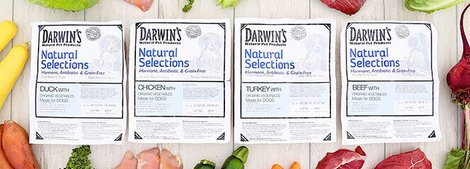
The product was shipped to distributors between September and early October 2017.
The affected product includes the following:
Through testing, the company determined that the products listed above, have the potential to be contaminated with Salmonella.
Salmonella is a bacterial organism that can cause serious and sometimes life-threatening infections in people, particularly young children, frail or elderly people, and those with weakened immune systems.
There is risk to humans from handling contaminated products, especially if they have not thoroughly washed their hands after having contact with the product or any surfaces exposed to these products.
Some healthy individuals who are infected may experience fever, diarrhea, nausea, vomiting and abdominal pain.
In rare circumstances, infections can result in the organism getting into the bloodstream and producing more severe or chronic illness.
According to the FDA, it is uncommon for healthy dogs to become sick from Salmonella.
However, dogs with weakened immune systems (such as puppies or older dogs) have a higher risk of becoming sick.
Pets with infections may be lethargic and have diarrhea or bloody diarrhea, fever, and vomiting.
Some pets will have only decreased appetite, fever and abdominal pain.
Further information about Salmonella can be found on the Food and Drug Administration website.
In an email message to distributors, Darwin’s president, Gary Tashjian writes…
We have not received any reports from customers regarding these meals, and are taking these steps out of an abundance of caution.
However, if your pet has consumed the recalled product and has any of the above symptoms, please contact your veterinarian if they persist.
We are recommending that you inspect your inventory of Darwin’s meals to determine if you have any left from the lot listed above.
If any of the above product is still in your inventory, please take the following steps:
Write down the lot number, date/time of manufacture and quantity of any product from the above lot remaining in your inventory.
Dispose of the product by placing it in a plastic bag, then placing the bag in the trash in a secure manner.
Contact us at productsafety@darwinspet.com to confirm that you have taken the above steps and to arrange for replacement of any unused product.
Please note the following:
Your name and address (or customer number)
The date and time of manufacture and quantity of food from this lot that you have remaining in your inventory
Confirmation that you have disposed of it.
We anticipate that some of our customers will have questions or concerns regarding this matter.
We welcome the opportunity to talk with you about it.
Toward that end, we have set up a special toll-free number for you to call: 866-832-8319 (Monday through Friday from 6 AM to 6 PM and Saturday 7 AM to 3 PM Pacific Time).
Please note that we may not be able to talk with each of you at once, so we do ask that you be patient, particularly if your issue is not of an urgent nature.
We regret any concern and/or inconvenience that this causes you.
We are taking steps to reduce the opportunity for this to occur again.
U.S. citizens can report complaints about FDA-regulated pet food products by calling the consumer complaint coordinator in your area.
Or go to http://www.fda.gov/petfoodcomplaints.
Canadians can report any health or safety incidents related to the use of this product by filling out the Consumer Product Incident Report Form.
Get free dog food recall alerts sent to you by email. Subscribe to The Dog Food Advisor’s emergency recall notification system.FDA
ooOOoo
As always, please share this with other dog lovers.
 Learning from Dogs