Year: 2016

Picture parade one hundred and thirty-four.

You are going to adore these!

(Big thanks to neighbour Dordie who sent these to me.)

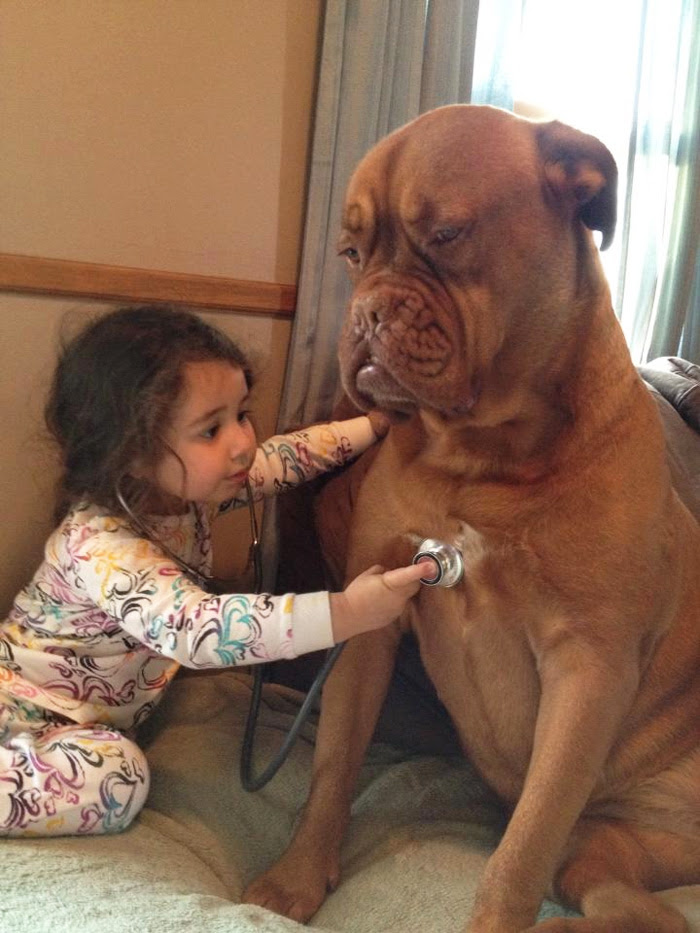
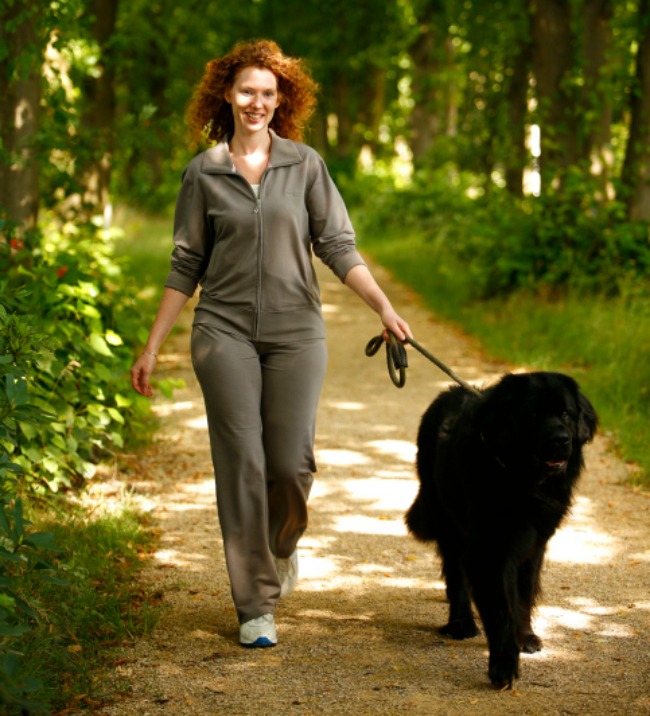
Few friendships can compare to the bond between a child and their pet. Pets provide companionship, they help kids learn, they encourage nurturing, they keep them healthy and help build beautiful family bonds. Let’s take a look at some of the cutest kid-and-pet pictures around.


dl1oooo

dl2oooo

dl3oooo

dl4oooo

dl5oooo

dl6oooo

The second set will not be next Sunday owing to that day being Valentine’s Day and I have plans for that day! šŸ˜‰ So part two of this wonderful three-part series of photographs will be Sunday, 21st February.

Loving, caring dogs!

A lovely reminder of our fabulous dogs.

Before moving on to the story, can I just say that the link to this report was emailed to me by a follower of Learning from Dogs. It underlines something that I had no idea about when I first started up this blog in July 2009. The wonderful sense of community that develops between a blogger and his or her readers and followers.

So many of you that interact with this place feel like long-established friends, and are treasured.

Marg, thank you for sending me the link to the following. It’s a wonderful item that appeared on the Australian outlet of The Huffington Post.

ooOOoo

Dog Escapes Cage To Comfort Rescue Puppies During Their First Night In Kennel

ā€œWe’ve never really seen it before, where a dog sneaks out to some puppies and is so excited to see them.ā€

02/03/2016
Kimberly Yam, Associate Good News Editor, The Huffington Post

This concerned dog just wanted to make sure some young pups would be OK in a new place.

Maggie the dog was staying at the Barker’s Pet Motel and Grooming in Alberta, Canada, when she was caught on a surveillance camera sitting outside a kennel that held two 9-week-old rescue puppies named Hannah and Kari last week.

Barkers Pet Motel and Grooming last Saturday
Barkers Pet Motel and Grooming
last Saturday

The canine sneaked out of her own kennel to comfort them on their first night there, and after pet motel owner Sandy Aldred let Maggie into the pups’ cage, the older dog spent the entire night cuddling with the two new guys on the block, according to ABC News.

ā€œWe’ve never really seen it before, where a dog sneaks out to some puppies and is so excited to see them.ā€ Aldred’s son, Alex, who also works at the pet motel, told ABC News.

Anna Cain, office manager at the pet motel, told The Huffington Post that Maggie, who is a formerĀ shelter dogĀ herself, had been staying there while her owners were on vacation. The puppies were dropped off at the facility after they were rescued by Alberta Animal Rescue Crew Society.

Barkers Pet Motel and Grooming last Saturday
Barkers Pet Motel and Grooming
last Saturday

The thoughtful dog, who recently had puppies of her own that were adopted out by a humane society, likely heard Hannah and Kari crying, according to a Facebook post from the motel. So Maggie squeezed her way out of her kennel after pushing aside a water bowl built into her door. She then went right to the pups’ cage.

“She paid them a lot of attention and you could see her little tail wagging. And she’d do the little bow down to them and poke them through the chainlink gate of their room,” AldredĀ told CBC News. “She just decided that was where she was going to stay until we came to get her.”

When Aldred returned to the kennels and let Maggie into the puppies’ cage, she supervised to see if all the dogs would get along. And of course they did.

“They were just all so happy to be together,” Aldred told CBC. “She was nuzzling them really gently and nudging them, and then she laid down and let them cuddle with her.”

The trio stayed together and were even found snuggling the next morning, ABC News reported. While Maggie’s actions are sweet, it’s not uncommon for dogs who have had puppies, to act compassionately like she did.

ā€œIt’s innate in a lot of female dogs, especially if they’ve had a litter in the past. It’s just in their nature,” Deanna Thompson of AARCS told ABC News. “We’ve seen it in a lot of dogs even with male dogs, when they hear other puppies crying they want to console them and make sure they’re feeling safe.ā€

Maggie and the pups have parted ways unfortunately as her owners have returned from their trip. There are pending adoption applications for both puppies, but for the time being, the pair are in the motel, Cain said.

ooOOoo

Other readers who know and love dogs will endorse my claim that it is not just crying puppies that are consoled by adult dogs; we humans as well experience a fair degree of compassion from our dogs!

Lovely story!

Oil, corruption and public money.

Nothing at all to do with dogs, or with integrity if it comes to that!

Regular followers of this place know that I am a tremendous fan of George Monbiot, the Englishman who so regularly exposes stuff that needs to be aired and discussed. As his About page explains:

Here are some of the things I love: my family and friends, salt marshes, arguments, chalk streams, Russian literature, kayaking among dolphins, diversity of all kinds, rockpools, heritage apples, woods, fishing, swimming in the sea, gazpacho, ponds and ditches, growing vegetables, insects, pruning, forgotten corners, fossils, goldfinches, etymology, Bill Hicks, ruins, Shakespeare, landscape history, palaeoecology, Gavin and Stacey and Father Ted.

Here are some of the things I try to fight: undemocratic power, corruption, deception of the public, environmental destruction, injustice, inequality and the misallocation of resources, waste, denial, the libertarianism which grants freedom to the powerful at the expense of the powerless, undisclosed interests, complacency.

Here is what I fear: other people’s cowardice.

I still see my life as a slightly unhinged adventure whose perpetuation is something of a mystery. I have no idea where it will take me, and no ambitions other than to keep doing what I do. So far it’s been gripping.

Way back in the early days of Learning from Dogs, the blog that is, not the book, George was very gracious in giving me blanket permission to republish his posts, and many of them have appeared in this place.

So now read George Monbiot’s latest Rigging the Market. It is yet another example of what is going wrong in these times.

ooOOoo

Rigging the Market

Life is a terminal disease!

What can we learn from the world’s oldest dog?

I’m seventy-one years old and aware that the ageing process is “alive and well” within me. It primarily is revealed by a degree of brain atrophy that is evidenced by very poor recall. There is no question that it worries Jean and, at times, worries me as well.Ā  Adding to the recognition that these are my “senior” years is the awareness that the people that one knows all tend to be a similar sort of age and, inevitably, you don’t have to go far to hear of someone who is very ill, or has recently died.

So the motivation is very strong to stay as fit and healthy; both in body and mind.

Thus a recent article over on the Care2 site about the world’s oldest dog seemed more than a tad relevant to yours truly and will hopefully connect with others who know they are never going to see twenty-one again!

ooOOoo

World’s Oldest Dog Reveals 3 Secrets to Long Life

3165238.largeBy: Laura S. January 24, 2016

About Laura

It’s often said that happiness is the key to a long life, but is the same true in the lives of dogs?

Let’s take a look at the world’s oldest living dog. His name was Bluey and he lived to be an astounding 29 1/2 years old. As a puppy in 1910, Bluey joined the household of Les Hall in Victoria, Australia.

Every morning, Bluey went to work among the cattle and sheep. He enjoyed the great outdoors and had constant companionship. He ate a diet that largely consisted of wild kangaroo and emu (not unhealthy animals raised in factory farms). Retiring from his official ā€˜job’ several years before his death, Bluey remained valued and respected even though he was no longer ā€œuseful.ā€

Oldest_Animals_2a12Ask Yourself These Three Questions

Ā So what about your dog? Are you providing the essential building blocks for a long life? It all boils down to these three questions. Answer honestly, and if you don’t like what you find, today may be the day to turn over a new ā€œleash.ā€

1.Ā Am I Listening to My Dog?

ThinkstockPhotos-200359349-0011No, your dog can’t speak in full sentences but how hard is it to understand his needs? Chances are, it’s pretty easy. Is your dog full of anxiety because you’ve worked a 10 hour day leaving him alone in the house, or worse yet, locked in a cage? When your dog greets you with excitement at the door, do you take the time to grab the leash and go for a long walk or do you scold him for bothering you? Is your dog getting up very, very slowly from painful joints?

Try listening, really listening, to the things your dog is telling you over and over again. Try this exercise. Think of two memories of times when your dog was happiest. Chances are that you were being active outdoors together. Could you re-create those experiences, even on a small scale, each week?

2. Do I Break My Promises?

ThinkstockPhotos-1224645481Are you guilty of breaking promises to yourself and to your dog? Ā Do you procrastinate? Make a dedicated practice of fulfilling your promises to your dog, the same way as you would care for your own needs. It’s just like brushing your teeth. Schedule in items like these:
  • A Ā 20 minute walk in the morning before you leave for work.
  • A neighbor to come and let your dog outside at lunchtime.
  • Adhering to a schedule of six month veterinary check-ups, especially for mature dogs.
  • Washing food and water bowls daily.
  • A long walk at the end of the day.
  • And most of all, doing those things you know your dog loves most.

3. Am I Putting My Stress Onto My Dog?

piIf you’ve had a bad day, do you let it spill over? Can you check your troubles at the front door or do you bring them with you and spread your grief? Although it is difficult, take a few deep breaths and remind yourself that your truest friend in the world is not the one you want to hurt today.
ooOOoo
This business of learning from our dogs just goes on and on!

Iceland’s ice caves

Stunningly beautiful.

I made a note to write about Iceland’s ice caves a few weeks ago. For I don’t know about you but previously I had never heard of them.

The Amusing Planet website offers details of these caves:

Ice caves are temporary structures that appear at the edge of glaciers. They look amazingly beautiful from the inside. This particular cave is located on the frozen lagoon of the SvĆ­nafellsjƶkull glacier in Skaftafell, Iceland. The centuries old ice coming down the slopes of ƖrƦfajƶkull via SvĆ­nafellsjƶkull glacier has metamorphosed into highly pressurized glacier ice that contains almost no air bubbles. The lack of air means that it absorbs almost all visible light, apart from the blue fraction which is then visible to the naked eye. However, this blue ice can be seen only under certain circumstances. It can be seen in winter after long periods of rain when the surface layer of the glacier has been washed away. It can be seen in ice-caves like this one and on floating icebergs that have recently rolled over.

This cave in the glacier ice is the result of glacial mill, or Moulin where rain and melt water on the glacier surface are channeled into streams that enter the glacier at crevices. The waterfall melts a hole into the glacier while the ponded water drains towards lower elevations by forming long ice caves with an outlet at the terminus of the glacier. The fine grained sediments in the water along with wind blown sediments cause the frozen meltwater stream to appear in a muddy colour while the top of the cave exhibits the deep blue colour. Due to the fast movement of the glacier of about 1 m per day over uneven terrain, this ice cave cracked up at its end into a deep vertical crevice, called cerrac. This causes the indirect daylight to enter the ice cave from both ends resulting in homogeneous lighting of the ice tunnel.

There are many beautiful photographs available if you conduct a web search. Here are some examples.

Skaftafell-ice-cave-1[2]Seen originally here.

014a0c21f9559463ac4dcd3f1ebe7953This one above was originally seen here.

skaftafell-iceland-ice-cave-woe4-690x517And my final photograph is taken from here, together with the opening paragraphs.

glacier-crystal-caves-900x900Fortress Of Solitude: Unbelievable Crystal Ice Caves In Iceland

Vatnajokull Glacier, Iceland

We crawl slowly on hands & knees into a long frozen chamber, under a brilliant cathedral of crystal blue waves. Superman would feel right at home in this ice cave.

When the Man of Steel wants to get away from the hustle & bustle of Metropolis, he flies to his ā€œFortress of Solitudeā€ hidden in the Arctic. A magnificent crystal castle built using Krypton alien technology.

What if I told you Superman’s crystal fortress is real?

Deep under Iceland’s massive Vatnajƶkull Glacier, beautiful caves of ice are formed by rivers of meltwater.

Too dangerous to visit in the spring & summer due to a threat of collapse, cold winter temperatures strengthen the ice and make exploration possible.

A fellow photographer convinced me to go during my Iceland road trip.

What a wonderful world we live on!

The love of a German Shepherd.

Towards a baby elephant!

The following beautiful example of the unconditional love of a dog was seen by my on the Care2 Petitions and Causes site.Ā  It just had to be shared with you, dear reader, because it is such a powerful reminder of what love and caring for others delivers.Ā  It was originally seen here and is republished within the terms of Care2.

ooOOoo

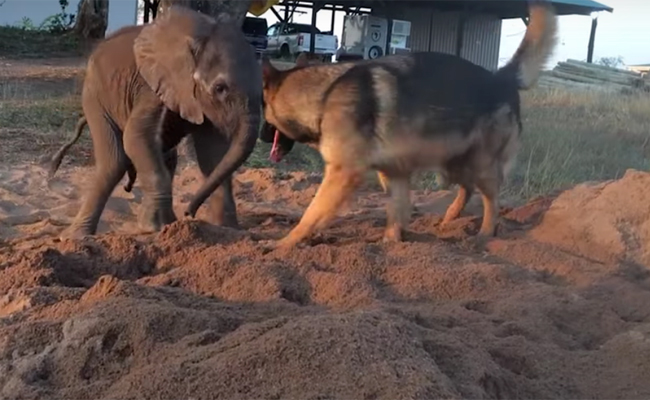
Baby Elephant, Rejected By His Herd, Finds Hope Again With German Shepherd

3166406.largeBy: Judy M. January 31, 2016

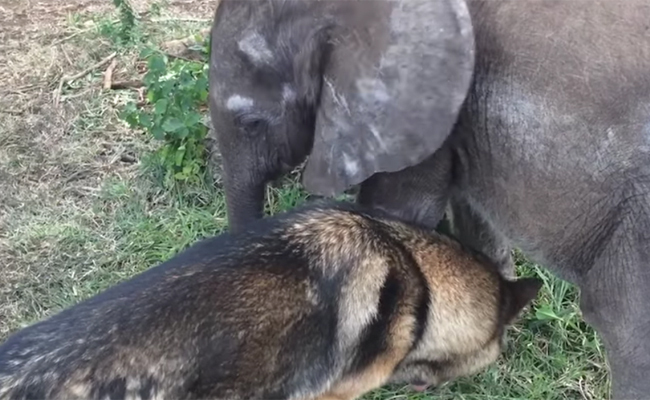
In Zululand, South Africa, an unlikely pair has becomeĀ best friends:Ā a baby elephant and a German Shepherd.

Ellie the baby elephant was shunned and rejected by his herd, and he also had big health problems. For most young elephants, all of this would mean an early death. Luckily for him, he was discovered by the Thula Thula Rhino Orphanage in South Africa, and he made a new best friend: Duma, the German Shepherd puppy.

When Ellie arrived at the rhino orphanage he was critically ill with an umbilical hernia and hadĀ little chance of survival.

The game reserve usually rehabilitatesĀ baby rhinos, victims of South Africa’s poaching crisis, butĀ is also home to otherĀ African wildlifeĀ likeĀ elephants,Ā buffalo, leopards, giraffes, zebras, hyenas, and crocodiles.

Ā So why is Ellie here? He was brought to the orphanage after he was rejected by his herd, in spite of numerous attempts to reunite him with his family.

When Ellie the elephant first arrived, his rescuers didn’t think he would make it, but they nursed him day and night.

Photo Credit: Screenshot from Youtube video

As Maren Trendler, a rehabilitation and crisis response expert at the orphanage, explains, ā€œHe also had a huge umbilical hernia and abscess. … In about 99 percent of these cases an umbilical abscess of that nature is fatal. … Against all odds, this little elephant is still with us.ā€Ā 

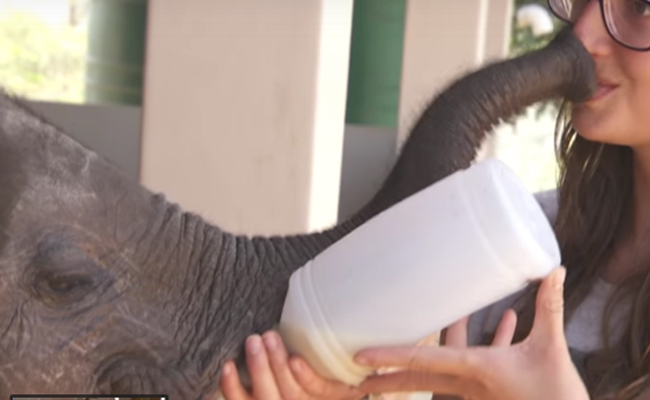
Ellie had an intolerance to milk and nothing seemed to work. So the orphanage decided to make him a special milk formula, and he slowly started to stabilize.

Eventually Ellie’s physical health improved, but his mental health did not, because elephants are social animals and known to be hard to raise away from a herd. He was depressed and lethargic until Duma, the German shepherd hero, swooped in.

With the arrival of Duma, a former service and sniffer dog, things seemed to turn around for Ellie. The young elephant had been lethargic, not interested in anything, until the orphanage introduced the two at aĀ sand pile. Immediately Ellie started being interested in life again. Duma and EllieĀ became friends, bonding in spite of their many differences.

Photo Credit: Screenshot from Youtube video

For the past few weeks, their relationship has been growing so much that the carers have a ā€œhard time keeping Duma away from the elephant,ā€ Trendler explains.

Ellie’s future is still uncertain, since elephants generally need to be part of a herd to develop and grow. But right now, Ellie and Duma are happy together.

Published on Jan 14, 2016

Everyone loves a canine companion, and this baby elephant is no exception! The tiny pachyderm arrived at the Thula Thula Rhino Orphanage in South Africa after being rejected by his herd. Critically ill, the youngster had very little chance of survival. But thanks to round-the-clock care from sanctuary staff, and a bit of help from a special canine companion, the baby elephant is on the road to a full recovery.
http://www.earthorganization.org/proj…
https://www.facebook.com/rhinoorphanage

ooOOoo

Time and time again, the world of dogs reminds us humans of what we need to learn, and to learn reasonably quickly, if we are to leave a sustainable, fair and equitable world for our grandchildren.

Talk about fiddling while Rome burns!

romeburns

K9 Influenza Postscript.

More information for dog owners.

Jim and Janet are good friends here in Merlin and live just a short distance away. Jim is also a Doctor of Veterinary Medicine (DVM) and he emailed me following my post on Saturday about being more aware of dog flu. This is what Jim said:

Hey Paul …..
I saw on your blog that you had already posted info regarding canine influenza.Ā  I don’t know if you needed any more material, but, if you are interested,Ā attached is a client information sheet and a couple maps indicating the spread of the DZ as of 11/15.

That client information sheet explained these important details.

ooOOoo

Canine Influenza H3N2

Authored by:Ā Dr. Mark Rishniw, ACVIMĀ 
VP Client Information Sheets

What is canine influenza?
Influenza in dogs is caused by canine influenza viruses (CIVs). The two main CIVs in circulation internationally areĀ H3N8Ā and H3N2. Dogs are occasionally infected with human influenza viruses. These viruses are extremely contagious.Ā 

When did the current U.S. outbreak of H3N2 start?
The outbreak began in the Chicago area in March, 2015.

Where have cases been reported?
Geographic locations expanded in the months after the initial outbreak. To see the latest news on where it has been seen, seeĀ regularly updated information fromĀ Cornell University College of Veterinary Medicine.

What strain of influenza caused this outbreak?
The 2004 outbreak, which was caused by the H3N8 strain, has remained circulating in the U.S. dog population, causing sporadic disease since that time. However, the current outbreak has been identified as a H3N2 strain of influenza A virus. This strain is closely related to an Asian strain that is circulating in China and South Korea.

Will the influenza vaccines against the H3N8 (old) strain protect against the H3N2 strain involved in the current outbreak?
Probably not. The current commercially available vaccines are not likely cross-protective against the H3N2 strain involved in the current outbreak.

What about the new H3N2 vaccines?
These should reduce the clinical signs if a dog becomes infected. They will also decrease the time that a dog remains ā€œinfectiveā€ to other dogs. They will not protect against the old (H3N8) strain.

Should I vaccinate my dog with the new vaccine?
That’s a decision for you and your veterinarian. Any place where dogs unknown to you congregate in large numbers confers an increased risk to your dog, such as boarding kennels, shows, traveling, going to dog parks, training classes, and performance competitions. Dogs that have diseases or treatments that suppress the immune system (e.g. corticosteroids, cancer etc.) are at higher risk. The virus does not survive well in the environment, so there is little risk of infection if a dog is mostly at home.

Prevention
For dog owners living in the affected areas, the best prevention is to minimize contact with other dogs. Consider avoiding places such as dog parks, dog day care, grooming facilities,Ā boarding, training classes, and group gatherings. Walking your dog should be fine, but avoid socializing with other dogs.

If your dog in the affected areas has respiratory signs, such as coughing, hacking, gagging or difficulty breathing, call your veterinarian before your appointment to let them know your dog has respiratory signs so that they can take appropriate precautions to minimize the possibility of contaminating the facility. When you get to the clinic, leave your dog in the car and have the veterinary team meet you at the car so they can figure out how to best handle the dog.

What are signs of infection?
Clinical signs range from subclinical infection, or mild fever and malaise to severe, life-threatening pneumonia; however, most clinically affected dogs have signs that are typical of kennel cough. Of approximately 1000 dogs recognized to be infected in the Chicago area, about five have died from the infection. Clinically, influenza infection is not distinguishable from kennel cough caused by other pathogens, such asĀ Bordetella bronchiseptica.

How is canine influenza diagnosed?
Tests that broadly detect influenza A virus (e.g., broadly targeted influenza A real time RT-PCR) should effectively detect both H3N8 and H3N2. However, tests targeted directly at H3N8 are unlikely to identify H3N2 infection because of limited cross-reaction between H3N8 and H3N2 antibodies.

Can other animals or people become infected with this strain?
Currently, there is no evidence that people can contract this virus. However, studies in Asia have shown limited transmission to cats. Whether this can happen with the strain currently involved in the U.S. outbreak is unknown. In Asia, the H3N2 strain that infected cats (and caused disease) was considered to be of avian origin. Current information about the U.S. H3N2 strain suggests that it might be of porcine origin.

How are the dogs treated?
The mild form requires minimal supportive treatment, as is the case with ANY mild upper-respiratory infection (kennel cough). Cough suppresants may be provided. Antibiotic therapy is restricted to high-risk patients. With the severe form, treatment is largely supportive. A rapid onset of disease (4-6 hours) is matched by an equally rapid improvement in clinical signs if treatment is instigated. Fluid support and broad-spectrum antimicrobials that cover both gram-positive and gram-negative bacteria are generally required.


Copyright 2015 – 2016 by the Veterinary Information Network, Inc. All rights reserved.

ooOOoo

Jim also included in his email these following maps in pdf format that I was unable to include in this post. Luckily I also found them as images originally published on the Dog Influenza website.

MAH_CIV-Map_2015_Overall_H3N2oooo

MAH_CIV-Map_2015_Overall_H3N8

Please treat this post as general information. If you have any doubt or queries about the health of your pet animals please see a vet without delay.