This is sure to outrage not only those against carbon emissions but others who don’t like nuclear fission, thus scoring a double whammy for the Russians. Putin must be pleased.
I can’t really see the point of trying to reduce emissions on a personal level; on a macro scale countries are not taking it seriously and are still extracting oil and gas as fast as they can. I believe only a dramatic breakthrough will actually achieve anything. Why they are not putting up giant mirrors into space or if you like in slowly desertifying Southern Spain is a mystery to me.
It’s all nothing if not ironic. Global warming caused most probably by emissions is opening up the Northeast passage which makes it much easier for the Russians to send MORE oil and gas to China. A perfect vicious circle indeed …..
And if WWIII doesn’t start in the China Sea maybe it’ll be up in the frozen North as nations squabble over “their” territory.
Look on the bright side; when there is no ice left at all it will be even better; ships will be able to go direct by straight line from any country to another. Mind you, when they arrive they’ll have to deliver the oil by submarine. No doubt they’re already working on that.
What does a (I hope) fairly sane private citizen do about all this nonsense? I’d like to save the planet for my children, but I am feeling rather helpless ……
By Chris Snuggs
P.S. One way to do something is to support those organisations that are doing all they can. See:
And recognise that this is something else we can learn from dogs – not to foul one’s own bed.
There has been much written and published about these two heros who enabled the stricken Airbus A-320 to ditch on the Hudson River with no loss of life. That was Flight 1549 on the 15th January, 2009.
However, at this year’s Oshkosh, Sullenberger and Skiles were presented with a wonderful memento from Jeppesen who publish among other products instrument approach charts for aircraft. They did something very creative in producing the following.
Jeppesen, known in the aviation industry as the worldwide leader in navigation and charting services, recently presented “Miracle on the Hudson” pilots captain Chesley Sullenberger and first-officer Jeffrey Skiles with a specially designed approach chart and engraved Jeppesen chart binders to commemorate the remarkable ditching of US Airways flight 1549 in the Hudson River in New York in January 2009.
Entitled “Hudson Miracle APCH,” the one-of-a-kind chart includes several light-hearted notations that honor the famous water landing that saved the lives of 155 passengers and crew on board the flight disabled by bird strikes. In the “briefing strip” section of the chart, instructions include: “After water landing, oversee evacuation of ALL SOULS from airplane. Float via HUDSON RIVER to RESCUE point. Once everyone is SAFE aboard rescue boats, secure passenger list and double check cabin. Captain is last to exit. Give THANKS.”
The chart documents the historic five minute flight with a unique graphic, beginning with departure from LaGuardia Airport, followed by a “Cooked Goose Transition” point and “Hudson River Approach,” which is then followed by “Splash” and “Rescue” points on the water. The humorous chart also salutes the career achievements of the crew of flight 1549, including Sullenberger, Skiles, and veteran flight attendants Sheila Dail, Donna Dent and Doreen Welsh.
Along with the commemorative chart, the pilots were presented with a special Jeppesen chart binder, engraved with the famous fortune cookie advice kept in Sullenberger’s flight bag: “A delay is better than a disaster.” The items were presented by Mark Van Tine, Jeppesen president and CEO, during the 2010 Gathering of Eagles fundraiser dinner and auction held during the EAA AirVenture fly-in and air show in Oshkosh, Wisc. The EAA Young Eagles event raises funds and awareness for youth involvement in aviation.
To view the commemorative US Airways flight 1549 chart, please visit this page.
A fellow pilot, Martin Thorpe, sent me the chart shortly after the Oshkosh event but it seemed appropriate to let some water flow under the bridge, so to speak, before I mentioned it on Learning from Dogs.
Yesterday, I posted an article based on a lecture given by Dr Helen Fisher presented to the TED Conference in 2006. It included some fascinating evidence about the nature of love and why it is such a powerful human emotion.
Then in 2008, Dr Fisher gave a second lecture, again at the TED Conference, that continued to reveal more amazing findings about how the brain functions when in love. As the presentation summary says:
Why do we crave love so much, even to the point that we would die for it? To learn more about our very real, very physical need for romantic love, Helen Fisher and her research team took MRIs of people in love — and people who had just been dumped.
Included in the lecture is something that I had wondered about and was delighted to see confirmed – animals fall in love as well. Here’s the extract from that part of the presentation (min:sec 50:50):
I would also like to tell the world that animals love. There’s not an animal on this planet that will copulate with anything that comes along. Too old, too young, too scruffy, too stupid, and they won’t do it. Unless you’re stuck in a laboratory cage –and you know, if you spend your entire life in a little box,you’re not going to be as picky about who you have sex with –but I’ve looked in a hundred species,and everywhere in the wild, animals have favorites.
As a matter of fact ethologists know this. There’s over eight words for what they call animal favoritism: selective proceptivity, mate choice, female choice, sexual choice. And indeed, there are three academic articlesin which they’ve looked at this attraction, which may only last for a second, but it’s a definite attraction, and either this same brain region, this reward system, or the chemicals of that reward system are involved. In fact, I think animal attraction can be instant — you can see an elephant instantly go for another elephant. And I think that this is really the origins of what you and I call, “love at first sight.”
Do watch it.
And a quote to conclude this post.
True happiness and a fullness of joy can be found only in the tender and intimate relationships of the family. However earnestly we may seek success and happiness outside the home through work, leisure activities, or large bank accounts, we will never be fully satisfied emotionally until we develop deep and loving relationships.
~ by James J. Jones Ph.D. ~
Watch the video to the end to make sense of the title!
The digitally connected world that is now so much a part of our lives brings lots of new issues, dangers and irritations. But it also brings us a great number of tremendous opportunities. TED is one of them.
For those that haven’t come across the TED website it offers a wonderful range of “Riveting talks by remarkable people, free to the world” as summarised here.
Dr Fisher
Thus it was via the TED website that I came across a fascinating talk by Dr Helen Fisher who is a Biological Anthropologist who has specialised on romantic love and connected areas.
Anyway, without any more waffle from me, if you want to be surprised by a number of Dr Fisher’s findings then do watch the TED video that may be found here.
And the reference to the rickshaw driver? Watch the video to the end (23 minutes) to find out.
P.S. since writing the above, I found a YouTube copy of the TED video, which is below. I haven’t watched it to the end to see if the reference to the rickshaw is in it, but I suspect it is.
Regular readers will have run out of counting the number of times that I applaud Yves Smith and her amazing blog, Naked Capitalism. Not only is it a fantastic source of many stories of real public concern, her daily antidote du jour is often delightful. Here’s the one that came from her Blog posting of the 19th September.
Clarence and Cindy
Cattle dog Clarence plays with an alpaca named Cindy in “Alpaca Land” in Goeming, Austria. The two have lived together on the farm since they were 3 months old. Eighty-seven alpacas, the largest flock in Austria, live on the farm.
The New York Times recently published a thought-provoking article on the development of farming for the Atlantic bluefin, the world’s largest tuna.
Bluefin Tuna
This is a magnificent fish, as a National Geographic website details:
The Atlantic bluefin tuna is one of the largest, fastest, and most gorgeously colored of all the world’s fishes. Their torpedo-shaped, streamlined bodies are built for speed and endurance. Their coloring—metallic blue on top and shimmering silver-white on the bottom—helps camouflage them from above and below. And their voracious appetite and varied diet pushes their average size to a whopping 6.5 feet (2 meters) in length and 550 pounds (250 kilograms), although much larger specimens are not uncommon.
Here’s some of what was written in that NYT article:
IN the wide expanse of the wild ocean, there is perhaps nothing more wild than the world’s largest tuna — the giant Atlantic bluefin. Equipped with a kind of natural GPS system that biologists have yet to decode, the bluefin can cross and recross the Atlantic’s breadth multiple times in the course of its life. Its furious metabolism enables the fish to sprint at more than 40 miles an hour, heat its muscles 20 degrees above ambient, and hunt relentlessly at frigid depths in excess of 1,500 feet.
I didn’t realise that these fish are warm-blooded, a rare trait among fish, but the more important fact is that a bluefin tuna is likely to eat between 5 lbs (2 kg) and 15 lbs (6 kg) of wildfish for every pound of body. Thus a fully grown bluefin of around 550 lbs (250 kg) represents a diet of anywhere between 2,750 and 8,250 lbs (340 -3,750 kgs) of wildfish. Back to the Greenberg article:
“Most forage fisheries,” Ms. Naylor wrote “are either fully exploited to overexploited or are in the process of recovering from overexploitation.”
If she is right — and if bluefin tuna farming is ramped up to the level of salmon farming, which produces more than two billion pounds a year — the effect on forage fish, the foundation of the oceanic food chain, could be devastating. A worldwide overharvest of forage fish could damage not just bluefin tuna populations but other important commercial species that also rely on these fish for sustenance.
In other words Rosamond Naylor is warning us, all of us that eat fish, that we could put at risk the entire ocean’s food chain. And what scares me is that humans have shown a real propensity to put their short-term needs totally above any long-term protection of the planet we all live on. How crazy is that!
The NYT article closes thus:
If Atlantic bluefin is not farmed, it will most likely become an even more scarce luxury item. Global fishing moratoriums on the species have been proposed (and then rejected by the many nations that catch bluefin). But other options being discussed include drastically reducing fishing quotas in the next few years and closing spawning grounds in the Mediterranean and the Gulf of Mexico to fishing entirely.
Perhaps, in the end, this is what the Atlantic bluefin tuna might really need. Not human intervention to make them spawn in captivity. But rather human restraint, to allow them to spawn in the wild, in peace.
One of the problems of our modern media is that there is so much competition for news that old stories frequently just seem to disappear.
So it was delightful to find in last Saturday’s Daily Telegraph news that the rescue shaft had achieved a very important milestone – the pilot shaft, 12 inches in diameter, had broken through to the chamber where the miners patiently wait for their rescue.
Rescuers working to release 33 trapped Chilean miners have achieved a pivotal breakthrough by drilling an escape shaft through to the underground chamber occupied by the men.

 And if WWIII doesn’t start in the China Sea maybe it’ll be up in the frozen North as nations squabble over “their” territory.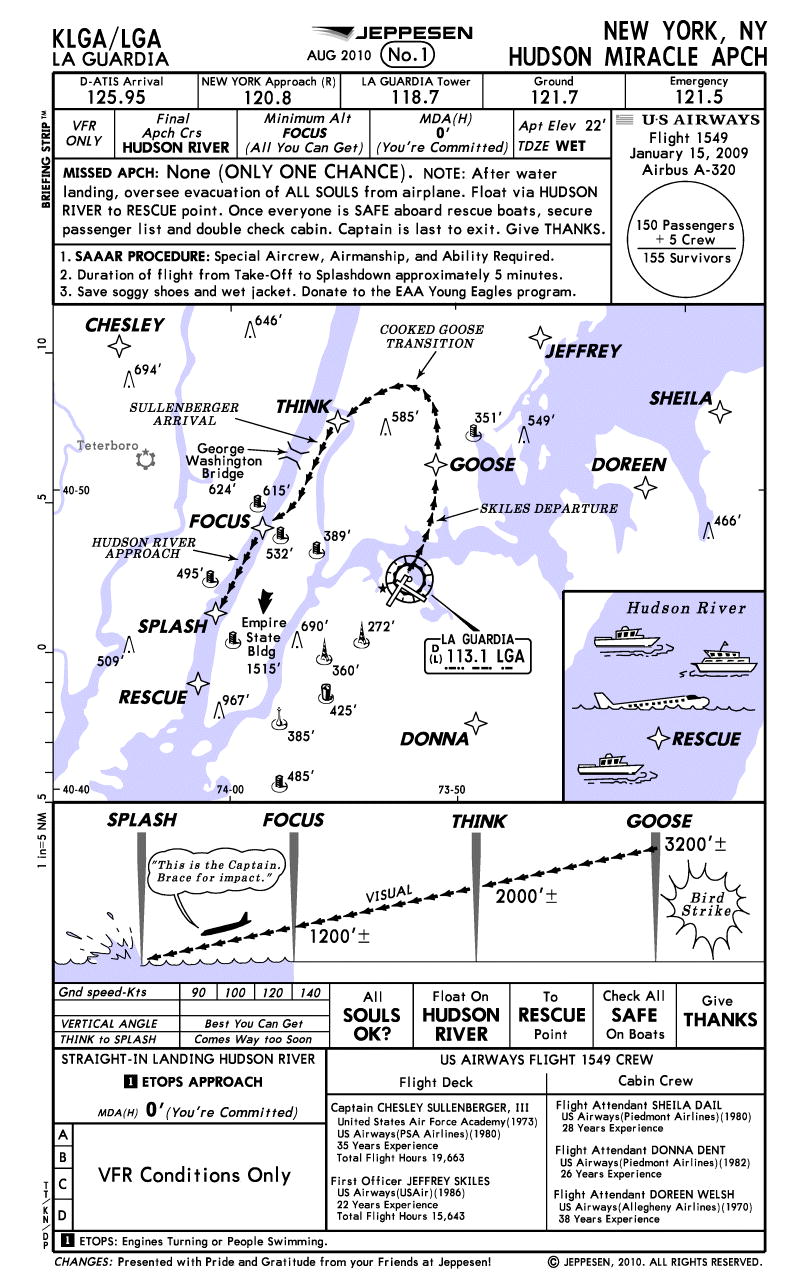


 Learning from Dogs