Year: 2010

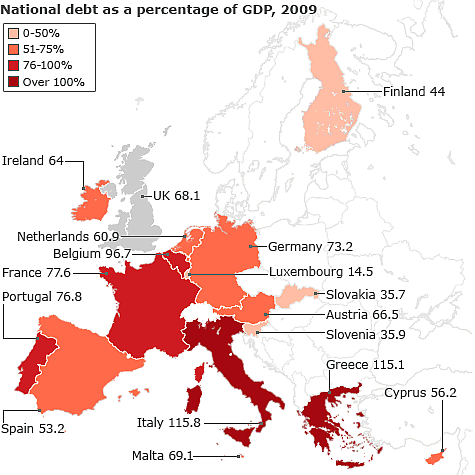
Greece and America — Similar crises?

Fiddling with gravity!

Financial crises can be very difficult events to understand.  Even for those who have spent a great deal of time studying such areas as finance and economics, comprehension of these disasters can be elusive.  However, analyzing shared elements in the recent American and Greek financial crises can help give even the economic layman insight into their common causes.

One word can be used to sum up the basic concept behind both of these crises – overextension.  Both the American and Greek governments attempted to take on a much heavier economic load than either could handle.  While, in both cases, this has been painted by some as a noble, humanitarian effort to help those in need, methods such as inflationary monetary policy tantamount to theft and the disguising of massive budgetary deficits (in both cases with the help of Goldman Sachs) would not justify the means employed even had these efforts been successful, and certainly should be taken to task considering the disastrous ramifications of these actions.

In both cases, many are citing unrestrained spending as the source of the problem.  For example, CNN wrote of the Greek crisis that “years of unrestrained spending, cheap lending and failure to implement financial reforms…whisked away a curtain of partly fiddled statistics to reveal debt levels and deficits that exceeded limits set by the Eurozone.”

Without suggesting that CNN was attempting to be deceptive in this explanation, as the points made certainly are important, it must be noted that things like unrestrained spending, cheap lending, and fiddled statistics are merely symptoms of the deeper disease.  Instead of asking the government to spend less, tighten lending laws, and implement financial reform, one should instead ask the deeper question – how does the government even have the power to cause such problems in the first place, and why are the results of such government power so often much more hurtful than helpful?

This deeper problem, whose symptoms we are now dealing with, is central banking.  The Federal Reserve System and its Greek counterpart, the Bank of Greece, each had a heavy hand in their respective nations’ financial collapses.  This is due to these banks’ attempts at economic manipulation – the Federal Reserve directly sets interest rates, while the Greek system uses more indirect methods to do nearly the same thing.   Note that it is due to their attempts at economic manipulation, as attempting to set economic law is about as useful as attempting to set gravity.

Consider this metaphor of setting gravity.  A man claims to be able to set the force of gravity on the earth.  He tells a stunt biker that he can set gravity to be half as much as normal.  So, the biker attempts to jump a distance that is much longer than he normally would attempt.  Upon jumping, the biker finds that, obviously, the first man never was able to set the nature of gravity at all, and he falls to the ground long before reaching his destination.

This is exactly what happened due to the actions of central banks in the cases of both the United States and Greece.  Interest rates and other natural economic restrictions were said to be more flexible than they truly were. Thus, individuals who based their actions on this information ended up engaging in activities that were far more risky than usual.  However, once they had “jumped,” so to speak, they found that, in fact, economic law was as strict as ever, and they “fell.”

However, if the answer is so obvious, why are we not hearing more about it?  Each of these financial crises is extremely complicated, and the above described scene is, it must be admitted, an oversimplification.  This is not to say that it is not accurate, but rather that this nature of the crises’ root cause is not immediately apparent to all upon examining the situation.

For example, a person who has been educated their entire life in an economic school that praises central banking, deficit spending, and government action in general would certainly seek to find another cause for the crisis, perhaps by blaming business owners for making risky investments or stating that government controls were not strict enough.  However, a person who has studied and understands the damage done by central banking and government economic controls will be quick to realize what has occurred.

People with such knowledge are becoming more and more common in both the United States and around the world.  “Even today, with an economic crisis raging, the response by our government and the Federal Reserve has been characteristic,” Ron Paul writes in his recent book, End the Fed.  “Interest rates are driven to zero and trillions of dollars are pushed into the economy with no evidence that any problems will be solved.  The authorities remain oblivious to the fact that they are only making our problems worse in the long run.”

While he may be one of the most popular adversaries of central banking, it is not just Ron Paul, or even Austrian economists, who are calling out government for its role in these financial crises.  In an e-mail to supporters, Democratic congressman Dennis Kucinich cited “the 1913 Federal Reserve Act, the banks’ fractional reserve system and our debt-based economic system” as major factors in the American crisis.

Such complex and important issues as economic crises need all the attention we can give them, and it is impossible here to provide the in-depth analysis that these situations merit.  It also must be noted that while both the United States and Greece have to an extent both engaged in central banking to their detriments, each country does have a different system.  Still, the general principles hold, always returning us to that first word – overextension.  As long as nations attempt to manipulate the laws of economics to engage in far grander pursuits than they can sustain, we can expect to see such economic crises as have been seen in the United States and Greece in the future.

By Elliot Engstrom

Letter from Payson – The Farmers Market

A foreigner but not a foreigner!

Despite the fact that we have now been living in Payson, Arizona, since the end of February and, therefore, a degree of familiarity exists in both directions, the local Saturday Farmers Market prompted this thought.

Why do I not feel a foreigner here?

There is no question that America, in general, and Arizona, in particular, is very different to England.  In many ways the differences are far greater than, say, England and Australia, or England and New Zealand (I’m picking other English speaking countries to avoid to obvious difference between countries of different languages).

Local goats' cheese

I love Farmers Markets.  They seem to encapsulate the wholeness of locals growing meat and produce for other locals. They seem to serve as a reminder of the integrity that is needed just as much in food as in all other areas of life.

Of course, I am not so naive to think that we could wind the food revolution back to before the days of supermarket chains – food is wonderful value nowadays especially for those families on tight incomes.

But I can’t be the only one that ponders what the long term effect of all those

Local jellies (jams to Brits!)

E-numbers and other strange ingredients that one reads on most packets of most items, and whether or not fruit is sprayed with anything that we should know about, and so on and so forth.

That’s why that place in my psyche is ‘stroked’ so well by wandering around the Farmers Market.

One would expect if there was going to be any place where yours truly, dressed and sounding like the Englishman that he is, is going to feel foreign, it would be at the Payson Farmers Market.  I don’t even try to hide my origins, responding to a “Howdy folks” from the stall-holder with a quintessentially English “Good Morning!

Inevitably there are reasons why I am made to feel welcome here in Payson, my hunch is that it is much to do with this being a pioneering town for most of the last 100 years, and therefore co-operation, collaboration and a welcoming attitude were key elements of sustaining a way of life, but, in the end, analysis is pointless.

What matters is how we are made to feel, and we are made to feel very welcome.

Indeed, Payson with it’s predominance of right-wing, independent thinking, tough ‘cow-boy’ inhabitants echoing a recent past, may have an important lesson for all of us, across the globe, as the forces of disconcerting change build and build: be local, think local, preserve local.

I’m very proud to be slowly but surely turning into a Payson local.

By Paul Handover

BP and Congress

Truth – 0, Lawyers – 1

Hayward of BP taking the oath

I can’t possibly add anything of substance to the hours and millions of words spoken about this tragic event.

All I felt as I watched the Congressional Hearing live on CNN was both embarrassment and sadness as a fellow Englishman demonstrated how the lawyers have won.

Hayward, from the couple of hours that I saw, said nothing of substance, nothing of real value and nothing that recognised how the American people, and the world in general, deserved openness and in-depth answers.

Very poorly advised, in my opinion.

Tragic.

By Paul Handover

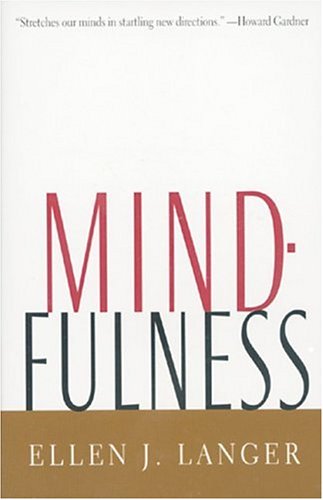
Mindfulness – a book review

In the laboratory of the hermits, no one noticed that the monkeys could talk.

Mindfulness

When a book ends with the above line, you know it’s going to be interesting.

When the inside front page carries a short review from Prof Alan Dershowitz of Havard Law School that reads, “One simply can’t finish this book and see the world in the same way”, you know the book is important.

Yes to both.

On Page 2, Ellen writes,

Unlike the exotic “altered states of conciousness” that we read so much about, mindfulness and mindlessness are so common that few of us appreciate their importance or make use of their power to change our lives.

This is a book for so many different aspects of life.  From fields like aviation where mindlessness can, literally, kill to mindful new perspectives for people looking to explore new horizons for the soul.

Langer demonstrates a rare capacity both to see what is extraordinary about human events and to envision even more enlivening human possibilities. – Lee Ross, Stanford University.

By Paul Handover

Whither the Internet?

A Force for Good may be becoming less good?

The Internet is clearly an extraordinary revolution, one almost as big as the invention of the printing press by Gutenberg. Amazingly, it also started out FREE and totally democratic – a fantastic boon to humanity.

However – as with everything else – it has inevitably become abused by the selfish minority that we seem unable or unwilling to deal with effectively, and for this we all must suffer.

So, because of this minority abuse the majority can expect more and more controls and bureaucratization and no doubt in the end it will be taxed as well. Indeed, I am astonished that greedy, incompetent, reckless governments haven’t already got their nasty paws on it as the next milch-cow to satisfy their insane rapaciousness.

But it is the potty EU (another giant institution that is currently sowing the seeds of its own demise through its arrogant grasping for power and control) where the most control-freakery is being displayed.

Firstly, we are apparently to have a new EU organism to “oversee” the Internet, and Estonia and France are currently vying for this lucrative (for its staff – not the EU taxpayer) little gravy-train.

Secondly, it seems that the EU now wants to log everyone’s Google searches for two years in a bid to ensnare paedophiles. Thankyou EU, but much as I hate paedophiles to be honest I do not want my Google searches logged, not even actually by Google. I have no faith whatsoever that someone, somewhere, sometime will not exploit this data even though I am completely innocent.

And anyway, as is pointed out in the above-mentioned article, this bit of overkill bureaucratization (no doubt another EU organism will have to be set up to actually do this – not of course in some run-down bit of Sicily but some posh and extremely expensive suburb of Brussels with loads of staff, secretaries, expenses and all the rest) will be totally ineffective anyway since paedophiles are far too cunning to use Google.

As for Google, is this yet another example of an organism overreaching itself? Have they gone too far for their own good with their street-level photography – amazing technology but one snoop too many nonetheless?

And returning to search monitoring, I am not sure I want to be the constant victim of oh so-clever targeted marketing all the time.  There comes a point when I simply want to be left alone and unmonitored. Sometime this data juggernaut has to be stopped, or where will it all end?

PS Is the Internet changing our brains? It is claimed people are losing the ability to concentrate. I certainly notice this in schoolkids I teach. This poses me three questions. If anyone out there is clever enough to provide answers I’d be most grateful.

A) Is it TRUE or another urban myth?

B) Does it MATTER?

C) If it does, can we DO ANYTHING about it?

By Chris Snuggs

Drink-Driving

Amazed they don’t just tax Fun and leave it at that!

Lemonade isn't a substitute!

Once again the British Politically Correct nanny-state lobby seems about to pounce by reducing the drink-driving limit to 50 mg. This is yet another fatuous knee-jerk “Let’s give the image that we are responsible and doing something” initiative.

No, I do NOT favour driving while drunk, but at 80 mg per ml you are not “drunk” or even impaired. The introduction of the 80 mg limit was a great step, but more would be a mg too far.

I know for an absolute fact that if I drink one pint of beer I am in no way more dangerous than if I drink nothing. Don’t ask me how I know; I just do. I’ve been driving all over Europe for 40 years; and experience counts for something after all.

Yes, I do want to see road accidents reduced, but let’s see something REALISTIC and EFFECTIVE. Why are most accidents caused? (apart from people way over the limit, unlicenced or driving unroadworthy cars and so on)

  • arrogance and lack of imagination: “It can’t happen to me.”
  • impatience: overtaking dangerously to save 45 seconds on a two-mile journey
  • driving too fast in the wrong place at the wrong time.
  • driving without consideration for others
  • not driving as if every other driver was an idiot
  • failing to give yourself enough of a margin for error
  • failing to understand statistics

The last two points are perhaps crucial. Drive on the périphérique in Paris and you’ll see examples of both. Of course, the French are, in general, brilliant drivers and 99.9% of the time they can get away with driving up someone’s boot, but statistics tell us that there is 0.01% of the time when this will NOT be OK.

What steps COULD be taken instead of clobbering the one pinter?

  • Start with the apparent ONE MILLION people in Britain driving either unlicensed and/or in uninsured or unroadworthy cars.
  • Ban rich Daddy’s boys from driving high-powered sports cars: nobody under 25 should be able to drive anything over 80 bhp for a start.
  • Where is the logic in manufacturing cars that can drive at three times the speed limit? BAN THEM. BE LOGICAL.
  • Make the viewing of video of the aftermath of accidents a compulsory part of the driving test so that people came reeling out of the room white and vomiting at the sight of accident victims with their faces smashed up and/or their heads severed. This is the REALITY of accidents. Let’s GET REAL.
  • Prevent people from driving for TOO LONG. Tiredness is a MAJOR factor in accidents, but there is ABSOLUTELY NO CONTROL over the hours that private motorists can drive. Modern technology could do something here.
  • Make the punishments for careless and/or dangerous driving SEVERE.
  • Make people AFRAID of causing an accident.

The truth is that a car is as dangerous as a gun and people should treat them as such. Sadly, familiarity breeds contempt and people too often forget the basic principles.

Every time I get in my car I tell myself the following:

  • Drive with as much care as when you first drove so nervously and gingerly on your first trip with your new licence.
  • Every journey could be your last. Just because the last n days have been trouble-free it doesn’t mean that today will. (statistics again)
  • There could be an idiot around the next corner, so drive defensively. (there is always a percentage of idiots, so statistically you are CERTAIN to meet one now and again)
  • Going too fast in the wrong place and/or conditions isn’t worth the risk. (stats again)
  • You have no right to maim or kill anyone else by bad driving and causing “an accident”‘.
  • Be afraid – think of what a serious injury or even your death would mean to your family.
  • It’s no good being “sorry” afterwards ……

Let’s hope the new British government has a bit of commonsense about this.

PS The Police could do their bit, too. A significant number of people are killed by policemen rushing about.

By Chris Snuggs

IAM Logo

A P.P.S. from the Editor. In fact, one of the best things that could be done is create an


incentive for passing the Institute of Advanced Driving driving test.  I passed the test in 1966 and it has been the best investment I have ever made.

Why doesn’t the UK Government give a free year’s road-tax for every person who passed the IAM test.  All this proposed change in the drink/drive limit will do is to put yet more British pubs out of business.  G’rrr.

BP – where lies the truth?

Among the calamities of war may be jointly numbered the diminution of the love of truth, by the falsehoods which interest dictates and credulity encourages.‘ (Samuel Johnson, from The Idler, 1758)

I have used this quotation simply because we need to remind ourselves that the media, politicians, journalists and many ordinary folk find it easier to be extreme, opinionated, outlandish and provocative (ergo, ignorant) than to be thoughtful and reflective about an incredibly complex situation.  Rant and blame, while making for great reading or viewing, is not helpful.

This all came to mind from reading a recent article in The Financial Times (you may need to register to view it) which was titled:

Britain should back down over BP

By Clive Crook

That article starts like this:

A week ago I criticised the US media for childishly demanding that President Barack Obama “just do something” about the oil spill in the Gulf of Mexico, observing there was much to be said for a leader who stayed calm in a crisis. Next day, no doubt as a result, Mr Obama became pointedly less calm. He called for some “ass to kick”, a very Bushian sentiment, and dialled up the invective against BP – which he likes to call by its old name, British Petroleum, to underline the company’s alien perfidy.

The US outcry against the company is still building, and the administration, intent on deflecting its critics, has put itself in the vanguard. Criminal investigations and efforts to remove a statutory cap on the company’s liability are under way. It is ominous that lawyers are working hard, with the administration’s blessing, to enlarge the very concept of civil liability.

And concludes thus:

The question of whether even this company’s mighty resources are adequate to meet these demands cannot be dismissed. In such circumstances, I cannot see why BP has hesitated to suspend its dividend. The idea that it can take this calamity in its stride and proceed on the basis of business as usual is absurd, and politically foolish too, since it is a provocation to critics intent on vengeance.

The Gulf disaster will have far-reaching economic and energy-policy implications. The right liability and mandatory insurance regimes for deepwater drilling are high on the list. No doubt the White House should worry less about kicking ass and more about thinking these questions through. But British complaints that BP is being “scapegoated” will not help reason to prevail. Let us not add insult to injury.

Frankly, I don’t have either the knowledge or the competence to judge the validity of Mr Crook’s article and, as so often in cases like this, took to reading the comments as they can frequently shed more light on a particular issue.

And that is how I came across the following comment from RiskManager. Whoever you are, well done on taking the time to put what feels like some badly needed balance into this issue. This in no way lessens the terrible harm being metered out on innocents, just as in any ‘war’, but this is not about winning – it is about learning.

From RiskManager

Unlike ANY U.S. company EVER in a similar situation (Exxon, Union Carbide, Accidental Petroleum, etc. etc. – its ALL of them), BP has indeed done the right thing since the blowout by immediately admitting its liability/responsibilities. It has mobilised the largest containment and clean up operation ever and immediately issued compensation to those affected. The effort to stem the well, something never done before at this depth, has seen the assembly of the best experts in the world and the greatest concentration of sub-sea equipment perhaps ever seen. That efforts have failed so far to stem the leak is a fact that testifies to the challenge of the task, a challenge that cannot be understood until the failed Blowout Preventer (BOP) is recovered and we find out why the accident happened and why the top-kill did not work. What is going on inside the BOP?

And there it is. Today we just do not know. The failsafe in place, a modern BOP, failed. We don’t yet know why. BP may well. Transocean and Cameron the same. When we do recover the failed BOP which is under subpoena already all the questions will be answered. Until then it is fatuous and unhelpful to go round looking for bottoms to boot.

Why the gas kick happened down the well seems to me to be secondary. Things happen. That’s why we have a failsafe, that’s why there was BOP installed and paid for by BP, the failsafe device.

An editorial in The Daily Telegraph of yesterday said….

“It should not be difficult to rewrite the rules to make sure that no deep-water drilling is permitted without a fail-safe arrangement in place from the start,…..”

No, these are the current rules. The fail-safe arrangement was the blowout preventer, the one that failed. Note how BP always refer to it as the “failed blowout preventer”. Always.

The BOP has multiple (five I think) valves, of varying types with at least one that is meant to shear the casing, the drill pipe and anything else.

One valve was operated from the surface by the tool pusher who testified as such, indeed he operated it before the Offshore Installation Manager gave permission as mud circulation had been lost. That failsafe BOP valve failed.

The next I believe is a failsafe that shuts when contact is lost with the rig, like a dead mans handle on a train. As the Deepwater Horizon rig sank and contact was physically broken (or before), it also failed.

The others (three ?? ) are I believe all meant to be operable by sub sea vehicles (ROV’s). The first days after the blowout were spent trying to shut these valves as per the design of the failsafe device, the blowout preventer. All these valves failed.

That’s a lot of failure. Why??

Now, if BP should have known about whatever is found to have happened in the failsafe BOP then it is their fault. If sub-contractors installing and operating the BOP or is manufacturers lied or were negligent it is there fault.

If the blowout preventer had worked as intended, as the failsafe final defence device, there would have been no loss of life and no oil spilled.

Given the sums of money involved I suggest the UK immediately prepares to seize US assets of potentially liable companies or associates in the event that BP is found to be the victim of its supplier’s negligence. Unlike BP these companies have already sought protection of US law, are paying dividends and are saying nothing at all as BP gets a kicking

At the end of the day, we (you and I) need the deepwater oil as the worlds easy and cheap to produce oil reserves are controlled by the OPEC cartel and restricted to about a 40% of global production from 80% of reserves. But however many failsafes, however many regulations, human activities entail risk. The deep water drilling was thought to be safe with a modern BOP. It wasn’t. Now we need a BOP and inspection/testing regime that really is failsafe and expertise in responding if that fails. I would have thought the facility to install a new shear ram at the well head below the BOP after a blowout would do the job, or a fitting at the top of the LMRP that a ready built new valve could be installed on top of post blowout would do the job..

Ironically BP will certainly be the world experts in these matters after this accident and response.

P.S. Shortly after completing this Post, I read the following from the BBC. (Extract provided only – see link for full BBC article.)

Barack Obama calls for clean energy push

President Obama

US President Barack Obama has called on his Democratic Party and other supporters to back a government campaign for clean energy.

In a statement aimed both at paid-up Democratic Party members and at millions of individuals who backed his 2008 presidential bid online, the president asked his network to lend their name to a campaign to change the way America produces and consumes its energy.

“We are working to hold BP accountable for the damage to the lands and the livelihoods of the Gulf Coast, and we are taking strong precautions to make certain a spill like this never happens again,” Mr Obama said.

“Beyond the risks inherent in drilling four miles beneath the surface of the Earth, our dependence on oil means that we will continue to send billions of dollars of our hard-earned wealth to other countries every month – including many in dangerous and unstable regions,” he said.

“In other words, our continued dependence on fossil fuels will jeopardise our national security. It will smother our planet. And it will continue to put our economy and our environment at risk.

“We cannot delay any longer, and that is why I am asking for your help.”

Let me close as I started, by using an old saying:

“It’s an ill wind that blows no good.” (John Heywood (c.1497-1580))

By Paul Handover

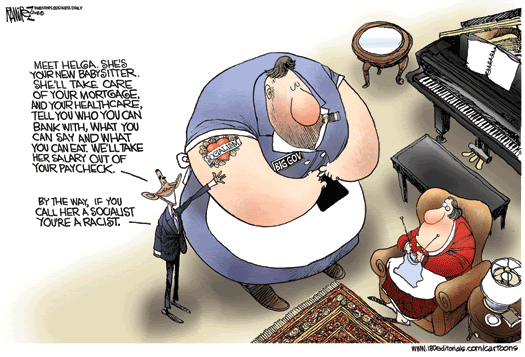
My Giant Mastiff Eats Socialists

“The trouble with Socialism is that you eventually run out of someone else’s money.”

The Human Species is unique in many aspects, but outstandingly so in the art of irony. Take Socialists, for example.

Now these are extremely caring people; they love their fellows so much that they want to do everything possible to make them comfortable and happy. It’s so wonderful; one is so admiring, inspired even at this outpouring of fellow-feeling.

In pursuit of their noble aim, socialists therefore spend vast amounts of money on all kinds of services to make people’s lives happy.

It’s true that they don’t always ASK people what they WANT in order to be happy, but that’s because they are very clever people who know what is best for other people.

And so mushrooms a whole myriad of agencies and quangoes for this or that disability; this or that special needs group.

There is free this, free that, handouts, subsidies, initiatives, pledges (Gordon Brown’s speciality). It is all so uplifting, and of course FREE!! What could be more wonderful?

Of course, it all has to be paid for. Now this phrase “of course” is very interesting. It means that being paid for is bleedin’ obvious to the writer and to anyone else with the slightest understanding of economics, including my old Gran.

Funnily enough, however, it is not quite so obvious to socialists, who – rather sadly – seem to believe that money grows on trees. This phrase is a bit hackneyed, but I can’t think of a more fitting one.

So where DOES the money come from, since it does not actually – to the surprise of many socialists – grow on trees? Well, it comes from those who MAKE money! What a surprise. And of course, that is an inexhaustible fount which can be milked till the cows come home (or perhaps after they come home!) Hence the expression “milch cow”. Yes, those nasty capitalists can be milked for all they are worth.

Read the rest of this brilliant Post

HELP, HELP!!

Can someone clever PLEASE explain what is going on here?

Over the weekend, US Treasury Secretary Tim Geithner called on countries running trade surpluses – which includes Germany – to increase their spending.

Tim Geithner? You can’t get much higher in responsibility for the US economy, yet he comes out with what to the layman seems an absolutely insane statement.

Germany is ALSO heavily in debt. The German coalition government has just announced a “Sparprogram” of €80 BILLION euros. Families, the unemployed and the civil service are all going to be hammered.

Germany like everyone else has overspent and of course been hit by the bankers’ insane greed and the ensuing financial crisis. (By the way, the latter was a total breakdown by regulators and if Obama really wants to rant at someone he should rant at the people responsible for organising the regulation of finance in the USA … oopps …. that was the politicians! No wonder BP makes an easier target.)

Tim Geithner

But returning to Geithner, does he REALLY think that we can get out of this mess by Germany getting more heavily into debt? It’s potty, isn’t it? Someone said recently “You don’t give a drunk more alcohol.”

Someone, somewhere, someone has got to say “ENOUGH – NO MORE DEBT” And anyway, why SHOULD Germans be expected to shoulder the responsibility for everyone else?

No Mr Geithner! Your government can continue to spend money it hasn’t got if you like (the US up to a $ trillion of debt now?) , but please leave us over here in Europe to sort this mess out in our own way. You are beginning to sound like ex- (God, how I love that prefix) British PM Gordon Brown, who spent 13 years playing Fantasy Finance, with the results all too clear.

Maybe I’ve got this all wrong – salvation really does come by incurring ever more debt? If so, perhaps the economists can explain it to me.  Can we find two economists who agree?

The funny thing is, my Mum and my Gran both agree. In their day if you overspent you were in trouble and could neither blame anyone else nor hope that some benevolent soul would bail you out …. perhaps they should be running western economies?

By Chris Snuggs