Year: 2009

Forwards to bygone times!

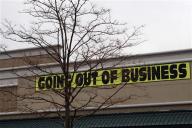
Sign of the times?

Woodstove

We have been looking for ways of cutting down our energy requirements and coupled with trying to grow as many of our own veggies as possible, 2 small flocks of chickens for eggs, we have now acquired a reconditioned, wood-burning cooker.

It arrived last Wednesday and weighs in at just under a third of a ton. It was manoeuvred into place by 2 men, some planks of wood and a few rollers made from off-cut, scaffolding poles.

Our youngest son and I fitted the flue and fired it up on Thursday evening. What a transformation!

The quality of heat and ambience it creates in the kitchen/dining room is amazing. It is like being transported back to a bygone era where everything seemed less stressed and slower. Whoever gets up in the morning lights it first and it seems to be able to rise from cold to a useful temperature in 20 minutes. It uses a very small amount of wood to keep it in all day and we have switched off all the heating in the adjoining rooms. We cooked a roast dinner in it on Sunday and a load of mince pies plus bread over the weekend.

It’s not instant and it has its own foibles but we love it – a bit like most of us, I expect!

By Jon Lavin

An interconnected world.

Bringing out the best in us.

As I visit some of my clients, I am becoming aware of an unusual phenomenon – I think some people are actually becoming less selfish. We are used to hearing stories of institutions reaching heights of greed and selfishness during this recession but not many that are about the other way round.

I don’t go to supermarkets very often because I’m usually out working when my wife goes but by a fluke, I kept her company recently. We have been trying to support the local farmer’s markets in the area but this is proving difficult as it’s much quicker to do a one-stop visit to a supermarket than lots of small visits since we both run our own businesses.

It is of course cheaper at the supermarket as they have systematically forced food prices down to a level that prohibits most small food producers from supplying them.

Anyway, I digress. In our local supermarket works an ex colleague and friend of mine. He was made redundant just over a year ago for the second time and decided that he would go for the stress-free, safe option. He used to organise procurement for a large, global communications company so he has his head screwed on around organising things. I guess the supermarket job means that he can just switch off away from work, something he could never do before.

I saw him with a large trolley, checking shelves and we stopped for a chat. He was fine and generally enjoying his work. He asked about mine and I mentioned that things were a bit tight at the moment. We got talking about how training is carried out at his work and how they work with developing employee’s interpersonal and communications skills. He mentioned that there was a new HR manager at the branch, or is it “in branch?”, and would I like an introduction as they were always recruiting new people and they needed training?

I was flabbergasted as we weren’t necessarily that good friends and he didn’t need to say or do anything but went out of his way to be helpful.

I have also noticed this phenomena in other companies from time to time, in the form of clients arranging meetings and spending time, something previously they really didn’t have time for. Maybe we get more of what we notice and by focusing on the positive, we attract more of the positive into our lives?

Is it because when the going gets really tough, for example, in times of national crisis or great hardship, that we remember that we are all interconnected?

By Jon Lavin

The Shame of Tibet

Transcripts from our bug in the Ministry of Misinformation, Whitehall, London

Good morning, Perkins ….

If you say so, Sir

Oh Dear …. I can tell there’s something wrong, Perkins … you’d better get it off your chest.

It’s this Tibet business, Sir, …

Tibet! Goodness me, Perkins! You do worry about such small things!

I wouldn’t exactly call Tibet, small, Sir.

But it’s thousands of miles away, Perkins, in a country of which we know little, and the British people even less.

Perhaps, but no man is an island and all that …

Perkins, we do have work to do, you know!

But nobody takes the Tibetans’ rights, seriously, Sir.

Well, it depends what you mean by “seriously”, Perkins.

But they are an occupied people! The Chinese Han are ethnically-swamping them! If the Americans did that to the Canadians, for example, there’d be all hell let loose …

Oh come, come, Perkins! You can’t compare Canadians to Tibetans! The latter are an underdeveloped, uncivilized race! The Chinese are bringing them into the modern world. They’re investing billions in the country.

Yes, to turn Tibet into a part of China, with Han culture …

But it is part of China, Perkins.

Only because the Chinese seized it by force. What right do they actually have to rule Tibet? Until they started moving millions of Chinese into the country there were practically no Chinese there at all. It was a thousand-year-old and totally different – and to the Chinese Han – alien culture.

What right, Perkins? Well, I’m sorry to disillusion you, but their bigger army gave them the right and after all, possession is nine-tenths of the law!

But they are so arrogant. And so-called democracies don’t say a word. India has even banned a march by a few hundred exiled Tibetans. The west continues to trade with and enrich China so that it can buy arms to oppress its minorities. It’s sickening, Sir.

Only if you have a conscience, Perkins. I’m sorry to see you are still afflicted by conscience.

I don’t think you are taking this seriously, Sir.

I am, Perkins; it’s just that nothing can be done.

You mean, nothing that doesn’t hurt us a bit, don’t you Sir?

Well, that goes without saying, Perkins! Do you really think the British consumer is going to accept to have to pay more for his DVD-recorder just to put a bit of pressure on China!!!

I’m sorry, Sir. It stinks. China supports North Korea, and they’ve just executed 15 people just for trying to flee the country. When North Koreans do get out of the hell of their regime, the Chinese often send them back. And yet we allow them to hold the Olympic Games! To set doves free in a gesture of peace! It is horrible, Sir.

Yes, Perkins. It’s called politics.

But it is preposterously hypocritical, Sir. Have you read “The Universal Declaration of Human Rights”?

Not recently, Perkins …

Well, what about this bit in Article 21?

The will of the people shall be the basis of the authority of government; this will shall be expressed in periodic and genuine elections which shall be by universal and equal suffrage and shall be held by secret vote or by equivalent free voting procedures.

Well, what about it, Perkins?

Well, members of the UN are supposed to subscribe to that, aren’t they, Sir? But a majority don’t, do they? China certainly doesn’t, does it?

I’m not sure I can answer three questions at once, Perkins. But I’ll give it some thought over the weekend …….

And what are you doing over the weekend, Sir?

As it happens, Perkins, I’m playing golf with the Chinese Ambassador …..

By Chris Snuggs

Remarkable people: General Sir Rupert Smith

Conform and/or reform?

Usually, people who have spent a long time in an organisation are steeped in its thinking and its received wisdom. Those who do not fit the mould have difficulty in rising far and may even end up leaving the organisation or being rejected by it.

However, there are people who avoid both outcomes, they fit the mould, and they challenge its thinking. They rise high in the organisation and yet emerge with views which run counter to the common understanding of its purpose. Perhaps they keep their views quiet, at least until they rise above some level where they have sufficient standing based on experience or reputation. To do so, they must very good at what they do and their criticism must be seen, at least on balance, as being constructive.

The utility of force

General Sir Rupert Smith is an impressive independent thinker who combines analysis with clear objectivity; and he has written an important book about it. He has been described as Britain’s foremost “thinking soldier”.

If you’d like to hear a man who has emerged from a substantial military career with a fascinating and important analysis of a major paradigm shift, then you might be interested in his presentation at the Carnegie Council.  He believes that this new era began in 1945 and the first effects were seen in Korea.

“War among the people”

As with so many presentations, the formal content covers the main points and creates the background for discussion; but the subject matter comes alive and the most valuable insights are communicated in the conversations which develop from questions or impromptu stories:

As a fairly young officer, I was in Belfast, responsible for a patch of West Belfast. A bus route came to my area, at the end of its route from Belfast city center. There was a roundabout, and the bus would sit there for twenty minutes and then turn round and go back down into Belfast.

Most Friday nights, somewhere around 9 o’clock in the evening, this bloody bus would get burned. There would be a riot, and people would throw stones at the fire brigade when it came, and then we’d all turn out and fire baton rounds and things at the hooligans throwing the stones, and then someone would shoot as us and we’d shoot back. A good time was had by all. The BBC and everyone were all in there. A burning bus can really get everyone going.

This was going on rather more than I was prepared to put up with. But I couldn’t stop it. I just wasn’t able to defeat this. Until we came up with a cunning wheeze, which involved me persuading two soldiers that it was in their interest to hide in a hidden box on the top of this bus, and when the hooligans appeared with the buckets of petrol and the box of matches, they would leap out before they lit the petrol and capture the hooligans with the petrol, and we would all rush in and help them.

These two soldiers agreed that this was a wizard wheeze and hid in the box. We drove the Trojan Horse in. And, sure enough, we got them.

A quiet conversation took place between the regimental sergeant major and these two little hooligans. It turned out that this thing that we had been treating as IRA terrorism, disrupting the streets, a come-on operation so that we would be pulled in so that then we could be sniped at—that was our complete logic and understanding of it—was wholly and totally wrong. This had nothing to do with terrorism at all. It was the black taxis, and they were paying these hooligans to burn the buses so they got more trade. We hadn’t been fighting anybody.

This story provides a clear example of the analysis in this presentation.

During a related interview by Jeffrey D McCausland, General Smith identifies some key questions:

Who are you supporting, to do what and what is military force’s contribution to achieve that?

Watch that the interview here.

On a comical note

In looking at more material, for this post, I ran across one item which you might be able to view, but I could not; this is due, apparently, to my being in the UK. The message that I am presented with at this location is particularly funny given the subject matter; it is:

Dear Great Britain,

We’re terribly sorry, but full episodes of The Daily Show with Jon Stewart are not available.

But please don’t send any Red Coats in retaliation at this time, as you CAN get your headlines at Channel 4.

(The style of the “Channel 4” text is flashing between white and underlined red. However clicking on it does not appear to have any effect. So does that mean that a gunboat of Red Coats would be acceptable after all?!)

By John Lewis

Son of Gaddhafi …..

Does international politics have to be this obtuse, to put it kindly?

Those that don’t follow the British Press closely may have missed the news that Peter Mandelson, the unelected Lord appointed to run Britain’s Trade and Industry Department, was guest at  a shooting party with the son of Muammar Gaddhafi .  Here’s how the Guardian Newspaper ran the start of the article:

Peter MandelsonThe Spectator has reported that Peter Mandelson joined Colonel Muammar Gaddafi’s son at a country house shooting party. Photograph: Shaun Curry/AFP/Getty ImagesHe [Mandelson] talked of being “intensely relaxed” about the filthy rich, and no one could say that Lord Mandelson doesn’t like their company. After twice facing criticism for consorting with billionaires in Corfu, it emerged tonight that the business secretary joined Colonel Muammar Gaddafi‘s son at a country house shooting party.

Mandelson and Saif al-Islam al-Gaddafi were guests at Lord Rothschild’s Waddesdon Manor in Buckinghamshire, the Spectator said. The magazine reported that Cherie Blair was also in attendance, although neither she nor Mandelson are reported to have taken part in the shoot.

Let us be clear about this. The Gaddhafi regime is the antithesis of what the free world believes in, namely a dictatorship that has ruled by iron fist for decades and was indeed part of the axis of evil.

Of course, it suddenly became non-evil overnight, mostly because it gave up (or appeared to give up) trying to develop a nuclear bomb.

Leaving aside the fact that making a bomb does not per se make you evil, (unless we are to consider that the US, France, Britain, Russia, Israel are “evil”, too) the point is that the regime has not changed in its fundamentals since the old black and white days of George Bush.

So once again, the question arises, why are western leaders cosying up to these scum?  This  is a strong word, but do we or do we not agree that dictators are scum? Evil people who deny basic freedoms to their peoples?

Do you know any benevolent dictators? White-bearded philosophers out of the Plato/ Solomon mould? I sure don’t …..

Of course, these scum regimes are all in the UN, even though I had thought that all members had to sign up to the Universal Charter of Human Rights. Apparently not, however, another piece of humungous hypocrisy.

The Gaddhafi regime is the same one that is guilty of numerous terrorist offences, including Lockerbie (though there is distinct murkiness surrounding the whole saga) and in Britain the shooting by a Libyan Embassy staff member of Yvonne Fletcher, a British policewoman, for which nobody has been brought to justice even though the British police are said to know who was responsible.

However, leaving aside the question of how to deal with nasty dictatorships (and is joining shooting parties with the heir apparent really the right way?) I am fascinated by the apparent idiocy of Lord Mandelson in associating with these people.

Exactly which segment of the British population – let alone American – is he going to try to sell this to? America may not interest him overmuch, but one imagines that he wishes to prolong his career in British politics. If so, he has a funny way of going about it.

His image will take an enormous bashing, and Mandelson is, or used to be, totally focused on image, spin, PR and “the message”. What message does the thought of him jollying along with the son of the dictator of an evil regime convey to us? Has the spin guru of the British Labour Party lost his rudder?

Of course, there could be a hidden (or rather obvious) agenda. It could all be to do with sshhhhh ……MONEY. Is he therefore working tirelessly against his conscience (and knowing this will do him great personal damage) in the  financial if not moral interests of the British people (who weren’t of course asked if they want their country cosying up to dictators) or could it be – oh Dear, are we being too cynical? – that he has a more personal interest in mind?

Does he deep down seek to become as rich as the man he helped to sell to the British public, Tony Blair himself, who incidentally is about to be embroiled in a potentially-devastating enquiry into the Iraq war?

And unfortunately, the news broke on the day after we discovered that Abdelbaset Ali al-Megrahi, found guilty of the Lockerbie bombing and released because he was dying, has in fact survived for three months with no apparent end in sight. Yes, only three months ago Gaddhafi bambino was helping to arrange the hero’s welcome that Megrahi received in Libya. As is well-known, Mandelson met Gaddhafi’s son one week before the alleged deal was done for Megrahi’s release, so they are old jet-set mates.

We believe in “freedom” and “democracy”, don’t we? We may have to share the planet with dictatorial scum, but do our representatives really have to grovel and sup with them?

It doesn’t feel good to be honest ….

By Chris Snuggs

Such patience!

What retired dentists get up to!

While dealing with children and their little models I can spend hours making and mending small plastic and wooden pieces to give them a few hours of fun and assist them in understanding what machinery is made up of.

Recently I saw a model of a galleon made by a prisoner of war. He would obviously have had many hours with which to spend his time, making a work of art, but now prepare to have your jaw dropped.

Young Park from Honolulu
Read more about this very clever man

The Future of the British National Health Service

Is Britain’s Health Service now terminally ill.

Near the end of November came more bad news from the British National Health Service, an institution that many Brits both love and hate at the same time.  The truth is that the NHS has simply become too big, too bureaucratic and is in many areas failing though over-regulation and poor management.

Not that it lacks managers of course;  I believe there are more managers per bed than in any other country of Europe.

Why is it that the more managers you have the worse the overall performance ends up? Too much working by committee and passing the buck for failure, perhaps?

It has to be broken up; vast organisations just don’t work. Smaller is beautiful. I feel confident the world will eventually understand this; already there are serious calls for the big banks to be split up after the credit fiasco and just recently we read about  calls for some of the big British supermarkets to be ‘smallered’. This is significant, coming from one of the “Neo-Conservative” gurus likely to have great influence in the next British government.

Have we passed through a period of worshipping size, power, takeovers, mergers, money, financial domination, vast stock options, fees for lawyers, obscene bonuses and instant gratification?

Economies of scale are one thing, but at some point other factors reduce their value to society as a whole. The bigger an institution of any kind the greater the possible abuse. And sadly, at some time or other there will be abuse, as we have seen so often.

The period of “Big is Beautiful” may be ending, and not before time.

By Chris Snuggs

Housing and the Economic Recovery

Perhaps the housing market is the best economic indicator?

As an economist, I am frequently asked for my predictions on when the economy is going to turn around.  Have we reached the bottom?  Have we begun to recover?  Might we go into a second, perhaps more severe recession?

Those are tough questions to answer.  Business cycles are notoriously difficult to predict.  In fact, about the only thing we know for sure is that no two business cycles are alike. Each is unique in some significant way.

Changes in the housing market may be one of the most meaningful indicators of a recovery, because housing stability is such a fundamental indicator of how households are budgeting their income.  Notice that I did not say that the level of homeownership was a useful indicator; instead, I look to changes in the housing market, either away from or toward an apparently sustainable and affordable supply of homes, for evidence of where in the business cycle the economy may be.

Despite record low mortgage rates and first-time home buyer credits, the U.S. housing market remains anemic.  Rising foreclosures in several major metropolitan areas will keep housing prices low for some time to come.

The U.S. currently has about 1.7 million excess housing units available.  Typically, about 1.3 million new households are formed in the U.S. per year.  But with the unemployment rate topping 10%, new household formation will fall to about 1 million per year.  If new home construction remains at its current level of about 600,000 units per year, it will take over 4 years (1.7 million/400,000) for the excess supply of housing to be absorbed and housing prices to recover.

Recovery rates will be much slower in some markets, such as in Florida, Nevada, and California, but I believe that the rest of the U.S. along with most other developed economies are looking at a three- to four-year period of time before housing and thus the overall levels of output return to their pre-recession levels.

By Sherry Jarrell

The Mystery of the Disappearing Ethics

The Dubai debt crisis raises fundamental questions.


UK banks account for half the £60billion of global loans to the debt-laden emirate, new statistics show.

Well done British banks ….. loads of loans built on sand … I suppose the words “conservative” and “prudent” didn’t get printed in the Banking Terminology dictionary?

So Britain, that Global Giant of the banking world, has half the dodgy loans? British banks are therefore as daft as the rest of the world put together? (Can someone check my maths!)

Oh, and why exactly were the banks lending money to SORDID DICTATORSHIPS? Would we have lent billions to Hitler’s Germany in 1937? What on earth happened to ETHICS in the financial world? I suppose lending to POOR countries who need it rather than the nasty, venal, corrupt dictatorships of the Middle East was right off the radar?

There is an obsession with the “Human Rights” of immigrants and others in Britain, but a complete and utter turning of  blind eyes to the slavery going on in the Middle East, as if it doesn’t concern us because it’s in “another far-off country of which we know little”. (Neville Chamberlain’s shameful explanation of his inaction over Hitler’s annexation of the Sudetenland in Czechoslovakia in 1936.)

Sorry, but “No Man is an Island” …. we can’t sign the UN Declaration of Human Rights on the one hand and then blithely lend money (the PEOPLE’S money) to countries that are treating people so terribly.

I hope Dubai goes bankrupt and our cretinous banks with it so that we can start again with people’s banks that have a modicum of honour and decency and are prepared to invest in democracies, not insanely greedy property developments based on dictators’ idle fantasies.

It wasn’t much different with Sadaam Hussein, whatever you think of the invasion. This was a man who – just to take one example – gassed to death 5,000 innocent men, women and children in one single village alone. Yet countries in the “free world” were secretly queuing up to do deals with him. One British government MP even went there and shook his hand, the hand that consigned hundreds of thousands of people to a horrible death.

Ecology? Apart from anything else, Dubai’s carbon emissions are pro rata 250% higher than the US, so much power goes into air-conditioning and desalination. Once again, the left hand doesn’t know or care what the right hand is doing. A British minister tells us to stop eating meat to save the world while British banks simultaneously rush to finance a humongously-profligate and obscenely-elitist project in the desert.

I sometimes wonder if we really deserve to survive Global Warming. Will it be God’s way of cleansing the Earth of an aberrant experiment in free will?

By Chris Snuggs

Commercial Real Estate and the U.S. Financial System

This is not over yet, folks

The U.S. banking system remains vulnerable to sizeable potential losses as the housing market struggles to recover.

Estimates of these losses range from $500 billion to $1 trillion (£312 bn – £625 bn). The Federal Reserve Board is especially concerned about the impact of commercial real estate on many regional and small banks across the country.  Occupancy and rental rates continue to decline dramatically as 2009 draws to a close, and the worst seems yet to come.

Commercial real estate loans on banks’ balance sheets total almost $1.1 trillion dollars.  With near-term commercial real estate losses topping $100 billion, the Wall Street Journal estimates that as many as one-third of small and mid-size U.S. banks could experience financial distress.


Troubled banks restrict lending until they can raise more capital.  In this illiquid market, expect banks to fight for survival by raising lending rates, shortening maturities, and lowering loan amounts.  Credit will continue to shrink in the U.S., which spells big trouble for any economic recovery.

By Sherry Jarrell