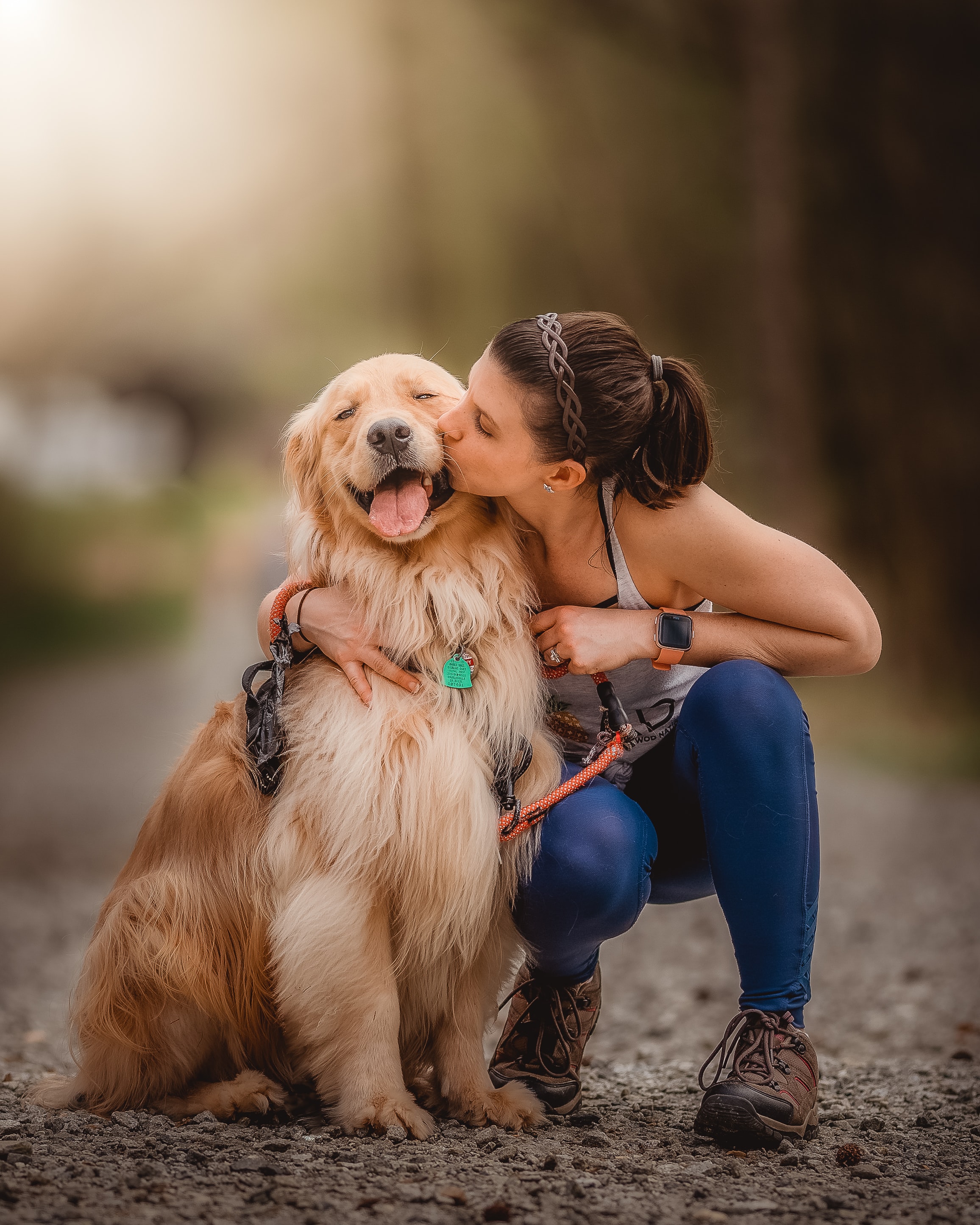
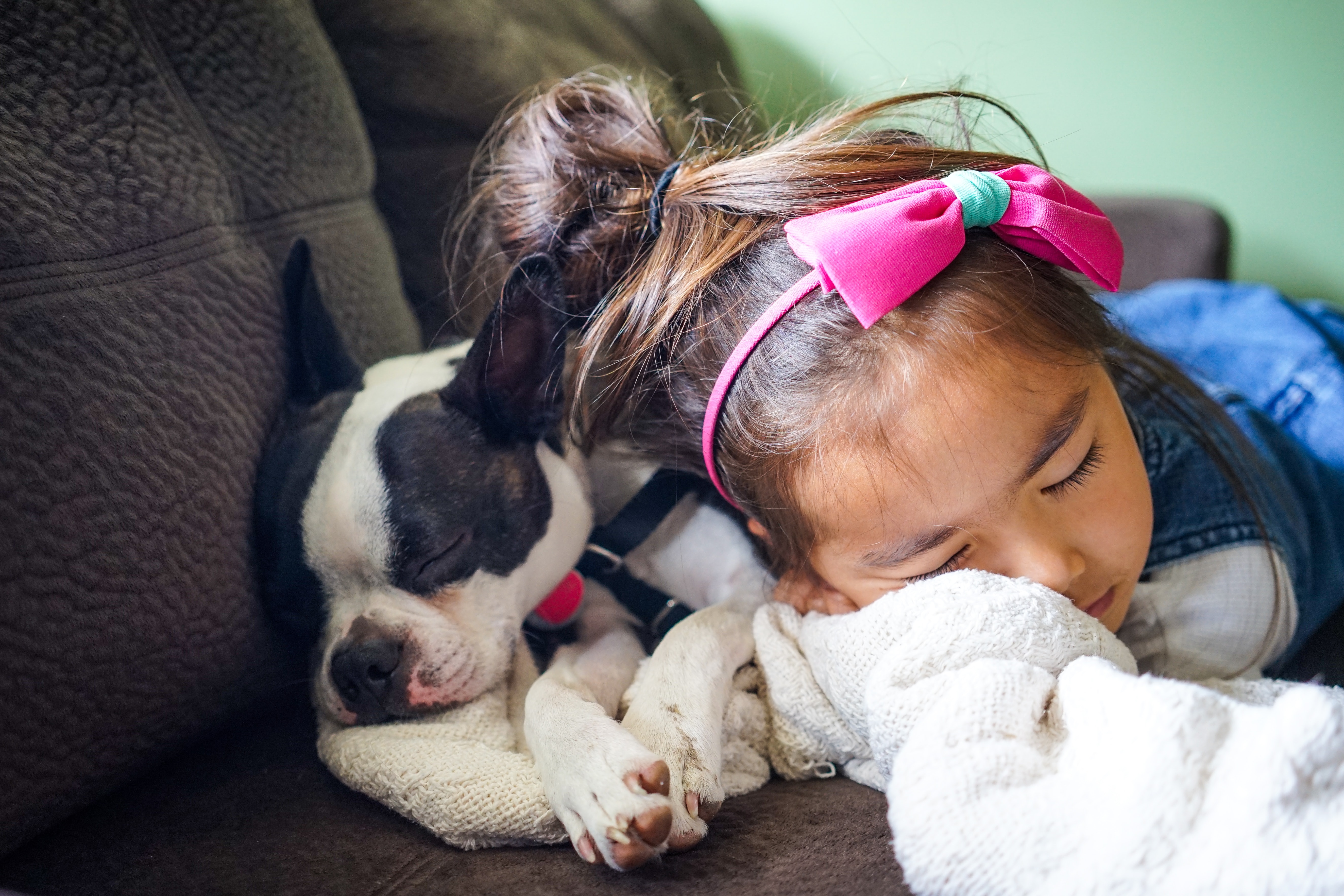
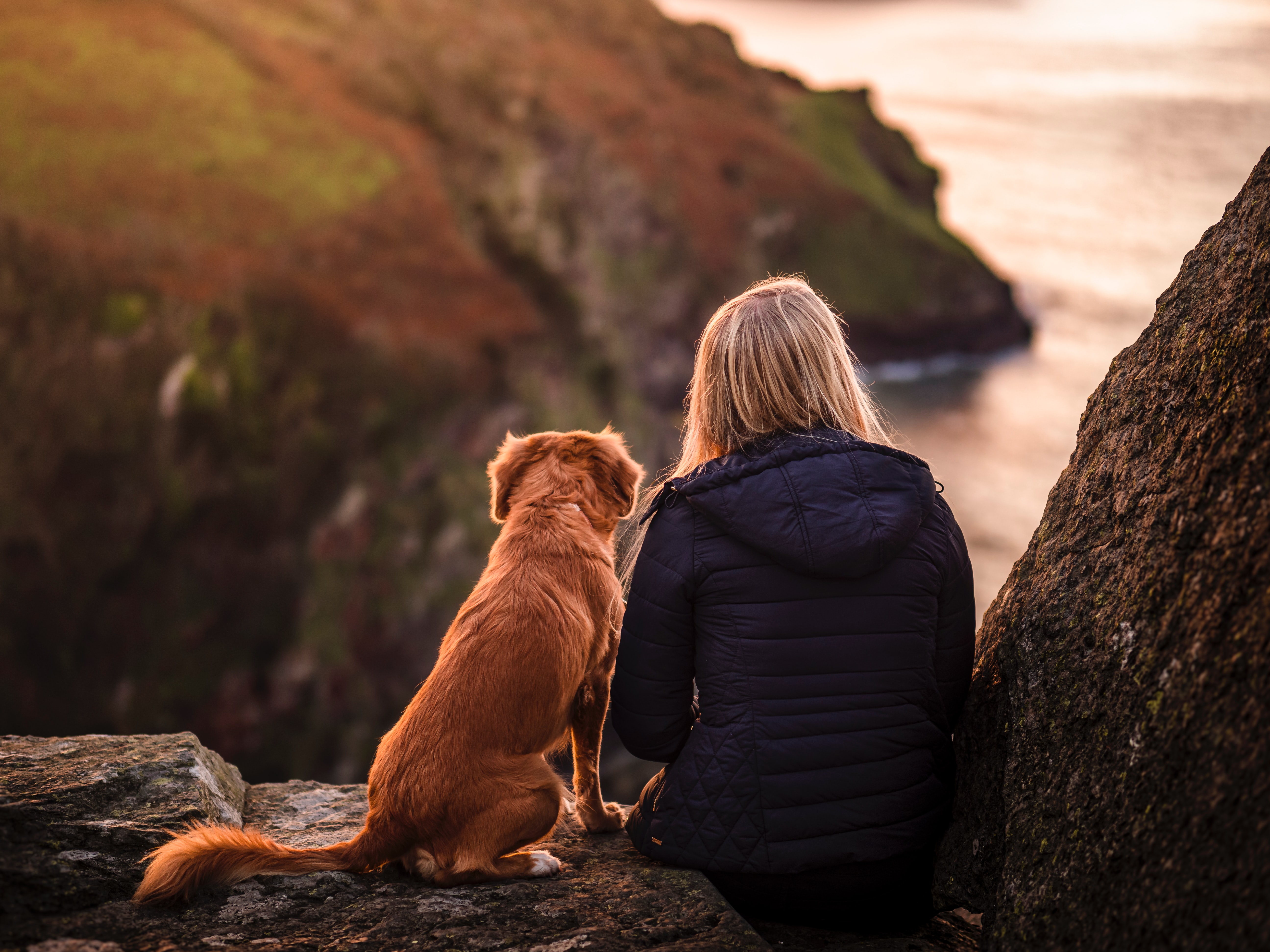
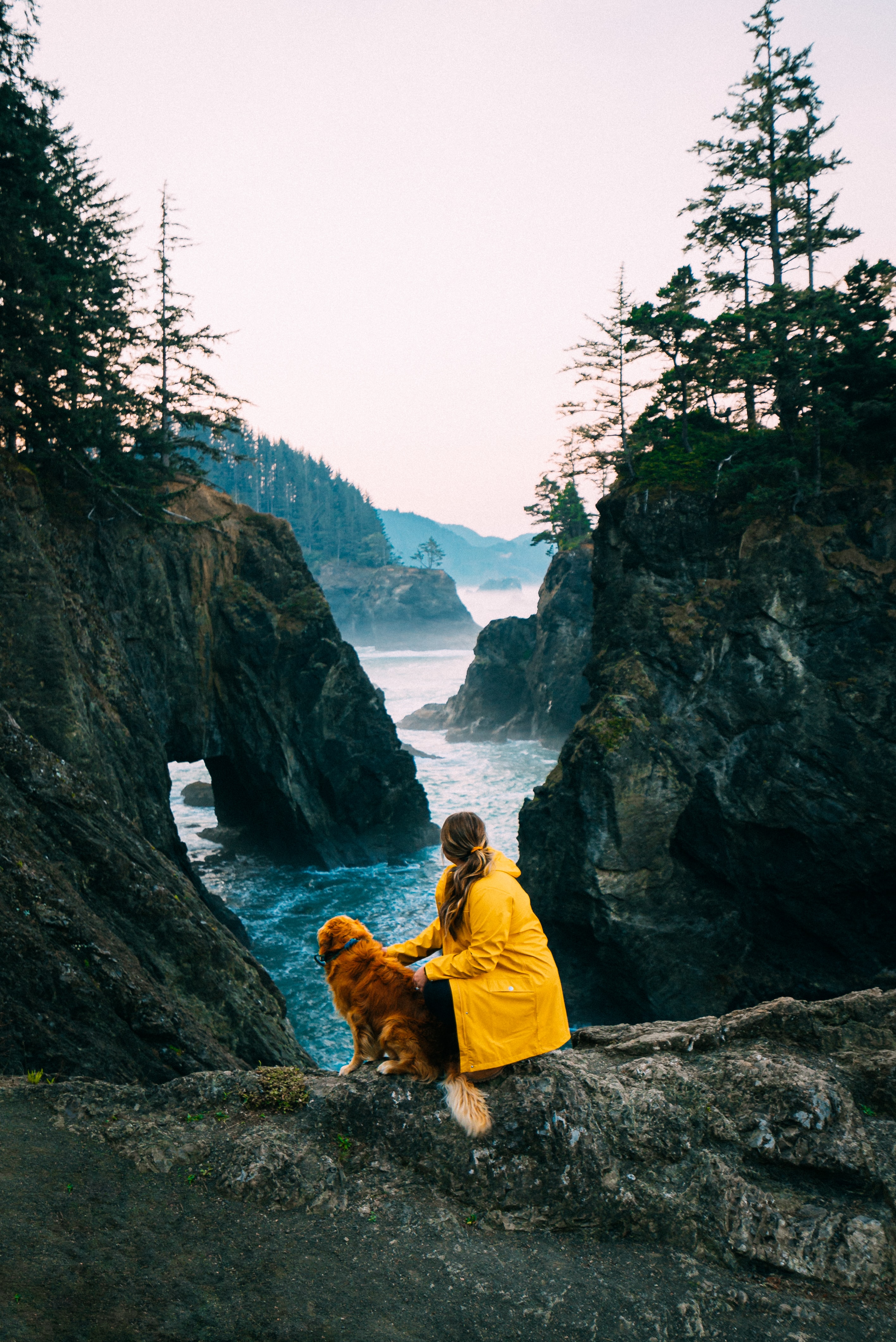
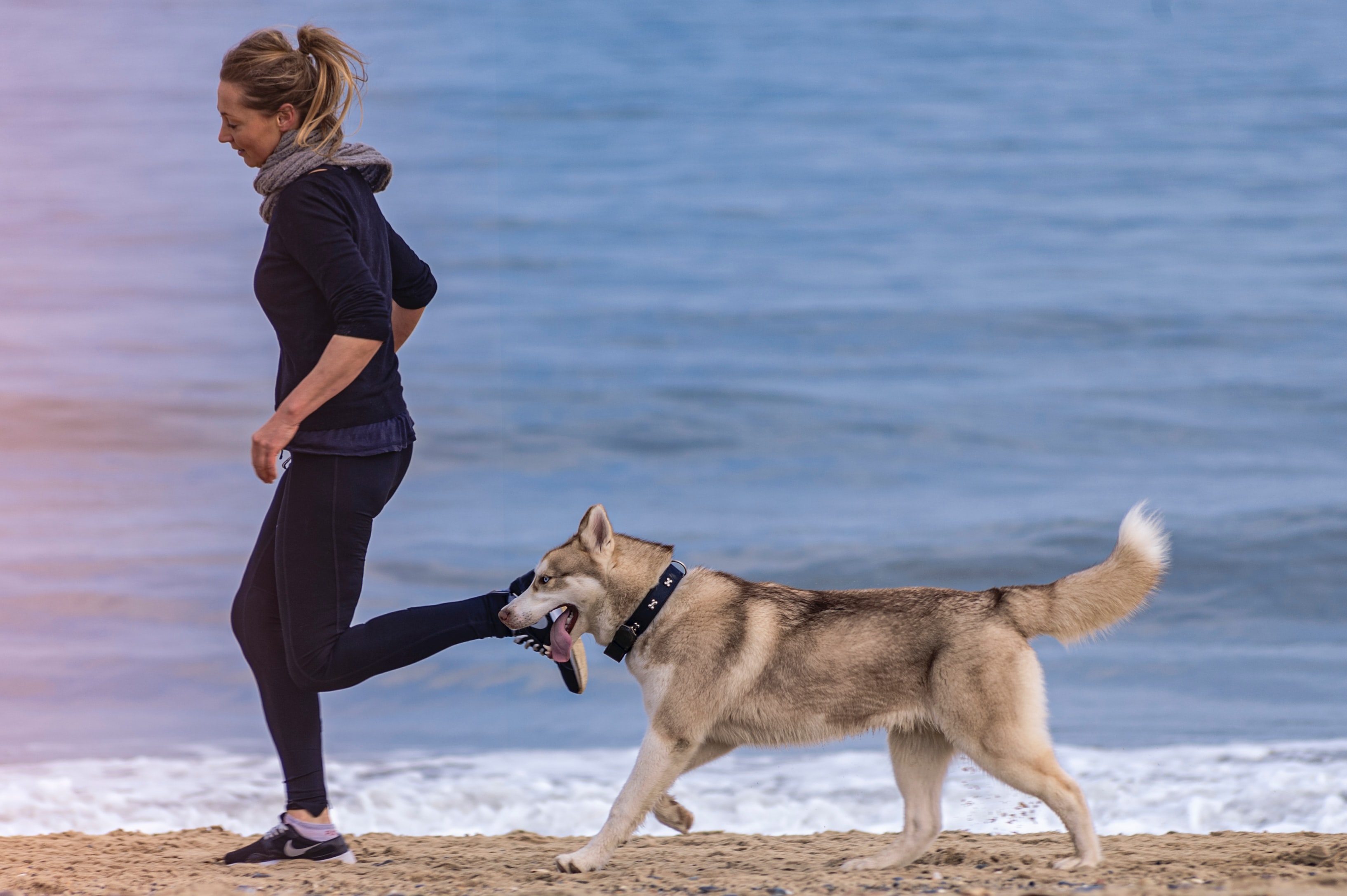
Of dogs and girls! From UnSplash.
oooo
oooo
oooo

oooo

oooo
oooo

oooo
oooo

Perfect photographs. We are so, so lucky to have dogs in our lives! (Yes, I know I have said this before but so what!)
Dogs are animals of integrity. We have much to learn from them.
Year: 2023
Of dogs and girls! From UnSplash.
oooo
oooo
oooo
oooo
oooo
oooo
oooo
oooo
Perfect photographs. We are so, so lucky to have dogs in our lives! (Yes, I know I have said this before but so what!)
It was published late last year but so what!
This story from the Dodo caught my eye. Don’t know why because the articles about dogs being rescued are not rare! But anyway, whatever the reason it seemed a good article to share with you all today.
ooOOoo
By Ashley Ortiz, Published on the 23rd December, 2022
The first time Donna Lochmann searched a crumbling, abandoned apartment building in St. Louis, Missouri, she couldn’t find who she was looking for. A Good Samaritan called Stray Rescue of St. Louis (SRSL) to report a dog sighting, but Lochmann, the shelter’s chief life saving officer, came out empty-handed.
“We searched every floor and never saw anything,” Lochmann told The Dodo. “There was not one dog, nothing.”
With temperatures dropping and more calls coming in about a dog barking from inside the building, Lochmann decided to go back again and keep searching. This time, she found someone.
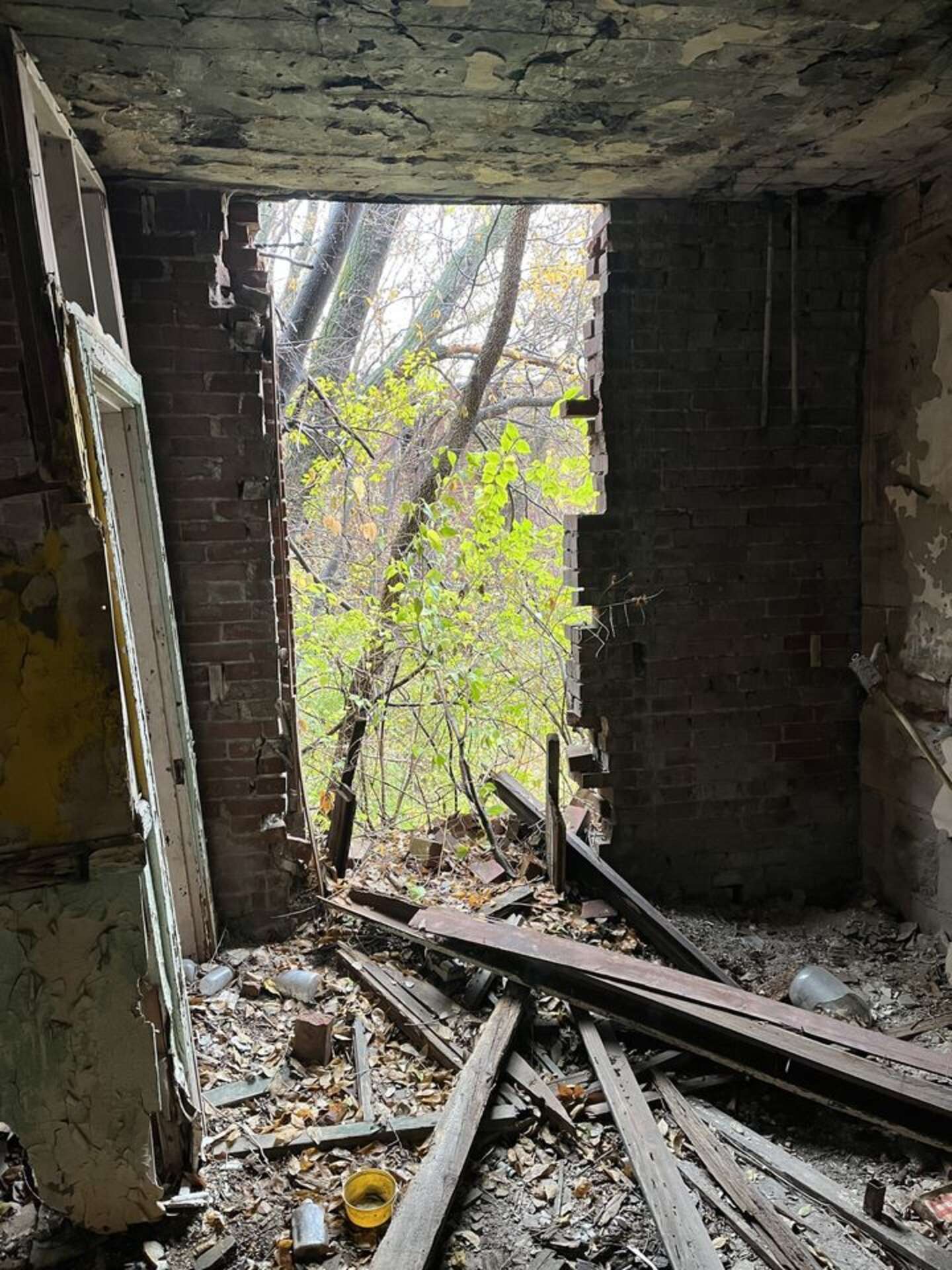
“When I got to the backside of the building, I saw a dog lying in the grass,” Lochmann said. “I saw her run towards the back of the building and she went in, so I followed her.”
Unfortunately, by the time Lochmann made it inside the building, the dog had already disappeared into one of the many empty apartments. She couldn’t find the pup on her own, so Lochmann went back to the shelter and recruited the help of other staff members.
Lochmann and her team went back to the building the next day, and as they went from room to room searching for the scared pup, they suddenly heard barking coming from inside.
“I got over there and there was a poor dog just lying in the rubble of this building,” Lochmann said. “She was absolutely trembling, her legs were shaking so hard.”
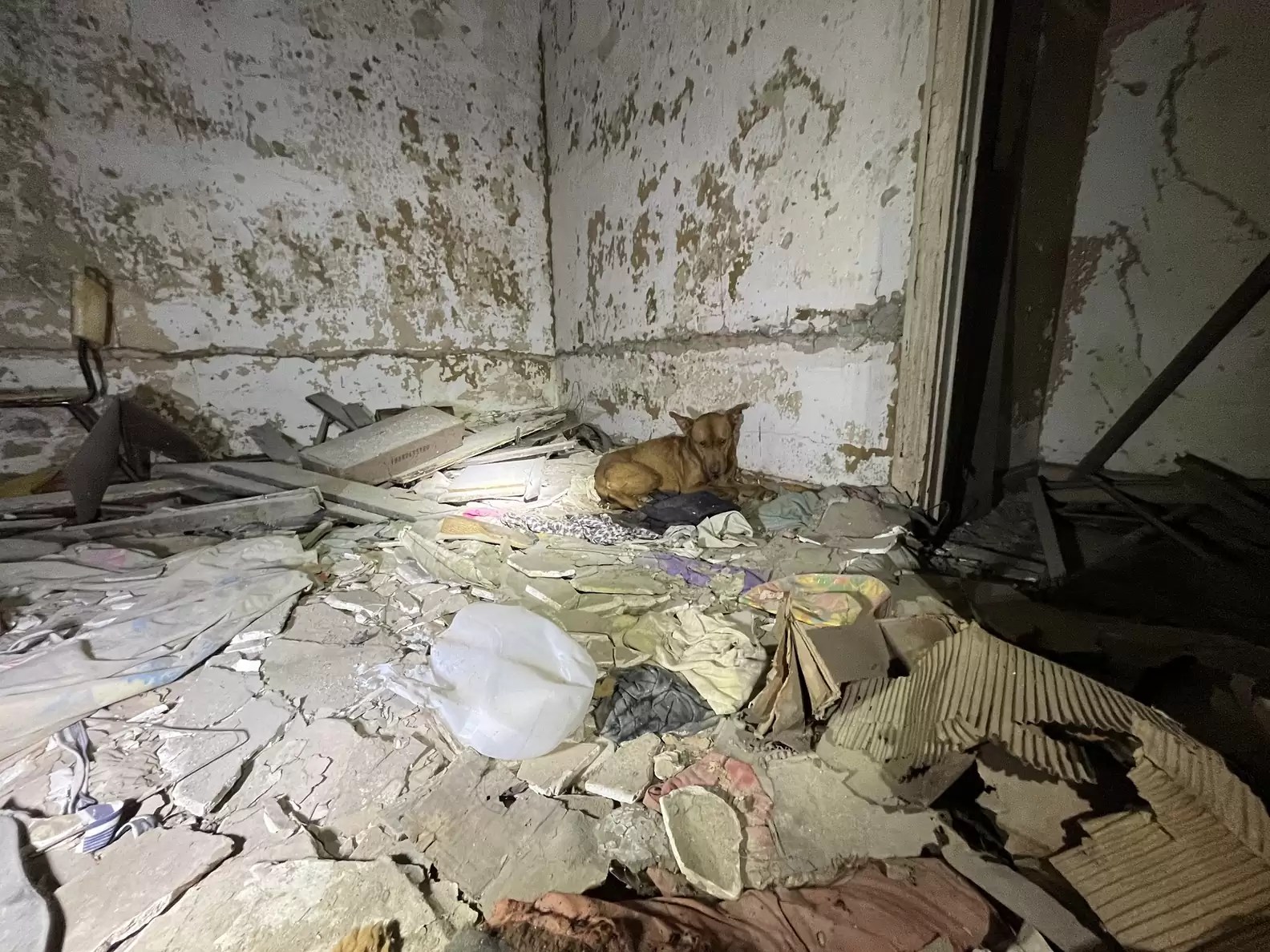
The weather was cold that day, but Lochmann knew that the dog’s shaking was caused by fear more so than lack of warmth.
“I felt so bad for her,” Lochmann said. “It’s been a while since I’ve seen one shaking that hard, and it’s just gut-wrenching to see them so scared of you.”
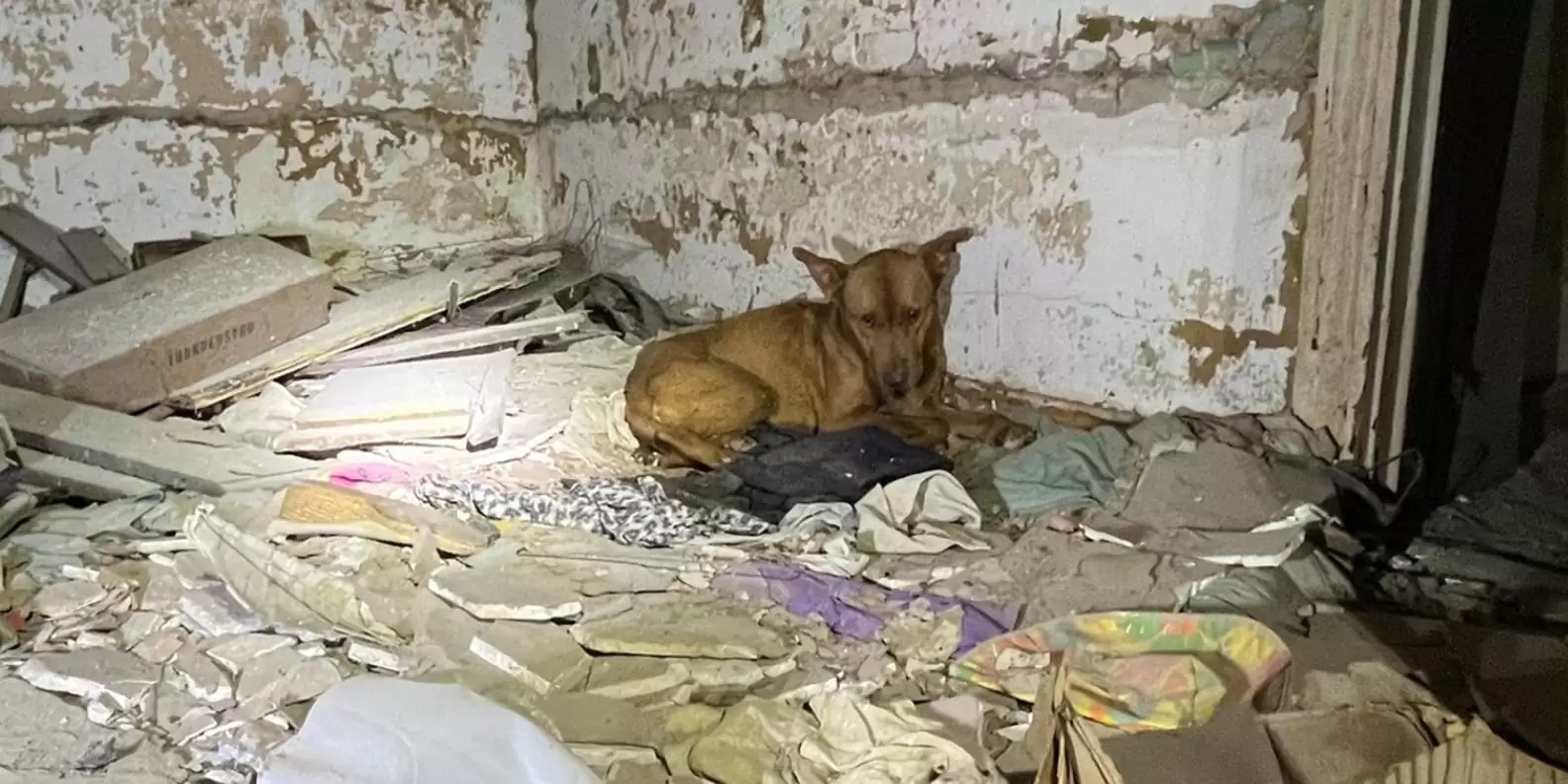
To get the dog out of the building, Lochmann decided to use a plastic crate instead of attempting to walk her out on a leash. Not only would it be physically difficult to lead the pup out of the crumbling building on a leash, but Lochmann feared it would stress her out even more.
So Lochmann used the leash she had to guide the dog into the plastic crate, then quickly closed the door behind her.
“Once she was in the crate, she was calm,” Lochmann said.
Lochmann and her team carried the crate out of the building, then gently loaded it into her Jeep. They brought her back to the shelter, where she underwent a medical evaluation. Luckily for the pup, she passed with flying colors.
The dog, whom Lochmann named Habenero, was OK physically, but she was still a little nervous when she first got to the shelter.

“She was still pretty scared at first,” Lochmann said. “But she came around fairly quickly. Within a few days, she wasn’t growling anymore and she stopped shaking when we would talk to her.”
Habanero has since been spending time with Lochmann and her crew at the shelter, slowly getting used to her surroundings. Together, they go on walks around the neighborhoods surrounding the shelter and enjoy plenty of snuggles throughout the day.

Now that Habanero is feeling more comfortable, Lochmann believes that she’s finally ready to go into a foster home. It’ll be yet another change for the 7-year-old pup, but Lochmann is confident that she’ll thrive.
“Once she gets into a home, she’s gonna have a bit of adjustment to do,” Lochmann said. “But she’ll do great. I’m just glad she’s not trembling anymore.”
All images by STRAY RESCUE OF ST. LOUIS with whom copyright rests.
ooOOoo
The thing about dogs is the way that we, as in humans, bond so well with the majority of dogs, and that the majority of dogs bond so well with us.
I was just saying this to Jeannie yesterday morning when Oliver jumped up on to the three-seat settee, admittedly onto his special cushion, next to me and proceeded to snooze with his head on my thigh. Dogs are the perfect companions and they are incredibly conscious of the states of mind of their loving humans.
Talk about looking up at the starry night!
I am sure that many of you have seen the latest images but still for those that have not…
ooOOoo
First the BBC presented a report on the 25th December, 2022. This is part of what they described:
James Webb telescope: Amazing images show the Universe as never before
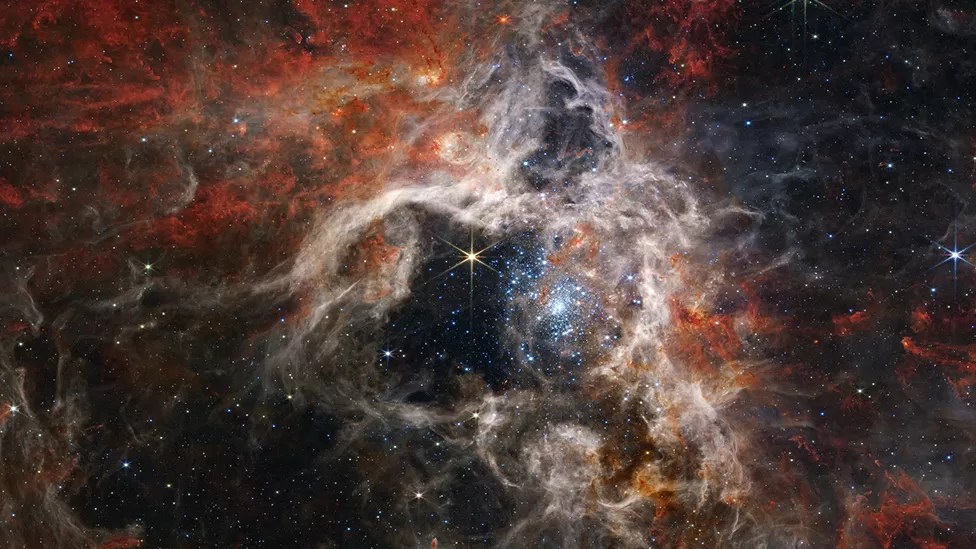
By Jonathan Amos, BBC Science Correspondent
It was the $10bn gift to the world. A machine that would show us our place in the Universe.
The James Webb Space Telescope (JWST) was launched exactly a year ago, on Christmas Day. It had taken three decades to plan, design and build.
Many wondered whether this successor to the famed Hubble Space Telescope could actually live up to expectations.
We had to wait a few months while its epic 6.5m primary mirror was unpacked and focused, and its other systems tested and calibrated.
The first thing you have to remember about James Webb is that it is an infrared telescope. It sees the sky at wavelengths of light that are beyond what our eyes are able to discern.
Astronomers use its different cameras to explore regions of the cosmos, such as these great towers of gas and dust. The Pillars were a favourite target of Hubble. It would take you several years travelling at the speed of light to traverse this entire scene.
Now we go to the NASA site for more of the JWST:
The dawn of a new era in astronomy has begun as the world gets its first look at the full capabilities of NASA’s James Webb Space Telescope, a partnership with ESA (European Space Agency) and CSA (Canadian Space Agency). The telescope’s first full-color images and spectroscopic data were released during a televised broadcast at 10:30 a.m. EDT (14:30 UTC) on Tuesday, July 12, 2022, from NASA’s Goddard Space Flight Center in Greenbelt, Maryland. These listed targets below represent the first wave of full-color scientific images and spectra the observatory has gathered, and the official beginning of Webb’s general science operations. They were selected by an international committee of representatives from NASA, ESA, CSA, and the Space Telescope Science Institute.
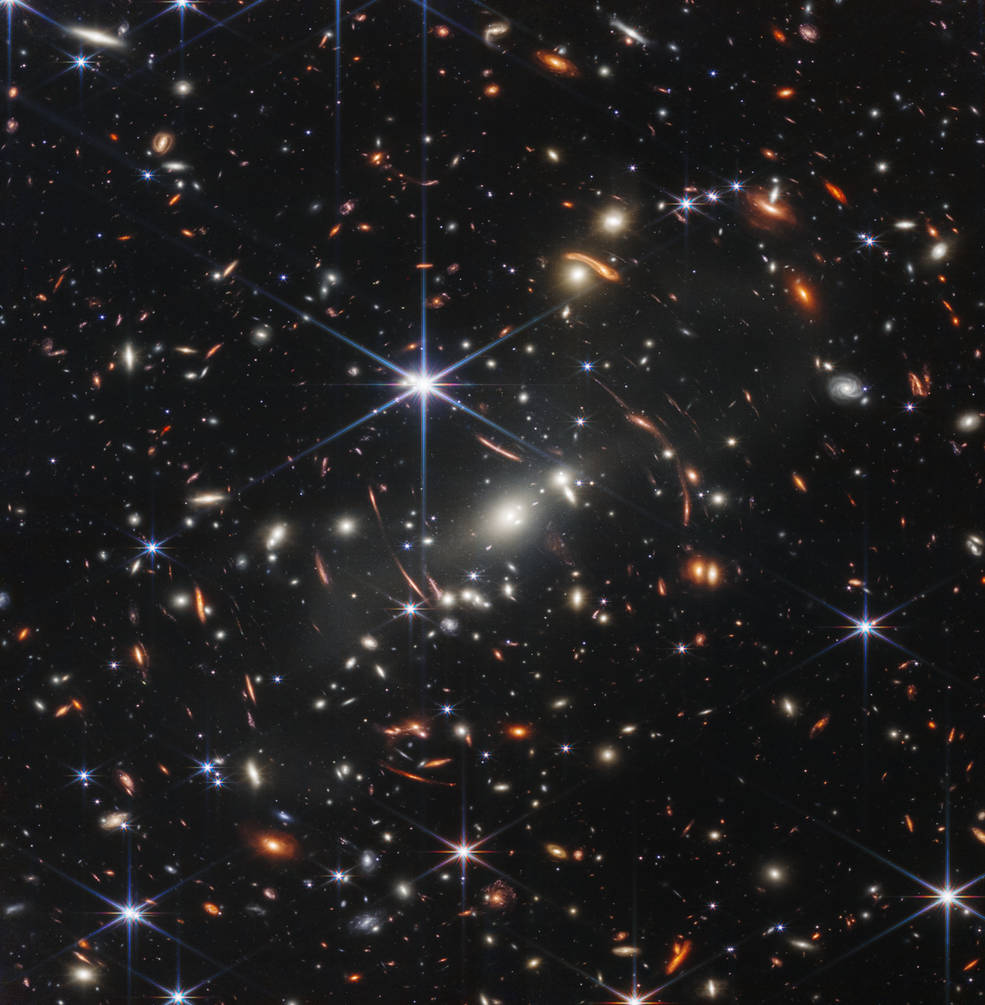
NASA’s James Webb Space Telescope has produced the deepest and sharpest infrared image of the distant universe to date. Known as Webb’s First Deep Field, this image of galaxy cluster SMACS 0723 is overflowing with detail.
Thousands of galaxies – including the faintest objects ever observed in the infrared – have appeared in Webb’s view for the first time. This slice of the vast universe covers a patch of sky approximately the size of a grain of sand held at arm’s length by someone on the ground.
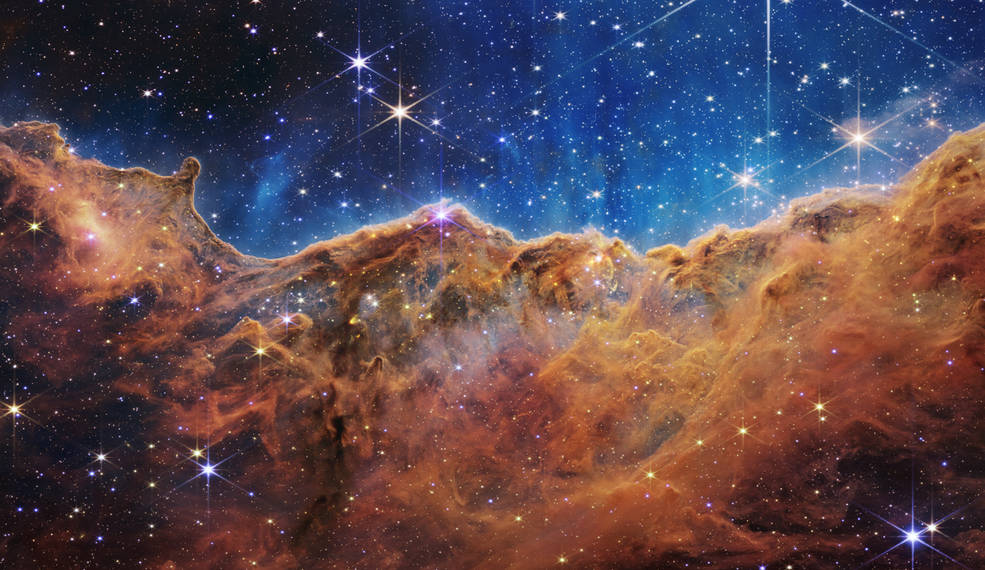
This landscape of “mountains” and “valleys” speckled with glittering stars is actually the edge of a nearby, young, star-forming region called NGC 3324 in the Carina Nebula. Captured in infrared light by NASA’s new James Webb Space Telescope, this image reveals for the first time previously invisible areas of star birth.
Called the Cosmic Cliffs, Webb’s seemingly three-dimensional picture looks like craggy mountains on a moonlit evening. In reality, it is the edge of the giant, gaseous cavity within NGC 3324, and the tallest “peaks” in this image are about 7 light-years high. The cavernous area has been carved from the nebula by the intense ultraviolet radiation and stellar winds from extremely massive, hot, young stars located in the center of the bubble, above the area shown in this image.
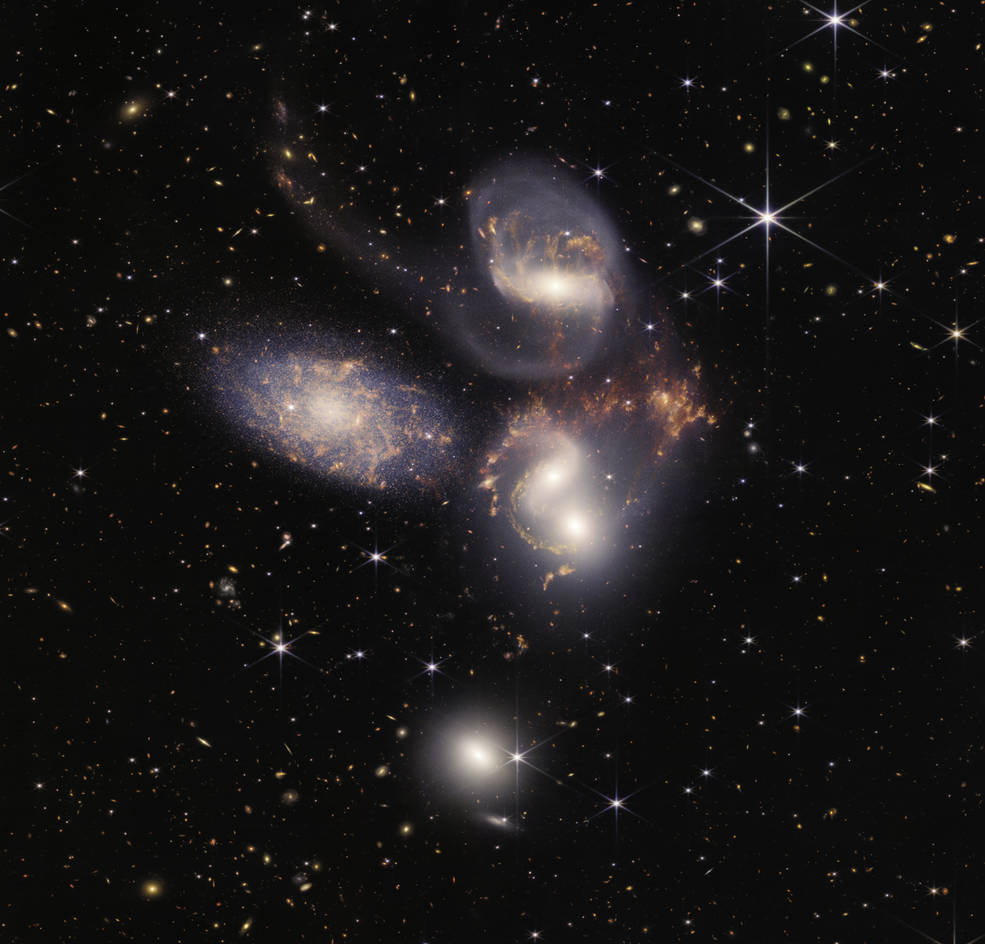
Stephan’s Quintet, a visual grouping of five galaxies, is best known for being prominently featured in the holiday classic film, “It’s a Wonderful Life.” Today, NASA’s James Webb Space Telescope reveals Stephan’s Quintet in a new light. This enormous mosaic is Webb’s largest image to date, covering about one-fifth of the Moon’s diameter. It contains over 150 million pixels and is constructed from almost 1,000 separate image files. The information from Webb provides new insights into how galactic interactions may have driven galaxy evolution in the early universe.
With its powerful, infrared vision and extremely high spatial resolution, Webb shows never-before-seen details in this galaxy group. Sparkling clusters of millions of young stars and starburst regions of fresh star birth grace the image. Sweeping tails of gas, dust and stars are being pulled from several of the galaxies due to gravitational interactions. Most dramatically, Webb captures huge shock waves as one of the galaxies, NGC 7318B, smashes through the cluster.
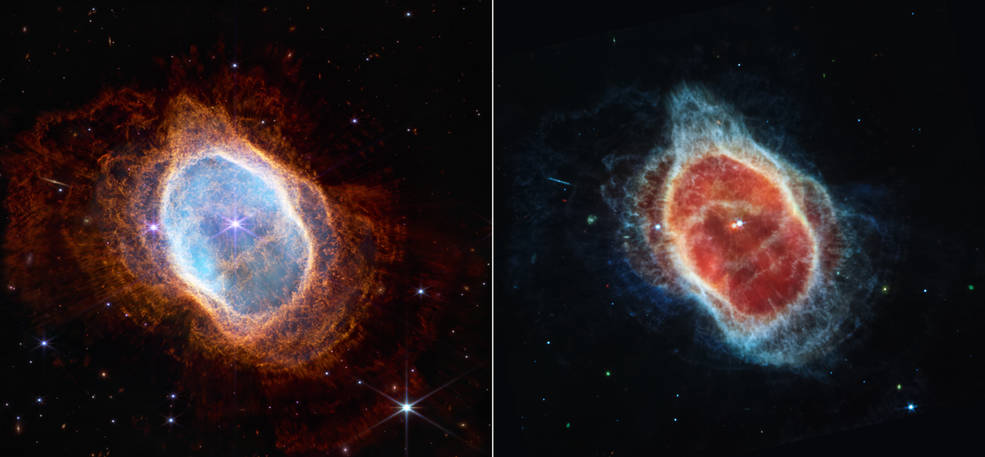
Some stars save the best for last.
The dimmer star at the center of this scene has been sending out rings of gas and dust for thousands of years in all directions, and NASA’s James Webb Space Telescope has revealed for the first time that this star is cloaked in dust.
Two cameras aboard Webb captured the latest image of this planetary nebula, cataloged as NGC 3132, and known informally as the Southern Ring Nebula. It is approximately 2,500 light-years away.
Webb will allow astronomers to dig into many more specifics about planetary nebulae like this one – clouds of gas and dust expelled by dying stars. Understanding which molecules are present, and where they lie throughout the shells of gas and dust will help researchers refine their knowledge of these objects.
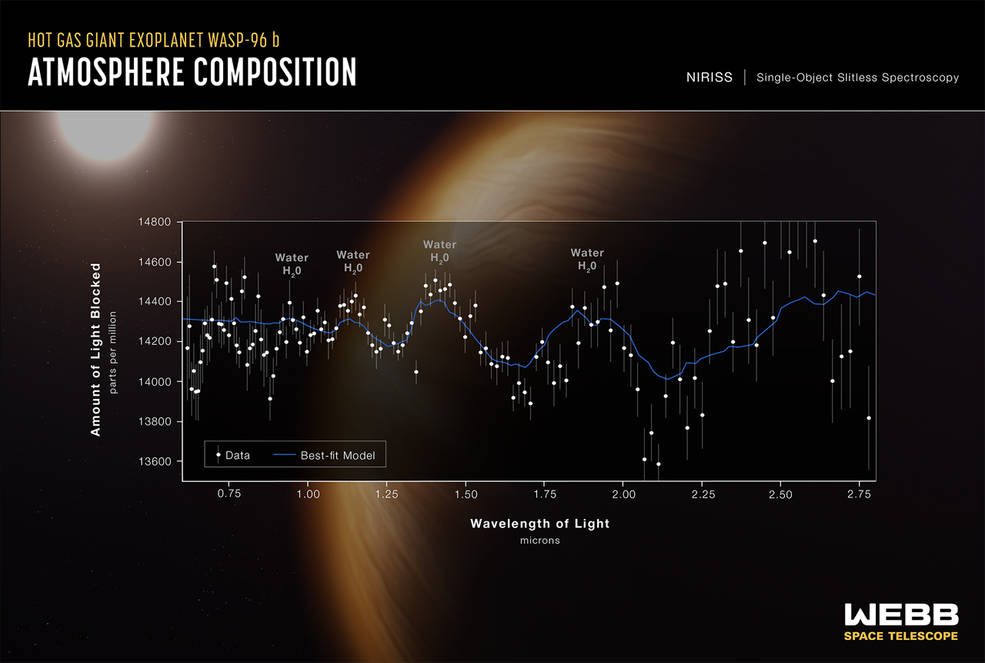
NASA’s James Webb Space Telescope has captured the distinct signature of water, along with evidence for clouds and haze, in the atmosphere surrounding a hot, puffy gas giant planet orbiting a distant Sun-like star.
The observation, which reveals the presence of specific gas molecules based on tiny decreases in the brightness of precise colors of light, is the most detailed of its kind to date, demonstrating Webb’s unprecedented ability to analyze atmospheres hundreds of light-years away.
While the Hubble Space Telescope has analyzed numerous exoplanet atmospheres over the past two decades, as in capturing the first clear detection of water in 2013, Webb’s immediate and more detailed observation marks a giant leap forward in the quest to characterize potentially habitable planets beyond Earth.
ooOOoo
Just a few of the very special photographs. They are remarkable!
December’s issue of the Science magazine had an article in which there was a paragraph that described:
The first data and images beamed back to Earth by JWST suggest it was all worthwhile. They are “beautiful” and ‘mind-blowing,” according to astronomers who have spoken with Science. It was like putting on infrared glasses, one said, and seeing the universe anew.
The GOLDEN EYE, by Daniel Clery
Imagine that just, say, 25 years ago these images and this mission would have been science fiction and now it is a reality.
I will leave you with a quotation from that SCIENCE magazine (16th December): “Politicians and pundits often make up whatever suits their political goals about science, but scientists recognize how little we understand about the Universe. As Kennedy said, “The greater our knowledge increases, the greater our ignorance unfolds.“”
 Learning from Dogs