“The more it changes, the more it’s the same thing.” Apparently an epigram by Jean-Baptiste Alphonse Karr in the January 1849 issue of his journal Les Guêpes (“The Wasps”). Source.
Both the heading and the sub-heading to today’s post reflect strong connections to Chris Snuggs. Chris has featured previously several times on Learning from Dogs and, I’m sure, my association with Chris has been mentioned. An association going back too many years to the time when Chris invited me to run a course on sales and marketing for the students at the French Institute ISUGA in Quimper, France. It became a regular event and Chris and I got to know each other well.
A retired teacher, I am very worried about the state and future of the world. One thing may help, a determination to communicate and state the truth as one sees it, which is what I seek to do. I try to see things objectively; my horror of being brainwashed or motivated by some dogma or partisan viewpoint is absolute.
I salute the free press which has a good record of unearthing nepotism, corruption, dishonest and lunacy. However, the nepotists, the despots, the corrupt, the dishonest and the lunatics often have a lot of power, money and therefore influence. This allied to the fact that the lumpenmass is too busy toiling away to survive and often shrugs its shoulders in hopelessness means that the aforementioned get away with it.
Anyway, enough of me waffling on! In my email in-box earlier today was an email from Chris offering me a couple of links to his posts on Nemo Insula Est. One was very funny and one was decidedly less so. The latter is being republished here today, with Chris’s permission. It is called The State of America.
oooOOOooo
The State of America
A Blog post from the “Daily Telegraph” on October 3rd, 2013 by:
Ghislane400
I haven’t got time to verify all of these statistics, but I assume they are accurate. I have added some from Nicholas Kristoff at the end.
As far as I understand, the only reason the USA is not totally bankrupt right now is because the rest of the world keeps lending to it, believing that it is “too big to fail.” Many countries and Empires in history have believed they are too big and important to fail, France being yet another one ………. On that point, see: “The Life Cycle of a Democracy”, which is rather sobering!
After DECADES of bad decisions, America is now dangerously in debt! Obama has crippled America since he was re-elected, and his ineptitude is highlighted by the facts below:
30 years ago the US national debt stood at about one trillion dollars. Today it stands at almost 17 TRILLION DOLLARS!
About 40 years ago the TOTAL debt stood at about 2 trillion dollars, today it is more than 56 TRILLION DOLLARS!
At the same time as they have run up all of this debt, their economic infrastructure and their ability to create wealth has been completely gutted. Since 2001, America has lost more than 56,000 manufacturing facilities and millions of jobs have been moved overseas.
Their share of the global GDP declined from 31.8% in 2001 to 21.6% in 2011.
The percentage of self-employed Americans is at an all time low whilst the amount of them on benefits is at a record high.
During Obama’s first term, the federal government accumulated more debt than it did under the first 42 U.S presidents combined.
If they started to pay off the new debt accumulated under Obama at the rate of $1 per second, it would take them 184,000 years to pay it off.
Every hour of every day, the federal government steals more than 100 MILLION DOLLARS from their children and your grandchildren.
America has dropped in global economic competitiveness for the past 4 years running.
According to “The Economist”, America was the best place to be born in 1988; now they tie for 16th place.
There are fewer Americans working in manufacturing today than in 1950, despite the fact that their population has doubled since then.
In Detroit alone, there are over 70,000 abandoned buildings.
When NAFTA was pushed through American Congress in 1933, they had a trade surplus with Mexico of 1.6 billion dollars. They had a trade DEFICIT with them of 61.6 billion dollars come 2010.
Their trade deficit with China was 6 MILLION DOLLARS in 1985 for the entire year. In 2012 their trade deficit with China was 315 BILLION DOLLARS. This is the largest trade deficit between nations in the history of the world.
America also loses half a million jobs to China annually. Fewer than 65% of all men in America have jobs. 53% of American male workers make less than $30,000 a year! Only 7% of all non-farm workers in the States are self-employed. This is an all time low.
146 million Americans are either ‘poor’ or ‘low income’. 49% of them live in a home that receives benefits from the federal government, according to the U.S Census Bureau. One in every 6 Americans is on Medicaid and Obamacare will add another 16 million to the Medicaid rolls; this will be a total of 73.2 million come 2025. This will increase liabilities of 38 trillion dollars to Medicare over the next 75 years, which equates to $328,404.00 for every single household in the United States.
Of the 56 million Americans collecting Social Security benefits now, by 2035 that will soar to an astounding 91 MILLION! That is a 134 trillion dollar shortfall over the next 75 years.
Americans on Social Security Disability exceed the population of Greece, and those on food stamps exceed the population of Spain.
45% of all children in Miami now live in poverty, more than 50% of all children in Cleveland live in poverty, 60% of all children in Detroit live in poverty.
More than 1 million public school students in America are HOMELESS. This is the first time in American history this has ever happened.
Since Obama got back in, those Americans on food stamps have risen from 32 million to 47 million. That number exceeds the combined populations of Alaska, Arkansas, Connecticut, Delaware, District of Colombia, Hawaii, Idaho, Iowa, Kansas, Maine, Mississippi, Montana, Nebraska, Nevada, New Hampshire, New Mexico, North Dakota, Oklahoma, Oregon, Rhode Island, South Dakota, Utah, Vermont, West Virginia and Wyoming!
What a spiffing good job Obama is doing of bankrupting America! Anyone would think he hates the States! Seriously, anyone who voted for him owes an apology to the children of America, for whom a terrible country full of debt has been created by the biggest clown one could imagine.
The richest 1 percent of Americans now take home almost 24 percent of income, up from almost 9 percent in 1976. As Timothy Noah of Slate noted in an excellent series on inequality, the United States now arguably has a more unequal distribution of wealth than traditional banana republics like Nicaragua, Venezuela and Guyana.
C.E.O.’s of the largest American companies earned an average of 42 times as much as the average worker in 1980, but 531 times as much in 2001. Perhaps the most astounding statistic is this: From 1980 to 2005, more than four-fifths of the total increase in American incomes went to the richest 1 percent.
POSTSCRIPT:
The fact that we are here today to debate raising America’s debt limit is a sign of leadership failure. It is a sign that the U.S. Government can’t pay its own bills. It is a sign that we now depend on on-going financial assistance from foreign countries to finance our Government’s reckless fiscal policies. … Increasing America’s debt weakens us domestically and internationally. Leadership means that “the buck stops here.” Instead, Washington is shifting the burden of bad choices today onto the backs of our children and grandchildren. America has a debt problem and a failure of leadership. Americans deserve better.
Want to know who said that, and when? ……
Senator Barack Obama on March 20, 2006.
oooOOOooo
Just a footnote on that level of US inequality reported by Nicholas Kristoff using an extract from a recent post on Learning from Dogs: Our broken ways:
OK, that’s enough ‘copying’ from me so please go and read more about the plight of those poor billionaires. But if the NYT and Paul Krugman will forgive me, here’s the paragraph towards the end of the Krugman essay that makes me sick [my emboldening]:
The thing is, by and large, the wealthy have gotten their wish. Wall Street was bailed out, while workers and homeowners weren’t. Our so-called recovery has done nothing much for ordinary workers, but incomes at the top have soared, with almost all the gains from 2009 to 2012 going to the top 1 percent, and almost a third going to the top 0.01 percent — that is, people with incomes over $10 million.
There will be hundreds of thousands, if not millions, who share my view that this dimming of America’s historic beacon of truth and justice is a failure not just for the United States of America but for the rest of the world.
It seems appropriate to remind all you dear readers as to why I write this Blog. Most easily encapsulated in what appears on my Welcome page:
Dogs live in the present – they just are! Dogs make the best of each moment uncluttered by the sorts of complex fears and feelings that we humans have. They don’t judge, they simply take the world around them at face value. Yet they have been part of man’s world for an unimaginable time, at least 30,000 years. That makes the domesticated dog the longest animal companion to man, by far!
As man’s companion, protector and helper, history suggests that dogs were critically important in man achieving success as a hunter-gatherer. Dogs ‘teaching’ man to be so successful a hunter enabled evolution, some 20,000 years later, to farming, thence the long journey to modern man. But in the last, say 100 years, that farming spirit has become corrupted to the point where we see the planet’s plant and mineral resources as infinite. Mankind is close to the edge of extinction, literally and spiritually.
Dogs know better, much better! Time again for man to learn from dogs!
Pharaoh, as with all dogs, is an integrous creature – man has much to learn from him, and all dogs.
Each and every one of us must fight for truth, justice, sanity and brotherhood!
How the foreclosure crisis was a boon for the super wealthy.
For some time now, must be quite a few years, I have subscribed to Yves Smith’s Naked Capitalism blog. I do so for a number of reasons.
Thus it was that a few days ago I read with a mixture of anger and disgust an article about the consequences of the foreclosure crisis on the wealthy. Within a few hours of me requesting by email permission to republish that article on Learning from Dogs came the reply from Yves granting such permission.
This is Naked Capitalism fundraising week. 53 donors [now well over 400, Ed.] have already invested in our efforts to shed light on the dark and seamy corners of finance. Join us and participate via our Tip Jar or another credit card portal, WePay in the right column, or read about why we’re doing this fundraiser and other ways to donate, such as by check, as well as our current goal, on our kickoff post.
It’s a welcome departure to see Adam Davidson’s weekly column in the New York Times, which usually puts a happy face on how the 1% are winning the class war in America, have a guest writer look at the other side of the story.
Catherine Rampell has a short but compelling piece on how the foreclosure crisis was wealth transfer from lower and middle income families to the rich. Her points are simple: the typical person who lost their home wasn’t a greedhead who bought too much house or refied to buy flat panel TVs and go on cruises (if you hang out with mortgage types, you’ll get a big dose of profligate consumer urban legend). The people who were like that (and there were some) for the most part were in subprime loans that reset in 2007 and 2008 and were in the early wave of foreclosures. The people who’ve lost their homes in later foreclosures were overwhelmingly people who had the bad fortune to buy late in the housing bubble (so when the bust hit, they had negative equity and couldn’t use lower rates to refi into cheaper payments) and took economic hits as a direct result of the crisis (hours cuts and job losses; other people who were hurt were in the more typical “shit happens” categories, like suffering medical problems, with their situation made much worse by their inability to sell or refinance their home).
Rampell’s contribution is to look at the phenomenon of investors, both big and small, and how they’ve bought properties at foreclosure and then flipped them. Separately, Josh Rosner recently released the astonishing statistic: that sales of owner-occupied properties showed only a 1% gain in the last 12 months. The gains that have been driving the indexes were all in investor owned properties. Some flipped to other investors. In hot markets, local investors have been doing “mini-bulks,” acquiring small portfolios to sell to private equity investors, some without renovating them, others with modest fix-ups. Others sold them to homebuyers.
Rampell uses the example of a couple who believed that renting was throwing away their money, and had the bad luck to buy a moderately-priced fixer-upper in early 2007. Each wage earner saw their income drop and unable to get a loan modification, they lost their home. Their $309,000 Seattle home went to an investor for $155,000 in the summer of 2011. That investor just sold it to a homeowner for $290,000, not far below what the hapless couple paid for it. But the new buyer paid all cash.
Rampell tells us:
Of the 87,062 foreclosures in the last five years that were bought by corporate investors and have been flipped, about a quarter were sold for at least $100,000 more than what the investor originally paid, according to [an online real estate listings site] Redfin (Although it’s impossible to know how much investors spent on upgrades or renovations.)….
The boom-bust-flip phenomenon is just one of the most obvious ways that research suggests the financial crisis has benefited the upper class while brutalizing the middle class. Rents have risen at twice the pace of the overall cost-of-living index, partly because middle-class families can’t get the credit they need to buy. That means “landlords can raise rents with impunity,” says Glenn Kelman, chief executive of Redfin. And according to a report by David Autor, the M.I.T. economist, job losses during and after the recession were concentrated in midskilled and midwage jobs, like white-collar sales, office and administrative jobs; and blue-collar production, craft, repair and operative jobs. Employment for higher-skilled workers, on the other hand, has grown substantially.
There is a second way foreclosures have served as a wealth transfer to the capitalist classes. Foreclosures don’t necessarily result in evictions. Banks often leave properties in a “zombie” state, starting foreclosures but not completing them, leaving the owner who thought he was foreclosed on still on the hook for property taxes. Another variant which is much less damaging is to leave the homeowner in place. I recently met an investor who is acquiring homes in Atlanta. The day after he buys a house, he goes to introduce himself to the former homeowner to see if he can work out a deal to keep them in place as tenant. In the overwhelming majority of cases, he can. “They were paying $1100 on their mortgage and the bank wouldn’t give them a mod. I’ll let them rent for $700, which is way above what they’d have gotten if they wrote the principal down to the price at which I bought the house. And I tell the tenants I’d be happy to sell the home to them.” We didn’t discuss details, but it sounded as if he’d be willing to structure rent to own deals (where part of the rent would go to a down payment on the house).
He was clear that his business depended on what he saw as value destroying behavior by banks. He described how he’d recently bought a home and when he went for his usual visit to the house, a well-dressed black man met him and invited him in, saying he’d be out in 30 days and assumed it wasn’t a problem. The new owner saw the house was in impeccable shape. He chatted with the owner a bit and found out he was a bodybuilder with a high-end training business. He asked the homeowner: “You look like you take good care of yourself and the house. You’d been paying on time. What happened?”
The trainer told him that he’d bought the house at the peak of the cycle for $160,000. The house was clearly now worth way less. He tried to get the bank to modify it to a principal balance of $100,000. The bank wouldn’t consider it. “So I bought a house which is comparable to this one for $50,000 and gave this one up.”
In this case, the homeowner had enough cash to arbitrage himself. The investor told me he’d bought the foreclosed home for $40,000. Had the bank cut a deal for $100,000 (and who knows, the homeowner might have accepted a higher number), it would have come out way ahead. But that also assumes that the bank owned the mortgage. It’s pretty much a given that the bank was a servicer, and as we’ve seen again and again, servicers don’t have the incentives or the infrastructure to do mods. So investor in the mortgages lose, homeowners lose. The winners are the banks as inefficient looters (the money they skim off the servicing is chump change relative to the damage done by negligent and predatory servicing) and the investors who profit by picking up the pieces. This is isn’t a well-functioning economic system, it’s rentier capitalism. And it’s looking more and more like a doomsday machine for what remains of the middle class.
oooOOOooo
Can’t add anything polite to this! Except, to say it’s a very long way from integrity!
Note:We have a flooring contractor in the house all week and it’s making it a little tricky to spend the couple of hours a day that is my usual pattern for writing posts for LfD. So apologies if this week’s posts are more dependent on the thoughts of others than is usual.
Alain de Botton
Alain de Botton is a familiar face on British television. WikiPedia’s entry describes him, thus:
Alain de Botton, FRSL (born 20 December 1969) is a Swiss/British writer, philosopher, television presenter and entrepreneur, resident in the United Kingdom. His books and television programmes discuss various contemporary subjects and themes, emphasizing philosophy’s relevance to everyday life.
He has been the presenter of a BBC Six-part series called Philosophy: A Guide To Happiness. And who wouldn’t be turned on by that!
Luckily, all six episodes are available on YouTube, at this overall link.
But I wanted to share the first episode because despite the title being Socrates on Self-Confidence it really speaks to our lives in this year of 2013.
Moving on.
A recent item on Big Think, again about philosophy, jumped off the page at me. It specifically looked at making our life, as in mental health, easier in these demanding times. It was by Daniel Dennett and was called The Philosopher’s Self-Help Book.
Daniel Dennett
oooo
The Philosopher’s Self-Help Book (with Daniel Dennett)
While Silicon Valley and Silicon Alley busy themselves making every aspect of our lives more efficient (except, perhaps, for the process of discovering these new technologies, learning them, and integrating them into our lives), Daniel Dennett sits up at Tufts University in Massachusetts, philosophizing. His latest book, Intuition Pumps and Other Tools for Thinking is an attempt to make transparent some of the tricks of the philosopher’s trade. In an accelerating age, it’s a self-help book designed to slow the reader down and improve our ability to think things through.
The kinds of things Mr. Dennett likes to think about include the nature of consciousness, evolution, and religious belief. But the mind-training his new book offers is applicable to any problem you want to consider thoroughly. In an age of quick fixes and corner-cutting, we’re in constant danger of bad decision making – of overreliance on what cognitive psychologist Daniel Kahneman calls “system 1”, and what most of us call intuition. This rapid decision making channel of the brain is helpful when we are in mortal danger, or pressed for a quick decision within our areas of expertise. But for most decisions, the slower, more deliberate channel (system 2) is much more reliable. What Dennett offers, then, in Intuition Pumps, is a workout for system 2 – a series of thought experiments you can apply to puzzles real and imagined to bulk up the slower, wiser parts of your consciousness.
Some of the tools Dennett offers in the book are more familiar than others. Reductio ad absurdum arguments, for example, in which we test the validity of a claim by taking it to its most outrageous illogical extreme (a: “all living things have a right to liberty.” b: “so let me get this straight – a blade of grass has a right to liberty? What does that even mean?”). But the true delights of the book are the far-out exercises Dennett and his colleagues have dreamed up in the course of their work, such as “Swampman Meets A Cow-Shark”, from Donald Davidson, which begins:
Suppose lightning strikes a dead tree in a swamp; I am standing nearby. My body is reduced to its elements, while entirely by coincidence (and out of different molecules) the tree is turned into my physical replica. My replica, The Swampman, moves exactly as I did; according to its nature it departs the swamp, encounters and seems to recognize my friends, and appears to return their greetings in English.
Walking us through Davidson’s considerations about whether and to what extent the Swampman is anything like Davidson, and related ones about a cow that gives birth to something that looks exactly like a shark (yet has cow DNA in all of its cells), Dennett teaches us a surprising lesson about the utility of wild philosophical speculation.
Cloaked in the breezy, familiar trappings of a self-help book, Intuition Pumps is in actuality a dark mirror of that genre – a field of rabbit holes designed to leave the reader with more questions than answers, and wiser for the long and indirect journey.
Watch for Daniel Dennett’s Tools For Better Thinking – a Big Think Mentor workshop coming soon.
oooOOOooo
I’m tempted to put the book on my own reading list. If you want to drop into the appropriate Amazon page there is an audio link plus the option to read an extract. Amazon describe the book, as follows:
One of the world’s leading philosophers offers aspiring thinkers his personal trove of mind-stretching thought experiments.
Over a storied career, Daniel C. Dennett has engaged questions about science and the workings of the mind. His answers have combined rigorous argument with strong empirical grounding. And a lot of fun.
Intuition Pumps and Other Tools for Thinking offers seventy-seven of Dennett’s most successful “imagination-extenders and focus-holders” meant to guide you through some of life’s most treacherous subject matter: evolution, meaning, mind, and free will. With patience and wit, Dennett deftly deploys his thinking tools to gain traction on these thorny issues while offering readers insight into how and why each tool was built.
Alongside well-known favorites like Occam’s Razor and reductio ad absurdum lie thrilling descriptions of Dennett’s own creations: Trapped in the Robot Control Room, Beware of the Prime Mammal, and The Wandering Two-Bitser. Ranging across disciplines as diverse as psychology, biology, computer science, and physics, Dennett’s tools embrace in equal measure light-heartedness and accessibility as they welcome uninitiated and seasoned readers alike. As always, his goal remains to teach you how to “think reliably and even gracefully about really hard questions.”
A sweeping work of intellectual seriousness that’s also studded with impish delights, Intuition Pumps offers intrepid thinkers—in all walks of life—delicious opportunities to explore their pet ideas with new powers.
Speaking of ‘pet ideas with new powers’ prompts one to reflect on the amount of time that dogs spend thinking! As the following picture confirms!
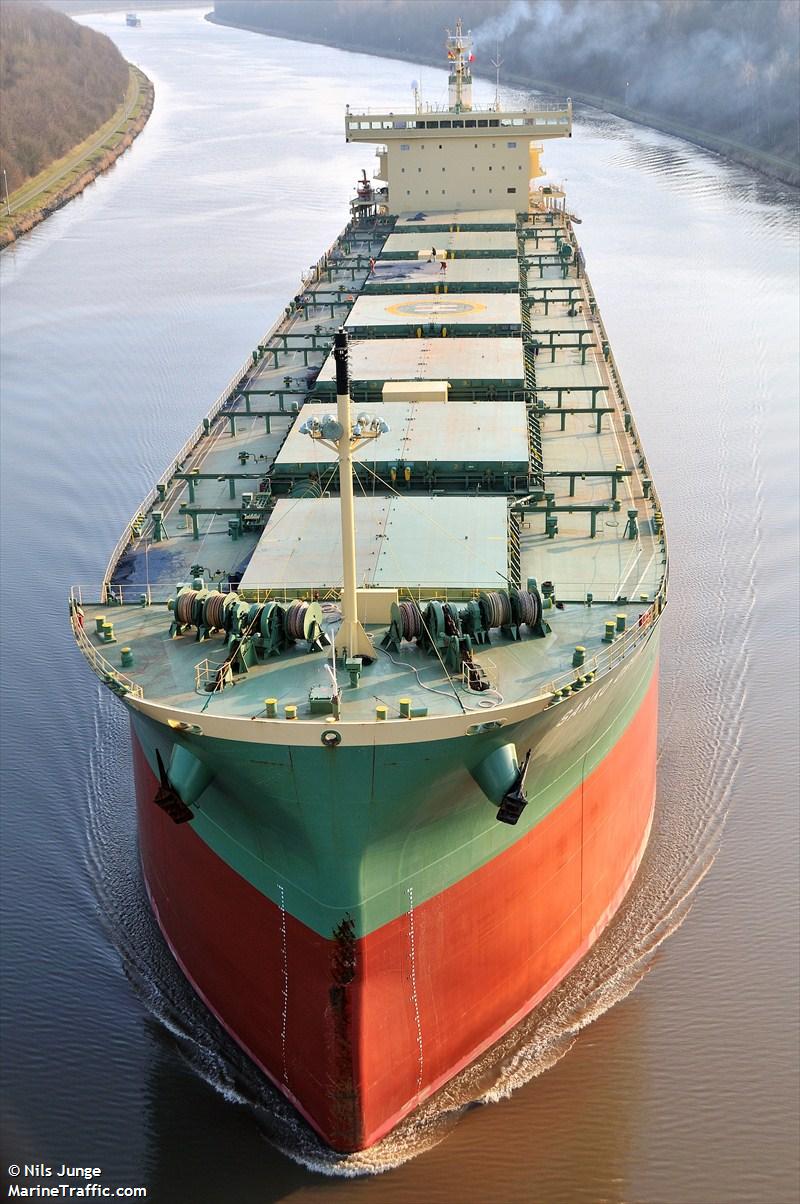
Just a ship out of many thousands that ply the trade routes across our oceans. She was built in 2011 and is classified as a bulk carrier. Her gross tonnage is 40,142 tons. She is 738 feet long and 105 feet wide.
So what, you may ask?
To answer that question, let me turn to a recent post over on TomDispatch generously offered for republication on Learning from Dogs. (Thanks Tom.)
It was the stuff of fantasy, of repeated failed expeditions and dreams that wouldn’t die. I’m talking about the Northwest Passage, that fabled route through Arctic waters around North America. Now, it’s reality. The first “bulk carrier,” a Danish commercial freighter with a load of coal, just traveled from Vancouver, Canada, to Finland, cutting a week off its voyage, skipping the Panama Canal, and even, according to the Finnish steel maker Ruukki Metals, for whom the coal was intended, “reducing its greenhouse gas emissions because of fuel savings.”
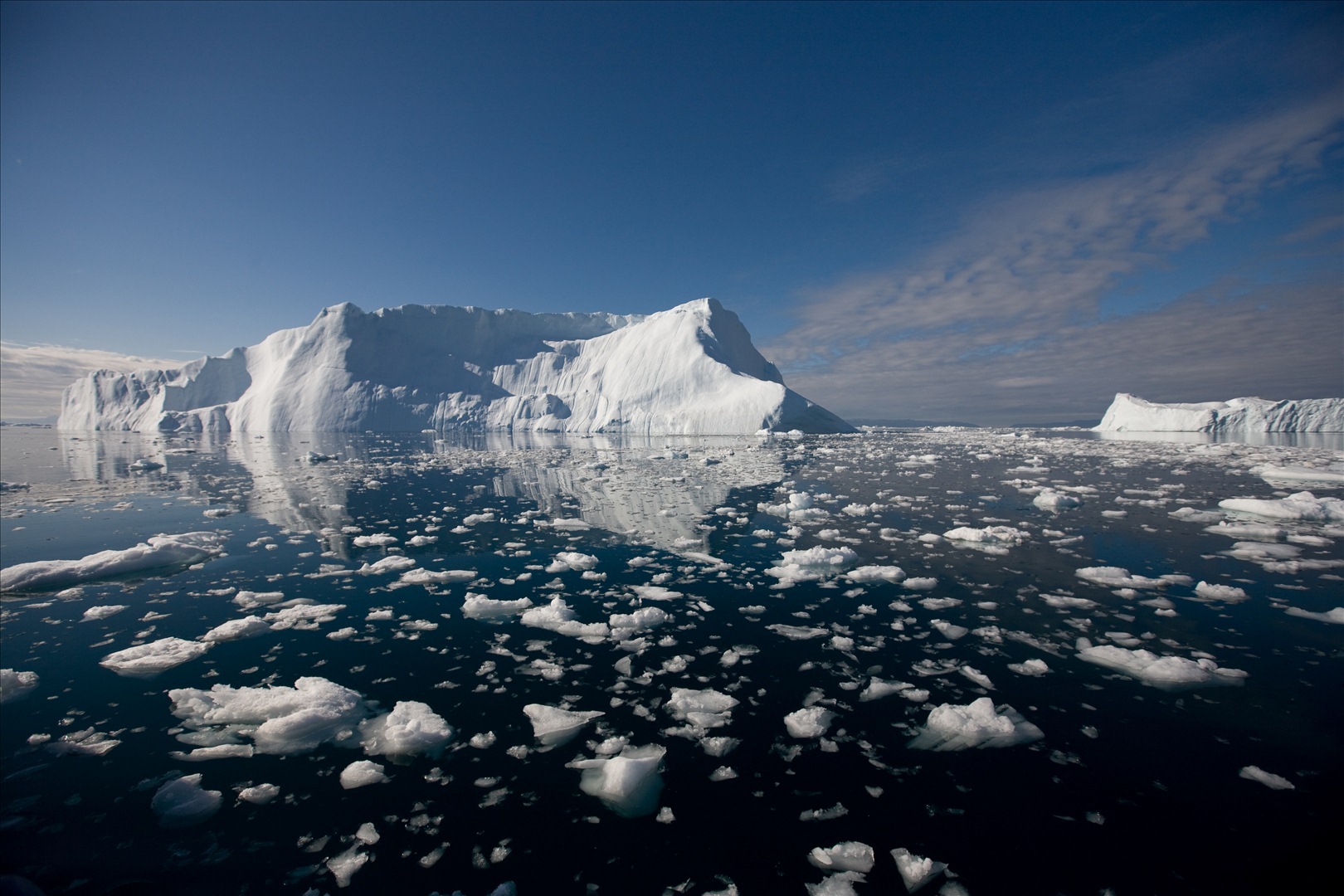
When dreams come true, it’s time to celebrate, no? Only in this case, under the upbeat news of the immediate moment lies a far larger nightmare. Those expeditions from the fifteenth to the twentieth centuries failed to find the Northwest Passage because Arctic sea ice made the voyage impossible. There simply was no passage. No longer. Thanks to global warming, the melting of ice — glaciers are losing an estimated 303 billion tons of the stuff annually worldwide — staggers the imagination. The Greenland ice shield is turning into runoff ever more rapidly, threatening significant sea level rise, and all of the melting in the cold north has, in turn, opened a previously nonexistent Northwest Passage, as well as a similar passage through Russia’s Arctic waters.
None of this would have happened, as the prestigious Intergovernmental Panel on Climate Change pointed out in its latest report, if not for the way the burning of fossil fuels (like that coal the Nordic Orion took to Finland) has poured carbon dioxide into the atmosphere. In other words, we created that Arctic passage and made it commercially viable, thus ensuring that our world, the one we’ve known since the dawn of (human) time, will be ever less viable for our children and grandchildren. After all, the Arctic with its enormous reservoirs of fossil fuels can now begin to be opened up for exploitation like so much of the rest of the planet. And there can be no doubt about it: those previously unreachable reserves will be extracted and burned, putting yet more CO2 into the atmosphere, and anyone who tries to stop that process, as Greenpeace protestors symbolically tried to do recently at an oil rig in Arctic Russia, will be dealt with firmly as “pirates” or worse. That dream of history, of explorers from once upon a time, is now not just a reality, but part of a seemingly inexorable feedback loop of modern fossil-fuel production and planetary heating, another aspect of what Michael Klare has grimly termed the Third Carbon Age (rather than a new Age of Renewables).
If we don’t need a little perspective on ourselves and our world now, then when? Fortunately, TomDispatch regular Rebecca Solnit is here to offer us both that perspective and some hope for what we can do in the face of well-funded climate denialism and fossil-fuel company boosterism. Tom
Bigger Than That (The Difficulty of) Looking at Climate Change
By Rebecca Solnit
Late last week, in the lobby of a particularly unglamorous downtown San Francisco building, a group of passionate but polite activists met with a bureaucrat who stepped forward to hear what they had to say about the fate of the Earth. The activists wanted to save the world. The particular part of it that might be under their control involved getting the San Francisco Retirement board to divest its half a billion dollars in fossil fuel holdings, one piece of the international divestment movement that arose a year ago.
Sometimes the fate of the Earth boils down to getting one person with modest powers to budge.
The bureaucrat had a hundred reasons why changing course was, well, too much of a change. This public official wanted to operate under ordinary-times rules and the idea that climate change has thrust us into extraordinary times (and that divesting didn’t necessarily entail financial loss or even financial risk) was apparently too much to accept.
The mass media aren’t exactly helping. Last Saturday, for instance, the New York Times gave its story on the International Panel on Climate Change’s six-years-in-the-making report on the catastrophic future that’s already here below-the-fold front-page placement, more or less equal to that given a story on the last episode of Breaking Bad. The end of the second paragraph did include this quote:“In short, it threatens our planet, our only home.” But the headline (“U.N. Climate Panel Endorses Ceiling on Global Emissions”) and the opening paragraph assured you this was dull stuff. Imagine a front page that reported your house was on fireright now, but that some television show was more exciting.
Sometimes I wish media stories were organized in proportion to their impact. Unfortunately, when it comes to climate change, there is not paper enough on this planet to properly scale up a story to the right size. If you gave it the complete front page to suggest its import, you would then have to print the rest of the news at some sort of nanoscale and include an electron microscope for reading ease.
Hold up your hand. It’s so big it can block out the sun, though you know that the sun is so much bigger. Now look at the news: in column inches and airtime, a minor controversy or celebrity may loom bigger than the planet. The problem is that, though websites and print media may give us the news, they seldom give us the scale of the news or a real sense of the proportional importance of one thing compared to another. And proportion, scale, is the main news we need right now — maybe always.
As it happens, we’re not very good at looking at the biggest things. They may be bigger than we can see, or move more slowly than we have the patience to watch for or remember or piece together, or they may cause impacts that are themselves complex and dispersed and stretch into the future. Scandals are easier. They are on a distinctly human scale, the scale of lust, greed, and violence. We like those, we understand them, we get mired in them, and mostly they mean little or nothing in the long run (or often even in the short run).
A resident in a town on the northwest coast of Japan told me that the black 70-foot-high wave of water coming at him on March 11, 2011, was so huge that, at first, he didn’t believe his eyes. It was the great Tohoku tsunami, which killed about 20,000 people. A version of such cognitive dissonance occurred in 1982, when NASA initially rejected measurements of the atmosphere above Antarctica because they indicated such a radical loss of ozone that the computer program just threw out the data.
Some things are so big you don’t see them, or you don’t want to think about them, or you almost can’t think about them. Climate change is one of those things. It’s impossible to see the whole, because it’s everything. It’s not just a seven-story-tall black wave about to engulf your town, it’s a complete system thrashing out of control, so that it threatens to become too hot, too cold, too dry, too wet, too wild, too destructive, too erratic for many plants and animals that depend on reliable annual cycles. It affects the entire surface of the Earth and every living thing, from the highest peaks to the depths of the oceans, from one pole to the other, from the tropics to the tundra, likely for millennia — and it’s not just coming like that wave, it’s already here.
It’s not only bigger than everything else, it’s bigger than everything else put together. But it’s not a sudden event like a massacre or a flood or a fire, even though it includes floods, fires, heat waves, and wild weather. It’s an incremental shift over decades, over centuries. It’s the definition of the big picture itself, the far-too-big picture. Which is why we have so much news about everything else, or so it seems.
To understand climate change, you need to translate figures into impacts, to think about places you’ll never see and times after you’re gone. You need to imagine sea level rise and understand its impact, to see the cause-and-effect relations between coal-fired power plants, fossil-fuel emissions, and the fate of the Earth. You need to model data in fairly sophisticated ways. You need to think like a scientist.
Given the demands of the task and the muddle of the mainstream media, it’s remarkable that so many people get it, and that they do so despite massive, heavily funded petroleum industry propaganda campaigns is maybe a victory, if not enough of one.
Four months ago, two bombers in Boston murdered three people and injured hundreds in a way spectacularly calculated to attract media attention, and the media obeyed with alacrity. Climate change probably fueled the colossal floods around Boulder, Colorado, that killed seven people in mid-September, but amid the copious coverage, it was barely mentioned in the media. Similarly, in Mexico, 115 people died in unprecedented floods in the Acapulco area (no significant mention of climate change), while floods reportedly are halving Pakistan’s economic growth (no significant mention), and 166 bodies were found in the wake of the latest Indian floods (no significant mention).
Climate change is taking hundreds of thousands of lives in Africa every year in complex ways whose causes and effects are difficult to follow. Forest fires, very likely enhanced by climate change, took the lives of 19 firefighters facing Arizona blazes amid record heat waves in July. Again, climate change generally wasn’t the headline on that story.
(For the record, climate change is clearly helping to produce many of the bigger, more destructive, more expensive, more frequent disasters of our time, but it is impossible to point to any one of them and say definitely, this one is climate change. It’s like trying to say which cancers in a contaminated area were caused by the contamination; you can’t, but what you can say is that the overall rise in cancer is connected.)
Not quite a year ago, a climate-change-related hurricane drowned people when superstorm Sandy hit a place that doesn’t usually experience major hurricane impact, let alone storm surges that submerge amusement parks, the New York City subway system, and the Jersey shore. In that disaster, 148 people died directly, nearly that many indirectly, losses far greater than from any terrorist incident in this country other than that great anomaly, 9/11. The weather has now become man-made violence, though no one thinks of it as terrorism, in part because there’s no smoking gun or bomb — unless you have the eyes to see and the data to look at, in which case the smokestacks of coal plants start to look gun-like and the hands of energy company CEOs and well-paid-off legislators begin to morph into those of bombers.
Even the civil war in Syria may be a climate-change war of sorts: over the past several years, the country has been hit by its worst drought in modern times. Climate and Security analyst Francesco Femia says, “Around 75 percent of [Syrian] farmers suffered total crop failure, so they moved into the cities. Farmers in the northeast lost 80 percent of their livestock, so they had to leave and find livelihoods elsewhere. They all moved into urban areas — urban areas that were already experiencing economic insecurity due to an influx of Iraqi and Palestinian refugees. But this massive displacement mostly wasn’t reported. So it wasn’t factoring into various security analyses. People assumed Syria was relatively stable compared to Egypt.”
Column Inches, Glacial Miles
We like to think about morality and sex and the lives of people we’ve gotten to know in some fashion. We know how to do it. It’s on a distinctly human scale. It’s disturbing in a reassuring way. We fret about it and feel secure in doing so. Now, everything’s changed, and our imaginations need to keep pace with that change. What is human scale anyway? These days, after all, we split atoms and tinker with genes and can melt an ice sheet. We were designed to think about human-scale phenomena, and now that very phrase is almost as meaningless as old terms like “glacial,” which used to mean slow-moving and slow to change.
Nowadays glaciers are melting rapidly or disappearing entirely, and some — those in Greenland, for example — have gushing rivers of ice water eating through their base. If the whole vast Greenland ice sheet were to melt, it could raise global sea levels by 23 feet.
We tend to think about climate change as one or two or five things: polar ice, glaciers melting, sea-level rise, heat waves, maybe droughts. Now, however, we need to start adding everything else into the mix: the migration of tropical diseases, the proliferation of insect pests, crop failures and declining crop yields leading to widespread hunger and famine, desertification and flooded zones and water failures leading to mass population shifts, resource wars, and so many other things that have to do with the widest systems of life on Earth, affecting health, the global economy, food systems, water systems, and energy systems.
It is almost impossibly scary and painful to contemplate the radical decline and potential death of the oceans that cover 70% of the Earth’s surface and the dramatic decrease of plankton, which do more than any other type of organism to sequester carbon and produce oxygen — a giant forest in microscopic form breathing in what we produce, breathing out what we need, keeping the whole system going. If you want to read something really terrifying, take a look at the rise of the Age of Jellyfish in this review of Lisa-Ann Gershwin’s book Stung!: On Jellyfish Blooms and the Future of the Ocean. Maybe read it even if you don’t.
Only remember that like so much about climate change we used to imagine as a grim future, that future is increasingly here and now. In this case, in the form of millions or maybe billions of tons of jellyfish proliferating globally and devouring plankton, fish eggs, small fish, and bigger creatures in the sea we love, we know, we count on, we feed on, and now even clogging the water-intake pipes of nuclear power plants. In the form of seashells dissolving in acidic waters from the Pacific Northwest to the Antarctic Ocean. In the form of billions of pine-bark beetles massacring the forests of the American West, from Arizona to Alaska, one bite at a time.
It’s huge. I think about it, and I read about it, following blogs at Weather Underground, various climate websites, the emails of environmental groups, the tweets of people at 350.org, and bits and pieces of news on the subject that straggle into the mainstream and alternative media. Then I lose sight of it. I think about everything and anything else; I get caught up in old human-scale news that fits into my frameworks so much more easily. And then I remember, and regain my sense of proportion, or disproportion.
The Great Wall, Brick by Brick
The changes required to address climate change are colossal, but they are made up of increments and steps and stages that are more than possible. Many are already underway, both as positive changes (adaptation of renewable energy, increased energy efficiency, new laws, policies, and principles) and as halts to destruction (for example, all the coal-fired plants that have not been built in recent years and the Tar Sands pipeline that, but for popular resistance, would already be sending its sludge from Alberta to the Gulf of Mexico). The problem is planetary in scale, but there is room to mitigate the worst-case scenarios, and that room is full of activists at work. Much of that work consists of small-scale changes.
As Sierra Club Executive Director Michael Brune put it last week, “Here’s the single most important thing you need to know about the IPCC report: It’s not too late. We still have time to do something about climate disruption. The best estimate from the best science is that we can limit warming from human-caused carbon pollution to less than 3.6 degrees Fahrenheit — if we act now. Bottom line: Our house is on fire. Rather than argue about how fast it’s burning, we need to start throwing buckets of water.”
There are buckets and bucket brigades. For example, the movement to get universities, cities, churches, and other entities to divest their holdings of the top 200 fossil-fuel stocks could have major consequences. If it works, it will be achieved through dedicated groups on this campus or in that city competing in a difficult sport: budging bureaucrats. It’s already succeeded in some key places, from the city of Seattle to the national United Church of Christ, and hundreds of campaigns are underway across the United States and in some other countries.
My heroes are now people who can remain engaged with climate change’s complex and daunting facts and still believe that we have some leeway to determine what happens. They insist on looking directly at the black wall of water, and they focus on what we can do about the peril we face, and then they do it. They do their best to understand scale and science, and their dedication and clarity comes from connecting their hearts to their minds.
I hear people who are either uninformed or who are justifying disengagement say that it’s too late and what we do won’t matter, but it does matter, because a rise in the global temperature of two degrees Celsius is going to be very, very different from, say, five degrees Celsius for almost everything living on Earth now and for millennia to come. And there are still many things that can be done, both to help us adapt to the radical change on the way and to limit the degree of change to which we’ll have to adapt. Because it’s already risen .8 degrees and that’s been a disaster — many, many disasters.
I spent time over the last several months with the stalwarts carrying on a campaign to get San Francisco to divest from its energy stocks. In the beginning, it seemed easy enough. City Supervisor John Avalos introduced a nonbinding resolution to the Board of Supervisors, and to everyone’s surprise it passed unanimously in April on a voice vote. But the board turned out only to have the power to recommend that the San Francisco Retirement Board do the real work of divesting its vast holdings of fossil-fuel stocks. The retirement board was a tougher nut to crack.
Its main job, after all, is to ensure a safe and profitable pension fund and in that sense, energy companies have, in the past, been good investments. To continue on such a path is to be “smart about the market.” The market, in the meantime, is working hard at not imagining the financial impact of climate change.
The failure of major food sources, including fishing stocks and agricultural crops, and the resultant mass hunger and instability — see Syria — is going to impact the market. Retirees in the beautiful Bay Area are going feel it if the global economy crashes, the region fills with climate refugees, the spectacularly productive state agricultural system runs dry or roasts, and the oceans rise on our scenic coasts. It’s a matter of scale. Your investments are not independent of nature, even if fossil-fuel companies remain, for a time, profitable while helping destroying the world as humanity has known it.
Some reliable sources now argue that fossil-fuel stocks are not good investments, that they’re volatile for a number of reasons and due to crash. The IPCC report makes it clear that we need to leave most of the planet’s fossil fuel reserves in the ground in the coming decades, that the choice is either to fry the planet or freeze the assets of the carbon companies. Activists are now doing their best to undermine the value of the big carbon-energy corporations, and governments clued in to the new IPCC report will likely join them in trying to keep the oil, gas, and coal in the ground — the fossil fuel that is also much of the worth of these corporations on paper. If we’re lucky, we’ll make them crash. So divesting can be fiscally sound, and there is a very strong case that it can be done without economic impact. But the crucial thing here isn’t the financial logistics of divestment; it’s the necessity of grasping the scale of things, understanding the colossal nature of the problem and the need to address it, in part, by pressuring one small group or one institution in one place.
To grasp this involves a feat of imagination and, I think, a leap of faith: a kind of conviction about what matters, about living according to principle, about understanding what is too big to be seen with your own eyes, about correlating data on a range of scales. A lot of people I know do it. If we are to pull back from the brink of catastrophe, it will be because of their vision and their faith. You might want to thank them now, and while your words are nice, so are donations. Or you might want to join them.
That there is a widespread divestment movement right now is due to the work of a few people who put forth the plan less than a year ago at 350.org. The president has already mentioned it, and hundreds of colleges are now in the midst of or considering the process of divesting, with cities, churches, and other institutions joining the movement. It takes a peculiar kind of genius to see the monster and to see that it might begin to be pushed back by small actions — by, in fact, actions on a distinctly human scale that could still triumph over the increasingly inhuman scale of our era.
Hold up your hand. It looks puny in relation to the sun, but the other half of the equation of scale is seeing that something as small as that hand, as your own powers, as your own efforts, can matter. The cathedral is made stone by stone, and the book is written word by word.
If there is to be an effort to respond to climate change, it will need to make epic differences in economics, in ecologies, in the largest and most powerful systems around us. Though the goals may be heroic, they will be achieved mostly through an endless accumulation of small gestures.
Those gestures are in your hands, and everyone’s. Or they could be if we learned to see the true scale of things, including how big we can be together.
Rebecca Solnit writes regularly for TomDispatch, works a little with 350.org, and is hanging out a lot in 2013 with the newly arrived Martin, Thyri, Bija Milagro, and Camilo, who will be 80 in the unimaginable year of 2093. Her most recent book is The Faraway Nearby.
It’s easy to underestimate just how powerful the brain can be.
Last Friday’s post was called Instinctive behaviours and explored the notion of instinct, coming to the conclusion that almost everything the brain does is a result of learning rather than genetics. Yet acknowledging the vast amount of brain activity that runs in ‘background’ mode or subconsciously.
That was brought home to me in spades as a result of being introduced to the flying of gliders, or sailplanes in American speak. The year was 1981 and working near to me in my offices in Colchester, Essex was a gentlemen running his own company, like yours truly. His name was Roger Davis and we were sharing a beer one day when the subject of flying came up. It piqued my interest so, as my logbook declares, on the 7th June, 1981 I had the first of two flights in a glider with Roger at the controls. The place was Rattlesden Airfield, an old wartime airfield near Felsham, Bury St. Edmunds in Suffolk. The gliding club was Rattlesden Gliding Club.
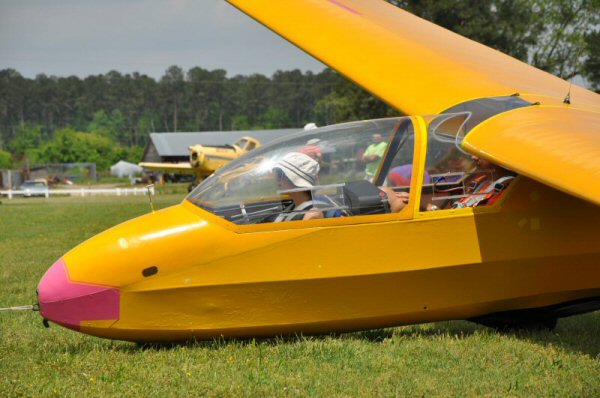
The glider we were in was known as a K-7, a high-wing, two-seater (naturally!) glider with the instructor sitting behind the student.
A K-7 typical of the glider I first flew in at Rattlesden GC.
Anyway, some 43 flights later, I was signed off to conduct my first solo flight in the K-7. The date was 5th September, 1981 and my flight time was just 4 minutes! I was hooked.
In over 10 years of flying amounting to more than 1,400 flights I had the great fortune to experience much of the magic of flying relying on nothing more than the currents of air.
Ahh! Memories! Over 10 years of glider flying, amounting to more than 200 hours of flight-time, 17 different types of glider. Longest flight was 5 hours, 16 minutes including a climb to over 6000 feet above sea-level on the 7th July, 1985 in a single-seater LS4 glider type.
So what’s this got to do with subconscious thinking? Simply this.
One quickly learnt that once the decision had been made to land, most frequently because one was unable to find further, or any, rising air currents the brain had a major computing task in hand. As the aircraft descends, the air currents change and the direction and velocity of the wind changes. There is no engine to allow one to abort the landing; to do a ‘go round’!
One of the key visual judgments was determining the point of touchdown: not too early that might risk a ground contact before the start of the runway, and not too late which might risk running out of landing space.
Thus the brain was operating clearly in two modes. Consciously, computing second by second where the touch-down point was going to be and, subconsciously, the flying of the glider as in operating the joystick and rudder pedals in support of the touch-down ‘computations’.
Moving on.
In last Friday’s post, I also wrote this: “Plus something that could just possibly be the key to mankind having a long-term sustainable future on this planet: The Power of Thinking.”
That ‘something’ was me reflecting on an article in the October 7th edition of FORTUNE magazine. Not something I read on a normal basis but just happened to come across that edition – and glad I did. Because there was an article about IBM’s new supercomputer Watson. The link to the summary is here, from which I republish this:
Dr. Mark Kris is among the top lung cancer specialists in the world. As chief of thoracic oncology at Memorial Sloan-Kettering (MSK) Cancer Center in New York City, he has been diagnosing and treating patients for more than 30 years. But even he is overwhelmed by the massive amount of information that goes into figuring out which drugs to give his patients — and the relatively crude tools he has to decipher that data. “This is the standard for treatment today,” he says, passing me a well-worn printout of the 2013 treatment guidelines in his office. We choose a cancer type. A paragraph of instructions says to pair two drugs from a list of 16. “Do the math,” he says. It means more than 100 possible combinations. “How do you figure out which ones are the best?”
It’s a huge problem. More than 230,000 Americans will be diagnosed with lung cancer this year. Almost all of them will receive chemotherapy. As crude as the existing guidelines are, says Kris, they won’t be followed more than half the time. If we bumped up adherence by just 10% to 20%, he says, as many as 30,000 people might live longer. Never mind curing cancer — shouldn’t we be able to get the best available combinations of medications to sick people now?
That’s the question that led Kris to IBM. He saw that more information was not the answer. What doctors needed was a better brain — one that could instantly vacuum up facts, draw deeper connections between data points, and remember everything. They needed Watson.
Just read that last paragraph again. That it’s not about information, it’s about offering humanity computing power that can see things that humans might not easily see.
Thus, I mused that when mankind gets to the point where there is total and complete commitment to finding a non-carbon-burning way ahead for every living thing on this planet we won’t have the luxury of countless years working out the new journey directions. Maybe, just maybe, computing power a la Watson might just be our saving grace.
Curious to learn more about IBM Watson? Then here’s the relevant website.


















Not quite a year ago, a climate-change-related hurricane drowned people when superstorm Sandy hit a place that doesn’t usually experience major hurricane impact, let alone storm surges that submerge amusement parks, the New York City subway system, and the Jersey shore. In that disaster, 148 people died directly, nearly that many indirectly, losses far greater than from any terrorist incident in this country other than that great anomaly, 9/11. The weather has now become man-made violence, though no one thinks of it as terrorism, in part because there’s no smoking gun or bomb — unless you have the eyes to see and the data to look at, in which case the smokestacks of coal plants start to look gun-like and the hands of energy company CEOs and well-paid-off legislators begin to morph into those of bombers.


 Learning from Dogs