ONLY A MAN WOULD ATTEMPT THIS |
Just try reading this without laughing till you cry!!!Pocket taser Stun Gun, a great gift for the wife.
A guy who purchased his lovely wife a pocket Taser for their anniversary submitted this: Last weekend I saw something at Larry’s Pistol & Pawn Shop that sparked my interest. The occasion was our 15th anniversary and I was looking for a little something extra for my wife Julie. What I came across was a 100,000-volt, pocket/purse-sized Taser. The effects of the Taser were supposed to be short lived, with no long term adverse affect on your assailant, allowing her adequate time to retreat to safety…?? WAY TOO COOL! Long story short, I bought the device and brought it home… I loaded two AAA batteries in the darn thing and pushed the button. Nothing! I was disappointed. I learned, however, that if I pushed the button and pressed it against a metal surface at the same time, I’d get the blue arc of electricity darting back and forth between the prongs. AWESOME!!! Unfortunately, I have yet to explain to Julie what that burn spot is on the face of her microwave. Okay, so I was home alone with this new toy, thinking to myself that it couldn’t be all that bad with only two AAA batteries, right? There I sat in my recliner, my cat Gracie looking on intently (trusting little soul) while I was reading the directions and thinking that I really needed to try this thing out on a flesh & blood moving target. I must admit I thought about zapping Gracie (for a fraction of a second) and then thought better of it. She is such a sweet cat. But, if I was going to give this thing to my wife to protect herself against a mugger, I did want some assurance that it would work as advertised. Am I wrong? So, there I sat in a pair of shorts and a tank top with my reading glasses perched delicately on the bridge of my nose, directions in one hand, and Taser in another. The directions said that:
All the while I’m looking at this little device measuring about 5″ long, less than 3/4 inch in circumference (loaded with two itsy, bitsy AAA batteries); pretty cute really, and thinking to myself, ‘no possible way!’ What happened next is almost beyond description, but I’ll do my best. I’m sitting there alone, Gracie looking on with her head cocked to one side so as to say, ‘Don’t do it stupid,’ reasoning that a one second burst from such a tiny lil ole thing couldn’t hurt all that bad.. I decided to give myself a one second burst just for heck of it.. I touched the prongs to my naked thigh, pushed the button, and… HOLY MOTHER OF GOD. WEAPONS OF MASS DESTRUCTION. WHAT THE… !!! I’m pretty sure Hulk Hogan ran in through the side door, picked me up in the recliner, then body slammed us both on the carpet, over and over and over again. I vaguely recall waking up on my side in the fetal position, with tears in my eyes, body soaking wet, both nipples on fire, testicles nowhere to be found, with my left arm tucked under my body in the oddest position, and tingling in my legs! The cat was making meowing sounds I had never heard before, clinging to a picture frame hanging above the fireplace, obviously in an attempt to avoid getting slammed by my body flopping all over the living room.. Note: If you ever feel compelled to ‘mug’ yourself with a Taser, There is NO such thing as a one second burst when you zap yourself! You will not let go of that thing until it is dislodged from your hand by a violent thrashing about on the floor! A three second burst would be considered conservative! A minute or so later (I can’t be sure, as time was a relative thing at that point), I collected my wits (what little I had left), sat up and surveyed the landscape.
I’m still looking for my testicles and I’m offering a significant reward for their safe return!PS: My wife can’t stop laughing about my experience, loved the gift and now regularly threatens me with it!If you think education is difficult, try being stupid!!!! |
Year: 2011
H’mmm
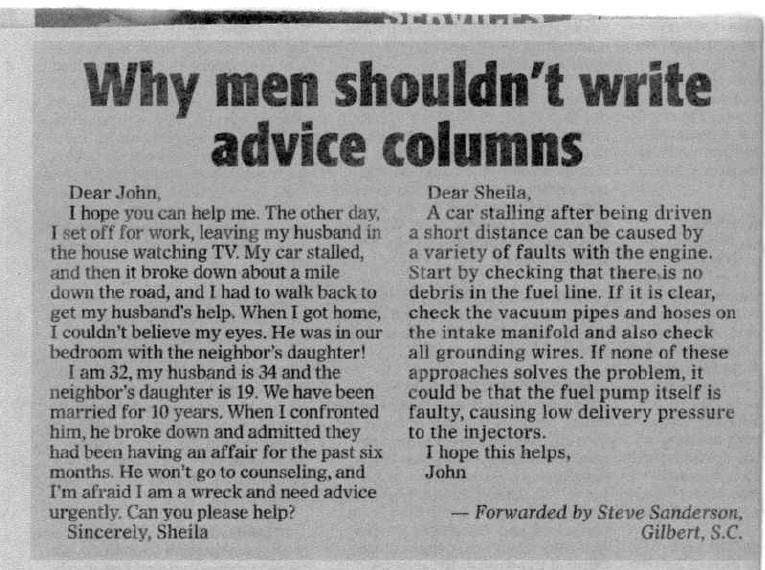
Why men shouldn’t write advice columns.
The modern internet – a perspective.
A very thoughtful article from an interesting website.
By definition, everyone reading this article will be doing it as a result of the incredible advances in digital communications. Thus it was that from today’s issue of Naked Capitalism there was reference to an article on a website called The Scholarly Kitchen, a site that I hadn’t come across before. I won’t reproduce the article in full – that doesn’t seem right. But I will present extracts to give you an idea of the thrust of the article.
The article is called The Battle for Control – What People who worry about the Internet are really worried about. Here’s how it starts:
Over the past few years, we’ve been witness to a parade of partisans in the debate over whether the Internet is making us smarter and more capable or turning us into shallow and superficial information parasites.
Nicholas Carr carries the most water for this argument, but others have joined in. Usually, their arguments that we’re going too far, becoming too fragmented, or becoming distracted are positioned to seem as if they have our best interests at heart — concern for our minds, our families, our communities, our culture.
. . . the Never-Betters, the Better-Nevers, and the Ever-Wasers. The Never-Betters believe that we’re on the brink of a new utopia, where information will be free and democratic. . . . The Better-Nevers think that we would have been better off if the whole thing had never happened, that . . . books and magazines create private space for minds in ways that twenty-second bursts of information don’t. The Ever-Wasers insist that at any moment in modernity something like this is going on, and that a new way of organizing data and connecting users is always thrilling to some and chilling to others.
A recent post by Jeff Jarvis puts what he calls “the distraction trope” into perspective. Instead of worrying about whether our brains, families, or communities are changing, Jarvis strips away that sophistry and lays bare something more primal that seems to be at stake:
And isn’t really their fear . . . that they are being replaced? Control in culture is shifting. We triumphalists — I don’t think I am one but, what the hell, I’ll don the uniform — argue that these tools unlock some potential in us, help us do what we want to do and better. The catastrophists are saying that we can be easily led astray to do stupid things and become stupid. One is an argument of enablement. One is an argument of enslavement. Which reveals more respect for humanity? That is the real dividing line. I start with faith in my fellow man and woman. The catastrophists start with little or none.
Throughout history, this fear of losing control has been consistently masked as concerns for higher, even altruistic interests. Jarvis quotes Erasmus (via Elizabeth Eisenstein’s new book, “Divine Art, Infernal Machine“), who said during the proliferation of books:
To what corner of the world do they not fly, these swarms of new books? . . . the very multitude of them is hurting scholarship, because it creates a glut, and even in good things satiety is most harmful. [The minds of men,] flighty and curious of anything new [are lured] away from the study of old authors.
Erasmus was worried about losing control over a world he’d mastered through his knowledge of old authors and stable cultural touchstones, and Carr is worried about losing control over a way of studying and thinking and processing information he’s become adept with. These are not the political leaders of the Middle East who are concerned about destabilization at an entirely different level (but for some of the same basic reasons, and from some of the same fundamental causes). Control has a softer side than anything we’d associate with authoritarianism.
Control can be channeled from competence and tradition. Change threatens both of these.
Do cut across and read the full article – it really is worth reading. It concludes thus:
It’s not that one is all good and one is all bad. There is a trade-off, an elusive balance, a mix of benefits and traits. In writing that seems prescient to both the pros and cons of humanity’s continuing exploration of its boundaries, Sigmund Freud once wrote:
Man has, as it were, become a kind of prosthetic god. When he puts on all his auxiliary organs he is truly magnificent; but those organs have not grown on to him and they still give him much trouble at times.
We may argue again and again whether the Internet is changing our brains, elevating us, lowering us, making us smarter, or making us stupid. But at the end of the day, it seems the real argument is about control — who has it, who shares it, and who wants it.
So, despite all the partisans, sophistry, and essays about our brains, our culture, our souls, it’s important to remember that what we’re really arguing about is control.
Sometimes, a cigar is just a cigar.
Where are we off to?
More musings on how this present civilisation is going to change, as change it must.
I have a sense that this article is going to spread across a number of posts. Regular readers of Learning from Dogs will be aware that I am summarising Lester Brown’s excellent book, World on the Edge. If you have missed those summaries, the last one, Part 4, was here. (Part 3 here, Part 2 here, Part 1 here.)
Details of this excellent book are on the Earth Policy Institute website including the opportunity to download the book for free.
OK, back to the theme of this article, very much connected with the mission of the EPI.
Jean and I watched a video last night from the website Top Documentary Films; great site by the way. It was called 2210: The Collapse. This was how the film was described on that website.
Imagine if hundreds of years from now, scientists excavated the abandoned ruins of some of our largest cities, what conclusions would they come to?
It happened to the Romans, the Anasazi, and the Mayans and, inevitably, one day our own modern civilization will also fall. In this two hour special discover how a future civilization might be baffled as to why the population of these once-great cities would suddenly abandon their technology and architecture, and turn their homes into ghost towns.
Some experts believe that there is a very real risk this could happen, and the collapse of the world as we know it is closer than we think.
Examining the parallels between cultures separated by hundreds of years, explore whether the key to preventing such a global collapse today could lie in finding renewable alternatives to our dwindling energy supplies and sustainable resources. Can we learn from the mistakes of the past before it’s too late?
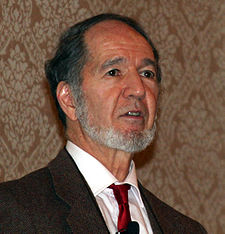
In some ways the film didn’t cover any new ground despite it being an interesting way of approaching the subject of the future of our present civilisation. But what was really worthwhile were the clips from three experts in their various fields. They were the author Jared Diamond, Daniel Gilbert who is Professor of Psychology at Havard, and Joseph Tainter also an author. There is much material around from these three gentlemen.
So I am going to start with Jared Diamond. WikiPedia has Jared’s details. The following is a video going back to 2003 which is no less relevant in terms of where we are in 2011. (If you want more of Jared’s ideas, just let me know and they will be included in a future Post.)
“I’ve set myself the modest task of trying to explain the broad pattern of human history, on all the continents, for the last 13,000 years. Why did history take such different evolutionary courses for peoples of different continents? This problem has fascinated me for a long time, but it’s now ripe for a new synthesis because of recent advances in many fields seemingly remote from history, including molecular biology, plant and animal genetics and biogeography, archaeology, and linguistics.”
JARED DIAMOND is Professor of Geography at the University of California, Los Angeles. Until recently he was Professor of Physiology at the UCLA School of Medicine. He is the author of the recently published Collapse: How Societies Choose to Fail or Succeed, and the Pulitzer Prize-winning author of the widely acclaimed Guns, Germs, and Steel: the Fates of Human Societies, which also is the winner of Britain’s 1998 Rhone-Poulenc Science Book Prize. (From here)
Truth, myth and meaning
A musing on Chief Seattle’s famous speech.
I came across this recently following a bit of a prowl through YouTube. The YouTube video, although deeply moving, is more myth than factual record; as one finds out if even a small amount of probing is undertaken.
But does it matter? Maybe those ideas that reach out to us in a spiritual sense are as powerful as myths, perhaps even more so, than as ‘facts’.
Here’s that YouTube video.
Did you watch it all? I hope so. Did it disturb you to know that this wasn’t a factual rendition? Probably not.
WikiPedia has a comprehensive account of Chief Seattle and in terms of the speech here’s an extract:
There is a controversy about a speech by Si’ahl concerning the concession of native lands to the settlers.
Even the date and location of the speech has been disputed,[8] but the most common version is that on March 11, 1854, Si’ahl gave a speech at a large outdoor gathering in Seattle. The meeting had been called by Governor Isaac Ingalls Stevens to discuss the surrender or sale of native land to white settlers.Doc Maynard introduced Stevens, who then briefly explained his mission, which was already well understood by all present.[3]
Si’ahl then rose to speak. He rested his hand upon the head of the much smaller Stevens, and declaimed with great dignity for an extended period. No one alive today knows what he said; he spoke in the Lushootseed language, and someone translated his words into Chinook jargon, and a third person translated that into English.
So in terms of looking for the truth, forget it.
But in terms of being inspired to regard the land, and all that depends on it, as sacred then the myth of Chief Seattle’s words is beautiful and powerful, a myth that modern man has just about rejected.
If you want to read the words that are supposed to be the most authentic recording of what the noble Chief said, then these follow. They are taken from here and the introduction and footnotes are valuable background information. You may also want to read this account of the speech from the Washington State Library.

- The only known photograph of Chief Seattle, taken 1864.

Scraps from a Diary:
Chief Seattle—A gentleman by Instinct
His Native Eloquence, etc., etc.by Henry A. Smith
10th article in the series “Early Reminiscences”
Seattle Sunday Star, October 29, 1887Yonder sky that has wept tears of compassion upon my people for centuries untold, and which to us appears changeless and eternal, may change. Today is fair. Tomorrow it may be overcast with clouds. My words are like the stars that never change. Whatever Seattle says, the great chief at Washington can rely upon with as much certainty as he can upon the return of the sun or the seasons. The white chief says that Big Chief at Washington sends us greetings of friendship and goodwill. This is kind of him for we know he has little need of our friendship in return. His people are many. They are like the grass that covers vast prairies. My people are few. They resemble the scattering trees of a storm-swept plain. The great, and I presume — good, White Chief sends us word that he wishes to buy our land but is willing to allow us enough to live comfortably. This indeed appears just, even generous, for the Red Man no longer has rights that he need respect, and the offer may be wise, also, as we are no longer in need of an extensive country.
There was a time when our people covered the land as the waves of a wind-ruffled sea cover its shell-paved floor, but that time long since passed away with the greatness of tribes that are now but a mournful memory. I will not dwell on, nor mourn over, our untimely decay, nor reproach my paleface brothers with hastening it, as we too may have been somewhat to blame.
Youth is impulsive. When our young men grow angry at some real or imaginary wrong, and disfigure their faces with black paint, it denotes that their hearts are black, and that they are often cruel and relentless, and our old men and old women are unable to restrain them. Thus it has ever been. Thus it was when the white man began to push our forefathers ever westward. But let us hope that the hostilities between us may never return. We would have everything to lose and nothing to gain. Revenge by young men is considered gain, even at the cost of their own lives, but old men who stay at home in times of war, and mothers who have sons to lose, know better.
Our good father in Washington—for I presume he is now our father as well as yours, since King George has moved his boundaries further north—our great and good father, I say, sends us word that if we do as he desires he will protect us. His brave warriors will be to us a bristling wall of strength, and his wonderful ships of war will fill our harbors, so that our ancient enemies far to the northward — the Haidas and Tsimshians — will cease to frighten our women, children, and old men. The in reality he will be our father and we his children. But can that ever be? Your God is not our God! Your God loves your people and hates mine! He folds his strong protecting arms lovingly about the paleface and leads him by the hand as a father leads an infant son. But, He has forsaken His Red children, if they really are His. Our God, the Great Spirit, seems also to have forsaken us. Your God makes your people wax stronger every day. Soon they will fill all the land. Our people are ebbing away like a rapidly receding tide that will never return. The white man’s God cannot love our people or He would protect them. They seem to be orphans who can look nowhere for help. How then can we be brothers? How can your God become our God and renew our prosperity and awaken in us dreams of returning greatness? If we have a common Heavenly Father He must be partial, for He came to His paleface children. We never saw Him. He gave you laws but had no word for His red children whose teeming multitudes once filled this vast continent as stars fill the firmament. No; we are two distinct races with separate origins and separate destinies. There is little in common between us.
To us the ashes of our ancestors are sacred and their resting place is hallowed ground. You wander far from the graves of your ancestors and seemingly without regret. Your religion was written upon tablets of stone by the iron finger of your God so that you could not forget. The Red Man could never comprehend or remember it. Our religion is the traditions of our ancestors — the dreams of our old men, given them in solemn hours of the night by the Great Spirit; and the visions of our sachems, and is written in the hearts of our people.
Your dead cease to love you and the land of their nativity as soon as they pass the portals of the tomb and wander away beyond the stars. They are soon forgotten and never return. Our dead never forget this beautiful world that gave them being. They still love its verdant valleys, its murmuring rivers, its magnificent mountains, sequestered vales and verdant lined lakes and bays, and ever yearn in tender fond affection over the lonely hearted living, and often return from the happy hunting ground to visit, guide, console, and comfort them.
Day and night cannot dwell together. The Red Man has ever fled the approach of the White Man, as the morning mist flees before the morning sun. However, your proposition seems fair and I think that my people will accept it and will retire to the reservation you offer them. Then we will dwell apart in peace, for the words of the Great White Chief seem to be the words of nature speaking to my people out of dense darkness.
It matters little where we pass the remnant of our days. They will not be many. The Indian’s night promises to be dark. Not a single star of hope hovers above his horizon. Sad-voiced winds moan in the distance. Grim fate seems to be on the Red Man’s trail, and wherever he will hear the approaching footsteps of his fell destroyer and prepare stolidly to meet his doom, as does the wounded doe that hears the approaching footsteps of the hunter.
A few more moon, a few more winters, and not one of the descendants of the mighty hosts that once moved over this broad land or lived in happy homes, protected by the Great Spirit, will remain to mourn over the graves of a people once more powerful and hopeful than yours. But why should I mourn at the untimely fate of my people? Tribe follows tribe, and nation follows nation, like the waves of the sea. It is the order of nature, and regret is useless. Your time of decay may be distant, but it will surely come, for even the White Man whose God walked and talked with him as friend to friend, cannot be exempt from the common destiny. We may be brothers after all. We will see.
We will ponder your proposition and when we decide we will let you know. But should we accept it, I here and now make this condition that we will not be denied the privilege without molestation of visiting at any time the tombs of our ancestors, friends, and children. Ever part of this soil is sacred in the estimation of my people. Every hillside, every valley, every plain and grove, has been hallowed by some sad or happy event in days long vanished. Even the rocks, which seem to be dumb and dead as the swelter in the sun along the silent shore, thrill with memories of stirring events connected with the lives of my people, and the very dust upon which you now stand responds more lovingly to their footsteps than yours, because it is rich with the blood of our ancestors, and our bare feet are conscious of the sympathetic touch. Our departed braves, fond mothers, glad, happy hearted maidens, and even the little children who lived here and rejoiced here for a brief season, will love these somber solitudes and at eventide they greet shadowy returning spirits. And when the last Red Man shall have perished, and the memory of my tribe shall have become a myth among the White Men, these shores will swarm with the invisible dead of my tribe, and when your children’s children think themselves alone in the field, the store, the shop, upon the highway, or in the silence of the pathless woods, they will not be alone. In all the earth there is no place dedicated to solitude. At night when the streets of your cities and villages are silent and you think them deserted, they will throng with the returning hosts that once filled them and still love this beautiful land. The White Man will never be alone.
Let him be just and deal kindly with my people, for the dead are not altogether powerless.
Amen to that.
Better than pills
I’m talking about dogs, of course!
Don’t know where today has gone but my plans to write a long, thoughtful piece have evaporated much like the snow that fell over the week-end.
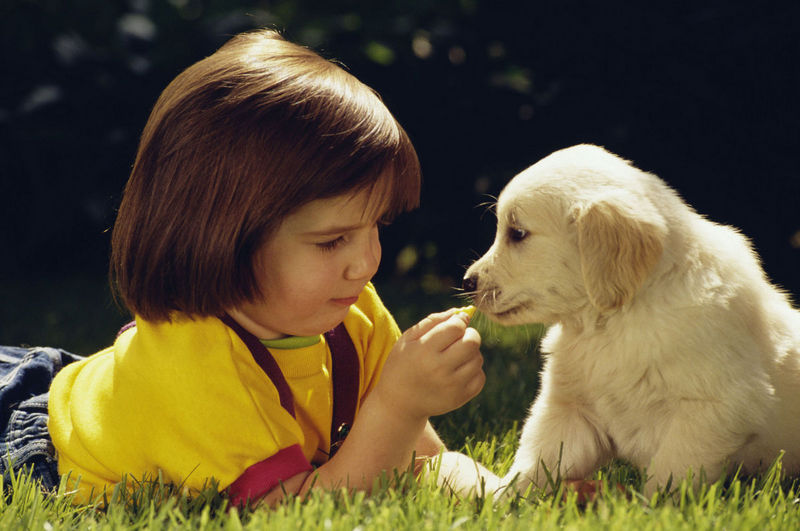
So I am taking the liberty of reproducing a piece on About.com showing the health benefits that come from being close to dogs and cats.
When thinking of ways to reduce stress in life, usually techniques like meditation, yoga and journaling come to mind. These are great techniques, to be sure. But getting a new best friend can also have many stress relieving and health benefits. While human friendsprovide great social support and come with some fabulous benefits, this article focuses on the benefits of furry friends: cats and dogs! Research shows that, unless you’re someone who really dislikes animals or is absolutely too busy to care for one properly, pets can provide excellent social support, stress relief and other health benefits—perhaps more than people! Here are more health benefits of pets:
Pets Can Improve Your Mood:
For those who love animals, it’s virtually impossible to stay in a bad mood when a pair of loving puppy eyes meets yours, or when a super-soft cat rubs up against your hand. Research supports the mood-enhancing benefits of pets. A recent study found that men with AIDS were less likely to suffer from depression if they owned a pet. (According to a press release, men with AIDS who did not own a pet were about three times more likely to report symptoms of depression than men who did not have AIDS. But men with AIDS who had pets were only about 50 percent more likely to report symptoms of depression, as compared to men in the study who did not have AIDS.)Pets Control Blood Pressure Better Than Drugs:
Yes, it’s true. While ACE inhibiting drugs can generally reduce blood pressure, they aren’t as effective on controlling spikes in blood pressure due to stress and tension. However, in a recent study, groups of hypertensive New York stockbrokers who got dogs or cats were found to have lower blood pressure and heart rates than those who didn’t get pets. When they heard of the results, most of those in the non-pet group went out and got pets!Pets Encourage You To Get Out And Exercise:
Whether we walk our dogs because they need it, or are more likely to enjoy a walk when we have companionship, dog owners do spend more time walking than non-pet owners, at least if we live in an urban setting. Because exercise is good for stress management and overall health, owning a dog can be credited with increasing these benefits.Pets Can Help With Social Support:
When we’re out walking, having a dog with us can make us more approachable and give people a reason to stop and talk, thereby increasing the number of people we meet, giving us an opportunity to increase our network of friends and acquaintances, which also has great stress management benefits.Pets Stave Off Loneliness and Provide Unconditional Love:
Pets can be there for you in ways that people can’t. They can offer love and companionship, and can also enjoy comfortable silences, keep secrets and are excellent snugglers. And they could be the best antidote to loneliness. In fact, research shows that nursing home residents reported less loneliness when visited by dogs than when they spent time with other people! All these benefits can reduce the amount of stress people experience in response to feelings of social isolation and lack of social support from people.Pets Can Reduce Stress—Sometimes More Than People:
While we all know the power of talking about your problems with a good friend who’s also agood listener, recent research shows that spending time with a pet may be even better!Recent research shows that, when conducting a task that’s stressful, people actually experienced less stress when their pets were with them than when a supportive friend or even their spouse was present! (This may be partially due to the fact that pets don’t judge us; they just love us.)It’s important to realize that owning a pet isn’t for everyone. Pets do come with additional work and responsibility, which can bring its own stress. However, for most people, the benefits of having a pet outweigh the drawbacks. Having a furry best friend can reduce stress in your life and bring you support when times get tough.
Sources:
Evenson RJ, Simon RW. Clarifying the Relationship Between Parenthood and Depression. Journal of Health and Social Behavior. December 2005.
Siegel JM, Angulo FJ, Detels R, Wesch J, Mullen A. AIDS diagnosis and depression in the Multicenter AIDS Cohort Study: the ameliorating impact of pet ownership. AIDS Care. April 1999.
Want more? Then go to this article on The Huffington Post published last December
Dog love
The great gift that dogs grant us.
That is the ability to feel in our hearts and souls what unconditional love really is. Both the giving and receiving of that unconditional love.
As regular readers know there has been a number of articles on Learning from Dogs in recent times about the relationship that we humans have with this genetic off-shoot of wolves with an origin literally in the mists of time. So it is an honour to share with you all, a poem about a very special dog, written by the grandniece of a good friend of ours here in Payson.
That grandniece is Meg and her dog’s name is Siku. Here is Meg’s love poem.
SIKU
My best friend in the whole world is Siku.
Siku is a smelly, thick-fur, cute type of dog.
Siku has a wet nose, round eyes and pointy ears like shark teeth.
She is a happy-go-lucky free-minded smart dog and I am so lucky to have her in my life.
She also is a fun-funny, hip-happy type of dog.
Siku is a run-running, camp-camping, playing games type of dog.
Siku loves to train with me, go sledding with me, and she loves to catch the squirrels and torture our poor little stressed-out cats.
When I am with Siku I feel like the whole world loves me.
I feel smart, cool, funny and loved.

 Learning from Dogs