I don’t recall who it was who passed this poem to me so apologies for that.
Also a trawl around the Internet can’t find the name of the poem although it is referred to several times as a quote from the late George Crabbe.
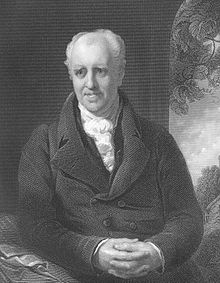
George Crabbe
Anyway, quote or poem, here it is:
With eye upraised his master’s look to scan,
The joy, the solace, and the aid of man:
The rich man’s guardian and the poor man’s friend,
The only creature faithful to the end.
George Crabbe
However my trawl for more details about the poem did lead to some interesting background information about this writer.
George Crabbe combined three careers: doctor, minister, and writer. Born in Aldeburgh, a fishing village in Suffolk, he served his apprenticeship to an apothecary, and then set up as a surgeon-apothecary in 1775. He abandoned this career four years later and went to London to earn his living as a writer. In 1782 he was ordained priest and became chaplain to the Duke of Rutland. He held several livings thereafter, and finally in 1814 became rector of Trowbridge, Wiltshire, where he spent the rest of his life.
Crabbe’s long literary career divides into two parts: the poems, — notably ‘The Village‘ (1783), published during or shortly after his early stay in London; and the long series of works beginning with ‘Poems‘ (1807), which includes ‘The Parish Register‘ and ‘Sir Eustace Grey‘;’The Borough‘ (1810), ‘Tales in Verse‘ (1812), ‘Tales of the Hall‘ (1819), and the inferior ‘Posthumous Tales‘ (1834). This series shows Crabbe moving from static description and portrait toward narrative, until he achieves something which approaches a group of linked short stories in verse. His work, in its low-keyed, realistic, unsentimental picture of rural life, represents less the last gasp of eighteenth-century poetry than a reaction to it different in direction from Wordsworth’s. It is indicative of the kind of work Crabbe produced that Thomas Hardy admired and was influenced by him.
Also Wikipedia has an extensive entry for Crabbe that starts,
George Crabbe (24 December 1754 – 3 February 1832) was an Englishpoet and naturalist.
He was born in Aldeburgh, Suffolk, the son of a tax collector, and developed his love of poetry as a child. In 1768, he was apprenticed to a local doctor, who taught him little, and in 1771 he changed masters and moved to Woodbridge. There he met his future wife, Sarah Elmy, who accepted his proposal and had the faith and patience not only to wait for Crabbe but to encourage his verse writing. His first major work, a poem entitled “Inebriety”, was self-published in 1775. By this time he had completed his medical training, and had decided to take up writing seriously. In 1780, he went to London, where he had little success, but eventually made an impression on Edmund Burke, who helped him have his poem, The Library, published in 1781. In the meantime, Crabbe’s religious nature had made itself felt, and he was ordained a clergyman and became chaplain to the Duke of Rutland at Belvoir Castle in Leicestershire.
The two works for which Crabbe became best known were The Village (1783) and The Borough (1810), both lengthy poems dealing with the way of life he had experienced. In 1783, he also married Sarah. In 1814, he became Rector of Trowbridge in Wiltshire, where he remained. By the time of his death, he was well regarded and a friend of William Wordsworth, Sir Walter Scott and other major literary figures of the time.
A good friend here in Payson, himself a former ‘lamplighter’ forwarded me an email with a link to a video taken using the Head-Up-Display (HUD) camera which also has a voice recorder.
F-16 fighter/attack aircraft
This is the email,
Here’s the F-16 dead stick into Elizabeth City, NC: A fairly short RWY for jets, (about 6000 ft long), but qualifies for an “Emergency landing field” in the grand scheme of US aviation.
You’ll probably have to watch the video several times to appreciate how intense the situation and how busy the pilot was all the way to stopping on the runway. Very apparently, the pilot was one-of-four F-16s in a flight returning to their base, (most probably from the Navy Dare bombing range south of Manteo), and the F-16 in question had already reported a “Ruff-Running Engine” to his flight leader before the start of the video.
A few comments not readily apparent are:
The whole episode, from start-to-finish only takes about 3 1/2 minutes!
The video begins as the flight is being followed on radar.
The flight leader asks for the Elizabeth City tower UHF freq which is repeated as 355.6 and the entire flight switches to that freq: Just one-more-task for the pilot to execute in the cockpit as he reports that his engine has QUIT. He has to activate the Emergency Unit to maintain electric and hydraulic power. This unit is powered by Hydrazine: (the caustic fuel that Germany created in WW II to power their V-2 Rockets and their ME-163 rocket fighters among others.) Thus, the last call about requesting fire support after the jet is safe on deck, and pilot breathing easy.
Meanwhile, back in the cockpit, the pilot is busily attempting to “Re-light” his engine: (Unsuccessfully, of course) while tending to everything else. The video is taken using the Head-Up-Display (HUD) camera which also has a voice recorder.
The HUD is a very busy instrument, but among things to notice are the ‘circle’ in the middle which represents the nose of the aircraft and where it is ‘pointed’: “The velocity Vector”.
The flight leader reports they are 7-miles out from the airport and at 9000 ft altitude. Since the weather is clear and the airport is in sight, this allows for adequate “Gliding distance” to reach a runway with the engine OFF. Rest assured, jet fighters glide sorta like a rock. They don’t enjoy the higher lift design of an airliner like that which allowed Sullenburger to land in the NY river.
Coming down 9000 ft in only 7-miles requires a helluva rate of descent, so the pilot’s nose remains well below the “Horizon” until just prior to touching down on the runway. The HUD horizon is a solid, lateral bar, and below the horizon, the horizontal lines appear as dashes. You’ll see a “10” on the second dashed line below the horizon which = 10-degrees nose low.
Radio chatter includes the flight leader calling the tower and the tower stating runway 10 with wind 070 @ 5 mph with the altimeter setting of 30.13, yet another step for the pilot to consider.
The flight leader calls for the pilot to jettison his external fuel tanks and askes another pilot in the flight to “Mark” where they dropped. The tower later tells the pilot to land on any runway he chooses.
Pilot reports “Three in the green” indicating all three gear indicate down and locked which the flight leader acknowledges.
You will hear the computer voice of “Bitchin’-Betty” calling out “Warnings”. More confusing chatter when none is welcome or even necessary. (That’s “Hi-Tech” for ya.)
The pilot has only ONE CHANCE to get this right and must also slow to an acceptable landing speed in order to stop on the short runway. You’ll see Black rubber on the rwy where “The rubber meets the road” in the touchdown area. Note that during rollout, he gets all the way to the far end which you can see by all the black skid marks where planes have landed heading in the opposite direction.
OK: That’s more than ya probably wanted to know, but you have to appreciate the fine job this guy did in calmly managing this emergency situation. He is a “USAF Reserve” pilot and those guys generally have plenty of experience. That really pays off.
Please scroll down for the link + Enjoy.
The pilot just saved about $20+m at his own risk…….Great job! Note the breathing rate on the hot mic and also the sink rate (airspeed tape on the left side of the heads up display.)
Pretty cool guy!!!
See if you can keep all of the radio transmissions straight.
Probably the coolest sounding voice in the whole mix is the pilot of the engine out aircraft.
Just a reminder an F-16 has only one engine. When it goes, you are coming down. It is just a matter of figuring out where the airplane will come to rest on terra firma.
Note: For those not familiar, the EPU (Electrical Power Unit) provides hydraulic and electrical power in event of failure of the engine, electrical or hydraulics. The EPU is powered by Hydrazine which decomposes into hot gasses as it passes across a catalyst bed or engine bleed air (if available). The hot air passes through a turbine which drives the emergency hydraulic pump and generator through a gear box.
The video is also on YouTube, as below,
Most people are aware of the value of training and experience that saved, in this case, the US taxpayer a large pile of money.
Now onto a much more tragic case, the loss of Air France Flight AF 447 that went down on 1 June 2009 after running into an intense high-altitude thunderstorm, four hours into a flight from Rio de Janeiro in Brazil to Paris. AF 447 was an Airbus A330-203 aircraft registered F-GZCP.
Many will recall that earlier on in May the second of the ‘black boxes’ or flight recorders was found. Here’s how Bloomberg reported that,
Air crash investigators retrieved the second of two black boxes from the Air France jet that plunged into the Atlantic in 2009, which may help them unlock the mysteries of the crash after two years.
“They appear to be in a good state,” said Jean-Paul Troadec, head of the BEA, the French air crash investigator that has been probing the accident that killed all 228 people aboard a flight from Rio de Janeiro to Paris. “The first thing is to dry them, prepare them, which needs about a day.” Once the boxes arrive in BEA’s offices, in about 10 days, “the reading of information would be pretty fast,” he said.
Those who wish to read the report issued by the French Authorities may find it here. The summary from the report concludes,
NEW FINDINGS
At this stage of the investigation, as an addition to the BEA interim reports of 2 July and 17 December 2009, the following new facts have been established:
The composition of the crew was in accordance with the operator’s procedures.
At the time of the event, the weight and balance of the airplane were within the operational limits.
At the time of the event, the two co-pilots were seated in the cockpit and the Captain was resting. The latter returned to the cockpit about 1 min 30 after the disengagement of the autopilot.
There was an inconsistency between the speeds displayed on the left side and the integrated standby instrument system (ISIS). This lasted for less than one minute.
After the autopilot disengagement:
the airplane climbed to 38,000 ft,
the stall warning was triggered and the airplane stalled,
the inputs made by the PF were mainly nose-up,
the descent lasted 3 min 30, during which the airplane remained stalled. The angle of
attack increased and remained above 35 degrees,
the engines were operating and always responded to crew commands.
The last recorded values were a pitch attitude of 16.2 degrees nose-up, a roll angle of 5.3 degrees left and a vertical speed of -10,912 ft/min.
If my maths is correct a descent speed of 10,912 feet per minute is the equivalent of 124 miles per hour!
Anyway, I am advised by someone who is a very experienced Airbus captain that the odds of a stall in the cruise for a commercial airliner are extremely low, sufficiently so that it is not something that is regular covered during crew recurrent training sessions.
Linking yesterday’s amazing story with Dr. Sheldrake’s work.
Many of you will have read the account published yesterday about little Mason, the pet dog that was picked up by the recent tornado in North Smithfield, Alabama. Here’s a recap of what happened.
Mason, a terrier mix, now rests inside the Vulcan Park Animal Care Clinic where he’s waiting to find out what kind of surgery he will need to repair 2 badly broken legs. This is only the 2nd night he’s spent under any kind of roof in the last 2 weeks and the story of how he got there is almost too amazing to believe.
On April 27th, Mason was hiding in his garage in North Smithfield when the storm picked him up and blew him away. His owners couldn’t find him and had about given up when they came back Monday to sift through the debris, and found Mason waiting for them on the porch.
In that book, there are several references to both incredible journeys undertaken by pet dogs and the science believed to be involved. The book is much recommended.
Chapter 13 of Sheldrake’s book is called Pets Finding Their People Far Away. Here’s how it starts,
In 1582, Leonhard Zollikofer left his native St. Gall, Switzerland, to go to Paris as ambassador to the court of the French King Henri III. He left behind his faithful dog, aptly named Fidelis. Two weeks later the dog disappeared from St. Gall. Three weeks after that he rejoined his master at the court in Paris, exactly at the time when the Swiss ambassadors were being led in to an audience with the king. The dog had never been to Paris before. How did he find his master so far away from home?
There are other ‘mind-blowing’ examples in the book. In Chapter 10, Incredible Journeys, Dr. Sheldrake explores many aspects of this wondrous ability of many animals.
Animals bond not only to members of their social group but also to particular places. Many kinds of animals, both wild and domesticated, can find their way home from unfamiliar locations. This attachment to places depends on morphic fields, which underlie the sense of direction that enables animals to find their way home over unfamiliar terrain.
The sense of direction also plays a vital role in migration. Some species, like swallows, salmon, and sea turtles, migrate from breeding grounds to feeding grounds and back again over thousands of miles. Their ability to navigate is one of the great unsolved mysteries of biology, as I discuss in the next chapter. Here too I think that morphic fields, and the ancestral memory inherent in them, could provide an explanation.
If you have read this and are curious, then these videos will give you a little more to mull over. The first is a little ‘alternate’.
Watch this video – any chit-chat from me is superfluous.
Smithfield, Alabama
If a tornado picked you up, threw you across the sky, and set you down in an unfamiliar place far away from home, and you broke two legs in the process, could you find your way back? That’s exactly the incredible story of Mason, a terrier mix in Alabama.
Credits.
I first saw the item as a link in the daily digest from Naked Capitalism. As ever, I am indebted to the fantastic work that Yves and her team does in scouring the world for interesting news items.
The link went to a website that was just loaded with ads but in the article was another link to Fox 6. There was the story as well, as this extract explains,
BIRMINGHAM, AL (WBRC) –
Update**:As of Wednesday night, Mason has been x-rayed and put on an IV. His vets at the Vulcan Park Animal Clinic plan to operate on his two broken legs Friday. They will use plates and maybe pins to help realign his bones. Doctors think it will be a long, but ultimately successful recovery.
Amazing stories of survival from the April 27th tornadoes don’t just include people. There are some amazing 4-legged tales of endurance being told including the story of one dog who just returned home yesterday. He is clearly battered, but alive.
Mason, a terrier mix, now rests inside the Vulcan Park Animal Care Clinic where he’s waiting to find out what kind of surgery he will need to repair 2 badly broken legs. This is only the 2nd night he’s spent under any kind of roof in the last 2 weeks and the story of how he got there is almost too amazing to believe.
On April 27th, Mason was hiding in his garage in North Smithfield when the storm picked him up and blew him away. His owners couldn’t find him and had about given up when they came back Monday to sift through the debris, and found Mason waiting for them on the porch.
Do support the Fox 6 website by reading the story in full.
Finally, the original link, as mentioned above, did contain this great news update,
Because of the generosity of Vulcan Park Animal Care in Birmingham, a center that volunteered their services to help the ailing pup, Mason is now on the mend — and needless to say, being showered with affection. Last Friday, Mason underwent surgery to fix metal plates to both his broken limbs, which will keep them stabilized as they heal. Mason will remain at Vulcan Park for about six more weeks, as his family works to restore some sense of order to their shattered home.
Just another account of how remarkable man’s best friend truly is.
We really may be on the verge of a new geological period.
Just a couple of weeks ago, on the 16th May, I wrote an article called The Anthropocene period. It was based on both a BBC radio programme and a conference called “The Anthropocene: A New Epoch of Geological Time?”
So imagine my surprise when I collected this week’s copy of The Economist from my mail-box last Saturday. The cover page boldly illustrated a lead article within, as this picture shows.
US edition, May 28th
The leader is headlined, ‘Humans have changed the way the world works. Now they have to change the way they think about it, too.’ The first two paragraphs of that leader explain,
THE Earth is a big thing; if you divided it up evenly among its 7 billion inhabitants, they would get almost 1 trillion tonnes each. To think that the workings of so vast an entity could be lastingly changed by a species that has been scampering across its surface for less than 1% of 1% of its history seems, on the face of it, absurd. But it is not. Humans have become a force of nature reshaping the planet on a geological scale—but at a far-faster-than-geological speed.
A single engineering project, the Syncrude mine in the Athabasca tar sands, involves moving 30 billion tonnes of earth—twice the amount of sediment that flows down all the rivers in the world in a year. That sediment flow itself, meanwhile, is shrinking; almost 50,000 large dams have over the past half- century cut the flow by nearly a fifth. That is one reason why the Earth’s deltas, home to hundreds of millions of people, are eroding away faster than they can be replenished.
There’s also a video on The Economist website of an interview with Dr. Erle Ellis, associate professor of geography and environmental systems at the University of Maryland. That video link is here.
That Economist lead article concludes,
Recycling the planet
How frightened should people be about this? It would be odd not to be worried. The planet’s history contains many less stable and clement eras than the Holocene. Who is to say that human action might not tip the planet into new instability?
Some will want simply to put the clock back. But returning to the way things were is neither realistic nor morally tenable. A planet that could soon be supporting as many as 10 billion human beings has to work differently from the one that held 1 billion people, mostly peasants, 200 years ago. The challenge of the Anthropocene is to use human ingenuity to set things up so that the planet can accomplish its 21st-century task.
Increasing the planet’s resilience will probably involve a few dramatic changes and a lot of fiddling. An example of the former could be geoengineering. Today the copious carbon dioxide emitted to the atmosphere is left for nature to pick up, which it cannot do fast enough. Although the technologies are still nascent, the idea that humans might help remove carbon from the skies as well as put it there is a reasonable Anthropocene expectation; it wouldn’t stop climate change any time soon, but it might shorten its lease, and reduce the changes in ocean chemistry that excess carbon brings about.
More often the answer will be fiddling—finding ways to apply human muscle with the grain of nature, rather than against it, and help it in its inbuilt tendency to recycle things. Human interference in the nitrogen cycle has made far more nitrogen available to plants and animals; it has done much less to help the planet deal with all that nitrogen when they have finished with it. Instead we suffer ever more coastal “dead zones” overrun by nitrogen-fed algal blooms. Quite small things, such as smarter farming and better sewage treatment, could help a lot.
For humans to be intimately involved in many interconnected processes at a planetary scale carries huge risks. But it is possible to add to the planet’s resilience, often through simple and piecemeal actions, if they are well thought through. And one of the messages of the Anthropocene is that piecemeal actions can quickly add up to planetary change.
We are living in interesting times!
Finally, more of Dr. Ellis may be watched on the following YouTube video.


 Learning from Dogs