Year: 2010

Science is Us (2)

Amazing Statistics

The expression “mind-boggling” seems most appropriate here.

After reading my book, The Ascent of Science, referred to yesterday, I gathered together just a few of the randomly-miscellaneous statistics which most struck me. No doubt there are plenty more! PLEASE SEND ME YOUR MOST AMAZING NATURAL STATISTICS!

We are carbon-based creatures. EVERY SINGLE CARBON ATOM in our bodies
was created in a supernova explosion of a giant star. We are truly “Children of the Stars”.

The “Nature” of our world and existence is indeed almost unbelievable.

MOLECULES: They are extremely small: a teaspoonful of water contains about 200,000,000,000,000,000,000,000 molecules. If everyone on the planet set out to count these molecules one per second it would take over ONE MILLION YEARS.

  • A molecule of hydrogen in a steel cylinder travels at about 3,800 mph.
  • Molecules NEVER stop moving. A molecule in the air makes 6,000 MILLION collisions with other molecules PER SECOND.
  • The above two facts explain why the progress of molecules through space is extremely slow unless assisted by an external force (e.g. the wind)
  • Every second, your skin is subject to bombardment by 2*10 to the power 24 (200,000,000,000,000,000,000,000,000) blows from molecules in the air.

ELECTRONS: When you switch on a light bulb, approximately 3*10 to the power 19 (30 million million million) electrons flow through your lamp EVERY SECOND

THE ATOM
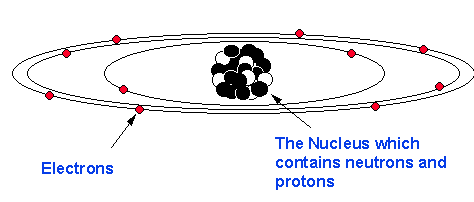
NOT drawn in "real" proportions
  • A man is about 10 BILLION times larger than an oxygen atom. If an atom were the size of a golf ball then a man would stretch from earth to the moon.
  • A teaspoonful of solid nuclei of atoms would weigh about 500 million tons.
  • The nucleus of a typical atom contains about 99.8% of the total mass of the atom.
  • The diameter of an atom is about 100,000 times the diameter of the central nucleus.
  • Most of an atom is empty space. Imagine a sphere of FIVE MILES to represent an atom. The nucleus on the same scale would be the size of a tennis ball.
  • Most of your body is empty space …..
  • A black hole is supposed to consist entirely of material from the nucleus; all the “empty space” has been stripped away. A black hole of the mass of the earth would be ONE CENTIMETER in diameter.

COLLAPSED STARS
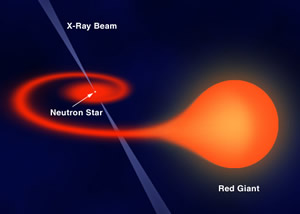
  • There is believed to be a black hole at the centre of our galaxy with the mass of ONE MILLION times that of our Sun.
  • A pulsar or neutron star is a collapsed star that spins on its axis up to three or four thousand times per second.
  • A pulsar is ONE HUNDRED TIMES DENSER than a white dwarf, which is what our Sun will become once its nuclear fuel has been used up.
  • Pulsars sometimes send out gigantic amounts of visible light, equivalent to many times the total light emitted by the Milky Way.
  • A tablespoon of material from a neutron star would weigh about 3 BILLION TONS.

THE HUMAN EAR

  • can distinguish around 400,000 different sounds.
  • can detect sounds so quiet that the vibratory movement induced in the eardrum is not much more than the width of a calcium atom.

By Chris Snuggs

Science is Us!

A plea for science education.

a science class at Woolverstone Hall School, late 50s - click to see more

Apart from hearing and knowing that many people are suffering terrible hardships in this world, I find few things more depressing than to hear young people say “I’m not interested in science”.

We are part of Nature. Science is the study of Nature.

How can it possibly NOT be the most interesting and endlessly-fascinating of subjects? There is a shortage of well-trained science teachers in Britain. There are too many students doing courses on “Football Management”, “Media Studies” or even “sociology”.

Why is this? I can’t explain it. Can anyone else?

I am not a scientist, having had to abandon the study of physics and biology – two subjects I loved – because I was better at languages.  Too many youngsters have to drop science at the age of 16. What an absolute folly in the technological age, even 50 years ago.

My point is not just that science is important but that it is so interesting. Is the problem that some kids find it “too hard”? That must be poor teaching, surely? You gear your lessons to your students.

One positive point about British schools – at least in my distant experience – was the great use made of practical work. I so looked forward to that in physics: boiling up water in calorimeters, mucking about with levers and pulleys, passing electrical currents through each other …. I looked on physics lessons as a game, not a boring school subject.

Yes, science CAN be hard, especially for those not that good at maths. Some of the most brilliant minds on the planet do science; we cannot hope to understand all they do. But this doesn’t matter, does it?

ISBN: 0-19-511699-2

As for maths, I have recently been reading a most stupendous book, one that I cannot recommend too highly to any layman interested in science. Shown right, this was written by Brian Silver, former Professor of Physical Chemistry at the Technicon Institute of Technology in Israel.

I read and re-read this book every night, each time hoping – somewhat in vain – that I will  eventually understand what quantum mechanics and relativity really are. But I read it, too, with a tinge of sadness, for Brian Silver died in 1997, just prior to the publication of his book, which I personally feel is a masterpiece of its kind.

In this book Professor Silver takes us through the history of science from Antiquity and before right up to the end of the 20th century.  As well as chapters on all the major fields and discoveries of science from Pythagoras to Hawking we have fascinating snippets of biographical information about the science greats: Galileo, Copernicus, Newton, Herschel, Boyle, Hooke, Faraday, Lavoisier, Maxwell, Mendel, Darwin, Planck, Bohr, Heisenberg, Schrödinger, Einstein, Rutherford, Crick and so many more.

Their biographies themselves make fascinating reading, let alone their discoveries.

I read a book some years ago about Joseph Salk and the development of the polio vaccine. This was a hundred times more exciting than the most classy whodunnit, recounting the story of one of the greatest triumphs of medicine. Do you know anyone with polio? Nor do I, though I did when I was a kid in the 50s and of course there are many in “developing” nations still today, as we spend billions on CERN and not enough on medicine for the deprived of this world. Interwoven with the factual accounts of science and scientists considerable attention is given to philosophy and the placing of scientists and their discoveries in their historical context. A dry, purely factual book this isn’t, with the final chapters on cosmology, the origin of the universe and the meaning of life. (But don’t expect any answers to the last two!!)

Maths? Well, Professor Silver puts Michael Faraday right up there among the immortals. An astounding practical scientist/technologist, he made major discoveries in the field of electricity that affect the lives of everyone on the planet today. But his maths wasn’t too good! So much so that he pleaded with James Clerk Maxwell to write his equations in a more understandable way!

So you don’t have to be a great mathematician to do good things in science. If only I’d realized that before, I could have been another Faraday!

This book should be a standard textbook for all 6th formers, not just those doing science. I salute the brilliant and too-soon departed author.

By Chris Snuggs

Papal spokesman loses marbles

Not quite the best way to manage one’s ‘news’.

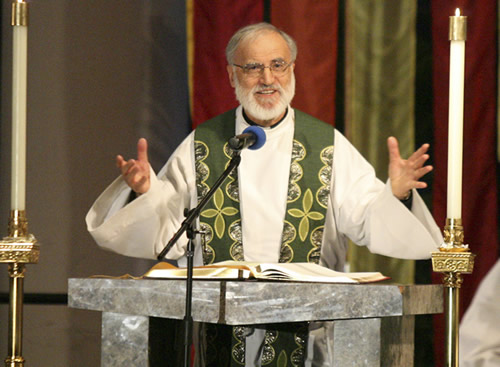
Fr Raniero Cantalamessa

I’ve been trying to think of the right word, and I think I’ve finally managed it – “stupefying”. This is in connection with Fr Cantalamessa’s remarks comparing the current criticism of the Roman Catholic church hierarcy with anti-semitism, this in relation to the on-going child-abuse scandals that are rocking the Roman Empire.

I don’t like to kick a man when he is down, and Fr Cantalamessa is clearly challenged on a wide number of fronts, including cerebrally.

The Catholic Church is in a totally indefensible position on the abuse front; the Pope himself is accused of failing to take action (always the easy course) in his earlier career when presented with clear evidence of wrong-doing.

No, the only possible reaction was to assume great humility and sorrow and issue grovelling apologies.  No doubt the usual politicians’ standby soundbite would not have gone amiss: “Lessons have been learned.”

I give  Fr Cantalamessa some credit for saying what he thinks instead of passing his comments through a gruesome PR spin merchant, but unfortunately he has got it completely wrong. And it’s no good the Vatican claiming that these remarks “did not represent its official view”. They were after all printed in full on the front page of the Vatican’s own newspaper “L’Osservatore Romano.”

As Peter Isely of SNAP (survivors Network of those Abused by Priests) put it much better than I could:

“They’re sitting in the papal palace, they’re experiencing a little discomfort, and they’re going to compare themselves to being rounded up … and sent in cattle cars to Auschwitz? You cannot be serious.”

Porr old Fr Cantalamessa should get out and about into the real world a bit more.  Someone should send him a copy of Mother Theresa’s biography or “Five Chimneys”

Has he seen “Schindler’s List”, even though what was shown there was extremely mild compared to the horror of the reality?

Sorry Fr Cantalamessa, you score nul points on this one ….

By Chris Snuggs

Alistair Cooke

A tribute to Alistair Cooke of Letter from America

Many, many people of a certain age will remember with very fond affection the weekly BBC Radio broadcasts of Alistair Cooke under the title of Letter from America.

Alistair’s broadcast title, Letter from America, came to mind because I have been thinking for a couple of weeks about what to call my impressions about moving to Payson in Arizona.

Payson Perceptions? Pictures of Payson? Payson Profile?  No!  They all seemed naff!

But would it be too presumptuous to echo Cooke’s hugely famous programme title?  Hopefully not.

(And regular readers will know that yesterday, the first Letter from Payson was published.)

I did a Google search on Alistair Cooke and immediately found the BBC web page devoted to him.  For those that don’t know Cooke here are a few details from WikiPedia.

Born in 1908 in Salford, Lancashire, England, Cooke first started broadcasting for the BBC in 1946 and continued until the 20th February, 2004, a total of 58 years and making Letter from America the longest-running speech radio show in the world.

I hope the BBC will forgive me in reproducing here on Learning from Dogs the obituary that is on the Alistair Cooke website.  He was a wonderfully interesting man and his weekly Letter from America seems to have been part of my complete life (in a sense it was).

——————-

Reading Letter from America in the 1950s

He read his Letter from America for 58 years

Esteemed writer and BBC broadcaster Alistair Cooke, famed for his programme Letter From America, has died aged 95. BBC News Online looks back at his long and respected career.

For more than half a century, Alistair Cooke’s weekly broadcasts of Letter from America for BBC radio monitored the pulse of life in the United States and relayed its strengths and weaknesses to 50 countries.

His retirement from the show earlier this month after 58 years, due to ill health, brought a flood of tributes for his huge contributing to broadcasting.

Born in Salford, near Manchester, northern England, Alistair Cooke’s father was an iron-fitter and Methodist lay-preacher.

Alistair Cooke

Alistair Cooke: Consummate broadcaster

Winning a scholarship to Jesus College, Cambridge he read English, edited the undergraduate magazine, Granta, and founded the Cambridge University Mummers.

Alistair Cooke made his first visit to the United States in 1932, on a Commonwealth Fund Fellowship which took him to both Yale and Harvard universities.

Following his return to Britain, he became the BBC’s film critic and, in 1935, London correspondent for America’s National Broadcasting Corporation.

He returned to the United States in 1937 to work as a commentator on American affairs for the BBC. He made his home there and, in 1941, became an American citizen.

Alistair Cooke

A passion for jazz

March 1946 saw the first edition of American Letter, which became Letter from America in 1949.

The series was the longest-running series in history to be presented by a single person.

Alistair Cooke never decided what he was going to talk about until he wrote the script, made no notes during the preceding week and preferred to rely on his memory.

In an interview given at the time of the 3,000th edition of Letter from America, he appeared to have mixed feelings about the future of the United States.

“In America,” he said, “the race is on between its decadence and its vitality, and it has lots of both.”

Addressing Congress in 1973

He addressed Congress in 1973

Cooke led his listeners through the American vicissitudes of Korea, Kennedy, Vietnam, Watergate, Nixon’s resignation and Clinton’s scandals.

In all of this, Cooke pulled no punches. The lyricism of his broadcasting and the urbanity of his voice did not disguise his fears for America which he saw becoming a more violent society.

A liberal by nature, he reserved particular dislike for what he saw as the shallow flag-waving of the Reagan presidency.

Alongside working for the BBC and The Guardian, for which he wrote from 1945 to 1972, he developed a passion for jazz and golf and, as a film critic, he mixed with Hollywood stars.

As a commentator on history, Cooke was sometimes an eyewitness too. He was just yards away from Senator Bobby Kennedy when the latter was assassinated in 1968.

He was never as comfortable on television as radio but, by the 1970s, his hugely successful television series America recounted his personal history of his adopted homeland and won international acclaim, two Emmy Awards and spawned a million-selling book.

British or American?

The Queen awarded him an honorary knighthood in 1973 and the following year, for a journalist, he received the ultimate recognition – he was asked to address the United States Congress on its 200th anniversary.

He told his audience he felt as if he was in a dream, standing naked before them and there was only one thing he could find to say.

Teasing, he exclaimed to the assembled legislators, “I gratefully accept your nomination for President of the United States!”

Naturally, he brought the house down.

Many Britons thought he was American, but to the Americans he was the quintessential Brit, the man who brought them the best of British television as presenter of Masterpiece Theatre. For his part, he explained, “I feel totally at home in both countries.”

He impressed both audiences with his high quality work. With his unquenchable curiosity, Alistair Cooke remained for decades the consummate broadcaster, an elegant writer and a man of enormous wit and charm who made sense of the American Century.

By Paul Handover (still missing Letter from America on the radio.)

Letter from Payson – first impressions

Ma’am, it’s only a small cow town!

On February 26th Jean and I, and a caravan of dogs and cats, arrived at our new home in Payson, Arizona.

We chose Payson simply because we wanted seasons.  Payson is about an hour NE of Phoenix up at 5,000 feet and has very distinct seasons!

Snow in the garden - late March!

Both of us for different reasons thought we knew America pretty well.  Jean was married to an American for nearly 30 years and I had been doing business in the US for a long time, even having my own (small) US company based in New Jersey.

But what neither of us anticipated was the wonderful warmth and friendliness of the Payson inhabitants.  Despite the fact that Payson is hurting big time as a result of the economic situation, the majority of people that we met were happy, smiling and wonderfully accepting of a couple of Brits turning up in their town.

Indeed, Jean spoke to this stranger in the local supermarket, a tall guy complete with the boots and Stetson hat, and asked simply, “Why are so many people in Payson smiling?

His reply was simply, “Ma’am, it’s only a small cow town!

Well here’s a couple of newcomers to this small cow town who like it!

Payson and the Mogollon Rim in the background.

By Paul Handover

Should you invest in U.S. bonds? Part 3

This is part three of a multipart series on the factors that drive U.S. and foreign bond prices and yields.

[Part One is here, Part Two here, Ed.]

The yield on a bond is made up of several components. Some think of the return on a bond as the sum of the risk-free rate of interest (how impatient we are to get our money back, or how much we need to be compensated to delay consumption) and a risk premium (the additional return we require to compensate us for the risk of default, the risk the bond will be called, the risk of inflation reducing the purchase power of the repaid dollars, and many other sources of risk as outlined in the most recent article in this series).

Another useful way of thinking of the return on a bond is as the sum of the real rate of interest and the expected rate of inflation.  But what is the real rate of interest?  We never actually observe that rate, unless of course the inflation rate is zero and then the real rate is just the nominal rate set in the market.

It is useful, however, to think about what drives the ability of a company to generate a real rate of return to lenders, for this is essence of capitalism and risk-taking and creating economic value and growth.

Bond traders

A firm’s asset cash flows support the real returns to its lenders – all kinds of lenders (debt, equity, hybrid, and derivative security holders). A firm will want to borrow more, and is willing to pay a higher interest rate for those funds, the more profitable are the projects they want to undertake, or the greater the number of profitable projects. Profitability, in turn, is determined by the relationship between demand and supply:  how much does society value a good or service, and how many resources does the business use in producing the good or service.  As the marginal productivity or efficiency of a business goes up, it can afford to profitably fund more projects.  So the core driver of the real return on bonds is the strength of the underlying economic activity of the private economy.

Or, when viewed from the investor’s side, note that an investor will purchase a bond, or lend money to a company, if they expect to earn a return sufficient to compensate them, first, for delaying consumption and, second, for bearing the various sources of risk or uncertainty associated with the bond’s cash flows or return.

By Sherry Jarrell

The Age of Pledge and Spin

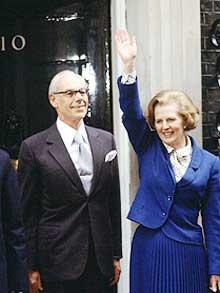
Mrs Thatcher and hubby

A dream that, perhaps, one day politicians will be truthful.

British General Elections are always fascinating occasions. On the one hand they are deadly serious. Mrs Thatcher’s win in 1979 set up the country for 18 years of Tory rule with massive changes and frequent social conflict whose effects are still felt today.

It was either a total social and economic disaster or a great leap forward into modernity depending on your point of view. Her victory of course also consigned Labour to 18 years of impotent pfaffing about in the political wilderness.

But on the other hand they always cause a great deal of hilarity to the student of human behaviour, as day after day nonsensical, fatuous, spinladen pronouncements are made by those desperate to get their hands on power.

And these pronouncements of future intentions (often delivered with the word “pledge” attached – as if that were somehow more weighty than “promise”) are often based not on reason or good planning but on how they will go down with the public!

And amazingly, they often seem to be made without any great thought about the consequences. Brown has got some stick only today because he promised (or if you like “pledged”) that there would be no VAT imposed on the Simon Cowell charity record for Haiti, yet EU rules prohibit such gestures and so the Treasury is having after all to charge VAT and is now promising to pay this back with increased aid as a workaround.

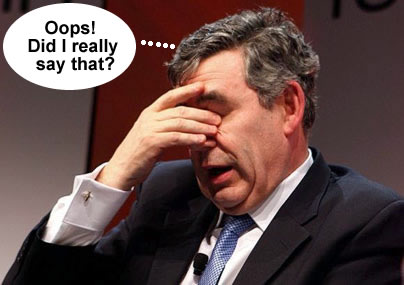
Foot in mouth - again!

The increased aid could have been given in the first place without his headline-grabbing “pledge” to make it VAT-free.

As ex Chancellor, Brown should have KNOWN that removing VAT from individual items on a whim is not allowed, but he clearly spoke without thinking, the headline-potential of declaring the record VAT-free being irresistible.

Gordon Brown has also got himself into “another fine mess” by trying out a variation of  his trick of the 1994 election.

During the pre-election campaign then he solemnly pledged NOT to raise income tax. No,  not he. He was not the man to steal the public’s hard-earned cash by raising income tax; that would be most unsporting.

Meanwhile the poor old honest and hopelessly-naive spinfree Lib-Dems promised to put one measly pence onto income tax to pay for more education. Naturally, in the election they got slaughtered as wild spenders. You couldn’t make it up!

As for Gordon Brown, he kept his word. Income Tax remained as untouched as the virgin snow. But he had a cunning plan; as soon as he got his hands on our money, he vastly raised National Insurance (NI) instead. It actually comes down to the same thing, but of course the SPIN was different. That was how Brown’s management of our finances began, and so it has gone ever since.

Well, it’s hard not to repeat a winning formula, as many crooks have found out to their cost.  Putting up National Insurance of course (even if this time you TELL the people you’re going to do it) can be sold as much more  socially responsible than simply putting up income tax. The former can be spun as essential to pay for hospitals, pensions and the like whereas the latter seems more often like Robin Hood in reverse. The silly thing is that it’s ALL MONEY TAKEN FROM OUR PAYPACKETS, so what difference does it make?

Well, to the wage-earner, none at all, but to the employer quite a lot, and this is where Brown is batting on a sticky wicket. Increasing National Insurance certainly IS a “tax on jobs”. Let’s look across the English Channel ……

They have a VERY high level of NI (French = “charges”) in France. The result is that:

  • Employers bend over backwards NOT to employ anyone; it is so expensive.
  • Productivity in France is very high (higher than in the US – fewer workers than in many other countries do the same amount of work).
  • Unemployment is also consistently very high.

In Denmark it is much cheaper and easier to hire and fire people than in France. Oh Dear! Horrible, nasty, capitalist,  Denmark and wonderful, caring, socialist France!!

Errmmm … No, actually; unemployment in Denmark is usually around 4% (I just checked; it is TODAY despite all the economic chaos just 4.1%) and in France endemically nearer 10%.

Rocket science it ain’t. Sad for the otherwise-could-be-employed it certainly is.

Well, even the plebs are not quite as gullible as 25 years ago. The negative effects on employment are blindingly-obvious to employers but as it is such an easy thing to understand (though not apparently for the entire French government or for Mr Brown) ordinary people are beginning to understand it, too. Brown’s statement that he will raise NI isn’t doing his election campaign any good at all.

However, as it is currently business leaders in particular who are bleating about this, perhaps it will be spun as: “Don’t worry chaps – it’s just those capitalist business-chief bastards whinging again”. That’s one thing you can rely on in an election; there will be endless spinning, quoting of statistics and rubbishing of the enemy ….

By Chris Snuggs

The Flirting Pilot

A departure from economics!

I have hit a man only once in my adult life. Only once, but this was a full-out, closed-fist, knock-you-off-your-feet slug that dared him to come back for more. And he didn’t. One slug did it! How empowering!

Bob (name changed) took me and George (my then-fiancé and now ex-husband) for a ride in a four-seat plane above the skyline in downtown Dallas, Texas late one summer night when the skies were dark and the stars were bright.

Private Plane

Bob was a friend of Allen, who was a very good friend of mine and an accomplished private pilot who had introduced me to the joys of flying. Allen trusted Bob and I trusted Allen, so I was not unusually concerned about Bob’s ability to get us back down safely. But I hadn’t factored in Bob’s judgment, or lack thereof.

I think, in hindsight, that Bob had hoped I would show up for the ride alone despite the  fact that I had arranged it as a surprise for George. The plan was for George to sit up front and play co-pilot.  Upon arrival at the hanger, however, Bob promptly stuck George in the back seat of the plane and then turned his full attention to me.  I’m usually fairly dense to these things, but it was apparent even to me that Bob considered this to be a  “date.”  He was charming, animated and very friendly, while virtually ignoring George’s very existence.  We reviewed the safety measures, checked out the plane, and away we went.

Bob was showing me a series of maneuvers, swooping and banking and it was all lovely and exciting until…..a sudden plunge…..and everything instantly blacked out.  It was very disorienting — even though my eyes were  wide open and I was totally conscious, I could not see a thing.

The sirens started blaring; a recorded voice shouted “Stall! Stall! Stall!”  I called to George but he didn’t answer. Either he was unconscious or couldn’t hear me over the noise, but I wasn’t sure which.  I reached out to Bob, but he was unresponsive and felt limp.  Now I was really worried.  Momentarily terrified, actually, with that cold feeling of raw fear in the pit of my stomach.  I thought to myself, “If I am blacked out and cannot see, then HE, the, um, PILOT,  might be blacked out as well!”

I had what seemed like a very long time to ponder what I could do to survive this emergency, and keep George alive, who was there because of me!  I tried to feel my way along the control panel to find the radio to call out “May Day,” but that wasn’t going too well. Somehow — I don’t know how because I still could not see! — Bob got us out of the descent, pulling the nose up and righting the plane.   The sirens and warnings stopped.  After a few more moments, my vision came back, and my stomach returned to its rightful place.  We landed in one piece.

But when ole’ Bob got out of the pilot’s seat and walked around the plane to help me exit, I had a little surprise for him. Actually, it was a surprise for me, too, because I didn’t plan it and didn’t “see” or “feel” it coming. The next thing I knew I had drawn my right arm back, made a fist, and threw it into his left shoulder with everything I had. POW!

He stumbled, grabbed his arm, and said “Ow! What did you do THAT for?”  Well, I didn’t think I had to explain how I thought he had just put my life and that of a friend in danger just to show off.  I didn’t think he would see it the way I did, that he had flown that plane beyond his ability to control it. And even if he was in control the entire time, which I doubted, he scared the bajeebees out of me which was reason enough for me to sock him one!

I don’t recommend physical violence, even if the assailant is half the size of the perpetrator, but I have to tell you that to my knowledge, Bob never took another unsuspecting victim up for a little spin around the tops of buildings in downtown Dallas.   And I know that if I ever really need to wind it up and let her go, I do have it in me.

By Sherry Jarrell

The State of the Union?

A view of the Union from across the Pond

Dr Sherry Jarrell commented recently on her disappointment with President Obama, with two specific criticisms:

A) the way he speaks to the people, or perhaps to some of the people

B) his handling of the economy

With this in mind and given that the President has now been in office for long enough for a judgement to be made, here is a view from this side of the water.

HOME

How he speaks to the people. I can’t judge this; I don’t currently have a television, let alone one with access to all the US media; And “yes”, I know this is a bit bizarre, but there you go …

What does surprise me is that during the election he showed himself to be an orator of considerable talent. Indeed, without this talent to inspire people it seems unlikely that he could have got elected in the first place. So what has gone wrong? Do the people he is speaking badly to perhaps deserve it?

The economy? Dr Jarrell is the expert. However, I just caught sight of a headline about US growth, which seems to be picking up surprisingly well.

Surely it is not all gloom, even if unemployment is high at nearly 10%. However, if you think this is bad you should visit Spain.

Health? As a European, one struggles to understand why he has been criticized by some on this issue. The US can’t afford it? Well, perhaps the bankers should be giving up some of their vast salaries and bonuses to help pay for it.

Priorities? How can the USA possibly NOT have a universal health system, when poor little Cuba has one? As I understand it, health consumes about 17% of US GDP, which is WAY above other comparable nations.

Something is wrong here. Have the medical profession and pharmaceutical companies got Americans by the short and curlies? And even this 17% didn’t until now include tens of millions of people. I would really like to have someone’s take on this.

The Republicans? Well, are we seeing a great party beginning to implode? The hysteria over the health reforms is astonishing. The “Tea Party” group has issued all kinds of threats and complaints that even senior members of the Republican party have not criticized. What is going on here?

Do they have no understanding of how modern, civilised societies work? As a friend of mine put it (as it happens a strong supporter of the Cuban regime, which I certainly am NOT) “You judge a society by the way it treats its poorest and weakest members.” On this score, the Republicans are living on another planet.

I read a fascinating take on this the other day in the New York Times.  In essence, Frank Rich claims that the Tea Party hysteria is nothing to do with the health system, but concerns the fact that WASPs feel threatened as they will soon be in a minority in the USA.

Yup – hard to believe for a British kid brought up on John Wayne, the Pilgrim Fathers, New England and all that … but true. Even so, if the Republicans are not to become a laughing-stock they need to find some more statesmanlike leaders. Sarah Palin just doesn’t cut the mustard I’m afraid.

Oil & Energy? Well, he is cracking down on gas-guzzlers. He has to have points there, surely? It is both essential and long overdue. On the other hand, he has sanctioned oil exploration in hitherto off-limits areas, the  idea being to reduce dependency on imported oil. Very commendable, but the aim of all nations is to reduce consumption, isn’t it?

AWAY

As a European, whatever impression one has of the USA has to be tempered by remembering that one does not live there. One simply cannot pick up the real mood of the country unless one has feet on the ground, and so all the above comments are impressions, possibly misplaced.

But on INTERNATIONAL affairs one is on slightly firmer ground, and of course what the US does internationally also concerns us more directly. When he took office, I decided I would judge him on one thing in particular ……

Palestine: There has been precious little movement since 9/11. Lots of “talks”, “negotiations” and proposals of course, but underlying it all the feeling that the Israelis are not going to give up anything at all.

The present government in particular seems like an immovable object on many key issues that must – frankly – be resolved by compromise on all sides. This is where an irresistible force comes in, and this can only be Obama.

Well, there have been positive signs, but I have yet to see evidence that pressure on Israel will be both real and sustained. Sometimes “negotiations” and “frank-talking” are just NOT enough, and this is one of them. The jury has retired with some recent positive feelings, but it is still out, and very sceptical.

Iran/China?: Obama has tried to be nice to these people, but – as with Israel – being nice sometimes doesn’t do it. There is I feel serious trouble ahead with China, one way or the other. Will Obama be tough enough to deal with it? The jury is still out on that one, too.

SUMMARY: Humans tend to be optimistic folk: we believe there is a solution out there somewhere. We believed Obama might be it.

We were as ever hopelessly-idealistic. Nevertheless, I am mindful that this is an extremely inexperienced President, chosen by Americans for his youth, optimism and charisma more than his long experience as a statesman.

He will need time. Unlike some Americans – who already think he is the anti-Christ (those strange Republicans again) – I am prepared to wait a bit longer to make a final judgement.

By Chris Snuggs

Europe Uber Alles, Pt 2.

A Guest post by Patrice Ayme

Part One ended saying:

The euro, long in planning by some European institutions, was introduced minimally, namely without the governmental apparatus generally associated to a currency. This is the way Europeans have found to progress peacefully towards greater harmony: do what is necessary, and nothing more than that, and do it with total consensus.

Everybody knew that a currency without a government to create and anchor it had never happened before, and was unlikely to endure.

The European Union

Part Two continues

That fit the European federalists just right, and could not have escaped the understanding of Paris and Berlin. As it turned out, the PIIGS’ crisis is putting back Paris and Berlin, the historical engine of Europe, back on top, and this, for an excellent reason.

“PIIGS” stand for Portugal Ireland Iceland Greece Spain. All of them ran bubble economies, partially propelled by taxes from the richest European countries (including France and Germany). It became ridiculous as, for example, Ireland was getting European subsidies while the Irish were already way richer than those subsidizing them. (OK Iceland is not in the EU, yet, but it begged to enter the Eurozone, and it has disappeared the savings of countless Brits and Dutch, which means it has some outstanding business with the rest of Europe, that it will have to sort out, after executing a few more whales, guilty as charged.)

Some acknowledge the convenience of a common European currency and easier border transits, while remaining obsessed by what they view as gigantic differences between European countries. Those quaint nationalists and parochial types obsess that core differences between countries are so strong and deep-rooted that any form of real European union is a ridiculous concept. This is triply erroneous.

Read the rest of this Post