Tag: Health care

More Shenanigans on U.S. Health Care Reform

Is this really what the Founding Fathers had in mind for America?

This topic may seem to be more about politics than economics, but anything related to health care reform is squarely rooted in the most important of economic issues:  the costs of doing business, the size of the government, and the potentially oppressive role of government in private industry.

To that end, the following is a must-read, and should make you angry, no matter what your political persuasion.  http://bostonherald.com/business/healthcare/view.bg?articleid=1224249&format=text

In this article, we see how the Senate Democrats are going to do whatever it takes to get their version of health care reform through, even if it comes down to ‘stealing’ votes.  Could the timing of this Massachusetts special election, to replace the temporary replacement put in for the late Senator Edward Kennedy, be one of the reasons that the Senate wants to rush this reform through before the President’s State of the Union Address, typically set for mid-January, though the White House is curiously reluctant to commit to a date….  ?
By Sherry Jarrell

U.S. Health Care Reform: The Ultimate Intrusion

US health care reform comes with strings, nay chains.

Once a single-payer health care program is enacted into law, the US Government will assume the right to tell us how to live our lives.  Our health will be their responsibility.  Government officials will feel empowered to tell us what to eat and drink, what risks to take, whether we can smoke, how much weight we can gain and how much exercise we must get.

If you have any doubt, consider the following statements from the Obama administration over the last year. The clear message is if the government pays for something with tax dollars, it has both a right and a responsibility to tell the recipients of those dollars how to conduct themselves.

  • This is America. We don’t disparage wealth. We don’t begrudge anybody for achieving success,” Obama said. “But what gets people upset — and rightfully so — are executives being rewarded for failure. Especially when those rewards are subsidized by U.S. taxpayers.”   http://wcbstv.com/national/executive.pay.limits.2.926332.html
  • President Obama challenged top bankers to explore “every responsible way” to increase lending, saying they were obliged to help after being rescued by taxpayers. He asked them to “take a third and fourth look” at their small-business lending. He also exhorted the executives — both in private and in public — to drop their opposition to an overhaul of the nation’s financial industry.  “If they wish to fight commonsense consumer protections, that’s a fight I’m more than willing to have,” Obama told reportersin the Diplomatic Reception Room of the executive mansion.  http://www.msnbc.msn.com/id/34416646/ns/business-us_business/
  • Obama said it is “wholly unreasonable to expect that American taxpayers would or should hand this administration or any administration a $700 billion blank check with absolutely no oversight or conditions, when a lack of oversight in Washington and on Wall Street is exactly what got us into this mess.”  Obama said taxpayers should be treated like investors if they are being asked to underwrite the bailout.  http://www.cnn.com/2008/POLITICS/09/23/campaign.wrap/index.html
  • “What’s really frustrating me right now is that you’ve got these same banks who benefited from taxpayer assistance who are fighting tooth and nail with their lobbyists up on Capitol Hill, fighting against financial regulatory control,” Obama added.  http://au.biz.yahoo.com/091213/31/2aafh.html

By Sherry Jarrell

Parenting the Government

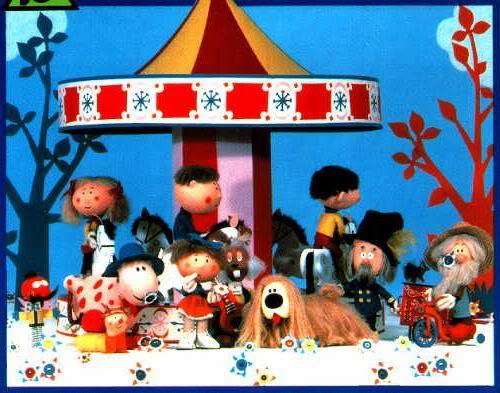
Governments version of the Magic Roundabout.

Okay. If you tried this ploy on your parents, you wouldn’t get away with it.  If your kids tried it on you, you wouldn’t fall for it either.  So why are the American people letting the Government get away with this ploy?  I don’t know. And I don’t get it.  Maybe there is just so much going on that it gets lost in the mix. Maybe it’s because of the deceptive and disingenuous way it’s being presented by Pelosi, Reid, and Obama.

Here’s the ruse:  “Give us more of your money today, and we will reduce tomorrow’s health care costs. We will increase efficiency.  And we will do all of this without increasing the budget deficit!”

Yeah, right.

What exactly is stopping them from reducing health care costs and improving the efficiency of health care delivery now? Why do they need more money today to accomplish these things tomorrow? What magical powers does the next dollar of tax collections have that the current ones don’t?

Exactly.  None.  So when Congress asks to increase taxes and the deficit in order to fix health care tomorrow, let’s respond to them as we would our clever but errant children: Ask to see some proof today first.

You know how that will turn out. And so does Congress.  That’s why they just keep promising the moon.  What I don’t get is why we continue to let them get away with it.

[Not just the US Government plays on the roundabout – I’m sure they learnt from the Brits! Ed.]

By Sherry Jarrell

The Insanity of Medicare 2.0

US still struggling to find a proper health care solution

We’ve all heard this definition of insanity: doing the same thing over and over again but expecting a different result.

Here, in a nutshell, is the insanity of the current U.S. health care debate:

  1. Medicare, the government’s single-payer wealth redistribution health care program, is quickly going bankrupt.  No one disputes this fact.
  2. When President Obama refers to “cutting costs of healthcare,” he is referring to cutting the Medicare budget. Period.  No increased efficiencies, no improved services, no reduced market-clearing prices. No, cutting costs refers to reducing the fraction of the U.S. government’s tax collections devoted to Medicare.
  3. The new Health Care Plan is fundamentally a new Medicare program. Let’s call is Medicare 2.0.
  4. Medicare 2.0 is being funded in large part by cutting the current Medicare budget item. We are supposed to ignore the fact that the funds cut from the current Medicare program will be spent on Medicare 2.0.
  5. The Medicare 2.0 plan shifts as much as 25% of its (under)estimated costs (e.g. payments to physicians) to other accounts.  The costs are still there; these obligations would still need to be paid by the government under the proposed legislation, but Congress is hoping the public won’t “count” the shifted costs if they slap another name on them, further fostering the illusion of “lowering costs of health care.”
  6. Medicare 2.0 will also go bankrupt but, as a larger, more far-reaching entitlement program, the impact on the U.S. budget will be larger and more far-reaching.

By Sherry Jarrell

Copenhagen – the unspoken issue

It’s getting crowded down here!

For those readers who are not regular BBC television viewers, the Beeb has for many years run an excellent factual/science & nature series under the name of Horizon.  Just recently there was a programme with the title of How Many People Can Live on Planet Earth?

Sir David Attenborough

It was presented by that familiar face on the BBC in terms of the natural world, Sir David Attenborough.  It was an appropriate and worthy person to present the information.

But before getting into some of the details underpinning the programme, there seems to been an enormous and unspoken omission at Copenhagen – why no debate about global population trends?

Luckily the media noticed the rather obvious exclusion.  Here’s the UK Daily Telegraph newspaper (online version) of the 8th December, 2009. An extract:

Population growth is the one issue accused of causing driving climate change that no one at the Copenhagen climate summit dares to talk about.

The argument is that more people consume more resources, therefore producing more greenhouse gases that cause global warming.

The global population is currently at 6 billion and could rise to 11 billion by 2050 if fertility rates continue, not only threatening the climate, but food shortages and conflict as well.

Organisations like the Optimum Population Trust, that is backed by Sir Jonathan Porritt, Dame Jane Goodall and Sir David Attenborough, advocate birth control as a way of slowing climate change.

As Sir David has said: “I’ve never seen a problem that wouldn’t be easier to solve with fewer people, or harder, and ultimately impossible, with more.”

A study by the London School of Economics found contraception is almost five times cheaper as a means of preventing climate change than conventional green solutions such as investing in green technology.

Read more of this Post

The Swine Flu “Pandemic”

When is a Pandemic a Pandemic?

[I owe Chris an apology as this Post was prepared for publication on the 20th August and somehow got lost in the works.  I believe it is still a relevant and important topic and has not lost any impact from this unintentional delay. Ed.]

The swine flu “pandemic” is to me a very interesting phenomenon. Sadly, it seems typical of the sort of combination of marketing hype and hysteria that is all too common.

I am principally interested in seeing beyond all the media lies and spin to know the TRUTH about what is going on. From what I have so far read the following seems to be true, but if anyone is able to correct me on some issues I would be most grateful.

Read more about this so-called pandemic

Sunflowers in the desert

Stop doing what you are doing and watch Jacqueline Novogratz!

Small things add up to make larger things! This concept of “integration” is seen everywhere that we look.

The subject and content of this presentation are fundamental to the future of the world. And the presenter is showing what can be done.

I found this presentation particularly poignant.

By John Lewis

Health Care vs. Health Insurance

Being clear about the terms Care and Insurance when it comes to US health.

The issue for the day is the distinction between health CARE and health INSURANCE.

As we all know, they are not the same thing.  But, as we all have noticed, the two are often confused and the distinctions ignored by many, if not most, in the media, Congress, and the White House.

Health Care and Health Insurance are certainly interdependent. But it helps first to separate the two and take each in turn.

Let’s start with health insurance.  And let’s think of it first as just any “insurance,” like a policy on your house or car.

What is insurance?  It’s a contract that you buy to limit your losses if a bad event happens, even though the likelihood of the bad event occurring is usually very low.

Read more about this important issue

Rationing by Government or the Market?

Rationing.  First of all, what does rationing mean?

It means that there is a finite or limited supply of a good or service, and that not everyone will get all of it that they want.  Rationing can occur through the price that is charged for the good, or through limiting the quantity of the good by some centralized authority.

Yes, it is true that regardless of whether we get our health insurance from private insurers or from a government program, there is rationing.   But there is a huge difference between the type and scope of rationing by the market through price, and rationing by the federal government through control. When the service is rationed by an insurance company, a doctor, or a hospital, if we don’t like the decision, we have a recourse.  We have options. We have choices.  We can go to a different doctor, a different insurer, a different plan; we can report the company, sue the company, fire the company.

When your health care is rationed by government-sponsored single-payer health insurance, that’s it. If you don’t like the rationing decision, you can’t get “another government,” you can’t sue the government, you can’t fire the government, you can’t pay a higher price to get more services out of the government (not legally anyway).  You have no recourse.  The government decision is the end of the road.

So rationing in and of itself is not the point, is not the problem.  Government rationing is the problem.

By Sherry Jarrell

Lend an Ear!

Taking stuff for granted.

Speaking to Paul on the phone and reading his comments about Hurricane Jimena, it’s clear that we all take basic things

Georgia Horsley - see text

in life very much for granted.  The following was passed to me by a fellow commercial pilot who, like me, as you will probably appreciate, requires regular medicals to be passed fit to fly.  It serves as a reminder to all of us that we should value frequently our health.

Here’s the tale.

Read more of this Post