Category: Communication

Still more Vitamin D recalls

Still they come.

ooOOoo

November 28, 2018 — ANF, Inc. is issuing a voluntary recall of select products of ANF Pet Food due to potentially elevated levelsof vitamin D, which can cause serious health issues in dogs.

No product images were provided with this recall.

What’s Recalled?

The following products have been recalled:

    • ANF Lamb and Rice Dry Dog Food
      Size: 3 kg bag
      UPC: 9097231622
      Best by date: NOV 23 2019
  • ANF Lamb and Rice Dry Dog Food
    Size: 7.5 kg bag
    UPC: 9097203300
    Best by date: NOV 20 2019

The above products were distributed in retail stores within Puerto Rico.

No other ANF Products are affected by this recall.

This voluntary recall is being conducted in cooperation with the U.S. Food and Drug Administration.

About High Levels of Vitamin D

Consumers should stop feeding the products listed above.

Dogs ingesting elevated levels of Vitamin D may exhibit symptoms such as vomiting, loss of appetite, increased thirst, increased urination, excessive drooling, and weight loss.

Vitamin D, when consumed at very high levels can lead to serious health issues in dogs including renal dysfunction.

Consumers with dogs who have consumed any of the products listed above and are exhibiting any of these symptoms, should contact their veterinarian.

What to Do?

Consumers who have purchased any of the products affected by this recall should dispose of it or return it to the retailer for a full refund.

Consumers may contact ANF, Inc. customer service at 936-560-5930 from 8 AM to 5 PM Central Time, Monday through Friday.

Or by email at mwhite@anf.com for additional information.

U.S. citizens can report complaints about FDA-regulated pet food products by calling the consumer complaint coordinator in your area.

Or go to http://www.fda.gov/petfoodcomplaints.

oooo

Elm Dog Food Recall

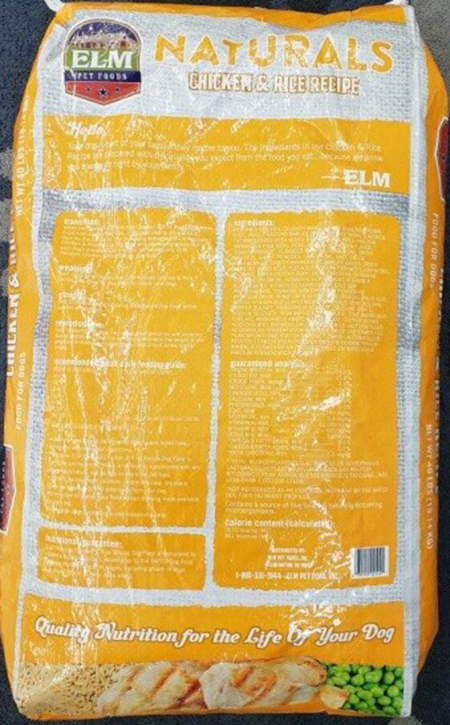
November 29, 2018 — ELM Pet Foods, Inc. is issuing a voluntary recall of certain products of Elm Dog Food because the products could contain elevated levels of vitamin D, which can cause serious health issues.

What’s Recalled?

The recall includes products manufactured between February 25, 2018 and October 31, 2018 with the following “Best By” dates:

    • 3lb Elm Chicken and Chickpea Recipe
      Size: 3-pound pkg
      UPC Code: 0-70155-22507-8
      TD2 26 FEB 2019
      TE1 30 APR 2019
      TD1 5 SEP 2019
      TD2 5 SEP 2019
    • Elm Chicken and Chickpea Recipe
      Size: 28-pound pkg
      UPC Code: 0-70155-22513-9
      TB3 6 APR 2019
      TA1 2 JULY 2019
      TI1 2 JULY 2019
  • Elm K9 Naturals Chicken Recipe
    Size: 40-pound pkg
    UPC Code: 0-70155-22522-9
    TB3 14 Sep 2019
    TA2 22 Sep 2019
    TB2 11 Oct 2019

Consumers, who have purchased the specific product above, during these dates, should stop feeding it to their dogs.

All Bags in the recall are yellow with the Elm Pet Foods Tag on the front of the bag and have a silhouette of a chicken at the bottom of the front side of the bag.

Consumers can check the lot codes on the back of the bag at the bottom center on the 3-lb bags and in the center of the back of the bag on the 28-lb bags.

The 40-lb bag lot numbers can be found on the bottom right of the back of the bag.

No other ELM Pet Foods products are impacted.

This is a voluntary recall and is being conducted in cooperation with the U.S. Food and Drug Administration.

Where Was the Product Sold?

Lot codes in this voluntary recall were distributed in the following states:

  • Delaware
  • Maryland
  • New Jersey
  • Pennsylvania

About Elevated Vitamin D

Dogs ingesting elevated levels of Vitamin D may exhibit symptoms such as vomiting, loss of appetite, increased thirst, increased urination, excessive drooling and weight loss.

Vitamin D when consumed at very high levels can lead to serious health issues in dogs including renal dysfunction.

Consumers with dogs who have consumed the product listed above are exhibiting these symptoms, should contact their veterinarian.

What to Do?

If consumers have questions or would like a refund they should call ELM Pet Foods at 800-705-2111 from 8 AM to 5 PM ET Monday through Friday or by email at customerservice@elmpetfoods.com.

U.S. citizens can report complaints about FDA-regulated pet food products by calling the consumer complaint coordinator in your area.

Or go to http://www.fda.gov/petfoodcomplaints.

Canadians can report any health or safety incidents related to the use of this product by filling out the Consumer Product Incident Report Form.

ooOOoo

One wonders about the dogs whose owners do not see these notices!

Picture Parade Two Hundred and Sixty-Six

A look at some of the prize winners of the 23rd annual Nature’s Best Photography Windland Smith Rice Award

Taken from here. (And I hope the copyrights aren’t being infringed by me sharing them.)

Silver Fox, Northern Washington, USA by Tin Man Lee (Winner for “Wildlife”): “I spent a week with this fox family after a friend shared the location.” (© Tin Man Lee, courtesy of Nature’s Best Photography Windland Smith Rice International Awards)

oooo

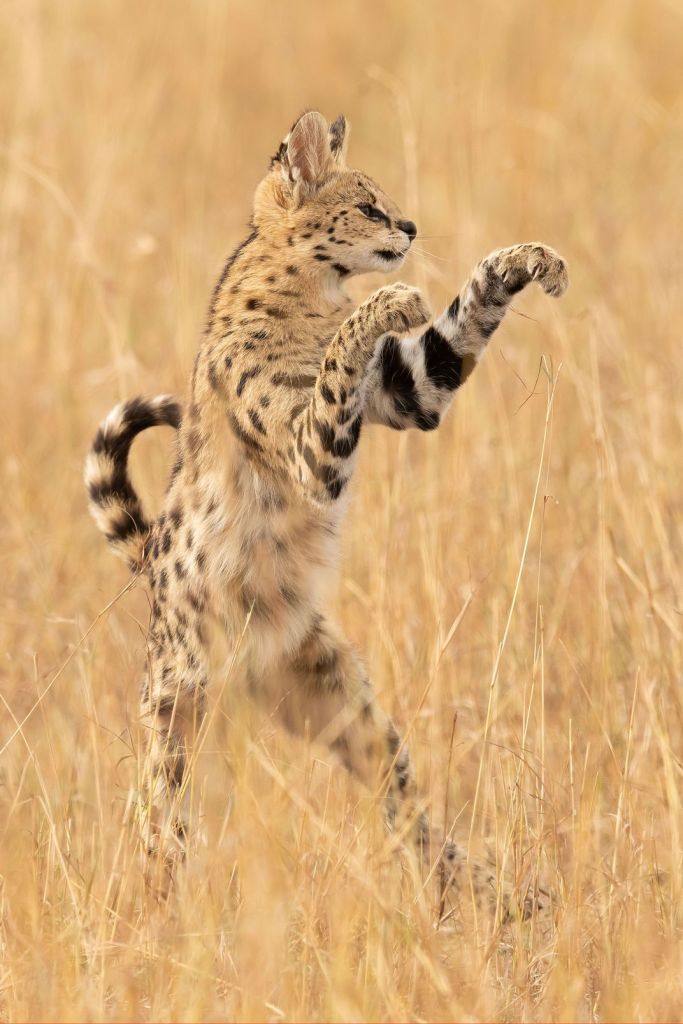
Serval, Maasai Mara National Reserve, Kenya by Richard Peters: “It paused for a moment, ready to pounce at a butterfly passing by.” (© Richard Peters, courtesy of Nature’s Best Photography Windland Smith Rice International Awards)

oooo

Cheetah, Maasai Mara National Reserve, Kenya by Andy Rouse: “I had been following this family in the Maasai Mara for two weeks and loved their displays of intimacy.” (© Andy Rouse, courtesy of Nature’s Best Photography Windland Smith Rice International Awards.)

oooo

Gentoo Penguins, Antarctic Peninsula by Anil Sud: “I spotted two chicks being fed by their parents.” ( (c) Anil Sud, courtesy of Nature’s Best Photography Windland Smith Rice Intermediate Awards)

oooo

Filtering Giants (vimeo,com (259502508), Isle Mujeres, Mexico by Howard and Michele Hall (Winner for “Video Nature in Motion”): “How these animals know when and where the fish will spawn is a mystery.” Courtesy of Nature’s Best Photography Windland Smith Rice International Awards.

Wonderful!

And yet more!

More on the elevated vitamin D issue in our dog food.

Here are the details.

ooOOoo

Evolve, Sportsman’s Pride, and Triumph Dog Food Recall

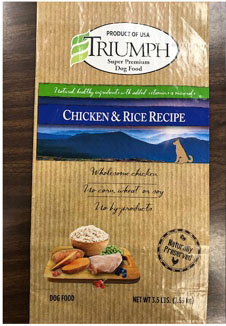
November 27, 2018 — Sunshine Mills, Inc., of Red Bay, Alabama, is voluntarily recalling select products of Evolve, Sportsman’s Pride, and Triumph dog foods due to elevated levels of vitamin D, which can cause serious health issues.
What’s Recalled?

The following products are being recalled:

    • Evolve Chicken & Rice Puppy Dry Dog Food
      Size: 14-pound bag
      UPC: 0-73657-00862-0
    • Evolve Chicken & Rice Puppy Dry Dog Food
      Size: 28-pound bag
      UPC: 0-73657-00863-7
    • Sportsman’s Pride Large Breed Puppy Dry Dog Food
      Size: 40-pound bag
      UPC: 0-70155-10566-0
    • Sportsman’s Pride Large Breed Puppy Dry Dog Food
      Size: 40-pound bag
      UPC: 0-70155-10564-0
    • Triumph Chicken & Rice Recipe Dry Dog Food
      Size: 3.5 pound bag
      UPC: 0-73657-00873-6
    • Triumph Chicken & Rice Recipe Dry Dog Food
      Size: 16-pound bag
      UPC: 0-73657-00874-3
  • Triumph Chicken & Rice Recipe Dry Dog Food
    Size: 30-pound bag
    UPC 0-73657-00875-0

Bags affected have a Best Buy Date Code of November 1, 2018 through November 8, 2019.

The Best Buy Code can be located on the back of each bag.

No other Evolve, Sportsman’s Pride or Triumph products are affected by this recall.

Where Was Product Sold?

The above products were distributed in retail stores within the United States as well as some export distributors in Japan, Puerto Rico, Colombia, Israel, Canada and South Korea.

This recall is being conducted in cooperation with the U.S. Food and Drug Administration.

About High Levels of Vitamin D

Dogs ingesting elevated levels of Vitamin D may exhibit symptoms such as vomiting, loss of appetite, increased thirst, increased urination, excessive drooling, and weight loss.

Vitamin D, when consumed at very high levels can lead to serious health issues in dogs including renal dysfunction.

Consumers with dogs who have consumed any of the products listed above and are exhibiting any of these symptoms, should contact their veterinarian.

What to Do?

Consumers should stop feeding the products listed above.

Consumers who have purchased any of the affected product should dispose of it or return it to the retailer for a full refund.

Consumers may contact Sunshine Mills, Inc. customer service at (800) 705-2111 from 7AM to 4PM Central Time, Monday through Friday.

Or by email at customer.service@sunshinemills.com for additional information.

ooOOoo

Phew!

Maybe that is the last of the recalls with regard to Vitamin D.

And another dog food recall!

This time it’s Harris Teeter of Mathews

ooOOoo

November 19, 2018 — Harris Teeter of Matthews, NC, is recallingAbound Chicken and Rice Dog Food due to elevated levels of vitamin D, which may cause renal failure.

No graphic was supplied with the official bulletin.

The following image was retrieved from the internet and is provided in good faith by The Dog Food Advisor.

The graphic below may or may not be an accurate representation of the actual recalled product.

What’s Recalled?

    The following products are being recalled by Harris Teeter.

  • Abound Chicken & Brown Rice Dog Food
    Size: 4 lb package
    UPC Code: UPC 0001111083556
  • Abound Chicken & Brown Rice Dog Food
    Size: 14 lb package
    UPC Code: 0001111083573

Batch information and Best By dates were not provided by the company in its recall bulletin.

About Elevated Levels of Vitamin D
Dogs ingesting elevated levels of Vitamin D may exhibit symptoms such as vomiting, loss of appetite, increased thirst, increased urination, excessive drooling, and weight loss.

Vitamin D, when consumed at very high levels, can lead to serious health issues in dogs including renal dysfunction.

Customers with dogs who have consumed any of the products listed above and are exhibiting any of these symptoms, should contact their veterinarian.

What to Do?

Harris Teeter has removed the recalled products from its shelves.

If you purchased these items, please do not allow your pet to consume them. Instead, return them to your Harris Teeter store for a full refund.

Customers may contact Sunshine Mills, Inc. customer service (the maker) at 800-705-2111 from 7 am to 4 pm Central Time, Monday through Friday.

Or by email at customer.service@sunshinemills.com for additional information.

U.S. citizens can report complaints about FDA-regulated pet food products by calling the consumer complaint coordinator in your area.

Or go to http://www.fda.gov/petfoodcomplaints.

Canadians can report any health or safety incidents related to the use of this product by filling out the Consumer Product Incident Report Form.

ooOOoo

I don’t know what to make of these. Part of me thinks there are too many dog-food recalls and part of me thinks it is much better that we have this service. Oh well.

This is the reality, folks, for us all.

A very sombre read from George Monbiot.

I read this essay first thing in the morning last Wednesday while still in bed. It struck me with a whole range of feelings and emotions; not positive ones I should add. Then I read it aloud to Jeannie with the feeling that this speaks of what it is, what it’s going to be, and how little time we have to make the sorts of gigantic changes that we all need.

Sorry to be down-in-the-dumps about the following; published with George Monbiot’s kind permission.

ooOOoo

Hopeless Realism

No effective means of stopping climate breakdown is deemed “politically realistic”. So we must change political realities.

By George Monbiot, published in the Guardian 14th November 2018.

It was a moment of the kind that changes lives. At a press conference held by Extinction Rebellion last week, two of us journalists pressed the activists on whether their aims were realistic. They have called, for example, for carbon emissions in the UK to be reduced to net zero by 2025. Wouldn’t it be better, we asked, to pursue some intermediate aims?

A young woman called Lizia Woolf stepped forward. She hadn’t spoken before, and I hadn’t really noticed her, but the passion, grief and fury of her response was utterly compelling. “What is it that you are asking me as a 20-year-old to face and to accept about my future and my life? … this is an emergency – we are facing extinction. When you ask questions like that, what is it you want me to feel?”. We had no answer.

Softer aims might be politically realistic, but they are physically unrealistic. Only shifts commensurate with the scale of our existential crises have any prospect of averting them. Hopeless realism, tinkering at the edges of the problem, got us into this mess. It will not get us out.

Public figures talk and act as if environmental change will be linear and gradual. But the Earth’s systems are highly complex, and complex systems do not respond to pressure in linear ways. When these systems interact (because the world’s atmosphere, oceans, land surface and lifeforms do not sit placidly within the boxes that make study more convenient) their reactions to change become highly unpredictable. Small perturbations can ramify wildly. Tipping points are likely to remain invisible until we have passed them. We could see changes of state so abrupt and profound that no continuity can be safely assumed.

Only one of the many life support systems on which we depend – soils, aquifers, rainfall, ice, the pattern of winds and currents, pollinators, biological abundance and diversity – need fail for everything to slide. For example, when Arctic sea ice melts beyond a certain point, the positive feedbacks this triggers (such as darker water absorbing more heat, melting permafrost releasing methane, shifts in the polar vortex) could render runaway climate breakdown unstoppable. When the Younger Dryas period ended 11,600 years ago, Greenland ice cores reveal temperatures rising 10°C within a decade.

I don’t believe that such a collapse is yet inevitable, or that a commensurate response is either technically or economically impossible. When the US joined the Second World War in 1941, it replaced a civilian economy with a military economy within months. As Jack Doyle records in his book Taken for a Ride, “In one year, General Motors developed, tooled, and completely built from scratch 1000 Avenger and 1000 Wildcat aircraft … Barely a year after Pontiac received a Navy contract to build antishipping missiles, the company began delivering the completed product to carrier squadrons around the world.” And this was before advanced information technology made everything faster.

The problem is political. A fascinating analysis by the social science professor Kevin Mackay contends that oligarchy has been a more fundamental cause of the collapse of civilisations than social complexity or energy demand. Oligarchic control, he argues, thwarts rational decision-making, because the short-term interests of the elite are radically different to the long-term interests of society. This explains why past civilizations have collapsed “despite possessing the cultural and technological know-how needed to resolve their crises.” Economic elites, that benefit from social dysfunction, block the necessary solutions.

The oligarchic control of wealth, politics, media and public discourse explains the comprehensive institutional failure now pushing us towards disaster. Think of Trump and his cabinet of multi-millionaires, the influence of the Koch brothers, the Murdoch empire and its massive contribution to climate science denial, the oil and motor companies whose lobbying prevents a faster shift to new technologies.

It is not just governments that have failed to respond, though they have failed spectacularly. Public sector broadcasters have deliberately and systematically shut down environmental coverage, while allowing the opaquely-funded lobbyists that masquerade as thinktanksto shape public discourse and deny what we face. Academics, afraid to upset their funders and colleagues, have bitten their lips. Even the bodies that claim to be addressing our predicament remain locked within destructive frameworks.

For example, last Wednesday I attended a meeting about environmental breakdown at the Institute for Public Policy Research. Many of the people in the room seemed to understand that continued economic growth is incompatible with sustaining the Earth’s systems. As the author Jason Hickel points out, a decoupling of rising GDP from global resource use has not happened and will not happen. While 50 billion tonnes of resources used per year is roughly the limit the Earth’s systems can tolerate, the world is already consuming 70 billion tonnes. Business as usual, at current rates of economic growth, will ensure that this rises to 180 billion tonnes by 2050. Maximum resource efficiency, coupled with massive carbon taxes and some pretty optimistic assumptions, would reduce this to 95 billion tonnes: still way beyond environmental limits. A study taking account of the rebound effect (efficiency leads to further resource use) raises the estimate to 132 billion tonnes. Green growth, as members of the Institute appear to accept, is physically impossible.

On the same day, the same Institute announced a major new economics prize for “ambitious proposals to achieve a step-change improvement in the growth rate.” It wants ideas that will enable economic growth rates in the UK at least to double. The announcement was accompanied by the usual blah about sustainability, but none of the judges of the prize has a discernible record of environmental interest.

Those to whom we look for solutions trundle on as if nothing has changed. They continue to behave as if the accumulating evidence has no purchase on their minds. Decades of institutional failure ensures that only “unrealistic” proposals – the repurposing of economic life, with immediate effect – now have a realistic chance of stopping the planetary death spiral. And only those who stand outside the failed institutions can lead this effort.

Two tasks need to be performed simultaneously: throwing ourselves at the possibility of averting collapse, as Extinction Rebellion is doing, slight though this possibility may appear. And preparing ourselves for the likely failure of these efforts, terrifying as this prospect is. Both tasks require a complete revision of our relationship with the living planet. Because we cannot save ourselves without contesting oligarchic control, the fight for democracy and justice and the fight against environmental breakdown are one and the same. Do not allow those who have caused this crisis to define the limits of political action. Do not allow those whose magical thinking got us into this mess to tell us what can and cannot be done.

www.monbiot.com

ooOOoo

I have a son and daughter who live in England. My daughter and her husband have a seven-year-old boy, my grandson, and I hope that I live long enough to have some decent conversations with him.  Now whether or not those conversations will turn to his future and what fears he has only time will tell.

But that doesn’t stop me from worrying, worrying big time, just what world we are leaving for him and the thousands of others of his age as they grow up. I truly fear that it is going to be a very different planet than the one we have at present.

I hope with all my heart that I am wrong!

Nature’s Promise Dog Food recall

Giant and Martin’s Recall Nature’s Promise Dog Food

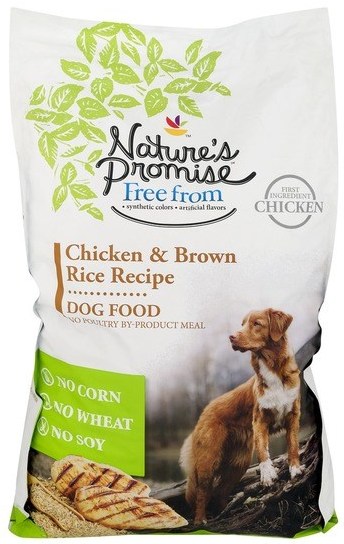
November 20, 2018 — Giant Food Stores and Martin’s Food Markets are voluntarily recalling certain lots of Nature’s Promise Dog Food because they may contain excessive amounts of Vitamin D, which may cause renal failure.

No graphic was supplied with the official news wire. The following image was retrieved from the internet and is provided in good faith by The Dog Food Advisor.

What’s Recalled?

The following products are included in this recall event:

  • Nature’s Promise Chicken & Brown Rice Dog Food
    Size: 4 lb package
    Best By Dates: November 1, 2018 to November 8, 2019
  • Nature’s Promise Chicken & Brown Rice Dog Food
    Size: 14 lb package
    Best By Dates: November 1, 2018 to November 8, 2019
  • Nature’s Promise Chicken & Brown Rice Dog Food
    Size: 28 lb package
    Best By Dates: November 1, 2018 to November 8, 2019

Giant/Martin’s has removed all affected product from its shelves and urges customers to return the product to their local store for a full refund.

The companies have received no reports of illnesses to date.

About Elevated Levels of Vitamin D

Dogs ingesting elevated levels of Vitamin D may exhibit symptoms such as vomiting, loss of appetite, increased thirst, increased urination, excessive drooling, and weight loss.

Vitamin D, when consumed at very high levels, can lead to serious health issues in dogs including renal dysfunction.

Customers with dogs who have consumed any of the products listed above and are exhibiting any of these symptoms, should contact their veterinarian.

What to Do?

Customers should stop feeding the products listed above.

Customers may contact Sunshine Mills, Inc. customer service at 800-705-2111 from 7 am to 4 pm Central Time, Monday through Friday.

Or by email at customer.service@sunshinemills.com for additional information.

In addition, customers may call Giant/Martin’s Customer Support Center at 888-814-4268.

U.S. citizens can report complaints about FDA-regulated pet food products by calling the consumer complaint coordinator in your area.

Or go to http://www.fda.gov/petfoodcomplaints.

Canadians can report any health or safety incidents related to the use of this product by filling out the Consumer Product Incident Report Form.

Get Dog Food Recall Alerts by Email

Get free dog food recall alerts sent to you by email. Subscribe to The Dog Food Advisor’s emergency recall notification system.

ooOOoo

It’s not what I had planned for today, that will have to wait until tomorrow, but you will understand that this recall alert had to take priority!

Finally, please accept greetings from Jeannie and me for a wonderful Thanksgiving!

This is the woman I love!

Today is our anniversary.

Yes, November 20th, 2010 was the day we became married.

And in celebration of that day, and more generally in meeting Jean some three years previously, I want to republish the following. For when I met my darling Jeannie she had been vegetarian for many years and in turn we both became vegan.

ooOOoo

Why people become vegans: The history, sex and science of a meatless existence

By    Assistant Professor of Marketing, University of Oregon

November 19, 2018

At the age of 14, a young Donald Watson watched as a terrified pig was slaughtered on his family farm. In the British boy’s eyes, the screaming pig was being murdered. Watson stopped eating meat and eventually gave up dairy as well.

Later, as an adult in 1944, Watson realized that other people shared his interest in a plant-only diet. And thus veganism – a term he coined – was born.

Flash-forward to today, and Watson’s legacy ripples through our culture. Even though only 3 percent of Americans actually identify as vegan, most people seem to have an unusually strong opinion about these fringe foodies – one way or the other.

As a behavioral scientist with a strong interest in consumer food movements, I thought November – World Vegan Month – would be a good time to explore why people become vegans, why they can inspire so much irritation and why many of us meat-eaters may soon join their ranks.

Early childhood experiences can shape how we feel about animals – and lead to veganism, as it did for Donald Watson. HQuality/Shutterstock.com

It’s an ideology not a choice

Like other alternative food movements such as locavorism, veganism arises from a belief structure that guides daily eating decisions.

They aren’t simply moral high-grounders. Vegans do believe it’s moral to avoid animal products, but they also believe it’s healthier and better for the environment.

Also, just like Donald Watson’s story, veganism is rooted in early life experiences.

Psychologists recently discovered that having a larger variety of pets as a child increases tendencies to avoid eating meat as an adult. Growing up with different sorts of pets increases concern for how animals are treated more generally.

Thus, when a friend opts for Tofurky this holiday season, rather than one of the 45 million turkeys consumed for Thanksgiving, his decision isn’t just a high-minded choice. It arises from beliefs that are deeply held and hard to change.

Sutton and Sons is a vegan fish and chip restaurant in London. Reuters/Peter Nicholls

Veganism as a symbolic threat

That doesn’t mean your faux-turkey loving friend won’t seem annoying if you’re a meat-eater.

The late celebrity chef Anthony Bourdain famously quipped that meat avoiders “are the enemy of everything good and decent in the human spirit.”

Why do some people find vegans so irritating? In fact, it might be more about “us” than them.

Most Americans think meat is an important part of a healthy diet. The government recommends eating 2-3 portions (5-6 ounces) per day of everything from bison to sea bass. As tribal humans, we naturally form biases against individuals who challenge our way of life, and because veganism runs counter to how we typically approach food, vegans feel threatening.

Humans respond to feelings of threat by derogating outgroups. Two out of 3 vegans experience discrimination daily, 1 in 4 report losing friends after “coming out” as vegan, and 1 in 10 believe being vegan cost them a job.

Veganism can be hard on a person’s sex life, too. Recent research finds that the more someone enjoys eating meat, the less likely they are to swipe right on a vegan. Also, women find men who are vegan less attractive than those who eat meat, as meat-eating seems masculine.

The fake meat at one Fort Lauderdale restaurant supposedly tastes like real meat. AP Photo/J. Pat Carter

Crossing the vegan divide

It may be no surprise that being a vegan is tough, but meat-eaters and meat-abstainers probably have more in common than they might think.

Vegans are foremost focused on healthy eating. Six out of 10 Americans want their meals to be healthier, and research shows that plant-based diets are associated with reduced risk for heart disease, certain cancers, and Type 2 diabetes.

It may not be surprising, then, that 1 in 10 Americans are pursuing a mostly veggie diet. That number is higher among younger generations, suggesting that the long-term trend might be moving away from meat consumption.

In addition, several factors will make meat more costly in the near future.

Meat production accounts for as much as 15 percent of all greenhouse gas emissions, and clear-cutting for pasture land destroys 6.7 million acres of tropical forest per year. While some debate exists on the actual figures, it is clear that meat emits more than plants, and population growth is increasing demand for quality protein.

Seizing the opportunity, scientists have innovated new forms of plant-based meats that have proven to be appealing even to meat-eaters. The distributor of Beyond Meat’s plant-based patties says 86 percent of its customers are meat-eaters. It is rumored that this California-based vegan company will soon be publicly traded on Wall Street.

Even more astonishing, the science behind lab-grown, “cultured tissue” meat is improving. It used to cost more than $250,000 to produce a single lab-grown hamburger patty. Technological improvements by Dutch company Mosa Meat have reduced the cost to $10 per burger.

Watson’s legacy

Even during the holiday season, when meats like turkey and ham take center stage at family feasts, there’s a growing push to promote meatless eating.

London, for example, will host its first-ever “zero waste” Christmas market this year featuring vegan food vendors. Donald Watson, who was born just four hours north of London, would be proud.

Watson, who died in 2006 at the ripe old age of 95, outlived most of his critics. This may give quiet resolve to vegans as they brave our meat-loving world.

ooOOoo

Well all I can say is that if Donald Watson can do it then so can Jeannie and me.

Beam me up, Scotty.

Just had to share this with you!

This is a remarkable photograph. Something I have never seen.

Anyway, here’s the story behind it!

ooOOoo

Otherworldly light pillars captured over Whitefish Bay

MICHAEL D’ESTRIES,   November 2, 2018

Light pillars over Whitefish Bay on the shore of Lake Superior as captured by nocturnal photographer Vincent Brady. (Photo: Vincent Brady)

At first glance, the mesmerizing light display that occurred on Oct. 16 over Whitefish Bay, Michigan, had all the hallmarks of a visual effect from a science-fiction film. Instead of “first contact,” however, this beautiful shimmer is actually a fairly common optical phenomenon called a light pillar.

Light pillars form when sources of light from the ground, sun or even the moon interact with horizontal concentrations of ice crystals in the atmosphere. When viewed from a distance, these crystals align in such a way as to create the optical illusion of a dazzling pillar of light.

Photographer Vincent Brady, who specializes in capturing nocturnal scenes, said in a Facebook post that he was “pleasantly surprised” to come across the phenomenon.

“This is a shot north of Paradise, MI looking east over Whitefish Bay,” he wrote. “The red lights are around the Canadian island Ile Parisienne. I’m not entirely sure of the artificial light source of the pillars.”

ooOOoo

Astounding!

Anyone else seen these?

That Look – Of A Siberian Husky!

Those eyes!

Of all the dogs that we can look at the Siberian Husky takes the biscuit! I’m talking about those eyes!

Up until reading this article in the Smithsonian I hadn’t really stopped to wonder how those eyes came about.

Read on …

ooOOoo

How Siberian Huskies Get Their Piercing Blue Eyes

A new study suggests that the defining trait is linked to a unique genetic mutation

smithsonian.com
(Yasser Alghofily/Flickr)

At-home DNA kits have become a popular way to learn more about one’s ancestry and genetic makeup—and the handy tests aren’t just for humans, either. Dog owners who want to delve into their fluffy friends’ family history and uncover the risks of possible diseases can choose from a number of services that screen doggie DNA.

As Kitson Jazynka reports for National Geographic, one of these services, Embark Veterinary, Inc., recently analyzed user data to unlock an enduring canine mystery: How did Siberian huskies get their brilliant blue eyes?

Piercing peepers are a defining trait of this beautiful doggo. According to the new study, published in PLOS Genetics, breeders report that blue eyes are a common and dominant trait among Siberian huskies, but appear to be rare and recessive in other breeds, like Pembroke Welsh corgis, old English sheepdogs and border collies. In some breeds, like Australian shepherds, blue eyes have been linked to patchy coat patterns known as “merle” and “piebald,” which are caused by certain genetic mutations. But it was not clear why other dogs—chief among them the Siberian husky—frequently wind up with blue eyes.

Hoping to crack this genetic conundrum, researchers at Embark studied the DNA of more than 6,000 pooches, whose owners had taken their dogs’ saliva samples and submitted them to the company for testing. The owners also took part in an online survey and uploaded photos of their dogs. According to the study authors, their research marked “the first consumer genomics study ever conducted in a non-human model and the largest canine genome-wide association study to date.”

The expansive analysis revealed that blue eyes in Siberian huskies appear to be associated with a duplication on what is known as canine chromosome 18, which is located near a gene called ALX4. This gene plays an important role in mammalian eye development, leading the researchers to suspect that the duplication “may alter expression of ALX4, which may lead to repression of genes involved in eye pigmentation,” Aaron Sams of Embark tells Inverse’s Sarah Sloat.

The genetic variation was also linked to blue eyes in non-merle Australian shepherds. Just one copy of the mutated sequence was enough to give dogs either two blue eyes, or one blue and one brown eye, a phenomenon known as “heterochromia.” It would seem, however, that duplication on chromosome 18 is not the only factor influencing blue eye color: Some dogs that had the mutation did not have blue eyes.

More research into this topic is needed to understand the genetic mechanisms at work when it comes to blue-eyed dogs. But the study shows how at-home DNA kits can be highly valuable to scientists, providing them with a wealth of genetic samples to study.

“With 6,000 people getting DNA samples from their dogs and mailing them to a centralized location and then filling out a website form detailing all the traits of their dog—that’s a game-changer for how genetics is being done in the 21st century,” Kristopher Irizarry, a geneticist with the College of Veterinary Medicine at Western University of Health Sciences, tells National Geographic’s Jazynka.

The benefits of having access to such huge troves of data go further than uncovering nifty insights into our canine companions. Scientists are also teaming up with at-home DNA test companies to learn more about human genetics and behavior.

ooOOoo

There’s such a wide range of information about our lovely dogs!

Oh, and I had better include the following.

Follow us: @SmithsonianMag on TwitterRead more: https://www.smithsonianmag.com/smart-news/how-siberian-huskies-get-their-piercing-blue-eyes-180970507/#4cO22KfQH7w6qp6B.99
Give the gift of Smithsonian magazine for only $12! http://bit.ly/1cGUiGv
Follow us: @SmithsonianMag on Twitter

See you all tomorrow!

Lidl Recalls Orlando Brand Dog Food

Yet another dog food recall.

ooOOoo

Lidl Recalls Orlando Brand Dog Food

November 9, 2018

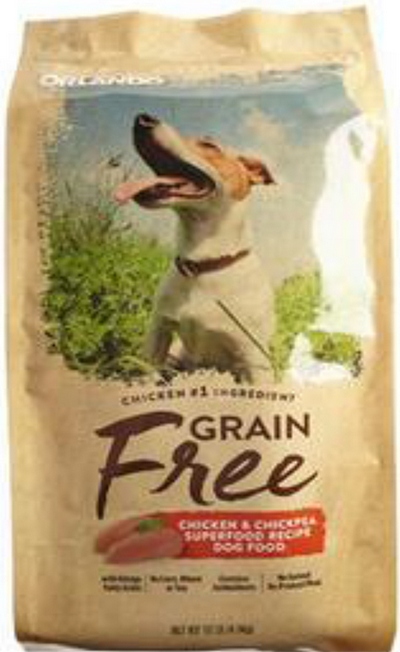
Lidl USA is voluntarily recalling specific lots of Orlando brand Grain Free Chicken & Chickpea Superfood Recipe Dog Food because the products may contain elevated levels of Vitamin D.

What’s Recalled?

The recalled Orlando brand products include the following lot numbers manufactured between March 3, 2018 and May 15, 2018:

  • TI1 3 Mar 2019
  • TB2 21 Mar 2019
  • TB3 21 Mar 2019
  • TA2 19 Apr 2019
  • TB1 15 May 2019
  • TB2 15 May 2019

Elevated Vitamin D Levels

Dogs consuming elevated levels of Vitamin D could exhibit symptoms such as vomiting, loss of appetite, increased thirst, increased urination, excessive drooling, and weight loss.

Customers with dogs who have consumed this product and are exhibiting these symptoms should contact their veterinarian as soon as possible.

No other products sold by Lidl are impacted by the recall.

This is a voluntary recall and is being conducted in cooperation with the U.S. Food and Drug Administration.

What to Do?

Customers who have purchased this product with the affected lot codes should stop feeding it to their dogs and discard the product immediately or return it to their nearest Lidl store for a full refund.

Customers who have questions about this recall should call the Lidl US Customer Care Hotline at 844-747-5435, 8 AM to 9 PM Eastern time, 7 days a week.

U.S. citizens can report complaints about FDA-regulated pet food products by calling the consumer complaint coordinator in your area.

Or go to http://www.fda.gov/petfoodcomplaints.

Canadians can report any health or safety incidents related to the use of this product by filling out the Consumer Product Incident Report Form.

Get Dog Food Recall Alerts by Email

Get free dog food recall alerts sent to you by email. Subscribe to The Dog Food Advisor’s emergency recall notification system.

ooOOoo

Please share this amongst all your friends.