The full description may be read here, but I have taken the liberty of republishing this extract:
Earth, which is 898 million miles (1.44 billion kilometers) away in this image, appears as a blue dot at center right; the moon can be seen as a fainter protrusion off its right side. An arrow indicates their location in the annotated version. The other bright dots nearby are stars.
Now it doesn’t take too much imagination to put that minute speck of light, our Planet Earth, into its scale of meaning and importance vis-a-vis the universe. You get my message, I’m sure.
The second event was a comment left by long-term reader and supporter of Learning from Dogs, Patrice Ayme. The comment was on yesterday’s post, The meaning of wildness, and I quote:
Excellent article. Clearly primary temperate rain forest, nearly gone everywhere except in the American North west, has to be reintroduced.
Sheep ought not to be removed by man, but be removed by wolf, bear, felids. Cows would feel whole, having to fight off lions. And man’s sense of what nature means, vital to insure our survival, would blossom in this hour of need, when we have arisen as the planet’s gods. gods of evil, or gods of wisdom? That is the most important question.
“gods of evil, or gods of wisdom?”
To everybody I say this. (And I am most certainly not excluding me.) When you next look at yourself in the mirror will you make a decision? Will you be a god of evil or a god of wisdom?
“Reality is merely an illusion, albeit a very persistent one.”
So said Albert Einstein.
The reason I went searching for a quotation on reality was that our, as in humans, ability to see the world in grossly distorted ways jumped ‘off the page’ at me when I was reading a recent essay from George Monbiot. Followers of Learning from Dogs will know that Mr. Monbiot has featured before; most recently just under a month ago in a post Returning to Nature. Before then in April when George gave permission for the full republishing of his essay The Great Unmentionable.
“Comfort the afflicted, afflict the comfortable.”
Why the notion of humans seeing reality in grossly distorted ways? Simply because in George Monbiot‘s following essay he challenges what we mean by the word ‘wildness’ and I immediately realised that my own idea of wildness was badly corrupted.
See if you react the same way as you read The Naturalists Who Are Terrified of Nature by George Monbiot, republished in full with the kind permission of George.
oooOOOooo
The Naturalists Who Are Terrified of Nature
July 16, 2013
A radical challenge to British conservation and its bizarre priorities.
I’m writing this on the train home, after visiting two places in the north of England celebrated for their “wildness”. One of them is Ennerdale in the Lake District, now officially known as Wild Ennerdale, a valley in which the river has been allowed to move freely once more, and in which native trees are succeeding naturally up the hillsides(1).
The other is the Sheffield Moors (in the Peak District), from which most of the sheep have been removed and where the structure of the vegetation has been allowed to change a little. I found both visits fascinating, not least because of the eruditon and enthusiasm of the people who walked me through these places.
But sitting on the train, watching the chemical deserts of the English lowlands flash past, I’m struck by how pathetically grateful I feel. For what? For the fact that, in two small conservation areas, located in national parks, a few natural processes have been allowed to resume.
Were I to explain to a foreigner that these places are now celebrated by conservationists in Britain for their radical approach, he or she would think I had gone mad. “What?,” they would say, “you are telling me that this is the cutting edge of nature conservation in your country? Where have you been for the past 50 years?”
I don’t know if there is any other country in which people – including conservationists – are as afraid of nature as they are in Britain. I don’t know if there is anywhere else in which conservationists are so convinced that if they relax their intensive management of the natural world, something dreadful will happen.
Nowhere else do conservationists subscribe more enthusiastically to the biblical doctrine of dominion: that we have a holy duty to control and corral nature, in case it gets out of hand. Nowhere else does conservation look more like a slightly modified version of the farming which trashed the land in the first place.
In my view most of our conservation areas aren’t nature reserves at all. They are museums of former farming practices, weeded and tended to prevent the wilds from encroaching. The ecosystem’s dynamic interactions are banned. Animals and plants are preserved as if they were a jar of pickles, kept in a state of arrested development, in which little is allowed to change.
But nature is not just a fixed assemblage of species, maintained as if it were a collection in a museum. It is also the ever-changing relationships between them, the successional processes, the shifting communities: all of which, in many of our reserves, are prohibited.
The problem begins with designation. The “interest features” of a site of special scientific interest – its species and habitats – must be kept in “favourable condition”. Often this means the condition in which they happened to be when the reserve was created. In most cases that’s a condition of dire impoverishment and depletion: ecosystems missing almost their entire trophic structure, most of their large herbivores, all their large predators, in many cases even the trees. They have to be kept like this by extreme and intrusive management, in order to sustain the impacts which reduced them to this woeful state.
In Wild-ish Ennerdale and on the Sheffield Moors, there has been a partial relaxation of this draconian regime. But even in these places, there is much that I question.
On the Sheffield Moors, for example, cattle are kept: at much higher densities and for far longer periods than large herbivores would exist in a self-willed ecosystem. In many parts of the moors, trees, if they have the temerity to return, are cleared. The effort, even here, is to ensure that the landscape remains farmed, open and bare.
This is done partly to favour breeding populations of wading birds(2). It’s likely that these species are being maintained at artificially high populations(3). A tendency I’ve noticed among some groups is to try to make all their target species common, even if they were naturally rare. Perhaps some species ought to be rare. Those which lived in open habitats – which would have been small and occasional before people started cutting and burning the forests – are likely to have been rarest of all.
Think of the varying fortunes of grouse populations in Britain. The palaeontological evidence is extremely sparse, so this is guesswork, but during the Boreal and Atlantic phases, 9,000-5,000 years ago, when closed-canopy forest covered most of Britain, the commonent grouse species in this country might have been hazel hen. Perhaps the second commonest would have been capercaillie, followed by black grouse, followed by red grouse, which are likely to have been very scarce.
That likely sequence has now been reversed. Hazel hen is extinct, capercaillie extremely rare, black grouse are sparse and in severe decline and red grouse are bloody everywhere. The red grouse is the magpie of the uplands: it benefits from human intervention, which in this case means the clearing of land.
Arbitrarily, conservation groups in the uplands of England and Wales have decided that their priorities are, for example, dunlin and curlew, rather than capercaillie and pine martens. I’m not insisting that this is always the wrong decision. But it’s a decision that should be rigorously questioned, especially if this intensive management means the destruction of habitats which would have sheltered a much wider range of species.
Spend a couple of hours in an open upland nature reserve, and count the diversity and abundance of the birds you see. Then spend a couple of hours in a bushy suburban garden and do the same thing. In my experience you’re likely to see more birds of more species in the garden. That’s hardly surprising: most birds – indeed most wildlife – require cover to survive. Am I the only one who thinks that something has gone badly wrong here?
It’s not just common species I’m talking about. Many of those excluded by our brutal upland management are not just rare in Britain; they are extinct.
Whenever I meet a conservation manager, I find myself acting like a 3-year old: I keep asking “why?”. Why are you preserving this and not that? Why is this site designated for moorland flea beetle and pearl-bordered fritillary, rather than blue stag beetle and lynx? Why are you protecting the wretched scrapings of life that remain here, rather than reintroducing the species which would once have lived here, but have been excluded by the kind of interventions that you – the conservationists – have sustained?
When I worked in the Amazon, the conservationists I met were fighting to defend the rainforest against cattle ranching. In Britain the conservationists are – literally – defending cattle ranching against the rainforest. Britain was once covered by rainforest: woodland wet enough for epiphytes to grow. (Epiphytes are plants which root in the bark of trees). Our closed-canopy rainforest was likely to have been richer in species than any of our remaining habitats. Given half a chance, it would return. But it isn’t given half a chance, even in conservation sites, because conservationists keep clearing the land and running cattle on it, in case the wayward and irresponsible ecosystem does something that isn’t listed in the rules. In doing so, they preserve a burnt, blasted and largely empty land with the delightful ambience of a nuclear winter.
Conservation groups in this country are obsessed by heather. Heather is typical of the vegetation that colonises land which has been repeatedly deforested. You can see similar vegetation – low, scrubby, tough, thriving on burnt ground and depleted soils – covering deforested land all over the tropics. There, the dominance of these plants is lamented by ecologists, for it is rightly seen as a symptom of ecological destruction. Here it is fetishised and preserved.
Even in the Eastern Sheffield Moors management plan, published by the RSPB and the National Trust, “cutting and burning” are listed as the requisite tasks for managing heather(4). Imagine what a tropical ecologist would say if she saw that. “You people have been telling us for decades that we should stop cutting and burning. You’ve been sending us money and lobbying our governments to discourage us from doing it. And all the while you’ve been telling yourselves that cutting and burning are necessary for the protection of wildlife.” If she concluded that we are hypocrites, that we are unambitious, irrational, anally retentive and ecologically illiterate, she would not be far wrong.
The same plan reveals that these two august conservation bodies will maintain cattle on the moors at their current level, but keep them there for longer. “Their grazing and trampling will manage the vegetation in a way which should improve the condition of the habitats and benefit wildlife.”(5) What does this mean? Yes, it might benefit some wildlife, but only at the expense of other species. Yes, it might “improve the condition” of a habitat, if by improvement you mean a better representation of the state of arrested development you’ve chosen. It sounds uncomfortably close to the 19th Century agricultural meaning of “improvement”: which means draining and clearing land to make it more suitable for farming.
It astonishes me to see statements like this left unpacked. Asserted without qualification, they create the impression that all wildlife benefits from management of this kind. Of course, all interventions (including a complete cessation of management), are better for some species than for others. But in my view, the losses inflicted by cattle ranching – here, as in the Amazon – outweigh any gains.
An even starker example is provided by a report commissioned by the RSPB on changing livestock numbers. It contends that “undergrazing and loss of vegetation structure is now occurring in some areas, with adverse impacts for some species such as golden plover and other waders.”(6)
“Undergrazing” is an interesting concept. The report seems to be referring to “undergrazing” by sheep. How can a native ecosystem be undergrazed by an invasive ruminant from Mesopotamia? Is our wildlife underhunted by American mink? Are our verges underinfested by Japanese knotweed?
I would question what undergrazing by any domestic animal means. “Not farmed enough” is what the term appears to signify, “or not sufficiently damaged”. Sure, the golden plover is among a small group of species that benefit from scorched-earth policies, but a far greater number are harmed by them. So why is the golden plover the priority? And how can a report for a conservation organisation blithely use the term undergrazing without qualification or explanation?
Another RSPB report advocates “the eradication of invasive tree species” from the bare uplands of Wales and claims, without citing any evidence or explaining what this means, that “extensive grazing, ideally mixed grazing, is important in maintaining upland pastures in a state that benefits upland birds and other wildlife.”(7)
A document published by the Welsh government revealed something I have never seen in the RSPB’s literature: that the society advises farmers “to cut down trees to discourage buzzards which kill other birds.”(8)
I checked with the RSPB in Wales and it confirmed that it does “at times provide advice to landowners on the management of trees to reduce available vantage points and nest sites for some avian predators.”(9)
Isn’t that more or less what the British government wanted to do to protect pheasant shoots? And didn’t the society contest those efforts?(10)
I wonder whether, in their arbitrary choice of target species and target habitats, British conservationists are influenced by the legacy of hunting. Many of the birds on behalf of which this extreme and brutal simplification of the ecosystem takes place are those which, in the 19th Century, were pursued by gentlemen with guns. Perhaps we should see conservation efforts in Britain as a form of gamekeeping, which regards some of our native species as good and worthy of preservation, and others (such as trees and buzzards) as bad and in need of control.
Sometimes I receive coherent answers from the conservation managers I speak to, which are debatable but at least consistent. Sometimes the only answer I receive is “that’s what the rules say.” But isn’t it time we began to challenge the rules? Isn’t it time we began to question the way sites are designated, and to challenge the ecological blitzkreig required to maintain them in what is laughably called “favourable condition”? Isn’t it time we began asking why we have decided to privilege certain species over others? Isn’t it time we started wondering whether the collateral damage required to support them is worth it?
After all, how did nature cope before we came along? To judge by the actions of British conservation groups, it must have been in a pretty dismal state for the three billion years before humans arrived to look after it.
2. National Trust and RSPB, 2012. The Eastern Moors Management Plan summary, page 15. Eastern Moors Partnership, Curbar.
3. This, of course, is speculative, as palaeontology gives us few indications of numbers. But the circumstantial evidence seems powerful: the habitat required for breeding populations of these birds, many of which need to nest several hundred metres from the nearest woodland edge to avoid predation, was in short supply. See for example:
NJ Whitehouse and D Smith, 2010. How fragmented was the British Holocene wildwood? Perspectives on the ‘‘Vera’’ grazing debate from the fossil beetle record. Quaternary Science Reviews Vol. 29, nos. 3-4, pp539–553. doi.org/10.1016/j.quascirev.2009.10.010
FJG Mitchell, 2005. How open were European primeval forests? Hypothesis testing using palaeoecological data. Journal of Ecology Vol. 93, 168–177
JHB Birks, 2005. Mind the gap: how open were European primeval forests? Trends in Ecology & Evolution Vol. 20, pp154-156.
R Fyfe, 2007. The importance of local-scale openness within regions dominated by closed woodland. Journal of Quaternary Science, Vol.22, no. 6, pp571–578. doi: 10.1002/jqs.1078
JC Svenning, 2002. A review of natural vegetation openness in northwestern Europe. Biological Conservation Vol 104: 133-148.
RHW Bradshaw, GE Hannon, AM Lister, 2003. A long-term perspective on ungulate-vegetation interactions. Forest Ecology and Management, Vol. 181: 267–280.
8. Welsh Government, 2010. Glastir: frequently asked questions, Section 13. This document is no longer available on the government site, but you can read it here: http://www.fuw.org.uk/glastir-faq-miscellaneous.html
9. Emma Roberts, RSPB Wales, 10th August 2011. By email.
Last Friday, I published a post under the title of People, people, everywhere! Coincidentally, that same day over on Transition Town Payson‘s blog a post was published Urban Sprawl, a Vision from Space! It seemed like a fitting follow-on to that post on Learning from Dogs and is reproduced with the kind permission of the TTP team (thanks Rob).
Urban Sprawl has a major impact on all our Resources!
Urban Sprawl can be tracked
In the Sun Belt Areas of our country, phenomenal growth has occurred over the past 30 years. Satellite images from 1984 through 2012 show the impacts on the Landscape in a time lapse image that is a scary picture of what the next 30 years may bring.
A blog article from the Atlantic Cities website forwarded to me by my friend Dave H. It is a geographic time lapse of satellite images provided by Google. Their article titled “The Devastating Impact of 30 Years of Sprawl, as Seen From Space.” gives startling images of how our cities have grown.
“These GIFs were recorded from Google’s “Landsat Annual Time Lapse” tool by Samuel Aston Williams, a young Texas architect. Williams wanted to contribute something new to a startling series of showing three decades of human-landscape intervention recently produced by a collaboration of Google, NASA, TIME and others.”
The Atlantic Cities also published a blog titled “A Terrifying, Fascinating Time lapse of 30 Years Impact on Earth.” The images in this blog shows development in other places on the earth in a scary 30 year blink of an eye.
“Since the 1970s, NASA and the U.S. Geological Survey have been amassing satellite images of every inch of our planet as part of the Landsat program. Over time, the images reveal a record of change: of cities expanding, lakes and forests disappearing, new islands emerging from the sea off the coast of rising Middle East metropolises like Dubai.
If you could thumb through these historic pictures as if in a flip book, they would show stunning change across the earth’s surface, in both our natural environments and our man-made ones. Now, the digital equivalent of that experience is possible – three decades of global change as GIF – in a project unveiled today between NASA, the USGS, TIME, Google, and the CREATE Lab at Carnegie Mellon University.
Landsat images taken between 1984 and 2012 have been converted into a seamless, navigable animation built from millions of satellite photos. As Google wrote this morning on its blog: “We believe this is the most comprehensive picture of our changing planet ever made available to the public.”
“October 11, 2002: While space technology was undergoing its spectacular birth during the 1950s and ’60s, and visionaries were predicting the spread of human colonies into space, another kind of human colony was spreading rapidly–right here on Earth!
It was the dawn of the modern suburb, a time of post-war prosperity when housing developments popped up across the landscape like mushrooms after a rain.
A half-century later, we now understand that many environmental problems accompany the outward spread of cities: fragmenting and destroying wildlife habitat, for example, and discharging polluted runoff water into streams and lakes.”
Urban Sprawl in the United States is covered in Photos by Christoph Gielen
The photo below was taken by Christoph Gielen. There is a symmetrical beauty to his aerial photos of Urban Areas. Please go to his Twisted Sifter website for phenomenal aerial photos of our Urban Centers.
A Great Aerial photo by Christoph Gielen of an Arizona Neighborhood
Urban Sprawl is defined in detail at the Wiki website;
An interesting phenomena is that Sprawl is a term only used in America for Urban Growth, “The term “sprawl” is most often associated with USland use; outside the US (and especially outside the Anglosphere), the term “peri-urbanisation” is often used to denote similar dynamics and phenomena.”
Smart Growth is the alternative to Urban Sprawl, unfortunately many people argue against high density living and it is still a contentious point. Do we continue to grow outward or upward. Will we feel more like rats trapped in a cage or free range rats. Read the following National Institute of Health article for their take on the impacts of Urban Sprawl vs. Smart Growth.
Urban Sprawl
“Urban sprawl in the United States has its origins in the flight to the suburbs that began in the 1950s. People wanted to live outside of city centers to avoid traffic, noise, crime, and other problems, and to have homes with more square footage and yard space. As suburban areas developed, cities expanded in geographic size faster than they grew in population. This trend has produced large metropolitan areas with low population densities, interconnected by roads. Residents of sprawling cities tend to live in single-family homes and commute to work, school, or other activities by automobile.”
“Although there is considerable evidence that urban sprawl has adverse environmental impacts and contributes to a variety of health problems—including obesity, diabetes, cardiovascular disease, and respiratory disease implementation of policies designed to combat sprawl, such as smart growth, has proven to be difficult.”
Smart Growth
“Smart growth can be defined as a policy framework that promotes an urban development pattern characterized by high population density, walkable and bikeable neighborhoods, preserved green spaces, mixed-use development (i.e., development projects that include both residential and commercial uses), available mass transit, and limited road construction.”
From Wiki these are the Advantages and Disadvantages of Urban Sprawl
Advantages
– More single family residences on larger lots.
– Lower land prices.
– Less experience of noise and pollution.
– Suburban areas generally associated with “sprawl” tend to have lower crime and higher-quality schools.
– Perceived overwhelming consumer preference for sprawl-type developments.
Disadvantages
– High car dependence.
– Inadequate facilities e.g.: cultural, emergency, health, etc.
– Higher per-person infrastructure costs.
– Inefficient street layouts.
– Low diversity of housing and business types.
– Higher per-capita use of energy, land, and water.
– Perceived low aesthetic value
Our Human Colonies seem to be spreading about as fast as our ice caps are melting. I wonder if there is any correlation?
Is it time for mankind to adapt to a new future? No, it’s past time. We have a lot of catching up to do in implementing new technologies to provide sustainable growth options in all areas; industry, transportation, energy production, carbon footprints, food supply, to taking care of our precious fresh water supplies.
How do we make our cities more sustainable and resilient? Start with telling your national, state and local politicians that you want a sustainable future. Let’s work together and make this happen.
Back last November, not long after Jean and I had moved up to Oregon, I saw this on the PRI website: The Sufficiency Economy – Envisioning a Prosperous Way Down. Very quickly I realised the importance of the essay and contacted the author requesting permission to republish on Learning from Dogs. That author was Dr. Samuel Alexander and permission was quickly given, leading to two essays: The simpler life and Where less is so much more.
Now fast forward to nearly a month ago and in came this email:
Samuel Alexander here, from the Simplicity Institute. I’ve recently published a new book, Entropia: Life Beyond Industrial Civilisation. Was wondering whether you were interested in posting either a review or an excerpt on your website?
I was flattered to have been asked and delighted to review the book.
First, some background. Dr. Alexander is a part-time lecturer with the Office for Environmental Programs, University of Melbourne, Australia. He teaches a course called ‘Consumerism and the Growth Paradigm: Interdisciplinary Perspectives’ in the Masters of Environment.
After the review was completed, I forwarded it to Sam just to check that I hadn’t made any technical errors. Within Sam’s reply to that email was his acknowledgement that his book fell into a genre that was not easily classified. Ergo, the book being fiction yet not a novel. Sam went on to muse that perhaps he should have been clearer about what the reader was going to get. He wondered if my review should mention that aspect. I said that I wouldn’t amend my review but would include an introduction to that effect, as now witnessed!
So to the review. (Note: For some reason, I was unable to prevent the paragraph spacing from being deleted in the published version. Hence the insertion of a single ‘-‘ after each paragraph.)
oooOOOooo
Entropia – Life Beyond Industrial Civilisation by Samuel Alexander
–
A review by Paul Handover
–
The title of the book didn’t offer this reader any clue about what might be coming. Nevertheless, very soon an experience of an ‘ah-ha’ moment arrived. Right on page one of the Acknowledgements when this sentence jumped off the page: “Henry Thoreau has been by far the greatest influence on my worldview, for it was he who awakened me to the insight that ‘superfluous wealth can buy superfluities only’.” [my emphasis] Wow, what an intriguing turn of phrase about wealth.
–
I plunged into the Prologue:
After the poets were banished from Plato’s Republic it is said that they set sail into unknown horizons in search of a new place to call home.
–
Shortly later reading:
But life proceeds in twists and turns, not straight lines. After losing consciousness in the midst of this perfect storm, the lost poets found themselves washed ashore on a small,fertile island, which was uninhabited and isolated entirely from the rest of civilisation. The boundless opportunities presented by this merciful twist of fate were immediately clear to all.
–
Some people believe this simple living community flourishes peacefully to this day, lost to the world in its own harmonious, aesthetic existence. But like Atlantis, the Isle of Furor Poeticus, as it has come to be known, has never been found.
* * *
The Isle of Furor Poeticus is a utopian romance of course – a myth. But we should remember that human existence has always been shaped and guided by myths and stories, so let us not dismiss the story of the lost poets too quickly or proudly. After all, we may not be so free from superstitions of our own. Modernity’s ‘myth of progress’ might itself just be a story we have been telling ourselves in recent centuries, one in fact that could soon be dismissed as a story no longer worth telling. Indeed, perhaps that book is closing before our very eyes – has already closed – leaving us to reflect on its themes from beyond as we step forth into unknown pages. And yet, it seems we have not found a new story by which to live. We are the generation in-between stories, desperately clinging to yesterday’s story but uncertain of tomorrow’s. Adrift in the cosmos, without a narrative in which to lay down new roots, humanity marches on – lost and directionless. But then again, perhaps the new words we need are already with us. Perhaps we just need to live them into existence.
–
Beautiful, magical writing right up to the closing sentences of the Prologue:
By choosing to do so we could again become the poets of our own lives and of a new generation, instead of merely reading out a pre-written script to an audience that is no longer listening. So open your mind, gentle reader, for the future is but clay in the hands of our imaginations.
–
We are being called to make things new. [again, my emphasis]
–
The novel, for it is a work of fiction, opens in substance with the account of Mortimer Flynn, a wealthy Texas oil magnate and son and only child of a Welsh coal industrialist, who having achieved “everything of which he had ever dreamed” comes to the realisation that he has no idea at all as to the purpose of his life. From this life-changing reassessment of his journey, his profound crisis of conscious, comes the purpose of the book. A story of a group of people who settle down in a remote South Pacific island, the island of Entropia. A “story about a community that became isolated on its small island in the wake of industrial civilisation’s collapse, during the third decade of the twenty-first century.”
–
Now, it’s fair to say that at this point I was truly hooked on the book. This was going to be the read of my life. Because it reflected my own belief that humanity was at the point, perhaps beyond the point, where the growing threats to our natural world threatened our moral obligations to the generations that follow.
–
However, somewhere during the second chapter, the style of writing started to intrude into my absorption of the story. At first the intrusion was more like a fly buzzing around; a minor irritation. Then it got to the stage where I had to stop reading and ponder on why I felt so uncomfortable with this reading experience. I was by now well into the third chapter.
–
Still couldn’t put my finger on what the problem was. Returned to the book but noticed that I was skim reading and had forcibly to focus on fully reading each page. After all, I was reading the book for review purposes!
–
Then it struck me. There were no characters coming to life off the page. Consequently, there was no dialogue. It didn’t read like a novel, much more like a report. That was the key to me re-establishing my relationship with the story; the book. Because despite the unusual style for a work of fiction, the value inherent in the pages was beyond measure. Here was a book that described in great detail the way a community discovered the reality of a sustainable way of life. How this group of a couple of thousand souls reinvented a society, a sustainable society, out of the ashes of a failed industrial civilisation.
–
I read on.
–
Later on the book described how the community looked at the way they governed themselves, how they set up representative systems and then, on page 119, came something that really punched me in the face, figuratively speaking. It was introduced, thus:
Eventually a short constitutional document was drafted by the Advisory Council and put to a referendum by the People’s Council, and this document received 94 per cent support. It is reproduced in its entirety below, as it serves as the best summary of our social, economic and political vision.
–
And proceeded:
Charter of the Deep Future
ENOUGH, FOR EVERYONE, FOREVER
.
We affirm that providing ‘enough, for everyone, forever’ is
the defining objective of our economy, which we seek to
achieve by working together in free association.
.
We affirm that everyone is free to create as an aesthetic
project the meaning of their own lives, while acknowledging
that this freedom legitimately extends only so far as others
can have the same freedom. Freedom thus implies restraint.
.
We affirm that our inclusive democracy does not
discriminate on such grounds as race, ethnicity, gender,
age, sexuality, politics, or faith.
.
We affirm that generations into the deep future are entitled
to the same freedoms as present generations.
.
We affirm that respecting the deep future requires maintaining
a healthy environment.
.
We affirm that technology can help to protect our
environment only if it is governed by an ethics of sufficiency,
not an ethics of growth. Efficiency without sufficiency is lost.
.
We affirm that maintaining a healthy environment requires
creating a stationary state economy that operates within
environmental and energy limits.
.
We affirm that a stationary state means stabilising
consumption and population, transitioning to renewable
sources of energy, and adapting to reduced energy supply.
.
We affirm that strict limits on material accumulation are
required if a stationary state is to maintain a just distribution
of resources and avoid corrosive inequalities.
.
We affirm that property rights are justifiable only to the
extent they serve the common good, including the overriding
interests of humanitarian and ecological justice.
.
We affirm that a stationary state economy depends on a
culture that embraces lifestyles of material sufficiency and
rejects lifestyles of material affluence.
.
We affirm that material sufficiency in a free society provides
the conditions for an infinite variety of meaningful, happy,
and fulfilling lives.
___________________________
–
Well that had such an impact on this reader. For this reason. The contrast between the reality of our present 21st Century life and the lives of those souls on Entropia was like night versus day. Enough, For everyone, Forever. If ever we needed a new cry from the heart, a new cry of hope and purpose, it was now and those are the words of that cry.
–
Entropia is a book you should read. It is a book that offers much hope, much guidance and much direction. As Samuel Alexander wrote on page 148, “Tranquillity and angst are both contagious, so it matters which of them we feed.”
Without doubt, President Obama’s recent speech on climate change was very welcome. I fervently hope this is a genuine commitment to change the course of the biggest and most powerful nation on our planet. Abandoning the Keystone XL pipeline would be the proof to my mind. UPDATE: But read this!
But the runaway, exponential growth in CO2 has a brother; huge growth in the world’s population.
I’m going to ‘smack you in the face‘ with this population chart.
To put that into context from a personal perspective, when I was born in 1944 the global population was 2.5 billion persons. Some 4.7 billion fewer people than today!
But that prediction from the U.S Census Bureau in June, 2011 is already out of date!
13 June 2013 – The current world population of 7.2 billion is projected to increase by 1 billion over the next 12 years and reach 9.6 billion by 2050, according to a United Nations report launched today, which points out that growth will be mainly in developing countries, with more than half in Africa.
Now please humour me for a few moments. If the world population is presently 7.2 billion people and by 2050 the prediction is 9.2 billion people, that is an increase of 2,400,000,000 persons.
The end of 2050 is 438 months away. Now do the maths. That growth in population in that time period is the equivalent of an increase in population of 5,479,000 persons every single month!
Need to find a darkened room – I feel a headache coming on!
Why the choice of this sub-heading? Well, just because a number of quite separate articles and essays have come together to offer a powerful, cohesive argument for reconsidering the role of Nature in the future of mankind.
Of course, my use of words in that preceding sentence is completely ludicrous; the suggestion that ‘Nature’ is disconnected from ‘mankind’. Yet millions of us, to a greater or lesser degree, do behave as if we are the masters of the world.
So let me dip into what has been ‘crossing my desk’ in recent times.
On May 28th, George Monbiot published in The Guardian newspaper an essay entitled A Manifesto for Rewilding the World. (The link takes you to the article on the Monbiot blogsite.) Here’s how that essay opened,
Until modern humans arrived, every continent except Antarctica possessed a megafauna. In the Americas, alongside mastodons, mammoths, four-tusked and spiral-tusked elephants, there was a beaver the size of a black bear: eight feet from nose to tail(1). There were giant bison weighing two tonnes, which carried horns seven feet across(2).
The short-faced bear stood thirteen feet in its hind socks(3). One hypothesis maintains that its astonishing size and shocking armoury of teeth and claws are the hallmarks of a specialist scavenger: it specialised in driving giant lions and sabretooth cats off their prey(4). The Argentine roc (Argentavis magnificens) had a wingspan of 26 feet(5). Sabretooth salmon nine feet long migrated up Pacific coast rivers(6).
During the previous interglacial period, Britain and Europe contained much of the megafauna we now associate with the tropics: forest elephants, rhinos, hippos, lions and hyaenas. The elephants, rhinos and hippos were driven into southern Europe by the ice, then exterminated around 40,000 years ago when modern humans arrived(7,8,9). Lions and hyaenas persisted: lions hunted reindeer across the frozen wastes of Britain until 11,000 years ago(10, 11). The distribution of these animals has little to do with temperature: only where they co-evolved with humans and learnt to fear them did they survive.
I’m not going to reproduce the bulk of the article; just hoped that I have tickled your curiousity sufficient for you to read it in full here. But will just show you how it closed:
Despite the best efforts of governments, farmers and conservationists, nature is already beginning to return. One estimate suggests that two thirds of the previously-forested parts of the US have reforested, as farming and logging have retreated, especially from the eastern half of the country(23). Another proposes that by 2030 farmers on the European Continent (though not in Britain, where no major shift is expected) will vacate around 30 million hectares (75 million acres), roughly the size of Poland(24). While the mesofauna is already beginning to spread back across Europe, land areas of this size could perhaps permit the reintroduction of some of our lost megafauna. Why should Europe not have a Serengeti or two?
Above all, rewilding offers a positive environmentalism. Environmentalists have long known what they are against; now we can explain what we are for. It introduces hope where hope seemed absent. It offers us a chance to replace our silent spring with a raucous summer.
Then further research for this post brought to light an interview with David Suzuki in February. Widely reported, I picked the version published on Straight.com, from which comes:
In December, Canadian specialty TV channel Business News Network interviewed me about the climate summit in Copenhagen. My six-minute interview followed a five-minute live report from Copenhagen, about poor countries demanding more money to address climate change and rich countries pleading a lack of resources. Before and after those spots were all kinds of reports on the Dow Jones Industrial Average, the price of gold and the loonie, and the implications of some new phone technology.
For me, this brought into sharp focus the inevitable failure of our negotiating efforts on climate change. BNN, like the New York-based Bloomberg channel, is a 24-hour-a-day network focused completely on business. These networks indicate that the economy is our top priority. And at Copenhagen, money dominated the discussions and the outcome.
But where is the 24-hour network dealing with the biosphere? As biological creatures, we depend on clean air, clean water, clean soil, clean energy, and biodiversity for our well-being and survival. Surely protecting those fundamental needs should be our top priority and should dominate our thinking and the way we live. After all, we are animals and our biological dependence on the biosphere for our most basic needs should be obvious.
The economy is a human construct, not a force of nature like entropy, gravity, or the speed of light or our biological makeup. It makes no sense to elevate the economy above the things that keep us alive. But that’s what our prime minister does when he claims we can’t even try to meet the Kyoto targets because that might have a detrimental effect on the economy.
This economic system is built on exploiting raw materials from the biosphere and dumping the waste back into the biosphere. And conventional economics dismisses all the “services” that nature performs to keep the planet habitable for animals like us as “externalities”. As long as economic considerations trump all other factors in our decisions, we will never work our way out of the problems we’ve created.
Concluding:
Nature is our home. Nature provides our most fundamental needs. Nature dictates limits. If we are striving for a truly sustainable future, we have to subordinate our activities to the limits that come from nature. We know how much carbon dioxide can be reabsorbed by all the green things in the oceans and on land, and we know we are exceeding those limits. That’s why carbon is building up in the atmosphere. So our goal is clear. All of humanity must find a way to keep emissions below the limits imposed by the biosphere.
The only equitable course is to determine the acceptable level of emissions on a global per capita basis. Those who fall below the line should be compensated for their small carbon footprint while those who are far above should be assessed accordingly. But the economy must be aligned with the limits imposed by the biosphere, not above them.
Quite clearly, if we continue to turn our backs on Nature, the consequences won’t be long in tapping us on the shoulder.
So, going to close it today with this, seen nearly a month ago on the PRI website:
Imagine the type of world we could see
If instead of saying ‘pray,’ we said, ‘plant a tree’.
With this one little change so much more could be done
To protect all living things found under the sun.
We could ‘plant a tree’ for our troops sent away into war
So when they return they’d come home to find more.
We could ‘plant a tree’ at our churches with our husband or wife
To praise the Creator through a celebration of life.
We could ‘plant a tree’ for the needy and for those with no food
We could even plant in public without seeming rude.
The government would not have to introduce rules,
And most likely we could ‘plant a tree’ at our schools.
If we took it to task to ‘plant trees’ for the poorest,
We would all soon be reaping the wealth of a forest.
We could plant freely with those of all religions and creeds,
The improvement of earth would be based on these deeds.
We could plant with our neighbours, our family, and friends,
And ‘plant a tree’ with our enemies to help make amends.
If we ‘plant a tree’ for the sick to show them we care,
We would also be healing the soil, water, and air.
We could ‘plant a tree’ to observe when two people wed,
And plant one with our kids each night before bed.
Throughout the history of the whole human race
We find respect for the ‘tree’ has always had a place.
The great Ash of the Norse was their tree of the World,
And on a tree in the Garden is where the serpent once curled.
It was in groves of Oaks that the Druid priests wandered,
And under the Bodhi where the great Buddha pondered.
In the Bible it’s clear that we have all that we need:
‘All the trees with their fruits and plants yielding seed’.
Despite all these lessons that the past has taught
Now days, it seems, we cut our trees without thought.
This is confirmed by the Koran, for in it we read:
‘Many are the marvels of earth, yet we pay them no heed’.
We all have a duty, no matter what nation
To perform our part in protecting Creation.
Just think what we’d have if we had picked up a spade
Every time each one of us bowed our heads and prayed.
Professor Mark Cochrane’s perspective on ‘certainty’!
I’m an avid follower of Mike Stasse’s blog Damn the Matrix. So it was rather fortuitous that two days ago there was a guest post on Mike’s blog from Mark Cochrane. Dr. Mark Cochrane is a Senior Scientist and Professor at South Dakota State University where one can read:
Dr. Mark Cochrane conducts interdisciplinary work combining ecology , remote sensing, and other fields of study to provide a landscape perspective of the dynamic processes involved in land-cover change. He is an expert on wildfire, documenting the characteristics, behavior and severe effects of fire in tropical and temperate forests that are inherent to current systems of human land-use and management. His research focuses on understanding spatial patterns, interactions and synergisms between the multiple physical and biological factors that affect ecosystems. Recently published work has emphasized the climate change, human dimensions of land-cover change and the potential for sustainable development.
Another guest post by Mark Cochrane…… and I hope Guy reads this, I’d like his feedback, no pun intended!
Mark Cochrane
I’ve been asked by several people to address the take of climate ‘doomists’ like McPherson and indicate how my views on what the science indicates differ. First, let me just say that my differences with the doomist views are similar to my differences with the ‘denialist’ views, namely one of actually examining the scientific findings and concluding what they signify versus beginning with a conclusion and looking for evidence to support a pre-concluded viewpoint.
Appropriate use of science (or any information), requires weighing anything being newly reported against the rest of the accumulated evidence on a subject (e.g. climate change) that we have amassed, to date, and using this knowledge to infer the most probable meaning and significance. How credible is the source, how relevant are the results to the larger question, do the new results substantially change our previous understanding? If someone is presenting new ideas that claim to massively shift what we think we know about the world, have they been vetted (e.g. peer-reviewed), do they adequately explain how their new claims better explain observed phenomena than previous studies did and also detail why previous explanations were somehow erroneous? If the results are truly stunning, can they be replicated by others? Although some may find it hard to believe, there is a lot of space between climate denial and climate doom.
I’ve only seen the one talk now by McPherson but where the ‘we are doomed and soon’ meme falls apart is on general logic. You cannot say, there are positive feedbacks A, B and C, therefore life on Earth is suddenly going to end without considering:
what are the current rates of those feedbacks,
what is the rate of change for the feedback,
what is the area affected by the feedback,
what natural limits exist for the feedback,
what negative feedbacks might occur in response?
If you listen to McPherson’s talk, what you get is a litany of disturbing findings, especially feedbacks, and then an expectation that you must reach the same conclusion that we are doomed, and soon. If someone would like to outline the chain of logic used, I’d be happy to discuss it. Even if you accept the chain of logic though, where, in any of it, is there evidence for the timeline being suggested?
Guy McPherson
There is considerable amount of concern about the feedbacks in the Arctic, with good reason, but people do things like linking the large amount of carbon stocks in the Arctic with rapid warming, with increased rates of release, with increased rates of warming……with the obvious end of all life on Earth – near-term extinction!
As anyone who has followed this thread knows, I am usually the one pointing out feedbacks and how most are not even included in current climate projections, in contradiction to those who claim such dire projections are all because of such feedbacks (which ‘skeptics’ claim don’t exist). This does not mean though that the existence of feedbacks means that we can then make the leap to a runaway greenhouse that will soon lead us to having the climate of Venus (atmospheric acid bath at temperatures that would melt lead). Perhaps providing some perspective on the recent material posted about the NASA CARVE project and what it means for all of that carbon in the (not so) permafrost will help.
“Over hundreds of millennia, Arctic permafrost soils have accumulated vast stores of organic carbon – an estimated 1,400 to 1,850 petagrams of it (a petagram is 2.2 trillion pounds, or 1 billion metric tons). That’s about half of all the estimated organic carbon stored in Earth’s soils. In comparison, about 350 petagrams of carbon have been emitted from all fossil-fuel combustion and human activities since 1850. Most of this carbon is located in thaw-vulnerable topsoils within 10 feet (3 meters) of the surface.”
“Permafrost soils are warming even faster than Arctic air temperatures – as much as 2.7 to 4.5 degrees Fahrenheit (1.5 to 2.5 degrees Celsius) in just the past 30 years,” Miller said. “As heat from Earth’s surface penetrates into permafrost, it threatens to mobilize these organic carbon reservoirs and release them into the atmosphere as carbon dioxide and methane, upsetting the Arctic’s carbon balance and greatly exacerbating global warming.”
In other words, there is 4-5 times as much carbon sitting around in those frozen soils as we have already emitted that are becoming increasingly vulnerable to being thawed out for a portion of each year.
Once those soils thaw they become accessible to microorganisms that feed on the incompletely decomposed plant materials that they contain. If there is sufficient oxygen (warm relatively dry Arctic) the process is faster and the product is CO2, if the process is anaerobic (warm relatively wet Arctic), then the product is methane.
So warming leads to thawing, thawing leads to microbial decomposition, and microbial activity leads to carbon emissions. These emissions are a positive feedback that makes the current process of greenhouse gas warming worse since each degree of warming yields more greenhouse gases that speed up the warming process further. This is where the message of doom goes off the tracks and extrapolates erroneously that this somehow means that all of that carbon is going to suddenly find itself in the atmosphere.
Three meters (10ft) of soil carbon doesn’t just suddenly evaporate into the atmosphere in the next few years. Thawing permafrost is not synonymous with melting carbon. Even once permafrost melts, it is still very cold. However, bacteria can start digesting it – until it freezes again. Melted permafrost does not mean permanently melted. The surface layer of the Arctic lands are already in the active layer that temporarily thaws each year and then refreezes. Now, we are making more of the Arctic soil active to greater depths and at higher latitudes. This means that there will be more emissions from those soils.
Taken out of context snippets like this (below) from that NASA press piece can be made to sound catastrophic.
“Some of the methane and carbon dioxide concentrations we’ve measured have been large, and we’re seeing very different patterns from what models suggest,” Miller said. “We saw large, regional-scale episodic bursts of higher-than-normal carbon dioxide and methane in interior Alaska and across the North Slope during the spring thaw, and they lasted until after the fall refreeze. To cite another example, in July 2012 we saw methane levels over swamps in the Innoko Wilderness that were 650 parts per billion higher than normal background levels. That’s similar to what you might find in a large city.”
Parsing the quote, please note that “episodic bursts of higher-than-normal carbon dioxide and methane” in two locations (regions) does not mean the end is nigh. Higher-than-normal is just that, but how much higher and how long did it last? The scientists are saying that the observations do not match existing ‘models’ (models are wrong, a favorite meme), it doesn’t mean that such events haven’t been happening up until now (only that we didn’t know about them). As for the 650ppb increase over a swamp, that equates to being 1/3 higher than the background level. Methane and swamps go together so some higher level is to be expected. The question is if and by how much 650ppb is higher than it would have been back around 1980 or so? If it used to be 10ppb higher than background then you have a big change (640ppb), however, if it used to be 640ppb, then not so much (10ppb difference). Even if that is all new carbon being emitted, the local change becomes very small when diluted globally. The point here is not to poo-poo the findings or the scientist’s work, they are doing very important stuff (!), it is to provide context.
Just how bad could things be? I do not work in the high Arctic but I do work in similar organic soils in the tropics (peat swamps) where, because of intentional draining, the several meter thick peat layer that is ‘active’ is increased in an analogous manner to the effects of melting permafrost. Microbial degradation is occurring, with the difference that the temperature is very warm instead of being very cold. Think of how fast fruit spoils in your refrigerator versus on a hot window sill. In these tropical peat soils we see large amounts of CO2 coming off into the atmosphere each year now, but even with such large rates of loss, this equates to taking about 20-25 years to lose 1 meter of organic soil. In the Arctic the microbial degradation will be much slower due to the relatively low temperatures. This doesn’t mean that it is not important. Slow rates of emissions over a large area is still a lot of extra carbon going into atmosphere but this is a problem that is going to take centuries to play out, not less than a decade. It makes things worse but it doesn’t suddenly end life on Earth.
Incidentally, all of that soil carbon in the Arctic isn’t a uniform petri dish either. Some of that carbon is easier to access by bacteria than other portions. Emissions will rise quickly as the bacteria chew through the cellulose, for example, but things like lignin get left behind. The point being that even for a given mass of carbon in the ‘active’ layer, there will be a dampening of the emissions growth rate as the quality of the bacteria buffet goes down when it gets picked over.
I do not pretend to know what the motivations of ‘doomists’ are, whether it be honest despair or simple misunderstanding but they are conveying the same message of do nothing as those who deny the existence or importance of climate change. Denial = don’t worry be happy, while Doom = don’t worry, you can’t do anything about it anyway. Both viewpoints are wrong in trying to turn climate change into a false dichotomy of either fantasy or inevitability. Both the science and our choices are much more complicated. It’s uncomfortable but your choices do matter now and for generations to come. There is no ‘fixing’ things at this point but you still have the ability to choose how you react to the predicament we have created. Doom and denial are respectively trying to tell you that you either have no choice or no need to choose. But, as Philip K. Dick wrote:
“Reality is that which, when you stop believing in it, doesn’t go away.”
I opened the first post on Monday with the sub-heading: “Certainty is perfect knowledge secure from error or doubt.” going on to write that, “Whatever your views on the effect of man’s behaviours on our planet’s climate, it’s a long way from the logical idea of ‘2 + 2‘!”
Within that very strict definition, I remain unmoved. The argument that mankind is the cause of the present change in the climate of Planet Earth is not certain!
However, if only life was that simple! The change in our planet’s atmosphere is possibly the most emotionally-laden topic of all time. For some reason that quotation attributed to Hiram Johnson comes to mind, “The first casualty when war comes is truth.” because the supporters and deniers of AGW are engaged in what amounts to a verbal war.
Each side can draw on much information.
For example, a very recent article in The New York Times by their Justin Gillis offered this:
The rise in the surface temperature of earth has been markedly slower over the last 15 years than in the 20 years before that. And that lull in warming has occurred even as greenhouse gases have accumulated in the atmosphere at a record pace.
The slowdown is a bit of a mystery to climate scientists. True, the basic theory that predicts a warming of the planet in response to human emissions does not suggest that warming should be smooth and continuous. To the contrary, in a climate system still dominated by natural variability, there is every reason to think the warming will proceed in fits and starts.
But given how much is riding on the scientific forecast, the practitioners of climate science would like to understand exactly what is going on. They admit that they do not, even though some potential mechanisms of the slowdown have been suggested. The situation highlights important gaps in our knowledge of the climate system, some of which cannot be closed until we get better measurements from high in space and from deep in the ocean.
As you might imagine, those dismissive of climate-change concerns have made much of this warming plateau. They typically argue that “global warming stopped 15 years ago” or some similar statement, and then assert that this disproves the whole notion that greenhouse gases are causing warming.
Rarely do they mention that most of the warmest years in the historical record have occurred recently. Moreover, their claim depends on careful selection of the starting and ending points. The starting point is almost always 1998, a particularly warm year because of a strong El Niño weather pattern.
Dan Gomez, a long-time friend of over 40 years and a regular contributor to items on Learning from Dogs, wrote in a recent email,
I’m not sure what is meant by “believer”, Paul. The Universe unfolds as it should. Because many have been led to “believe” that AGW is inevitable and that all the facts are the ‘Truth”, we’ve created a religious substitute, almost a new “industry” with significant “tithing” obligations, etc. (e.g. Cap and Trade). Presumptions and facts are being manipulated to fulfill the prophecy.
Interesting to note in our daily lives, that weather prediction is very good 24-36 hrs out. This drops precipitously just a few days out. More than 7-10 days is nearly impossible. Even though both Europe and the USA have decreased CO2 levels by multiple percentage points over the last 20 years, the rest of the world does not care and the impact is very problematic. Recently, CO2 gas has increased overall but heat has not. In the past, warming has occurred followed by CO2 levels increasing. Global politics and redistribution of wealth schemes continue to interfere with common sense.
Let’s just deal with the facts as Science reveals its secrets. New information is discovered every day about the interaction of the Earth/Sun/Atmosphere/Lithosphere/Hydrosphere. New information is learned every day about the Universe. These are not closed subjects. Climatology, meteorology, geology and solar system dynamics will continue to shape the Earth’s future for millennia to come whether Man is involved or not.
There is much in what Dan writes that has me nodding my head; stimulates my recollection of what Luther Haave and Derek Alker wrote in 2009:
With the explosion of knowledge, particularly in the past 100 years, each of us has found it a requirement for being successful, and to being able to earn a living, to concentrate our knowledge in an ever increasingly narrow field. Just as we have come to expect others to defer to our expertise in our narrow area, we have come to assume that we need to defer to others who have a deeper comprehension of seemingly complex topics such as the science related to climate change. [Apologies, can’t find the web link for this.]
However, if we broaden the perspective from that tight definition of certainty to an analysis of probabilities, then it all changes for me and I can embrace the views so strongly put forward by Martin Lack.
For example, Martin left a comment on Monday, “ACD is not a matter of opinion or belief; it is a matter of probability. As such, all that matters now is the extremely high probability that the scientific consensus is real, reasonable and reliable.” That comment included a link to a discussion on the website Skeptical Science, Is the science settled? Let me quote from that:
Some aspects of the science of AGW are known with near 100% certainty. The greenhouse effect itself is as established a phenomenon as any: it was discovered in the 1820s and the basic physics was essentially understood by the 1950s. There is no reasonable doubt that the global climate is warming. And there is also a clear trail of evidenceleading to the conclusion that it’s caused by our greenhouse gas emissions. Some aspects are less certain; for example, the net effect of aerosol pollution is known to be negative, but the exact value needs to be better constrained.
What about the remaining uncertainties? Shouldn’t we wait for 100% certainty before taking action? Outside of logic and mathematics, we do not live in a world of certainties. Science comes to tentative conclusions based on the balance of evidence. The more independent lines of evidence are found to support a scientific theory, the closer it is likely to be to the truth. Just because some details are still not well understood should not cast into doubt our understanding of the big picture: humans are causing global warming.
In most aspects of our lives, we think it rational to make decisions based on incomplete information. We will take out insurance when there is even a slight probability that we will need it. Why should our planet’s climate be any different?
That, ultimately, delivers for me what truly counts.
I am not a scientist; just a Brit living in Southern Oregon trying to make sense of the world while I still have a functioning head and body – time is not on my side! 😉 The powerful common-sense in the sentence, “Outside of logic and mathematics, we do not live in a world of certainties.” is beyond argument.
In the year 2012, the total number of passengers carried by US Airlines and other carriers in and out of the USA was a staggering 815 million people. 815,000,000 people!
Remember the sub-heading from the start of this post! “If there’s any doubt, there’s no doubt!” Years ago I heard that from Bob Derham, a long-time friend and a commercial airline Captain since the time God was a boy! It’s that cautious, safety-focused attitude that has made airline transport such an amazing mode of transport for all those millions of passengers.
Should we not travel with the same cautious, safety-focused attitude on the ‘vehicle’ that carries every man, woman and child; every animal, plant and living thing: Planet Earth!
Readers will recall that this post opened yesterday. That Part One closed with Martin writing this:
Martin Lack
Much of what Oakwood writes is an attack upon the Hockey Stick graph of palaeoclimatic temperature reconstructions first produced in 1998 (MBH98).
However, the fatal flaws in Oakwood’s scepticism regarding MBH98 are as follows:
MBH98 has been validated by at least 14 other reconstructions (as cited in IPCC AR4 in 2007) using a wide variety of other proxy data(see Wikipedia for relevant links)
Hockey Stick-shaped graphs turn up in reconstructions of CO2 levels and temperature – now going back over thousands of years – because they are not ‘statistical noise’ –
Arguments about splicing instrumental data onto proxy data only serve to challenge the extent to which the speed of late 20th Century warming is unprecedented.
Such arguments do not invalidate the conclusion that it is now almost certainly warmer than it has been at any time since the last Ice Age (i.e. a period of relative climate and sea level stability that has made agriculture, urbanisation and civilisation possible).
However, this is no reason for us to be complacent because, as Oakwood must know, the 50 to 100 metres of sea level rise that will be caused by the melting of terrestrial ice sheets will necessitate the mass migration of millions of people. This makes his concerns about current poverty and starvation (i.e. the main reason he eventually cites for not believing action is yet necessary) look very trivial indeed.
So continuing ….
Oakwood
The argument that the ‘divergence problem’ does not bring into question proxy studies is just one example of supposed ‘settled’ evidence in the case for AGW. There are others which collectively bring down the case to one of opinion.
Martin Lack
After a lengthy attempt to assert that the “hide the decline” controversy was or is significant, Oakwood eventually moves onto attack the significance of MBH98; and to claim that ACD is no more than a matter of opinion. It is only possible to reach this conclusion by dismissing the majority of climate scientists as being stupid, sloppy, or sinister.
Oakwood
Here are a few others:
Mann et al’s original hockey stick (1998) (as well as a number of other studies) shows an unprecedented temperature rise in the first half of the 20th century, a temperature change that most climate scientists believe can be explained by natural phenomena, such as the Sun (while failing to reproduce the man-made rise in the 2nd half of the century, due to the divergence problem explained above).
Martin Lack
However, Climategate and, more especially Climategate 2.0 merely served to demonstrate how deliberate and organised are the attempts to discredit climate science and derail international attempts to tackle the ACD problem.
Oakwood
Thus, we are expected to believe there was both an unprecedented NATURAL temperature rise and unprecedented MAN-MADE rise in the same century. Not impossible, but statistically highly unlikely.
Martin Lack
Oakwood suggests that assertions about early 20th Century warming are statistically highly unlikely (i.e. that climate scientists are stupid to make them). However, the real statistically highly unlikely suggestion is that 30 years of monthly average temperatures exceeding their long-term average values could be a consequence of natural variation. Unlike early 20th Century warming, this is definitely not capable of being explained by natural causes (such as cyclical solar activity or random volcanic eruptions).
Oakwood
The ‘record’ (in just 35 years) of minimum summer ice in the Arctic is repeatedly presented as evidence for impending doom. However, the record MAXIMUM ice cover in the ANTarctic, at the same time, is dismissed with ‘we have another explanation for that’.
Martin Lack
Trying to shift the focus away from the accelerating rate of ice loss in the Arctic is very lame indeed. The Arctic is surrounded by land and (now) increasing amounts of warming water. The reasons for the ice loss are well understood and it is happening faster than was predicted even 5 years ago. The Antarctic is surrounded by a huge expanse of cold ocean and is also being kept cold by the human caused hole in the ozone layer. The reasons why its ice is not melting so fast are therefore also well understood. In addition, it should be noted that the Antarctic Peninsula is the fastest warming place in the southern hemisphere.
Oakwood
Whatever the weather, blame global warming. A few years ago, milder winters and earlier springs in the UK were hailed as evidence of AGW. But now we get lots of snow, and appalling spring, cooler summers, etc, and guess what, its due to global warming.
Hot/dry weather and floods around the world are routinely highlighted as ‘more evidence’ whereas as cold weather extremes and records are dismissed as ‘just natural variation’ – again, and again and again.
Martin Lack
Oakwood‘s remarks about extreme events are also very misleading. The number of records being broken for hot and/or dry events is many times greater than the number of records being broken for cold and/or wet events. As Hansen et al explained last year, in their review of historical data for the last five decades, natural variability does not explain the steady shift in average temperatures and the broadening of the range of conditions experienced in any one place.
I really can’t believe that Oakwood is so parochial in his outlook that he dares to mention the cold weather the UK has experienced recently. We may have had the coldest Spring for 50 years, but, that does not change the fact that global average temperatures are still the highest ever in recorded history. Furthermore, it does not change the fact that the analysis of Hansen et al (2012) continues to be validated by events such as those in Central Europe at the moment – where 1 in 100 year flood events have recurred after only 10 years. Not impossible – just statistically highly unlikely.
Oakwood
Those who highlight the lack of rising temperature for the past 10-15 years are routinely dismissed as deniers and liars. We’re told, ‘but the last decade is the warmest in a 100 years’. No-one disputes that. Given the world warmed by 0.8 degC in 100 years, that’s perfectly reasonable, and is not a defence against the fact that warming has at least paused.
We’re told: ‘but the heat is going into the ice caps and the deep oceans and atmospheric heat is just a small percentage of the total’, How convenient. In the 1980s and 1990s, atmospheric temperature was enough for ‘proof’ of serious AGW. We didn’t hear anything about ocean heat then. No-one suggested that perhaps the warming was due to a release of previously ‘hidden’ ocean heat. Or that we shouldn’t read too much into a small atmospheric temperature rise.
We see again and again, whatever happens, whatever the data show, the theory is revised to ‘show’ that nothing has changed. This is simply not plausible science.
We’re told, the physics of CO2-induced global warming is just that, ‘physics’, and we can’t change that however much we dispute it. No-one disputes the physics. But, the atmosphere (believe it or not) is very complicated. We have the physics that says aerosols reflect the Sun’s heat, that clouds may increase and also reflect more heat. We now hear the relationships with the oceans is very important (which we didn’t hear before). Thus the debate is not about the reality of the CO2-global warming physics. Its about the sensitivity of the system and which physical phenomena will dominate.
Martin Lack
Given the massive inertia in the climate system (which guarantees decades of future temperature rise even if CO2 emissions were completely halted today), there is no reason for us to be complacent about the fact that we have only seen a rise of 0.8C since the Industrial Revolution. The scientific consensus remains that equilibrium climate sensitivity is somewhere in excess of 2C and that such a rise in temperature will not be good for the vast majority of life on Earth. On the evidence of the ACD that we are already experiencing, I think there is very good reason to agree with that conclusion.
Again, I am astonished that Oakwood even dares to mention the ‘global warming has stopped’ canard. This misconception has been debunked so many times; there are even debates about who has written written the best rebuttals. Here is a summary: Whilst surface warming may have paused, the warming of the ocean (which is driving the increased frequency of extreme weather events of all kinds) has continued. Given that oceans cover two thirds of the Earth’s surface, is this something really worth arguing about?
Some will respond: ‘but all of these arguments have been debunked many times’. All they really mean is another opinion or speculation has been given by an AGW believer. Nothing wrong with these, but don’t claim they represent settled science.
Martin Lack
However, I should like to re-iterate the importance of the recently-published results of investigations at a lake in the NE of Arctic Russia. What this new 3.6 million year continuous palaeoclimatic record tells us is that current warmth is not unprecedented (if you go back to an era in which humans did not exist – 400 or 1,100 thousand years ago). This demonstrates that good scientists do not change their story when they get unexpected results.
Oakwood
I have no problem with scientists believing in AGW and believing it a serious threat. But when so much of their case is based on weak arguments, I do have a problem with claiming the case is ‘settled’ and that anyone who questions or challenges it is a liar, denier, conspiracy theorist, etc.
Both sides of the debate have their extremists and nutters. My interest is in the rational middle ground. To suggest an ‘eccentric’ like Christopher Monckton is ‘typical’ of all AGW-sceptics is just like claiming all Conservative voters are fascist and all Labour voters communist. It has no place in informed and educated debate.
Martin Lack
Oakwood claims arguments for concern over ACD are “weak” but, in making this assertion, the only information he has referred to is very much out-of-date (such as IPCC AR4 in 2007). Oakwood moves on to discuss unhelpful labels such as “liar” and “denier”.
I do not think I have ever suggested that anyone who professes to be ‘sceptical’ is lying. However, I do think that, just like the tobacco executives whose ‘modus operandi’ they are copying, the executives of fossil fuel companies know more than they care to admit. There is also a great deal of evidence to indicate that climate change ‘scepticism’ is in fact being driven by unscientific economists aided in their anti-science cause by a handful of friendly scientists who tell them what they want to hear. This is not scepticism, it is ideological prejudice.
Oakwood
The term “denier” was introduced with the intention of associating AGW-sceptics with Holocaust Deniers. That is to say, AGW-sceptics are putting millions of lives at risk through their lies and ignorance. Given the weakness of the AGW case, the use of the labels ‘denier’, ‘deny’, denial’ seems to represent an insult to every victim of the Holocaust.
Martin Lack
I agree that use of the term ‘denier’ is generally not helpful, but, given all the evidence that conflicts with their position, I do think that those who remain ‘sceptical’ about the primary cause of ongoing climate change are being irrational. If your beliefs require you to dismiss any and all evidence that conflicts with them, that is not scepticism, it is wilful blindness; it is what Young Earth Creationists have to do in order to protect themselves from wicked and ungodly scientific ideas.
Therefore, even if Oakwood does not do it, many who are ‘sceptical’ do rely upon conspiracy theories to dismiss all the evidence that conflicts with their beliefs. This includes dismissing most scientists as stupid, sloppy or sinister.
Oakwood
And why is it not time to act now? I am an environmentalist and see many environmental and social problems that need addressing. In particular, the need for ‘sustainability’ in all we do. There remain millions dying each year from such things as malnutrition, lack of safe drinking water, malaria, etc.
These are hard facts with zero room for any doubt. Given the weakness in the AGW-case, it is not a priority. I see some benefits in acting. For example, in many cases a reduction in CO2 emissions leads to much improved energy-efficiency, and less pollution. However, the case is not made for diverting money and effort from the more immediate priorities, covering pristine countryside in wind farms to satisfy urban energy demands, or using more biofuels at the expense of more hunger.
Martin Lack
Having wasted so much time trying to falsify MBH98, Oakwood finally gets round to the important bit of my question: Why does he think the time to act has not yet arrived?
Failing to address the point that a wide range of industrial, political and economic organisations now agree that it is time to act, Oakwood opts instead to simply re-state his belief that attempts to mitigate the ACD problem will do more harm than good. All the evidence I have seen suggests that he is mistaken. To-date, I think the most compelling evidence is that contained in the IIED’s 2009 report , ‘Assessing the costs of Adaptation to Climate Change: A review of UNFCCC and other recent estimates’ (PDF available here), which begins with the following very sobering executive summary:
Several recent studies have reported adaptation costs for climate change, including for developing countries. They have similar-sized estimates and have been influential in discussions on this issue.
However, the studies have a number of deficiencies which need to be transparent and addressed more systematically in the future. A re-assessment of the UNFCCC estimates for 2030 suggests that they are likely to be substantial under-estimates. The purpose of this report is to illustrate the uncertainties in these estimates rather than to develop new cost estimates, which is a much larger task than can be accomplished here.
The main reasons for under-estimation are that: (i) some sectors have not been included in an assessment of cost (e.g. ecosystems, energy, manufacturing, retailing, and tourism); (ii) some of those sectors which have been included have been only partially covered; and (iii) the additional costs of adaptation have sometimes been calculated as ‘climate mark-ups’ against low levels of assumed investment. In some parts of the world low levels of investment have led to a current adaptation deficit, and this deficit will need to be made good by full funding of development, without which the funding for adaptation will be insufficient. Residual damages also need to be evaluated and reported because not all damages can be avoided due to technical and economic constraints.
There is an urgent need for more detailed assessments of these costs, including case studies of costs of adaptation in specific places and sectors.
Oakwood
Thus, belief in AGW is not a simple moral argument which some would want to believe – good vs evil, or capitalist vs environmentalist, etc.
Martin Lack
Oakwood says he does not think this is a good-vs- evil or a capitalist-vs- environmentalist issue. I would agree. However:
I am not the one who is allowing my political beliefs to prejudice my approach to the science;
I am not the one who is accusing most scientists of being stupid, sloppy or sinister in order to dismiss what they are telling me; and
I am not the one changing my story or my preferred argument whenever something I have formerly relied upon is shown to be unreasonable.
Of course there will always be uncertainties within climate science and the need for research to continue… We make progress by building on what we know, and questioning what we don’t. But some sections of the press are giving an uncritical campaigning platform to individuals and lobby groups who reject outright the fact that climate change is a result of human activity. Some who even deny the reality of climate change itself… By selectively misreading the evidence, they seek to suggest that climate change has stopped so we can all relax and burn all the dirty fuel we want without a care…
Oakwood says he opposes action to curb ACD because there are bigger problems we need to solve. If this were likely to be true, it would be an admirable position to take. Unfortunately, the bulk of the evidence suggests that ACD is a problem unlike any other and, unless we make serious attempts to minimise it, its consequences will dwarf all other problems we face.
This is because basic physics tells us that allowing the Earth to warm up will cause terrestrial ice to melt and sea levels to rise. It was predicted and it is now happening. The time to act to stop it is now. Millions of people cannot and will not adapt to having their land and their cities submerged under water.
oooOOOooo
Well I think that the agreement of Oakwood and Martin to set out their positions is fabulous and very worthy.
If readers will forgive me, tomorrow I will offer my own personal reflections on what has been offered by Martin and Oakwood today and yesterday.
“Certainty is perfect knowledge secure from error or doubt.”
You may wonder what this post is all about opening, as it does, with a definition of ‘certainty’.
What that definition might imply is that ‘certainty’ is a tantalising ‘will of the wisp’ creature. Excepting for pure mathematics, of course! “Pure mathematics is, in its way, the poetry of logical ideas.” – Einstein quotation.
Whatever your views on the effect of man’s behaviours on our planet’s climate, it’s a long way from the logical idea of ‘2 + 2‘! So when Oakwood, a reader of Learning from Dogs, submitted a long, carefully written comment rejecting Anthropogenic Global Warming (AGW), the idea came to me that perhaps this comment should stand on its own two feet, so to speak, as a separate post. I asked Martin Lack, a passionate believer in AGW, to counter the points set out by Oakwood. Both Martin and Oakwood are scientists; both hydrogeologists.
Now please take a moment to read and assimilate the next few sentences. The length of the ‘dialogue’ runs to two posts. Making it without question the longest post that has ever been published on Learning from Dogs. It is also the most important! If there is one question above all others for these times, it is the question of whether or not mankind is changing the climate of this planet; the only one we have.
These posts are not an easy read. They can’t be skim read. They don’t have pictures! But I hope with all my heart that you will settle down today and tomorrow and read each post carefully to the end.
Now to some background information on the two gentlemen. ‘Oakwood’ is a nom-de-plume. However, he and I have exchanged emails and I support his need for anonymity. This is how Oakwood describes himself:
I am an Earth systems scientist
I have followed the AGW scientific arguments on both sides for many years
Hydrogeology (my field) and climate science have quite a lot in common, the main one being they require some knowledge and expertise in a wide range of disciplines. It’s not a simple case of saying ‘you are an expert or not’.
For example, I need to know quite a bit about chemistry, although I am not an ‘expert chemist’.
I am experienced in studying long-time period data, and judging its credibility (this also in common with climate science). Many of the key AGW arguments are based on data and statistics.
There are many reasons for being an AGW-sceptic, needing many pages. I give one main example: The ‘divergence problem’ applies to tree ring proxy temperature graphs. Most (perhaps all), proxy graphs cannot reproduce modern temperature data from about the 1980s onwards (in fact the very period of detectable man-made global warming). Because of this, we cannot rely on proxy graphs to conclude now is warmer than the past. Although climate scientists claim the divergence problem is only a modern thing, and does not affect historic data, this is purely a statement or belief. There is no convincing science to back that view.
For that reason, I am sceptical of the value of proxy graphs to show current temperatures are unprecedented.
I list a number of other brief examples.
I do not believe in conspiracy theories and have no problem with climate scientists believing in AGW. But in view of the examples I give, I do have a problem in them saying ‘the science is settled’.
There are some benefits from acting on the AGW scare now, such as improved energy efficiency and reduced pollution. There are also negatives, such as wind-farms on pristine countryside and biofuels causing increased hunger.
Too much focus on the AGW threat (based on relatively weak scientific arguments) diverts effort and money from more immediate and certain problems.
I am an environmentalist who cares about the future of our planet and sustainability. My views on AGW are based purely on the science.
Martin‘s background is encapsulated on his Blog, from which I extract:
I have 25 years of professional work experience, as a geologist and hydrogeologist, in both public and private sectors.
Education:
St Albans School, Hertfordshire, 1976-1983.
BSc (Hons) in Geology (Portsmouth), 1983-1986.
MSc in Hydrogeology (Birmingham), 1989-1990.
Postgrad. Cert. in Education (Keele), 1998-1999.
MA in Environmental Politics (Keele), 2010-2011.
Professional Qualifications:
Fellow of the Geological Society (FGS) since 1992.
Chartered Geologist (CGeol) since 1998.
Member of Chartered Institution of Water and Environmental Management (MCIWEM) since 2000.
Martin’s MA dissertation topic was “A Discourse Analysis of Climate Change Scepticism in the UK“ An abstract of that dissertation may be read here.
So two highly professional persons with diametrically different views. Here’s the ‘debate’.
oooOOOooo
Oakwood
I have been posed a couple of questions [by Martin Lack, Ed.] which Paul has invited me to respond to.
Why do you think the vast majority of relevantly-qualified and active researchers in earth systems science have reached the conclusion that we need to stop pumping CO2 into the atmosphere as fast as we possibly can because it will get harder to avoid excessive climate change the longer we take to do so?
Explain why you think the time to act has not yet arrived?
If I may, I’m going to treat those questions more like this:
Why do the majority of climate scientists claim to believe man-made climate change (AGW) is significant and serious?
Why am I an AGW-sceptic?
Martin Lack
I am grateful to Paul for inviting me to respond to Oakwood’s thesis.
My carefully constructed question was:
Why do you think the vast majority of relevantly-qualified and active researchers in earth systems science have reached the conclusion that we need to stop pumping CO2 into the atmosphere as fast as we possibly can because it will get harder to avoid excessive climate change the longer we take to do so?
I am very pleased to see that Oakwood does not dispute the reality of a scientific consensus regarding AGW although I prefer – because it is more accurate – to call it anthropogenic climate disruption (ACD). Sadly, however, he does not appear to accept its validity. Although I asked Oakwood not to deconstruct the question, he clearly felt it necessary to both deconstruct it and re-word it (emphasis here is mine):
Why do the majority of climate scientists claim to believe man-made climate change is significant and serious?
Why am I an AGW-sceptic?
Right from the start, therefore, Oakwood appears to suggest that the majority of climate scientists are either being stupid, unprofessional, or deceitful. I say this because, by replacing my “have reached the conclusion” with his “claim to believe”, Oakwood would appear to think that the majority of climate scientists have reached a conclusion that is:
Reasonable when it is in fact unreasonable; or
Highly-probable when it is highly-improbable; or
Near-certain when they know it is very uncertain.
Bearing this in mind, let us look at the arguments Oakwood then uses to justify his ‘scepticism’.
Oakwood
I am an ‘earth-systems’ scientist with degrees in Geophysics and Hydrogeology and around 25 years working experience in both those fields, but mostly hydrogeology.
Note: working scientists are every bit as important to our advancement as academics and researchers. Academia is a career choice available to the better scientists. (Though a few ‘duds’ manage to survive by playing the right games.) But many excellent scientists and engineers choose to work in the ‘real world’ where science is applied which often includes active research, written up in reports, but not necessarily in peer-reviewed journals. Those scientists and engineers often have a far more immediate level of responsibility in terms of the quality and implications of their work.
If an academic ‘gets it wrong’, the worst things that may happen are embarrassment, loss of research grant or even loss of job. If a working scientist or engineer gets it wrong, then bridges may collapse, planes may crash, people may be poisoned, etc. Also ‘peer review’ doesn’t mean its right, but just that it adds to the debate.
I have followed the scientific debate for many years, reading much that is written on both sides, including a big proportion of the IPCC reports.
Martin Lack
Oakwood starts by attacking academics for being detached from the real world and suggesting that some may be “duds” that are just playing games, (although he does not say whom exactly)!
He then attacks the peer review process but fails to provide any reasonable explanation as to why only 24 out of nearly 14 thousand articles about ongoing climate change do not consider human activity to be its primary cause (unless the science is of course near certain).
Very much like hydrogeology, climate science is a multi-disciplinary science dependent on a level of knowledge and expertise in a whole range of disciplines. For example, I need to understand quite a lot about chemistry, although I don’t have a degree in chemistry.
I have to keep learning; by reading, researching, learning from expert colleagues, etc. I also need to know something of maths, statistics, fluid mechanics, weather patterns, computer modelling, microbiology, water treatment, etc.
There are better experts in each one of those subject areas, but that’s their focus and they would not normally be able to pull things together to develop a ‘conceptual model’ of a hydrogeological system.
Martin Lack
Oakwood highlights the similarities between hydrogeology and climate science but fails to mention that both make extensive use of probabilistic computer models (of the kind used by climate scientists). These are models that deal with uncertainty in modelled parameters by being run hundreds if not thousands of times using parameter values picked at random from within user-defined ranges. This produces a range of modelled outcomes with accompanying probabilities of being realised.
Oakwood
There is much overlap between scientific disciplines, especially in ‘Earth systems’. Therefore, to suggest you must be a ‘climate scientist’ to understand all of the scientific and statistical arguments, is incorrect. For example, the hockey stick tree ring studies are principally statistical exercises rather than ‘climate science’, and require an understanding of how the Earth’s climate has changed in the past, which geologists are only too aware of.
As a hydrogeologist, I am very experienced in studying time-series data, and judging whether conclusions drawn from them are plausible and reliable. Of course, my conclusions may not always be correct. Others may disagree with me. But that’s how science develops.
It would take me pages to explain all my reasons for being an AGW-sceptic, so instead I will focus on one key example of where I find a key conclusion unreliable.
THE DIVERGENCE PROBLEM IN TREE-RING TEMPERATURE PROXY STUDIES
Recent warmth appears anomalous for at least the past 1,300 years whether or not tree-ring data are used. If tree-ring data are used, the conclusion can be extended to at least the past 1,700 years, but with additional strong caveats. The reconstructed amplitude of change over past centuries is greater than hitherto reported, with somewhat greater Medieval warmth in the Northern Hemisphere, albeit still not reaching recent levels.
Thus, they claim their work shows current temperatures are unprecedented in at least the past 1,300 years, including the Medieval Warm Period (MWP). This is extremely important. If current temperatures are not warmer than the MWP, then there is far less reason for alarm about the current climate. For example, we don’t have records of such things as droughts, hurricanes, tornadoes, etc., being noticeably worse or more common during the MWP. (I know, some will respond: ‘regardless of whether its warmer now, predictions are it will get much worse’. But that is a separate argument). Thus, it seems to be very important to the AGW-case that current temperatures are unprecedented, and changing more quickly than in the past 1,000 to 2,000 years.
Despite, their stated conclusions, their work does not show that now is warmer than the MWP. On their graphs in their Figure 3, current temperatures show as warmer. But the proxy data themselves do not show this. The only data that do are the instrumental data. So if proxy data do not align with instrumental data since the 1980’s onwards, how can we rely on them to show us the MWP was cooler than now? We can’t.
They try to address this with the following statement:
The observed warming rises above the error bounds [ie., the highest possible temperature indicated by proxy data – my words] of the estimates during the 1980s decade, consistent with the known ‘‘divergence problem’’, wherein the temperature sensitivity of some temperature-sensitive tree-ring data appears to have declined in the most recent decades. Interestingly, although the elimination of all tree-ring data from the proxy dataset yields a substantially smaller divergence bias, it does not eliminate the problem altogether. This latter finding suggests that the divergence problem is not limited purely to tree-ring data, but instead may extend to other proxy records.
If you look around at other literature, despite what we hear about ‘settled science’ nobody knows the cause of the ‘divergence’ problem. There is only speculation that it might be something to do with modern air pollution or perhaps CO2 itself.
Here’s what SkepticalScience says:
The divergence problem is a physical phenomenon – tree growth has slowed or declined in the last few decades, mostly in high northern latitudes. The divergence problem is unprecedented, unique to the last few decades, indicating its cause may be anthropogenic. The cause is likely to be a combination of local and global factors such as warming-induced drought and global dimming. Tree-ring proxy reconstructions are reliable before 1960, tracking closely with the instrumental record and other independent proxies.
So, the proxies are “reliable before 1960’s”. But back until when? Around 1880, when temperatures were cooler. There is no evidence whatsoever that the proxies were reliable at other periods of higher temperatures. And we are expected to accept this as ‘settled science’.
In fact, it is possible the divergence problem happens every time it’s warmer. They certainly don’t know this is not the case. The real answer is from very basic statistics:
If the proxy data cannot reproduce the higher temperatures of today, we cannot rely on them to compare with other warmer periods in the past. I don’t care if 99.9% of climate scientists tell me this is acceptable science, I will not agree with them, unless they can produce convincing scientific evidence (not just speculation) to back it up.
(I’ve seen one very comical response more than once: ‘We don’t need recent proxy data to be accurate because we have instrumental data to tell us the temperature.’ For example, a John Havery Samuel says: “A technical concern with one proxy since 1960, when we have perfectly good temperature records already, is an irrelevance.” This COMPLETELY misses the point (and I don’t know whether through ignorance or deliberate distortion). Accurate proxy data today are needed, not to tell us the temperature, but to demonstrate that proxy data are reliable for understanding historical temperatures. That’s simple, basic science. )
Martin Lack
Much of what Oakwood writes is an attack upon the Hockey Stick graph of palaeoclimatic temperature reconstructions first produced in 1998 (MBH98).
However, the fatal flaws in Oakwood’s scepticism regarding MBH98 are as follows:
MBH98 has been validated by at least 14 other reconstructions (as cited in IPCC AR4 in 2007) using a wide variety of other proxy data(see Wikipedia for relevant links)
Hockey Stick-shaped graphs turn up in reconstructions of CO2 levels and temperature – now going back over thousands of years – because they are not ‘statistical noise’ –
Arguments about splicing instrumental data onto proxy data only serve to challenge the extent to which the speed of late 20th Century warming is unprecedented.
Such arguments do not invalidate the conclusion that it is now almost certainly warmer than it has been at any time since the last Ice Age (i.e. a period of relative climate and sea level stability that has made agriculture, urbanisation and civilisation possible).
However, this is no reason for us to be complacent because, as Oakwood must know, the 50 to 100 metres of sea level rise that will be caused by the melting of terrestrial ice sheets will necessitate the mass migration of millions of people. This makes his concerns about current poverty and starvation (i.e. the main reason he eventually cites for not believing action is yet necessary) look very trivial indeed.
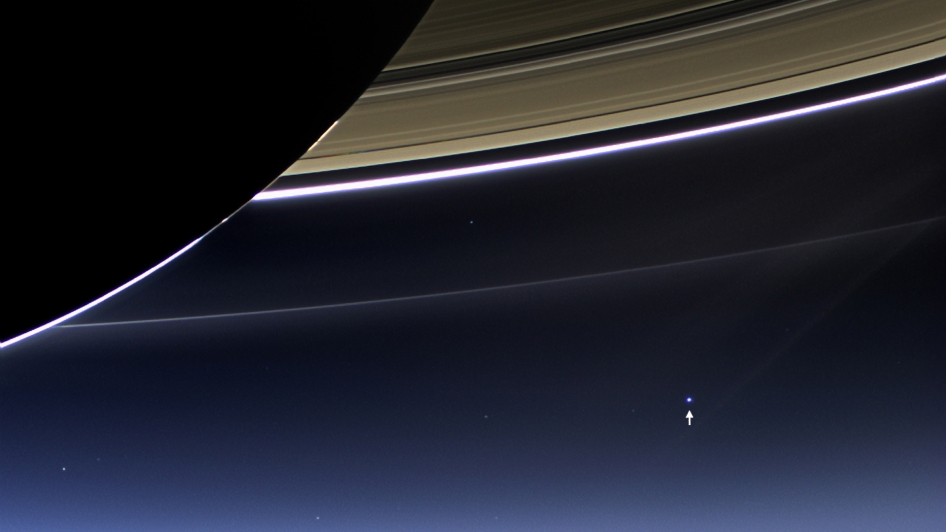


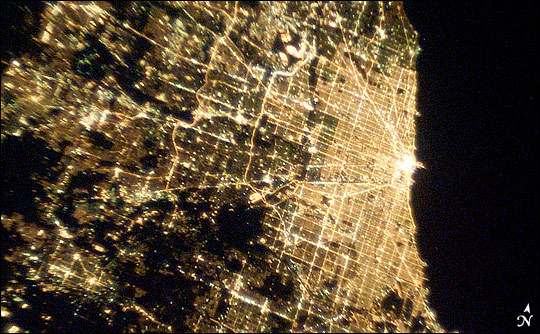


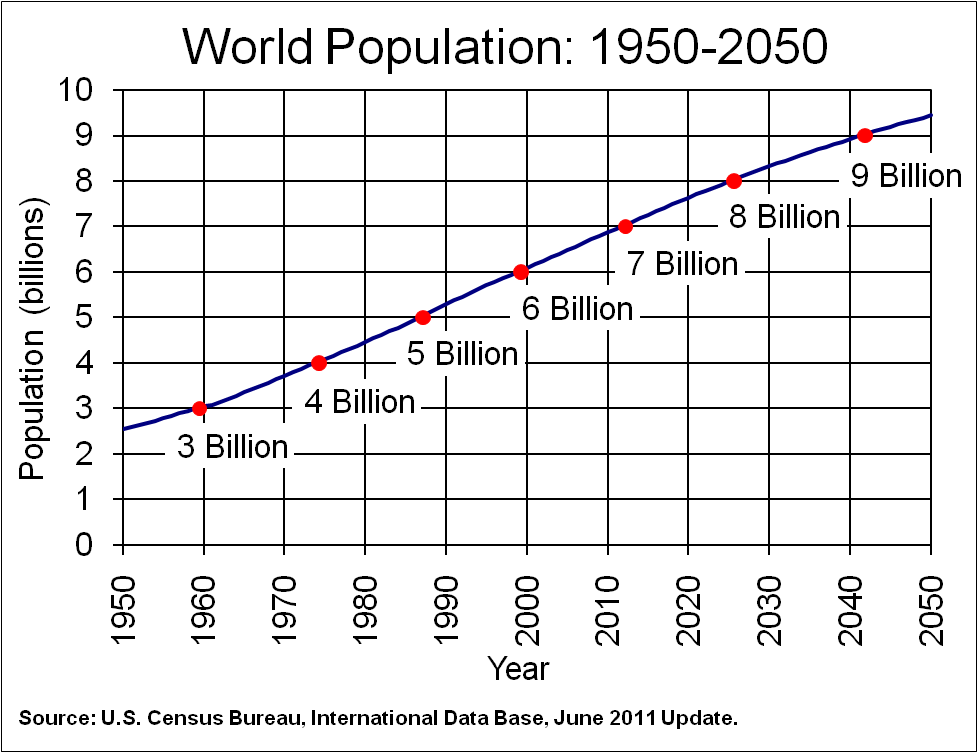
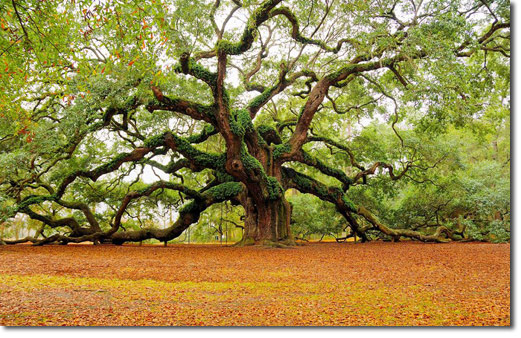


 Learning from Dogs