The latest from Washington on Health Care Reform is the Senate’s version which taxes insurance companies on plans valued at over $8,500 for individuals and $23,000 for couples.
President Obama has defended the tax as a way to drive down health costs. “I’m on record as saying that taxing Cadillac plans that don’t make people healthier but just take more money out of their pockets because they’re paying more for insurance than they need to, that’s actually a good idea, and that helps bend the cost curve,” the president said in an interview with National Public Radio just before Christmas. “That helps to reduce the cost of health care over the long term. I think that’s a smart thing to do.”
Huh? Mr. President, you need an Econ 101 primer. Let’s begin now, with supply and demand:
Supply is an upward-sloping marginal cost curve, and includes the taxes and fees a business must pay to the government. By imposing this tax, the supply curve of insurance companies will shift up and to the left, as shown in the graph, representing a higher cost per unit of insurance coverage. The demand curve slopes down, so when intersected by a more costly supply curve, the final price to consumers rise and the amount of insurance coverage falls. Period. End of story. Indisputable fact. And nothing Obama or the Senate says will change this fact, though they will try.
Is this really what the Founding Fathers had in mind for America?
This topic may seem to be more about politics than economics, but anything related to health care reform is squarely rooted in the most important of economic issues: the costs of doing business, the size of the government, and the potentially oppressive role of government in private industry.
In this article, we see how the Senate Democrats are going to do whatever it takes to get their version of health care reform through, even if it comes down to ‘stealing’ votes. Could the timing of this Massachusetts special election, to replace the temporary replacement put in for the late Senator Edward Kennedy, be one of the reasons that the Senate wants to rush this reform through before the President’s State of the Union Address, typically set for mid-January, though the White House is curiously reluctant to commit to a date…. ?
US health care reform comes with strings, nay chains.
Once a single-payer health care program is enacted into law, the US Government will assume the right to tell us how to live our lives. Our health will be their responsibility. Government officials will feel empowered to tell us what to eat and drink, what risks to take, whether we can smoke, how much weight we can gain and how much exercise we must get.
If you have any doubt, consider the following statements from the Obama administration over the last year. The clear message is if the government pays for something with tax dollars, it has both a right and a responsibility to tell the recipients of those dollars how to conduct themselves.
“This is America. We don’t disparage wealth. We don’t begrudge anybody for achieving success,” Obama said. “But what gets people upset — and rightfully so — are executives being rewarded for failure. Especially when those rewards are subsidized by U.S. taxpayers.” http://wcbstv.com/national/executive.pay.limits.2.926332.html
President Obama challenged top bankers to explore “every responsible way” to increase lending, saying they were obliged to help after being rescued by taxpayers. He asked them to “take a third and fourth look” at their small-business lending. He also exhorted the executives — both in private and in public — to drop their opposition to an overhaul of the nation’s financial industry. “If they wish to fight commonsense consumer protections, that’s a fight I’m more than willing to have,” Obama told reportersin the Diplomatic Reception Room of the executive mansion. http://www.msnbc.msn.com/id/34416646/ns/business-us_business/
Obama said it is “wholly unreasonable to expect that American taxpayers would or should hand this administration or any administration a $700 billion blank check with absolutely no oversight or conditions, when a lack of oversight in Washington and on Wall Street is exactly what got us into this mess.” Obama said taxpayers should be treated like investors if they are being asked to underwrite the bailout. http://www.cnn.com/2008/POLITICS/09/23/campaign.wrap/index.html
“What’s really frustrating me right now is that you’ve got these same banks who benefited from taxpayer assistance who are fighting tooth and nail with their lobbyists up on Capitol Hill, fighting against financial regulatory control,”Obama added. http://au.biz.yahoo.com/091213/31/2aafh.html
Today is my 54th birthday. I am now the age that my mother was when she died, on January 8th, 1985. I knew then that she died too young, that she had so much more living to do.
Two weeks before her death, I visited her in the convalescent hospital where she had been for months. She was going home! The doctors had given her a clean bill of health. She ordered a new skirt to celebrate and had it shipped to her home. We got out maps of London and made plans to take a trip there together, as adults, as friends, the following summer. I went back to school, happy to have had such a nice visit, happy she would soon be going home.
About ten days later, on January 5th, 1985, I got a call from my brother, telling me that mother had septic shock, that she might not make it, and that I needed to get there, fast. I bought a one-way ticket and packed a dark suit. She was still alert when I finally arrived. The nurses remembered me, and let me stay with her, even when visiting hours were over. I got to talk to her, and ask her what she wanted me to do for her, what she wanted the doctors to do for her, what measures she wanted taken. She wanted to live. She was getting weak, working to breath, waiting for the antibiotics to work. Or not. The doctors recommended a ventilator, to help her conserve her strength. Before they put it in, she had one last thing to say: “I love my children.” She died that night.
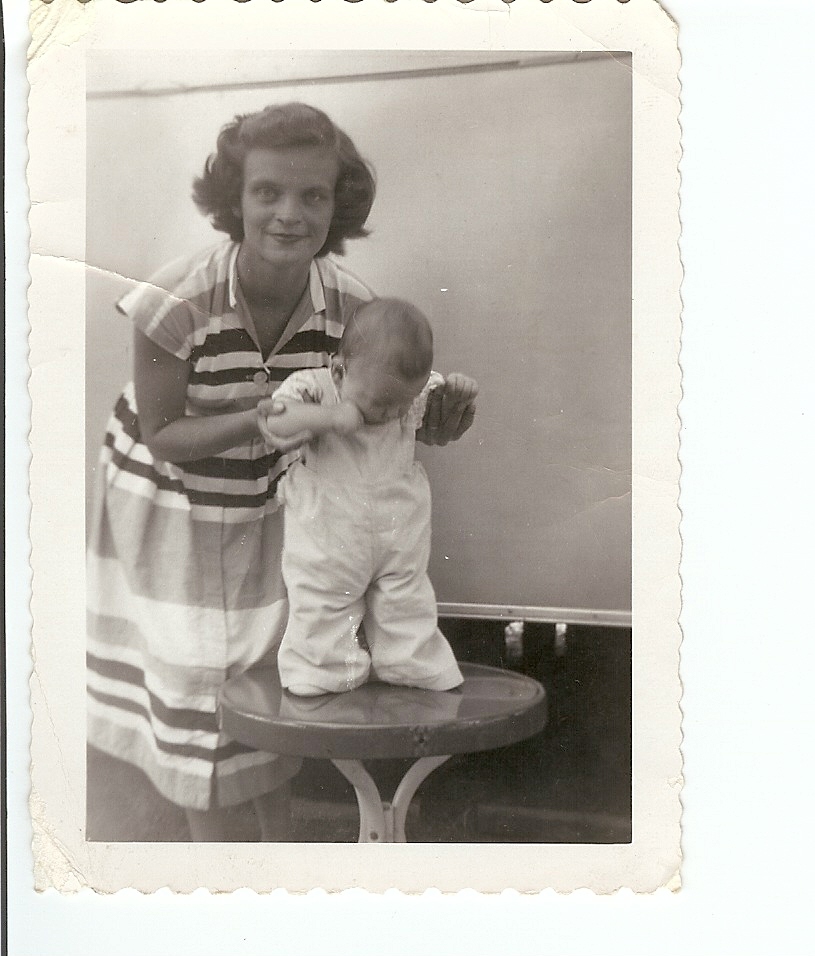
Lillian Harris, Sherry's mother, at age 20 with her first child Brenda
I remember thinking at the time how sad it was that she had never gone to college, never had a career, never fulfilled her dreams. That she had fallen in love at 18, gotten married, and devoted her entire adult life to her children. That her last thought was of her children. I was single and doing odd jobs while earning a doctorate. I had a cat and helped take care of my 90-year-old neighbor, but having children was the furthest thing from my mind.
Fast forward to today, January 12, 2010. I am now the age my mother was when she died. I did go to college, I do have a career, and I have chipped away at those dreams. But those are the side bars of my life. Like every parent out there, the moment my first child was born, I understood what my mother meant. I understood how much you could love someone, how you could put their interests ahead of your own, and how you could not be happy unless they were okay. And, as the years go by and I get older, I understand what a precious gift my mother gave me when she said those last words. She taught me that time flies, and you never know what day might be your last. She taught me to treasure every second with your children because, before you know it, they have grown up and are out the door. Just yesterday, they were toddlers; blink, and they are turning 30.
Time passes so fast. Make it worth it.
By Sherry Jarrell
[Readers may find that an earlier Post by Sherry fits very beautifully with this moving account published today. Ed.]
I’ve just about had it with the media interviewing lawyers and judges about the courtroom developments in the case against the “underwear” bomber. They all, without exception, end up circling around to the apparently “happy” fact that this individual will be found guilty of the charges against him (none of which includes any reference to terrorism, by the way), and will spend the rest of his life in jail.
My reaction? SO WHAT???? The mere fact that the likely verdict is a topic of discussion is insanity! Finding him guilty is not the point; it is precisely beside the point! He is not a criminal — he is an enemy combatant, a willing participant in an on-going war with the United States. And he should be treated as such. There is a reason we don’t fight wars in courtrooms.
EVEN Obama had to finally admit that fact when he used the word “war” for the first time in discussing this issue.
The U.S. unemployment rate remains at a 26-year high. This is troubling for two reasons. One, the struggle and suffering of the unemployed (and underemployed) and the impact on the world economy.
Two, the mixed signal it gives policy makers. I worry that the White House will think that it needs to do “more” of what it’s been doing, and dismiss any negative comments about its economic policies as a knee-jerk reaction to the unemployment figure when I, in fact, would be saying the same things if the unemployment figures had improved. It would be a harder sell, true, but that doesn’t change the facts.
The reason? Because I believe we would be in a better position today, with lower unemployment — no matter what the current unemployment rate — and higher growth, had the stimulus program never been initiated. I base this on my understanding of the fundamentals of how the economy works, how businesses create value, and how labor makes itself indispensable to industry.
And none of these areas were helped or improved by the economic policies of this President.
I feel less safe today. A terrorist tried to blow up a U.S. plane filled with hundreds of innocent people in the name of al Qaeda. But it gets worse. This terrorist is now being represented by an attorney and has been read his rights. He sits in a U.S. prison awaiting his criminal hearing. Criminal. Oh, excuse me, I should have referred to him as an “alleged” criminal or “suspect,” to quote President Obama.
It gets still worse. Why is this terrorist not sitting in a military detention center, like Guantanamo Bay, being questioned by the Central Intelligence Agency to obtain critical information about what and who he knows, if anything? Because, as the Left explained in the press today, that would be silly: why send him down to Guantanamo now, if he is just going to be sent right back — like all the others — to be tried in U.S. court as a criminal? What’s the difference, they ask, between a suspect being represented in the U.S. court system, and a terrorist being interrogated for intelligence by the CIA?
In this second of two posts on John Bougearel’s guest post at Naked Capitalism, Sherry Jarrell provides an economist’s response.
Response to “2010: Foreseeable and Unforeseeable Risks …”
In this wide-ranging and comprehensive piece, John Bougearel warns of the repercussions on the world economy of the steps taken to remedy the financial crisis. He warns of the impact of the Federal Reserve absorbing the toxic assets and shaky collateral on its balance sheet, and of the unsustainability of Social Security and Medicare in an aging demographic. On these basic facts, I agree.
One of the most difficult things for any writer to do when talking about economics and finance is to establish cause and effect. In trying to analyze past policy decisions and recommend future actions, however, it is absolutely imperative to distinguish cause and effect. In my view, Mr. Bougearel’s overview is either silent on this issue or implicitly assigns blame to the markets, when it belongs squarely on the doorstep of misguided government regulations. Continue reading “Establishing “cause and effect””→
What a shock. U.S. GDP is not growing at 3.5% per year, as originally reported, and celebrated with much fanfare from President Obama about how the stimulus program was working. It is not even growing at the revised 2.8% annualized rate reported a couple of weeks later. The latest re-revised figure is 2.2%.
Nearly the entire 2.2% annualized growth, or 3rd quarter growth of 0.55%, is driven by the cash for clunkers program, the government spending program (also called the stimulus program, but I have a big problem with that particular name), and the extended tax credit for first-time home buyers. As a result, this increase in GDP is not only entirely temporary and fleeting, it will cause lower GDP later.
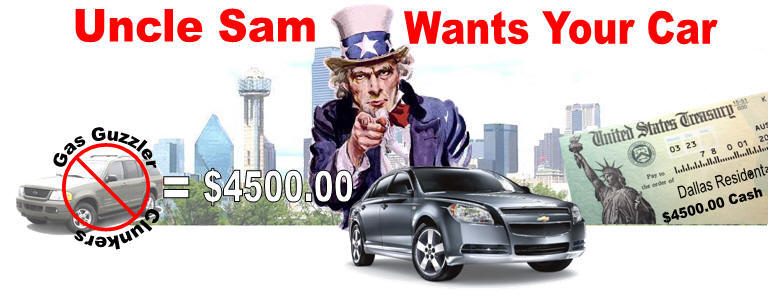
The cash for clunkers program did not create more overall demand for cars; it simply pulled some of the future demand for a new car into today, all the while wasting millions of tax dollars on administering the program, and putting some dealerships out of business in the process.
The spending program simply shifted profits from businesses to support other segments of society, all of which is temporary and destroys the productive capacity of the economy for many periods to come.
The extended tax credit to first-time home buyers is a real head-scratcher. A curious time to redistribute funds from the producers in the economy to finance a program which lowers the cost to those home buyers who would not have the funds to buy a home in the first place….second wave of home mortgage foreclosures, anyone?
The best place to live? It’s all down to your neighbors!
No offense to anyone else, but I live in the perfect neighborhood.
My neighborhood is not big; it consists of only one street, a circle; where you enter the street is the same place you exit. There are only about 30 homes on my street. None of them are very fancy or very big. Most of the houses are older. Some need repair. One or two are empty now. No, it isn’t the size of the neighborhood or the grandeur of the houses.
I live close to the University where I work. I could walk to work if I needed to. But I haven’t needed to, except for the one time, when the Presidential debate was held on campus and security closed it down to all but pedestrian traffic. Although it is certainly convenient, proximity to work is not the reason my neighborhood is perfect.
My girls are unlikely to agree just yet with my assessment of our neighborhood. But they are still young, and there are no kids their age on our street. One neighbor does have grandchildren their age who visit sometimes, but that doesn’t really count, they tell me. Off and on, they complain and say they want to move. My 15-year-old wants to live in a city, the bigger the better, the more people the better; my 13-year-old wants to live on a horse farm, the bigger the better, the more horses the better.
But I tell them that some day, when they are married and have children and are busy with life, they will look back on this time in our neighborhood, and will understand what I meant when I told them how very lucky we are to live here.
Because we have neighbors; real neighbors!
They welcome new families with home-baked bread; take in your mail when you are away; call to check on you when you are sick; give you a ride to get your car out of the shop; lend you their extra tall ladder. All without hesitation and without expecting anything in return. And they let me do what I can for them. There’s genuine warmth and support between neighbors on my street. It’s like an extended family.
Maybe even a little better! Why? Because they do all of this without pushing, without invading your privacy, without crossing into your personal space. They are supportive without being nosy. How totally wonderful: to have support when you need it but, as important, perhaps more important, you also have your privacy. I can’t imagine a better combination. I can’t imagine feeling safer. I can’t imagine a more wonderful neighborhood. I can’t imagine a better home. My neighbors are the best.




 Learning from Dogs