Photographs of moss from our garden.

oooo

oooo

oooo

oooo

I will see if I can take more nature photographs before next Sunday.
Dogs are animals of integrity. We have much to learn from them.
Year: 2026
Photographs of moss from our garden.
oooo
oooo
oooo
oooo
I will see if I can take more nature photographs before next Sunday.
This is a brilliant idea.
A Passport is a very important document. I have both a British and an American passport.
For most of my life there has been no World Wide Web (WWW). And being the age I am I do not pretend to know all the lastest advances in the WWW field. But my grandson is an avid user and, presumably, so are millions of other teenagers across the world.
Thus the idea of an Internet Passport is smart, extremely useful, and brilliant.
ooOOoo
The INTERNET PASSPORT Will Advance Civilization, Promote Democracy, Reduce Censorship, Save The Children And Fight Crime. What is There Not To Like?
Question: How could an internet passport, where the identity of an individual would be displayed, not improve security, safety of children, advance civilization, and even promote democracy if associated with completely constitutionally protected free speech?
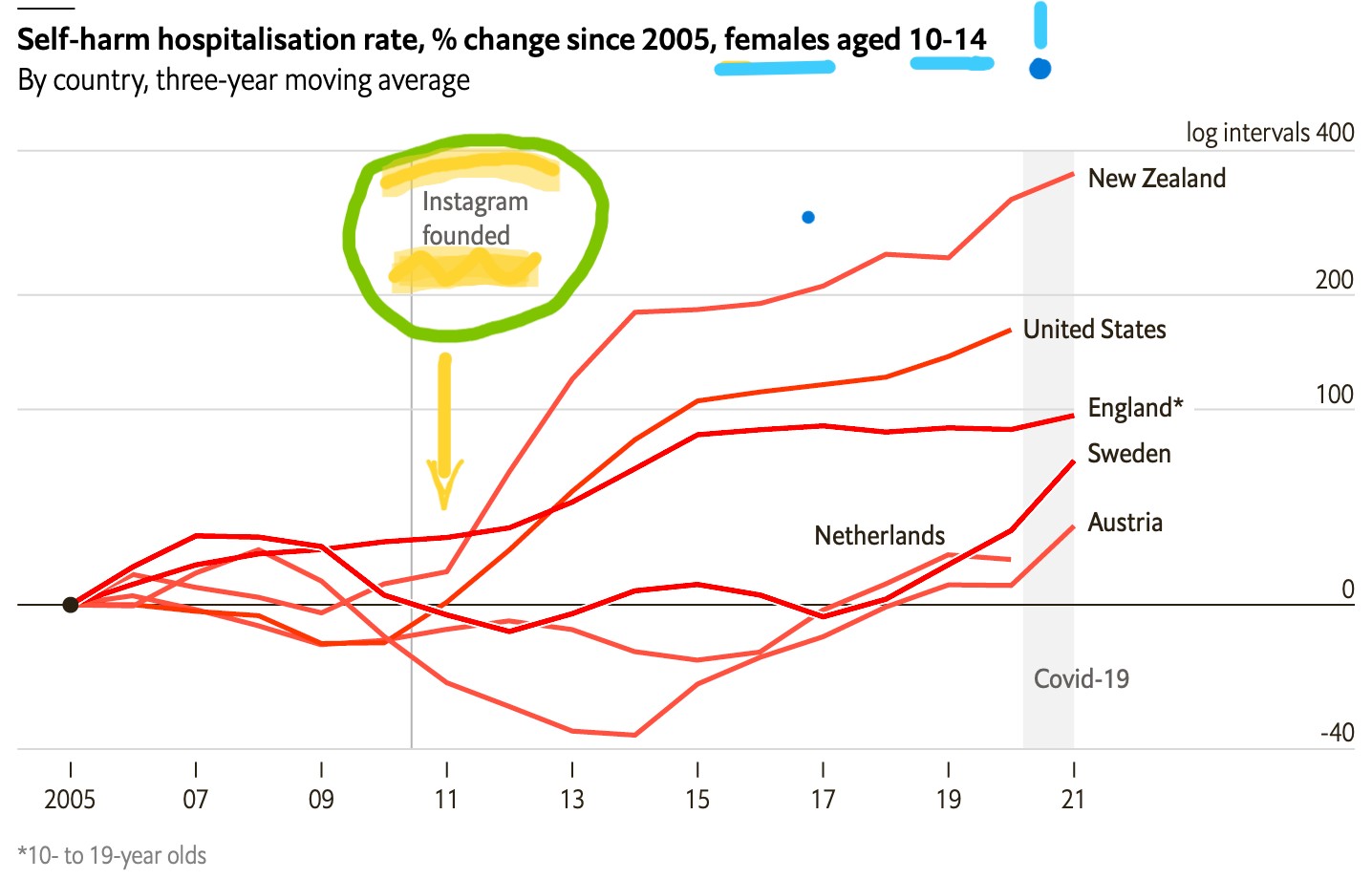
The INTERNET PASSPORT would enable to control the age and granular exposure of children to the INTERNET. Presumably, the more than doubling of the suicide rate of girls is related directly to WRONGFUL INTERNET EXPOSURE. Not acting on the Internet Passport would be tantamount to complicity in the abuse and deaths of millions of girls.
If one enters a country, one is required by the authorities to produce a document called a PASSPORT informing them of our identity. Otherwise NO entry. The controls are stiffer if a child is involved, as they should: child trafficking is as old as humanity (and was outlawed by the European Queen Bathilde in 657 CE). So why not the same sort of control of who is entering, when entering the Internet?
A huge problem with the Internet has been too much access by children and access to age inappropriate content. Another bad problem has been the usage of the Internet by Organized Crime.
A simple way to prevent ILLEGAL INTERNET USAGE is to deliver INTERNET PASSPORTS. A law passed worldwide would be impossible to access the Internet without an INTERNET PASSPORT The passports would have a degree of security and control comparable to that of a passport to pass physical ports. I am sure China would have to approve.
Organized Crime, which profits from adopting the latest Internet tech faster than anybody else, will protest (and some politicians on its payroll will listen). It may be objected by individuals who claim to be good citizens, that the instauration of an INTERNET PASSPORT would introduce a worldwide police state. On a personal basis, I am very much against police states… If the policing goes beyond the law enforcement necessary and sufficient to make sure the constitutional laws are respected. But only then. I firmly believe that a substantial population is kept in check only through the knowledge of potentially efficient police action (I have been a victim of serious crimes more than a few times).
To make sure that the INTERNET PASSPORT does not bring a non constitutional dictatorship, PARRHEISIA and ISEGORIA which should be META CONSTITUTIONAL PRINCIPLES ought to be enforced by arsenals of laws.
Parrheisa and Isegoria basically ensure FREEDOM and EQUALITY of speech, not just by allowing them, and making them constitutional, but by making them CIVIC DUTIES.. Thus constitutional speech and expression and their dissemination would be protected…. Which is certainly NOT the case now.
The usual objections will be raised by the same ones who object to cameras: intrusion on private lives. But that is silly. My main outlet is wilderness exploration. If drones would follow me everywhere, I would feel safer. They can spy on me all day long, but I do nothing wrong, aside from calculated risk[1].
The argument, made for years by many of the world’s wealthiest individuals, like Meta’s Zuckenberg, has been a nebulous “People’s right to privacy”. There is no such a thing because the “Right to Privacy” gets ABROGATED BY THE RIGHT TO SURVIVAL (I learned the abrogation idea in my studies of Islamic law, ironically enough…) As the singularity technology evolves, so does the power of individuals: somebody evil could sneak in with, say, Ebola in a jar… But no doubt planning Mass Destruction would involve Internet usage and could be recognized by LAW ENFORCEMENT AI… As long as distinct sources can be identified.
***
Naturally this simple treatment of an Internet malady has not been suggested. Instead fake news media has insisted on applying censorship on sites they consider “violent”. But of course one of the main ways dictatorships achieve control is through censorship of (what they consider to be) “violence” (the coverup is that only the dictator can use violence to suppress what the dictator calls violence)..
Much of the “culture” that young people are exposed to today is violent and extremely divisive, instead of being informational and collaborative. Why? Well, the established plutocracy has always tried, for keeping in control, to divide (and conquer). The controlling plutocracy has always greater means to adopt the latest tech, as when Hitler adopted air travel and radio to get elected. So naturally, the plutocracy we enjoy adopted Internet control and directing it towards the children was particularly perverse.
Patrice Ayme
[1] One of my fears is an accident which would leave me crippled and rescue would not arrive in time (I have occasionally been in absolutely gigantic landscapes with no one or no sign of human activity in sight; once in Nevada, a billionaire crashed his plane. Neither he nor the plane were ever found… It’s called Nevada for a good reason… Last year I broke an arm in the mountain consecutive to rock failure and subsequent fall; I took the decision to go down the mountain, waiting for rescue would have meant death from exposure. Being able to tell a drone to fetch rescue, or more precisely blankets and shelter would have been safer. Helis couldn’t fly.)
***
[2] In 2026 CNN and other plutocratic serving media oligopolies pressured the UK government to shut down entire websites because those sites showed violence. Showing violence somehow causes violence according to CNN (does this theory make CNN into a terrorist organization?). Instead one should behave as if all was for the best in the best of all possible words.
Paradoxically, the Internet Passport will force much greater democracy, because it could not be an improvement without Isegoria and Parrhesia. Those two are needed because the US First Amendment protects only aspects of free speech addressed to the government (and the situation is even worse in all other countries)…
Patrice Ayme
ooOOoo
Whether or not, governments across the world will implement these changes, this response to the online world we now live in, is terribly uncertain.
I regret that i am not holding my breath.
As you are seeing on the Web.
This article from The Conversation really resonated with me. For as the online world is advancing, so too is the darker side of the Web.
Here is that article.
ooOOoo

Gregory M. Dickinson, University of Nebraska-Lincoln; Institute for Humane Studies
You open a free app to do one simple thing. Before you even start, a full-screen message asks whether you want to try the paid version. The “Start free trial” button is large, bright and hard to miss. The option to keep using the free version is smaller, buried at the bottom. The same prompt appears again tomorrow. And the day after that.
A lot of people look at screens like that and think, “Surely this has to be illegal.” We even have a name for them, “dark patterns.” They feel pushy. They waste time. They seem designed to wear you down. But in most cases, they are perfectly lawful.
“Dark pattern” is not a legal term with a clear boundary. It is a broad label for digital designs that nudge, pressure, confuse or trap users. As a legal scholar who studies consumer protection and digital design, I think the most important thing for readers to understand is that the label “dark pattern” covers a broad spectrum.
Some of that spectrum is just annoying. Some of it is aggressive salesmanship. And some of it crosses the line into deception or coercion. Federal and state consumer protection laws are mostly aimed at that last category. They do not ban every design choice people dislike, only those that trick or coerce.

That reality may sound unsatisfying, but it is not unusual. Offline life is full of things that are irritating but not unlawful. Think of the cashier who asks whether you want to sign up for the store credit card, then points out the discount you are turning down, then asks again. Most people know exactly what is happening. They roll their eyes, say no and try to shop somewhere else next time.
The same is true online. A repeated pop-up can be obnoxious. A guilt-inducing button can be tacky. But consumers recognize ordinary annoyance for what it is. In many cases, the market answer is simple: Close the app, ignore the pitch or take your business elsewhere.
Similarly, law does not ban persuasive sales pitches just because they are effective. A car salesperson who keeps steering you toward the upgraded model is trying to influence your choice. So is the airline clerk who offers travel insurance. So is the restaurant server who asks whether you want dessert. Salesmanship is nothing new. Digital design often borrows from familiar techniques.
That helps explain why lawmakers cannot simply outlaw “manipulation.” And so many interfaces are built to persuade, openly and lawfully.
What the federal FTC Act and analogous state consumer-deception statutes usually care about is not whether a design is annoying. They focus on whether the design is likely to mislead a reasonable consumer. That is the core idea in modern consumer protection law.
So a design is likelier to be unlawful when it hides key facts, makes an optional choice look mandatory or tricks people about the effect of the button they are pressing. A fake countdown timer, a disguised ad, a misleading one-click purchase button or a cancellation path that looks finished when it is not are all different from ordinary hard selling. Those designs do not just pressure users; they can deceive them.
That is also why the app maker’s intent is not always the key question. In many consumer protection cases, a company does not get a free pass just because no one said, “Let’s trick people.” The legal question is often about effect: What would a reasonable user likely understand from this screen?
Research on dark patterns reinforces that concern. Even relatively mild designs can push people into choices they would not otherwise make. And regulators have increasingly focused on subscription flows, hidden fees and cancellation obstacles for exactly that reason.

One reason people might think there are no laws against dark patterns is that they see them so often. But that frequency reflects that the term covers a wide range of conduct, from lawful nagging to outright deception.
It also reflects enforcement limits. Regulators cannot chase every irritating screen on every app and website. They have to prioritize the worst cases. That leaves a lot of borderline conduct in the wild, which makes the whole problem feel bigger and murkier to ordinary users.
So when people ask why there is not a law against dark patterns, the best answer is that there already is, but the law does not prohibit every annoying or high-pressure design. It targets lies, misleading cues and coercive obstacles.
That line can be fuzzy. But the fuzziness is not a mistake. It is what you get when the law tries to separate persuasion from deception in a world full of both.
Gregory M. Dickinson, Assistant Professor of Law, University of Nebraska-Lincoln; Institute for Humane Studies
This article is republished from The Conversation under a Creative Commons license. Read the original article.
ooOOoo
Gregory Dickinson does us a real service. Especially when the intention is to pass on blatant mistruths.
So many people get sucked into these dark patterns. The legality of these dark matters needs to be re-examined.
 Learning from Dogs