Archive for the ‘monetary policy’ Category
Unintended Consequences
That pesky ‘law’ regarding the power of unintended consequences.
As many of you are aware, last week was an unusual format for Learning from Dogs in that the whole of the week was dedicated to republishing Dr. Samuel Alexander’s essay The Sufficiency Economy – Envisioning a Prosperous Way Down. If you missed that, the first chapter was a week ago today under the title of Where less is so much more.
Moving on. Many living in Northern California and South-West Oregon will have had a timely reminder that nature is tapping mankind on the shoulder in new and challenging ways. I’m referring to the massive storm that was featured in a recent Climate Crocks article that delivered over a foot of rainfall in recent days. Here in Southern Oregon we received over 10 inches! Hence the growing awareness that we have to do something!
So with those musings in mind, read the following essay written by Gail Tverberg of the website Our Finite World. Gail describes herself, thus:
I am an actuary interested in finite world issues – oil depletion, natural gas depletion, water shortages, and climate change. The financial system is also likely to be affected.
I’m very grateful to Gail for so promptly giving me written permission to republish her work. It is very relevant to all of us.
oooOOOooo
Climate Change: The Standard Fixes Don’t Work
World leaders seem to have their minds made up regarding what will fix world CO2 emissions problems. Their list includes taxes on gasoline consumption, more general carbon taxes, cap and trade programs, increased efficiency in automobiles, greater focus on renewables, and more natural gas usage.
Unfortunately, we live in a world economy with constrained oil supply. Because of this, the chosen approaches have a tendency to backfire if some countries adopt them, and others do not. But even if everyone adopts them, it is not at all clear that they will provide the promised benefits.

Figure 1. Actual world carbon dioxide emissions from fossil fuels, as shown in BP’s 2012 Statistical Review of World Energy. Fitted line is expected trend in emissions, based on actual trend in emissions from 1987-1997, equal to about 1.0% per year.
The Kyoto Protocol was adopted in 1997. If emissions had risen at the average rate that they did during the 1987 to 1997 period (about 1% per year), emissions in 2011 would be 18% lower than they actually were. While there were many other things going on at the same time, the much higher rise in emissions in recent years is not an encouraging sign.
The standard fixes don’t work for several reasons:
1. In an oil-supply constrained world, if a few countries reduce their oil consumption, the big impact is to leave more oil for the countries that don’t. Oil price may drop a tiny amount, but on a world-wide basis, pretty much the same amount of oil will be extracted, and nearly all of it will be consumed.
2. Unless there is a high tax on imported products made with fossil fuels, the big impact of a carbon tax is to send manufacturing to countries without a carbon tax, such as China and India. These countries are likely to use a far higher proportion of coal in their manufacturing than OECD countries would, and this change will tend to increase world CO2 emissions. Such a change will also tend to raise the standard of living of citizens in the countries adding manufacturing, further raising emissions. This change will also tend to reduce the number of jobs available in OECD countries.
3. The only time when increasing natural gas usage will actually reduce carbon dioxide emissions is if it replaces coal consumption. Otherwise it adds to carbon emissions, but at a lower rate than other fossil fuels, relative to the energy provided.
4. Substitutes for oil, including renewable fuels, are ways of increasing consumption of coal and natural gas over what they would be in the absence of renewable fuels, because they act as add-ons to world oil supply, rather than as true substitutes for oil. Even in cases where they are theoretically more efficient, they still tend to raise carbon emissions in absolute terms, by raising the production of coal and natural gas needed to produce them.
5. Even using more biomass as fuel does not appear to be a solution. Recent work by noted scientists suggests that ramping up the use of biomass runs the risk of pushing the world past a climate change tipping point.
It is really unfortunate that the standard fixes work the way they do, because many of the proposed fixes do have good points. For example, if oil supply is limited, available oil can be shared far more equitably if people drive small fuel-efficient vehicles. The balance sheet of an oil importing nation looks better if citizens of that nation conserve oil. But we are kidding ourselves if we think these fixes will actually do much to solve the world’s CO2 emissions problem.
If we really want to reduce world CO2 emissions, we need to look at reducing world population, reducing world trade, and making more “essential” goods and services locally. It is doubtful that many countries will volunteer to use these approaches, however. It seems likely that Nature will ultimately provide its own solution, perhaps working through high oil prices and weaknesses in the world financial system.
Elastic Versus Inelastic Supply
It seems to me that many bad decisions have been made because many economists have missed the point that crude oil supply tends to be very inelastic, while other fuels are fairly elastic. Let me explain.
Elastic supply is the usual situation for most goods. Plenty of the product is available, if the price is high enough. If there is a shortage, prices rise, and in not too long a time, the market is well-supplied again. If supply is elastic, if you or I use less of it, ultimately less of the product is produced.
Coal and natural gas usually are considered to be elastic in their supply. To some extent, they are still “extract it as you need it” products. Supply of natural gas liquids (often grouped with crude oil, but acting more like a gas, so it is less suitable as a transportation fuel) is also fairly elastic.
Crude oil is the one product that is in quite short supply, on a world-wide basis. Its supply doesn’t seem to increase by more than a tiny percentage, no matter how high the price rises. This is a situation of inelastic supply.

Figure 2. World crude oil production (including condensate) based primarily on US Energy Information Administration data, with trend lines fitted by the author.
Even though oil prices have been very high since 2005 (shown in Figure 3, below), the amount of crude oil has increased by only 0.1% per year (Figure 2, above).

Figure 3. Historical average annual oil prices, (“Brent” or equivalent) in 2011$, from BP’s 2012 Statistical Review of World Energy.
In the case of oil, both supply and demand are quite inelastic. No matter how high the price, demand for oil doesn’t drop back by much. No matter how high the price of oil, world supply doesn’t rise very much, either.1
In a situation of inelastic supply, the usual actions a person might take appear to work when viewed on a local basis, but backfire on a world basis, if not everyone participates. When one country tries to conserve crude oil (whether through a carbon tax, gasoline tax, or higher automobile mileage requirement), it may reduce its own consumption, but there are still plenty of other buyers in the market for the oil that was saved. So the oil gets used by someone else, perhaps at a slightly lower price. World oil production remains virtually unchanged. Thus, a reduction in oil usage by an OECD country can translate to more oil consumption by China or India, and ultimately more development of all types by those countries.
Adding Substitutes Adds to Carbon Emissions
If we don’t have enough crude oil, one approach is to create substitutes. Because crude oil supply is inelastic, though, these substitutes aren’t really substitutes, though. They are “add ons” to world oil supply, and this is one source of our problem with increasing world emissions.
What do we use to make the substitutes? Basically, natural gas and coal, and to a limited extent oil (because we can’t avoid using oil). The catch is, that to make the substitutes, we need to burn natural gas and coal more quickly than we would, if we didn’t make the oil substitutes. Since the supply of coal and natural gas is elastic, it is possible to pull them out of the ground more quickly. Thus, making the substitutes tends to increase carbon dioxide emissions over what they would have been, if we had never come up with the idea of substitutes.
The increased use of coal and natural gas is pretty clear, if a person thinks about coal-to-liquids or gas-to-liquids. Here, we need to first build the plants used in production, and then with each barrel of substitute made, we need to use more natural gas or coal. So it is very clear that we are extracting a lot of additional coal and natural gas, to make a relatively smaller amount of oil substitute. There is often a substantial need for water to make the process work as well, adding another stress on the system.
But the same issue comes up with biofuels, and with other renewables. These too, are add-ons to the world oil supply, not substitutes. While theoretically they might produce energy with less CO2 per unit than fossil fuel systems, in absolute terms they lead to natural gas and coal being pulled out of the ground more quickly to be used in making fertilizer, electricity, concrete, and other inputs to renewables.2
Carbon Taxes and Competitiveness
Each country competes with others in the world market place. Adding a carbon tax makes products made by the local company less competitive in the world marketplace. It also signals to potential coal users that the countries adopting the carbon taxes are willing to a leave a greater proportion of world coal exports to those who are not adopting the tax, thus helping to keep the cost of imported coal down.
Asian countries already have a competitive edge over OECD countries in terms of lower wages and lower fuel costs (because of their heavy coal mix), when it comes to manufacturing. Adding a carbon tax tends to add to the Asian competitive edge. This tends to shift production offshore, and with it, jobs.

Figure 4. China’s energy consumption by source, based on BP’s Statistical Review of World Energy data.
China joined the World Trade Organization in 2001. Figure 4 shows clearly that its fuel consumption ramped up rapidly thereafter. It seems likely that the number of Chinese manufacturing jobs and spending on Chinese infrastructure increased at the same time.
Economists seem to have missed the serious worldwide deterioration in CO2 emissions in recent years by looking primarily at individual country indications, including CO2 emissions per unit of GDP. Unfortunately, this narrow view misses the big picture–that total CO2 emissions are rising, and that CO2 emissions relative to world GDP have stopped falling. (See my posts Is it really possible to decouple GDP growth from energy growth and Thoughts on why energy use and CO2 emissions are rising as fast as GDP. See also Figure 1 at the top of the post.)
The Employment Connection
I have shown that in the US there is a close correlation between energy consumption and number of jobs. (For more information, including a look at older periods, see my post, The close tie between energy consumption, employment, and recession.)

Figure 5. Employment is the total number employed at non-farm labor as reported by the US Census Bureau. Energy consumption is the total amount of energy of all types consumed (oil, coal, natural gas, nuclear, wind, etc.), in British Thermal Units (Btu), as reported by the US Energy Information Administration.
There are several reasons why a connection between energy consumption and the number of jobs is to be expected:
(1) The job itself in almost every situation requires energy, even if it is only electricity to operate computers, and fuel to heat and light buildings.
(2) Equally importantly, the salaries that employees earn allow them to buy goods that require the use of energy, such as a car or house. (“Energy demand” is what people canafford; jobs allow “demand” to rise.)
(3) The lowest salaried people can be expected to spend the highest proportion of their salaries on energy-related services (such as food and gasoline for commuting). The wealthy spend their money on high priced goods and services, such as financial planning services and designer clothing that require much less energy per dollar of expenditure.
The thing I find concerning is the close timing between the ramp-up of Asian coal use and thus jobs using coal, and the drop-off of US employment as a percentage of US population, as illustrated in Figure 6 below. Arguably, the ramp up in world trade is just as important, but some aspects of programs that are intended to save CO2 emissions also seem to encourage world trade.

Figure 6. US Number Employed / Population, where US Number Employed is Total Non_Farm Workers from Current Employment Statistics of the Bureau of Labor Statistics and Population is US Resident Population from the US Census. 2012 is partial year estimate.
Of course, the US did not sign the Kyoto Protocol or enact a carbon tax, and it is its jobs that I show falling as a percentage of population. It is more that the CO2 solutions act as yet another way to encourage more international trade, and with it more “growth”, and more CO2.
Using More Biomass is Not a Fix Either
Burning more wood for fuel and creating “second generation” biofuels from biomass seems like a fix, until a person realizes that we are reaching limits there, as well.
In June 2012, twenty noted scientist published a paper in the journal Nature called Approaching a State Shift in the Earth’s Biosphere. This report indicates that humans have already converted as much as 43% of Earth’s land to urban or agricultural uses. In total, 20% to 40% of Earth’s primary productivity has been taken over by humans. The authors are concerned that we may now be reaching a tipping point leading to a state shift, because of loss of ecosystem services as use of biological products increases. With this state change would come a change in climate. Simulations indicate that this tipping point may occur when as little as 50% of land use is disturbed. This tipping point may be even lower, if world-wide synergies take place.
On Our Current Path – Lacking Good Solutions
While this list of problems relating to current proposed solutions is not complete, it gives a hint of the problems with reducing CO2 emissions using approaches suggested to date. There are many issues I have not covered.
One issue of note is the fact the cost of integrating intermittent renewables (such as wind and solar PV) increases rapidly, as we add increasing amounts to the grid. This occurs because there is more need to transport the electricity long distances and to mitigate its variability through electricity storage or fossil fuel balancing. (See for example, Low Carbon Projects Demand a New Transmission and Distribution Model, Grid Instability Has Industry Scrambling for Solutions, and Hawaii’s Solar Power Flare-Up.)
While the problems noted in these articles are probably solvable, the cost of these solutions has not been built into energy balance analyses. Energy balances (or EROEI estimates) as currently reported do not vary with the proportion of intermittent renewables added to the grid. If energy balance analyses were adjusted to reflect the high cost of adding an increasing proportion of wind or solar PV to the grid, they would likely show a rapidly declining energy balance, above a certain threshold. This would indicate that while adding a little intermittent renewables (as we have done to date) can be a partial solution, adding a lot is likely to have serious cost and energy balance issues.
Another issue that is difficult to deal with is the fact that we are not dealing with a temporary problem with CO2 emissions. The idea is not to slow down the burning of fossil fuels, and burn more later; what we really need to do is to leave unburned fossil fuels in the ground for all time. This is a problem, because there is no way that we can impose our will on people living 10 or 50 years from now. The Maximum Power Principle of H. T. Odum would seem to indicate that any species will make use of whatever energy sources are available to it, to the extent that it can. Even if we temporarily defeat this tendency with respect to humans’ use of fossil fuels, I don’t see any way that we can defeat this tendency for the long term.
Considering all of these issues, it does not appear that most of the “standard” solutions will really work.3 What other options do we have?
Nature’s Solution
The Earth has been handling the problem of shifting conditions for over 4 billion years. The earth is a finite system. Nature provides that finite systems, such as the Earth, will cycle to new states of equilibrium over time, as conditions change. While we would like to defeat Earth’s tendency in this regard, it is not at all clear that we can. Part of this cycling to a new state is likely to be a change in climate.
A state change is a cause for concern to humans, but not necessarily to the Earth itself. The Earth has moved from state to state many times in its existence, and will continue to do so in the future. The changes will bring the Earth back into a new equilibrium. For example, if CO2 levels are high, species that can make use of higher CO2 levels (such as plants) are likely to become dominant, rather than humans.
Exactly how this state change might occur is subject to different views. One view is that changing CO2 levels will be a primary driver. The Nature article referenced previously suggested that increased disturbance of natural ecosystems (as with greater use of biomass) might force a state change. My personal view is that a financial collapse related to high oil price may be part of Nature’s approach to moving to a new state. It could bring about a reduction in world trade, a scale back in CO2 emissions, and a general contraction of human systems.4
However the change takes place, it could be abrupt. It will not be to many people’s liking, since most will not be prepared for it.
Steps That Might Work to Slow CO2 Emissions
It would be convenient if we could slow CO2 emissions by working to produce energy with less CO2. This option does not seem to be working well though, so I would argue that we need to work in a different direction: toward reducing humans’ need for external energy. In order to do this, I would suggest two major steps:
(1) Reduce the world’s population, through one-child policies and universal access to family planning services. This step is necessary because rising population adds to demand. If we are to reduce demand, lower population needs to play a role.
(2) Change our emphasis to producing essential goods locally, rather than outsourcing them to parts of the world that are likely use coal to produce them. I would suggest starting with food, water, and clothing, and the supply chains necessary to produce these items.
Changing our emphasis to producing essential goods locally will have a multiple benefits. It will (a) add local jobs, and (b) lead to less worldwide growth in coal usage, (c) save on transport fuel, and (d) add protection against the adverse impact of declining world oil supply, if this should happen in the not too distant future. It should also help reduce CO2 emissions. The costs of goods will likely be higher using this approach, leading to less “stuff” per person, but this, too, is part of reaching reduced CO2 emissions.
It is hard to see that the steps outlined above would be acceptable to world leaders or to the majority of world population. Thus, I am afraid we will end up falling back on Nature’s plan, discussed above.
Notes:
[1] Michael Kumhof and Dirk Muir recently prepared a model of oil supply and demand (IMF working paper: Oil and the World Economy: Some Possible Futures). In it, they assume a long run price-elasticity of oil supply of 0.03, and remark that a paper by Benes and others indicates a range of 0.005 to 0.02 for this variable. The long term price elasticity of oil demand is assumed to be .08 in the Kumhof and Muir analysis.
[2] I would argue that standard EROEI measurements are defined too narrowly to give a true measure of the amount of energy used in making a particular substitute. For example, EROEI measures do not consider the energy costs associated with labor (even though workers spend their salaries on clothing, and commuting costs, and many other good and services that use fossil fuels), or with financing costs, or of indirect impacts like wear and tear on the roads by transporting corn for biofuel.
Other types of analysis have ways of dealing with this known shortfall. For example, when the number of jobs that a new employer can be expected to add to a community is evaluated, the usual approach seems to be to take the number of jobs that can be directly counted and multiply by three, to estimate the full impact. I would argue that with substitutes, some similar adjustment is needed. This adjustment which would act to increase the energy use associated with renewables, and reduce the EROEI. For example, the adjustment might divide directly calculated EROEI by three.
A calculation of the true net benefit of renewables also needs to recognize that nearly the full energy cost is paid up front, and only over time is recovered in energy production. When renewable production is growing rapidly, society tends to be in a long-term deficit position. Typically, it is only as growth slows that society reaches as net-positive energy position.
[3] I obviously have not covered all potential solutions. Nuclear power is sometimes mentioned, as is space solar power. There are new solutions being proposed regularly. Even if these solutions would work, ramping them up would take time and require use of fossil fuels, so it is wise to consider other options as well.
[4] The way that limited oil supply could interfere with world trade is as follows: High oil prices cause consumers to cut back on discretionary goods. This leads to layoffs in discretionary sectors of the economy, such as vacation travel. It also leads to secondary effects, such as debt defaults and lower housing prices. The financial effects “concentrate up” to governments of oil importing nations, because they receive less tax revenue from laid-off workers at the same time that they pay out more in unemployment benefits, stimulus, and bank bailouts. (We are already at this point.)
Eventually, countries will find that deficit spending is spiraling out of control. If countries raise taxes and cut benefits, this is likely to lead to more lay offs and debt defaults. One possible outcome is that citizens will become increasingly unhappy, and replace governments with new governments that repudiate old debt. The new governments may have difficulty establishing financial relationships with other governments, given that most are major debt defaulters. Such issues could reduce world trade substantially. With the drop of world trade would come much more limited ability to maintain our current systems, such as electricity and long distance transport.
What part of the word ‘no’ are you having trouble with?
So long overdue to saying ‘no’ to more drilling for oil and gas!
Just five days ago, I republished an essay from Tom Engelhardt of TomDispatch fame called The more it changes, the more it’s the same thing. Despite Tom’s permission for me to republish any of the essays that appear on TomDispatch, I do try to be very selective and not republish too often.
However, what was published by Tom on the 18th, just three days ago, is so powerful that it requires the widest readership possible. That’s why Tomgram: Ellen Cantarow, “Little Revolution,” Big Fracking Consequences is being republished on Learning from Dogs today and tomorrow. The reason I have split the essay into two parts is because I want to add some other material. Tom’s publication is in one part so if you can’t wait for my sequel tomorrow, then click here.
Here’s something that I want to draw your attention to:
If you’re 27 or younger, you’ve never experienced a colder-than-average month
By Philip Bump This image sums up 2012, temperature-wise. Nowhere on the surface of the planet have we seen any record cold temperatures over the course of the year so far. Every land surface in the world saw warmer-than-average temperatures except Alaska and the eastern tip of Russia. The continental United States has been blanketed with record warmth — and the seas just off the East Coast have been much warmer than average, for which Sandy sends her thanks.
I saw this on the Grist website yesterday. Here are the next couple of paragraphs from that Grist article:
The National Oceanic and Atmospheric Administration summarizes October 2012:
The average temperature across land and ocean surfaces during October was 14.63°C (58.23°F). This is 0.63°C (1.13°F) above the 20th century average and ties with 2008 as the fifth warmest October on record. The record warmest October occurred in 2003 and the record coldest October occurred in 1912. This is the 332nd consecutive month with an above-average temperature.
If you were born in or after April 1985, (i.e. now 27 years old or younger), you have never lived through a month that was colder than average. That’s beyond astonishing.
You might want to go to the NOAA State of the Climate report just issued to read more. Indeed, go to read this: (my emboldening)
The average temperature across land and ocean surfaces during October was 14.63°C (58.23°F). This is 0.63°C (1.13°F) above the 20th century average and ties with 2008 as the fifth warmest October on record. The record warmest October occurred in 2003 and the record coldest October occurred in 1912. This is the 332nd consecutive month with an above-average temperature. The last below-average month was February 1985. The last October with a below-average temperature was 1976. The Northern Hemisphere ranked as the seventh warmest October on record, while the Southern Hemisphere ranked as second warmest, behind 1997.
So with all that in mind, here’s the first half of Ellen Cantarow‘s essay including the ‘must-read’ introduction from Nick Turse.
oooOOOooo
Tomgram: Ellen Cantarow, “Little Revolution,” Big Fracking Consequences
[Note for TomDispatch Readers: Back in May 2005, this site posted “Against Discouragement,” a graduation speech by the late, great Howard Zinn. Though it hardly needs be said, it was, of course, inspiring. I also interviewed him for TomDispatch and hewrote for the site. A last book of his has just been published, Howard Zinn Speaks: Collected Speeches (1963-2009). How could I not recommend it? After all, he still speaks to us all.
Also a reminder for TD readers: we don’t encourage you to become Amazon customers, but if you already are, and you go to that site via a TomDispatch book link like the one in the previous paragraph (or any book cover image link on the site), we get a modest cut of anything you buy, book or otherwise. It’s a way to support this site at absolutely no cost to you! Tom]
To say the Central Intelligence Agency has had an uneven record over its 65 years would be kind. It found early “success” in plotting to overthrow the legitimate governments of Iran and Guatemala (even if it did fail to foresee the Soviet Union going nuclear in 1949). Then, it had a troubled adolescence. The Bay of Pigs. Vietnam. Laos. Spying on Americans. As the Agency matured, it managed to miss all signs of the oncoming Iranian revolution – the natural endpoint of its glorious 1953 coup that brought the Shah to power — and the Soviet invasion of Afghanistan. (It did, however, manage to arm America’s future enemies there, sowing the seeds of 9/11.) Then there was the Reagan era Iran-Contra affair, the failure to notice the fall of the Berlin Wall until it was on CNN, the WMD “intelligence” of the Iraqi leaker codenamed “Curveball,” the Iraq debacle that followed, and…
Well, you get the picture. Recently, however, things seemed to be looking up. The most popular general in a generation or two, a soldier-scholar-superman who could do no wrong, became its director. Just before that, the Agency helped take out America’s public enemy number one in a daring night raid about which Hollywood is soon to release a celebratory movie.
But just as things were looking up, the rock star general was caught with his pants down, resigning in disgrace after an extramarital affair became public. That titillating development overshadowed another more serious one: a cry for help about a looming threat from the Agency and its brethren in the American intelligence community (IC). In late October, the National Research Council was toissue a report commissioned by the CIA and the IC. Superstorm Sandy intervened and so it was only recently released, aptly titled “Climate and Social Stress: Implications for Security Analysis.” And what a dire picture it painted: security analysts should, it explained “expect climate surprises in the coming decade… and for them to become progressively more serious and more frequent thereafter, most likely at an accelerating rate… It is prudent to expect that over the course of a decade some climate events… will produce consequences that exceed the capacity of the affected societies or global systems to manage and that have global security implications serious enough to compel international response.”
Think failed states, water wars, forced mass migrations, famine, drought, and epidemics that will spill across borders, overwhelm national and international mitigation efforts, and leave the United States scrambling to provide disaster response, humanitarian relief, or being drawn into new conflicts. That’s bad news for everyone, including the intelligence community. Even worse, the 206-page report calls for more study, more analysis, and more action — and yet none of that is likely to happen without the assent of Congress.
Keep in mind that Republican members of Congress opposed even the creation of a CIA climate change center and tried starve it of funding while, as Kate Sheppard of Mother Jones noted last year, “Republican lawmakers — including the chairman and ranking member of the House and Senate intelligence committees, respectively — have also expressed skepticism about the CIA’s climate work.”
In other words, add Republicans to the list of those who, like Cuban and Laotian communists of yore, have worked to thwart the Agency. And cross the CIA off any list of potential environmental saviors. In fact, when it comes to the health of this planet, saviors seem distinctly in short supply. As TomDispatch regular Ellen Cantarow reports from the frontlines of a full-scale climate conflict, the only hope for the environment may come from unlikely groups of people in the unlikeliest of places fighting a shadow war more important than any ever waged by the CIA. Nick Turse
Frack Fight
A Secret War of Activists — With the World in the Balance
By Ellen Cantarow
There’s a war going on that you know nothing about between a coalition of great powers and a small insurgent movement. It’s a secret war being waged in the shadows while you go about your everyday life.
In the end, this conflict may matter more than those in Iraq and Afghanistan ever did. And yet it’s taking place far from newspaper front pages and with hardly a notice on the nightly news. Nor is it being fought in Yemen or Pakistan or Somalia, but in small hamlets in upstate New York. There, a loose network of activists is waging a guerrilla campaign not with improvised explosive devices or rocket-propelled grenades, but with zoning ordinances and petitions.
The weaponry may be humdrum, but the stakes couldn’t be higher. Ultimately, the fate of the planet may hang in the balance.
All summer long, the climate-change nightmares came on fast and furious. Once-fertile swathes of American heartland baked into an aridity reminiscent of sub-Saharan Africa. Hundreds of thousands of fish dead in overheated streams. Six million acres in the West consumed by wildfires. In September, a report commissioned by 20 governments predicted that as many as 100 million people across the world could die by 2030 if fossil-fuel consumption isn’t reduced. And all of this was before superstorm Sandy wreaked havoc on the New York metropolitan area and the Jersey shore.
Washington’s leadership, when it comes to climate change, is already mired in failure. President Obama permitted oil giant BP to resume drilling in the Gulf of Mexico, while Shell was allowed to begin drilling tests in the Chukchi Sea off Alaska. At the moment, the best hope for placing restraints on climate change lies with grassroots movements.
In January, I chronicled upstate New York’s homegrown resistance to high-volume horizontal hydraulic fracturing, an extreme-energy technology that extracts methane (“natural gas”) from the Earth’s deepest regions. Since then, local opposition has continued to face off against the energy industry and state government in a way that may set the tone for the rest of the country in the decades ahead. In small hamlets and tiny towns you’ve never heard of, grassroots activists are making a stand in what could be the beginning of a final showdown for Earth’s future.
oooOOOooo
The second part of Ellen’s essay will be published tomorrow.
Ellen Cantarow first wrote from Israel and the West Bank in 1979. A TomDispatch regular, her writing has been published in The Village Voice, Grand Street, Mother Jones, Alternet, Counterpunch, and ZNet, and anthologized by the South End Press. She is also lead author and general editor of an oral-history trilogy, Moving the Mountain: Women Working for Social Change, published in 1981 by The Feminist Press/McGraw-Hill, widely anthologized, and still in print.
Follow TomDispatch on Twitter @TomDispatch and join us on Facebook. Check out the newest Dispatch book, Nick Turse’s The Changing Face of Empire: Special Ops, Drones, Proxy Fighters, Secret Bases, and Cyberwarfare.
Copyright 2012 Ellen Cantarow
A view from the Radical Middle
Promoting the thoughts of Per Kurowski.
A few days ago, I published a delightful story sent to me by Richard Maugham about Helga’s Bar. It was a tongue-in-cheek look at the crazy world of finance and banking that we seem to be living in at present.
One of the regular readers of Learning from Dogs is Per Kurowski and he left a couple of comments. The first being,
As a former ED at the World Bank, 2002-2004, living close to Washington, writing articles and being an assiduous blogger, I’ve been in the middle of many discussions about those many of the challenges our world faces. And my friend, I am sorry to say, our prospects to solve these problems, do not seem good.
One of the main reasons for that negative outlook, is that I have been able to witness how the discussion of many of these problems, no matter how urgent these are, so often get hijacked by a political agenda, or by a group that decides making a business, or a living, out of it.
If we cannot break out of this mold, unfortunately, the world is toast, and this, not only from a global warming perspective.
which was then followed up by,
By the way, I managed to sit down a prominent and important bank regulator in my chair yesterday, though he was invisible and quite silent!
I then replied,
Per, just love that. Any chance of you penning a guest post that could set the background to that video in terms that make it easy for the punter to understand?
So here is Per’s interview (sound volume is a little low) and his views.
oooOOOooo
Paul… well here is “a brief summary of my thoughts on banks and risks”
Capital requirements for banks which are lower when the perceived risk of default of the borrower is low, and higher when the perceived risk is high, distort the economic resource allocation process. This is so because those perceptions of risk have already been cleared for, by bankers and markets, by means of interest rates and amounts of exposures.
All the current dangerous and obese bank exposures are to be found in areas recently considered as safe and which therefore required these banks to hold little capital. What was considered as “risky” is not, as usual, causing any problems. This is not a crisis caused by excessive risk taking by the banks, but by excessive regulatory interference by naïve and nanny type regulators.
And, if that distortion is not urgently eliminated, all our banks are doomed to end up gasping for oxygen and capital on the last officially perceived safe beach… like the US Treasury or the Bundesbank.
Bank regulators have no business regulating based on risk perceptions being right, their role is to prepare for when these perceptions turn out to be wrong.
A nation that cares more for history, what it has got, the haves, the “not-risky”, the AAA rated or the “infallible” sovereigns, than for the future, what it can get, the not-haves, the risky, the small businesses or the entrepreneurs, is a nation on its way down.
Per.
oooOOOooo
You may read more from Per on his blog here, and also read Per’s Tea with FT blog! So let me close by saying that Per’s summary seems like a blast of sanity in an otherwise crazy world!
Understanding Europe!
A delightful tale sent to me by Richard Maugham.
Richard and I go back too many years! He has been a dear friend despite the obvious hurdle that when we first met, he declared that he was a typewriter salesman for Olivetti in the UK with me admitting that I was a typewriter salesman for IBM UK! Here’s the story.
oooOOOooo
WHAT WENT WRONG IN EUROPE – SIMPLY EXPLAINED!
Helga is the proprietor of a bar. She realizes that virtually all of her customers are unemployed alcoholics and, as such, can no longer afford to patronize her bar. To solve this problem she comes up with a new marketing plan that allows her customers to drink now, but pay later.
Helga keeps track of the drinks consumed on a ledger (thereby granting the customers’ loans).
Word gets around about Helga’s “drink now, pay later” marketing strategy and, as a result, increasing numbers of customers flood into Helga’s bar. Soon she has the largest sales volume for any bar in town.
By providing her customers freedom from immediate payment demands, Helga gets no resistance when, at regular intervals, she substantially increases her prices for wine and beer – the most consumed beverages.
Consequently, Helga’s gross sales volumes and paper profits increase massively. A young and dynamic vice-president at the local bank recognises that these customer debts constitute valuable future assets and increases Helga’s borrowing limit. He sees no reason for any undue concern, since he has the debts of the unemployed alcoholics as collateral.
He is rewarded with a six figure bonus.
At the bank’s corporate headquarters, expert traders figure a way to make huge commissions, and transform these customer loans into DRINKBONDS. These “securities” are then bundled and traded on international securities markets.
Naive investors don’t really understand that the securities being sold to them as “AA Secured Bonds” are really debts of unemployed alcoholics. Nevertheless, the bond prices continue to climb and the securities soon become the hottest-selling items for some of the nation’s leading brokerage houses.
The traders all receive six figure bonuses.
One day, even though the bond prices are still climbing, a risk manager at the original local bank decides that the time has come to demand payment on the debts incurred by the drinkers at Helga’s bar. He so informs Helga. Helga then demands payment from her alcoholic patrons but, being unemployed alcoholics, they cannot pay back their drinking debts. Since Helga cannot fulfil her loan obligations she is forced into bankruptcy. The bar closes and Helga’s 11 employees lose their jobs.
Overnight, DRINKBOND prices drop by 90%. The collapsed bond asset value destroys the bank’s liquidity and prevents it from issuing new loans, thus freezing credit and economic activity in the community.
The suppliers of Helga’s bar had granted her generous payment extensions and had invested their firms’ pension funds in the BOND securities. They find they are now faced with having to write off her bad debt and with losing over 90% of the presumed value of the bonds. Her wine supplier also claims bankruptcy, closing the doors on a family business that had endured for three generations; her beer supplier is taken over by a competitor, who immediately closes the local plant and lays off 150 workers.
Fortunately though, the bank, the brokerage houses and their respective executives are saved and bailed out by a multibillion dollar no-strings attached cash infusion from the government.
They all receive a six figure bonus.
The funds required for this bailout are obtained by new taxes levied on employed, middle-class, non-drinkers who’ve never been in Helga’s bar……………………….!
oooOOOooo
I can add not a single word to this!
The Greatest Crash – footnote
The story that could run for an awfully long time!
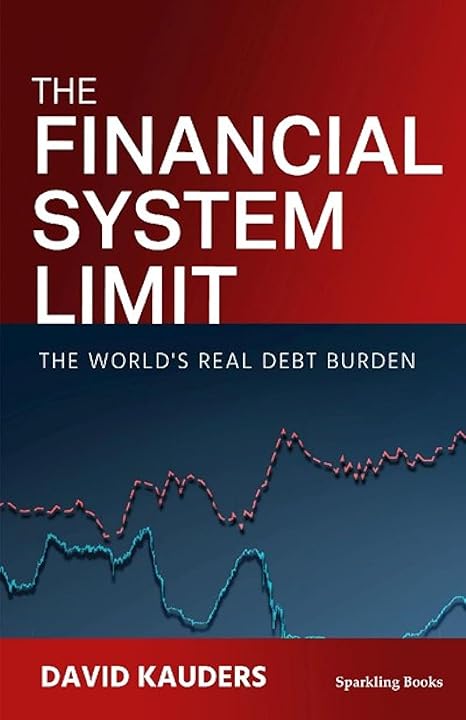
I rather revealed my newness as a US resident by posting my review of David Kauders’ book The Greatest Crash over 2 days last week, one of them being Thanksgiving Day. Despite that 1,895 people viewed my review which was entitled The end of an era.
A week has now passed since that review. I was curious to see what sorts of headlines had been making the news in the last 7 days. It’s just a random trawl through those items that have captured my attention.
Let’s start with the Financial Times, November 27th,
The eurozone really has only days to avoid collapse
By Wolfgang Münchau
In virtually all the debates about the eurozone I have been engaged in, someone usually makes the point that it is only when things get bad enough, the politicians finally act – eurobond, debt monetisation, quantitative easing, whatever. I am not so sure. The argument ignores the problem of acute collective action.
Last week, the crisis reached a new qualitative stage. With the spectacular flop of the German bond auction and the alarming rise in short-term rates in Spain and Italy, the government bond market across the eurozone has ceased to function.
Wolfgang concludes his article thus,
Italy’s disastrous bond auction on Friday tells us time is running out. The eurozone has 10 days at most.
Then my print copy of The Economist that arrived on the 26th had this lurid cover page,
Unless Germany and the ECB move quickly, the single currency’s collapse is looming
The leader article contains this paragraph,
Past financial crises show that this downward spiral can be arrested only by bold policies to regain market confidence. But Europe’s policymakers seem unable or unwilling to be bold enough. The much-ballyhooed leveraging of the euro-zone rescue fund agreed on in October is going nowhere. Euro-zone leaders have become adept at talking up grand long-term plans to safeguard their currency—more intrusive fiscal supervision, new treaties to advance political integration. But they offer almost no ideas for containing today’s conflagration.
and a few paragraphs later, this,
This cannot go on for much longer. Without a dramatic change of heart by the ECB and by European leaders, the single currency could break up within weeks. Any number of events, from the failure of a big bank to the collapse of a government to more dud bond auctions, could cause its demise. In the last week of January, Italy must refinance more than €30 billion ($40 billion) of bonds. If the markets balk, and the ECB refuses to blink, the world’s third-biggest sovereign borrower could be pushed into default.
Then on Sunday, 27th, MISH’s Trend Analysis blogsite reveals,
ICAP Plc, the world’s largest inter-dealer broker (one that carries out transactions for financial institutions rather than private individuals), is now Testing Trades In Greek Drachma Against Dollar, Euro
ICAP Plc is preparing its electronic trading platforms for Greece’s potential exit from the euro and a return to the drachma, senior executives at the inter-dealer broker said Sunday.
ICAP is the latest firm to disclose such preparations, joining the growing ranks of banks, governments and other key players in the global financial system whose officials are worried enough about the stability of the common currency to be making contingency plans for a possible break-up.
Then Bloomberg published an article by Peter Boone and Simon Johnson, the latter of Baseline Scenario fame, that opened as follows,
Investors sent Europe’s politicians a painful message last week whenGermany had a seriously disappointing government bond auction. It was unable to sell more than a third of the benchmark 10-year bonds it had sought to auction off on Nov. 23, and interest rates on 30-year German debt rose from 2.61 percent to 2.83 percent. The message? Germany is no longer a safe haven.
and concluded,
Ultimately, an integrated currency area may remain in Europe, albeit with fewer countries and more fiscal centralization. The Germans will force the weaker countries out of the euro area or, more likely, Germany and some others will leave the euro to form their own currency. The euro zone could be expanded again later, but only after much deeper political, economic and fiscal integration.
Tragedy awaits. European politicians are likely to stall until markets force a chaotic end upon them. Let’s hope they are planning quietly to keep disorder from turning into chaos.
Finally, on the 29th the BBC News website carried details of the Autumn Statement made by British Chancellor, George Osborne, to Parliament.
Osborne confirms pay and jobs pain as growth slows
Chancellor George Osborne has said public sector pay rises will be capped at 1% for two years, as he lowered growth forecasts for the UK economy.
The number of public sector jobs set to be lost by 2017 has also been revised up from 400,000 to 710,000.
Borrowing and unemployment are set to be higher than forecast and spending cuts to carry on to 2017, he admitted.
Just look at that figure of public sector job losses – 710,000!
Well that’s more than enough from me but it does surely endorse the opening views that David Kauders expounded in his book, as carried in my review, and reproduced here,
Starting with the first sentence, David sets out the core problem;
This book argues that it is impossible to expand the financial system much further.
expanding this a few paragraphs later,
This is the financial system limit: lack of new borrowing plus excessive weight of debt obligations from past borrowing combine to slow economies down. This is the barrier whichever way policy makers turn. It is like the lid on a boiling kettle. Enough steam can lift it for a while but it always snaps back into place. The financial system limit is a roadblock preventing growth.
A few pages later in this opening chapter ‘The roadblock preventing growth‘ this limit is explained thus,
Policy contradictions also show us that the financial system has reached a roadblock. The glaring conflict between bailout and austerity is at the core. Each bailout or stimulus requires creation of more credit, leading to false financial speculation, and for a short while markets recover their poise. The threat of inflation returns. Later, bad debts rise, the markets tumble again and a new crisis emerges. Austerity, the alternative policy, cuts spending thereby cutting the immediate level of economic activity and bringing economic decline more quickly than the stimulus alternative. Whichever way they turn, the authorities are damned.
You can understand why I called this Post a ‘footnote’ not an endnote.
The end of an era, part two.
A review of David Kauder’s recently published book, The Greatest Crash.
Details of the availability of the book are included at the end of the review.
Extracts from the book included are with grateful thanks to Sparkling Books.
Part One of this review was published yesterday which needs to be read before Part Two.
——————-
Chapter 5 continues by examining the over-bearing consequences of excessive public spending, excessive Government regulations, substitute taxation, weakness of Treasury forecasts, and so on. While these are UK issues, there is no doubt that similar restraints of free enterprise exist in many other western nations.
In Chapter 6, ‘Group Think‘, David looks at the strange ways in which we form opinions. It’s a topic that has been discussed and written about widely but the point behind this chapter is that people have in great part lost the ability to discern truth from fiction, with terrible implications when it comes to understanding how individuals are affected by government and bureaucratic institutions.
The chapter closes;
One of the remarkable points that I have found in writing this book is that many of the detailed errors, incorrect policies et al, have already been amply documented by others. But we never learn. The delegated society, the strength of lobby groups and vulnerability of our political system to pressure, the sheer volume of noise in the media and on the Internet, the immediacy of the demands of daily life, all combine to make our collective memory rather short.
Amen to that!
Chapter 7, ‘Academic differences of opinion‘, was surprisingly short at just 6 1/2 pages. One would have thought the subject worthy of a much longer review especially as David was exploring the fundamental differences between Keynesian and Ricardian economic theories and opportunities for alternative theories. Must say that that I laughed out loud (David’s book is a little short on humour!) at the sentence on p.127 that ran, “One correspondent writing to the Financial Times proposed that economics should be declared a failing discipline, economists as not fit for purpose, and a physicist put in charge of sorting their theories out.“
Chapter 8, ‘The dark side of capital markets‘, is the penultimate chapter and quite a technical one at that. But David manages to trip through esoteric aspects, well esoteric to the lay reader, in a manner that keeps one involved. Here’s an example from early on in the chapter.
Capital markets follow a long cycle beyond the experience of most practitioners, detectable only by understanding history and then applying this understanding to contemporary conditions.
It didn’t mean much to me. Then the next sentence;
The principles are identical for any market where prices depend on the supply of credit: equities, bonds, property and commodities are all markets where the prices must relate to the availability of credit.
That, at least, was understood but still the penny hadn’t dropped. Then came;
Bond prices prosper when credit is lacking while the other three prosper when credit is abundant.
That then made sense to me but still only at some academic level. David then followed those sentences with these two paragraphs;
The whole market cycle consists of bull market followed by bear market, as surely as night follows day. The bull market in assets is driven by an increasing supply of credit and economic expansion, since more credit leads to higher prices. The bear market in assets is driven by less credit and economic contraction; there is no purchasing power to keep asset prices high. Only fixed interest bonds are contra-cyclical, declining in price as credit expands and rising in price as credit sinks.
There are two useful theories for analysing the whole market cycle: conversion flow and Dow theory.
So in half-a-page of text, the book effectively educated me and then showed the relevance of that learning to the world I was living in. Cleverly done!
Chapter 9, ‘The attitude change‘, is, without doubt, a clincher of a close to this fascinating book. The sentiments conveyed in this chapter are so unexpected that, forgive me, it would be wrong to explicitly refer to them. Buy the book!
Let me just say that the last chapter fully endorsed me calling this review The End of an Era.
Overall conclusions
This is an important book from a writer who has both the academic and professional experience to enable him to form the views that he expresses. Only time will tell if the whole scenario that is envisaged by Mr. Kauders will play out as he expects. My personal view is that it will.
For individuals and business alike, reading The Greatest Crash will inform you in a manner that I would argue is critical when one notes the precarious and potentially unstable period we are living through. The decisions readers make after reading the book are beyond the remit of this review and, of course, David Kauders, but, at least, read the book!
Prof. Myddelton in the book’s introduction wrote, “But one of the things we need now is new thinking on the fundamentals.” Perhaps not new thinking on fundamentals, as the Prof. puts it, but a reinstatement of core fundamental values.
I am not alone from sensing that the world, especially the western world, is transitioning from an era of greed and materialism, seeing a world of unlimited resources, to a different societal relationship with planet Earth, the only planet we have. A transition across all layers of society towards the values of truth, integrity and compassion; values whose day has come.
The Greatest Crash reinforces immensely my notion that this truly is the end of an era.
——————
Want to buy The Greatest Crash? The ebook was published in October worldwide, the paperback published in the UK on the 1st November UK, the hardcover being released any day now in the UK. For North America both the paperback and hardcover versions are being published on 1st February, 2012.
Full details from the Sparkling Books webpage here.
Copyright © 2011 Paul Handover
The end of an era, part one.
A review of David Kauder’s recently published book, The Greatest Crash.
Details of the availability of the book are included at the end of both parts of my review, part two is published tomorrow.
Extracts from the book included are with grateful thanks to Sparkling Books.
Personal introduction.
Back in the late 90s, when I was living in England, I attempted to bolster my self-employed income by investing and trading in equities. It was a frustrating game, game being the right word! One day I was lamenting this to a close friend and he gave me the name of David Kauders at Kauders Portfolio Management and suggested I might like to contact him.
I followed my friend’s recommendation and met with David. What he outlined at that meeting all those years ago was mind-blowing, no other way of putting it. Essentially, David predicted a financial and economic crisis of huge proportions. He convinced me of the likelihood of that crisis and in November 2001 I became a fee-paying client. As the world now knows that prediction came to fruition. My anticipated residency in the USA meant continuing to be a client was not possible, and I ceased being a client of Kauders Portfolio Management in June 2010.
Thus not only am I deeply indebted to my friend for referring me to David but also unable to write this review from an unprejudiced point of view.
The Greatest Crash
The book, released in paperback in England in October 2011, published by Sparkling Books, is subtitled ‘How contradictory policies are sinking the global economy‘. Frankly, that subtitle doesn’t do much for me. A clearer message that comes from the book is this: the economic world has reached a ‘systems limit’. Indeed, the term systems limit is used widely throughout the book.
In his introduction to the book, Professor D. R. Myddelton, Chairman of the Institute of Economic Affairs, writes,
Adam Smith said ‘There’s a deal of ruin in a nation’, and it would be a mistake to despair. But one of the things we need now is new thinking on the fundamentals. That is what David Kauders provides in his book ‘The Greatest Crash’.
Without doubt, David achieves that.
Starting with the first sentence, David sets out the core problem;
This book argues that it is impossible to expand the financial system much further.
expanding this a few paragraphs later,
This is the financial system limit: lack of new borrowing plus excessive weight of debt obligations from past borrowing combine to slow economies down. This is the barrier whichever way policy makers turn. It is like the lid on a boiling kettle. Enough steam can lift it for a while but it always snaps back into place. The financial system limit is a roadblock preventing growth.
A few pages later in this opening chapter ‘The roadblock preventing growth‘ this limit is explained thus,
Policy contradictions also show us that the financial system has reached a roadblock. The glaring conflict between bailout and austerity is at the core. Each bailout or stimulus requires creation of more credit, leading to false financial speculation, and for a short while markets recover their poise. The threat of inflation returns. Later, bad debts rise, the markets tumble again and a new crisis emerges. Austerity, the alternative policy, cuts spending thereby cutting the immediate level of economic activity and bringing economic decline more quickly than the stimulus alternative. Whichever way they turn, the authorities are damned.
In the next chapter, ‘Evolution by trial and error‘, David writes about economic cycles and reminds his readers that the long economic cycle is often “beyond the practical experiences of our working lifetimes“. Then later suggesting that because we have seen the greatest period of inflation ever since the end of World War Two, ergo “the unwelcome lesson from history is that the greatest deflation should follow.“
In Chapter 4, ‘An Era of Wishful Thinking‘, the spotlight is put on the horrific policy errors that have been made for decades, try these three examples (there is a longer list in the book),
- Policy makers believed that debt could expand indefinitely, at no cost.
- Nobody realised that interest rate rises would make existing borrowing unaffordable and cause a wave of defaults.
- The world was swamped with so many detailed requirements and standards that nobody could understand how they all fitted together. It was assumed that ‘transparency’, i.e. extensive detail, would solve the inability to comprehend how the parts made the whole.
Part Two of the review, continuing with Chapter 5 is tomorrow.
Want to buy The Greatest Crash? The ebook was published in October worldwide, the paperback published in the UK on the 1st November UK, the hardcover being released any day now in the UK. For North America both the paperback and hardcover versions are being published on 1st February, 2012.
Full details from the Sparkling Books webpage here.
Copyright © 2011 Paul Handover
Hearing clearly?
Perhaps intuition is all we have to hear clearly.
John O’Donohue, in yesterday’s post, touched on the essence of today’s theme, “The greatest philosophers admit that to a large degree all knowledge comes through the senses. The senses are our bridge to the world.“
Dogs, of course, demonstrate powerfully how their senses provide a ‘bridge to the world’.
This odd collection of writings (ramblings?) that comprise Learning from Dogs is based around the ‘i’ word – Integrity. The banner on the home page proclaims Dogs are integrous animals. We have much to learn from them. Ergo, dogs offer a powerful metaphor for the pressing need for integrity among those that ‘manage’ our societies.
Thus my senses are more tuned, than otherwise, to the conversations in the world out there that support the premise that unless we, as in modern man, radically amend our attitudes and behaviours, then the species homo sapiens is going to hell in a hand-basket!
End of preamble!
Professor Bill Mitchell is one person who recently touched my senses. As his Blog outlines he is an interesting fellow,
Bill Mitchell is the Research Professor in Economics and Director of the Centre of Full Employment and Equity (CofFEE), at the University of Newcastle, NSW Australia.
He is also a professional musician and plays guitar with the Melbourne Reggae-Dub band – Pressure Drop. The band was popular around the live music scene in Melbourne in the late 1970s and early 1980s. The band reformed in late 2010.
He also plays with a Newcastle swing blues band – The Blues Box. You can find music and other things on his Home Page.
Professor Mitchell’s Blog is not for the faint-hearted, it can be pretty technical at times. Nevertheless, I have been a daily subscriber for a couple of months now.
On the 24th, Prof. Bill wrote a long article under the heading of ‘What if economists were personally liable for their advice‘. I want to quote a little from that article. Starting with,
Economists have a strange way of writing up briefing documents. There is an advanced capacity to dehumanise economic advice and ignore the most important economic and social problems (unemployment and poverty) in favour of promoting non-issues (like public debt ratios). It reminds me sometimes of how the Nazis who were brutal in the extreme in the execution of their ideology sat around getting portraits of themselves taken with their loving families etc. The training of economists creates an advanced state of separation from human issues and an absence of empathy.
In a sense, we all understand this, this use of language to separate us from our collective humanity. A random Google search came up with this. A statement by British Prime Minister, David Cameron, to Parliament on the 24th regarding Europe, as in,
Mr Speaker, let me turn to yesterday’s European Council.
This European Council was about three things.
Sorting out the problems of the Eurozone.
Promoting growth in the EU.
And ensuring that as the Eurozone develops new arrangements for governance, the interests of those outside the Eurozone are protected.
This latter point touches directly on the debate in this House later today, and I will say a word on this later in my statement.
Resolving the problems in the Eurozone is the urgent and over-riding priority facing not only the Eurozone members, but the EU as a whole – and indeed the rest of the world economy.
Britain is playing a positive role proposing the three vital steps needed to deal with this crisis – the establishment of a financial firewall big enough to contain any contagion; the credible recapitalisation of European banks; and a decisive solution to the problems in Greece.
Read the last paragraph. Wonderful words that seem to make sense to the casual listener but picking up on Prof. Bill, an utter ‘separation from human issues and an absence of empathy‘. There is no humanity in those words from the British Prime Minister. We all know there are hundreds of other examples from mouthpieces all across our global society. Back to Bill Mitchell’s article,
Linkiesta say:
Greece has failed. To say this is not another report of investment banks or research centers, but directly Troika officials who have just completed their review on Hellenic public finance. Linkiesta is in possession of the entire report of the troika, composed of officials from the International Monetary Fund (IMF), European Central Bank (ECB) and European Commission.
I have a rule of thumb that I use when considering documents such as these. The rule is to assess how strong the concern for unemployment is. How often is unemployment mentioned? The answer is zero. The document never mentions the word or concept.
So obsessed are the Troika and their bean counters about public debt stabilisation that they have completely lost sight of one of the worst problems an economy can encounter – the failure to generate work for all.
Read those last words again, “completely lost sight of one of the worst problems an economy can encounter – the failure to generate work for all“. One last extract from the article,
There is absolutely no historical evidence which shows that when all nations are contracting or stagnant and private spending is flat (or contracting) that cutting public spending will create growth.
So why did these economists think that a nation would grow when all components of spending were strongly indicated to fall or were being actually cut? The answer lies in acknowledging that they operate in an ideologically blinkered world and are never taken to account for their policy mistakes. They are unaccountable and do not suffer income losses when the nations they dispense advice to and impose policies on behave contrary to the “expectation” which results in millions being unemployed.
In my view, my profession should be liable for the advice it gives and economists should be held personally liable for damages if their advice causes harm to other individuals. If the economists in the IMF and elsewhere were held personally responsible then the advice would quickly change because they would be “playing” with their own fortunes and not the fortunes of an amorphous group of Greeks that they have never met.
Very powerful words that strike at the heart of the matter, that of integrity. (If you want to read it in full, then the article is here.)
Let me move on a little. The 24th also saw a powerful essay on Yves Smith’s Blog Naked Capitalism, from Philip Pilkington, a journalist and writer living in Dublin, Ireland. Here’s a taste of what Mr. Pilkington wrote.
Every now and then a terrible thought enters my mind. It runs like this: what if the theatre of the Eurocrisis is really and truly a political power-game being cynically played by politicians from the core while the periphery burns?
Yes, of course, we can engage in polemic and say that such is the case. But in doing so we are trying to stoke emotion and generally allowing our rhetorical flourish to carry the argument. At least, that is what I thought. I had heard this rhetoric; I had engaged in it to some extent myself; but I had never really believed it. Only once or twice, in my nightmares, I had thought that, maybe, just maybe, it might have some truth.
Can you see the parallels between Prof. Mitchell and Philip Pilkington? The latter wrote, “a political power-game being cynically played by politicians from the core while the periphery burns“, the former wrote, “If the economists in the IMF and elsewhere were held personally responsible then the advice would quickly change because they would be “playing” with their own fortunes and not the fortunes of an amorphous group of Greeks that they have never met.”
It’s clearly obvious to all those that have commented to both the Bill Mitchell and Philip Pilkington items. That is, in my words, a complete lack of integrity, truth and a commitment to serve the people, from so many in places of influence and power.
We all sense this, hear it so clearly, a separation from human issues and an absence of empathy.
We have so much to learn, so much sense to learn, from dogs!
————–
Footnote. Had just completed the above when I came across a piece by Patrick Cockburn in last Sunday’s Independent newspaper, that starts thus,
World View: A sense of injustice is growing. Elite politicians and notorious wrongdoers appear immune as ordinary Greeks reel from wage and job cuts
Up close, the most striking feature of the reforms being forced on Greece by its international creditors is their destructiveness and futility. The pay cuts, tax rises, cuts and job losses agreed to by parliament in Athens last week will serve only to send the economy into a steeper tailspin, even if it extracted a much-needed €8bn in bailout money from the EU leaders. “Nothing but a lost war could be worse than this situation,” one left-wing ex-minister tells me. “What is worse, no party or political group in Greece is offering real solutions to our crisis.
Say no more!